
Small Automation   18-slide PPT PowerPoint presentation slide deck (PPTX)
$29.00

Small Automation (18-slide PPT PowerPoint presentation slide deck (PPTX)) Preview Image
Log in to unlock full preview.
Small Automation (18-slide PPT PowerPoint presentation slide deck (PPTX)) Preview Image
Arrow   Click main image to view in full screen.

Small Automation (PowerPoint PPTX Slide Deck)

PowerPoint (PPTX) 18 Slides FlevyPro Document

$29.00
FlevyPro price: FREE (included in subscription)
This framework is developed by a team of former McKinsey and Big 4 consultants. The presentation follows the headline-body-bumper slide format used by global consulting firms.
Add to Cart


Immediate download
Free lifetime updates

AUTOMATION PPT DESCRIPTION

Editor Summary The Small Automation PowerPoint is an 18-slide deck that explains Small Automation and contrasts it with Big Automation, offering strategic guidance and implementation templates. Read more

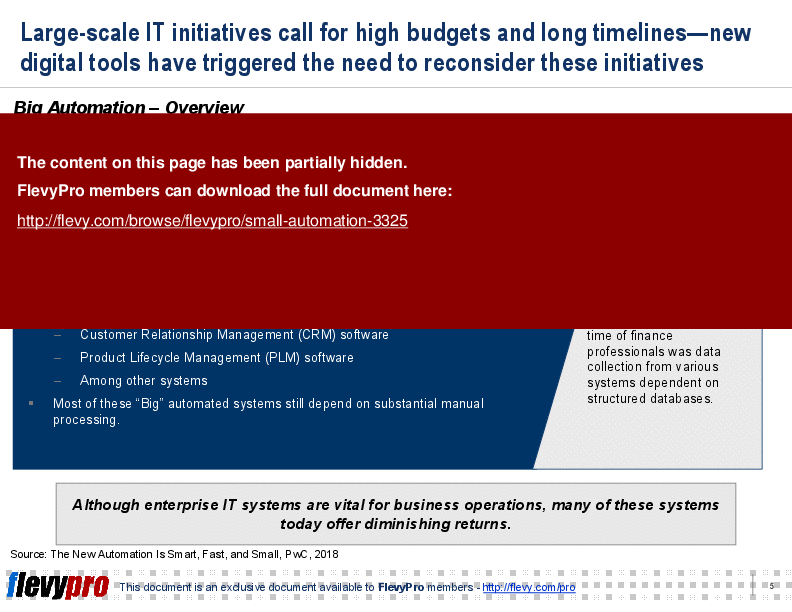
Large-scale technology projects—such as Enterprise Resource Planning (ERP) systems or Customer Relationship Management (CRM) systems—are often cost and time intensive. Investments for such initiatives typically run in millions and they consume years to complete.

Traditional large-scale IT initiatives are referred to as "Big" Automation, due to their big budgets, big timelines, and big agendas. Although enterprise IT systems are critical for business operations, many of these systems today offer diminishing returns.

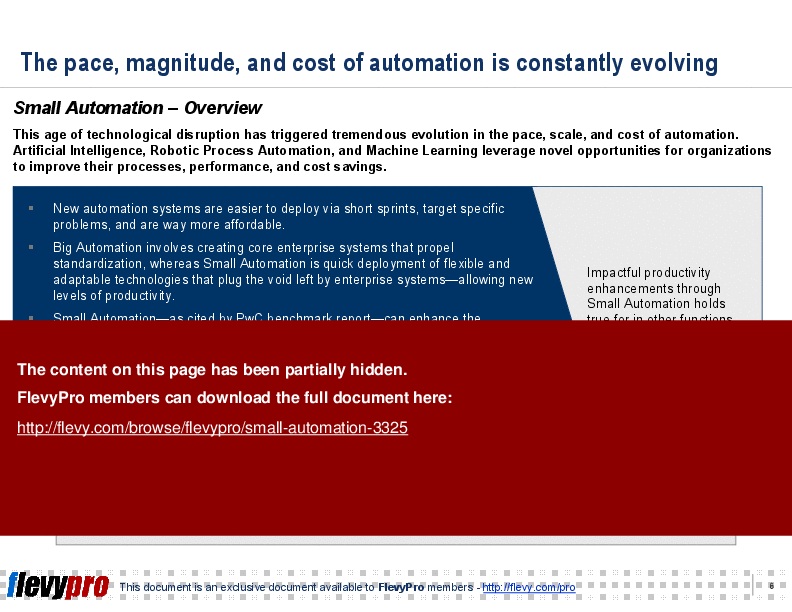
Newer systems ("Small" Automation), on the other hand, have triggered tremendous evolution in the pace, scale, and cost of automation. New technologies leverage novel opportunities for organizations to improve their processes, performance, and cost savings.

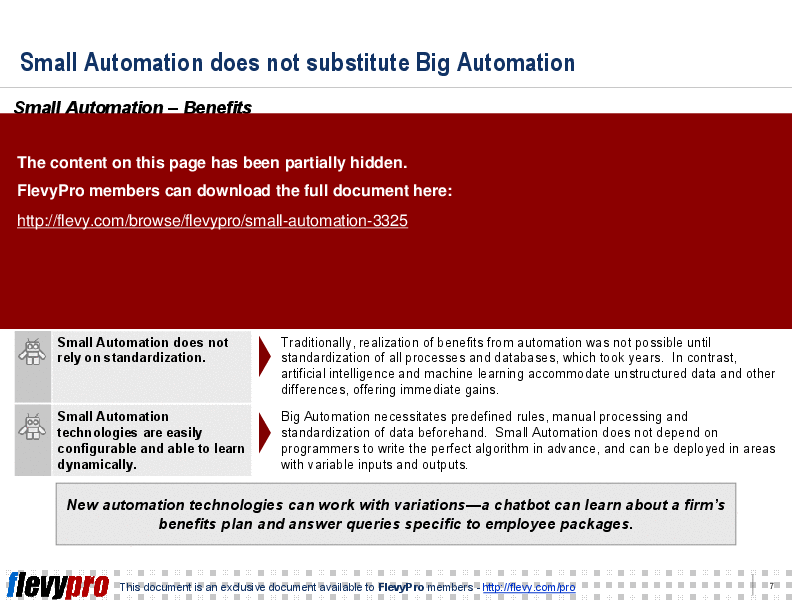
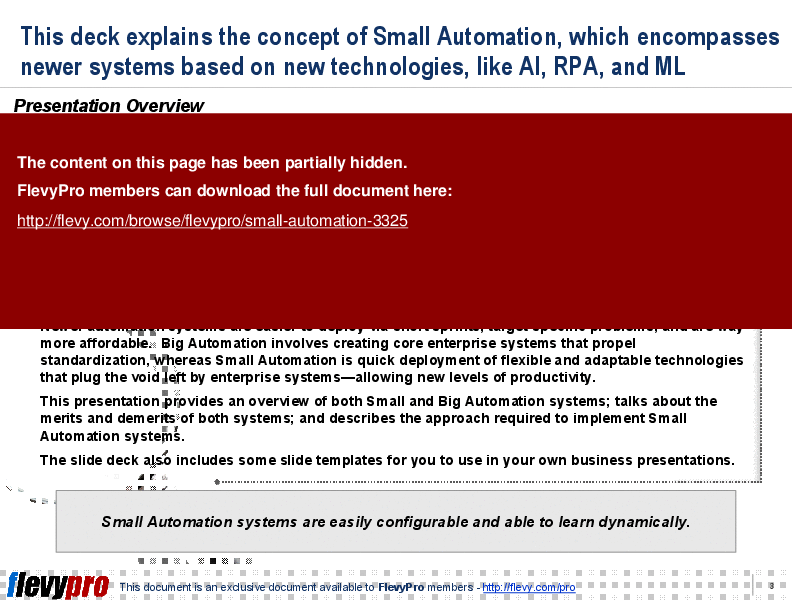
Newer automation systems are easier to deploy via short sprints, target specific problems, and are way more affordable. Big Automation involves creating core enterprise systems that propel standardization, whereas Small Automation is quick deployment of flexible and adaptable technologies that plug the void left by enterprise systems—allowing new levels of productivity.

This presentation provides an overview of both Small and Big Automation systems; talks about the merits and demerits of both systems; and describes the approach required to implement Small Automation systems.

The slide deck also includes some slide templates for you to use in your own business presentations.

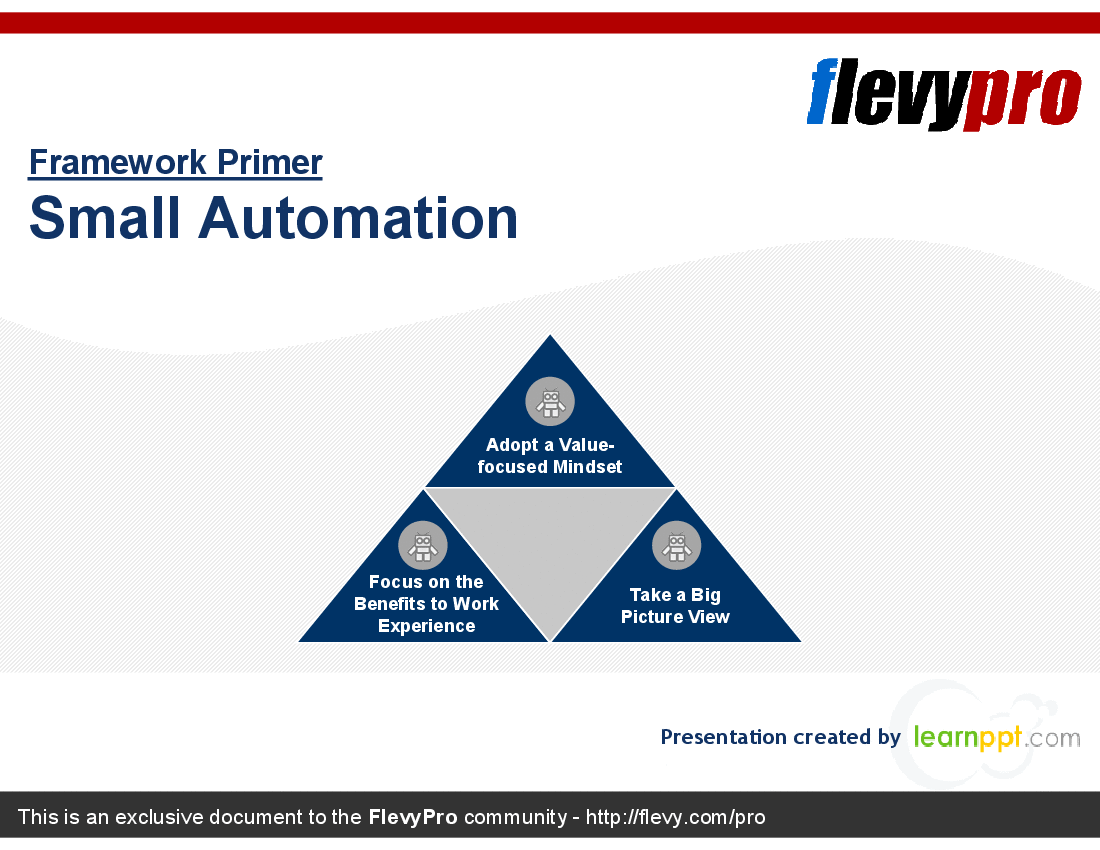
This presentation delves into the strategic shift required to transition from Big Automation to Small Automation, emphasizing the need for a value-focused mindset. It highlights the importance of aligning organizational culture and leadership commitment to fully leverage the benefits of Small Automation. The PPT also provides actionable insights and practical templates to facilitate the implementation of Small Automation initiatives, ensuring that your organization can achieve rapid, targeted improvements without the extensive overheads associated with traditional IT projects.

Got a question about this document? Email us at flevypro@flevy.com.

MARCUS OVERVIEW

This synopsis was written by Marcus [?] based on the analysis of the full 18-slide presentation.


Executive Summary
The Small Automation PowerPoint template is designed to provide corporate executives, integration leaders, and consultants with a comprehensive understanding of Small Automation systems. This presentation contrasts Small Automation with traditional Big Automation, highlighting the benefits, strategies, and processes involved in implementing Small Automation. Users will gain insights into how to leverage new technologies such as AI, RPA, and ML to enhance productivity and streamline operations, all while minimizing costs and deployment time.

Who This Is For and When to Use
•  Corporate executives seeking to understand automation trends and their implications for business strategy
•  Integration leaders responsible for implementing automation solutions within their organizations
•  Consultants advising clients on technology adoption and process improvement
•  IT leaders exploring new automation technologies to enhance operational efficiency

Best-fit moments to use this deck:
•  During strategic planning sessions focused on technology adoption
•  In workshops aimed at educating teams about automation benefits
•  When evaluating the transition from traditional IT systems to more agile automation solutions

Learning Objectives
•  Define Small Automation and its key differentiators from Big Automation
•  Identify the benefits of implementing Small Automation in various business functions
•  Develop a strategic approach for adopting Small Automation technologies
•  Analyze case studies demonstrating successful Small Automation implementations
•  Create a roadmap for transitioning to Small Automation within an organization
•  Establish metrics for measuring the impact of Small Automation on productivity and cost savings

Table of Contents
•  Overview (page 3)
•  Big Automation vs. Small Automation (page 5)
•  Small Automation Approach (page 9)
•  Templates (page 14)

Primary Topics Covered
•  Overview of Automation - An introduction to automation concepts, focusing on the evolution from Big Automation to Small Automation.
•  Big Automation vs. Small Automation - A comparative analysis of traditional large-scale IT initiatives and newer, agile automation technologies.
•  Benefits of Small Automation - Detailed insights into how Small Automation enhances productivity and reduces costs across various functions.
•  Implementation Strategies - Guidance on how to effectively adopt Small Automation within an organization, including mindset shifts and strategic planning.
•  Case Studies - Real-world examples illustrating successful Small Automation implementations and their outcomes.
•  Templates for Small Automation - Ready-to-use templates that facilitate the planning and execution of Small Automation projects.

Deliverables, Templates, and Tools
•  Small Automation implementation roadmap template
•  Cost-benefit analysis template for automation initiatives
•  Change management plan template for transitioning to Small Automation
•  Performance metrics dashboard for tracking automation outcomes
•  Communication plan template for stakeholder engagement during automation projects

Slide Highlights
•  Overview slide that succinctly defines Small Automation and its relevance in today’s business landscape
•  Comparative analysis slide illustrating the key differences between Big Automation and Small Automation
•  Benefits slide detailing the specific advantages of adopting Small Automation technologies
•  Implementation strategy slide outlining the necessary steps for successful adoption
•  Case study slide showcasing a successful Small Automation project with measurable outcomes

Potential Workshop Agenda
Introduction to Automation Concepts (30 minutes)
•  Overview of Big vs. Small Automation
•  Discussion on the importance of automation in modern business

Small Automation Benefits and Implementation (60 minutes)
•  Deep dive into the benefits of Small Automation
•  Group activity: Identifying potential Small Automation projects within participants' organizations

Case Studies and Best Practices (45 minutes)
•  Presentation of successful Small Automation implementations
•  Q&A session to discuss challenges and solutions

Customization Guidance
•  Tailor the implementation roadmap to reflect specific organizational goals and timelines
•  Adjust case studies to align with industry-specific challenges and solutions
•  Modify templates to incorporate company-specific terminology and metrics

Secondary Topics Covered
•  Change management strategies for technology adoption
•  The role of leadership in fostering a culture of innovation
•  Integration of Small Automation with existing IT systems
•  Future trends in automation technologies

Topic FAQ

What are the main differences between Big Automation and Small Automation?

Big Automation refers to large-scale enterprise initiatives (ERP/CRM) that require substantial budgets and multi-year timelines, focused on standardization. Small Automation targets specific tasks with agile, low-cost technologies, deployable in short sprints and designed to plug gaps left by enterprise systems. Typical Small Automation timelines are sprint-based, often 16 to 20 weeks.

Which technologies are commonly used in Small Automation projects?

Small Automation projects commonly use emerging, flexible technologies that target specific processes, specifically artificial intelligence (AI), robotic process automation (RPA), and machine learning (ML). These technologies enable task-level automation that can be deployed in short sprints using targeted integrations with existing systems, such as AI, RPA, and ML.

How should I measure the success of a Small Automation initiative?

Success is measured with quantitative performance metrics tied to value objectives: cost savings, time reductions, and process efficiency improvements. Organizations track these outcomes using dashboards and structured evaluations; Flevy’s Small Automation deck includes a performance metrics dashboard template to record cost savings and time reductions.

What skills and roles are needed to implement Small Automation effectively?

Effective Small Automation implementations require skills in data analysis to define targets, programming or RPA configuration for building automations, process improvement expertise to redesign workflows, and change management to secure adoption. These capabilities align with the deck’s emphasis on technical and organizational readiness, including change management.

What should I look for when selecting a Small Automation slide deck or toolkit?

Look for materials that explain the Big vs Small Automation tradeoffs, provide implementation strategies, include case studies, and offer practical templates (roadmap, cost‑benefit, change management, and dashboards). A suitable toolkit should provide an implementation roadmap and cost‑benefit analysis templates to support planning and governance.

How long do Small Automation projects usually take compared with traditional IT initiatives?

Small Automation projects are designed to be completed in short, focused sprints rather than multi-year programs; the resource and time commitment is significantly shorter than large ERP/CRM rollouts. Typical Small Automation efforts can be delivered over a series of sprints spanning about 16 to 20 weeks.

We’re mid-ERP rollout, but need targeted improvements now—what approach should we take?

Adopt a Small Automation approach that identifies specific gaps left by the ERP, pilots sprint-based automations that plug those gaps, and aligns pilots with governance and integration points. Use an implementation roadmap and a change management plan to coordinate with the larger program; Flevy’s Small Automation includes both templates.

How can leaders build a roadmap to transition from Big Automation to Small Automation pilots?

Leaders should define a value-focused agenda, prioritize high-impact processes for sprint pilots, secure leadership commitment, and plan change management and measurement. Document the steps in a phased implementation roadmap, run short sprints, and track outcomes on a performance metrics dashboard; the deck provides an implementation roadmap template and a performance metrics dashboard.

Document FAQ
These are questions addressed within this presentation.

What is Small Automation?
Small Automation refers to the use of agile, flexible technologies such as AI and RPA to automate specific tasks, enhancing productivity and reducing costs.

How does Small Automation differ from Big Automation?
Big Automation involves large-scale IT initiatives that require significant investment and time, while Small Automation focuses on quick, targeted implementations that can deliver immediate value.

What are the key benefits of implementing Small Automation?
Benefits include increased productivity, reduced operational costs, and the ability to address specific business challenges quickly and effectively.

What types of organizations can benefit from Small Automation?
Organizations across various industries can leverage Small Automation to improve processes, enhance customer service, and drive efficiency.

How long does it typically take to implement Small Automation projects?
Small Automation projects can often be completed in a series of sprints over a timeframe of 16 to 20 weeks.

What skills are needed to successfully implement Small Automation?
Key skills include data analysis, programming, process improvement, and change management.

How can I measure the success of Small Automation initiatives?
Success can be measured through performance metrics such as cost savings, time reductions, and improvements in process efficiency.

What resources are available for further learning about Small Automation?
The presentation includes templates and case studies, and additional resources can be found in the FlevyPro library.

Glossary
•  Small Automation - The use of agile technologies to automate specific tasks within an organization.
•  Big Automation - Traditional large-scale IT initiatives requiring significant investment and time.
•  AI - Artificial Intelligence, a technology enabling machines to perform tasks that typically require human intelligence.
•  RPA - Robotic Process Automation, software that automates repetitive tasks.
•  ML - Machine Learning, a subset of AI that enables systems to learn from data and improve over time.
•  Change Management - The process of managing organizational change to minimize resistance and maximize engagement.
•  Performance Metrics - Quantitative measures used to assess the efficiency and effectiveness of a project or process.
•  Implementation Roadmap - A strategic plan outlining the steps to successfully adopt a new technology or process.
•  Stakeholder Engagement - The process of involving individuals or groups who have an interest in the outcome of a project.
•  Cost-Benefit Analysis - A financial assessment that compares the costs and benefits of a project to determine its feasibility.
•  Process Improvement - The practice of analyzing and enhancing business processes for greater efficiency.
•  Templates - Pre-designed documents or frameworks that facilitate planning and execution of projects.

AUTOMATION PPT SLIDES

Transforming Mindsets for Effective Automation Adoption

Guiding Leadership in Small Automation Implementation

Distinct Advantages of Small Automation Over Big Automation

Source: Best Practices in Digital Transformation, RPA PowerPoint Slides: Small Automation PowerPoint (PPTX) Presentation Slide Deck, LearnPPT Consulting


$29.00
FlevyPro price: FREE (included in subscription)
This framework is developed by a team of former McKinsey and Big 4 consultants. The presentation follows the headline-body-bumper slide format used by global consulting firms.
Add to Cart
  

Did you need more documents?

Consider a FlevyPro subscription from $39/month. View plans here.

For $10.00 more, you can download this document plus 2 more FlevyPro documents. That's just $13 each.

ABOUT FLEVYPRO

This document is part of the FlevyPro Library, a curated knowledge base of documents for our FlevyPro subscribers.

FlevyPro is a subscription service for on-demand business frameworks and analysis tools. FlevyPro subscribers receive access to an exclusive library of curated business documents—business framework primers, presentation templates, Lean Six Sigma tools, and more—among other exclusive benefits.

Click here to learn more about FlevyPro and its benefits.

Did you know?
The average daily rate of a McKinsey consultant is $6,625 (not including expenses). The average price of a Flevy document is $65.


Trusted by over 10,000+ Client Organizations
Since 2012, we have provided business templates to over 10,000 businesses and organizations of all sizes, from startups and small businesses to the Fortune 100, in over 130 countries.
AT&T GE Cisco Intel IBM Coke Dell Toyota HP Nike Samsung Microsoft Astrazeneca JP Morgan KPMG Walgreens Walmart 3M Kaiser Oracle SAP Google E&Y Volvo Bosch Merck Fedex Shell Amgen Eli Lilly Roche AIG Abbott Amazon PwC T-Mobile Broadcom Bayer Pearson Titleist ConEd Pfizer NTT Data Schwab


Read Customer Testimonials

 
"As a small business owner, the resource material available from FlevyPro has proven to be invaluable. The ability to search for material on demand based our project events and client requirements was great for me and proved very beneficial to my clients. Importantly, being able to easily edit and tailor "

– Michael Duff, Managing Director at Change Strategy (UK)
 
"As a niche strategic consulting firm, Flevy and FlevyPro frameworks and documents are an on-going reference to help us structure our findings and recommendations to our clients as well as improve their clarity, strength, and visual power. For us, it is an invaluable resource to increase our impact and value."

– David Coloma, Consulting Area Manager at Cynertia Consulting
 
"As a young consulting firm, requests for input from clients vary and it's sometimes impossible to provide expert solutions across a broad spectrum of requirements. That was before I discovered Flevy.com.

Through subscription to this invaluable site of a plethora of topics that are key and crucial to consulting, I "

– Nishi Singh, Strategist and MD at NSP Consultants
 
"I have used Flevy services for a number of years and have never, ever been disappointed. As a matter of fact, David and his team continue, time after time, to impress me with their willingness to assist and in the real sense of the word. I have concluded in fact "

– Roberto Pelliccia, Senior Executive in International Hospitality
 
"As a consultant requiring up to date and professional material that will be of value and use to my clients, I find Flevy a very reliable resource.

The variety and quality of material available through Flevy offers a very useful and commanding source for information. Using Flevy saves me time, enhances my expertise and ends up being a good decision."

– Dennis Gershowitz, Principal at DG Associates
 
"If you are looking for great resources to save time with your business presentations, Flevy is truly a value-added resource. Flevy has done all the work for you and we will continue to utilize Flevy as a source to extract up-to-date information and data for our virtual and onsite presentations!"

– Debbi Saffo, President at The NiKhar Group
 
"My FlevyPro subscription provides me with the most popular frameworks and decks in demand in today’s market. They not only augment my existing consulting and coaching offerings and delivery, but also keep me abreast of the latest trends, inspire new products and service offerings for my practice, and educate me "

– Bill Branson, Founder at Strategic Business Architects
 
"I am extremely grateful for the proactiveness and eagerness to help and I would gladly recommend the Flevy team if you are looking for data and toolkits to help you work through business solutions."

– Trevor Booth, Partner, Fast Forward Consulting


Customers Also Bought These Documents


Customers Also Like These Documents

Explore Templates on Related Management Topics


Your Recently Viewed Documents
Download our FREE Digital Transformation Templates

Download our free compilation of 50+ Digital Transformation slides and templates. DX concepts covered include Digital Leadership, Digital Maturity, Digital Value Chain, Customer Experience, Customer Journey, RPA, etc.