
This framework is developed by a team of former McKinsey and Big 4 consultants. The presentation follows the headline-body-bumper slide format used by global consulting firms.
Editor Summary
Crisis Recovery Strategy is a 21-slide PowerPoint presentation by LearnPPT Consulting that provides a structured framework for managing crises across 6 core elements (Immediate Impact and Sustainable Success).
Read moreIncludes 6 deliverables: Crisis Recovery Strategy framework template, Supply Chain Optimization checklist, Strategic Roadmap template, Scenario Analysis framework, Governance model template, and Financial assessment tools. Target users include corporate executives, integration leaders, consultants, supply chain managers, and financial analysts. Sold as a digital download on Flevy with immediate digital download.
Use this presentation when an organization must stabilize operations while planning for long-term recovery—examples include the onset of a market shock, major supply disruptions, or liquidity stress.
Corporate executives prioritizing short-term liquidity and approving a Strategic Roadmap that links immediate measures to long-term goals.
Integration leaders assigning responsibilities and sequencing recovery actions during a post-crisis implementation sprint.
Supply chain managers identifying procurement and production changes to reduce costs and restore flows.
Financial analysts modeling cash needs and tracking profitability to inform investment trade-offs.
The deck’s two-phase approach (Immediate Impact and Sustainable Success) reflects a structured consulting-style sequence used in crisis response planning.
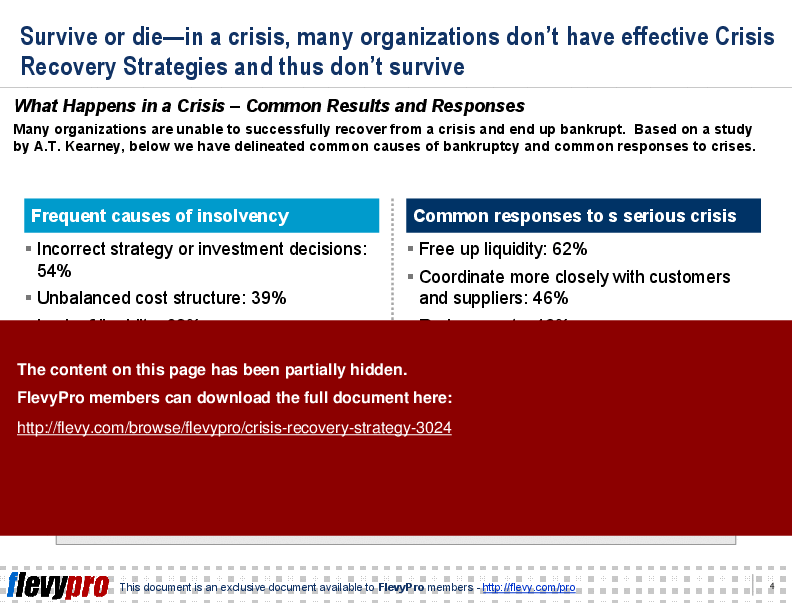
Many organizations are unable to successfully recover from a crisis and end up bankrupt. Organizations typically react to crises by adopting only short-term, operational measures.
To maintain a sustained Competitive Advantage and recover from the crisis stronger, we must tie short-term decisions to long-term strategy. To achieve this, there are 6 core elements to the Crisis Recovery Strategy:
IMMEDIATE IMPACT
1. Procurement
2. Operations & Production
3. Sales
SUSTAINABLE SUCCESS
1. Industry Perspective
2. Scenario Analysis
3. Focus for the Future
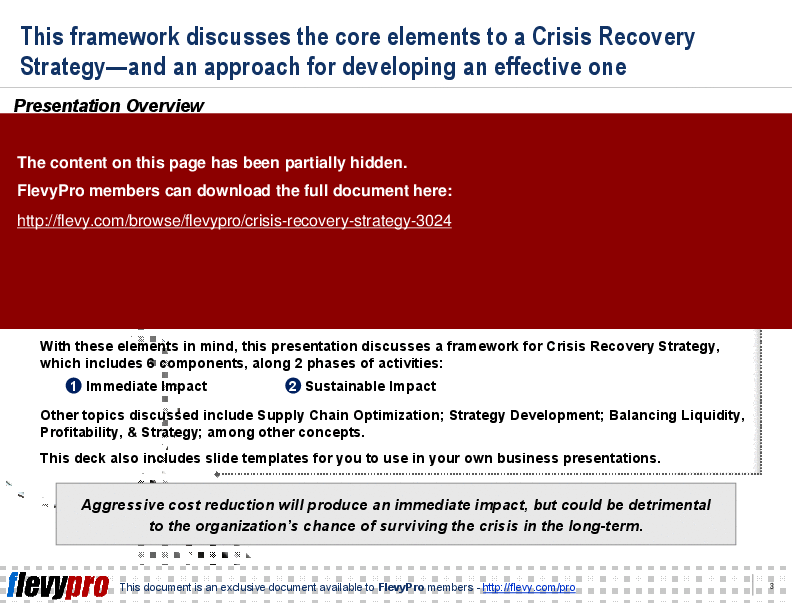
With these elements in mind, this presentation discusses a framework for Crisis Recovery Strategy, which includes 6 components, along 2 phases of activities: 1. Immediate Impact and 2. Sustainable Impact. Aggressive cost reduction will produce an immediate impact, but could be detrimental to the organization’s chance of surviving the crisis in the long-term.
Other topics discussed include Supply Chain Optimization; Strategy Development; Balancing Liquidity, Profitability, & Strategy; among other concepts.
This deck also includes slide templates for you to use in your own business presentations.
This presentation provides a detailed roadmap for navigating a crisis, emphasizing the importance of balancing immediate actions with long-term strategic goals. It outlines a comprehensive approach to supply chain optimization, focusing on procurement, operations, and sales to drive immediate impact. The PPT also delves into strategic development, highlighting the need for industry perspective, scenario analysis, and future-focused initiatives to ensure sustainable success.
The framework includes practical templates and actionable insights, enabling executives to deploy immediate measures while forming a task force to manage the crisis effectively. It underscores the necessity of balancing liquidity, profitability, and strategic initiatives, offering a structured pathway to reassess investments, optimize the supply chain, and enhance organizational fitness. This deck is an essential tool for leaders aiming to steer their organizations through turbulent times with a clear, strategic vision.
This synopsis was written by Marcus [?] based on the analysis of the full 21-slide presentation.
Executive Summary
The Crisis Recovery Strategy presentation is a meticulously crafted framework designed to guide organizations through the complexities of crisis management. Developed by seasoned consultants from top-tier firms, this presentation provides a structured approach to balancing immediate actions with long-term strategic goals. By focusing on 6 core elements, the framework enables organizations to not only survive a crisis, but also emerge stronger and more resilient. Key components include immediate impact measures and sustainable success strategies, ensuring that short-term decisions align with long-term objectives.
Who This Is For and When to Use
• Corporate executives responsible for strategic planning and crisis management
• Integration leaders tasked with executing recovery strategies
• Consultants advising organizations on crisis response and recovery
• Supply chain managers focused on optimizing operations during crises
• Financial analysts assessing liquidity and profitability in turbulent times
Best-fit moments to use this deck:
• During the onset of a crisis to establish immediate response measures
• In strategic planning sessions aimed at long-term recovery
• When conducting scenario analyses to prepare for potential future challenges
• For workshops focused on aligning operational actions with strategic goals
Learning Objectives
• Define the core components of an effective Crisis Recovery Strategy
• Identify immediate actions that can stabilize operations during a crisis
• Develop a strategic roadmap that integrates short-term and long-term measures
• Analyze industry trends and their implications for crisis recovery
• Establish governance frameworks to oversee recovery initiatives
• Create templates for ongoing assessment and adaptation of recovery strategies
Primary Topics Covered
• Crisis Recovery Strategy - A comprehensive framework that outlines the essential elements for navigating crises effectively, focusing on both immediate and long-term strategies.
• Immediate Impact - Actions aimed at stabilizing operations and ensuring liquidity during a crisis, including procurement and operational adjustments.
• Sustainable Success - Long-term strategies that align with organizational goals, emphasizing the importance of integrating immediate actions with future planning.
• Supply Chain Optimization - Techniques for enhancing procurement and production processes to reduce costs and improve efficiency during crises.
• Strategy Development - A structured approach to reassessing organizational strategies in light of changing market dynamics and crisis conditions.
• Scenario Analysis - Tools and methodologies for evaluating potential future scenarios and their implications for strategic planning.
Deliverables, Templates, and Tools
• Crisis Recovery Strategy framework template for immediate and long-term planning
• Supply Chain Optimization checklist for assessing procurement and operational efficiency
• Strategic Roadmap template for aligning short-term actions with long-term goals
• Scenario Analysis framework for evaluating potential crisis impacts
• Governance model template for overseeing recovery initiatives
• Financial assessment tools for tracking liquidity and profitability
Slide Highlights
• Overview of the Crisis Recovery Strategy framework, emphasizing immediate and sustainable actions
• Detailed breakdown of immediate impact measures, including procurement and operational adjustments
• Strategic Roadmap slide illustrating the connection between short-term actions and long-term goals
• Supply Chain Optimization strategies focused on cost reduction and efficiency improvement
• Scenario Analysis framework for proactive strategic planning
Potential Workshop Agenda
Crisis Response Strategy Session (90 minutes)
• Review immediate impact measures and assign responsibilities
• Develop a preliminary Strategic Roadmap for recovery
• Discuss governance structures for overseeing recovery initiatives
Supply Chain Optimization Workshop (60 minutes)
• Identify key areas for cost reduction in procurement
• Explore strategies for enhancing operational efficiency during crises
• Develop action plans for stabilizing supply chain operations
Customization Guidance
• Tailor the Strategic Roadmap to reflect specific organizational goals and timelines
• Adjust the Supply Chain Optimization checklist to align with industry-specific challenges
• Incorporate organization-specific metrics for tracking recovery progress
• Modify scenario analysis frameworks to include relevant market conditions
Secondary Topics Covered
• Balancing liquidity and profitability during crises
• The role of leadership in crisis management
• Communication strategies for internal and external stakeholders
• Risk management practices in crisis recovery
Topic FAQ
What are the typical phases of a crisis recovery strategy?
A common structure separates immediate stabilization from long-term recovery. The model in this category uses 2 phases: Immediate Impact (procurement, operations & sales) and Sustainable Success (industry perspective, scenario analysis, future focus), organized around 6 core elements.
What activities belong in the Immediate Impact phase of recovery planning?
Immediate Impact activities focus on stabilizing operations and liquidity: procurement adjustments, operational and production changes, and sales measures. The approach notes aggressive cost cuts can harm long-term survival, emphasizing procurement, operations & sales as primary areas.
How does scenario analysis inform crisis recovery planning?
Scenario analysis helps evaluate potential future conditions and their strategic implications, enabling planners to stress-test assumptions and prioritize resilient actions. In this topic area, organizations use a Scenario Analysis framework to identify plausible outcomes and adjust recovery plans accordingly.
What should a supply chain optimization checklist cover during a crisis?
A crisis-focused checklist concentrates on procurement resiliency, production process adjustments, supplier risk, cost-reduction levers, and operational efficiency improvements. The checklist supports rapid identification of stabilizing actions and cost-saving opportunities in procurement and production.
How should I choose a crisis recovery toolkit when my budget is limited?
Prioritize toolkits that include templates for both immediate stabilization and longer-term strategy, scenario-analysis capability, and financial assessment tools you can adapt. Consider resources like Flevy’s Crisis Recovery Strategy as an example, which bundles templates such as a Strategic Roadmap and Supply Chain Optimization checklist.
What content scope is typical for a crisis recovery PowerPoint deck?
Typical decks include an overview of the recovery framework, immediate-impact measures, supply chain optimization, strategy development, scenario-analysis tools, and slide templates for workshops and governance. An example of this scope is a 21-slide PowerPoint presentation.
We experienced a major supplier disruption—what initial steps should our supply chain team take?
Immediate steps are to stabilize procurement (identify alternate suppliers), adjust production sequencing, assess inventory buffers, and implement cost-control measures while drafting short-term action plans. Teams often use a Supply Chain Optimization checklist to prioritize these interventions.
How should finance teams balance liquidity and profitability during recovery planning?
Finance should track cash and short-term liquidity needs, evaluate profitability impacts of operational cuts, reassess near-term investments, and feed results into the Strategic Roadmap. Use financial assessment tools to quantify trade-offs between liquidity and profitability.
Document FAQ
These are questions addressed within this presentation.
What is the primary focus of the Crisis Recovery Strategy?
The primary focus is to provide a structured approach to managing crises by balancing immediate actions with long-term strategic goals.
How can organizations ensure they recover stronger after a crisis?
By integrating short-term decisions with long-term strategies, organizations can maintain a competitive advantage and achieve sustainable success.
What are the 6 core elements of the Crisis Recovery Strategy?
The 6 core elements include immediate impact actions, sustainable success strategies, supply chain optimization, scenario analysis, and strategic development.
How does the presentation assist in supply chain optimization?
The presentation outlines specific strategies for reducing costs and improving efficiency in procurement and production processes.
What templates are included in the presentation?
Templates for the Crisis Recovery Strategy framework, Supply Chain Optimization checklist, and Strategic Roadmap are included for practical application.
How can organizations assess their liquidity during a crisis?
The presentation provides financial assessment tools to track liquidity and profitability, ensuring organizations can make informed decisions.
What is the significance of scenario analysis in crisis recovery?
Scenario analysis helps organizations evaluate potential future challenges and develop proactive strategies to mitigate risks.
How can this presentation be customized for specific industries?
Customization can include adjusting templates and frameworks to reflect industry-specific challenges and metrics relevant to the organization.
Glossary
• Crisis Recovery Strategy - A framework for managing organizational responses to crises.
• Immediate Impact - Short-term actions taken to stabilize operations during a crisis.
• Sustainable Success - Long-term strategies that align with organizational goals post-crisis.
• Supply Chain Optimization - Strategies aimed at enhancing procurement and production efficiency.
• Scenario Analysis - A method for evaluating potential future scenarios and their implications.
• Strategic Roadmap - A plan that outlines short-term and long-term recovery actions.
• Liquidity - The availability of cash or assets that can be quickly converted to cash.
• Profitability - The ability of an organization to generate profit relative to its revenue.
• Governance Framework - A structure for overseeing and managing recovery initiatives.
• Financial Assessment Tools - Instruments used to evaluate an organization's financial health during crises.
• Task Force - A group formed to address specific challenges during a crisis.
• Operational Adjustments - Changes made to business operations to improve efficiency and effectiveness during crises.
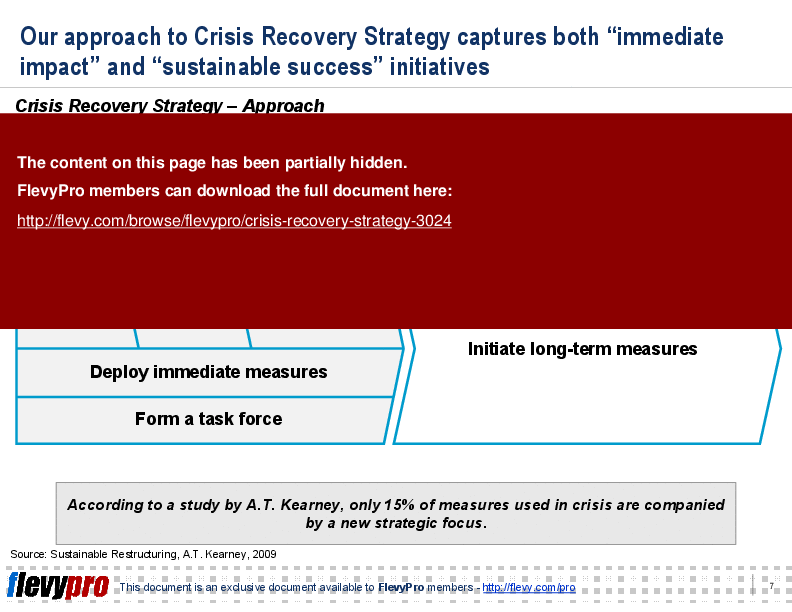
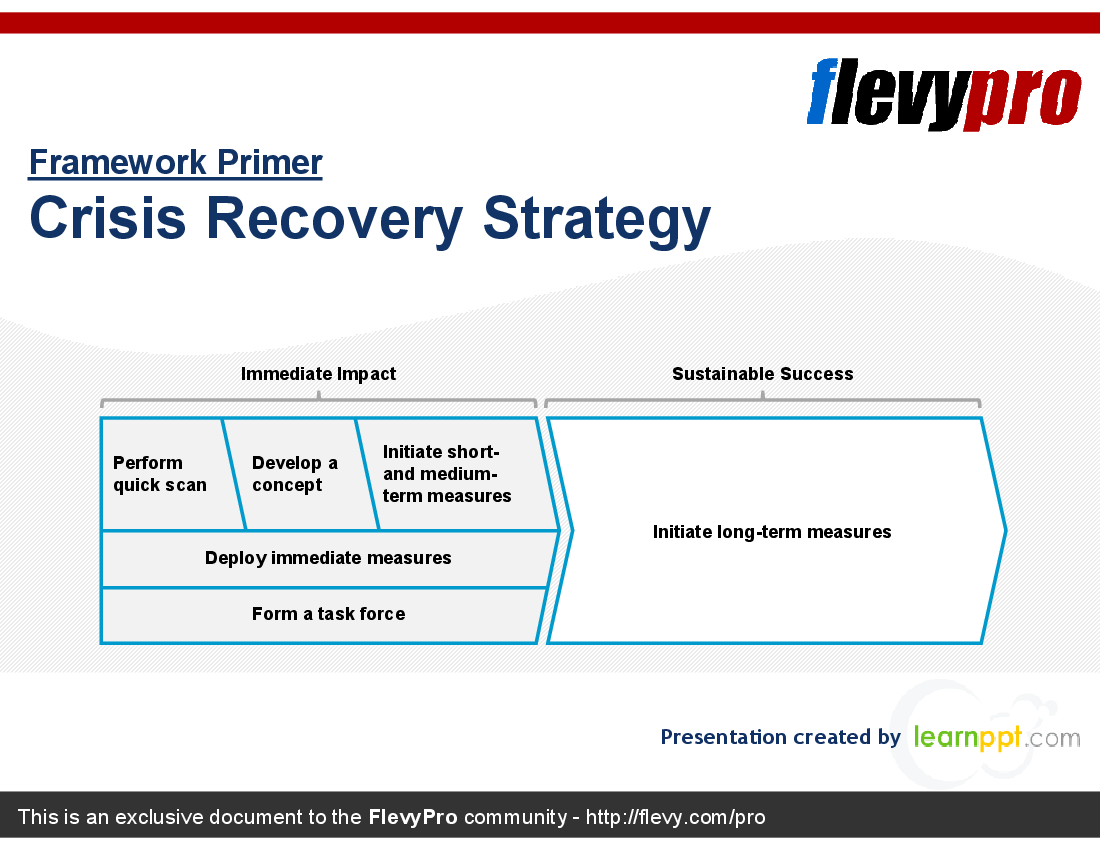
This PPT slide outlines a Crisis Recovery Strategy framework divided into 2 phases: Immediate Impact and Sustainable Success. The Immediate Impact phase includes 4 key components: performing a quick scan to assess critical issues, developing a strategic recovery concept, deploying immediate measures to stabilize operations, and forming a task force to drive recovery efforts. The Sustainable Success phase emphasizes initiating short- and medium-term measures for ongoing recovery, followed by long-term measures to ensure resilience and growth. A study by A.T. Kearney reveals that only 15% of crisis measures align with a new strategic focus, highlighting the necessity of integrating immediate actions with long-term goals for comprehensive recovery.
This PPT slide outlines a structured approach to developing a Strategic Roadmap for crisis recovery. It begins with a "quick scan" to assess organizational potential, focusing on liquidity, profitability, and overall strategy. This assessment identifies immediate needs and informs subsequent actions. The next step involves deploying immediate measures and forming a task force to address urgent issues and mobilize resources effectively. Initiating short- and medium-term measures is essential for a comprehensive 5-year Strategic Roadmap, balancing immediate actions with long-term strategic goals. Flexibility during downtime is crucial for pursuing growth initiatives post-crisis, ensuring organizations are prepared for future opportunities.
This PPT slide presents a framework for balancing liquidity, profitability, and strategic initiatives, structured along 2 axes: "Liquidity and efficiency" (vertical) and "Time to impact" (horizontal). The framework categorizes actions into liquidity, profitability, and strategic initiatives. For liquidity, actions include securing financing, stabilizing liquidity, and reducing net current assets to ensure effective cash flow. Profitability actions involve reducing overhead, launching customer retention programs, and adjusting capacity utilization to enhance financial performance. Strategic initiatives focus on growth and innovation, including developing new products, pursuing mergers and acquisitions, and improving business processes. This balanced approach ensures organizations address immediate liquidity needs while investing in profitability and strategic initiatives for long-term viability.
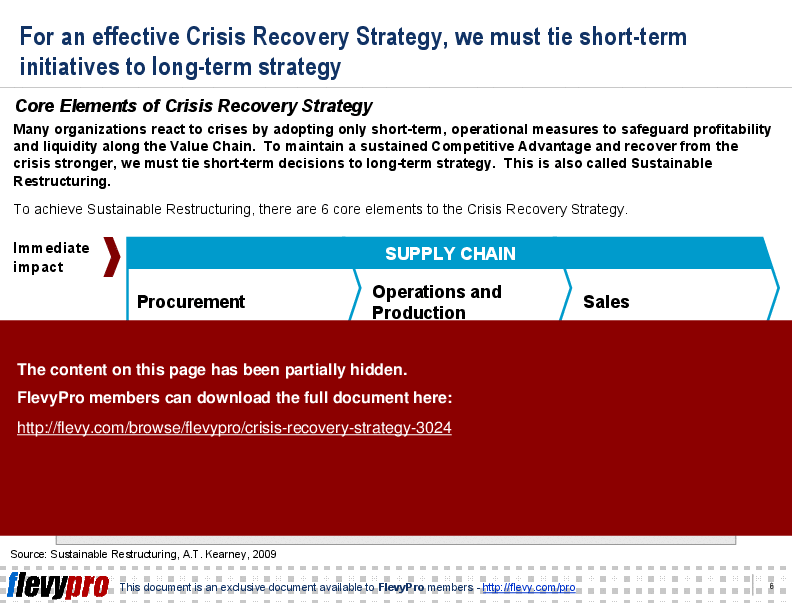
This PPT slide outlines a framework for developing an effective Crisis Recovery Strategy, emphasizing the integration of short-term initiatives with long-term strategic goals. Many organizations focus on immediate operational responses during crises, risking overall sustainability. The framework includes 2 main sections: Immediate Impact and Sustainable Success. Immediate Impact identifies 3 key components in the Supply Chain: Procurement, Operations and Production, and Sales, essential for stabilizing operations and maintaining liquidity. Sustainable Success features 2 components: Industry Perspective and Scenario Analysis, crucial for understanding market context and preparing for future scenarios. Immediate actions must address current challenges while aligning with long-term objectives, promoting a comprehensive strategy for future growth.
This framework is developed by a team of former McKinsey and Big 4 consultants. The presentation follows the headline-body-bumper slide format used by global consulting firms.
For $10.00 more, you can download this document plus 2 more FlevyPro documents. That's just $13 each.
ABOUT FLEVYPRO
This document is part of the FlevyPro Library, a curated knowledge base of documents for our FlevyPro subscribers.

FlevyPro is a subscription service for on-demand business frameworks and analysis tools. FlevyPro subscribers receive access to an exclusive library of curated business documents—business framework primers, presentation templates, Lean Six Sigma tools, and more—among other exclusive benefits.
The average daily rate of a McKinsey consultant is $6,625 (not including expenses). The average price of a Flevy document is $65.
Trusted by over 10,000+ Client Organizations
Since 2012, we have provided business templates to over 10,000 businesses and organizations of all sizes, from startups and small businesses to the Fortune 100, in over 130 countries.
"Last Sunday morning, I was diligently working on an important presentation for a client and found myself in need of additional content and suitable templates for various types of graphics. Flevy.com proved to be a treasure trove for both content and design at a reasonable price, considering the time I
saved. I encountered a download issue during the ordering process. However, a quick email to Flevy's support team, even on a Sunday (!!!), resulted in assistance within less than an hour, allowing me to download the content I needed. Fantastic job, Flevy! I give 5 stars for both content/price and customer service. Thank you!
"
– M. E., Chief Commercial Officer, International Logistics Service Provider
"As a small business owner, the resource material available from FlevyPro has proven to be invaluable. The ability to search for material on demand based our project events and client requirements was great for me and proved very beneficial to my clients. Importantly, being able to easily edit and tailor
the material for specific purposes helped us to make presentations, knowledge sharing, and toolkit development, which formed part of the overall program collateral. While FlevyPro contains resource material that any consultancy, project or delivery firm must have, it is an essential part of a small firm or independent consultant's toolbox.
"
– Michael Duff, Managing Director at Change Strategy (UK)
"My FlevyPro subscription provides me with the most popular frameworks and decks in demand in today’s market. They not only augment my existing consulting and coaching offerings and delivery, but also keep me abreast of the latest trends, inspire new products and service offerings for my practice, and educate me
in a fraction of the time and money of other solutions. I strongly recommend FlevyPro to any consultant serious about success.
"
– Bill Branson, Founder at Strategic Business Architects
"One of the great discoveries that I have made for my business is the Flevy library of training materials.
As a Lean Transformation Expert, I am always making presentations to clients on a variety of topics: Training, Transformation, Total Productive Maintenance, Culture, Coaching, Tools, Leadership Behavior, etc. Flevy
It is well worth the money to purchase these presentations. Sure, I have the knowledge and information to make my point. It is another thing to create a presentation that captures what I want to say. Flevy has saved me countless hours of preparation time that is much better spent with implementation that will actually save money for my clients.
"
– Ed Kemmerling, Senior Lean Transformation Expert at PMG
"FlevyPro has been a brilliant resource for me, as an independent growth consultant, to access a vast knowledge bank of presentations to support my work with clients. In terms of RoI, the value I received from the very first presentation I downloaded paid for my subscription many times over! The
quality of the decks available allows me to punch way above my weight – it's like having the resources of a Big 4 consultancy at your fingertips at a microscopic fraction of the overhead.
"
– Roderick Cameron, Founding Partner at SGFE Ltd
"FlevyPro provides business frameworks from many of the global giants in management consulting that allow you to provide best in class solutions for your clients."
– David Harris, Managing Director at Futures Strategy
"I have used FlevyPro for several business applications. It is a great complement to working with expensive consultants. The quality and effectiveness of the tools are of the highest standards."
– Moritz Bernhoerster, Global Sourcing Director at Fortune 500
"The wide selection of frameworks is very useful to me as an independent consultant. In fact, it rivals what I had at my disposal at Big 4 Consulting firms in terms of efficacy and organization."
– Julia T., Consulting Firm Owner (Former Manager at Deloitte and Capgemini)
Receive our FREE presentation on Operational Excellence
This 50-slide presentation provides a high-level introduction to the 4 Building Blocks of Operational Excellence. Achieving OpEx requires the implementation of a Business Execution System that integrates these 4 building blocks.