
This framework is developed by a team of former McKinsey and Big 4 consultants. The presentation follows the headline-body-bumper slide format used by global consulting firms.
Transform your organization with this expert PPT on building a customer-centric model. Created by industry veterans, it covers key frameworks like McKinsey's Decision Journey. Six Building Blocks of CX Org is a 32-slide PPT PowerPoint presentation slide deck (PPT) available for immediate download upon purchase.
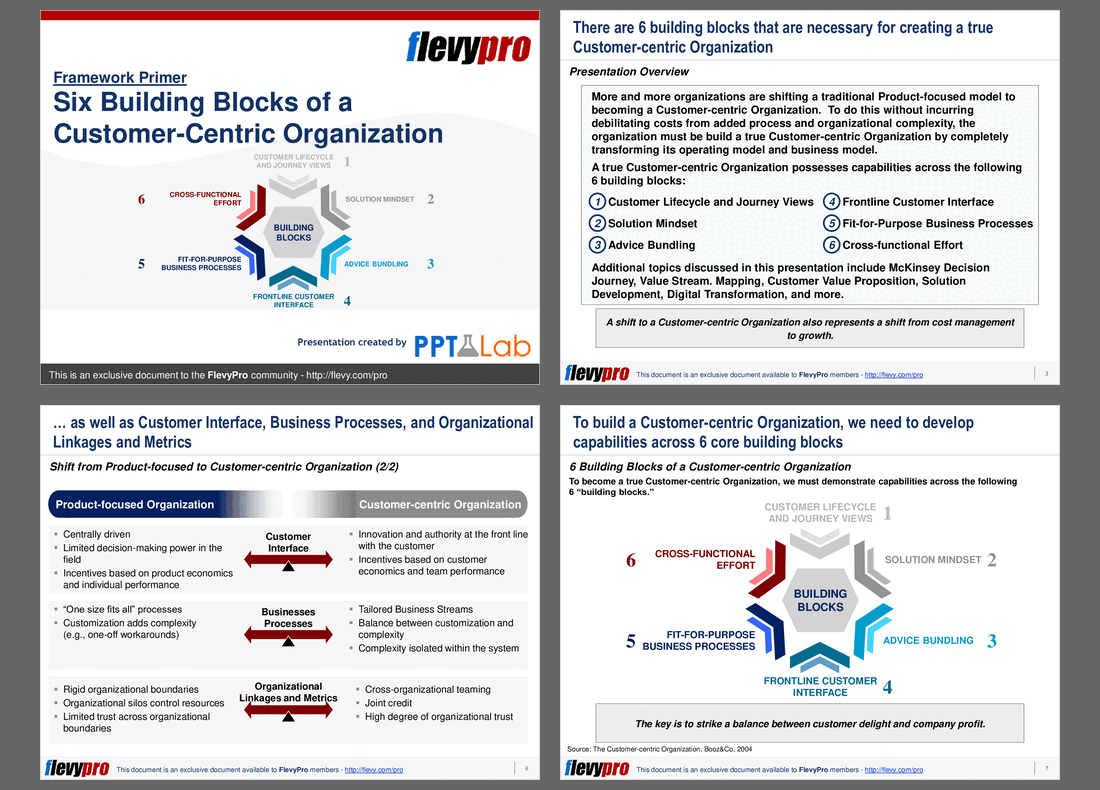
More and more organizations are shifting a traditional Product-focused model to becoming a Customer-centric Organization. To do this without incurring debilitating costs from added process and organizational complexity, the organization must be build a true Customer-centric Organization by completely transforming its operating model and business model.
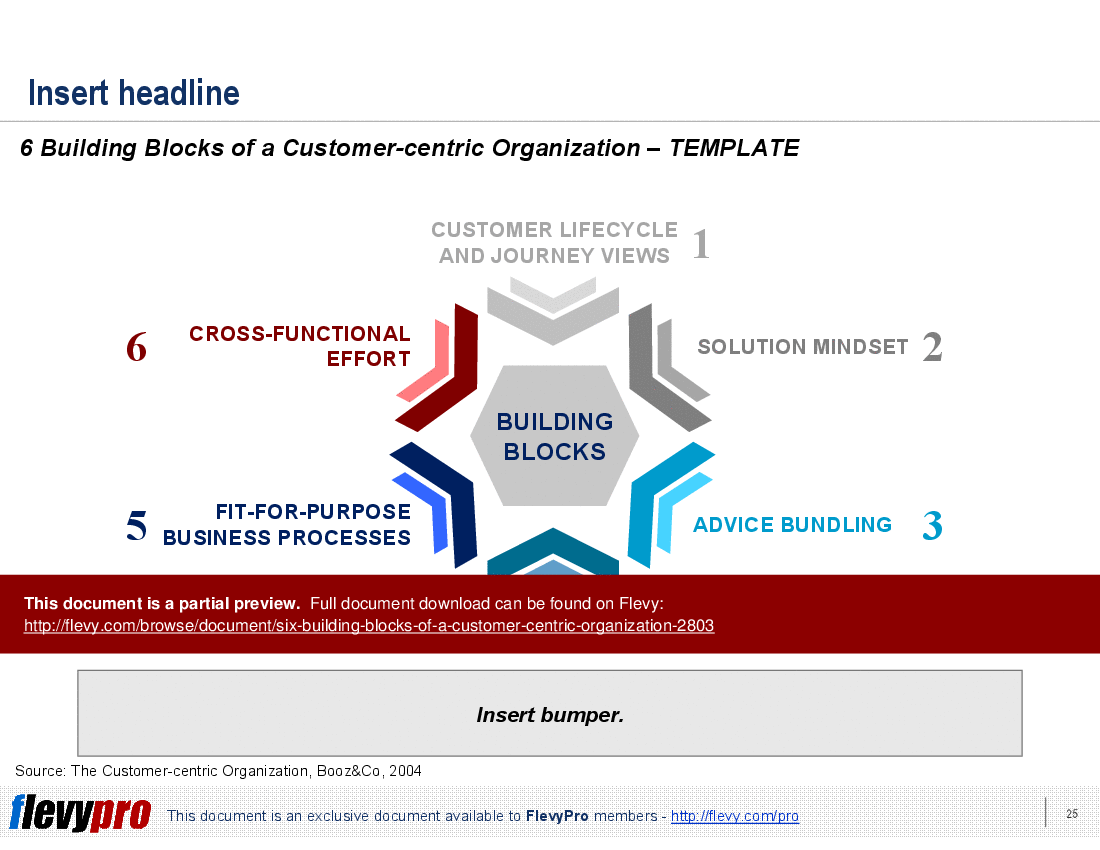
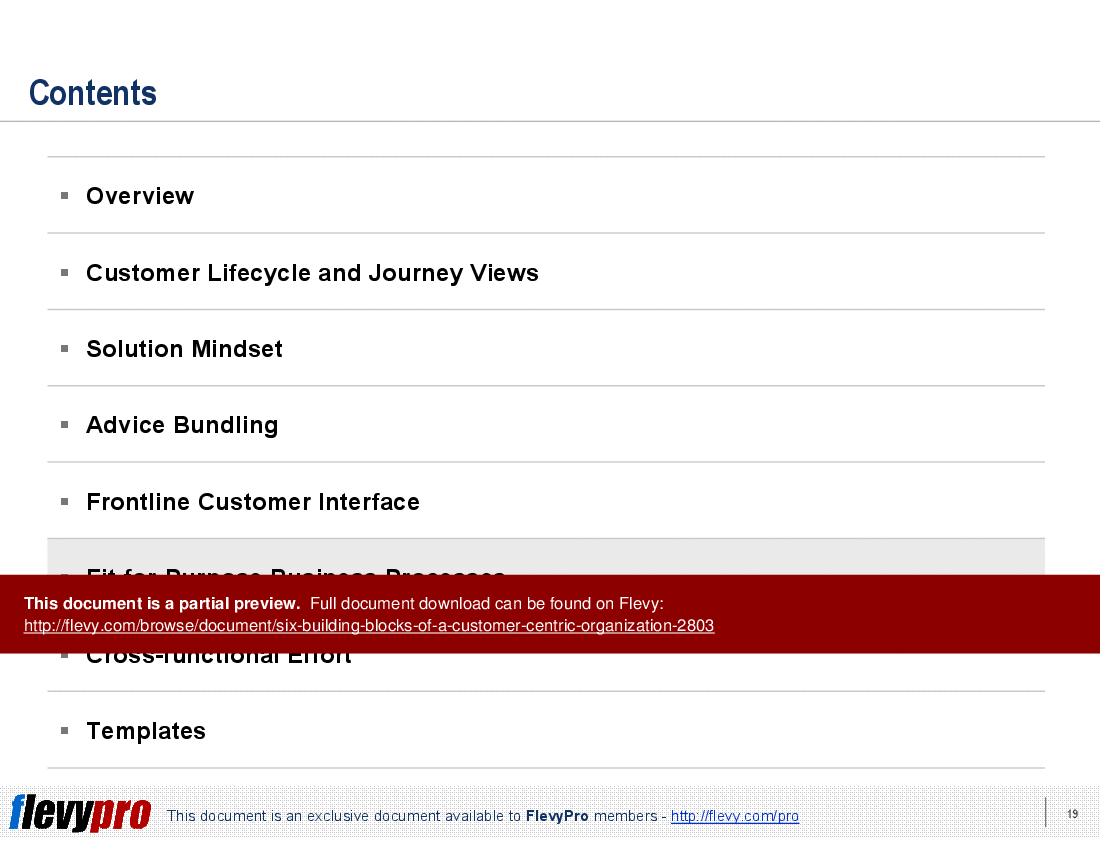
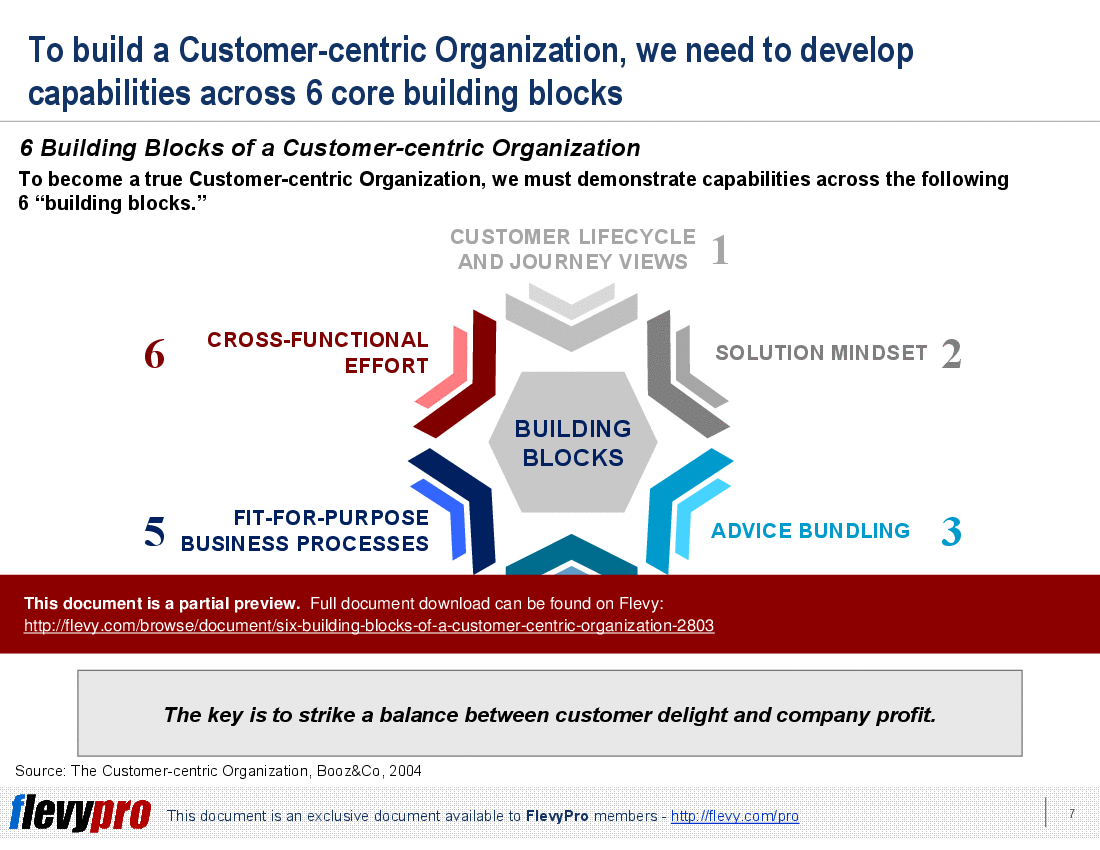
A true Customer-centric Organization possesses capabilities across the following 6 building blocks:
Additional topics discussed in this presentation include McKinsey Decision Journey, Value Stream Mapping, Customer Value Proposition, Solution Development, Digital Transformation, and more.
This document also includes templates for you to use in your own business presentations.
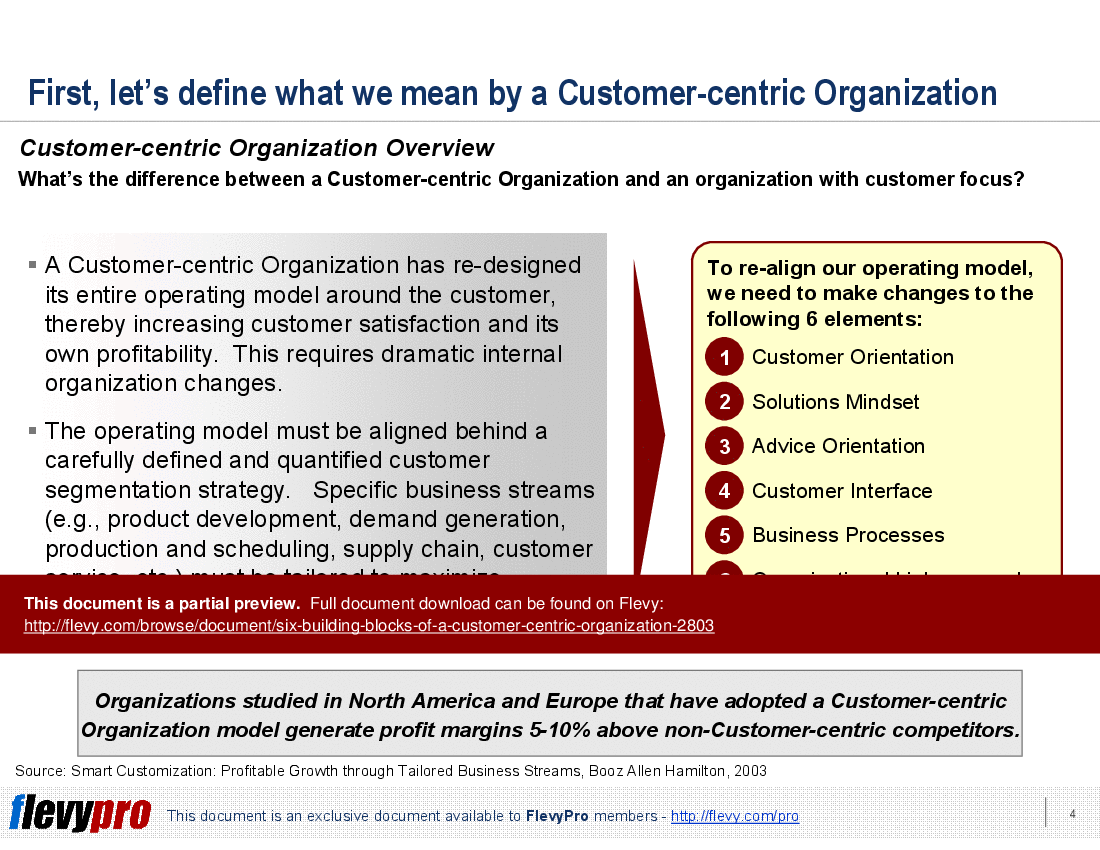
This presentation delves into the essential components required to transform into a Customer-centric Organization. It outlines the critical need for a re-designed operating model that revolves around the customer, enhancing both satisfaction and profitability. The PPT emphasizes the importance of aligning the operating model with a well-defined customer segmentation strategy. This alignment ensures that specific business streams are tailored to maximize customer value.
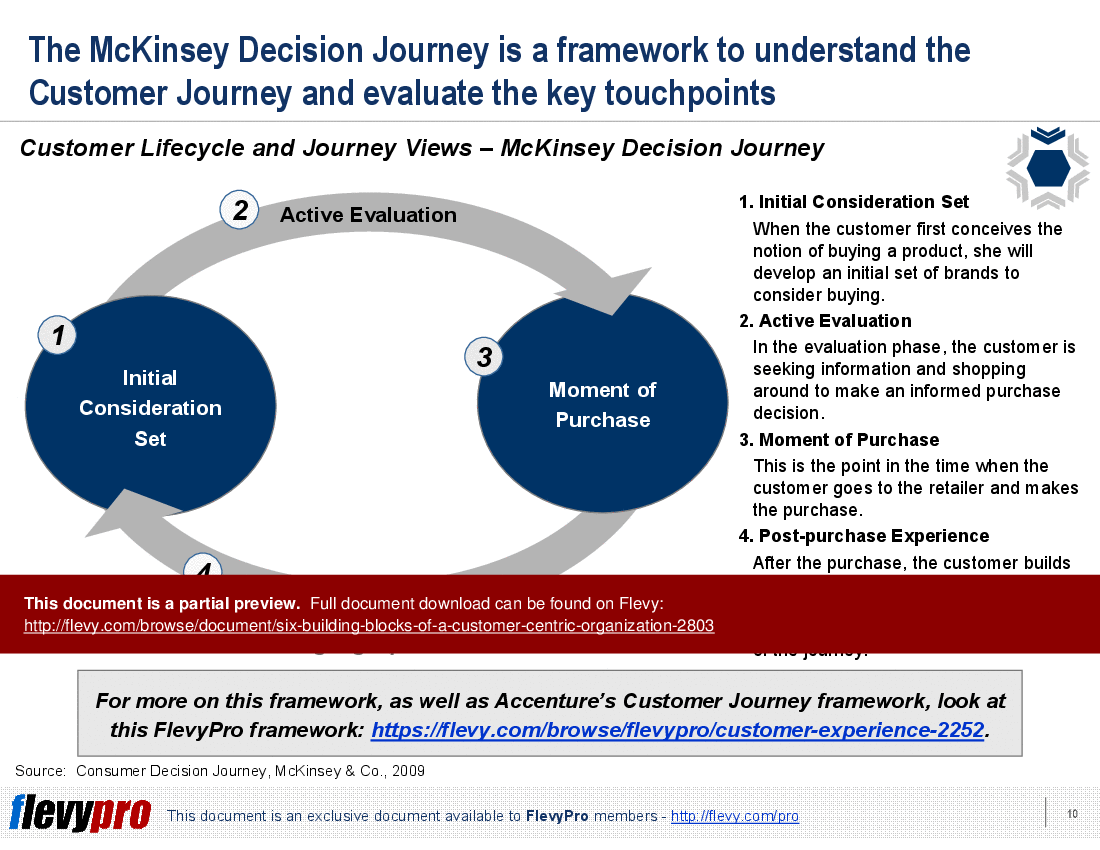
The McKinsey Decision Journey framework is highlighted as a tool to understand and evaluate key touchpoints in the Customer Journey. This framework provides a structured approach to map out the customer's path from initial consideration to post-purchase experience. By leveraging this model, organizations can gain deeper insights into customer behavior and preferences, enabling more effective engagement strategies.
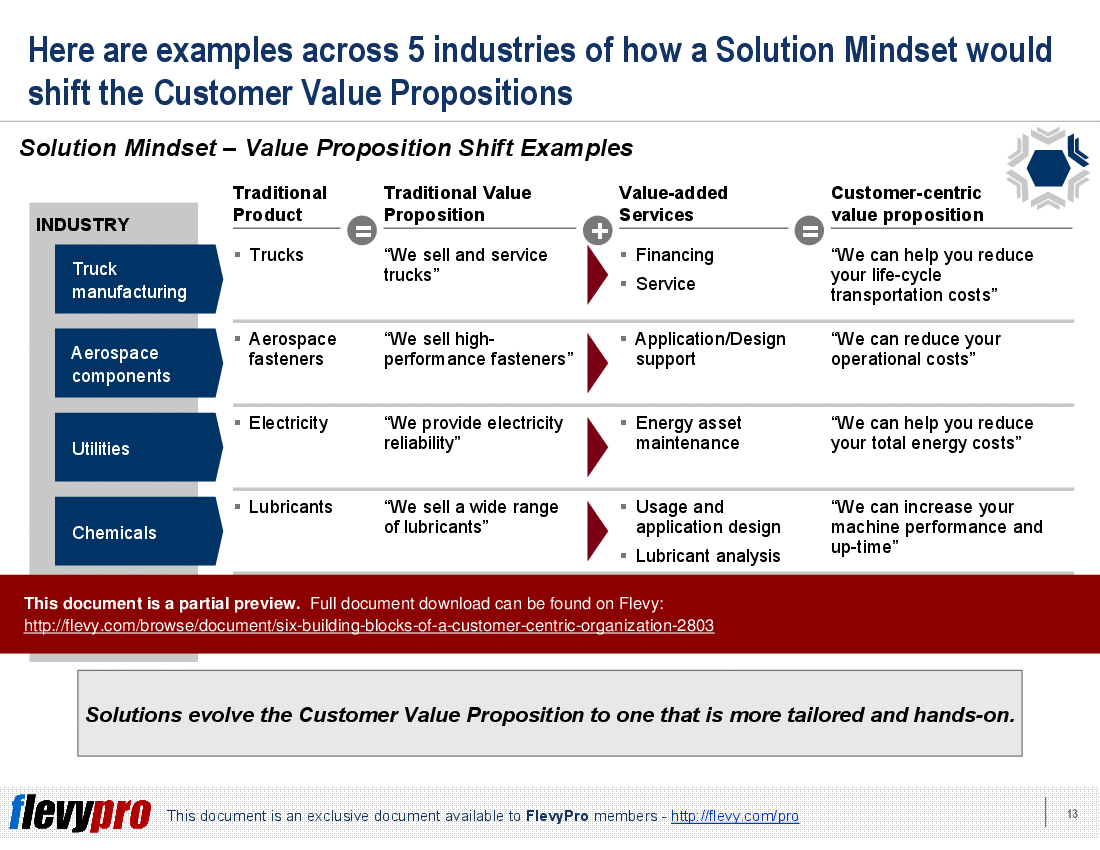
Additionally, the presentation showcases examples from various industries on how adopting a Solution Mindset can shift Customer Value Propositions. These examples illustrate how value-added services can transform traditional product offerings into comprehensive solutions that address customer needs more holistically. This approach not only enhances customer satisfaction, but also drives long-term loyalty and business growth.
This PPT slide outlines the significance of a customer-centric approach by analyzing the Customer Lifecycle and Customer Journey. The Customer Lifecycle represents the stages a customer experiences, such as transitioning from student to professional, each requiring tailored value propositions to meet evolving needs. Lifecycle Marketing leverages Digital Transformation technologies, including social listening and big data, to customize offerings for specific lifecycle phases. The Customer Journey, a modern framework, depicts a cyclical path to purchase with 4 distinct phases, contrasting the traditional linear sales funnel. This shift underscores the competitive landscape of customer engagement, where companies compete for loyalty at each stage, influenced by factors like product category and market maturity. Insights from both frameworks enable organizations to align strategies with customer needs, enhancing relationships and driving loyalty.
This PPT slide outlines a framework for redesigning business processes using Value Stream Mapping (VSM) to deliver maximum customer value while minimizing waste across 3 phases: Design, Build, and Sustain. The Design phase conceptualizes the product from the customer’s perspective, the Build phase focuses on efficient logistics for delivery, and the Sustain phase maintains product value throughout its lifecycle. VSM requires collaboration among stakeholders for accurate mapping, facilitated by an expert to navigate complexities. The eight key steps in creating a Value Stream Map include Sponsor Selection, Team Selection, Process Selection, Data Collection and Current State Map, Current State Evaluation, Future State Map, Action Plan, and Benefits Measurement. This structured approach helps organizations identify inefficiencies, streamline operations, and enhance customer satisfaction.
This PPT slide outlines how a solution mindset transforms customer value propositions across 5 industries: Truck Manufacturing, Aerospace Components, Utilities, Chemicals, and Pharmaceuticals. In Truck Manufacturing, integrating financing and service shifts the focus to life-cycle transportation cost reduction. Aerospace Components enhance high-performance fasteners with application and design support, leading to operational cost reductions. Utilities evolve from electricity reliability to energy asset maintenance, emphasizing total energy cost reduction. The Chemicals industry transitions from selling lubricants to offering usage and application design services, promising increased machine performance and uptime. Pharmaceuticals move from drug sales to comprehensive product support and outcomes-driven databases, improving patient management. This evolution into tailored, solution-oriented approaches is essential for maintaining competitiveness in each market.
This PPT slide outlines 6 essential building blocks for developing a customer-centric organization. The first block, "Customer Lifecycle and Journey Views," emphasizes understanding the entire customer journey from awareness to post-purchase interactions, enabling tailored strategies. The second block, "Solution Mindset," advocates for a problem-solving approach focused on delivering customer-centric solutions. "Advice Bundling" highlights the need for integrated solutions that simplify customer decision-making. The fourth block, "Frontline Customer Interface," stresses the importance of equipping frontline employees for effective customer engagement. "Fit-for-Purpose Business Processes" underscores the necessity of processes designed to support customer-centric initiatives. Finally, "Cross-Functional Effort" emphasizes collaboration across departments to align objectives for customer satisfaction. Balancing customer delight with company profit is crucial for sustaining a customer-centric approach.
This PPT slide analyzes the transition from a product-focused to a customer-centric organization. In a product-focused model, centralized decision-making limits frontline employee empowerment, and incentives tied to product performance can undermine customer satisfaction. Processes are often "one size fits all," complicating customization and leading to inefficiencies. In contrast, a customer-centric organization prioritizes innovation and employee authority at the customer interface, aligning incentives with customer economics and team performance. Business processes are tailored to specific customer needs, balancing customization with complexity. This model fosters cross-organizational collaboration, joint credit for successes, and trust among teams, enhancing customer experience and driving organizational effectiveness. Organizations must reconsider their structures, processes, and incentives to align better with customer needs.
Source: Best Practices in Customer Decision Journey, Operating Model, Customer-centric Organization, Customer Lifecycle PowerPoint Slides: Six Building Blocks of a Customer-Centric Organization PowerPoint (PPT) Presentation Slide Deck, PPT Lab
This framework is developed by a team of former McKinsey and Big 4 consultants. The presentation follows the headline-body-bumper slide format used by global consulting firms.
For $10.00 more, you can download this document plus 2 more FlevyPro documents. That's just $13 each.
ABOUT FLEVYPRO
This document is part of the FlevyPro Library, a curated knowledge base of documents for our FlevyPro subscribers.

FlevyPro is a subscription service for on-demand business frameworks and analysis tools. FlevyPro subscribers receive access to an exclusive library of curated business documents—business framework primers, presentation templates, Lean Six Sigma tools, and more—among other exclusive benefits.
The average daily rate of a McKinsey consultant is $6,625 (not including expenses). The average price of a Flevy document is $65.
Trusted by over 10,000+ Client Organizations
Since 2012, we have provided business templates to over 10,000 businesses and organizations of all sizes, from startups and small businesses to the Fortune 100, in over 130 countries.
"As a small business owner, the resource material available from FlevyPro has proven to be invaluable. The ability to search for material on demand based our project events and client requirements was great for me and proved very beneficial to my clients. Importantly, being able to easily edit and tailor
the material for specific purposes helped us to make presentations, knowledge sharing, and toolkit development, which formed part of the overall program collateral. While FlevyPro contains resource material that any consultancy, project or delivery firm must have, it is an essential part of a small firm or independent consultant's toolbox.
"
– Michael Duff, Managing Director at Change Strategy (UK)
"I am extremely grateful for the proactiveness and eagerness to help and I would gladly recommend the Flevy team if you are looking for data and toolkits to help you work through business solutions."
– Trevor Booth, Partner, Fast Forward Consulting
"The wide selection of frameworks is very useful to me as an independent consultant. In fact, it rivals what I had at my disposal at Big 4 Consulting firms in terms of efficacy and organization."
– Julia T., Consulting Firm Owner (Former Manager at Deloitte and Capgemini)
"As a niche strategic consulting firm, Flevy and FlevyPro frameworks and documents are an on-going reference to help us structure our findings and recommendations to our clients as well as improve their clarity, strength, and visual power. For us, it is an invaluable resource to increase our impact and value."
– David Coloma, Consulting Area Manager at Cynertia Consulting
"FlevyPro has been a brilliant resource for me, as an independent growth consultant, to access a vast knowledge bank of presentations to support my work with clients. In terms of RoI, the value I received from the very first presentation I downloaded paid for my subscription many times over! The
quality of the decks available allows me to punch way above my weight – it's like having the resources of a Big 4 consultancy at your fingertips at a microscopic fraction of the overhead.
"
– Roderick Cameron, Founding Partner at SGFE Ltd
"I like your product. I'm frequently designing PowerPoint presentations for my company and your product has given me so many great ideas on the use of charts, layouts, tools, and frameworks. I really think the templates are a valuable asset to the job."
– Roberto Fuentes Martinez, Senior Executive Director at Technology Transformation Advisory
"One of the great discoveries that I have made for my business is the Flevy library of training materials.
As a Lean Transformation Expert, I am always making presentations to clients on a variety of topics: Training, Transformation, Total Productive Maintenance, Culture, Coaching, Tools, Leadership Behavior, etc. Flevy
It is well worth the money to purchase these presentations. Sure, I have the knowledge and information to make my point. It is another thing to create a presentation that captures what I want to say. Flevy has saved me countless hours of preparation time that is much better spent with implementation that will actually save money for my clients.
"
– Ed Kemmerling, Senior Lean Transformation Expert at PMG
"My FlevyPro subscription provides me with the most popular frameworks and decks in demand in today’s market. They not only augment my existing consulting and coaching offerings and delivery, but also keep me abreast of the latest trends, inspire new products and service offerings for my practice, and educate me
Download our FREE Digital Transformation Templates
Download our free compilation of 50+ Digital Transformation slides and templates. DX concepts covered include Digital Leadership, Digital Maturity, Digital Value Chain, Customer Experience, Customer Journey, RPA, etc.