
Digital-native organizations are digitizing their entire critical Customer Journeys at scale to realize improved Customer Experiences and Engagement. They achieve these results by transforming their products, processes, legacy systems and technology, and culture to become truly digital businesses.
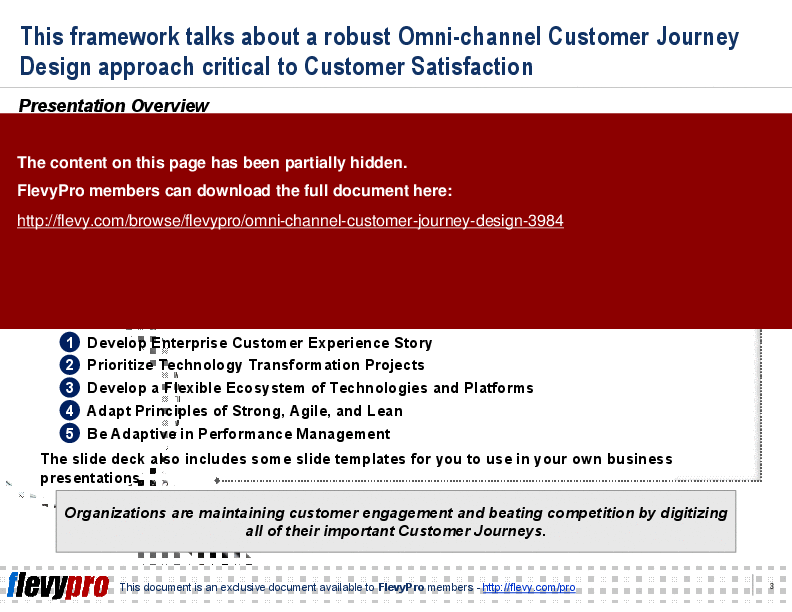
Becoming a digital business and revolutionizing multiple Customer Journeys concurrently needs restructuring, integration of existing systems, building new capabilities, and deploying existing competences in a different way. Organizations are maintaining customer engagement and beating competition by digitizing all of their important Customer Journeys.
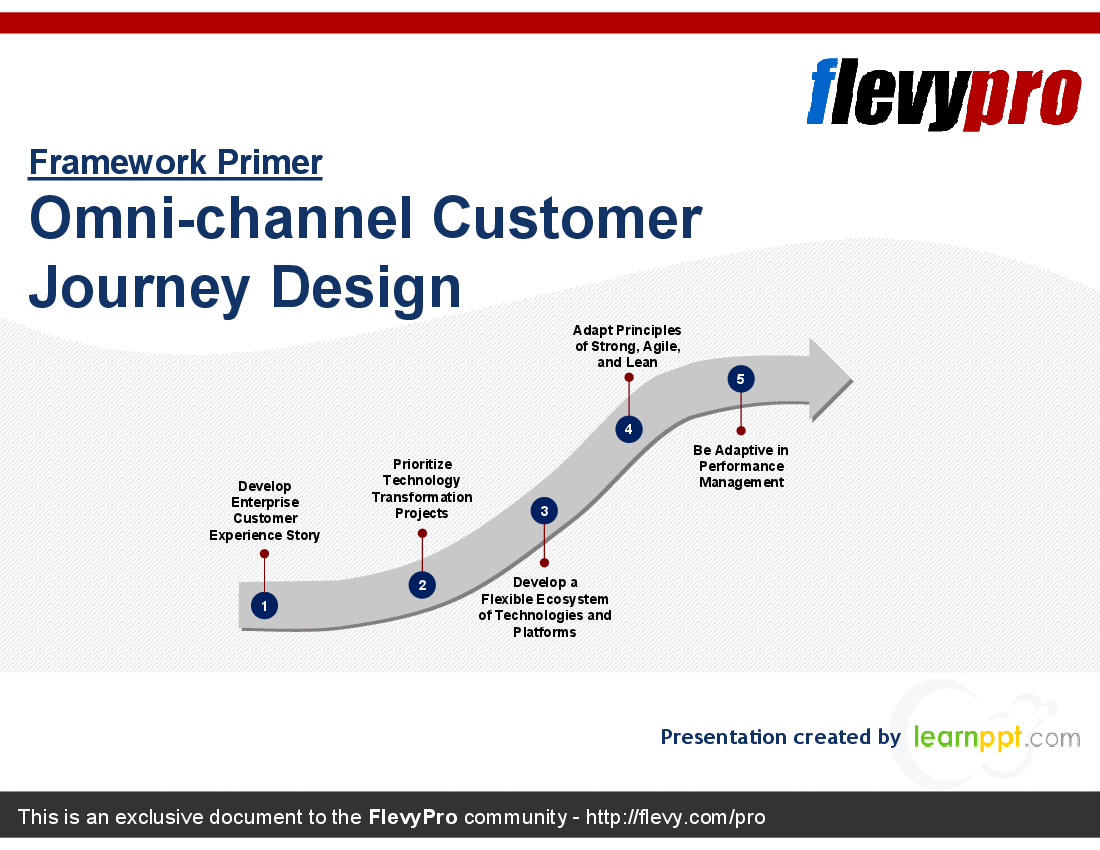
This presentation presents a detailed overview of the 5-phase Omni-channel Customer Journey Design approach that is critical for improving Customer Experiences and accomplishing higher Customer Engagement:
1. Develop Enterprise Customer Experience Story
2. Prioritize Technology Transformation Projects
3. Develop a Flexible Ecosystem of Technologies and Platforms
4. Adapt Principles of Strong, Agile, and Lean
5. Be Adaptive in Performance Management
The slide deck also includes some slide templates for you to use in your own business presentations.
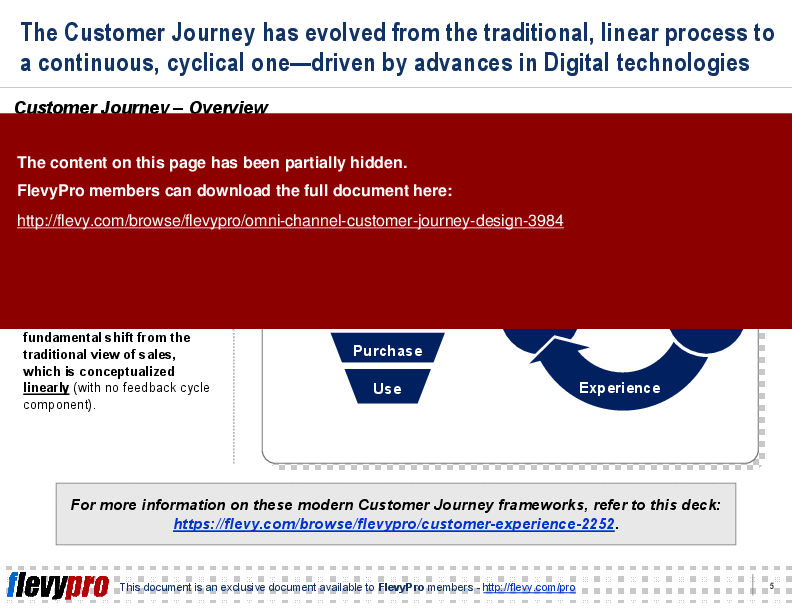
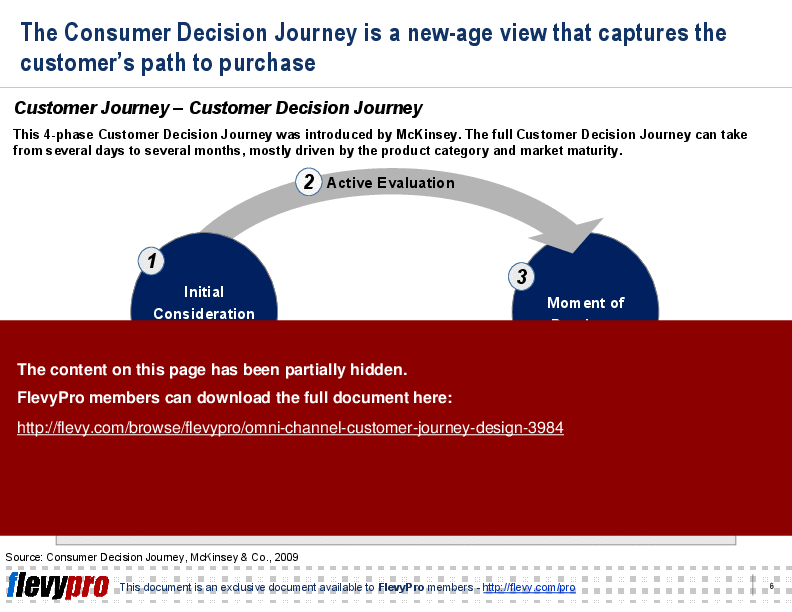
This PPT delves into the evolution of the Customer Journey from a traditional linear model to a continuous, cyclical process, driven by advancements in digital technologies. It includes a detailed examination of the Consumer Decision Journey, a four-phase model introduced by McKinsey, which captures the customer's path to purchase. The framework emphasizes the importance of active evaluation and the moment of purchase, providing a comprehensive view of the modern customer decision-making process.
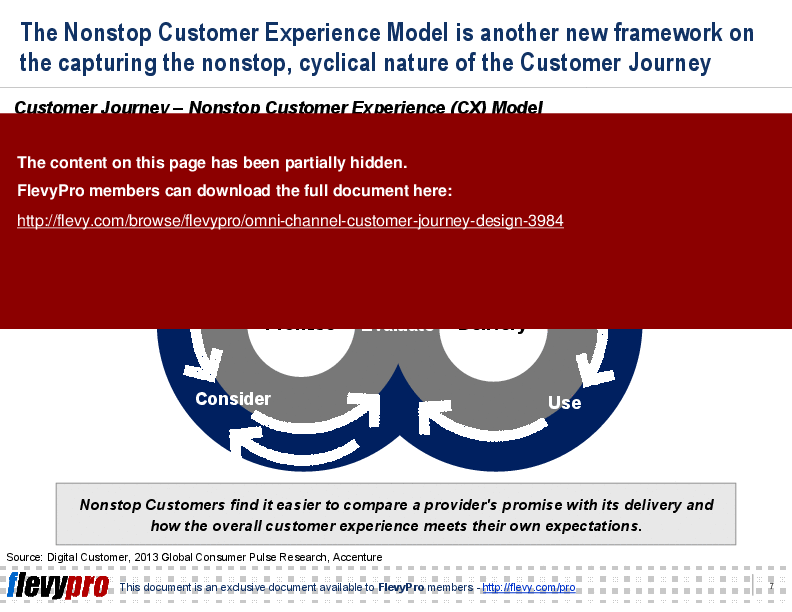
The presentation also highlights the Nonstop Customer Experience Model, which focuses on the cyclical nature of the Customer Journey. This model underscores the significance of continuous improvement and iterative design in enhancing customer experiences. By leveraging robust technology infrastructure and IT systems, organizations can create a seamless, integrated ecosystem that supports dynamic interaction models and curtails security threats. This document is essential for businesses aiming to stay competitive in the digital age by optimizing their Customer Journeys.
Got a question about this document? Email us at flevypro@flevy.com.
Executive Summary
The Omni-channel Customer Journey Design presentation provides a structured framework for enhancing customer experiences through a comprehensive five-phase approach. Developed by former McKinsey and Big 4 consultants, this document equips organizations to digitize critical customer journeys, thereby improving engagement and satisfaction. By implementing this framework, executives and teams can effectively transform their operations, integrate technologies, and adapt their strategies to meet evolving customer expectations in the digital landscape.
Who This Is For and When to Use
• Customer Experience (CX) leaders focused on enhancing customer engagement strategies
• Digital transformation teams responsible for integrating technology across customer touchpoints
• Marketing executives aiming to optimize customer journey mapping and engagement
• IT leaders tasked with implementing technology solutions that support customer interactions
Best-fit moments to use this deck:
• During strategic planning sessions for digital transformation initiatives
• When developing customer journey maps to enhance user experiences
• For workshops aimed at aligning cross-functional teams on customer engagement strategies
Learning Objectives
• Define the 5 phases of the Omni-channel Customer Journey Design framework
• Build a comprehensive customer experience story that aligns with organizational goals
• Prioritize technology transformation projects to streamline customer journeys
• Develop a flexible ecosystem of technologies and platforms to support customer interactions
• Adapt principles of strong, agile, and lean methodologies in performance management
• Establish metrics for tracking performance and enhancing customer satisfaction
Table of Contents
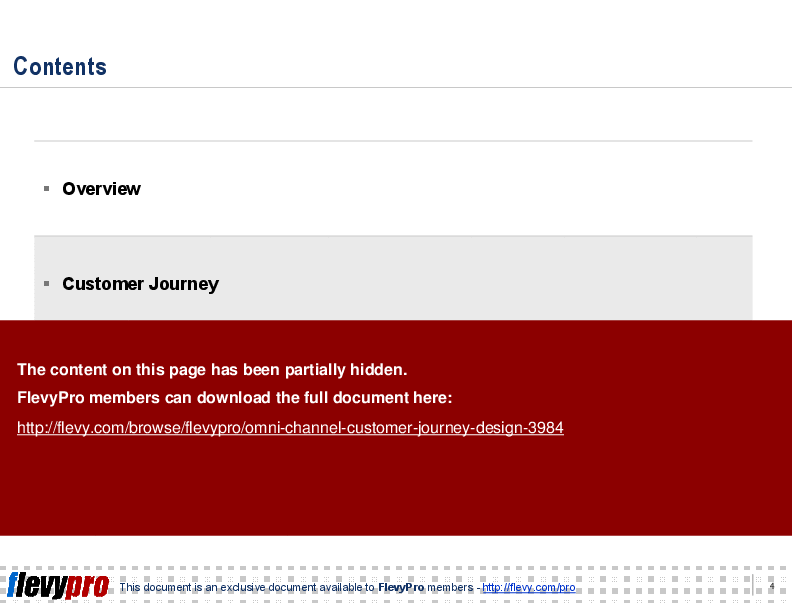
• Overview (page 3)
• Customer Journey (page 5)
• Omni-channel Customer Journey Design (page 9)
• Templates (page 15)
Primary Topics Covered
• Customer Journey Evolution - The transition from a linear to a cyclical customer journey, emphasizing continuous engagement.
• Omni-channel Customer Journey Design Framework - A structured approach consisting of 5 phases to enhance customer satisfaction and engagement.
• Technology Transformation - Strategies for prioritizing IT projects that facilitate seamless customer experiences across channels.
• Flexible Technology Ecosystem - The importance of integrating various technologies to support customer interactions in real time.
• Continuous Improvement - The necessity of iterative processes in adapting to changing customer needs and preferences.
• Performance Management - Aligning performance metrics with digital transformation goals to foster a culture of innovation.
Deliverables, Templates, and Tools
• Customer Experience Story template to outline key customer interactions
• Technology transformation project prioritization framework
• Ecosystem mapping tool for visualizing technology integrations
• Performance management dashboard template for tracking customer engagement metrics
• Continuous improvement plan template for iterative journey enhancements
• Omni-channel strategy development guide
Slide Highlights
• Overview slide detailing the five-phase Omni-channel Customer Journey Design approach
• Customer Journey Evolution graphic illustrating the shift from linear to cyclical processes
• Technology Transformation framework highlighting key project prioritization strategies
• Flexible Ecosystem slide showcasing integration of technologies for enhanced customer interactions
• Continuous Improvement model emphasizing iterative enhancements in customer journeys
Potential Workshop Agenda
Introduction to Omni-channel Customer Journey Design (30 minutes)
• Overview of the framework and its importance
• Discussion of current customer engagement challenges
Phase Deep Dive Sessions (90 minutes each)
• Explore each of the 5 phases in detail, including practical applications and case studies
• Group activities to develop customer experience stories and technology transformation plans
Wrap-up and Next Steps (30 minutes)
• Summarize key takeaways from the workshop
• Outline action items for implementing the Omni-channel framework
Customization Guidance
• Tailor the customer experience story template to reflect your organization’s unique brand and strategy
• Adjust technology transformation project priorities based on specific organizational needs and capabilities
• Modify performance metrics to align with your digital transformation goals and customer engagement objectives
Secondary Topics Covered
• The role of digital technologies in enhancing customer engagement
• Strategies for overcoming common barriers to digitization
• Best practices for integrating customer feedback into journey design
• The impact of organizational culture on customer experience initiatives
Topic FAQ
Document FAQ
These are questions addressed within this presentation.
What is the Omni-channel Customer Journey Design framework?
The framework is a structured approach consisting of 5 phases aimed at enhancing customer experiences through effective digitization and integration of customer journeys.
How can this framework improve customer satisfaction?
By implementing the five-phase approach, organizations can streamline customer interactions, reduce friction, and create more engaging experiences, ultimately leading to higher satisfaction levels.
What are the key phases of the Omni-channel Customer Journey Design?
The key phases include developing a customer experience story, prioritizing technology transformation projects, developing a flexible technology ecosystem, adapting agile principles, and being adaptive in performance management.
How does technology transformation fit into the customer journey?
Technology transformation is essential for enabling seamless customer interactions across various channels, ensuring that organizations can meet customer expectations effectively.
What metrics should be tracked for performance management?
Organizations should align performance metrics with digital transformation goals, focusing on customer engagement, satisfaction, and operational efficiency.
Can this framework be customized for different industries?
Yes, the framework is adaptable and can be tailored to meet the specific needs and challenges of various industries.
How often should the customer journey be reviewed and updated?
Customer journeys should be continuously reviewed and updated to reflect changing customer needs, preferences, and market dynamics.
What resources are available for implementing this framework?
The presentation includes templates and tools that can be used to facilitate the implementation of the Omni-channel Customer Journey Design framework.
Glossary
• Omni-channel - A multi-channel approach to sales and customer engagement that provides a seamless customer experience.
• Customer Experience Story - A narrative that outlines key customer interactions and experiences with a brand.
• Technology Transformation - The process of integrating new technologies to improve customer engagement and operational efficiency.
• Continuous Improvement - An ongoing effort to enhance products, services, or processes through incremental improvements.
• Performance Metrics - Quantitative measures used to assess the effectiveness of strategies and initiatives.
• Agile Principles - A set of values and practices that promote flexibility, collaboration, and customer-centricity in project management.
• Ecosystem - A network of interconnected technologies and platforms that support business operations and customer interactions.
• Customer Journey - The complete experience a customer has with a brand, from initial awareness to post-purchase interactions.
• Digital Transformation - The integration of digital technology into all areas of a business, fundamentally changing how it operates and delivers value to customers.
• Engagement - The emotional connection between a customer and a brand, often measured through interactions and experiences.
• Satisfaction - The degree to which customer expectations are met or exceeded.
• Feedback Loop - A process where customer feedback is collected and used to improve products or services.
• Integration - The process of combining different systems or technologies to work together effectively.
Source: Best Practices in Customer Experience, Customer Journey PowerPoint Slides: Omni-channel Customer Journey Design PowerPoint (PPT) Presentation Slide Deck, LearnPPT Consulting
Did you need more documents?
Consider a FlevyPro subscription from $39/month. View plans here.
For $10.00 more, you can download this document plus 2 more FlevyPro documents. That's just $13 each.
|
Download our FREE Digital Transformation Templates
Download our free compilation of 50+ Digital Transformation slides and templates. DX concepts covered include Digital Leadership, Digital Maturity, Digital Value Chain, Customer Experience, Customer Journey, RPA, etc. |