
Holistic Approach: Ensures that all aspects of change are covered, from planning to execution to sustainment.
Sustainable Results: Focuses on long-term success and embedding change within the organizational culture.
Enhanced Readiness: Prepares organizations to handle both expected and unexpected challenges during change.
CHANGE MANAGEMENT PPT DESCRIPTION
This product (Change Management - Methodology, Toolkit, and Templates) is a 190-slide PPT PowerPoint presentation slide deck (PPTX), which you can download immediately upon purchase.
This PowerPoint document from ACP serves as a comprehensive guide for organizations undergoing strategic and transformational change. It encapsulates the collective experience of over 120 senior consultants from around the globe. The insights and tools provided within are derived from working with clients who have faced significant enterprise-wide or business unit-specific changes. The document includes methodologies, approaches, and templates designed to address common challenges and foster successful, sustainable change.
Target Audience
• Executives and Senior Leaders: Seeking to drive strategic change.
• Change Management Teams: Responsible for planning and executing change initiatives.
• Project Managers: Overseeing specific change projects.
• HR and Organizational Development Professionals: Focusing on workforce readiness and adoption.
• Consultants: Providing external expertise in change management.
Key topics and templates explored and provided include:
Introduction to Change Management
• Definition and Importance of Change Management
• Overview of Common Challenges in Change Initiatives
Change Management Methodology and Toolkit
• Overview of the ACP method together with templates for each phase of analysis, communication and management
• Aligned with Prosci ADKAR Model, Kotter's 8-Step Process for Leading Change, Lewin's Change Management Model, McKinsey 7-S Framework and Agile Change Management principles
Strategic Change Planning
• Aligning Change Initiatives with Business Strategy
• Creating a Vision for Change
• Developing a Roadmap with Clear Milestones
• Ensuring Long-term Sustainability vs. Short-term Wins
Building Ownership and Engagement
• Strategies for Building Ownership at All Levels
• Engaging Stakeholders and Communication Planning
• Techniques for Empowering Change Agents
Addressing Common Challenges
• Managing Resistance to Change
• Preparing an Unprepared Workforce
• Ensuring Consistent Alignment in a Series of Changes
• Integrating Process and Technology Changes
• Measuring and Sustaining Change
Templates and Tools (over 70 tools)
• Change Readiness Assessment Template
• Stakeholder Analysis Template
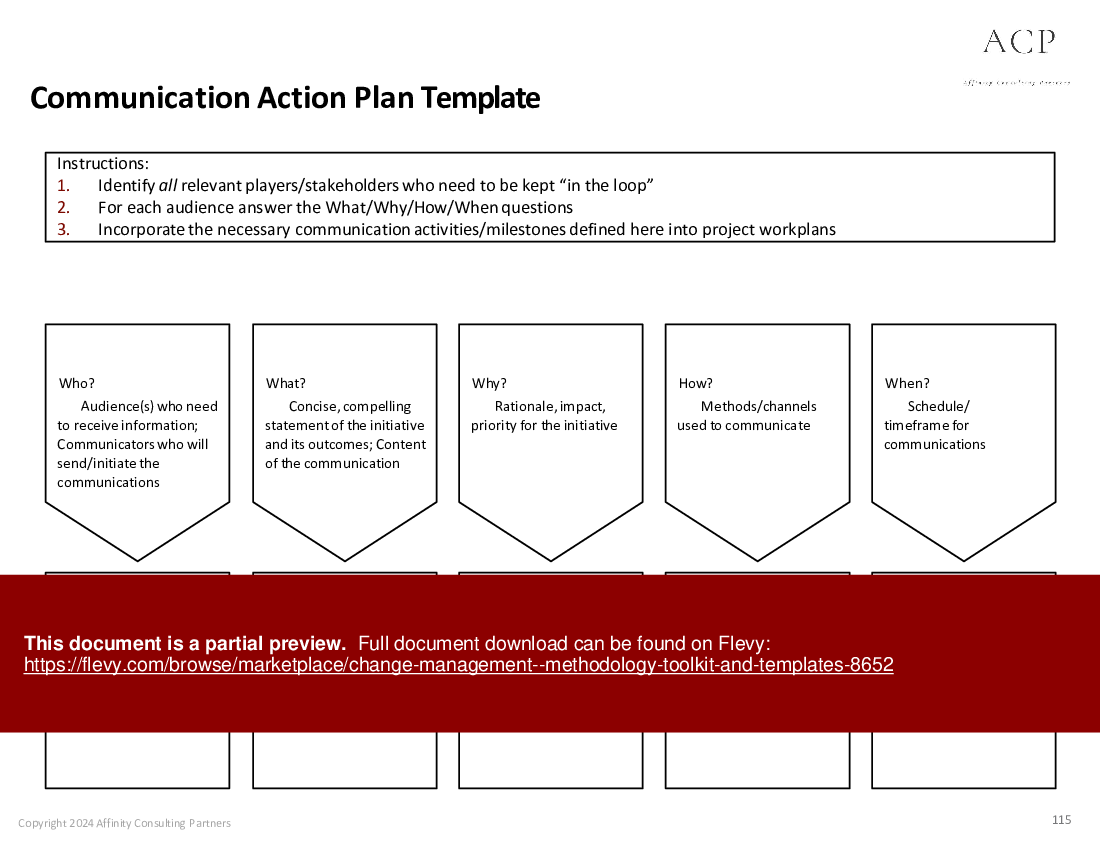
• Communication Plan Template
• Risk Management Plan Template
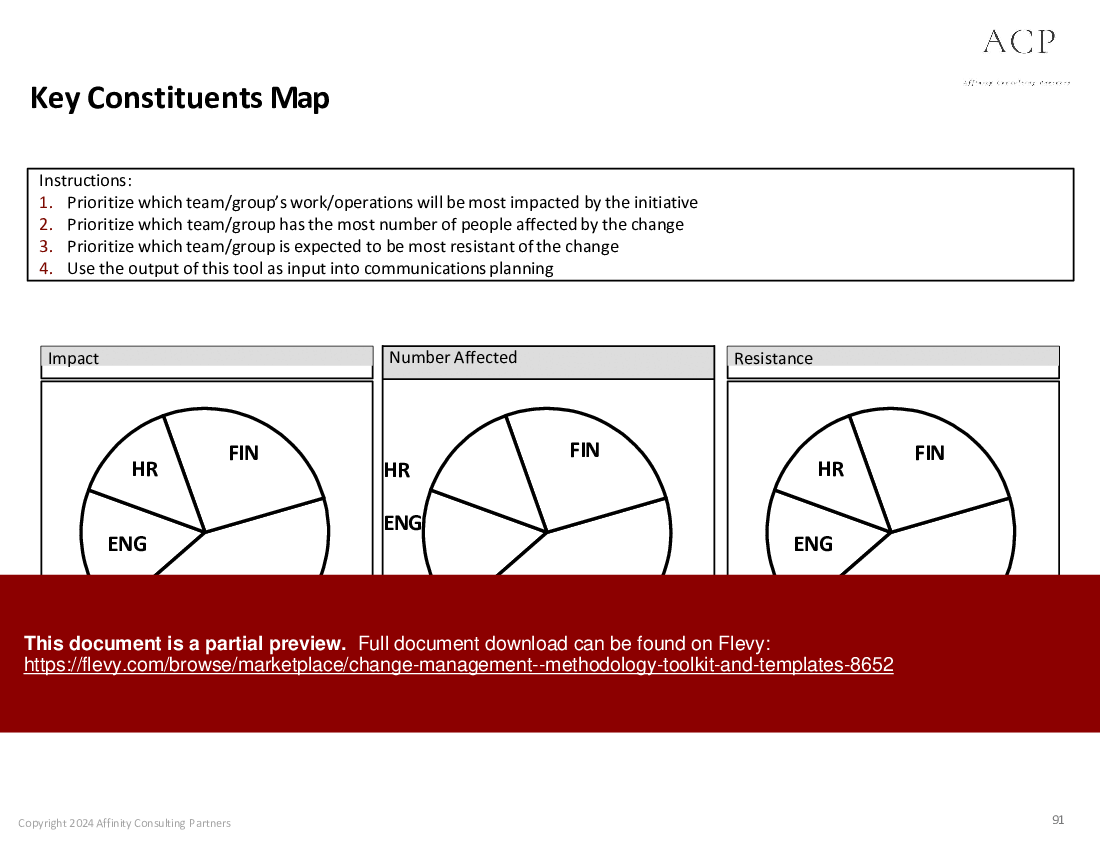
• Change Impact Assessment Template
• Training and Development Plan Template
Case Studies and Examples
• Real-world Examples of Successful Change Management
• Lessons Learned from Industry Leaders
• Key Takeaways from Past Projects
Features
Expert Insights: Drawing from the collective experience of senior consultants with extensive real-world experience.
Comprehensive Coverage: Addresses both strategic and operational aspects of change management.
Practical Templates: Ready-to-use templates for immediate application in change initiatives.
Actionable Guidance: Clear steps and methodologies to ensure successful change adoption.
Real-world Examples: Case studies illustrating successful change management practices.
This comprehensive 191-slide PowerPoint document is an invaluable resource for any organization looking to navigate the complexities of transformational change and achieve lasting success.
Got a question about the product? Email us at support@flevy.com or ask the author directly by using the "Ask the Author a Question" form. If you cannot view the preview above this document description, go here to view the large preview instead.
MARCUS OVERVIEW
This synopsis was written by Marcus [?] based on the analysis of the full 190-slide presentation.
Executive Summary
The Change Management Toolkit by Affinity Consulting Partners is a comprehensive resource designed to guide organizations through the complexities of change initiatives. This consulting-grade presentation, comparable to McKinsey, Bain, or BCG-quality frameworks, spans 191 slides and offers a structured approach to managing change effectively. It equips corporate executives, integration leaders, and consultants with methodologies, tools, and templates to facilitate smooth transitions, enhance workforce readiness, and ensure sustainable change. Users will gain insights into identifying triggers for change, assessing organizational readiness, and implementing effective communication strategies.
Who This Is For and When to Use
• Corporate executives overseeing strategic change initiatives
• Change management consultants guiding organizations through transitions
• Integration leaders managing post-merger or acquisition changes
• HR professionals focused on workforce readiness and engagement
Best-fit moments to use this deck:
• During the planning phase of a significant organizational change
• When addressing resistance to new processes or technologies
• To prepare for the implementation of a new business model or system
• For training sessions aimed at enhancing change management capabilities
Learning Objectives
• Define the key drivers for change within an organization
• Build a structured change management plan that includes stakeholder engagement
• Establish metrics to track the progress and effectiveness of change initiatives
• Identify and mitigate potential resistance to change
• Develop communication strategies that resonate with stakeholders
• Create a sustainable framework for ongoing change management
Table of Contents
• Demand Drivers for Change Management (page 2)
• A Proven Approach to Change Management (page 8)
• Key Tools and Methods (page 9)
• Change Management Thought Leadership (page 10)
• Sample High Profile Case Studies (page 11)
Primary Topics Covered
• Demand Drivers for Change Management - Identifies organizational challenges that necessitate change management, such as unprepared workforces and inconsistent alignment.
• Proven Change Management Approach - Outlines a structured methodology based on 5 key principles: Scope, Mobilize, Transparency, Flexibility, and Reinforce.
• Key Tools and Methods - Provides a toolkit of templates and frameworks for effective change management, including stakeholder analysis and communication strategies.
• Change Management Case Studies - Highlights successful change initiatives in large organizations, demonstrating practical applications of the toolkit.
• Change Management Metrics - Discusses the importance of measuring change progress and establishing accountability throughout the change lifecycle.
Deliverables, Templates, and Tools
• Change Management Toolkit templates for stakeholder engagement and communication
• Diagnostic tools for assessing organizational readiness for change
• Action Plan Template to outline specific steps and responsibilities
• Measurement Audit to evaluate the effectiveness of change initiatives
• Sponsorship Plan to ensure executive support and commitment
Slide Highlights
• Overview of the Change Commitment Curve illustrating stages of employee engagement during change
• Case studies showcasing successful change initiatives in multinational corporations
• Visual frameworks for assessing organizational capacity for change
• Tools for stakeholder analysis and communication strategies to enhance engagement
Potential Workshop Agenda
Change Management Overview Session (90 minutes)
• Introduce the Change Management Toolkit and its objectives
• Discuss key drivers for change and organizational challenges
• Review case studies and their relevance to participants' organizations
Stakeholder Engagement Workshop (60 minutes)
• Identify key stakeholders and their roles in the change process
• Develop communication strategies tailored to different stakeholder groups
• Create an action plan for stakeholder engagement
Metrics and Measurement Session (60 minutes)
• Establish metrics for tracking change progress
• Discuss best practices for measuring the effectiveness of change initiatives
• Review the Measurement Audit tool and its application
Customization Guidance
• Tailor the toolkit templates to reflect specific organizational terminology and governance structures
• Adjust the communication strategies to align with the company’s culture and values
• Incorporate organizational-specific metrics into the Measurement Audit
Secondary Topics Covered
• Change Management Best Practices
• Organizational Readiness Assessments
• Communication Strategies for Change Initiatives
• Resistance Management Techniques
• Continuous Improvement in Change Management
FAQ
What are the key drivers for change management?
Key drivers include significant organizational changes, process or technology adoption issues, and the need for workforce preparedness.
How can this toolkit help with stakeholder engagement?
The toolkit provides templates and strategies for identifying stakeholders, assessing their needs, and developing tailored communication plans.
What metrics should be tracked during a change initiative?
Metrics may include employee engagement levels, adoption rates of new processes, and overall project milestones.
How do I ensure that change initiatives are sustainable?
Implement ongoing measurement and feedback mechanisms, and reinforce change through continuous communication and training.
What are common pitfalls in change management?
Common pitfalls include lack of executive support, insufficient stakeholder engagement, and failure to address resistance.
How can I customize the toolkit for my organization?
Adapt the templates and strategies to reflect your organization’s specific culture, terminology, and governance structures.
What is the role of leadership in change management?
Leadership plays a crucial role in driving commitment, providing resources, and modeling desired behaviors throughout the change process.
How do I assess organizational readiness for change?
Conduct assessments using diagnostic tools included in the toolkit to evaluate capacity for change and identify areas for improvement.
Glossary
• Change Management - The process of guiding individuals and organizations through transitions to achieve desired outcomes.
• Stakeholder - An individual or group with an interest in the outcome of a change initiative.
• Sponsorship - The active support and commitment of leaders to drive change initiatives.
• Resistance - Opposition to change, which can arise from fear, uncertainty, or lack of understanding.
• Metrics - Measurements used to assess the effectiveness and progress of change initiatives.
• Engagement - The involvement and commitment of stakeholders in the change process.
• Communication Strategy - A plan for conveying messages related to change initiatives to stakeholders.
• Organizational Readiness - The preparedness of an organization to implement change effectively.
• Action Plan - A detailed outline of steps, responsibilities, and timelines for implementing change.
• Continuous Improvement - Ongoing efforts to enhance processes, products, or services.
• Training and Performance Support - Resources and assistance provided to help individuals adapt to new roles and responsibilities.
• Change Commitment Curve - A model illustrating the stages of employee engagement during change initiatives.
This slide outlines a structured approach to identifying value opportunities through 3 components: Target, Quantify, and Realize/Capture. The "Target" section defines the case for change, articulating the need for transformation to achieve client outcomes. The "Quantify" segment focuses on establishing metrics to track value, costs, and timelines, emphasizing the importance of quantifying potential benefits. The "Realize/Capture" component addresses change management, measuring progress and ensuring effective implementation of intended changes. Sample deliverables include the Issue Tree Repository and Economic Model, providing practical resources for clients to apply insights gained from the analysis.
This slide analyzes resistance factors in organizational change, categorized into Technical, Political, and Cultural areas. The Technical section highlights challenges like habit and inertia, sunk costs, and a lack of skills that hinder the adoption of new processes. The Political section examines power dynamics, noting threats from new leadership to existing structures and the impact of power imbalances on self-preservation behaviors. Culturally, it discusses how organizational norms and mindsets, such as selective perception and fear of change, impede progress. This analysis underscores the need for tailored strategies to effectively address each type of resistance during organizational transformations.
This slide outlines diagnostic questions for evaluating organizational change initiatives, divided into 3 sections: Monitor Progress, Align Organizational Systems and Structures, and Sustain the Change. The Monitor Progress section focuses on decision-making clarity, accountability, and tracking execution to ensure initiatives stay on course. Align Organizational Systems and Structures examines the alignment of management processes, communication plans, and resource availability with change objectives. Sustain the Change emphasizes learning from past initiatives, identifying lessons learned, and embedding change within organizational culture. This framework guides leaders in assessing strategic alignment and operational execution, fostering a more resilient organization.
The "Tracking Progress Checklist" is a structured tool for evaluating change initiatives in organizations, focusing on project management and implementation. Key sections include "Early successes," which assesses the communication of initial achievements and their alignment with project goals; "Commitment," emphasizing sustained leadership sponsorship and resource allocation; "Excitement," which evaluates team morale and sponsor engagement; and "Resource allocation," ensuring prompt identification of new needs and alignment with initiative priorities. The "Integration with other initiatives" section stresses coherence among organizational efforts and effective communication strategies. Finally, "Learning from experience" encourages reflection on past initiatives to promote continuous improvement and adaptability. This checklist serves as a practical framework for leaders to gauge initiative progress and identify areas needing attention.
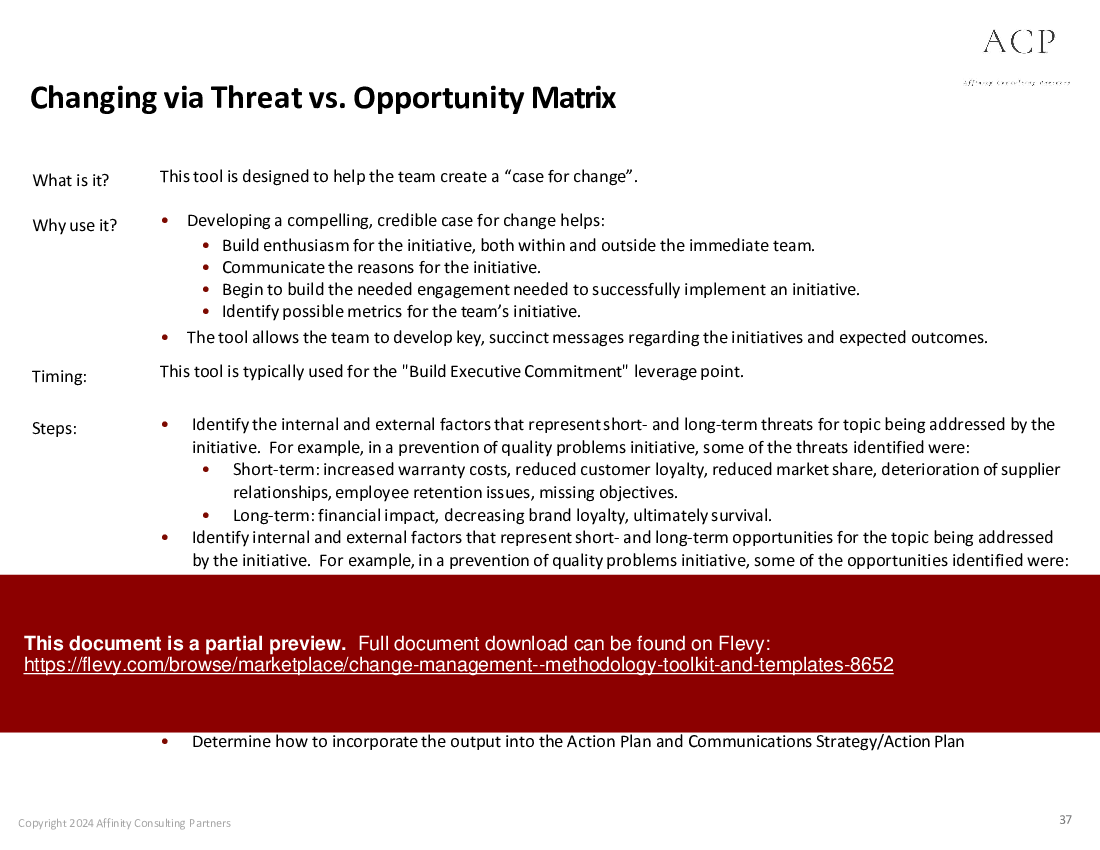
This slide outlines the Threat vs. Opportunity Matrix, a framework for organizations managing change initiatives. It identifies internal and external drivers necessitating change and categorizes perceptions of threats and opportunities across 4 quadrants over short and long-term time frames. Teams are prompted to reflect on motivations for change, current project perceptions, and ideal quadrants for successful implementation. Additionally, benchmarking against best practices from successful entities fosters continuous improvement. The final question challenges teams to assess the need for a shift in perception and actionable steps to achieve it, aligning stakeholder perspectives with organizational change objectives.
This slide outlines a structured approach for identifying and categorizing key stakeholders in a project, emphasizing stakeholder commitment for project success. It introduces a coding system for stakeholder roles during project phases: Initiating, Mobilizing, and Sustaining. The codes are: A for Approval (stakeholders with decision-making authority), R for Resource (individuals providing essential expertise), M for Member (team members with defined responsibilities), and I for Interested party (stakeholders needing updates to ensure support). This categorization clarifies roles and facilitates tailored communication strategies, enhancing project success by ensuring all necessary parties are engaged throughout the project lifecycle.
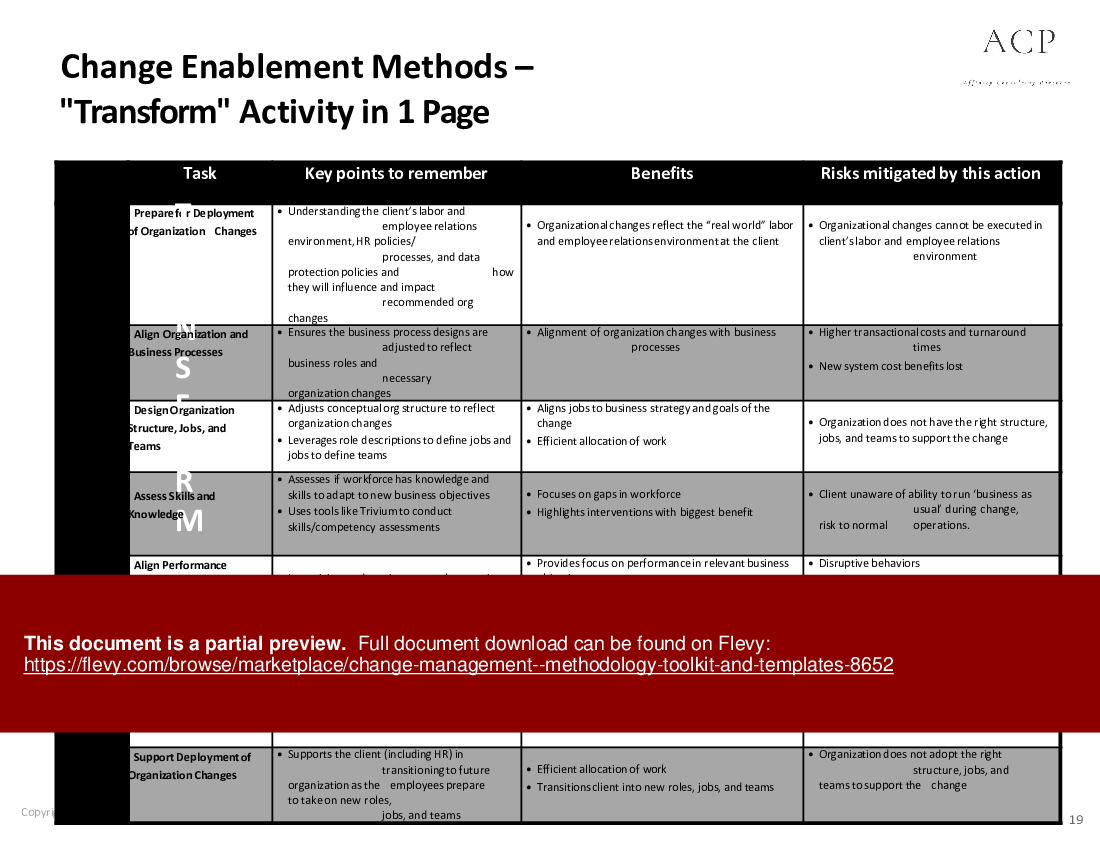
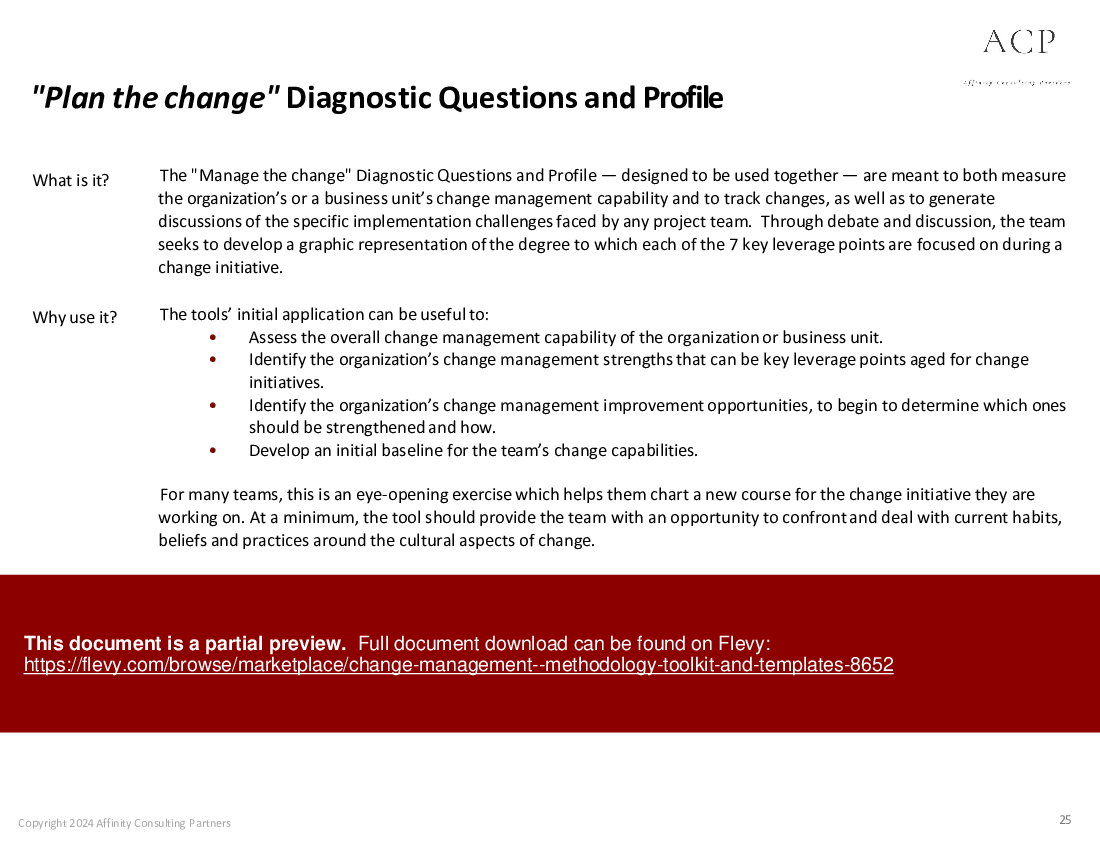
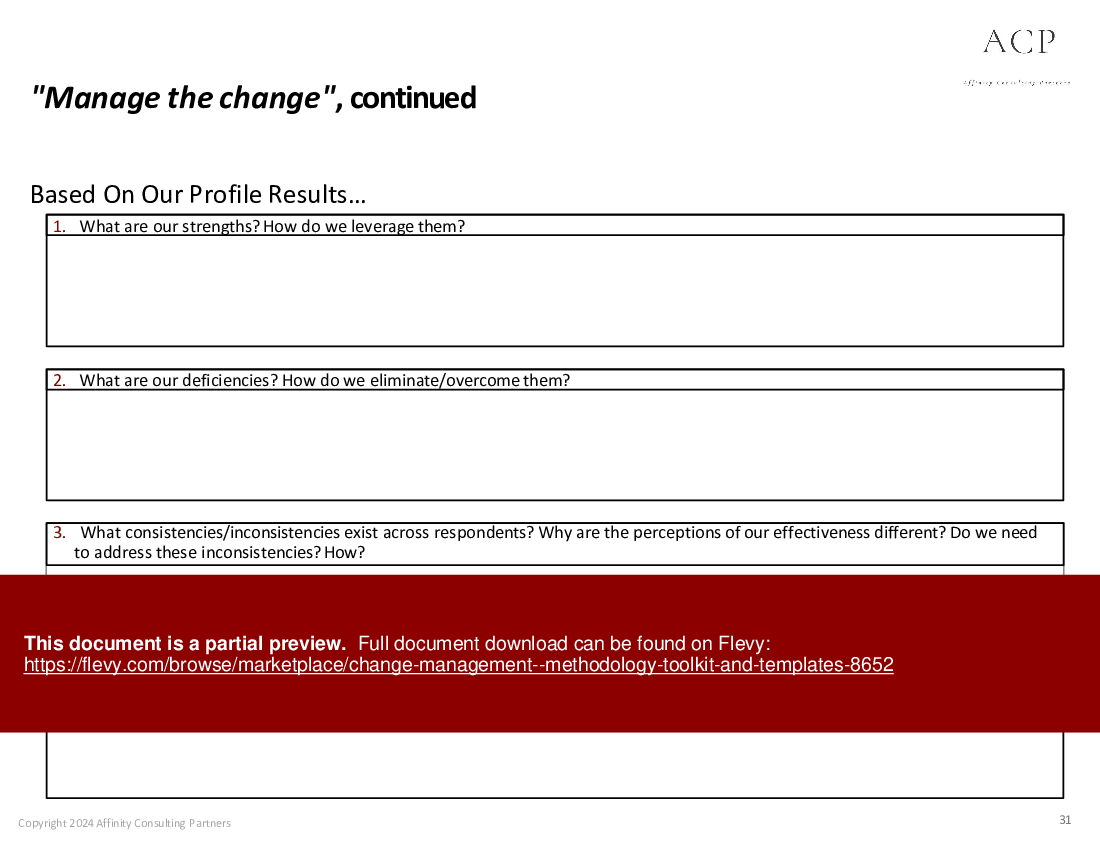
This slide presents a framework for managing organizational change, structured into 3 phases: "Plan the Change," "Manage the Change," and "Transform."
In "Plan the Change," key activities include defining change structure, identifying stakeholders, developing a change brand, and assessing impact, ensuring alignment with organizational goals.
The "Manage the Change" phase focuses on engaging a change network, measuring progress, and assessing business readiness to support effective change adoption.
The "Transform" section involves deploying changes by aligning processes, designing team structures, and assessing skills and knowledge, ensuring workforce readiness.
Training is emphasized throughout, with steps for analyzing needs, designing materials, and preparing for training to facilitate a smoother transition.
This slide outlines a framework for assessing organizational behaviors related to speed, innovation, and initiative through a coding system: R for reward, N for neutral, P for punishment, and U for unpredictable outcomes. Team members evaluate actions such as proposing new ideas or withholding information, reflecting on their alignment with organizational culture. The slide prompts critical discussions on whether the organization rewards the "right things" and addresses discrepancies between desired behaviors and actual rewards. This reflective process can yield actionable insights that enhance organizational effectiveness and alignment with strategic goals, fostering a culture of transparency and collaboration.
This slide visualizes the change management process, highlighting key phases: "Build Foundation," "Deploy," and "Sustain." It features a performance metric plotted over time, showing a typical trajectory during change initiatives. Performance dips during the "valley of despair" at the go-live phase, indicating challenges with new systems. Without a structured approach, outcomes can become unpredictable, complicating the change process. Key points A, B, C, and D illustrate critical moments: A focuses on minimizing negative impacts, B addresses their depth, while C and D emphasize accelerating time to competence and achieving new productivity levels. Effective change management throughout its lifecycle is essential for desired outcomes, maximizing positive results through strategic planning.
This slide outlines critical discussion questions for effective change management. It assesses project outcomes such as business transformation, leadership improvement, personal development, and cultural engagement, rated on a high, medium, or low scale. Identifying the sponsor's role is emphasized, with questions addressing potential challenges, expected involvement, and communication strategies to clarify expectations. Participants are prompted to evaluate the necessity of change implementation, articulating compelling reasons for or against it. A table for actionable next steps specifies responsibilities and timelines, enhancing accountability and clarity in executing the change management strategy.
The "Circles of Control and Influence" framework helps teams assess systems they can control, influence, or have no control over, clarifying operational boundaries for effective decision-making and resource allocation. This tool is commonly used during the Align Organizational Systems and Structures phase and complements the Project Impact on Systems and Structures. Teams categorize systems into 3 areas: control, influence, and no control, promoting a comprehensive understanding of each system's dynamics. Stakeholder involvement may vary from other analyses, necessitating a realistic assessment of control and influence. Related tools enhance the application of this framework, aiding teams in navigating complex organizational challenges.
This slide focuses on mobilization in change management, emphasizing stakeholder engagement to secure ownership and support for change initiatives. Mobilization involves informing relevant parties to minimize resistance and foster commitment. Key actions to reduce resistance include forming a coalition of committed supporters, identifying potential resistance, and converting key influencers. These elements create a supportive environment for change. Common pitfalls include lack of political sensitivity, failure to involve stakeholders, and underestimating resistance, highlighting the need to consider the perspectives of those affected by change. Strategic engagement with stakeholders is essential for successful transformation.
This slide outlines a structured approach to developing a communications strategy, focusing on effectively conveying key messages. The first step involves identifying key messages for specific initiatives, establishing a foundation for communication efforts. Next, users are prompted to frame these messages to achieve various objectives, ensuring clarity for the intended audience. The third step emphasizes selecting suitable communication channels, vital for maximizing reach and engagement. A table categorizes channels—written, verbal (one-to-many and one-to-one), and symbolic events—each with characteristics like cost-effectiveness and credibility. Written communication is noted for being inexpensive and consistent, while verbal communication builds credibility when delivered authentically. The table also details communication objectives and activities to inform, change opinions, and engage the audience, advocating for a comprehensive communications plan tailored to each audience segment's needs.
This slide outlines a structured approach for a Measurement Audit to enhance organizational initiatives aligned with key priorities. It emphasizes aligning metrics with cultural, business, and operational objectives. The 3 main sections include Cultural Priorities, focusing on values, mindset, and leadership style; Business Priorities, which highlight market share and customer engagement; and Operational Objectives, addressing efficiency and quality. Users are prompted to analyze current metrics, set clear targets, and evaluate results to identify gaps and foster accountability. The process encourages reflection on results and key learnings, driving continuous improvement in measurement strategies.
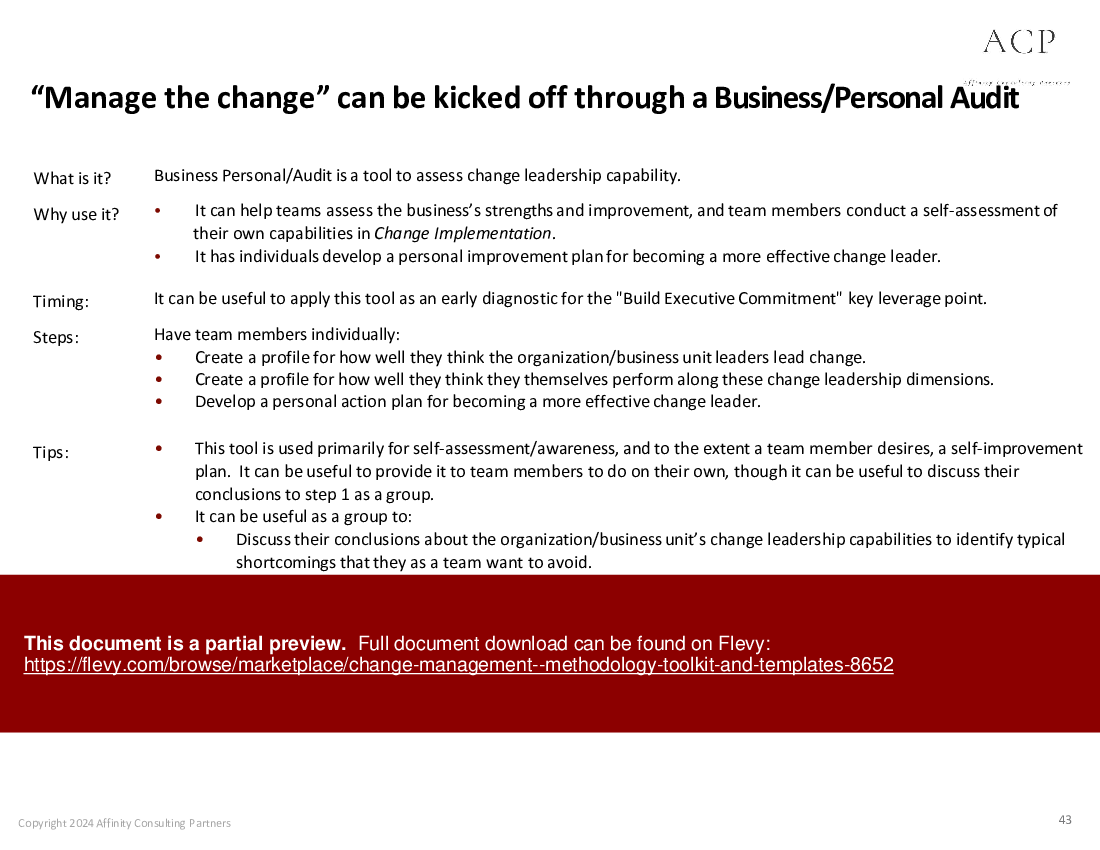
The "Project Managers vs. Change Leaders Diagnostic" framework assesses project management and change leadership effectiveness in organizations. It features a matrix categorizing project management tasks, skills, and behaviors along a vertical axis labeled "Strong/Effective" and "Weak/Ineffective," enabling teams to plot leaders based on their performance. Users identify leaders involved in initiatives and position them according to their effectiveness in managing change. Key discussion points encourage analysis of patterns, strengths, and weaknesses among leaders, aiming to enhance change leadership capabilities. This diagnostic tool is valuable for improving change management processes, facilitating insights into the dynamics between project management and change leadership, and identifying gaps in leadership effectiveness for targeted action.
This slide presents a structured framework for stakeholder analysis in change initiatives. It outlines a four-step process: identifying key stakeholders, assessing their current positions on the initiative using a negative to positive scale (++), visualizing necessary stakeholder positions for success, and determining specific actions to influence critical stakeholders. This proactive approach addresses potential roadblocks and fosters alignment. The organized table format facilitates data entry, tracking stakeholder perceptions and required actions. Leveraging this analysis enhances organizational readiness for change and improves the likelihood of successful outcomes.
Source: Best Practices in Change Management PowerPoint Slides: Change Management - Methodology, Toolkit, and Templates PowerPoint (PPTX) Presentation Slide Deck, Affinity Consulting Partners
The Affinity Consulting Partnership is a global powerhouse of experienced consultants, specializing in technology and digital-driven change.
Our team is comprised of individuals across the globe who have extensive expertise and a proven track record in guiding large corporations across the globe through complex business transformations. Our partners were all at some stage senior consulting
... [read more] professionals at tier 1 global consulting firms over half our staff have been equity partners in the past at these firms.
With a combined experience of over 120 years, our partners bring a wealth of knowledge and insights to the table. Each member of our team has a distinguished background, having served as a top-level executive and trusted advisor to the C-suite of major corporations. Our partners have honed their skills and expertise through years of hands-on experience, leading successful consulting engagements across a wide range of industries, including finance, healthcare, retail, manufacturing, and more.
Our partners have a keen eye for identifying emerging trends and disruptions in the business landscape and are adept at developing innovative strategies to help our clients stay ahead of the curve.

As a team, we are dedicated to driving meaningful results for our clients, helping them navigate the complexities of technology and digital-driven change, and unlocking new opportunities for growth and success. Our partners are trusted advisors and thought leaders in the industry, and we are committed to providing exceptional service and creating lasting partnerships with our clients.

The average daily rate of a McKinsey consultant is $6,625 (not including expenses). The average price of a Flevy document is $65.
Trusted by over 10,000+ Client Organizations
Since 2012, we have provided best practices to over 10,000 businesses and organizations of all sizes, from startups and small businesses to the Fortune 100, in over 130 countries.
"As a consulting firm, we had been creating subject matter training materials for our people and found the excellent materials on Flevy, which saved us 100's of hours of re-creating what already exists on the Flevy materials we purchased."
– Michael Evans, Managing Director at Newport LLC
"Flevy is our 'go to' resource for management material, at an affordable cost. The Flevy library is comprehensive and the content deep, and typically provides a great foundation for us to further develop and tailor our own service offer."
– Chris McCann, Founder at Resilient.World
"I am extremely grateful for the proactiveness and eagerness to help and I would gladly recommend the Flevy team if you are looking for data and toolkits to help you work through business solutions."
– Trevor Booth, Partner, Fast Forward Consulting
"Flevy is now a part of my business routine. I visit Flevy at least 3 times each month.
Flevy has become my preferred learning source, because what it provides is practical, current, and useful in this era where the business world is being rewritten.
many challenges and there is the need to make the right decisions in a short time, with so much scattered information, we are fortunate to have Flevy. Flevy investigates, selects, and puts at our disposal the best of the best to help us be successful in our work.
"
– Omar Hernán Montes Parra, CEO at Quantum SFE
"If you are looking for great resources to save time with your business presentations, Flevy is truly a value-added resource. Flevy has done all the work for you and we will continue to utilize Flevy as a source to extract up-to-date information and data for our virtual and onsite presentations!"
– Debbi Saffo, President at The NiKhar Group
"I like your product. I'm frequently designing PowerPoint presentations for my company and your product has given me so many great ideas on the use of charts, layouts, tools, and frameworks. I really think the templates are a valuable asset to the job."
– Roberto Fuentes Martinez, Senior Executive Director at Technology Transformation Advisory
"[Flevy] produces some great work that has been/continues to be of immense help not only to myself, but as I seek to provide professional services to my clients, it gives me a large "tool box" of resources that are critical to provide them with the quality of service and outcomes they are expecting."
– Royston Knowles, Executive with 50+ Years of Board Level Experience
"I have used Flevy services for a number of years and have never, ever been disappointed. As a matter of fact, David and his team continue, time after time, to impress me with their willingness to assist and in the real sense of the word. I have concluded in fact
that it is not at all just a repository of documents/resources but, in the way that David and his team manage the firm, it is like dealing with consultants always ready to assist, advise and direct you to what you really need, and they always get it right.
I am an international hospitality accomplished senior executive who has worked and lived during the past 35 years in 23 countries in 5 continents and I can humbly say that I know what customer service is, trust me.
Aside from the great and professional service that Flevy's team provide, their wide variety of material is of utmost great quality, professionally put together and most current.
Well done Flevy, keep up the great work and I look forward to continue working with you in the future and to recommend you to a variety of colleagues around the world.
"
– Roberto Pelliccia, Senior Executive in International Hospitality
Download our free compilation of 50+ slides and templates on Organizational Design, Change Management, and Corporate Culture. Methodologies include ADKAR, Burke-Litwin Change Model, McKinsey 7-S, Competing Values Framework, etc.