
This framework is developed by a team of former McKinsey and Big 4 consultants. The presentation follows the headline-body-bumper slide format used by global consulting firms.
Explore a comprehensive MSP Strategy framework by ex-McKinsey & Big 4 consultants. Master critical decisions for platform success in the Digital Age. Multisided Platform (MSP) Strategy is a 34-slide PPT PowerPoint presentation slide deck (PPTX) available for immediate download upon purchase.
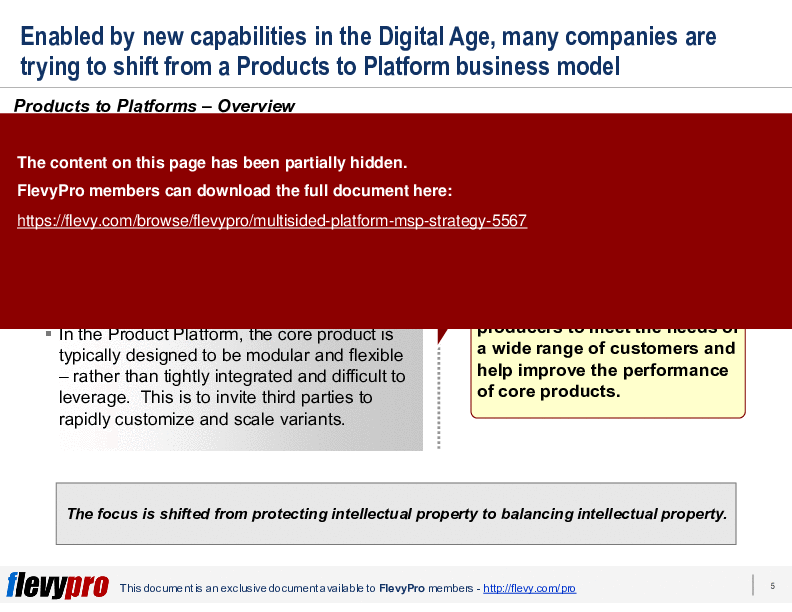
Enabled by new capabilities in the Digital Age, many organizations are trying to shift from a Products to Platform business model. The drive behind such a shift can also be attributed to the huge success of platform companies—e.g., Amazon, Google, and Apple. These organizations started out as a retailer, search engine, and computer manufacturer, respectively, but later transformed into platform models.
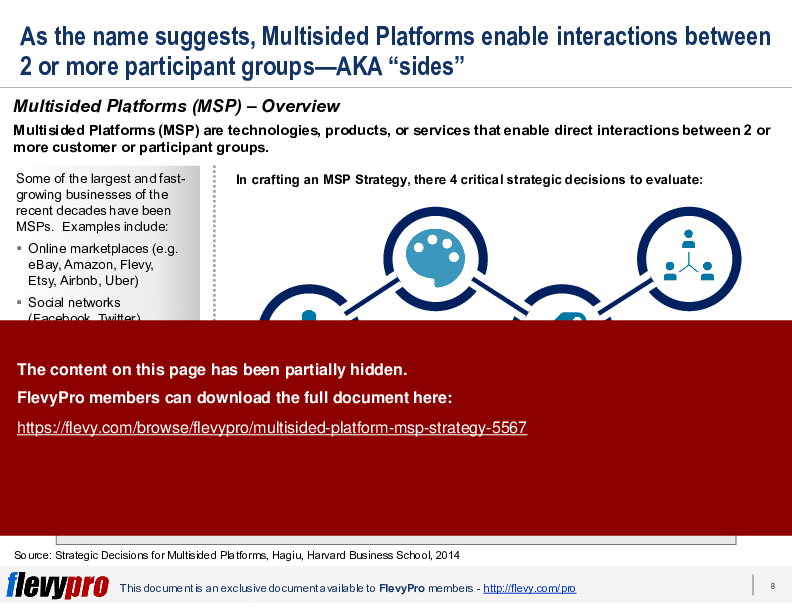
These platforms are referred to as Multisided Platforms (MSPs). MSPs are technologies, products, or services that enable direct interactions between 2 or more customer or participant groups—and include some of the most successful companies in recent decades.
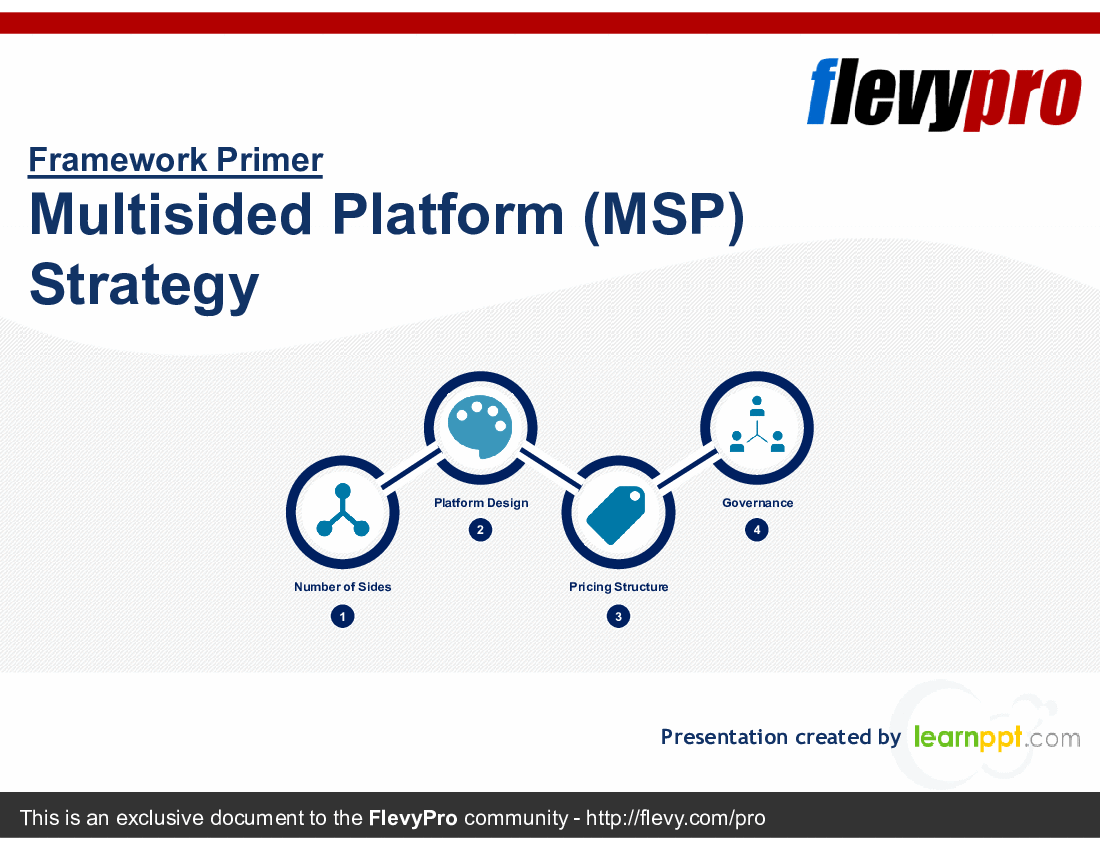
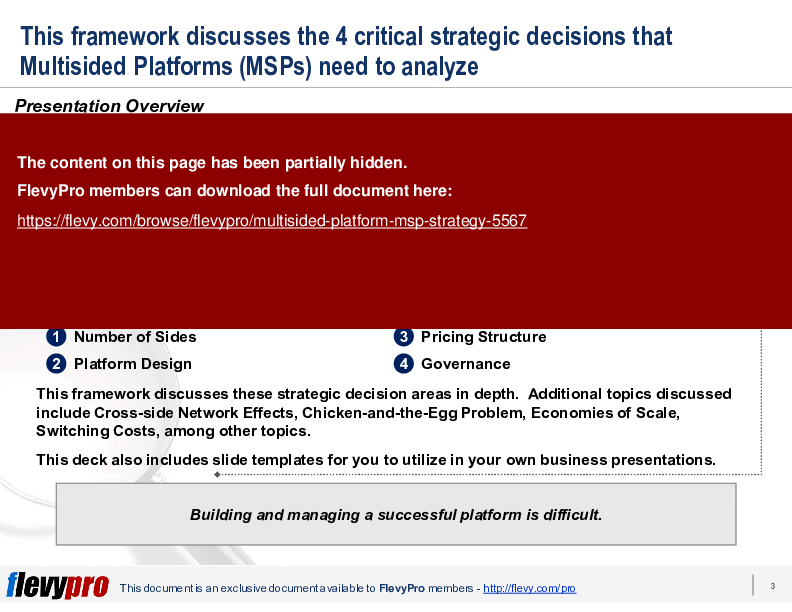
In crafting an MSP Strategy, there 4 critical strategic decisions to evaluate:
1. Number of Sides
2. Platform Design
3. Pricing Structure
4. Governance
This framework discusses these strategic decision areas in depth. Additional topics discussed include Cross-side Network Effects, Chicken-and-the-Egg Problem, Economies of Scale, Switching Costs, among other topics.
This deck also includes slide templates for you to utilize in your own business presentations.
This presentation provides a comprehensive exploration of the critical strategic decisions necessary for developing a successful Multisided Platform (MSP). The framework delves into the nuances of determining the number of sides, designing the platform, structuring pricing, and establishing governance. Each section is meticulously detailed to ensure that you can make informed, strategic choices that align with your business objectives.
The PPT also addresses common challenges MSPs face, such as the chicken-and-egg problem, cross-side network effects, and economies of scale. By understanding these barriers and leveraging the included slide templates, you will be well-equipped to navigate the complexities of building and managing a robust MSP. This resource is indispensable for executives seeking to transition to or optimize a platform business model.
This PPT slide analyzes pricing structures of multisided platforms (MSPs), categorizing them into loss-leader and profit-making sides. Loss-leader platforms, such as advertising-supported media and payment systems, often provide services at low or no cost to users to build a large user base. In contrast, the profit-making side includes advertisers, sellers, and developers who generate revenue by accessing this user base. The complexity of MSP pricing strategies reveals that users may not always fall on the loss-leader side, highlighting the balance between user acquisition and revenue generation. Understanding these dynamics informs strategic decisions regarding partnerships and investments in MSPs.
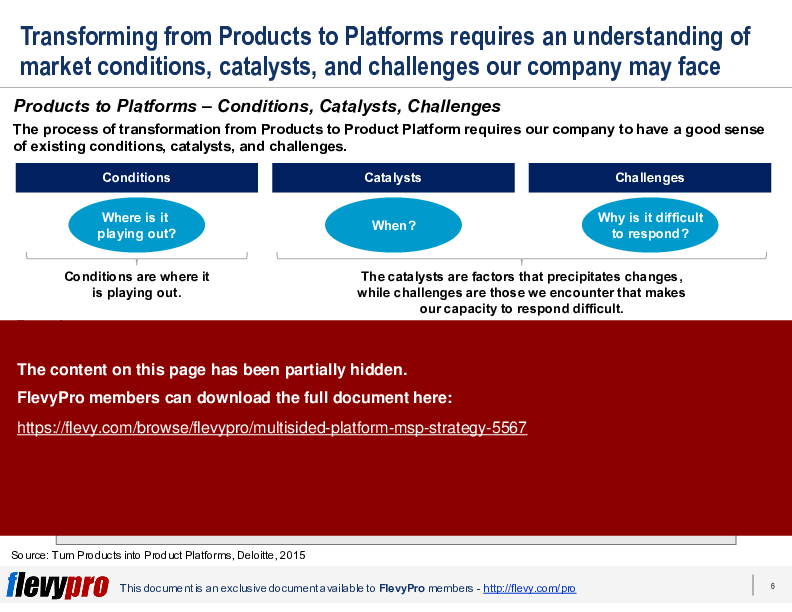
This PPT slide outlines the transformation from traditional products to platform-based models, structured into 3 sections: Conditions, Catalysts, and Challenges. The "Conditions" section identifies environments for transformation, highlighting industries like home appliances, automotive manufacturing, and furniture, indicating varying susceptibility to market dynamics. The "Catalysts" segment discusses the timing of changes, identifying driving forces that precipitate the shift toward platform models. The "Challenges" section addresses obstacles organizations face in adapting to new market realities, which can hinder effective responses to identified catalysts. This framework helps companies assess their readiness for transformation by understanding the interplay between market conditions, timing, and challenges.
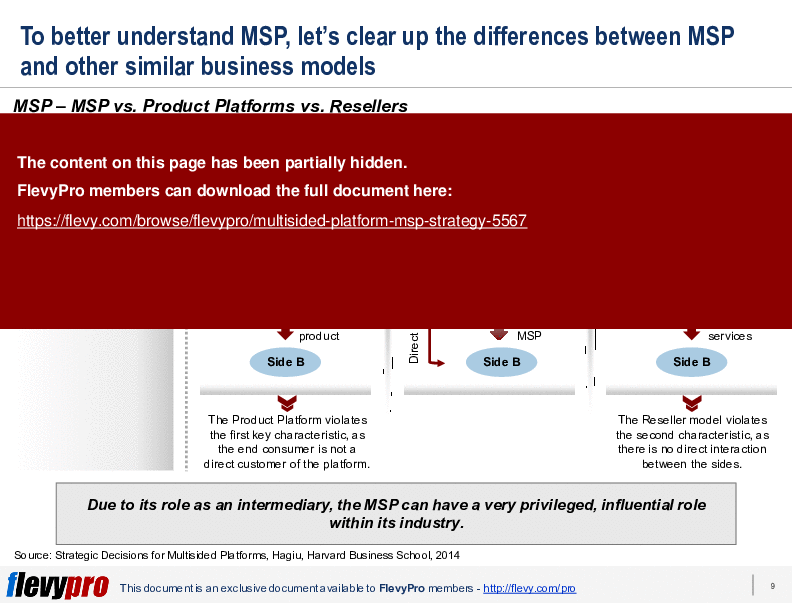
This PPT slide analyzes Multisided Platforms (MSPs) compared to Product Platforms and Resellers. MSPs have 2 essential traits: each participant group, or "side," must be meaningful customers, and the MSP facilitates direct interactions among these sides. The Product Platform shows a transaction flow where Side A sells inputs to Side B,, but lacks direct consumer engagement, violating the first MSP characteristic. In contrast, MSPs allow direct interactions between sides, ensuring operational integrity. The Reseller model also involves Side A and Side B, but fails to facilitate direct interactions, not meeting the second MSP characteristic. MSPs, as intermediaries, wield significant influence in their industries, highlighting their distinct operational model compared to others.
Multisided Platforms (MSPs) are technologies, products, or services enabling direct engagement among 2 or more customer segments. Notable examples include eBay, Amazon, Facebook, Twitter, and PlayStation. Key strategic decisions for effective MSP strategy include:
1. Number of Sides: Determining the distinct participant groups interacting on the platform to maximize value creation.
2. Platform Design: Structuring the platform to meet the needs of all sides effectively.
3. Pricing Structure: Monetizing services across different user groups to enhance engagement and retention.
4. Governance: Establishing rules and policies to ensure fair interactions within the platform ecosystem.
Strategic decisions in these areas are vital for building and managing a successful MSP.
This PPT slide outlines 5 key trade-offs and challenges in managing a multisided platform (MSP). The first challenge is "Increased Complexity," where more sides lead to operational inefficiencies and coordination difficulties. "Economic Dependency" highlights that the platform's viability relies on the performance of all sides; failure of one can jeopardize the entire model. The "Conflict of Interests" arises with multiple stakeholders, complicating governance as their interests may clash. The "Lowest Common Denominator Issue" indicates that innovation can be stifled by the need to satisfy all sides, hindering adaptability. Lastly, the "Chicken-and-the-Egg Problem" becomes more complex with additional sides, as attracting one side often depends on the presence of others.
This PPT slide addresses strategic decisions in Multisided Platform (MSP) design, focusing on core features. The critical question is, "What core features should we include?" Design decisions often involve a cost-benefit analysis, evaluating whether the value generated for multiple sides justifies the costs. However, MSP design can be complex, with features potentially conflicting with the interests of different stakeholders. Some design choices may require sacrificing short-term revenue to enhance overall utility for affected participants. This balance between immediate financial impacts and long-term value creation is essential for successful platform design. Poor design decisions can jeopardize the platform's success.
This PPT slide outlines 3 critical trade-offs in governance for multisided platforms (MSPs). The first trade-off, "Quantity vs. Quality," highlights the balance between governance rules and participant engagement; looser rules attract more participants, while stricter rules ensure higher quality, but may limit participation. Effective cross-side network effects depend on both quantity and quality.
The second point, "Lemons Market Failure" (LMF), emphasizes the need for quality assurance and transparency to prevent low-quality suppliers from driving out high-quality ones, which can alienate customers.
The final point, "Too Much Competition," warns that excessive participation on one side can saturate the market, discouraging innovation and capital investment. Poor governance can lead to market failures, underscoring the necessity for effective governance strategies in MSP operations.
Source: Best Practices in Pricing Strategy, Business Model, Platform Strategy PowerPoint Slides: Multisided Platform (MSP) Strategy PowerPoint (PPTX) Presentation Slide Deck, PPT Lab
This framework is developed by a team of former McKinsey and Big 4 consultants. The presentation follows the headline-body-bumper slide format used by global consulting firms.
For $10.00 more, you can download this document plus 2 more FlevyPro documents. That's just $13 each.
ABOUT FLEVYPRO
This document is part of the FlevyPro Library, a curated knowledge base of documents for our FlevyPro subscribers.
FlevyPro is a subscription service for on-demand business frameworks and analysis tools. FlevyPro subscribers receive access to an exclusive library of curated business documents—business framework primers, presentation templates, Lean Six Sigma tools, and more—among other exclusive benefits.
The average daily rate of a McKinsey consultant is $6,625 (not including expenses). The average price of a Flevy document is $65.
Trusted by over 10,000+ Client Organizations
Since 2012, we have provided business templates to over 10,000 businesses and organizations of all sizes, from startups and small businesses to the Fortune 100, in over 130 countries.
"One of the great discoveries that I have made for my business is the Flevy library of training materials.
As a Lean Transformation Expert, I am always making presentations to clients on a variety of topics: Training, Transformation, Total Productive Maintenance, Culture, Coaching, Tools, Leadership Behavior, etc. Flevy
It is well worth the money to purchase these presentations. Sure, I have the knowledge and information to make my point. It is another thing to create a presentation that captures what I want to say. Flevy has saved me countless hours of preparation time that is much better spent with implementation that will actually save money for my clients.
"
– Ed Kemmerling, Senior Lean Transformation Expert at PMG
"As a consultant requiring up to date and professional material that will be of value and use to my clients, I find Flevy a very reliable resource.
The variety and quality of material available through Flevy offers a very useful and commanding source for information. Using Flevy saves me time, enhances my expertise and ends up being a good decision."
– Dennis Gershowitz, Principal at DG Associates
"I am extremely grateful for the proactiveness and eagerness to help and I would gladly recommend the Flevy team if you are looking for data and toolkits to help you work through business solutions."
– Trevor Booth, Partner, Fast Forward Consulting
"As a small business owner, the resource material available from FlevyPro has proven to be invaluable. The ability to search for material on demand based our project events and client requirements was great for me and proved very beneficial to my clients. Importantly, being able to easily edit and tailor
the material for specific purposes helped us to make presentations, knowledge sharing, and toolkit development, which formed part of the overall program collateral. While FlevyPro contains resource material that any consultancy, project or delivery firm must have, it is an essential part of a small firm or independent consultant's toolbox.
"
– Michael Duff, Managing Director at Change Strategy (UK)
"FlevyPro provides business frameworks from many of the global giants in management consulting that allow you to provide best in class solutions for your clients."
– David Harris, Managing Director at Futures Strategy
"If you are looking for great resources to save time with your business presentations, Flevy is truly a value-added resource. Flevy has done all the work for you and we will continue to utilize Flevy as a source to extract up-to-date information and data for our virtual and onsite presentations!"
– Debbi Saffo, President at The NiKhar Group
"As a consulting firm, we had been creating subject matter training materials for our people and found the excellent materials on Flevy, which saved us 100's of hours of re-creating what already exists on the Flevy materials we purchased."
– Michael Evans, Managing Director at Newport LLC
"Flevy is now a part of my business routine. I visit Flevy at least 3 times each month.
Flevy has become my preferred learning source, because what it provides is practical, current, and useful in this era where the business world is being rewritten.

many challenges and there is the need to make the right decisions in a short time, with so much scattered information, we are fortunate to have Flevy. Flevy investigates, selects, and puts at our disposal the best of the best to help us be successful in our work.
Download our free compilation of 50+ Strategy & Transformation slides and templates. Frameworks include McKinsey 7-S, Balanced Scorecard, Disruptive Innovation, BCG Curve, and many more.