
This framework is developed by a team of former McKinsey and Big 4 consultants. The presentation follows the headline-body-bumper slide format used by global consulting firms.
Explore the Learning Organization Primer, crafted by ex-McKinsey & Big 4 consultants. Discover core traits, leadership roles, and actionable insights for continuous improvement. Learning Organization Primer is a 26-slide PPT PowerPoint presentation slide deck (PPT) available for immediate download upon purchase.
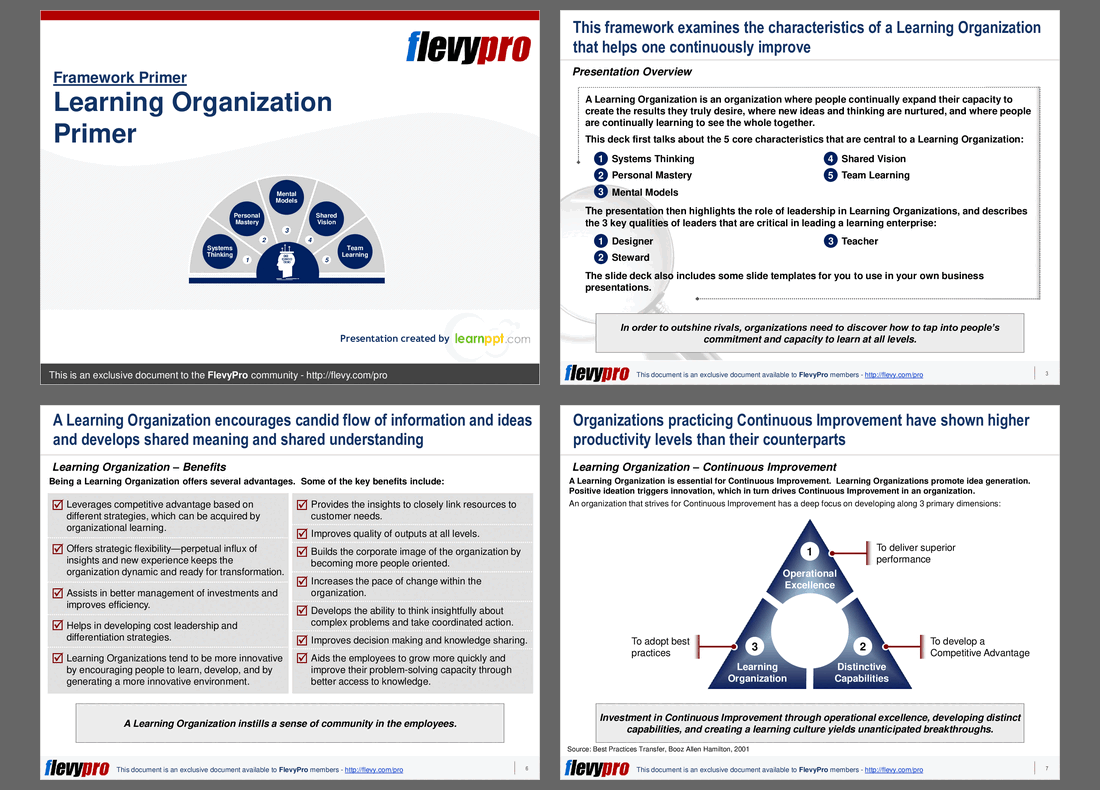
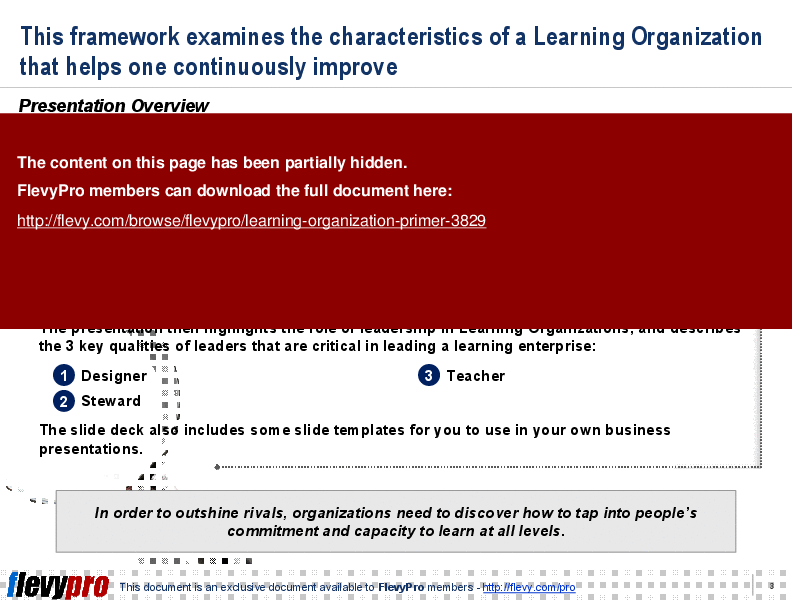
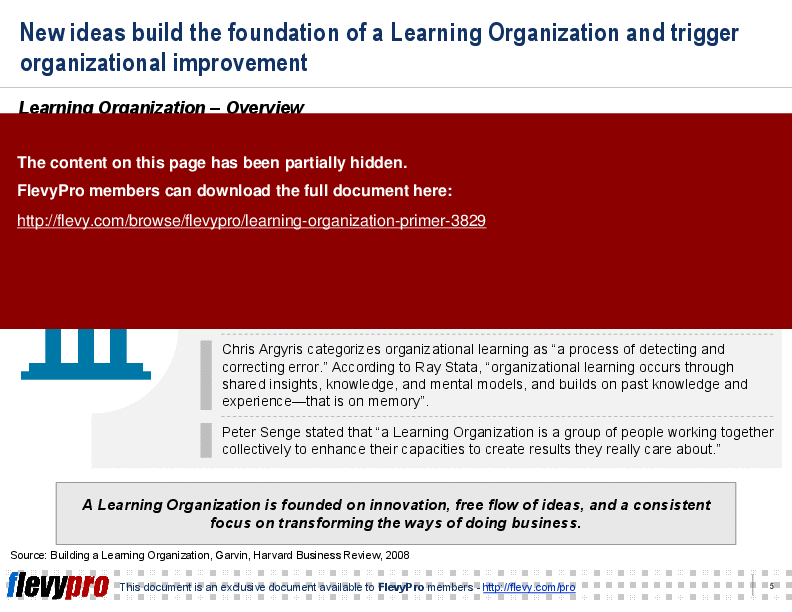
A Learning Organization is an organization where people continually expand their capacity to create the results they truly desire, where new ideas and thinking are nurtured, and where people are continually learning to see the whole together. In order to outshine rivals, organizations need to discover how to tap into people's commitment and capacity to learn at all levels.
This deck first talks about the 5 core characteristics that are central to a Learning Organization:
1. Systems Thinking
2. Personal Mastery
3. Mental Models
4. Shared Vision
5. Team Learning
The presentation then highlights the role of leadership in Learning Organizations, and describes the 3 key qualities of leaders that are critical in leading a learning enterprise:
1. Designer
2. Steward
3. Teacher
The slide deck also includes some slide templates for you to use in your own business presentations.
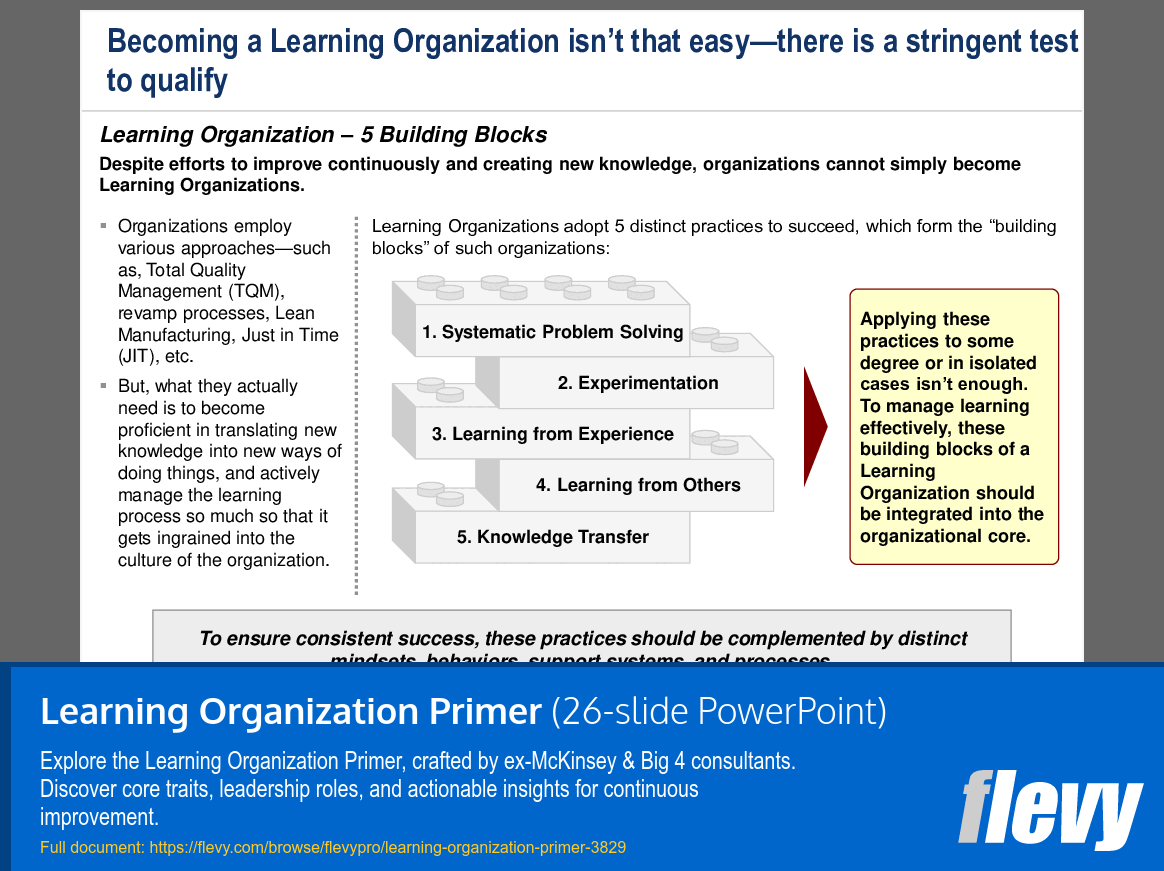
The Learning Organization Primer delves into the essential building blocks necessary for cultivating a culture of continuous improvement and innovation. It emphasizes systematic problem-solving and experimentation as foundational practices. By leveraging these methodologies, organizations can foster an environment where learning from experience and knowledge transfer become second nature, driving sustained growth and adaptability.
The PPT outlines the significant benefits of adopting a Learning Organization framework. These include enhanced strategic flexibility, better management of investments, and improved alignment with customer needs. The presentation also highlights how such an organization can increase the pace of change, improve output quality, and build a more people-oriented corporate image, making it a critical asset in today's competitive landscape.
Leadership plays a pivotal role in the success of a Learning Organization. The primer details the responsibilities of leaders as designers, stewards, and teachers. Leaders are tasked with integrating core characteristics, fostering a shared vision, and nurturing a culture of open dialogue and shared understanding. This comprehensive guide provides actionable insights and templates to help leaders and organizations embark on their journey towards becoming a Learning Organization.
Adopting a Learning Organization framework enhances operational effectiveness through continuous learning. Key benefits include strategic flexibility, enabling rapid adaptation to change, and improved investment management for better decision-making efficiency. Learning Organizations can implement cost leadership and differentiation strategies, positioning themselves favorably in the market. They foster innovation by encouraging employee growth, which cultivates a culture of creativity. Aligning resources with customer needs improves output quality and builds a stronger corporate image. Enhanced problem-solving capabilities arise from improved decision-making and knowledge sharing, allowing coordinated action on complex challenges. Overall, becoming a Learning Organization transforms employee engagement and responsiveness to market demands.
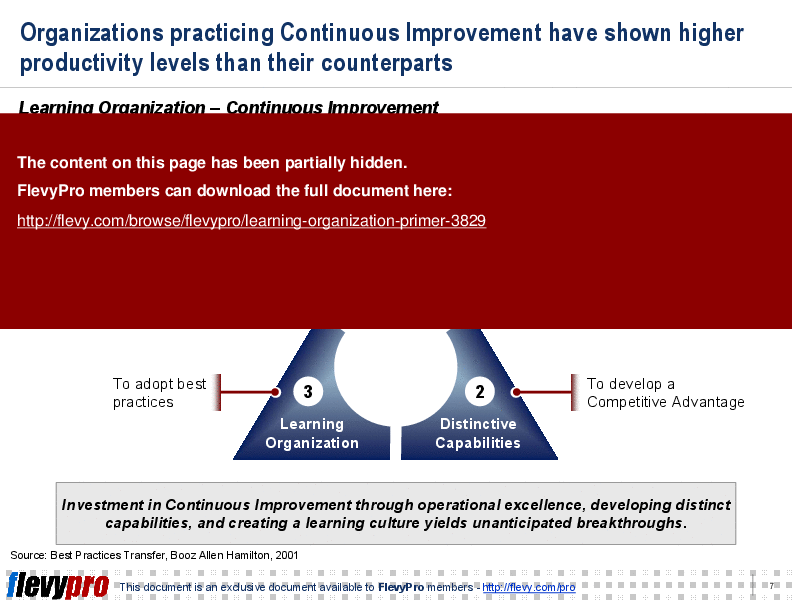
This PPT slide illustrates the relationship between Continuous Improvement and Learning Organizations, highlighting that organizations engaged in Continuous Improvement achieve higher productivity. The triangular model features 3 key dimensions: Operational Excellence at the top, indicating superior performance as a primary goal; Distinctive Capabilities on the right, emphasizing the need for unique strengths to differentiate; and Learning Organization at the base, which stresses adopting best practices. Investment in Continuous Improvement through these dimensions fosters a culture of learning and innovation, leading to significant breakthroughs and enhancing operational effectiveness and overall performance.
This PPT slide outlines 5 core characteristics of a Learning Organization: Systems Thinking, Personal Mastery, Mental Models, Shared Vision, and Team Learning. Systems Thinking encourages organizations to view themselves as part of a larger system, promoting holistic analysis and strategic alignment. Personal Mastery emphasizes individual growth, fostering a culture of learning and innovation. Mental Models involve challenging underlying assumptions to enhance adaptability and innovation. Shared Vision creates a common purpose that aligns efforts and motivates employees. Team Learning highlights the value of collective intelligence and shared experiences, improving performance and innovation. Mastering these characteristics transforms organizations into communities committed to continuous improvement and learning.
A Learning Organization fosters continuous improvement by enhancing individual capabilities, nurturing innovation, and developing a holistic understanding of the environment. Key characteristics include Systems Thinking, which views the organization as an interconnected whole; Personal Mastery, focusing on individual growth; Mental Models, which challenge existing assumptions; Shared Vision, promoting collective direction; and Team Learning, emphasizing collaborative knowledge sharing. Effective leadership is vital, characterized by 3 qualities: Designer, who shapes the learning environment; Steward, who supports the team; and Teacher, who fosters learning. Organizations aiming for sustained growth must develop learning capabilities and leadership qualities to navigate challenges effectively.
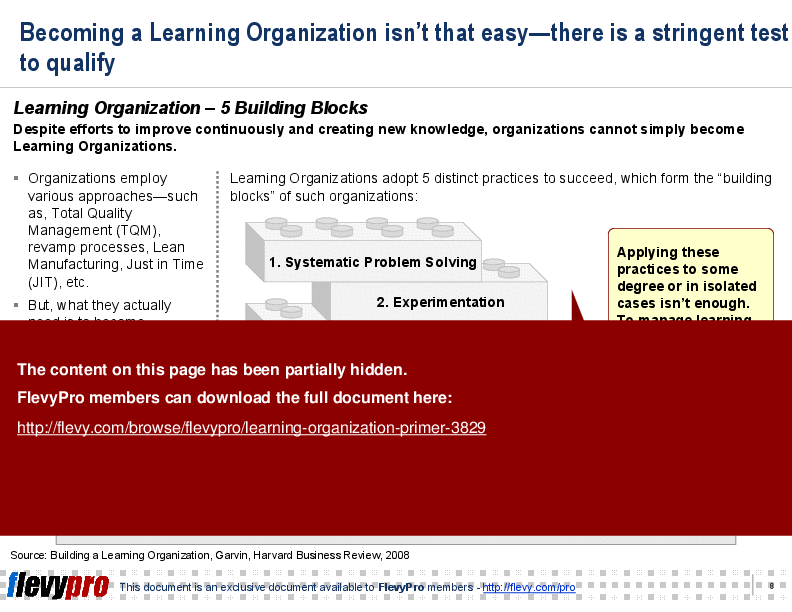
A Learning Organization is characterized by 5 essential building blocks: Systematic Problem Solving, Experimentation, Learning from Experience, Learning from Others, and Knowledge Transfer. These practices must be integrated into the organization's core to foster a culture of continuous learning. Simply applying methodologies like Total Quality Management (TQM) and Lean Manufacturing is insufficient; a holistic approach is necessary. Organizations should embed these practices alongside supportive mindsets, behaviors, and processes to ensure learning becomes fundamental to daily operations and decision-making. Transitioning to a Learning Organization requires a deep commitment to these principles for sustained success.
This PPT slide outlines the critical role of leadership in developing a Learning Organization within a globalized economy. Productivity and success depend on technological investments and fostering knowledge generation among individuals and teams. Peter Senge's framework identifies 3 essential leadership roles: Designer, Steward, and Teacher. The Designer inspires a shared vision, guiding team members through complexity. The Steward nurtures organizational culture, promoting continuous learning through dialogue and collaboration. The Teacher imparts knowledge and skills, facilitating individual growth. Effective communication is vital for fostering an environment conducive to shared thinking and innovation, emphasizing the need for leaders to prioritize knowledge and intellectual capital as key drivers of success.
This PPT slide outlines the foundational components of Learning Organizations, emphasizing systematic practices for continuous improvement. The first component, Systematic Problem Solving, involves training employees in structured decision-making through idea generation, data gathering, and consensus-building. The second component, Experimentation, promotes small-scale experiments to develop new capabilities and foster innovation. Learning from Experience focuses on evaluating past successes and failures to enhance future performance. Learning from Others encourages leveraging external insights through benchmarking and adopting industry best practices. Finally, Knowledge Transfer highlights the importance of sharing insights across the organization through open communication, employee rotations, and training initiatives. These interrelated components create a robust framework for fostering a learning culture that drives sustained success.
Source: Best Practices in Continuous Improvement, Learning Organization PowerPoint Slides: Learning Organization Primer PowerPoint (PPT) Presentation Slide Deck, LearnPPT Consulting
This framework is developed by a team of former McKinsey and Big 4 consultants. The presentation follows the headline-body-bumper slide format used by global consulting firms.
For $10.00 more, you can download this document plus 2 more FlevyPro documents. That's just $13 each.
ABOUT FLEVYPRO
This document is part of the FlevyPro Library, a curated knowledge base of documents for our FlevyPro subscribers.

FlevyPro is a subscription service for on-demand business frameworks and analysis tools. FlevyPro subscribers receive access to an exclusive library of curated business documents—business framework primers, presentation templates, Lean Six Sigma tools, and more—among other exclusive benefits.
Since 2012, we have provided business templates to over 10,000 businesses and organizations of all sizes, from startups and small businesses to the Fortune 100, in over 130 countries.
"I have used Flevy services for a number of years and have never, ever been disappointed. As a matter of fact, David and his team continue, time after time, to impress me with their willingness to assist and in the real sense of the word. I have concluded in fact
that it is not at all just a repository of documents/resources but, in the way that David and his team manage the firm, it is like dealing with consultants always ready to assist, advise and direct you to what you really need, and they always get it right.
I am an international hospitality accomplished senior executive who has worked and lived during the past 35 years in 23 countries in 5 continents and I can humbly say that I know what customer service is, trust me.
Aside from the great and professional service that Flevy's team provide, their wide variety of material is of utmost great quality, professionally put together and most current.
Well done Flevy, keep up the great work and I look forward to continue working with you in the future and to recommend you to a variety of colleagues around the world.
"
– Roberto Pelliccia, Senior Executive in International Hospitality
"FlevyPro has been a brilliant resource for me, as an independent growth consultant, to access a vast knowledge bank of presentations to support my work with clients. In terms of RoI, the value I received from the very first presentation I downloaded paid for my subscription many times over! The
quality of the decks available allows me to punch way above my weight – it's like having the resources of a Big 4 consultancy at your fingertips at a microscopic fraction of the overhead.
"
– Roderick Cameron, Founding Partner at SGFE Ltd
"If you are looking for great resources to save time with your business presentations, Flevy is truly a value-added resource. Flevy has done all the work for you and we will continue to utilize Flevy as a source to extract up-to-date information and data for our virtual and onsite presentations!"
– Debbi Saffo, President at The NiKhar Group
"[Flevy] produces some great work that has been/continues to be of immense help not only to myself, but as I seek to provide professional services to my clients, it gives me a large "tool box" of resources that are critical to provide them with the quality of service and outcomes they are expecting."
– Royston Knowles, Executive with 50+ Years of Board Level Experience
"Flevy is our 'go to' resource for management material, at an affordable cost. The Flevy library is comprehensive and the content deep, and typically provides a great foundation for us to further develop and tailor our own service offer."
– Chris McCann, Founder at Resilient.World
"As a small business owner, the resource material available from FlevyPro has proven to be invaluable. The ability to search for material on demand based our project events and client requirements was great for me and proved very beneficial to my clients. Importantly, being able to easily edit and tailor
the material for specific purposes helped us to make presentations, knowledge sharing, and toolkit development, which formed part of the overall program collateral. While FlevyPro contains resource material that any consultancy, project or delivery firm must have, it is an essential part of a small firm or independent consultant's toolbox.
"
– Michael Duff, Managing Director at Change Strategy (UK)
"I like your product. I'm frequently designing PowerPoint presentations for my company and your product has given me so many great ideas on the use of charts, layouts, tools, and frameworks. I really think the templates are a valuable asset to the job."
– Roberto Fuentes Martinez, Senior Executive Director at Technology Transformation Advisory
"I am extremely grateful for the proactiveness and eagerness to help and I would gladly recommend the Flevy team if you are looking for data and toolkits to help you work through business solutions."
– Trevor Booth, Partner, Fast Forward Consulting
Save with Bundles
This document is available as part of the following discounted bundle(s):
Download our free compilation of 50+ slides and templates on Organizational Design, Change Management, and Corporate Culture. Methodologies include ADKAR, Burke-Litwin Change Model, McKinsey 7-S, Competing Values Framework, etc.