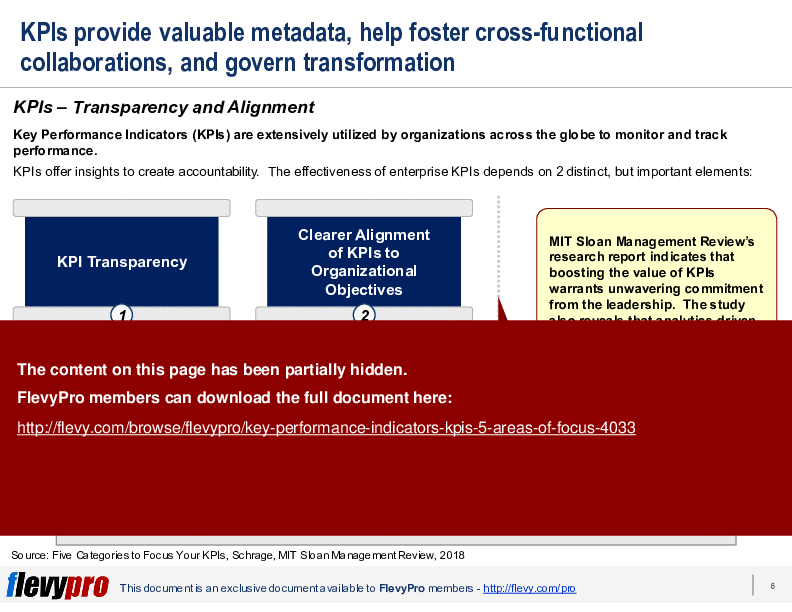

Key Performance Indicators (KPIs) are extensively utilized by organizations across the globe to monitor and track performance. They offer invaluable insights to create enterprise-wide accountability and a productive culture.
However, most executives are typically not able to utilize KPIs to their full potential. The effectiveness of KPIs depends on two distinct but important elements: KPI Transparency across the entire workforce and KPI Alignment with organizational goals. Development of a KPI-driven culture rests on unwavering commitment from the leadership and its ability to outline and direct KPI transparency and alignment in the organization.
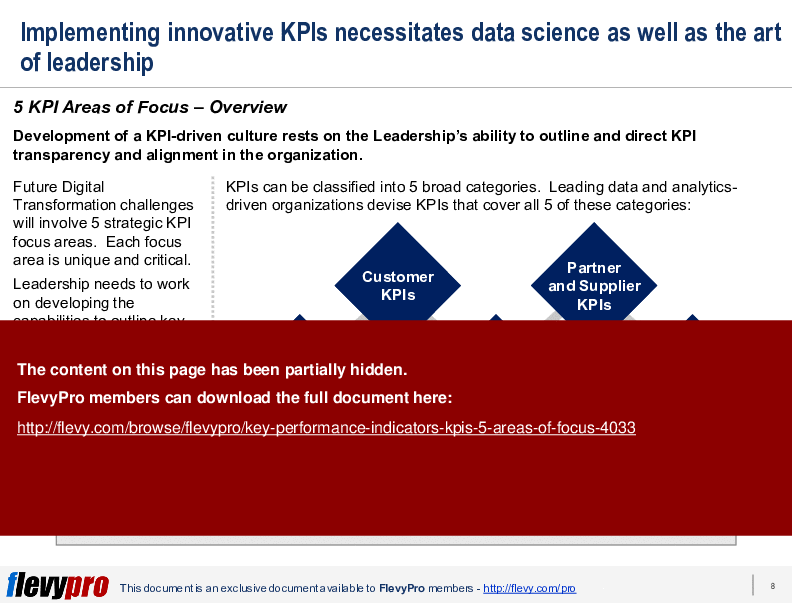
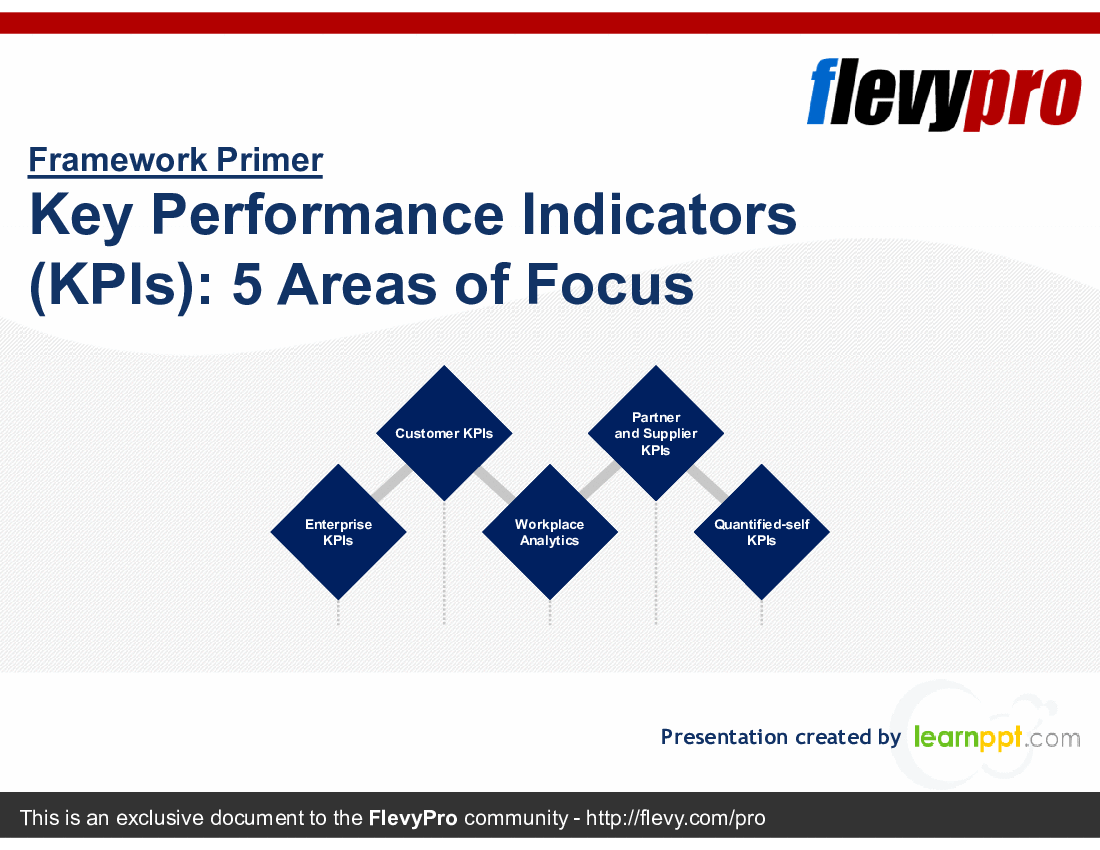
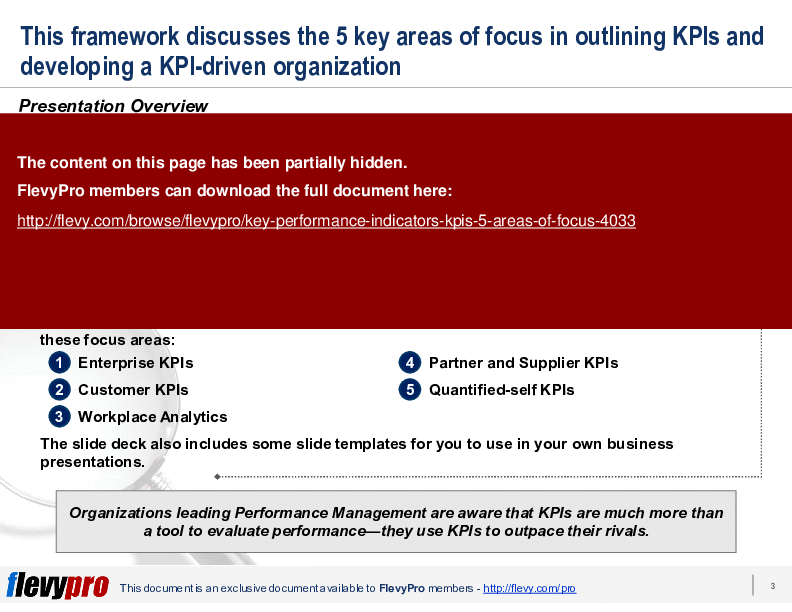
This presentation deliberates on the 5 key areas of focus that are essential to encourage a KPI-driven culture. Leading Analytics-enabled organizations formulate KPIs that encompass all 5 of these focus areas:
1. Enterprise KPIs
2. Customer KPIs
3. Workplace KPIs
4. Partner and Supplier KPIs
5. Quantified-self KPIs
Organizations leading Performance Management are aware that KPIs are much more than a tool to evaluate performance—they use KPIs to outpace their rivals.
The slide deck also includes some slide templates for you to use in your own business presentations.
This comprehensive guide delves into the intricacies of KPI transparency and alignment, emphasizing their critical role in fostering a data-driven culture. The PPT provides a structured approach to developing KPIs that align with organizational objectives, ensuring that every metric contributes to the overarching goals of the enterprise. It highlights the importance of leadership in driving KPI initiatives and maintaining transparency across all levels of the organization.
The presentation also includes practical templates to facilitate the implementation of KPIs in your business. These templates are designed to streamline the process of KPI development and alignment, making it easier for executives to track and measure performance effectively. By leveraging these tools, organizations can enhance their performance management practices and gain a competitive edge in the market.
Got a question about this document? Email us at flevypro@flevy.com.
Executive Summary
The "Key Performance Indicators (KPIs): 5 Areas of Focus" presentation provides a structured approach to understanding and implementing KPIs within organizations. This deck emphasizes the critical role of KPIs in performance management, offering insights into how they can drive accountability and foster a KPI-driven culture. By focusing on 5 essential areas—Enterprise KPIs, Customer KPIs, Workplace Analytics, Partner and Supplier KPIs, and Quantified-self KPIs—executives can leverage these metrics to enhance strategic planning and decision-making. The presentation includes templates for immediate application in business contexts.
Who This Is For and When to Use
• Corporate executives seeking to enhance performance measurement frameworks
• Integration leaders focused on establishing KPI transparency and alignment
• Consultants advising organizations on KPI implementation strategies
• Project managers responsible for tracking and reporting on performance metrics
Best-fit moments to use this deck:
• During strategic planning sessions to align KPIs with organizational goals
• In workshops aimed at developing a KPI-driven culture
• When evaluating the effectiveness of existing performance measurement systems
Learning Objectives
• Define the 5 key areas of focus for effective KPI implementation
• Build a KPI framework that aligns with organizational objectives
• Establish transparency and accountability in KPI reporting
• Analyze the interrelationships between different KPI categories
• Develop actionable templates for KPI tracking and reporting
• Foster a culture of continuous improvement through KPI insights
Table of Contents
• Overview (page 3)
• Key Performance Indicators (page 5)
• KPI Areas of Focus (page 8)
• Templates (page 18)
Primary Topics Covered
• KPI Overview - An introduction to Key Performance Indicators as essential metrics for evaluating organizational success.
• Enterprise KPIs - Metrics that benchmark the effectiveness of core organizational functions for strategic planning and decision-making.
• Customer KPIs - Metrics that assess the financial contributions of business prospects and clients, aiding in customer relationship management.
• Workplace Analytics - Metrics that quantify the effectiveness and engagement of the workforce, highlighting areas for improvement.
• Partner and Supplier KPIs - Metrics that evaluate the efficiency of external partnerships and supplier relationships.
• Quantified-self KPIs - Metrics that leverage personal performance data to enhance individual accountability and productivity.
Deliverables, Templates, and Tools
• KPI framework templates for visualizing and tracking performance metrics
• Reporting templates for presenting KPI data to stakeholders
• Actionable guidelines for establishing KPI transparency across the organization
• Tools for analyzing the interdependencies between different KPI categories
Slide Highlights
• Overview of the 5 KPI focus areas, visually represented for clarity
• Detailed breakdown of Enterprise KPIs and their strategic importance
• Insights into Customer KPIs and their role in driving revenue
• Analysis of Workplace Analytics and their impact on employee engagement
• Examples of Partner and Supplier KPIs that enhance operational efficiency
Potential Workshop Agenda
KPI Introduction and Overview (60 minutes)
• Discuss the importance of KPIs in performance management
• Review the 5 areas of focus for KPI development
KPI Alignment Session (90 minutes)
• Identify organizational goals and align KPIs accordingly
• Develop actionable plans for KPI implementation
KPI Transparency and Reporting (60 minutes)
• Establish guidelines for KPI transparency across teams
• Create templates for consistent KPI reporting
Customization Guidance
• Tailor KPI definitions and metrics to align with specific organizational goals
• Modify templates to reflect unique business processes and reporting structures
• Adjust the presentation style to fit the audience's familiarity with KPI concepts
Secondary Topics Covered
• The role of leadership in fostering a KPI-driven culture
• Strategies for overcoming common challenges in KPI implementation
• Best practices for maintaining KPI relevance and accuracy over time
Topic FAQ
Document FAQ
These are questions addressed within this presentation.
What are Key Performance Indicators (KPIs)?
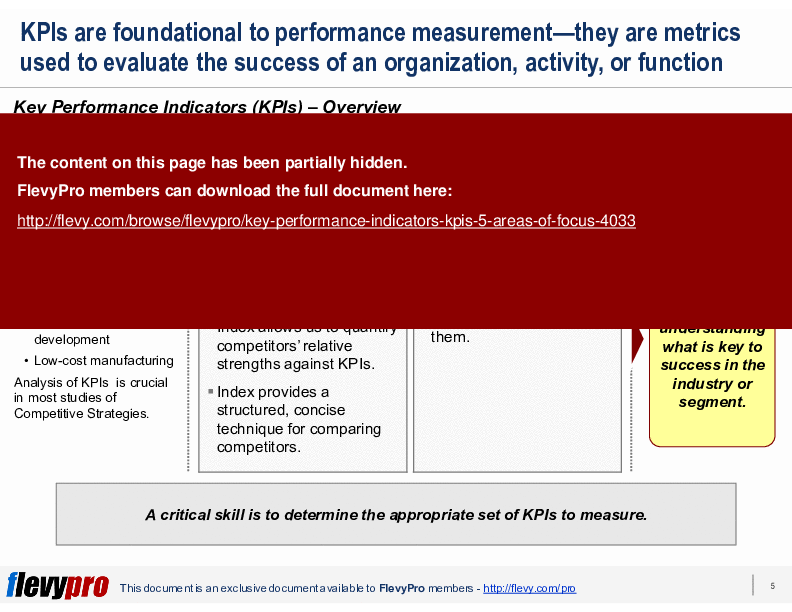
KPIs are measurable values that demonstrate how effectively an organization is achieving key business objectives.
Why is KPI transparency important?
KPI transparency ensures that all team members understand the metrics being tracked, fostering accountability and alignment with organizational goals.
How can I implement KPIs in my organization?
Start by defining your organizational goals, then select relevant KPIs that align with those goals, ensuring transparency and regular review.
What are the 5 areas of focus for KPIs?
The 5 areas are Enterprise KPIs, Customer KPIs, Workplace Analytics, Partner and Supplier KPIs, and Quantified-self KPIs.
How do KPIs drive accountability?
By providing clear metrics for performance, KPIs help organizations set expectations and measure progress, holding teams accountable for results.
Can KPIs change over time?
Yes, KPIs should be regularly reviewed and adjusted to remain relevant to the organization's evolving goals and market conditions.
What tools can help with KPI tracking?
Utilize performance management software and reporting templates to streamline KPI tracking and ensure consistent reporting.
How do I ensure alignment between KPIs and organizational objectives?
Regularly review and adjust KPIs to ensure they reflect current organizational goals and strategies, involving key stakeholders in the process.
Glossary
• KPI - Key Performance Indicator, a measurable value that demonstrates effectiveness.
• Transparency - The practice of making KPI data accessible to all relevant stakeholders.
• Alignment - The process of ensuring KPIs reflect organizational goals and objectives.
• Workplace Analytics - Metrics that measure employee engagement and effectiveness.
• Customer Lifetime Value - A prediction of the net profit attributed to the entire future relationship with a customer.
• Net Promoter Score (NPS) - A metric used to gauge customer loyalty and satisfaction.
• Quantified-self - The use of self-tracking data to improve personal performance.
• Partner KPIs - Metrics that evaluate the effectiveness of partnerships and supplier relationships.
• Enterprise KPIs - Metrics that assess the overall performance of an organization.
• Performance Management - The process of ensuring that goals are consistently being met in an effective and efficient manner.
• Data-Driven Organization - An organization that makes decisions based on data analysis rather than intuition.
• Accountability - The obligation of an individual or organization to report on their activities and accept responsibility for them.
• Stakeholders - Individuals or groups with an interest in the performance and success of an organization.
• Continuous Improvement - Ongoing efforts to improve products, services, or processes.
• Metrics - Standards of measurement used to assess performance.
• Strategic Planning - The process of defining an organization's direction and making decisions on allocating resources.
• Performance Measurement - The process of evaluating the efficiency and effectiveness of an action.
• Feedback Loop - A system where outputs of a process are circled back and used as inputs.
• Benchmarking - Comparing business processes and performance metrics to industry bests and best practices from other companies.
• Governance - The framework of rules and practices by which an organization ensures accountability, fairness, and transparency.
Source: Best Practices in Performance Management, Key Performance Indicators PowerPoint Slides: Key Performance Indicators (KPIs): 5 Areas of Focus PowerPoint (PPTX) Presentation Slide Deck, LearnPPT Consulting
Did you need more documents?
Consider a FlevyPro subscription from $39/month. View plans here.
For $10.00 more, you can download this document plus 2 more FlevyPro documents. That's just $13 each.
|
Download our FREE Strategy & Transformation Framework Templates
Download our free compilation of 50+ Strategy & Transformation slides and templates. Frameworks include McKinsey 7-S, Balanced Scorecard, Disruptive Innovation, BCG Curve, and many more. |