
This framework is developed by a team of former McKinsey and Big 4 consultants. The presentation follows the headline-body-bumper slide format used by global consulting firms.
Editor Summary
Human-centered Design (HCD) is an 18-slide PowerPoint presentation by PPT Lab that outlines a management framework for reshaping organizations around the customer experience.
Read moreIt presents 5 core principles: embed HCD, build brand value holistically, design for 3 years out, establish new structures and teams, and nurture digital culture. The slides cover practical application, digital technologies for rapid feedback, and cross-functional collaboration across Strategy, Product Development, Operations, Marketing, Sales, and Customer Service. Available on Flevy with immediate digital download.
Use this presentation when an organization needs to realign structure, capabilities, and culture around customer experience as part of a digital transformation or to introduce design-driven ways of working.
Executives leading enterprise-wide transformation, defining governance and new structures to support customer-centric operating models.
Product development leads creating multi-year roadmaps that embed customer empathy and a three-year design horizon.
Marketing and brand leaders aligning touchpoints and brand value across channels.
Operations and customer service managers implementing rapid feedback loops using digital technologies.
The 5-principle approach reflects common design-thinking and customer-centric transformation practices used in management consulting.
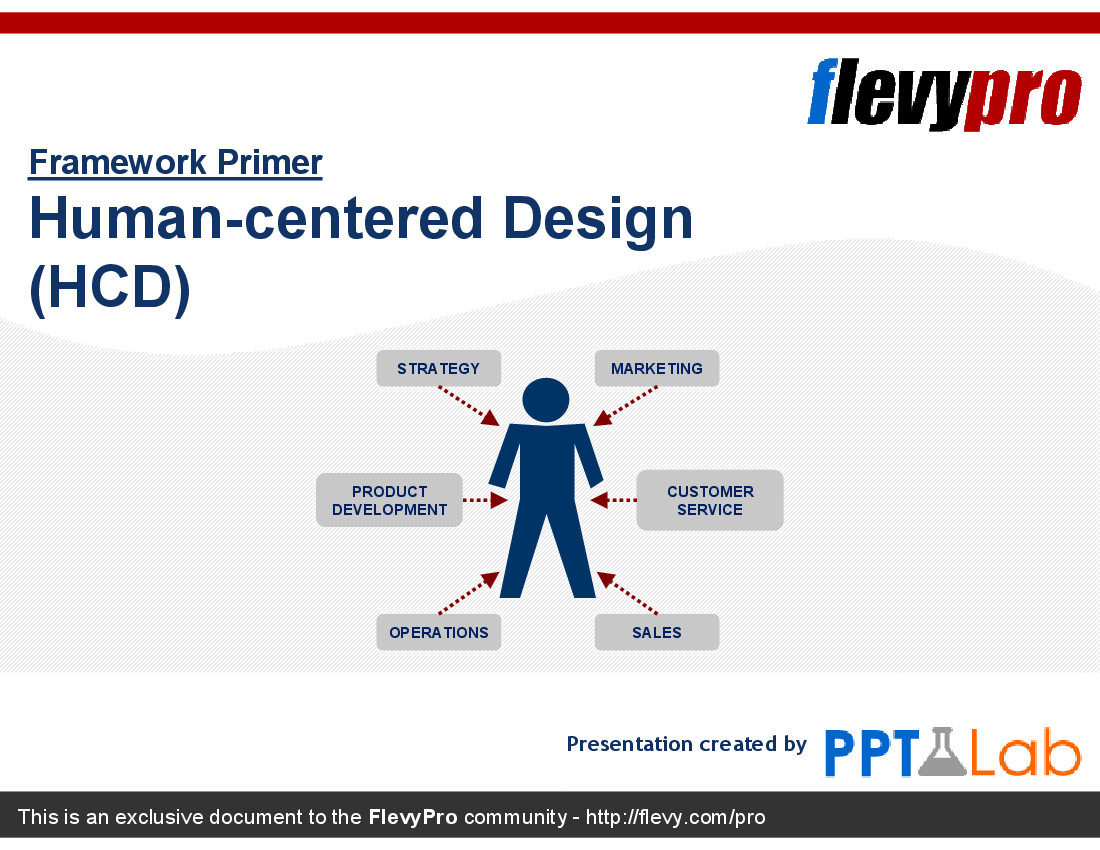
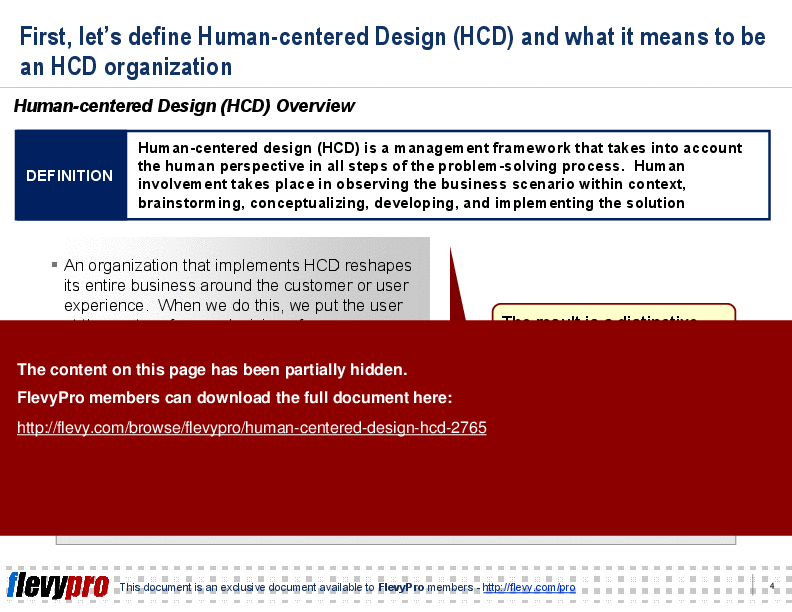
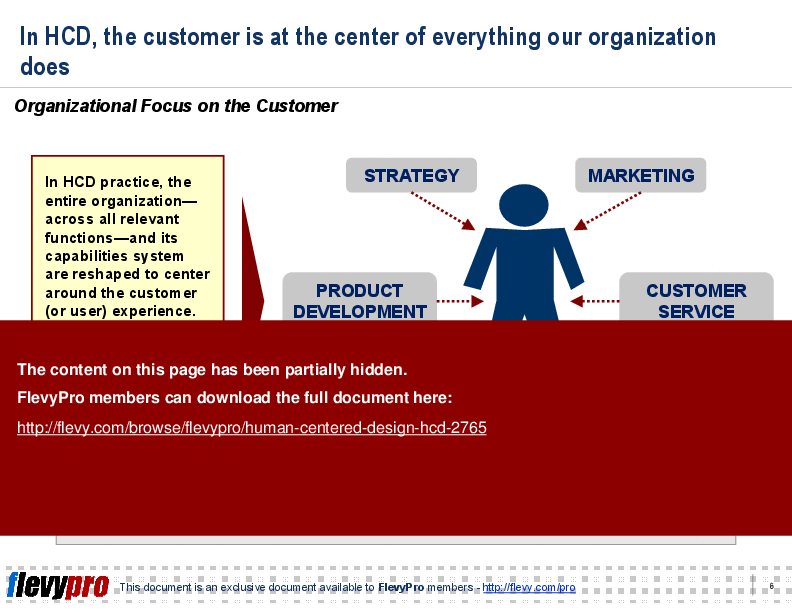
Human-centered design (HCD) is a management framework that takes into account the human perspective in all steps of the problem-solving process. When applied to business, HCD means to reshape the entire organization and its capabilities system around the Customer Experience. This includes Strategy, Product Development, Operations, Marketing, Sales, Customer Service, among other functional areas relevant to the Customer Experience element at hand. This requires mobilizing Digital Technologies to build empathy with the customer.
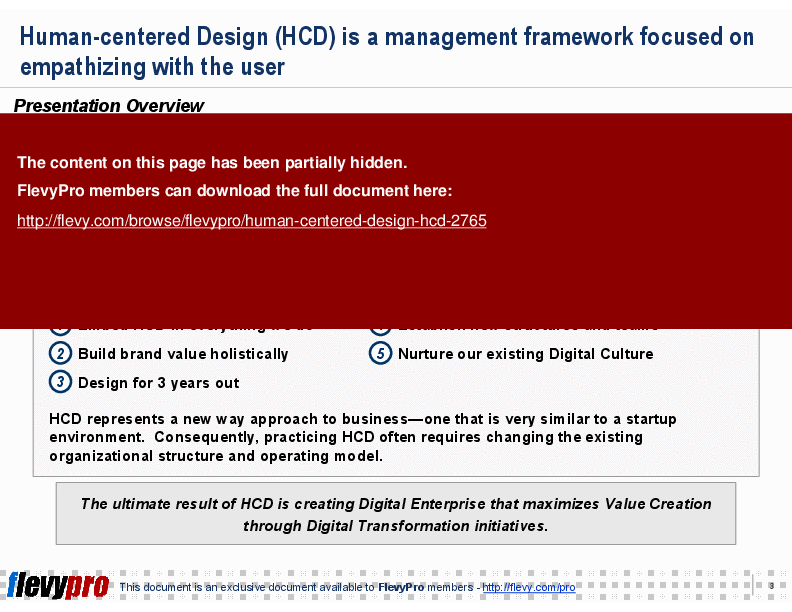
There are 5 core principles organizations follow when they seek to transform into an HCD organization:
1. Embed HCD in everything we do
2. Build brand value holistically
3. Design for 3 years out
4. Establish new structures and teams
5. Nurture our existing Digital Culture
HCD represents a new way approach to business—one that is very similar to a startup environment. Consequently, practicing HCD often requires changing the existing organizational structure and operating model. The ultimate result of HCD is creating Digital Enterprise that maximizes Value Creation through Digital Transformation initiatives.
This presentation also delves into the practical application of HCD principles, providing actionable insights and best practices for embedding HCD into every facet of your organization. It emphasizes the importance of leveraging digital technologies to foster rapid feedback loops and continuous improvement. This approach ensures that your organization remains agile and responsive to customer needs, driving sustained growth and innovation.
The PPT outlines how to cultivate a digital culture that supports HCD, highlighting the need to break down silos and foster cross-functional collaboration. By adopting an entrepreneurial mindset, your organization can navigate the complexities of digital transformation and create a customer-centric environment. This comprehensive guide is essential for any executive looking to lead their organization through a successful HCD transformation.
What are the core principles of human-centered design for organizations?
Human-centered design for organizations is built on 5 core principles: embed HCD in everything, build brand value holistically, design for 3 years out, establish new structures and teams, and nurture a digital culture. These 5 core principles guide organizational and capability changes.
How does HCD change the roles of marketing, operations, and product teams?
HCD shifts these functions to prioritize customer experience across the value chain, requiring cross-functional collaboration, entrepreneurial ways of working, and mobilizing digital tools to gather customer insight. It directly affects Strategy, Product Development, Operations, Marketing, Sales, and Customer Service.
How do digital technologies support a human-centered design transformation?
Digital technologies are used to build customer empathy, enable rapid feedback loops, and support continuous improvement, helping teams iterate on offerings and processes faster. The presentation emphasizes leveraging digital tools for rapid feedback loops and continuous improvement.
What should I look for when choosing an HCD presentation or toolkit for executives?
Choose materials that explain organizational implications (structures, teams), show how to embed HCD across functions, include guidance on digital culture and feedback mechanisms, and offer practical application advice. Flevy’s Human-centered Design (HCD) presentation provides these elements and covers the 5 core principles.
How should I assess the value of HCD slide decks or templates for my transformation program?
Assess value by whether the materials help reshape the organization around customer experience, mobilize digital technologies for feedback, and link to measurable value creation through digital initiatives. The relevant outcome is increased value creation through Digital Transformation initiatives.
How do you operationalize a "design for 3 years out" planning horizon?
Operationalizing a three-year horizon involves translating long-range customer trends into product and capability roadmaps, aligning cross-functional teams, and creating structures that support iterative validation over time, consistent with a three-year design horizon.
I need to restructure after a digital transformation effort—what framework should I use?
An HCD approach recommends reshaping the operating model around customer experience, establishing new cross-functional teams, and nurturing digital culture while using digital tools for rapid feedback. For a concise executive-ready view, see Flevy’s Human-centered Design (HCD) 18-slide PowerPoint presentation.
How can we measure success after adopting human-centered design practices?
Success can be measured by improvements in customer experience metrics, the speed and quality of feedback-driven iterations, cross-functional collaboration, and the extent to which digital transformation initiatives drive measurable value creation through Digital Transformation initiatives.
Building brand value holistically requires an integrated approach across all organizational aspects. Brand expansion is crucial, necessitating alignment of elements like corporate office design, mobile app experience, and product placement with customer perceptions. As digital capabilities grow, the brand must reflect ambiance, features, voice, and emotional resonance at every customer touchpoint. A comprehensive evaluation of the Value Chain identifies digitally-driven opportunities that communicate the brand's value proposition. The goal is to create immersive experiences that meet customer needs, solve user problems, and foster emotional connections. Embedding the brand's meaning at the core of digital design ensures every interaction reinforces brand identity and enhances customer loyalty, deepening engagement and strengthening market position.
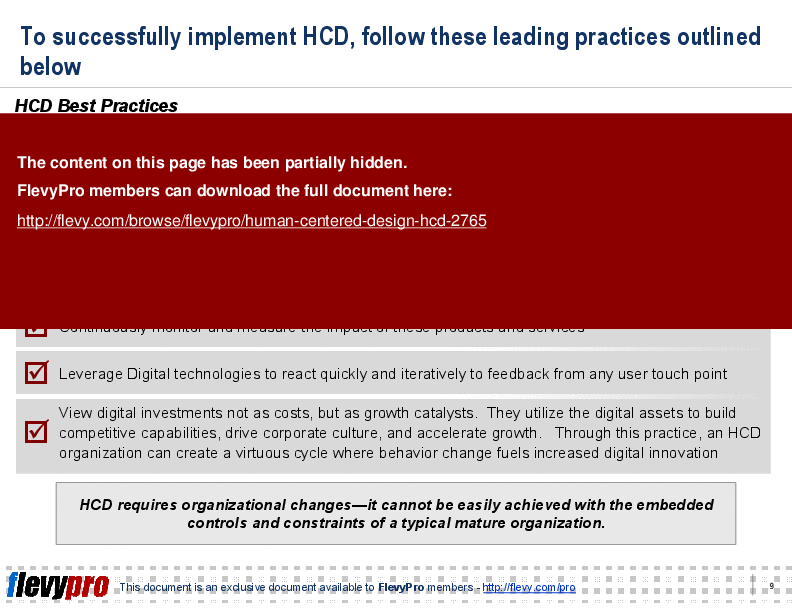
This PPT slide outlines 5 key principles for organizations undergoing a Human-Centered Design (HCD) transformation. The first principle, "Embed HCD in everything we do," emphasizes integrating HCD into all organizational aspects to foster customer-centric thinking. The second principle, "Build brand value holistically," advocates for aligning brand perception with customer needs. "Design for 3 years out" encourages a forward-thinking approach to anticipate future trends and customer demands. The fourth principle, "Establish new structures and teams," highlights the creation of agile teams to adapt to evolving customer needs. Finally, "Nurture our existing Digital Culture" underscores the importance of fostering a digital environment that supports innovation and responsiveness, essential for sustaining HCD initiatives. These principles collectively provide a framework for transitioning to a more customer-focused organization.
This PPT slide focuses on Human-Centered Design (HCD), emphasizing the restructuring of organizational functions to prioritize customer experience across departments such as Strategy, Product Development, Operations, Marketing, Sales, and Customer Service. It illustrates the interconnectedness of these areas, highlighting a flow of influence towards the customer. The transformation dismantles traditional silos, fostering collaboration and a unified focus on customer needs. Integration of Digital Transformation technologies enhances understanding and empathy towards customers, enabling organizations to gather insights and adapt offerings. Successful implementation of HCD requires a holistic view, where all departments contribute to improving customer experience, driving effective decision-making and business success.
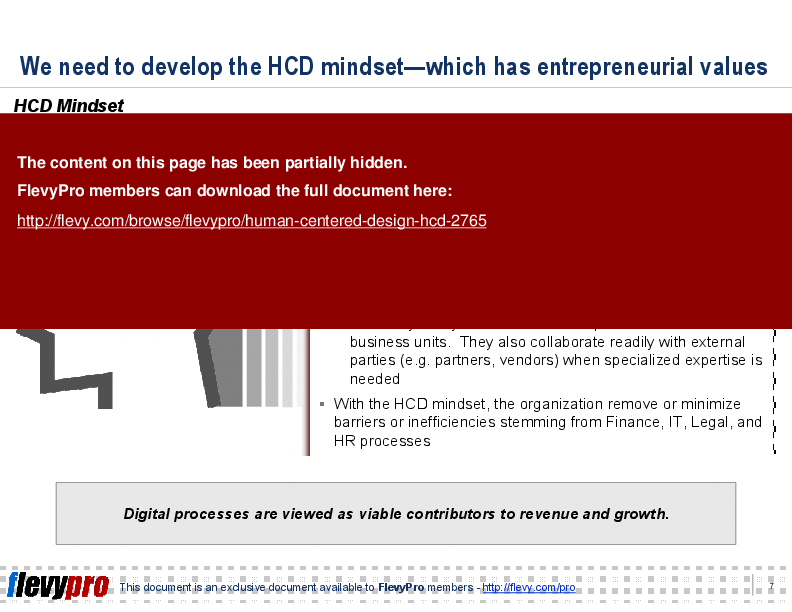
This PPT slide outlines a strategic principle for digital enterprises focusing on establishing structures and teams that foster an entrepreneurial spirit. Key components include innovative working methods, cross-functional teams, and adjusted incentives to enhance the Digital Customer Experience. Cross-functional teams, composed of specialists from Strategy, R&D, User Experience Design, Industrial Design, Marketing, Sales, and IT, are formed for specific projects and disbanded upon achieving their objectives. Additionally, developing an ecosystem that nurtures vendor relationships is essential for maintaining a dynamic partner network. Informal structures, such as personal networks and communities of interest, facilitate information flow and collaboration, emphasizing the need for adaptability and teamwork in modern business environments.
Source: Best Practices in Customer Experience, Digital Culture, Human-centered Design, Digital Enterprise PowerPoint Slides: Human-centered Design (HCD) PowerPoint (PPT) Presentation Slide Deck, PPT Lab
This framework is developed by a team of former McKinsey and Big 4 consultants. The presentation follows the headline-body-bumper slide format used by global consulting firms.
For $10.00 more, you can download this document plus 2 more FlevyPro documents. That's just $13 each.
ABOUT FLEVYPRO
This document is part of the FlevyPro Library, a curated knowledge base of documents for our FlevyPro subscribers.
FlevyPro is a subscription service for on-demand business frameworks and analysis tools. FlevyPro subscribers receive access to an exclusive library of curated business documents—business framework primers, presentation templates, Lean Six Sigma tools, and more—among other exclusive benefits.
The average daily rate of a McKinsey consultant is $6,625 (not including expenses). The average price of a Flevy document is $65.
Trusted by over 10,000+ Client Organizations
Since 2012, we have provided business templates to over 10,000 businesses and organizations of all sizes, from startups and small businesses to the Fortune 100, in over 130 countries.
"One of the great discoveries that I have made for my business is the Flevy library of training materials.
As a Lean Transformation Expert, I am always making presentations to clients on a variety of topics: Training, Transformation, Total Productive Maintenance, Culture, Coaching, Tools, Leadership Behavior, etc. Flevy
It is well worth the money to purchase these presentations. Sure, I have the knowledge and information to make my point. It is another thing to create a presentation that captures what I want to say. Flevy has saved me countless hours of preparation time that is much better spent with implementation that will actually save money for my clients.
"
– Ed Kemmerling, Senior Lean Transformation Expert at PMG
"FlevyPro has been a brilliant resource for me, as an independent growth consultant, to access a vast knowledge bank of presentations to support my work with clients. In terms of RoI, the value I received from the very first presentation I downloaded paid for my subscription many times over! The
quality of the decks available allows me to punch way above my weight – it's like having the resources of a Big 4 consultancy at your fingertips at a microscopic fraction of the overhead.
"
– Roderick Cameron, Founding Partner at SGFE Ltd
"Flevy is now a part of my business routine. I visit Flevy at least 3 times each month.
Flevy has become my preferred learning source, because what it provides is practical, current, and useful in this era where the business world is being rewritten.

many challenges and there is the need to make the right decisions in a short time, with so much scattered information, we are fortunate to have Flevy. Flevy investigates, selects, and puts at our disposal the best of the best to help us be successful in our work.
"
– Omar Hernán Montes Parra, CEO at Quantum SFE
"Flevy is our 'go to' resource for management material, at an affordable cost. The Flevy library is comprehensive and the content deep, and typically provides a great foundation for us to further develop and tailor our own service offer."
– Chris McCann, Founder at Resilient.World
"The wide selection of frameworks is very useful to me as an independent consultant. In fact, it rivals what I had at my disposal at Big 4 Consulting firms in terms of efficacy and organization."
– Julia T., Consulting Firm Owner (Former Manager at Deloitte and Capgemini)
"My FlevyPro subscription provides me with the most popular frameworks and decks in demand in today’s market. They not only augment my existing consulting and coaching offerings and delivery, but also keep me abreast of the latest trends, inspire new products and service offerings for my practice, and educate me
in a fraction of the time and money of other solutions. I strongly recommend FlevyPro to any consultant serious about success.
"
– Bill Branson, Founder at Strategic Business Architects
"As a consultant requiring up to date and professional material that will be of value and use to my clients, I find Flevy a very reliable resource.
The variety and quality of material available through Flevy offers a very useful and commanding source for information. Using Flevy saves me time, enhances my expertise and ends up being a good decision."
– Dennis Gershowitz, Principal at DG Associates
"I have used FlevyPro for several business applications. It is a great complement to working with expensive consultants. The quality and effectiveness of the tools are of the highest standards."
– Moritz Bernhoerster, Global Sourcing Director at Fortune 500
Download our FREE Digital Transformation Templates
Download our free compilation of 50+ Digital Transformation slides and templates. DX concepts covered include Digital Leadership, Digital Maturity, Digital Value Chain, Customer Experience, Customer Journey, RPA, etc.