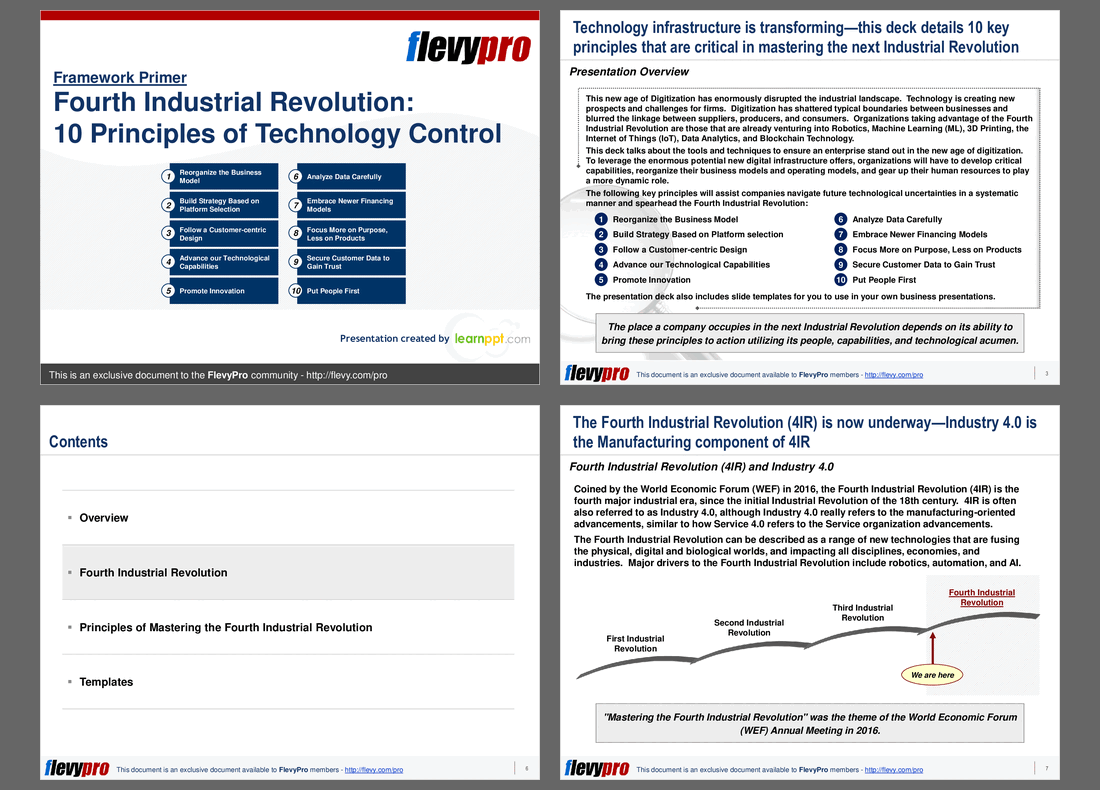
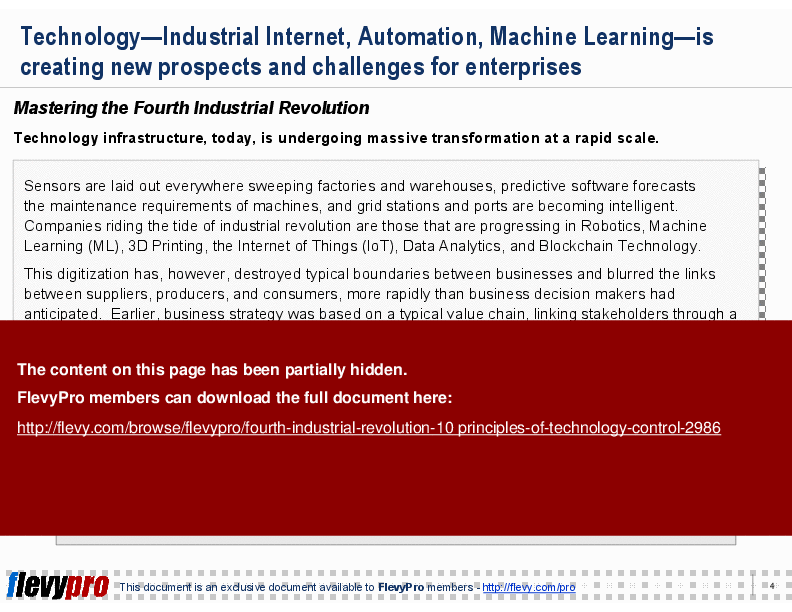

This new age of Digitization has enormously disrupted the industrial landscape. Technology is creating new prospects and challenges for firms. Digitization has shattered typical boundaries between businesses and blurred the linkage between suppliers, producers, and consumers. Organizations taking advantage of the Fourth Industrial Revolution are those that are already venturing into Robotics, Machine Learning (ML), 3D Printing, the Internet of Things (IoT), Data Analytics, and Blockchain Technology.
This deck talks about the tools and techniques to ensure an enterprise stand out in the new age of digitization. To leverage the enormous potential new digital infrastructure offers, organizations will have to develop critical capabilities, reorganize their business models and operating models, and gear up their human resources to play a more dynamic role.
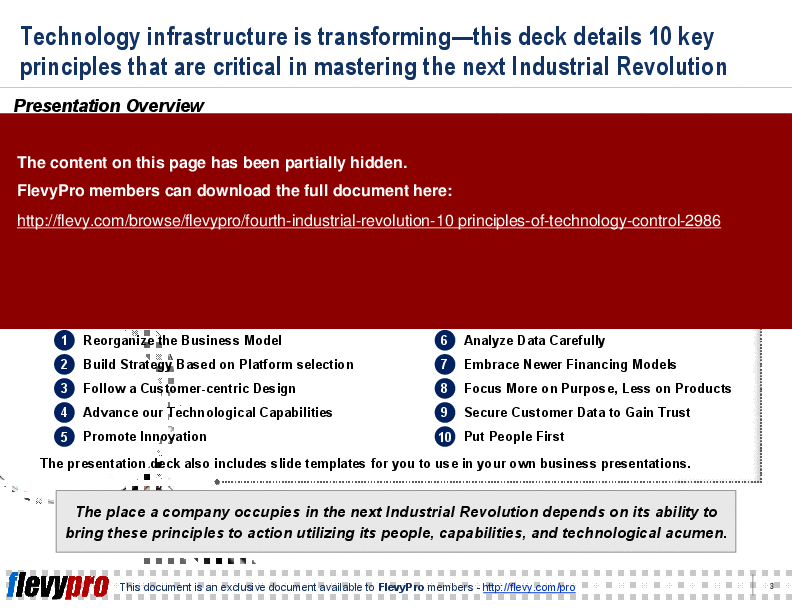
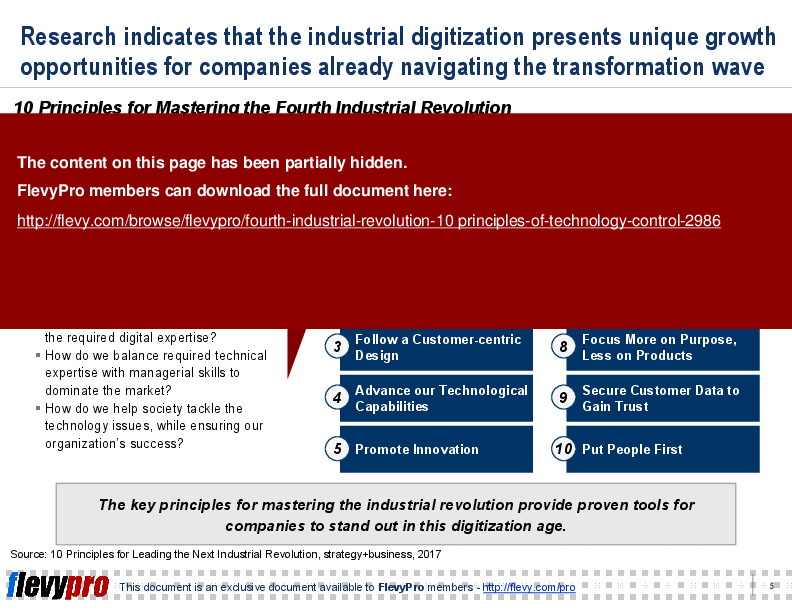
The following key principles will assist companies navigate future technological uncertainties in a systematic manner and spearhead the Fourth Industrial Revolution:
1. Reorganize the Business Model
2. Build Strategy Based on Platform selection
3. Follow a Customer-centric Design
4. Advance our Technological Capabilities
5. Promote Innovation
6. Analyze Data Carefully
7. Embrace Newer Financing Models
8. Focus More on Purpose, Less on Products
9. Secure Customer Data to Gain Trust
10. Put People First
The presentation deck also includes slide templates for you to use in your own business presentations.
This presentation is a comprehensive guide for mastering the Fourth Industrial Revolution. It delves into the key principles necessary for navigating the technological landscape, emphasizing the importance of reorganizing business models, advancing technological capabilities, and promoting innovation. The deck also highlights the significance of data analysis, customer-centric design, and securing customer data. With practical slide templates included, this resource is designed to equip executives with the tools needed to lead their organizations through the digital transformation effectively.
Got a question about this document? Email us at flevypro@flevy.com.
Executive Summary
The "Fourth Industrial Revolution: 10 Principles of Technology Control" presentation equips organizations with essential strategies to navigate the complexities of the Fourth Industrial Revolution (4IR). Developed by seasoned consultants, this deck outlines ten foundational principles that empower businesses to adapt their models, enhance technological capabilities, and foster innovation. By leveraging these principles, executives can effectively position their organizations for success in an era defined by rapid technological advancement and digital transformation.
Who This Is For and When to Use
• Corporate executives seeking to drive digital transformation within their organizations
• Integration leaders responsible for aligning business strategies with technological advancements
• Consultants advising clients on navigating the Fourth Industrial Revolution
• Business development teams focused on innovation and customer-centric strategies
Best-fit moments to use this deck:
• Strategy sessions aimed at redefining business models in light of technological changes
• Workshops focused on enhancing customer engagement through digital platforms
• Training sessions for teams on implementing data-driven decision-making processes
Learning Objectives
• Define the key principles of the Fourth Industrial Revolution and their implications for business
• Build strategies that align with platform selection and customer-centric design
• Establish frameworks for analyzing data and leveraging insights for decision-making
• Promote a culture of innovation that embraces both incremental and disruptive changes
• Secure customer data effectively to build trust and enhance brand reputation
• Foster a workforce that prioritizes human interaction and adaptability in a tech-driven environment
Table of Contents
• Overview (page 3)
• Fourth Industrial Revolution (page 7)
• Principles of Mastering the Fourth Industrial Revolution (page 10)
• Templates (page 21)
Primary Topics Covered
• Reorganize the Business Model - Firms must adapt their business models to leverage new technologies and maintain competitiveness in a rapidly changing environment.
• Build Strategy Based on Platform Selection - Organizations should establish interoperable platforms that enhance customer engagement and operational efficiency.
• Follow a Customer-centric Design - A customer-centric approach is essential for understanding and responding to consumer needs effectively.
• Advance our Technological Capabilities - Companies need to enhance their technological acumen to navigate risks and leverage digital tools effectively.
• Promote Innovation - Emphasizing both incremental and disruptive innovation can lead to significant competitive advantages.
• Analyze Data Carefully - Real-time data analysis is crucial for informed decision-making and operational improvements.
• Embrace Newer Financing Models - Transitioning to innovative financing models can facilitate access to capital for technology investments.
• Focus More on Purpose, Less on Products - Organizations should prioritize delivering positive outcomes and experiences for customers over simply selling products.
• Secure Customer Data to Gain Trust - Robust data security measures are vital for maintaining customer trust in a data-driven landscape.
• Put People First - Prioritizing human resources and fostering a supportive work environment are essential for long-term success.
Deliverables, Templates, and Tools
• Business model reorganization framework template
• Platform selection strategy template
• Customer-centric design guidelines
• Data analysis framework for operational insights
• Innovation promotion toolkit
• Customer data security checklist
Slide Highlights
• Overview of the Fourth Industrial Revolution and its impact on business
• Detailed breakdown of the ten principles for mastering 4IR
• Visual representation of the relationship between technology and human interaction
• Case studies illustrating successful implementation of the principles
Potential Workshop Agenda
Understanding the Fourth Industrial Revolution (60 minutes)
• Overview of 4IR and its implications for business
• Discussion on the ten principles and their relevance
Principle Implementation Workshop (90 minutes)
• Breakout sessions focused on specific principles
• Group presentations on proposed strategies for implementation
Data Analysis and Customer Engagement (60 minutes)
• Techniques for effective data analysis
• Strategies for enhancing customer engagement through technology
Customization Guidance
• Tailor the business model reorganization framework to reflect industry-specific challenges and opportunities
• Adjust platform selection strategies based on existing technological infrastructure
• Modify customer-centric design principles to align with target audience preferences
Secondary Topics Covered
• The role of automation and AI in the Fourth Industrial Revolution
• The importance of cybersecurity in protecting customer data
• Strategies for fostering a culture of innovation within organizations
• The impact of digital transformation on traditional business practices
Topic FAQ
Document FAQ
These are questions addressed within this presentation.
What is the Fourth Industrial Revolution?
The Fourth Industrial Revolution refers to the current era characterized by the fusion of physical, digital, and biological technologies, significantly impacting industries and economies.
How can organizations benefit from the ten principles?
By implementing these principles, organizations can enhance their adaptability, improve customer engagement, and drive innovation, positioning themselves for success in a rapidly changing environment.
What role does data play in the Fourth Industrial Revolution?
Data is crucial for informed decision-making and operational efficiency, enabling organizations to respond quickly to market changes and customer needs.
How can companies secure customer data effectively?
Implementing robust cybersecurity measures, ensuring data transparency, and establishing clear privacy policies are essential for gaining and maintaining customer trust.
Why is a customer-centric approach important?
A customer-centric approach allows organizations to better understand and meet consumer needs, leading to improved satisfaction and loyalty.
What are some examples of innovative financing models?
Innovative financing models include subscription-based services, pay-as-you-go systems, and venture capital funding for technology investments.
How can organizations foster a culture of innovation?
Encouraging collaboration, supporting diverse opinions, and providing opportunities for creative problem-solving can help cultivate a culture of innovation.
What skills will be essential for the workforce in the Fourth Industrial Revolution?
Skills such as data analytics, technological proficiency, and the ability to adapt to changing environments will be critical for success.
Glossary
• Fourth Industrial Revolution - The current era defined by the integration of digital, physical, and biological technologies.
• Platform Selection - The process of choosing the appropriate technological platforms for business operations.
• Customer-centric Design - An approach that prioritizes the needs and experiences of customers in product and service development.
• Data Security - Measures taken to protect sensitive information from unauthorized access and breaches.
• Innovation - The process of developing new ideas, products, or methods to improve business performance.
• Cybersecurity - The practice of protecting systems, networks, and data from digital attacks.
• Digital Transformation - The integration of digital technology into all areas of a business, fundamentally changing how it operates and delivers value.
• Agile Methodology - A project management approach that emphasizes flexibility and iterative progress.
• Artificial Intelligence (AI) - The simulation of human intelligence processes by machines, particularly computer systems.
• Machine Learning (ML) - A subset of AI that enables systems to learn and improve from experience without being explicitly programmed.
• Internet of Things (IoT) - The interconnection of everyday devices to the internet, allowing them to send and receive data.
• Blockchain Technology - A decentralized digital ledger that records transactions across many computers securely.
• Customer Engagement - The interaction between a company and its customers, aimed at fostering loyalty and satisfaction.
• Business Model - A company's plan for generating revenue and profit.
• Data Analytics - The science of analyzing raw data to make conclusions about that information.
• Venture Capital - Financing that investors provide to startup firms and small businesses with perceived long-term growth potential.
• Subscription Model - A business model where customers pay a recurring price at regular intervals for access to a product or service.
• Pay-as-you-go Model - A pricing model where customers pay for services based on their usage rather than a fixed fee.
• Incremental Innovation - Small, gradual improvements made to existing products or services.
• Disruptive Innovation - Innovations that create new markets and value networks, eventually displacing established market-leading firms and products.
Source: Best Practices in IT Strategy, Fourth Industrial Revolution PowerPoint Slides: Fourth Industrial Revolution: 10 Principles of Technology Control PowerPoint (PPT) Presentation Slide Deck, LearnPPT Consulting
Did you need more documents?
Consider a FlevyPro subscription from $39/month. View plans here.
For $10.00 more, you can download this document plus 2 more FlevyPro documents. That's just $13 each.
|
Download our FREE Digital Transformation Templates
Download our free compilation of 50+ Digital Transformation slides and templates. DX concepts covered include Digital Leadership, Digital Maturity, Digital Value Chain, Customer Experience, Customer Journey, RPA, etc. |