
This framework is developed by a team of former McKinsey and Big 4 consultants. The presentation follows the headline-body-bumper slide format used by global consulting firms.
Transform your organization's E2E Operating Model with insights from ex-McKinsey & Big 4 consultants. Enhance efficiency, reduce costs, and improve customer service. E2E Operating Model Transformation is a 30-slide PPT PowerPoint presentation slide deck (PPTX) available for immediate download upon purchase.
In many industries, executives have had their hands full staying competitive and surviving market downturns. This is done by making cuts, often silo by silo, and occasionally in ways that negatively affected customers.
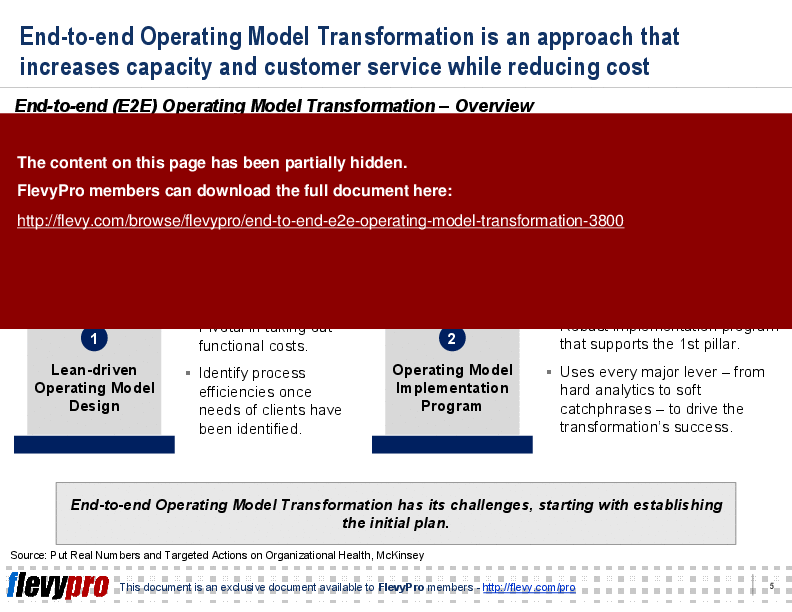
It is time for organizations to rework their Operating Models in a new way, with an approach that ensures continuous improvement, increases capacity, and enhance customer service while reducing costs. The best way to do this is through an End-to-end (E2E) Operating Model Redesign. E2E redesign is basically a simultaneous reworking of all, or many, of a company's functions based on an understanding of what clients value.
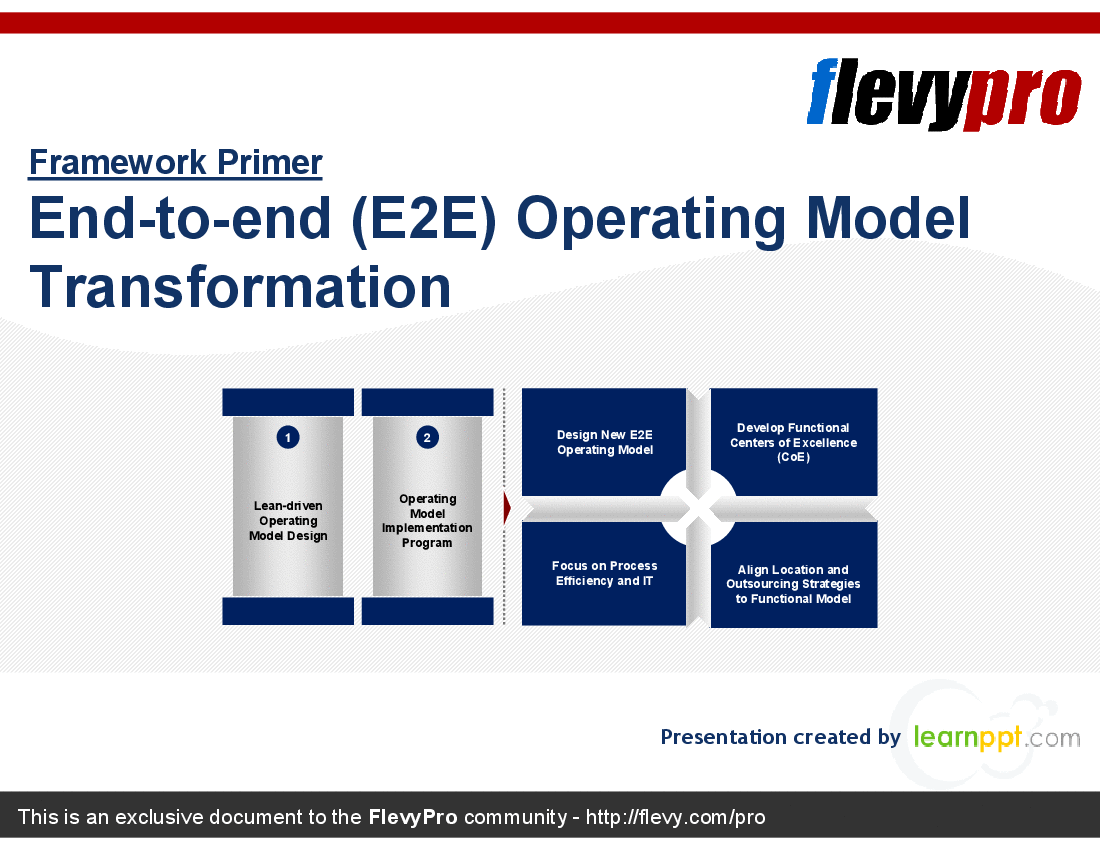
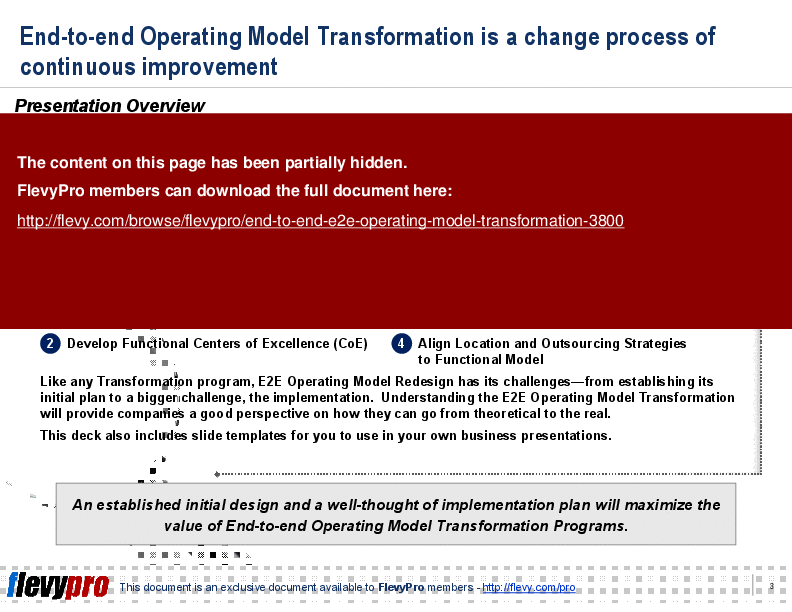
When structuring the company's End-to-end New Operating Model, expect 4 Core Changes to occur in the entire value chain based on the clients' needs. This Presentation discussed the 4 Core Changes that will guide companies as they go through the Transformation process.
1. Design New End-to-end Operating Model
2. Develop Functional Centers of Excellence (CoE)
3. Focus on Process Efficiency and IT
4. Align Location and Outsourcing Strategies to Functional Model
Like any Transformation program, E2E Operating Model Redesign has its challenges—from establishing its initial plan to a bigger challenge, the implementation. Understanding the E2E Operating Model Transformation will provide companies a good perspective on how they can go from theoretical to the real.
An established initial design and a well-thought of implementation plan will maximize the value of End-to-end Operating Model Transformation Programs.
This deck also includes slide templates for you to use in your own business presentations.
This comprehensive guide delves into the intricacies of implementing a Lean-driven Operating Model, emphasizing the importance of balancing workloads and minimizing trade-offs. The PPT also highlights the critical role of Functional Centers of Excellence (CoE) in managing specialized tasks and ensuring operational efficiency. By focusing on process efficiency and IT, it addresses the need for continuous improvement and the elimination of non-value-adding steps. The inclusion of robust performance measurement metrics ensures that companies can track progress and make data-driven decisions. This deck is an indispensable resource for executives aiming to drive transformational change in their organizations.
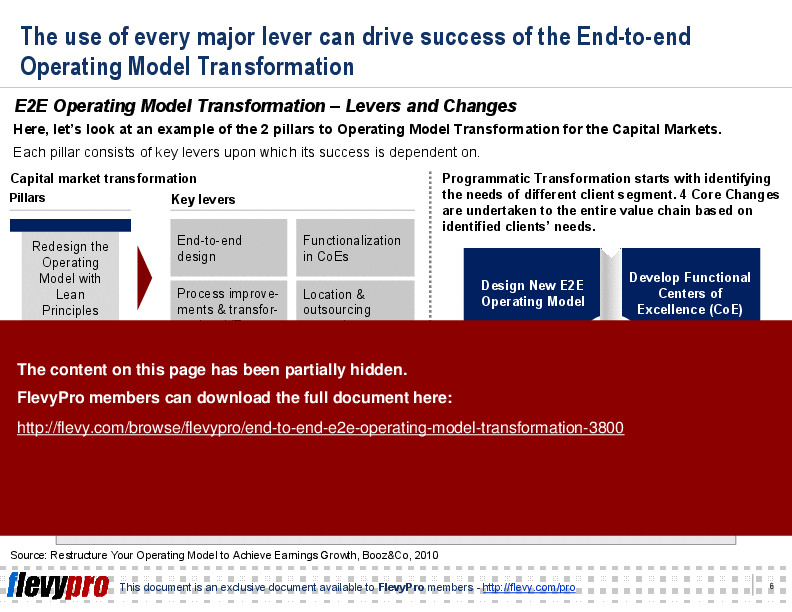
This PPT slide outlines the End-to-End (E2E) Operating Model Transformation framework for capital markets, focusing on 2 primary pillars: redesigning the operating model using lean principles and implementing a robust program. Key levers for the operating model redesign include end-to-end design, process improvements, and a data-driven design approach, emphasizing functionalization in Centers of Excellence (CoEs) and strategic outsourcing. Programmatic transformation starts with identifying client needs and involves 4 core changes: designing a new E2E operating model, enhancing process efficiency and IT, developing functional CoEs, and aligning outsourcing strategies with the functional model. This structured approach ensures comprehensive transformations tailored to client requirements, ultimately improving products, services, and client engagement.
The Lean Strategy's 5 core principles optimize the End-to-End (E2E) Operating Model to enhance value delivery and minimize waste. The first principle, Customer Value, focuses on defining value from the customer's perspective. The second principle, Value Stream, involves mapping steps that contribute to value and eliminating non-value-adding activities to streamline operations. Flow, the third principle, emphasizes maintaining a seamless transition of value to the customer without interruptions like excess inventory. The Pull principle advocates for a demand-driven approach, initiating work based on actual customer demand. Finally, the principle of Perfection promotes continuous improvement, urging organizations to regularly refine processes for operational excellence. These principles collectively enhance operational efficiency and customer satisfaction.
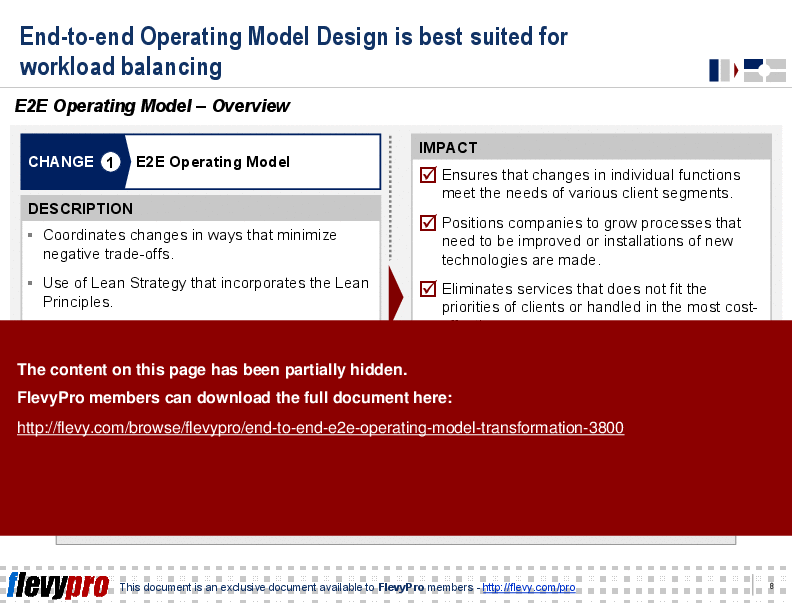
The End-to-End (E2E) Operating Model effectively manages workload balancing within organizations. It employs a structured approach to implement changes that minimize negative trade-offs, enhancing operational efficiency. Incorporating Lean Strategy principles, the model focuses on waste elimination and value delivery to customers.
Key aspects include coordinating changes across functions for a cohesive approach and promoting detailed process analysis to identify customer value creation and cost elimination. This analytical mindset is essential for operational optimization.
The model aligns changes with client segment needs, ensuring customer satisfaction, and positions companies to grow and improve processes with new technologies. Additionally, it aids in eliminating services misaligned with client priorities, leading to significant improvements in service delivery and operational performance.
This PPT slide outlines challenges and perceptions related to operational redesign within organizations. Key changes from such initiatives include new methodologies, revised processes, organizational restructuring, workforce reductions, and the introduction of new roles and cultural norms. Employee concerns often involve loss of autonomy, job security, and apprehension about new responsibilities or skills. Feelings of insecurity may arise from potential relocations and new colleagues. While these fears are valid, organizations must acknowledge employee concerns and foster a supportive environment to mitigate resistance to change. Balancing operational improvements with the emotional impacts on employees is essential for successful change initiatives and maintaining morale.
Significant changes in IT systems are essential for continuous improvement in process transformation. A structured approach using lean analysis identifies process inefficiencies through value-stream mapping and workload balancing models, allowing organizations to visualize the end-to-end value stream. This method helps determine which activities remain and which transition into Centers of Excellence (COEs). Organizations can achieve savings of 10 to 30 percent by performing tasks efficiently with a smaller workforce. The lean framework accelerates turnaround times and minimizes errors, benefiting clients directly. Additionally, freeing managers to focus on revenue-generating activities enhances strategic initiatives and decision-making through centralized data management, improving risk management capabilities. Integrating lean principles within IT systems fosters process improvements and operational optimization.
Source: Best Practices in Business Transformation, Operating Model, Continuous Improvement PowerPoint Slides: End-to-end (E2E) Operating Model Transformation PowerPoint (PPTX) Presentation Slide Deck, LearnPPT Consulting
This framework is developed by a team of former McKinsey and Big 4 consultants. The presentation follows the headline-body-bumper slide format used by global consulting firms.
For $10.00 more, you can download this document plus 2 more FlevyPro documents. That's just $13 each.
ABOUT FLEVYPRO
This document is part of the FlevyPro Library, a curated knowledge base of documents for our FlevyPro subscribers.

FlevyPro is a subscription service for on-demand business frameworks and analysis tools. FlevyPro subscribers receive access to an exclusive library of curated business documents—business framework primers, presentation templates, Lean Six Sigma tools, and more—among other exclusive benefits.
The average daily rate of a McKinsey consultant is $6,625 (not including expenses). The average price of a Flevy document is $65.
Trusted by over 10,000+ Client Organizations
Since 2012, we have provided business templates to over 10,000 businesses and organizations of all sizes, from startups and small businesses to the Fortune 100, in over 130 countries.
"I have used FlevyPro for several business applications. It is a great complement to working with expensive consultants. The quality and effectiveness of the tools are of the highest standards."
– Moritz Bernhoerster, Global Sourcing Director at Fortune 500
"I am extremely grateful for the proactiveness and eagerness to help and I would gladly recommend the Flevy team if you are looking for data and toolkits to help you work through business solutions."
– Trevor Booth, Partner, Fast Forward Consulting
"My FlevyPro subscription provides me with the most popular frameworks and decks in demand in today’s market. They not only augment my existing consulting and coaching offerings and delivery, but also keep me abreast of the latest trends, inspire new products and service offerings for my practice, and educate me
in a fraction of the time and money of other solutions. I strongly recommend FlevyPro to any consultant serious about success.
"
– Bill Branson, Founder at Strategic Business Architects
"Flevy.com has proven to be an invaluable resource library to our Independent Management Consultancy, supporting and enabling us to better serve our enterprise clients.
The value derived from our [FlevyPro] subscription in terms of the business it has helped to gain far exceeds the investment made, making a subscription a no-brainer for any growing consultancy – or in-house strategy team."
– Dean Carlton, Chief Transformation Officer, Global Village Transformations Pty Ltd.
"As a small business owner, the resource material available from FlevyPro has proven to be invaluable. The ability to search for material on demand based our project events and client requirements was great for me and proved very beneficial to my clients. Importantly, being able to easily edit and tailor
the material for specific purposes helped us to make presentations, knowledge sharing, and toolkit development, which formed part of the overall program collateral. While FlevyPro contains resource material that any consultancy, project or delivery firm must have, it is an essential part of a small firm or independent consultant's toolbox.
"
– Michael Duff, Managing Director at Change Strategy (UK)
"As a niche strategic consulting firm, Flevy and FlevyPro frameworks and documents are an on-going reference to help us structure our findings and recommendations to our clients as well as improve their clarity, strength, and visual power. For us, it is an invaluable resource to increase our impact and value."
– David Coloma, Consulting Area Manager at Cynertia Consulting
"The wide selection of frameworks is very useful to me as an independent consultant. In fact, it rivals what I had at my disposal at Big 4 Consulting firms in terms of efficacy and organization."
– Julia T., Consulting Firm Owner (Former Manager at Deloitte and Capgemini)
"I like your product. I'm frequently designing PowerPoint presentations for my company and your product has given me so many great ideas on the use of charts, layouts, tools, and frameworks. I really think the templates are a valuable asset to the job."
– Roberto Fuentes Martinez, Senior Executive Director at Technology Transformation Advisory
Receive our FREE presentation on Operational Excellence
This 50-slide presentation provides a high-level introduction to the 4 Building Blocks of Operational Excellence. Achieving OpEx requires the implementation of a Business Execution System that integrates these 4 building blocks.