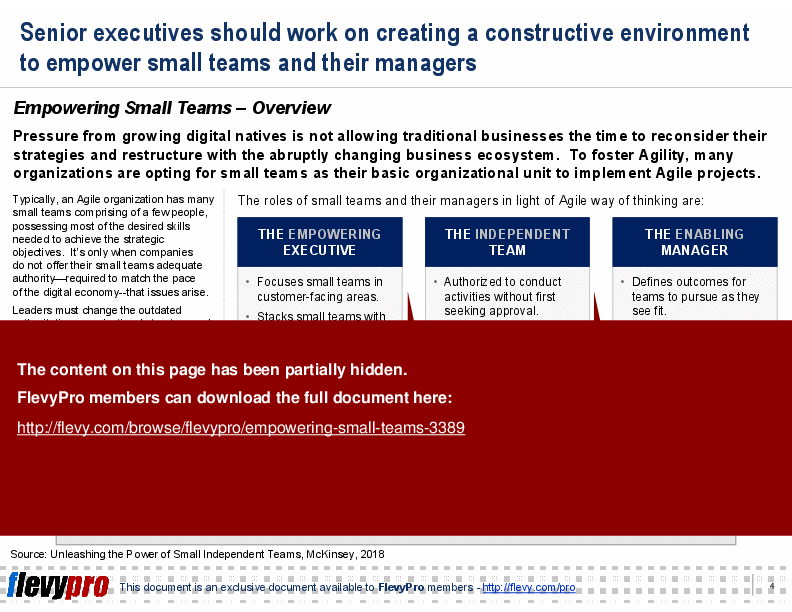

Pressure from growing digital natives is not allowing traditional businesses the time to reconsider their strategies and restructure with the abruptly changing business ecosystem. To foster Agility, many organizations are opting for small teams as their basic organizational unit to implement Agile projects.
Typically, an Agile organization has many small teams comprising of a few people, possessing most of the desired skills needed to achieve the strategic objectives. It's only when companies do not offer their small teams adequate authority—required to match the pace of the digital economy—that issues arise.
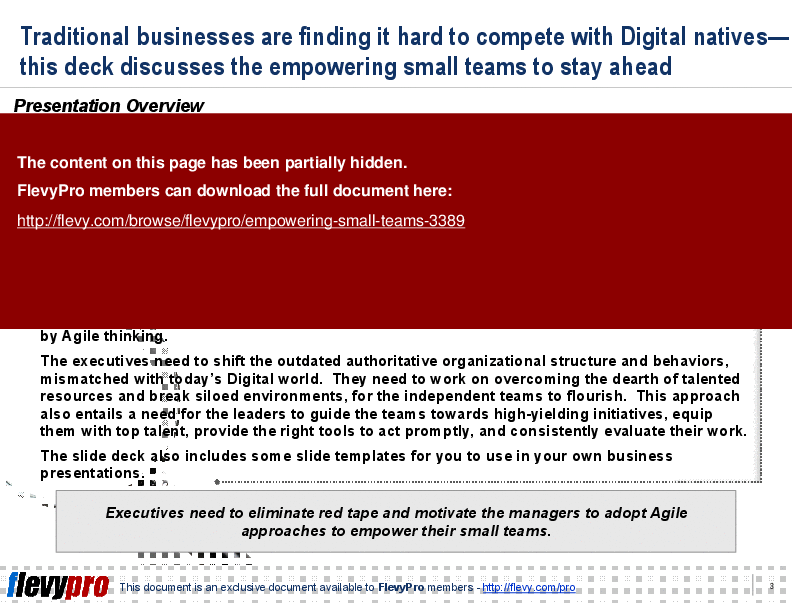
This presentation explores how senior executives can unleash the full potential of their organizations by empowering small teams, supporting their managers, and redefining their roles by Agile thinking.
The executives need to shift the outdated authoritative organizational structure and behaviors, mismatched with today's Digital world. They need to work on overcoming the dearth of talented resources and break siloed environments, for the independent teams to flourish. This approach also entails a need for the leaders to guide the teams towards high-yielding initiatives, equip them with top talent, provide the right tools to act promptly, and consistently evaluate their work.
The slide deck also includes some slide templates for you to use in your own business presentations.
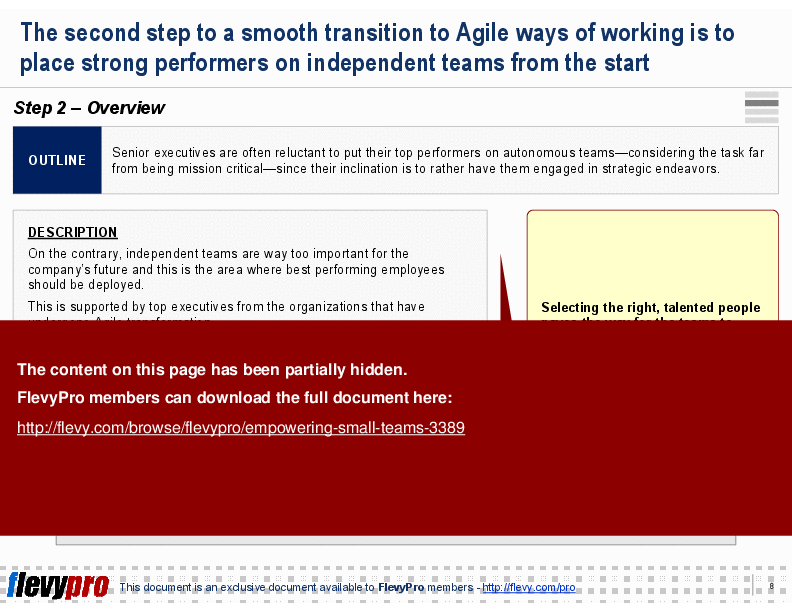
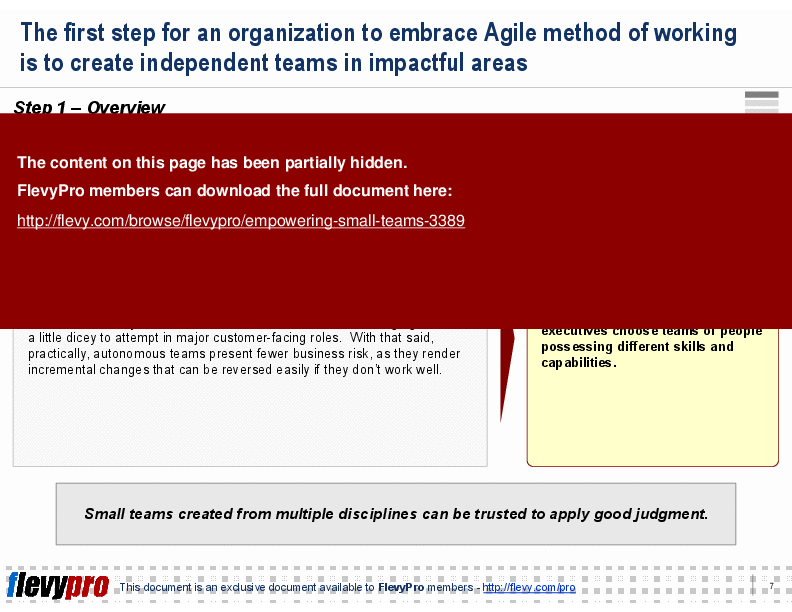
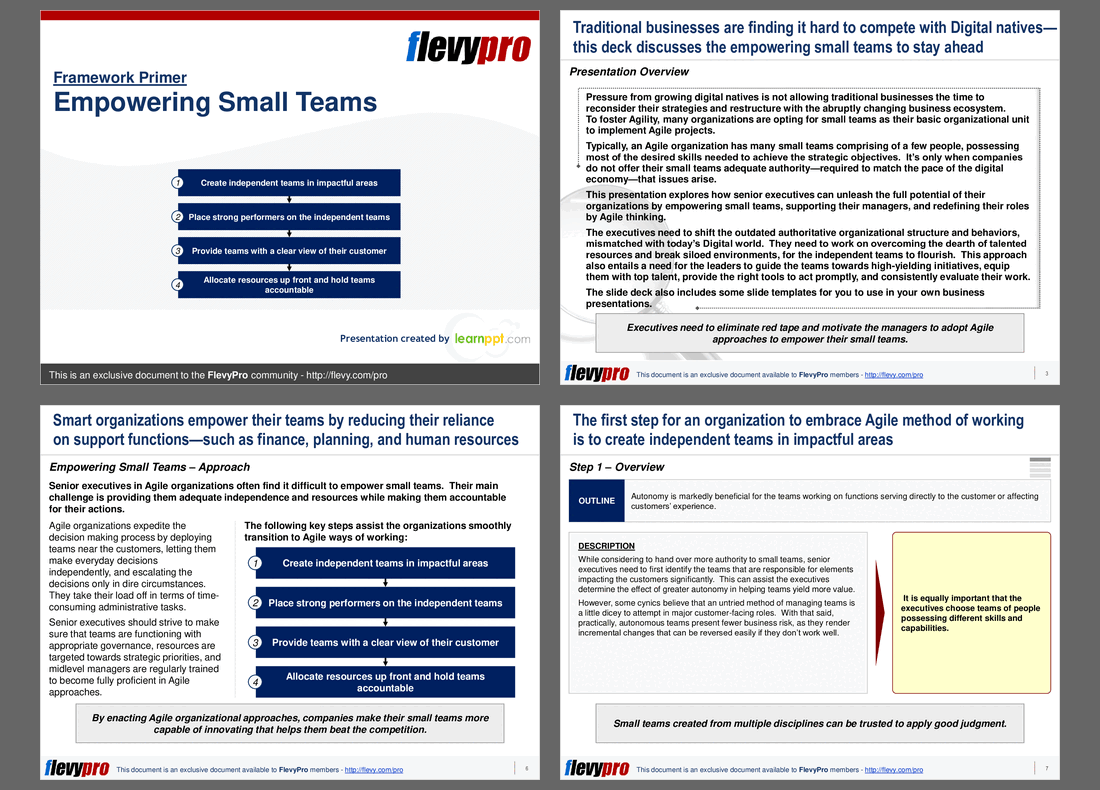
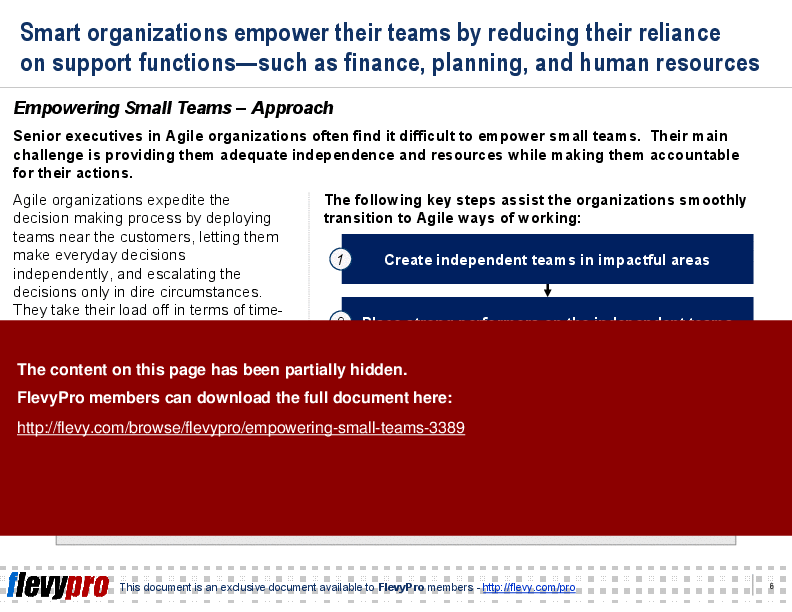
The PPT outlines a structured approach for empowering small teams within Agile organizations. It emphasizes the importance of creating independent teams in impactful areas, placing top performers in these teams from the start, and providing them with a clear view of their customer. Senior executives are encouraged to allocate resources upfront and hold teams accountable for their performance. The presentation also highlights the need for middle managers to adopt new behaviors and mindsets to support autonomous teams effectively. This comprehensive guide is essential for leaders aiming to foster agility and drive high performance in a rapidly evolving digital landscape.
Got a question about this document? Email us at flevypro@flevy.com.
Executive Summary
The "Empowering Small Teams" presentation provides a strategic framework for executives to enhance agility within their organizations by fostering independent teams. This deck, crafted by former McKinsey and Big 4 consultants, emphasizes the necessity of empowering small teams to navigate today's fast-paced digital economy. It outlines actionable steps for executives to allocate resources, redefine managerial roles, and cultivate a culture that supports autonomy and accountability. By implementing these strategies, organizations can drive innovation, improve customer engagement, and achieve strategic objectives effectively.
Who This Is For and When to Use
• Senior executives looking to enhance organizational agility
• Managers responsible for team performance and customer engagement
• Change leaders implementing Agile methodologies
• HR professionals focused on talent management and team dynamics
Best-fit moments to use this deck:
• During organizational restructuring to adopt Agile practices
• When launching new initiatives that require team autonomy
• In workshops aimed at improving team performance and accountability
• For training sessions on Agile management techniques
Learning Objectives
• Define the key characteristics of effective small teams in Agile organizations
• Build frameworks for empowering teams to make independent decisions
• Establish accountability measures for team performance
• Identify and allocate necessary resources to support team initiatives
• Create a culture that fosters collaboration and innovation
• Implement strategies for continuous evaluation and improvement of team outputs
Table of Contents
• Overview (page 3)
• Empowering Small Teams Approach (page 6)
• Empowering the Agile Manager (page 12)
• Templates (page 17)
Primary Topics Covered
• Empowering Small Teams - Strategies for creating independent teams that can operate autonomously and effectively in customer-facing roles.
• Agile Management Practices - Techniques for redefining managerial roles to support team autonomy and accountability.
• Resource Allocation - Guidelines for allocating resources upfront to empower teams and streamline decision-making processes.
• Customer-Centric Focus - Importance of providing teams with real-time data on customer experiences to enhance service delivery.
• Team Performance Measurement - Methods for establishing accountability and measuring team outcomes effectively.
• Cultural Transformation - Steps for fostering a culture that supports Agile practices and encourages innovation.
Deliverables, Templates, and Tools
• Framework for creating independent teams in impactful areas
• Guidelines for selecting top performers for autonomous teams
• Template for tracking customer experience metrics
• Resource allocation plan to support team initiatives
• Accountability framework for measuring team performance
• Training materials for Agile management practices
Slide Highlights
• Overview of the empowering small teams approach with actionable steps
• Visual representation of the roles of executives, independent teams, and enabling managers
• Key statistics on the impact of Agile practices on organizational performance
• Case studies illustrating successful implementation of small teams in various organizations
• Templates for tracking team performance and customer metrics
Potential Workshop Agenda
Empowering Small Teams Workshop (2 hours)
• Introduction to Agile principles and the importance of small teams
• Group discussion on current challenges in team dynamics
• Breakout sessions to develop team empowerment strategies
Agile Management Training (1.5 hours)
• Overview of the Agile manager's role and responsibilities
• Interactive session on redefining managerial behaviors
• Q&A on implementing Agile practices in existing teams
Customization Guidance
• Tailor the resource allocation plan to align with specific organizational goals
• Adjust performance metrics to reflect industry-specific standards
• Incorporate company-specific case studies to enhance relevance
• Modify templates to fit the unique structure of your teams
Secondary Topics Covered
• The role of digital transformation in empowering teams
• Strategies for overcoming resistance to Agile practices
• Best practices for fostering collaboration across teams
• Techniques for continuous feedback and improvement
Topic FAQ
Document FAQ
These are questions addressed within this presentation.
What are the key benefits of empowering small teams?
Empowering small teams enhances agility, fosters innovation, and improves customer engagement by allowing teams to make decisions independently.
How can I ensure my teams have the necessary resources?
Allocate resources upfront, including budgets, tools, and personnel, to enable teams to operate effectively without delays.
What role do managers play in an Agile environment?
Managers should act as enablers, defining outcomes and supporting teams rather than dictating processes.
How can I measure the success of empowered teams?
Establish clear performance metrics and regularly evaluate team outputs against these benchmarks.
What challenges might I face when implementing this approach?
Resistance to change, lack of clarity in roles, and insufficient training for managers can hinder the transition to Agile practices.
How can I promote a culture of accountability?
Encourage transparency in decision-making and establish regular check-ins to discuss progress and challenges.
What tools can support Agile management practices?
Utilize collaboration platforms like Jira or Slack to facilitate communication and project management among teams.
How do I maintain customer focus within independent teams?
Provide teams with real-time data on customer experiences and encourage regular feedback loops to inform their work.
Glossary
• Agile - A methodology that promotes iterative development and collaboration.
• Independent Teams - Small, autonomous groups empowered to make decisions and drive initiatives.
• Empowerment - Granting teams the authority and resources to act independently.
• Customer-Centric - Focusing on the needs and experiences of customers in decision-making.
• Performance Metrics - Standards used to measure the effectiveness and outcomes of teams.
• Resource Allocation - The process of distributing available resources to teams for optimal performance.
• Cultural Transformation - The process of changing organizational culture to support new practices and behaviors.
• Managerial Role - The responsibilities and functions of managers in guiding and supporting teams.
• Collaboration Tools - Software applications that facilitate teamwork and communication.
• Feedback Loops - Mechanisms for gathering input and insights to improve processes and outcomes.
• Innovation - The introduction of new ideas, products, or processes to enhance performance.
• Accountability - The obligation of teams to report on their performance and outcomes.
• Digital Transformation - The integration of digital technology into all areas of a business, fundamentally changing how it operates.
• Siloed Environment - A situation where departments or teams do not share information or collaborate effectively.
• Top Performers - Employees recognized for their exceptional skills and contributions.
• Customer Experience - The overall perception of a customer regarding their interactions with a company.
• Agile Manager - A manager who adopts Agile principles to lead and support teams effectively.
• Team Dynamics - The interactions and relationships among team members that affect performance.
• Continuous Improvement - Ongoing efforts to enhance products, services, or processes.
• Strategic Objectives - Long-term goals that guide an organization’s direction and decision-making.
Source: Best Practices in Leadership, Agile, Team Building PowerPoint Slides: Empowering Small Teams PowerPoint (PPT) Presentation Slide Deck, LearnPPT Consulting
Did you need more documents?
Consider a FlevyPro subscription from $39/month. View plans here.
For $10.00 more, you can download this document plus 2 more FlevyPro documents. That's just $13 each.
|
Download our FREE Organization, Change, & Culture, Templates
Download our free compilation of 50+ slides and templates on Organizational Design, Change Management, and Corporate Culture. Methodologies include ADKAR, Burke-Litwin Change Model, McKinsey 7-S, Competing Values Framework, etc. |