
Empowering Small Teams   23-slide PPT PowerPoint presentation slide deck (PPT)
$29.00

Empowering Small Teams (23-slide PPT PowerPoint presentation slide deck (PPT)) Preview Image
Log in to unlock full preview.
Empowering Small Teams (23-slide PPT PowerPoint presentation slide deck (PPT)) Preview Image
Arrow   Click main image to view in full screen.

Empowering Small Teams (PowerPoint PPT Slide Deck)

PowerPoint (PPT) 23 Slides FlevyPro Document

$29.00
FlevyPro price: FREE (included in subscription)
This framework is developed by a team of former McKinsey and Big 4 consultants. The presentation follows the headline-body-bumper slide format used by global consulting firms.
Add to Cart


Immediate download
Free lifetime updates

TEAM MANAGEMENT PPT DESCRIPTION

Editor Summary Empowering Small Teams is a 23-slide PowerPoint presentation by LearnPPT Consulting (crafted by former McKinsey and Big 4 consultants) that provides a strategic framework for building autonomous, customer-facing small teams. Read more

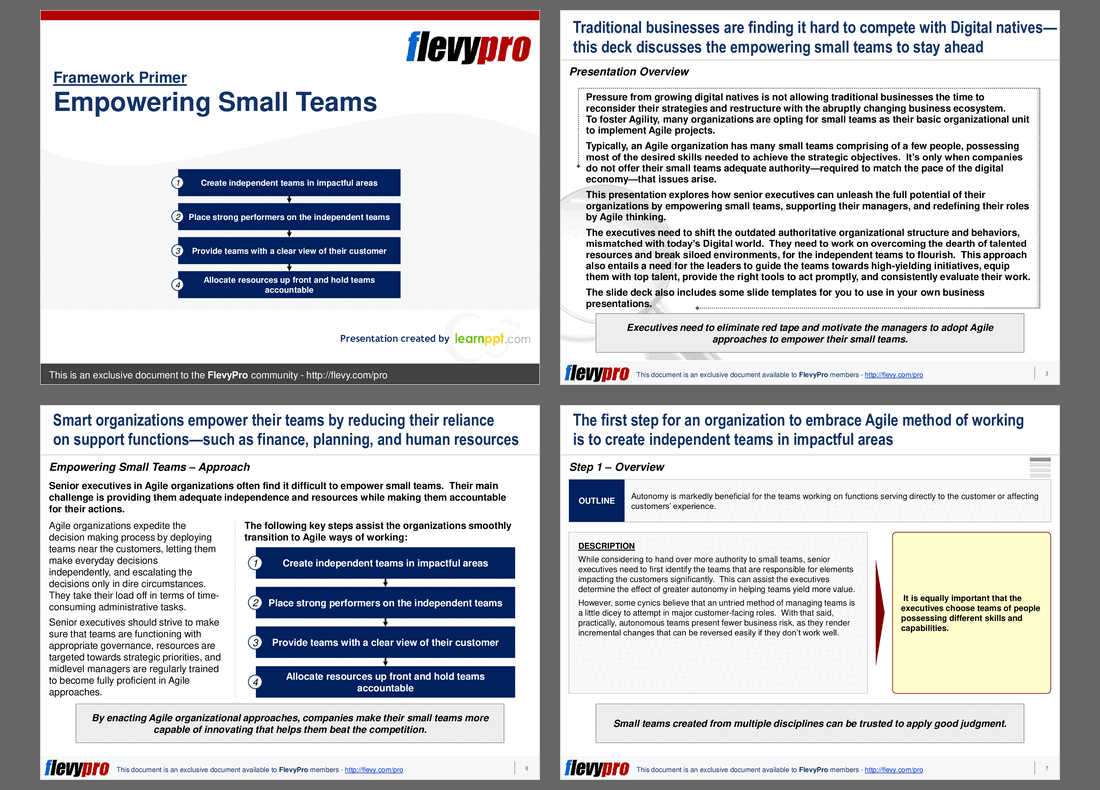
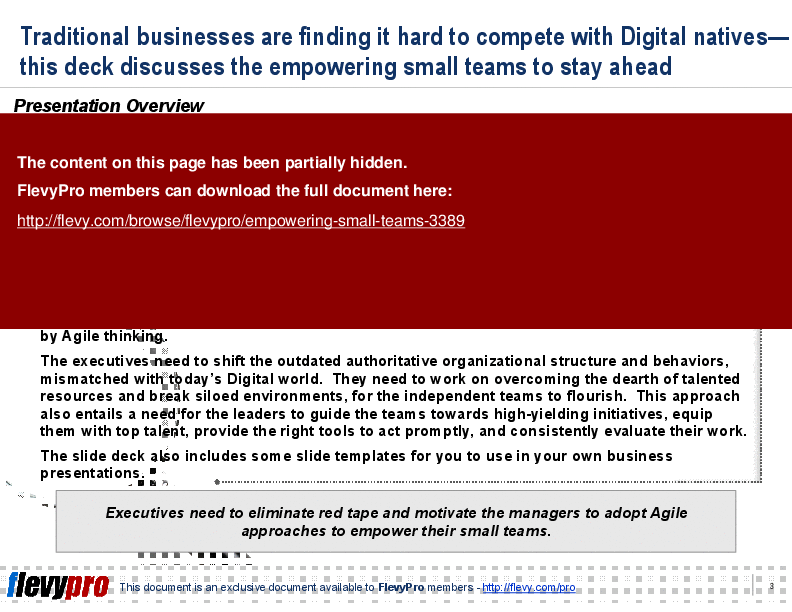
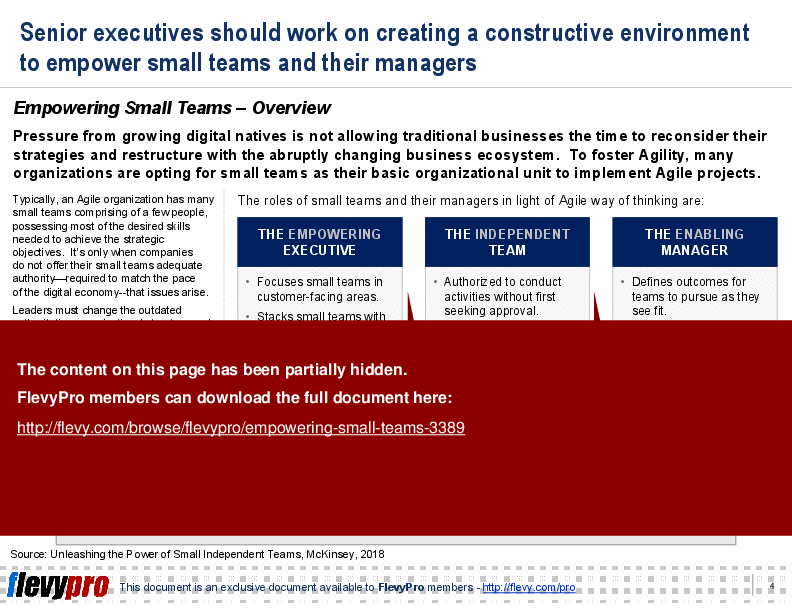
Pressure from growing digital natives is not allowing traditional businesses the time to reconsider their strategies and restructure with the abruptly changing business ecosystem. To foster Agility, many organizations are opting for small teams as their basic organizational unit to implement Agile projects.

Typically, an Agile organization has many small teams comprising of a few people, possessing most of the desired skills needed to achieve the strategic objectives. It's only when companies do not offer their small teams adequate authority—required to match the pace of the digital economy—that issues arise.

This presentation explores how senior executives can unleash the full potential of their organizations by empowering small teams, supporting their managers, and redefining their roles by Agile thinking.

The executives need to shift the outdated authoritative organizational structure and behaviors, mismatched with today's Digital world. They need to work on overcoming the dearth of talented resources and break siloed environments, for the independent teams to flourish. This approach also entails a need for the leaders to guide the teams towards high-yielding initiatives, equip them with top talent, provide the right tools to act promptly, and consistently evaluate their work.

The slide deck also includes some slide templates for you to use in your own business presentations.

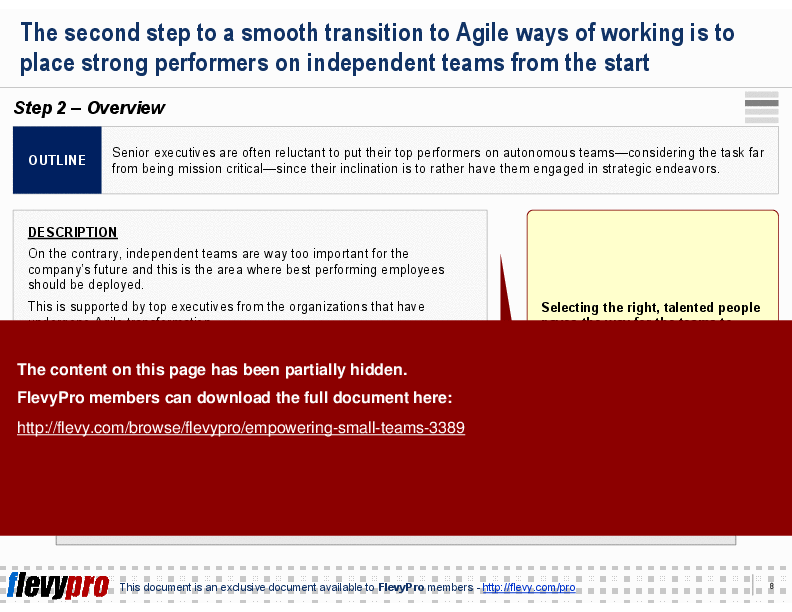
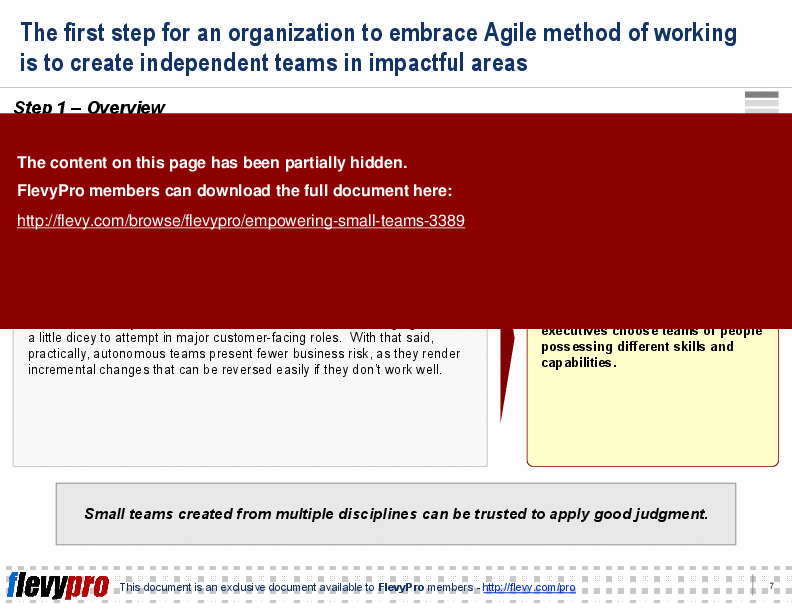
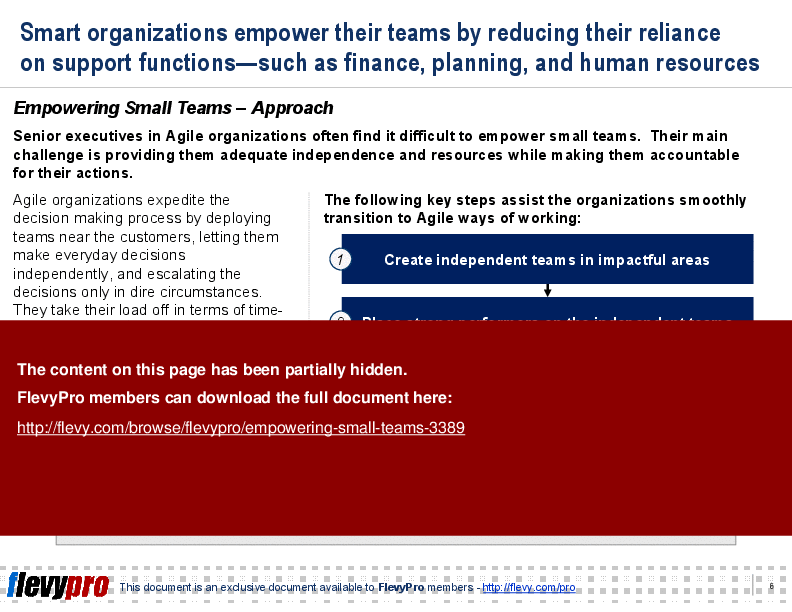
The PPT outlines a structured approach for empowering small teams within Agile organizations. It emphasizes the importance of creating independent teams in impactful areas, placing top performers in these teams from the start, and providing them with a clear view of their customer. Senior executives are encouraged to allocate resources upfront and hold teams accountable for their performance. The presentation also highlights the need for middle managers to adopt new behaviors and mindsets to support autonomous teams effectively. This comprehensive guide is essential for leaders aiming to foster agility and drive high performance in a rapidly evolving digital landscape.

Got a question about this document? Email us at flevypro@flevy.com.

MARCUS OVERVIEW

This synopsis was written by Marcus [?] based on the analysis of the full 23-slide presentation.


Executive Summary
The "Empowering Small Teams" presentation provides a strategic framework for executives to enhance agility within their organizations by fostering independent teams. This deck, crafted by former McKinsey and Big 4 consultants, emphasizes the necessity of empowering small teams to navigate today's fast-paced digital economy. It outlines actionable steps for executives to allocate resources, redefine managerial roles, and cultivate a culture that supports autonomy and accountability. By implementing these strategies, organizations can drive innovation, improve customer engagement, and achieve strategic objectives effectively.

Who This Is For and When to Use
•  Senior executives looking to enhance organizational agility
•  Managers responsible for team performance and customer engagement
•  Change leaders implementing Agile methodologies
•  HR professionals focused on talent management and team dynamics

Best-fit moments to use this deck:
•  During organizational restructuring to adopt Agile practices
•  When launching new initiatives that require team autonomy
•  In workshops aimed at improving team performance and accountability
•  For training sessions on Agile management techniques

Learning Objectives
•  Define the key characteristics of effective small teams in Agile organizations
•  Build frameworks for empowering teams to make independent decisions
•  Establish accountability measures for team performance
•  Identify and allocate necessary resources to support team initiatives
•  Create a culture that fosters collaboration and innovation
•  Implement strategies for continuous evaluation and improvement of team outputs

Table of Contents
•  Overview (page 3)
•  Empowering Small Teams Approach (page 6)
•  Empowering the Agile Manager (page 12)
•  Templates (page 17)

Primary Topics Covered
•  Empowering Small Teams - Strategies for creating independent teams that can operate autonomously and effectively in customer-facing roles.
•  Agile Management Practices - Techniques for redefining managerial roles to support team autonomy and accountability.
•  Resource Allocation - Guidelines for allocating resources upfront to empower teams and streamline decision-making processes.
•  Customer-Centric Focus - Importance of providing teams with real-time data on customer experiences to enhance service delivery.
•  Team Performance Measurement - Methods for establishing accountability and measuring team outcomes effectively.
•  Cultural Transformation - Steps for fostering a culture that supports Agile practices and encourages innovation.

Deliverables, Templates, and Tools
•  Framework for creating independent teams in impactful areas
•  Guidelines for selecting top performers for autonomous teams
•  Template for tracking customer experience metrics
•  Resource allocation plan to support team initiatives
•  Accountability framework for measuring team performance
•  Training materials for Agile management practices

Slide Highlights
•  Overview of the empowering small teams approach with actionable steps
•  Visual representation of the roles of executives, independent teams, and enabling managers
•  Key statistics on the impact of Agile practices on organizational performance
•  Case studies illustrating successful implementation of small teams in various organizations
•  Templates for tracking team performance and customer metrics

Potential Workshop Agenda
Empowering Small Teams Workshop (2 hours)
•  Introduction to Agile principles and the importance of small teams
•  Group discussion on current challenges in team dynamics
•  Breakout sessions to develop team empowerment strategies

Agile Management Training (1.5 hours)
•  Overview of the Agile manager's role and responsibilities
•  Interactive session on redefining managerial behaviors
•  Q&A on implementing Agile practices in existing teams

Customization Guidance
•  Tailor the resource allocation plan to align with specific organizational goals
•  Adjust performance metrics to reflect industry-specific standards
•  Incorporate company-specific case studies to enhance relevance
•  Modify templates to fit the unique structure of your teams

Secondary Topics Covered
•  The role of digital transformation in empowering teams
•  Strategies for overcoming resistance to Agile practices
•  Best practices for fostering collaboration across teams
•  Techniques for continuous feedback and improvement

Topic FAQ

What are the core elements required to empower small teams in an organization?

Empowering small teams requires upfront resource allocation, placing top performers into autonomous teams, providing real-time customer data, redefining managers as enablers, establishing accountability measures, and fostering a supportive culture. Practical deliverables commonly include a resource allocation plan and an accountability framework.

How should managers’ roles change to support autonomous teams?

Managers should shift from directing work to defining outcomes, removing impediments, coaching teams, and enabling decision-making autonomy. The presentation recommends redefining managerial behaviors and using Agile management training materials to support the transition, including interactive sessions on new manager responsibilities.

How can organizations measure success of empowered small teams?

Measure success by setting clear performance metrics, tracking team outputs against customer outcomes, and using customer experience metrics. The presentation provides templates specifically for tracking team performance and customer experience metrics to operationalize measurement and reporting.

What common challenges occur when transitioning to small autonomous teams?

Common challenges include resistance to change, unclear role definitions, insufficient manager training, siloed environments, and shortages of top talent. These obstacles typically manifest as role clarity issues and training gaps that require targeted interventions and change management.

What should I look for in a PowerPoint toolkit on empowering small teams?

Seek frameworks that define independent team models, templates for customer and performance metrics, resource allocation plans, guidance on selecting top performers, and manager training materials. A useful toolkit will include a resource allocation plan and an accountability framework as core assets.

How much time should I plan for workshops or training when implementing small-team changes?

Short, focused sessions can introduce principles and practice: examples include a 2-hour Empowering Small Teams workshop and a 1.5-hour Agile Management Training session, followed by role-specific coaching and breakout exercises to reinforce new behaviors.

We’re restructuring after a merger—how can small teams help integrate customer-facing functions?

Small autonomous teams can reduce handoffs and speed decisions by colocating needed skills, giving teams customer visibility, and allocating budgets up front. Use templates for tracking customer experience metrics and assign top performers to independent teams to support integration efforts.

Our middle managers resist giving up control—how can we shift their mindsets?

Address resistance by clarifying new managerial outcomes, running interactive sessions on redefining behaviors, providing Agile management training, and demonstrating accountability mechanisms. Practical steps include using Agile manager training materials and facilitated role-redefinition workshops.

Document FAQ
These are questions addressed within this presentation.

What are the key benefits of empowering small teams?
Empowering small teams enhances agility, fosters innovation, and improves customer engagement by allowing teams to make decisions independently.

How can I ensure my teams have the necessary resources?
Allocate resources upfront, including budgets, tools, and personnel, to enable teams to operate effectively without delays.

What role do managers play in an Agile environment?
Managers should act as enablers, defining outcomes and supporting teams rather than dictating processes.

How can I measure the success of empowered teams?
Establish clear performance metrics and regularly evaluate team outputs against these benchmarks.

What challenges might I face when implementing this approach?
Resistance to change, lack of clarity in roles, and insufficient training for managers can hinder the transition to Agile practices.

How can I promote a culture of accountability?
Encourage transparency in decision-making and establish regular check-ins to discuss progress and challenges.

What tools can support Agile management practices?
Utilize collaboration platforms like Jira or Slack to facilitate communication and project management among teams.

How do I maintain customer focus within independent teams?
Provide teams with real-time data on customer experiences and encourage regular feedback loops to inform their work.

Glossary
•  Agile - A methodology that promotes iterative development and collaboration.
•  Independent Teams - Small, autonomous groups empowered to make decisions and drive initiatives.
•  Empowerment - Granting teams the authority and resources to act independently.
•  Customer-Centric - Focusing on the needs and experiences of customers in decision-making.
•  Performance Metrics - Standards used to measure the effectiveness and outcomes of teams.
•  Resource Allocation - The process of distributing available resources to teams for optimal performance.
•  Cultural Transformation - The process of changing organizational culture to support new practices and behaviors.
•  Managerial Role - The responsibilities and functions of managers in guiding and supporting teams.
•  Collaboration Tools - Software applications that facilitate teamwork and communication.
•  Feedback Loops - Mechanisms for gathering input and insights to improve processes and outcomes.
•  Innovation - The introduction of new ideas, products, or processes to enhance performance.
•  Accountability - The obligation of teams to report on their performance and outcomes.
•  Digital Transformation - The integration of digital technology into all areas of a business, fundamentally changing how it operates.
•  Siloed Environment - A situation where departments or teams do not share information or collaborate effectively.
•  Top Performers - Employees recognized for their exceptional skills and contributions.
•  Customer Experience - The overall perception of a customer regarding their interactions with a company.
•  Agile Manager - A manager who adopts Agile principles to lead and support teams effectively.
•  Team Dynamics - The interactions and relationships among team members that affect performance.
•  Continuous Improvement - Ongoing efforts to enhance products, services, or processes.
•  Strategic Objectives - Long-term goals that guide an organization’s direction and decision-making.

TEAM MANAGEMENT PPT SLIDES

Empowering Small Teams: Agile Transition Strategies

Transforming Managerial Roles for Agile Success

Empowering Independent Teams for Enhanced Customer Impact

Empowering Teams: Defining Outcomes and Autonomy

Empowering Teams with Real-Time Customer Insights

Source: Best Practices in Leadership, Agile, Team Building PowerPoint Slides: Empowering Small Teams PowerPoint (PPT) Presentation Slide Deck, LearnPPT Consulting


$29.00
FlevyPro price: FREE (included in subscription)
This framework is developed by a team of former McKinsey and Big 4 consultants. The presentation follows the headline-body-bumper slide format used by global consulting firms.
Add to Cart
  

Did you need more documents?

Consider a FlevyPro subscription from $39/month. View plans here.

For $10.00 more, you can download this document plus 2 more FlevyPro documents. That's just $13 each.

ABOUT FLEVYPRO

This document is part of the FlevyPro Library, a curated knowledge base of documents for our FlevyPro subscribers.

FlevyPro is a subscription service for on-demand business frameworks and analysis tools. FlevyPro subscribers receive access to an exclusive library of curated business documents—business framework primers, presentation templates, Lean Six Sigma tools, and more—among other exclusive benefits.

Click here to learn more about FlevyPro and its benefits.

Did you know?
The average daily rate of a McKinsey consultant is $6,625 (not including expenses). The average price of a Flevy document is $65.


Trusted by over 10,000+ Client Organizations
Since 2012, we have provided business templates to over 10,000 businesses and organizations of all sizes, from startups and small businesses to the Fortune 100, in over 130 countries.
AT&T GE Cisco Intel IBM Coke Dell Toyota HP Nike Samsung Microsoft Astrazeneca JP Morgan KPMG Walgreens Walmart 3M Kaiser Oracle SAP Google E&Y Volvo Bosch Merck Fedex Shell Amgen Eli Lilly Roche AIG Abbott Amazon PwC T-Mobile Broadcom Bayer Pearson Titleist ConEd Pfizer NTT Data Schwab


Read Customer Testimonials

 
"Flevy is our 'go to' resource for management material, at an affordable cost. The Flevy library is comprehensive and the content deep, and typically provides a great foundation for us to further develop and tailor our own service offer."

– Chris McCann, Founder at Resilient.World
 
"One of the great discoveries that I have made for my business is the Flevy library of training materials.

As a Lean Transformation Expert, I am always making presentations to clients on a variety of topics: Training, Transformation, Total Productive Maintenance, Culture, Coaching, Tools, Leadership Behavior, etc. Flevy "

– Ed Kemmerling, Senior Lean Transformation Expert at PMG
 
"Flevy is now a part of my business routine. I visit Flevy at least 3 times each month.

Flevy has become my preferred learning source, because what it provides is practical, current, and useful in this era where the business world is being rewritten.

In today's environment where there are so "

– Omar Hernán Montes Parra, CEO at Quantum SFE
 
"I have used Flevy services for a number of years and have never, ever been disappointed. As a matter of fact, David and his team continue, time after time, to impress me with their willingness to assist and in the real sense of the word. I have concluded in fact "

– Roberto Pelliccia, Senior Executive in International Hospitality
 
"My FlevyPro subscription provides me with the most popular frameworks and decks in demand in today’s market. They not only augment my existing consulting and coaching offerings and delivery, but also keep me abreast of the latest trends, inspire new products and service offerings for my practice, and educate me "

– Bill Branson, Founder at Strategic Business Architects
 
"As a young consulting firm, requests for input from clients vary and it's sometimes impossible to provide expert solutions across a broad spectrum of requirements. That was before I discovered Flevy.com.

Through subscription to this invaluable site of a plethora of topics that are key and crucial to consulting, I "

– Nishi Singh, Strategist and MD at NSP Consultants
 
"Last Sunday morning, I was diligently working on an important presentation for a client and found myself in need of additional content and suitable templates for various types of graphics. Flevy.com proved to be a treasure trove for both content and design at a reasonable price, considering the time I "

– M. E., Chief Commercial Officer, International Logistics Service Provider
 
"[Flevy] produces some great work that has been/continues to be of immense help not only to myself, but as I seek to provide professional services to my clients, it gives me a large "tool box" of resources that are critical to provide them with the quality of service and outcomes they are expecting."

– Royston Knowles, Executive with 50+ Years of Board Level Experience


Customers Also Bought These Documents


Customers Also Like These Documents

Explore Templates on Related Management Topics


Your Recently Viewed Documents
Download our FREE Organization, Change, & Culture, Templates

Download our free compilation of 50+ slides and templates on Organizational Design, Change Management, and Corporate Culture. Methodologies include ADKAR, Burke-Litwin Change Model, McKinsey 7-S, Competing Values Framework, etc.