
How do people make decisions? Do they always follow a rational linear process to come to a conclusion?
Studies have suggested that the traditional Decision Making model—commonly known as the Rational Decision Making Model—does not explain the whole ambit of Decision Making.
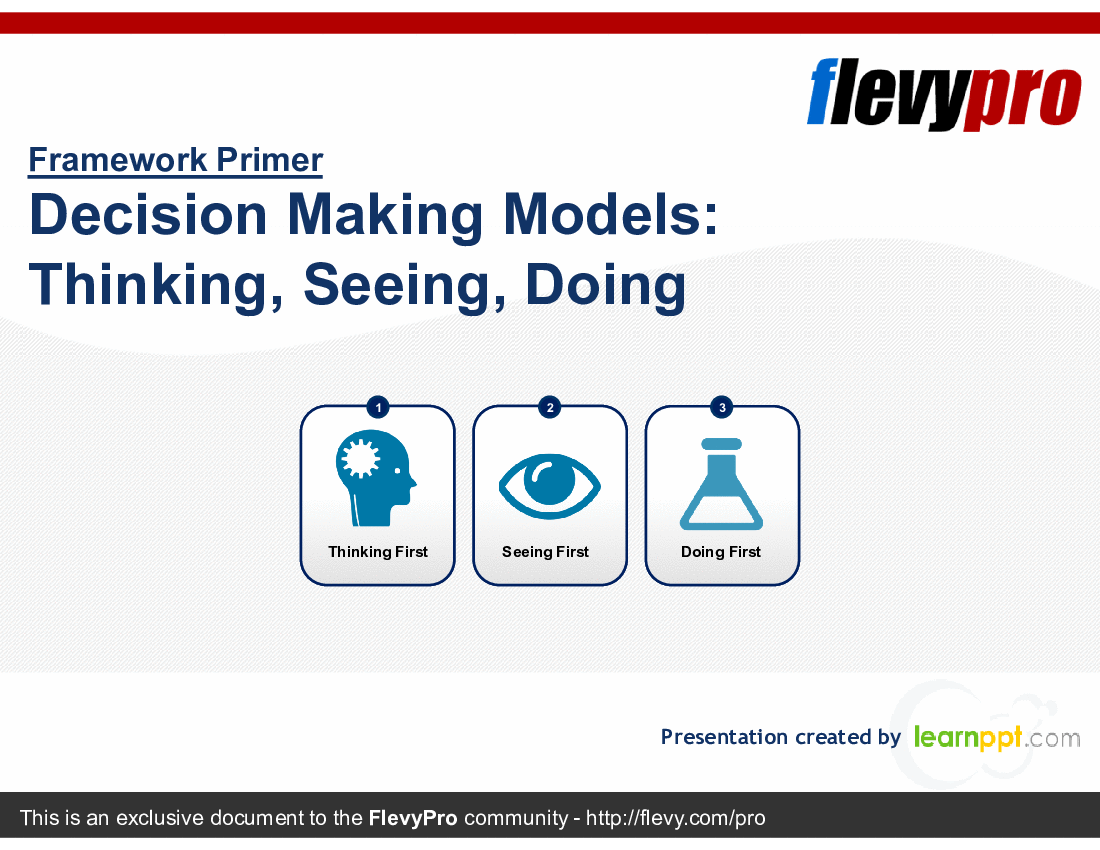
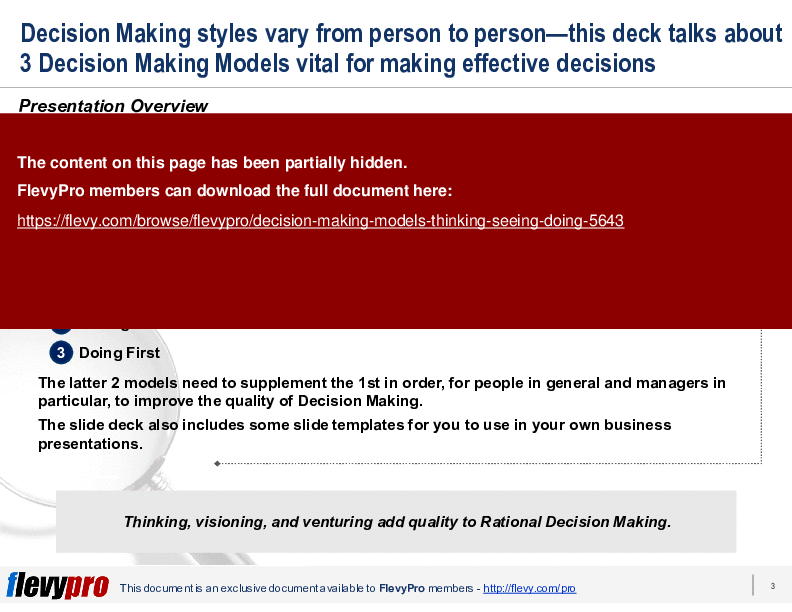
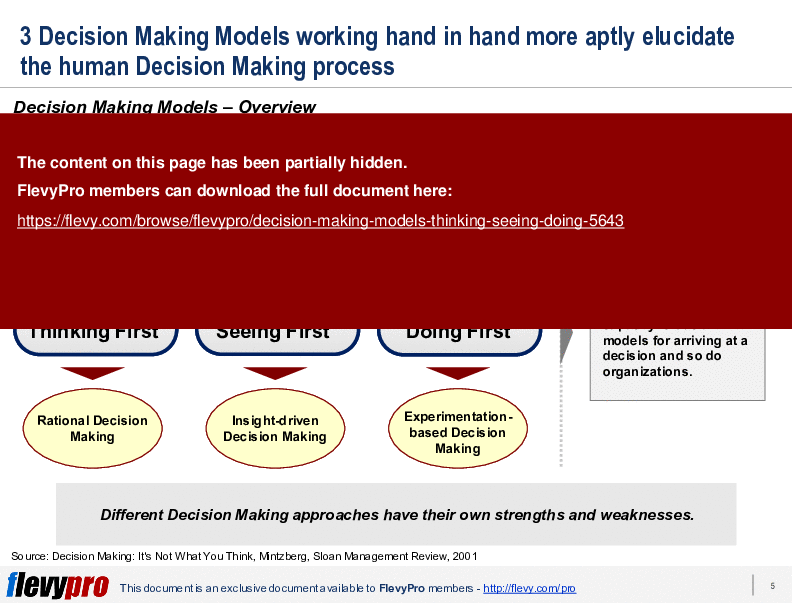
This presentation discusses 3 Decision Making Models that, experts suggest, are used by people to reach quality decisions.
1. Thinking First
2. Seeing First
3. Doing First
The latter 2 models need to supplement the 1st in order, for people in general and managers in particular, to improve the quality of Decision Making.
The slide deck also includes some slide templates for you to use in your own business presentations.
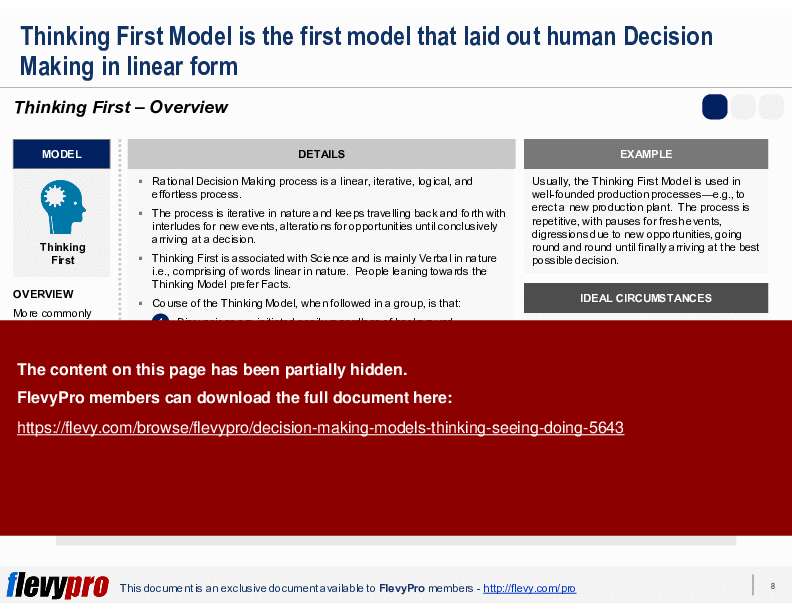
This presentation delves into the intricacies of the Thinking First model, which is grounded in rational decision-making. It outlines a linear, iterative process that is logical and methodical. The model is particularly effective in structured environments like production processes, where decisions are made through a series of well-defined steps. However, it also acknowledges the limitations of this approach, highlighting that real-life decision-making is often more chaotic and less linear.
The Seeing First model emphasizes the importance of visualization and insight in decision-making. This approach is ideal for situations requiring creative solutions and innovation. It involves a process of conceptualization, followed by an "Ah-ha" moment of illumination, often occurring after a period of rest or disengagement from the problem. This model is particularly useful in scenarios where multiple elements need to be integrated into a cohesive solution, and where communication and commitment are crucial.
The Doing First model focuses on action-oriented decision-making, where practical experimentation and trial-and-error are key. This approach is beneficial in unique, complex situations where traditional analysis may not be feasible. It involves diving headfirst into the problem, learning from the outcomes, and iterating based on experience. This model is effective in dynamic environments where quick, adaptive responses are necessary to navigate uncharted territories.
Got a question about this document? Email us at flevypro@flevy.com.
Executive Summary
The "Decision Making Models: Thinking, Seeing, Doing" presentation provides a comprehensive exploration of 3 advanced decision-making models essential for effective decision-making in business contexts. Developed by experts with backgrounds in top consulting firms, this presentation equips corporate executives and consultants with the insights needed to enhance their strategic choices. By understanding the interplay between rational, insight-driven, and experiential decision-making, users can improve their decision-making processes and outcomes. The included templates facilitate practical application in real-world scenarios.
Who This Is For and When to Use
• Corporate executives seeking to refine their decision-making strategies
• Consultants aiming to enhance client decision-making frameworks
• Business leaders involved in strategic planning and execution
• Teams focused on improving operational efficiency through better decision-making
Best-fit moments to use this deck:
• During strategic planning sessions to evaluate decision-making frameworks
• In workshops aimed at enhancing team decision-making capabilities
• When introducing new decision-making models to stakeholders
Learning Objectives
• Define the 3 decision-making models: Thinking First, Seeing First, and Doing First
• Analyze the strengths and weaknesses of each decision-making model
• Apply the appropriate decision-making model based on situational needs
• Create a structured approach to decision-making that incorporates insights from all 3 models
• Develop templates for practical implementation of decision-making strategies
• Foster a culture of informed decision-making within teams
Table of Contents
• Overview (page 3)
• Decision Making Models (page 5)
• Thinking First (page 8)
• Seeing First (page 13)
• Doing First (page 15)
• Templates (page 17)
Primary Topics Covered
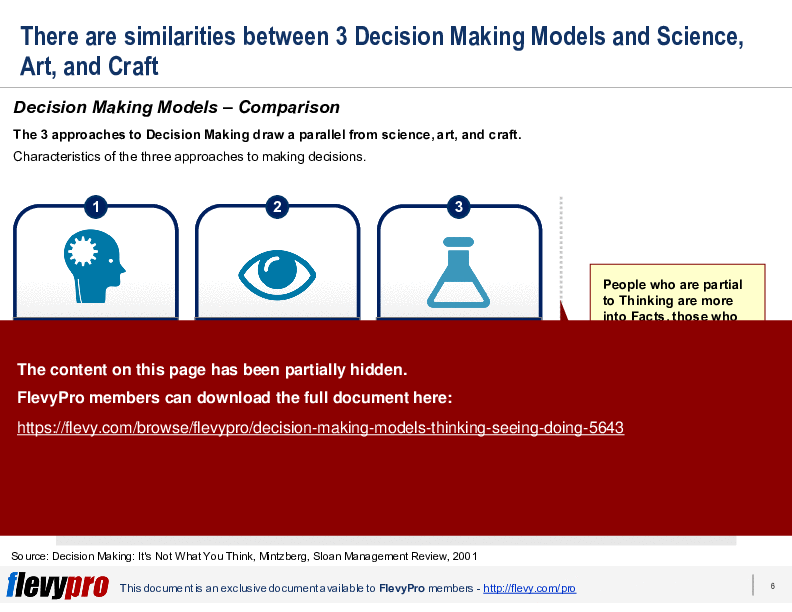
• Thinking First - This model emphasizes a rational, linear approach to decision-making, focusing on structured analysis and logical reasoning.
• Seeing First - This model highlights the importance of visualization and creative insight in the decision-making process, allowing for innovative solutions.
• Doing First - This model advocates for experiential learning through action, emphasizing trial and error as a means to effective decision-making.
Deliverables, Templates, and Tools
• Templates for each decision-making model to facilitate structured analysis
• Example frameworks for applying the Thinking First model in business scenarios
• Tools for visualizing insights in the Seeing First model
• Guidelines for implementing the Doing First model through practical experimentation
Slide Highlights
• Overview of the 3 decision-making models and their interconnections
• Visual comparisons of the Thinking First, Seeing First, and Doing First models
• Case studies illustrating the application of each model in real-world situations
• Templates designed for immediate use in decision-making processes
Potential Workshop Agenda
Introduction to Decision-Making Models (30 minutes)
• Overview of the 3 models and their significance
• Discussion on the importance of effective decision-making
Model Deep Dive Sessions (90 minutes)
• Breakout sessions focusing on each model: Thinking First, Seeing First, Doing First
• Group activities to apply each model to case studies
Practical Application and Templates (60 minutes)
• Hands-on session to customize templates for participants' specific needs
• Sharing best practices and insights from group discussions
Customization Guidance
• Tailor the templates to reflect specific organizational terminology and frameworks
• Adjust the case studies to align with industry-specific challenges
• Incorporate company-specific metrics and KPIs into the decision-making models
Secondary Topics Covered
• The role of cognitive biases in decision-making
• Strategies for overcoming common decision-making pitfalls
• The impact of organizational culture on decision-making processes
Topic FAQ
Document FAQ
These are questions addressed within this presentation.
What are the 3 decision-making models discussed?
The 3 models are Thinking First, Seeing First, and Doing First, each offering unique approaches to decision-making.
How can these models improve decision-making in my organization?
By understanding and applying these models, organizations can enhance their decision-making processes, leading to more effective and informed outcomes.
Are there templates included in the presentation?
Yes, the presentation includes templates designed for practical application of each decision-making model.
What types of organizations can benefit from this presentation?
Any organization, from startups to large enterprises, can benefit from these decision-making models to improve their strategic planning and execution.
Can these models be applied to team decision-making?
Absolutely. These models are designed to enhance both individual and team decision-making capabilities.
How do I know which model to use in a given situation?
The choice of model depends on the context of the decision, including the complexity of the problem and the available data.
What is the significance of the Seeing First model?
The Seeing First model emphasizes the role of visualization and creative insight, which can lead to innovative solutions that may not emerge from purely rational analysis.
How does the Doing First model facilitate learning?
The Doing First model encourages experimentation and learning through action, allowing organizations to discover effective solutions through trial and error.
Glossary
• Thinking First - A decision-making model focused on rational analysis and structured reasoning.
• Seeing First - A model emphasizing visualization and creative insights in decision-making.
• Doing First - A model that promotes experiential learning through action and experimentation.
• Decision-Making Process - The series of steps taken to arrive at a decision.
• Cognitive Biases - Systematic patterns of deviation from norm or rationality in judgment.
• Templates - Pre-designed frameworks for structuring decision-making processes.
• Case Studies - Real-world examples used to illustrate the application of decision-making models.
• Organizational Culture - The shared values, beliefs, and practices that shape how decisions are made within an organization.
• KPI (Key Performance Indicator) - A measurable value that demonstrates how effectively a company is achieving key business objectives.
• Strategic Planning - The process of defining a company's direction and making decisions on allocating resources to pursue this direction.
• Experiential Learning - Learning through experience, often involving hands-on practice and reflection.
• Visualization - The process of creating visual representations of information or concepts to aid understanding and decision-making.
Source: Best Practices in Decision Making PowerPoint Slides: Decision Making Models: Thinking, Seeing, Doing PowerPoint (PPTX) Presentation Slide Deck, LearnPPT Consulting
Did you need more documents?
Consider a FlevyPro subscription from $39/month. View plans here.
For $10.00 more, you can download this document plus 2 more FlevyPro documents. That's just $13 each.
|
Download our FREE Strategy & Transformation Framework Templates
Download our free compilation of 50+ Strategy & Transformation slides and templates. Frameworks include McKinsey 7-S, Balanced Scorecard, Disruptive Innovation, BCG Curve, and many more. |