
Strategic Decision Making   30-slide PPT PowerPoint presentation slide deck (PPT)
$29.00

Strategic Decision Making (30-slide PPT PowerPoint presentation slide deck (PPT)) Preview Image
Log in to unlock full preview.
Strategic Decision Making (30-slide PPT PowerPoint presentation slide deck (PPT)) Preview Image
Arrow   Click main image to view in full screen.

Strategic Decision Making (PowerPoint PPT Slide Deck)

PowerPoint (PPT) 30 Slides FlevyPro Document

Top 1,000 Best Practice $29.00
FlevyPro price: FREE (included in subscription)
This framework is developed by a team of former McKinsey and Big 4 consultants. The presentation follows the headline-body-bumper slide format used by global consulting firms.
Add to Cart


Immediate download
Free lifetime updates

DECISION MAKING PPT DESCRIPTION

Editor Summary Strategic Decision Making is a 30-slide PowerPoint by LearnPPT Consulting presenting the Mediating Assessments Protocol (MAP), a structured approach to reduce judgment errors in strategic decisions. Read more

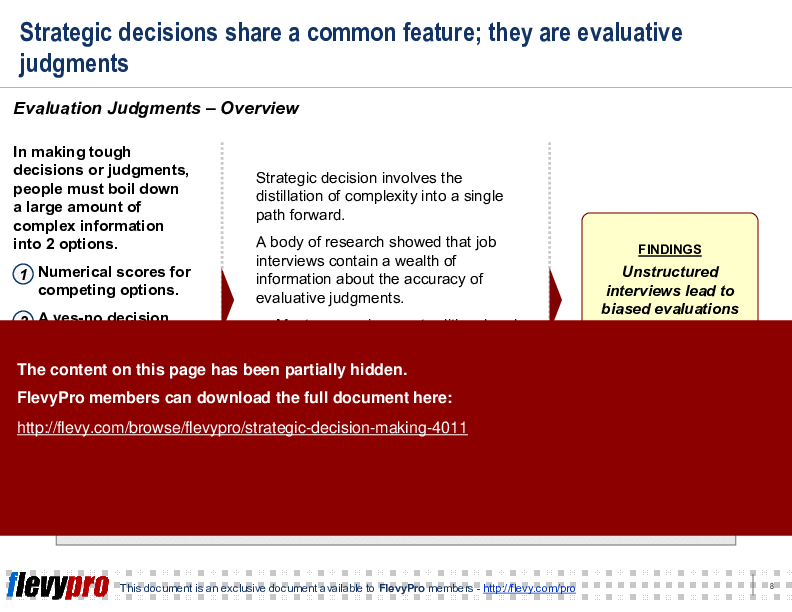
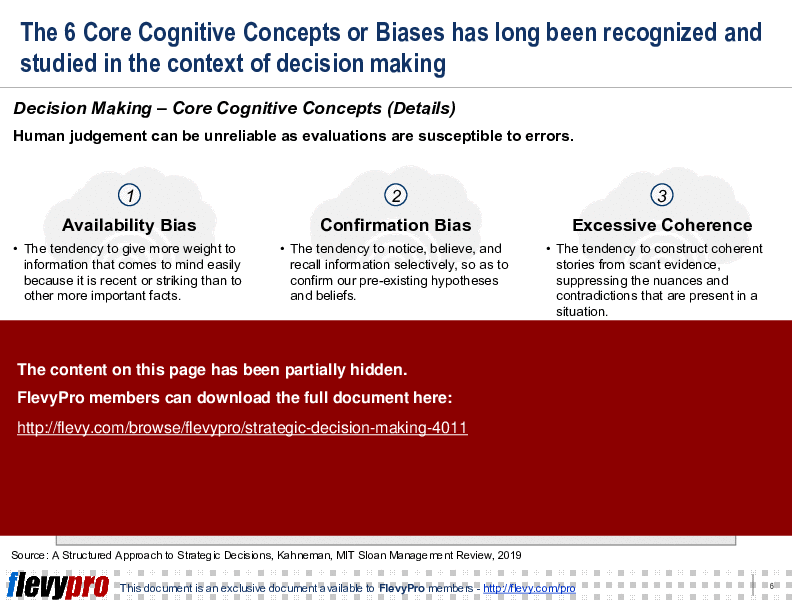
Human judgment can be unreliable as these are all susceptible to errors. In organizations, a lot of strategic decisions are made. These strategic decisions share a common feature: they are evaluative judgments.

In making these tough calls, large amount of complex information must be weighed down and evaluated. While some management decisions are made without weighing quite so much information, yet strategic decisions involve the distillation of complexity into a single path forward.

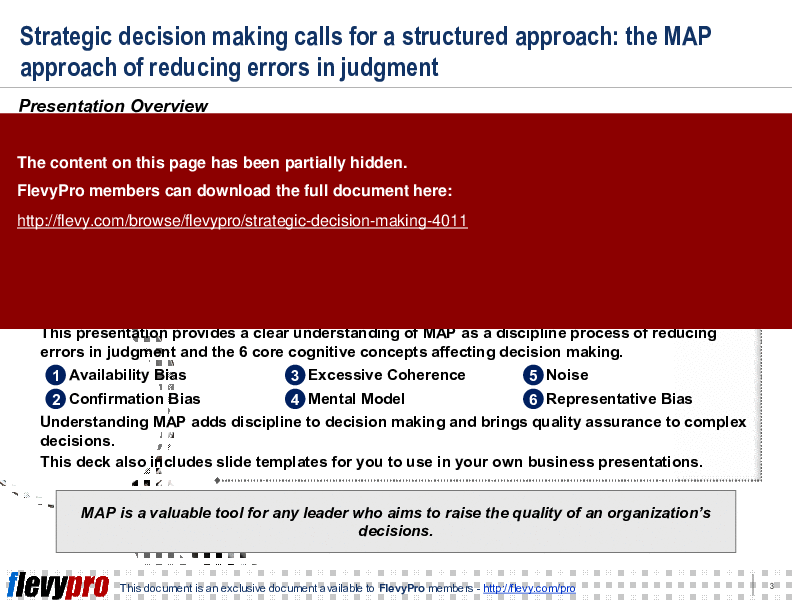
However, with the unreliability in judgment, particularly in decision making, there is a need for a practical, broadly applicable approach to reducing errors. This approach called Mediating Assessments Protocol (MAP) is a structured approach to strategic decision making. MAP is a valuable tool for any leader who aims to raise the quality of an organization's decisions.

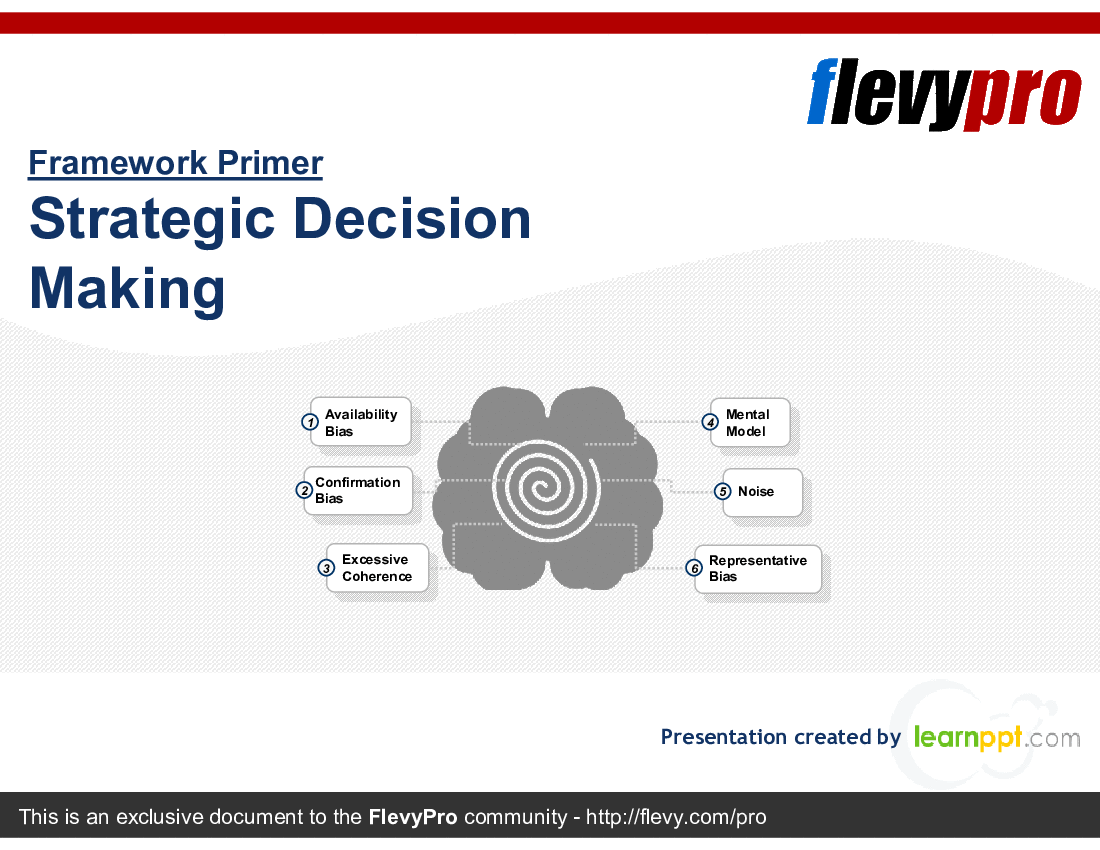
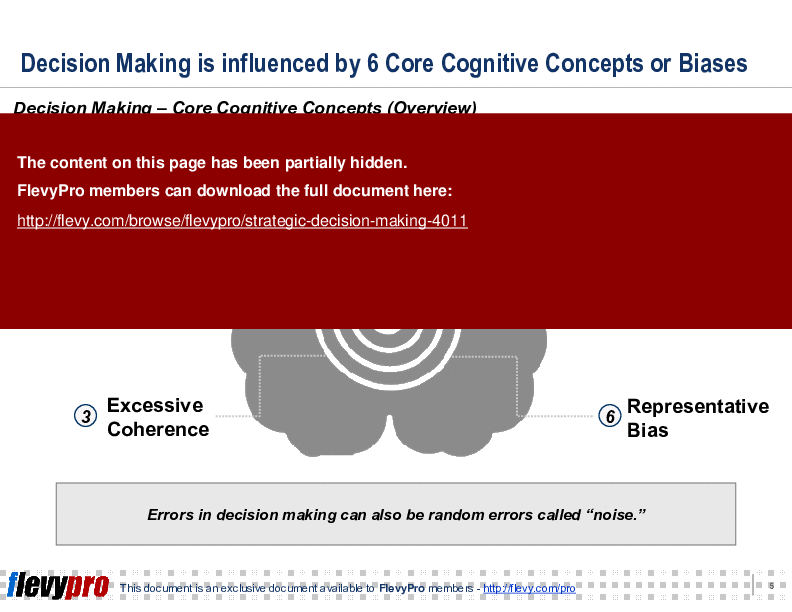
This presentation provides a clear understanding of MAP as a discipline process of reducing errors in judgment and the 6 core cognitive concepts affecting decision making.

1. Availability Bias
2. Confirmation Bias
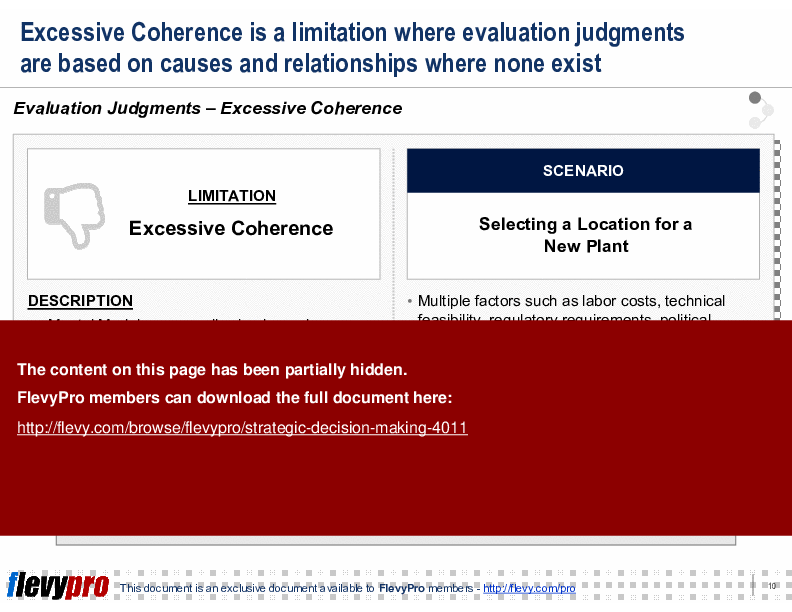
3. Excessive Coherence
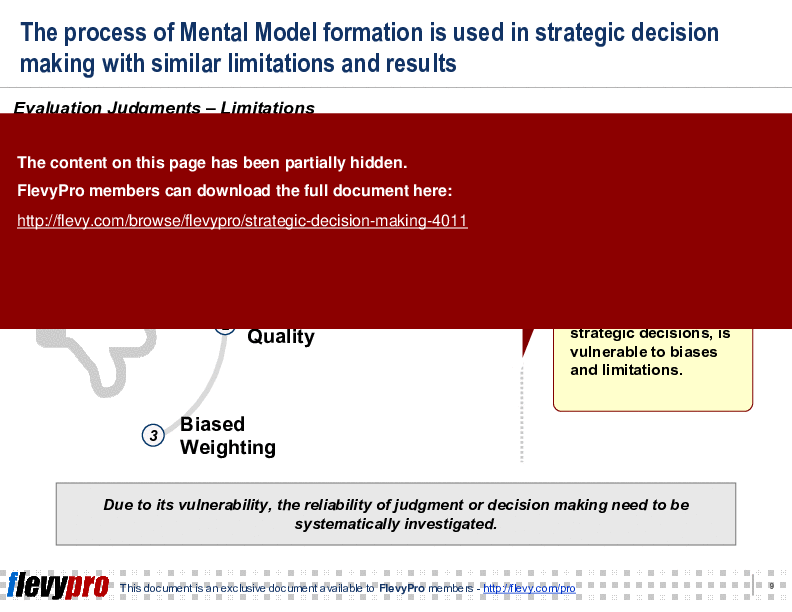
4. Mental Model
5. Noise
6. Representative Bias

Understanding MAP adds discipline to decision making and brings quality assurance to complex decisions.

This deck also includes slide templates for you to use in your own business presentations.

The PPT delves into the intricacies of strategic decision-making, emphasizing the importance of structured approaches to mitigate biases and errors. It highlights the six core cognitive concepts that influence decision-making and provides a comprehensive breakdown of the Mediating Assessments Protocol (MAP). This protocol is designed to enhance the quality of decisions by introducing a disciplined process that reduces judgment errors.

The presentation is a valuable resource for executives seeking to refine their decision-making processes. It includes practical slide templates that can be directly applied to business presentations. The structured approach of MAP ensures that decisions are grounded in evidence and free from undue influence, making it an essential tool for leaders aiming to improve organizational outcomes.

Got a question about this document? Email us at flevypro@flevy.com.

MARCUS OVERVIEW

This synopsis was written by Marcus [?] based on the analysis of the full 30-slide presentation.


Executive Summary
The Strategic Decision Making PPT introduces the Mediating Assessments Protocol (MAP), a structured approach designed to enhance the quality of organizational decisions. This presentation addresses the inherent unreliability of human judgment, particularly in complex decision-making scenarios. By employing MAP, leaders can systematically reduce judgment errors and cognitive biases, ensuring that strategic decisions are based on comprehensive evaluations rather than flawed mental models. This deck serves as a practical guide, offering templates and frameworks that can be directly applied in business contexts to improve decision-making processes.

Who This Is For and When to Use
•  Corporate executives looking to refine their decision-making frameworks
•  Integration leaders tasked with managing complex organizational decisions
•  Consultants seeking structured methodologies for client engagements
•  Teams involved in strategic planning and evaluation processes

Best-fit moments to use this deck:
•  During strategic planning sessions to align on decision-making processes
•  When evaluating major investments or acquisitions requiring thorough analysis
•  In workshops focused on improving organizational decision-making capabilities

Learning Objectives
•  Define the Mediating Assessments Protocol (MAP) and its relevance to strategic decision-making
•  Identify and mitigate cognitive biases that affect judgment in decision-making
•  Develop a structured approach to evaluating complex information for strategic decisions
•  Implement templates and frameworks that enhance decision-making quality
•  Foster a culture of disciplined decision-making within organizations
•  Assess the impact of structured decision-making on overall organizational effectiveness

Table of Contents
•  Overview (page 3)
•  Decision Making (page 5)
•  Evaluation Judgments (page 8)
•  Structured Decision Making (page 14)
•  Application (page 19)
•  Templates (page 25)

Primary Topics Covered
•  Mediating Assessments Protocol (MAP) - A structured approach that reduces errors in judgment and enhances decision-making quality.
•  Cognitive Biases - Identification of 6 core cognitive biases that influence decision-making: Availability Bias, Confirmation Bias, Excessive Coherence, Mental Model, Noise, and Representative Bias.
•  Evaluation Judgments - The process of making evaluative judgments under uncertainty, focusing on the limitations of mental models.
•  Structured Decision Making - An overview of MAP's core elements: Advanced Assessment Definition, Independent Assessments, and Final Evaluation.
•  Application of MAP - Practical applications of MAP in structuring one-off and recurring decisions to improve organizational outcomes.
•  Templates - Slide templates for implementing MAP in business presentations.

Deliverables, Templates, and Tools
•  Advanced Assessment Definition template for identifying key evaluation attributes
•  Independent Assessments framework to ensure fact-based decision-making
•  Final Evaluation checklist for comprehensive assessment reviews
•  Templates for structuring one-off and recurring decisions
•  Cognitive Biases assessment tool to identify and mitigate biases
•  Evaluation Judgments framework for systematic decision-making processes

Slide Highlights
•  Overview of the MAP approach and its significance in strategic decision-making
•  Detailed breakdown of the 6 cognitive biases affecting judgment
•  Visual representation of the structured decision-making process using MAP
•  Case studies illustrating the application of MAP in real-world scenarios
•  Templates for practical implementation of MAP in business contexts

Potential Workshop Agenda
Introduction to MAP (30 minutes)
•  Overview of cognitive biases and their impact on decision-making
•  Introduction to the Mediating Assessments Protocol

Applying MAP to Decision-Making (60 minutes)
•  Hands-on session to define assessments and identify biases
•  Group discussions on structuring decisions using MAP

Evaluating Decisions with MAP (45 minutes)
•  Review of case studies and application of templates
•  Final evaluation techniques and best practices

Customization Guidance
•  Tailor the templates to reflect specific organizational contexts and terminology
•  Adjust the assessment criteria based on industry-specific factors
•  Incorporate company-specific examples into the case studies for relevance

Secondary Topics Covered
•  The role of structured decision-making in organizational strategy
•  Techniques for fostering a culture of disciplined decision-making
•  The importance of transparency in the decision-making process
•  Strategies for continuous improvement in decision-making practices

Topic FAQ

What is a structured decision-making approach and how does it reduce errors in judgment?

A structured decision-making approach breaks a strategic choice into defined assessment steps to limit reliance on unaided judgment. The MAP described in Strategic Decision Making uses Advanced Assessment Definition to set attributes, Independent Assessments to gather fact-based inputs, and a Final Evaluation to integrate findings, reducing bias through those 3 elements.

Which cognitive biases most commonly distort strategic decisions and how do you recognize them?

Common distortions include Availability Bias, Confirmation Bias, Excessive Coherence, Mental Model errors, Noise, and Representative Bias. Recognize them by checking for overreliance on recent examples, selective evidence, oversimplified narratives, inconsistent judgments, or stereotype-based inference — the deck lists these 6 core biases.

How should teams structure evaluation judgments when facing high uncertainty?

Teams should define evaluation attributes up front, collect independent assessments to separate evidence from influence, and apply a final integrative review that highlights model limitations. The presentation’s Evaluation Judgments framework guides this sequence and provides templates like the Final Evaluation checklist.

What should I look for when purchasing a decision-making toolkit for executive use?

Look for clearly defined assessment steps, tools to mitigate cognitive bias, templates for both one-off and recurring decisions, and guidance on facilitating workshops and customization. Strategic Decision Making includes Advanced Assessment Definition, Independent Assessments, Final Evaluation templates, and slide templates as concrete items to evaluate.

How much time should I budget to run a MAP-based workshop with senior leaders?

A suggested agenda in the presentation totals about 135 minutes: a 30-minute MAP introduction, a 60-minute hands-on session to define assessments and identify biases, and a 45-minute evaluation and case review, yielding a roughly two-hour-fifteen-minute workshop plan.

I need to evaluate an acquisition—how can a protocol like MAP improve the assessment?

MAP separates definition of key evaluation attributes from independent fact-based assessments and a final integrative review, which reduces confirmation bias and narrative oversimplification. Applying the Independent Assessments framework and the Final Evaluation checklist structures due diligence and decision sign-off.

Can a structured protocol like MAP be applied to recurring operational decisions as well as one-off strategic choices?

Yes. The presentation states MAP is applicable to both one-off and recurring decisions and provides templates designed to structure repeated governance reviews as well as singular strategic evaluations, including specific templates for one-off and recurring decisions.

How do organizations implement MAP to foster disciplined decision-making across teams?

Implementation involves customizing templates to context, training teams on the MAP steps, embedding Independent Assessments in governance, and using the Cognitive Biases assessment tool to surface distortions. The deliverables support roll-out through customized templates and targeted training.

Document FAQ
These are questions addressed within this presentation.

What is the Mediating Assessments Protocol (MAP)?
MAP is a structured approach designed to improve the quality of strategic decisions by reducing judgment errors and cognitive biases.

How does MAP help in decision-making?
MAP provides a framework for systematically evaluating complex information and mitigating biases that can distort judgment.

What are the core cognitive biases identified in the presentation?
The 6 core biases are Availability Bias, Confirmation Bias, Excessive Coherence, Mental Model, Noise, and Representative Bias.

Can MAP be applied to both one-off and recurring decisions?
Yes, MAP is designed to enhance decision-making for both types of decisions, providing structured frameworks for each.

What templates are included in the PPT?
The presentation includes templates for Advanced Assessment Definition, Independent Assessments, Final Evaluation, and decision structuring.

How can organizations implement MAP effectively?
Organizations can implement MAP by customizing the templates, training teams on the framework, and fostering a culture of disciplined decision-making.

What is the significance of structured decision-making?
Structured decision-making ensures that decisions are made based on comprehensive evaluations rather than flawed mental models, leading to better organizational outcomes.

Are there any case studies included in the presentation?
Yes, the presentation includes case studies that illustrate the application of MAP in real-world decision-making scenarios.

Glossary
•  Mediating Assessments Protocol (MAP) - A structured approach to decision-making that reduces errors in judgment.
•  Cognitive Biases - Systematic patterns of deviation from norm or rationality in judgment.
•  Evaluation Judgments - The process of assessing options based on available information.
•  Advanced Assessment Definition - The initial step in MAP that identifies key evaluation attributes.
•  Independent Assessments - Fact-based evaluations made without influence from others.
•  Final Evaluation - The comprehensive review of assessments before making a decision.
•  Structured Decision Making - A systematic approach to making decisions that enhances quality and reduces bias.
•  Availability Bias - The tendency to rely on immediate examples that come to mind.
•  Confirmation Bias - The tendency to search for, interpret, and remember information that confirms one’s preconceptions.
•  Excessive Coherence - The tendency to create simplified narratives from complex information.
•  Mental Model - A representation of how things work in the real world.
•  Noise - Random errors in judgment that can affect decision-making.
•  Representative Bias - The tendency to judge based on stereotypes rather than actual probabilities.

DECISION MAKING PPT SLIDES

Understanding Cognitive Biases in Decision-Making

Enhancing Decision Quality through MAP Framework

Framework for Strategic Assessment and Decision-Making

Limitations of Mental Models in Decision-Making

Impact of Initial Impressions on Decision-Making

Framework for Conducting Final Evaluations in Hiring

Source: Best Practices in Decision Making, Structured Thinking, Cognitive Bias PowerPoint Slides: Strategic Decision Making PowerPoint (PPT) Presentation Slide Deck, LearnPPT Consulting


$29.00
FlevyPro price: FREE (included in subscription)
This framework is developed by a team of former McKinsey and Big 4 consultants. The presentation follows the headline-body-bumper slide format used by global consulting firms.
Add to Cart
  

Did you need more documents?

Consider a FlevyPro subscription from $39/month. View plans here.

For $10.00 more, you can download this document plus 2 more FlevyPro documents. That's just $13 each.

ABOUT FLEVYPRO

This document is part of the FlevyPro Library, a curated knowledge base of documents for our FlevyPro subscribers.

FlevyPro is a subscription service for on-demand business frameworks and analysis tools. FlevyPro subscribers receive access to an exclusive library of curated business documents—business framework primers, presentation templates, Lean Six Sigma tools, and more—among other exclusive benefits.

Click here to learn more about FlevyPro and its benefits.

Did you know?
The average daily rate of a McKinsey consultant is $6,625 (not including expenses). The average price of a Flevy document is $65.


Trusted by over 10,000+ Client Organizations
Since 2012, we have provided business templates to over 10,000 businesses and organizations of all sizes, from startups and small businesses to the Fortune 100, in over 130 countries.
AT&T GE Cisco Intel IBM Coke Dell Toyota HP Nike Samsung Microsoft Astrazeneca JP Morgan KPMG Walgreens Walmart 3M Kaiser Oracle SAP Google E&Y Volvo Bosch Merck Fedex Shell Amgen Eli Lilly Roche AIG Abbott Amazon PwC T-Mobile Broadcom Bayer Pearson Titleist ConEd Pfizer NTT Data Schwab


Read Customer Testimonials

 
"As a small business owner, the resource material available from FlevyPro has proven to be invaluable. The ability to search for material on demand based our project events and client requirements was great for me and proved very beneficial to my clients. Importantly, being able to easily edit and tailor "

– Michael Duff, Managing Director at Change Strategy (UK)
 
"I have used Flevy services for a number of years and have never, ever been disappointed. As a matter of fact, David and his team continue, time after time, to impress me with their willingness to assist and in the real sense of the word. I have concluded in fact "

– Roberto Pelliccia, Senior Executive in International Hospitality
 
"FlevyPro provides business frameworks from many of the global giants in management consulting that allow you to provide best in class solutions for your clients."

– David Harris, Managing Director at Futures Strategy
 
"I like your product. I'm frequently designing PowerPoint presentations for my company and your product has given me so many great ideas on the use of charts, layouts, tools, and frameworks. I really think the templates are a valuable asset to the job."

– Roberto Fuentes Martinez, Senior Executive Director at Technology Transformation Advisory
 
"Flevy.com has proven to be an invaluable resource library to our Independent Management Consultancy, supporting and enabling us to better serve our enterprise clients.

The value derived from our [FlevyPro] subscription in terms of the business it has helped to gain far exceeds the investment made, making a subscription a no-brainer for any growing consultancy – or in-house strategy team."

– Dean Carlton, Chief Transformation Officer, Global Village Transformations Pty Ltd.
 
"As a consulting firm, we had been creating subject matter training materials for our people and found the excellent materials on Flevy, which saved us 100's of hours of re-creating what already exists on the Flevy materials we purchased."

– Michael Evans, Managing Director at Newport LLC
 
"FlevyPro has been a brilliant resource for me, as an independent growth consultant, to access a vast knowledge bank of presentations to support my work with clients. In terms of RoI, the value I received from the very first presentation I downloaded paid for my subscription many times over! The "

– Roderick Cameron, Founding Partner at SGFE Ltd
 
"If you are looking for great resources to save time with your business presentations, Flevy is truly a value-added resource. Flevy has done all the work for you and we will continue to utilize Flevy as a source to extract up-to-date information and data for our virtual and onsite presentations!"

– Debbi Saffo, President at The NiKhar Group


Customers Also Bought These Documents


Customers Also Like These Documents

Explore Templates on Related Management Topics


Your Recently Viewed Documents
Download our FREE Strategy & Transformation Framework Templates

Download our free compilation of 50+ Strategy & Transformation slides and templates. Frameworks include McKinsey 7-S, Balanced Scorecard, Disruptive Innovation, BCG Curve, and many more.