
The decision on how to approach and respond to a problem varies depending on the circumstances. Decisions necessitate a tailored approach, which should help avoid making a fatal decision with irreparable consequences.
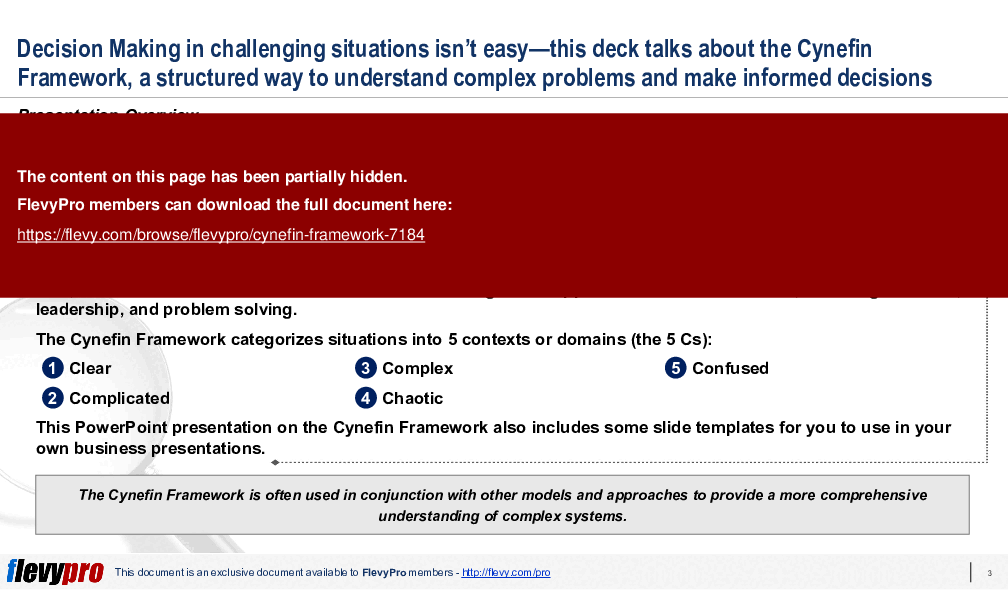
This PowerPoint presentation provides a detailed overview of the Cynefin Framework, which is a powerful tool to assist in making effective decisions in dynamic contexts. The model does that by analyzing possible elements of a circumstance and the factors that influence individuals' thoughts and judgments in ways that they are unaware of. The Cynefin Framework is often used in conjunction with other models and approaches to provide a more comprehensive understanding of complex systems.
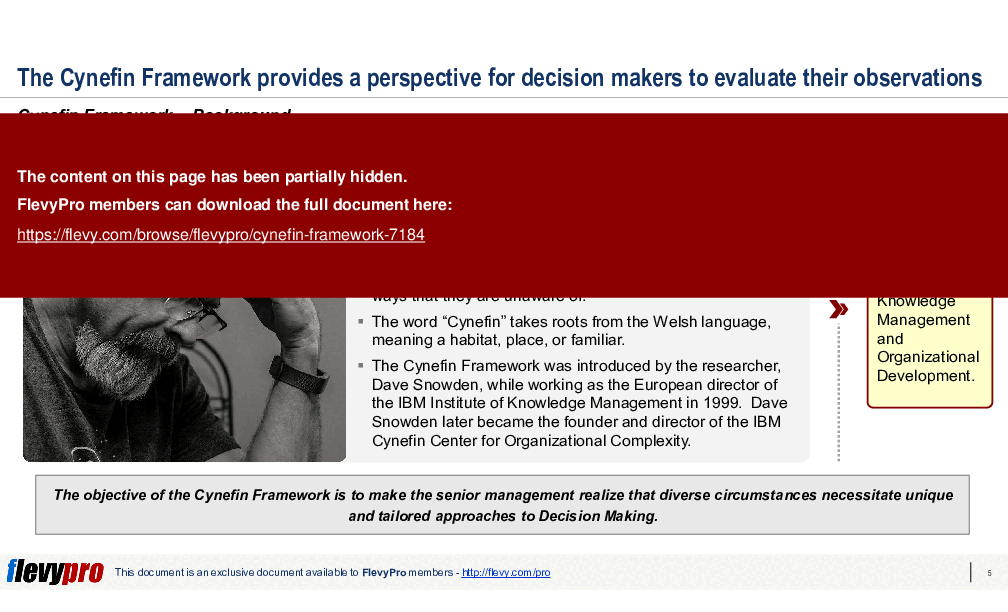
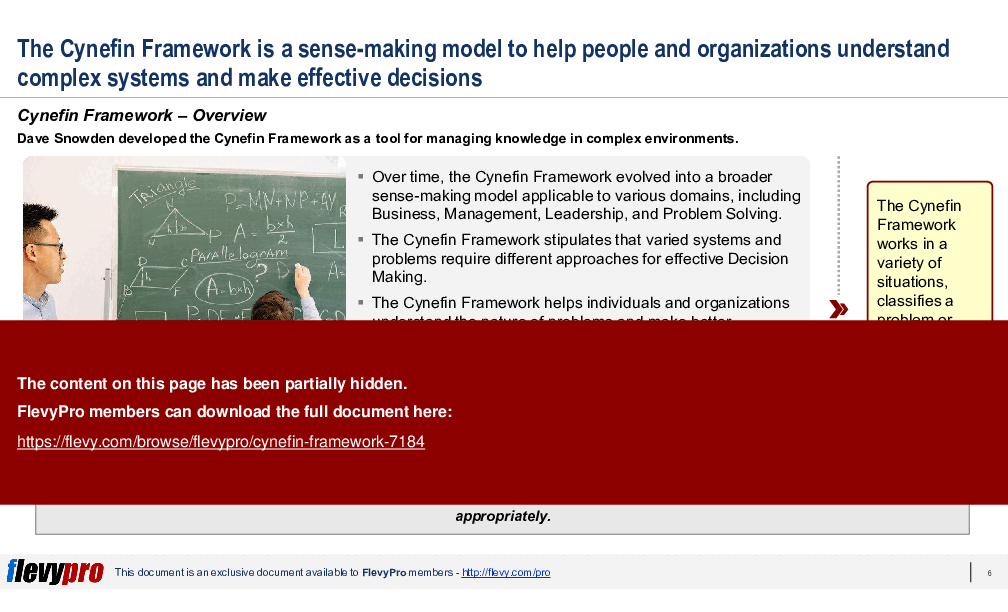
Dave Snowden developed the Cynefin Framework as a tool for managing knowledge in complex environments. Over time, the framework evolved into a broader sense-making model applicable to various domains, including business, leadership, and problem solving.
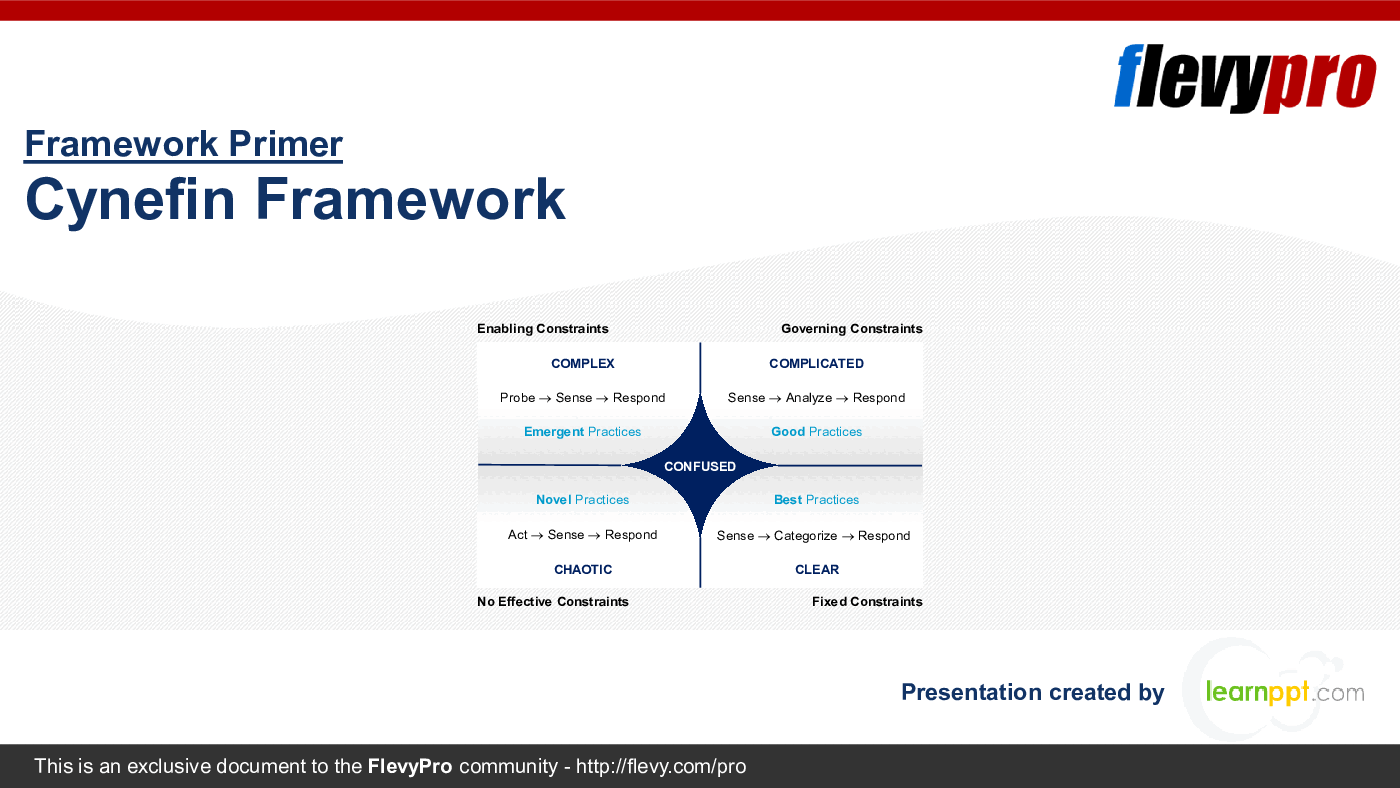
The Cynefin Framework categorizes situations into 5 contexts or domains (the 5 Cs):
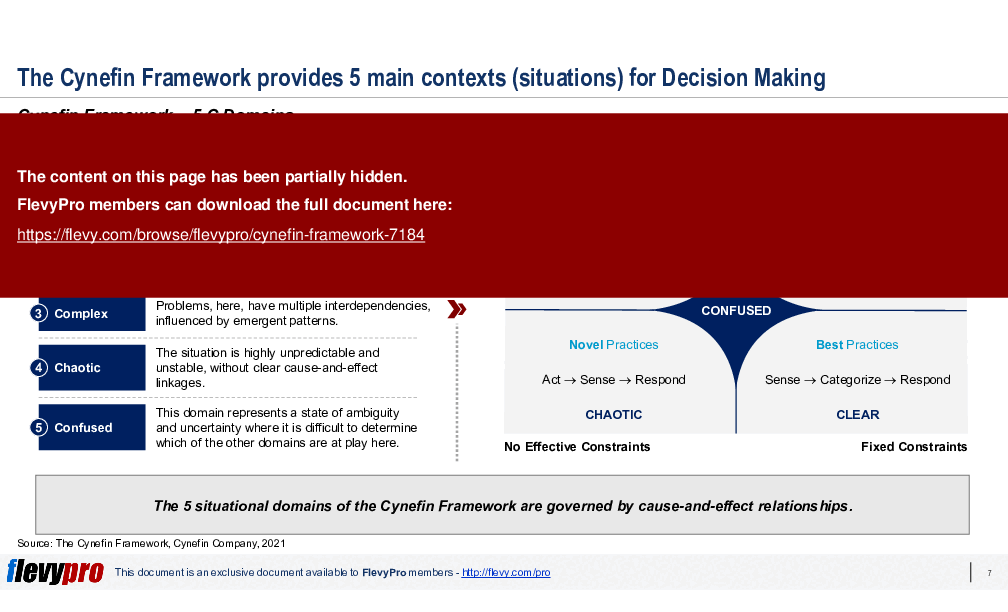
1. Clear – A context where cause and effect and options are obvious to everyone.
2. Complicated – In this domain, problems are still solvable, but they require expertise or analysis to under-stand the cause-and-effect relationships.
3. Complex – Problems, here, have multiple interdependencies, influenced by emergent patterns.
4. Chaotic – The situation is highly unpredictable and unstable, without clear cause-and-effect linkages.
5. Confused – This domain represents a state of ambiguity and uncertainty where it is difficult to determine which of the other domains are at play here.
Within this presentation, we discuss each domain in detail, include breaking down the decision making approach. We also discuss additional considerations when it comes to leveraging the Cynefin Framework, such as functional applications (e.g. Strategy Development, Risk Management, Organizational Learning), benefits, and criticisms.
This PowerPoint presentation on the Cynefin Framework also includes some slide templates for you to use in your own business presentations.
The Cynefin Framework is essential for leaders navigating the complexities of modern decision-making. This presentation equips executives with insights to discern the nature of challenges, enabling them to apply the right strategies in varying contexts.
Got a question about this document? Email us at flevypro@flevy.com.
Executive Summary
The Cynefin Framework presentation provides a structured approach to decision-making in complex environments. Designed by Dave Snowden, this framework categorizes situations into 5 distinct domains—Clear, Complicated, Complex, Chaotic, and Confused—each requiring tailored decision-making strategies. This deck equips corporate executives and consultants with insights to navigate challenges effectively, ensuring informed decisions that mitigate risks and enhance organizational adaptability.
Who This Is For and When to Use
• Corporate executives seeking to enhance decision-making processes.
• Change management leaders aiming to navigate complex organizational dynamics.
• Consultants advising clients on strategic problem-solving frameworks.
• Project managers dealing with uncertain and complex project environments.
• Teams involved in crisis management requiring rapid decision-making.
Best-fit moments to use this deck:
• During strategic planning sessions to assess decision-making approaches.
• In workshops focused on organizational change and adaptability.
• When addressing complex problems that require a structured analysis.
• In crisis management scenarios where rapid responses are critical.
Learning Objectives
• Define the Cynefin Framework and its relevance to decision-making.
• Identify the 5 domains of the Cynefin Framework and their characteristics.
• Analyze problems using the appropriate domain-specific strategies.
• Develop tailored responses based on the complexity of the situation.
• Enhance organizational learning through iterative decision-making processes.
• Foster collaboration and communication among team members in complex scenarios.
Table of Contents
• Overview (page 3)
• Cynefin Framework (page 5)
• Cynefin 5 Cs Domains (page 7)
• Additional Considerations (page 15)
• Slide Design Structure & Templates (page 19)
Primary Topics Covered
• Cynefin Framework Overview - An introduction to the Cynefin Framework, detailing its purpose in managing knowledge and decision-making in complex environments.
• Clear Domain - A context where cause-and-effect relationships are obvious, allowing for straightforward decision-making using best practices.
• Complicated Domain - Situations requiring expert analysis to understand cause-and-effect relationships, necessitating deeper investigation.
• Complex Domain - Environments characterized by unpredictable interactions, where solutions emerge through experimentation and collaboration.
• Chaotic Domain - Urgent situations requiring immediate action to restore order, emphasizing quick decision-making.
• Confused Domain - A state of uncertainty where decision-makers must assess the situation to determine the appropriate domain for action.
Deliverables, Templates, and Tools
• Cynefin Framework overview slide for presentations.
• Domain-specific decision-making templates to guide analysis.
• Slide templates for presenting complex problems and solutions.
• Framework for categorizing problems based on complexity.
• Guidelines for fostering collaboration in decision-making processes.
• Risk assessment tools tailored to the Cynefin Framework.
Slide Highlights
• Overview of the Cynefin Framework and its 5 domains.
• Detailed breakdown of each domain's characteristics and decision-making approaches.
• Visual representation of the Cynefin Framework for easy reference.
• Examples of real-world applications of the framework in various contexts.
• Critiques and considerations for using the Cynefin Framework effectively.
Potential Workshop Agenda
Introduction to the Cynefin Framework (30 minutes)
• Overview of the framework and its significance in decision-making.
• Discussion on the 5 domains and their implications.
Domain Analysis Workshop (60 minutes)
• Breakout sessions to analyze specific problems using the Cynefin Framework.
• Group presentations on findings and proposed solutions.
Application and Strategy Development (90 minutes)
• Develop strategies for applying the framework in real-world scenarios.
• Identify potential challenges and solutions in implementation.
Customization Guidance
• Tailor the framework examples to fit specific organizational contexts and challenges.
• Adjust the decision-making approaches based on industry-specific needs.
• Incorporate relevant case studies to enhance engagement and understanding.
• Modify slide templates to align with corporate branding and presentation standards.
Secondary Topics Covered
• Applications of the Cynefin Framework in organizational change.
• Strategies for fostering a culture of innovation and learning.
• Risk management considerations within the framework.
• Collaboration techniques to enhance decision-making processes.
Topic FAQ
Document FAQ
These are questions addressed within this presentation.
What is the Cynefin Framework?
The Cynefin Framework is a decision-making model that categorizes problems into 5 domains, guiding leaders in selecting appropriate strategies based on the complexity of the situation.
How can the Cynefin Framework improve decision-making?
By providing a structured approach to understanding different types of problems, the framework helps leaders choose tailored responses, reducing the risk of ineffective decisions.
What are the 5 domains of the Cynefin Framework?
The 5 domains are Clear, Complicated, Complex, Chaotic, and Confused, each representing different levels of complexity and requiring unique decision-making strategies.
When should I use the Cynefin Framework?
Use the framework during strategic planning, crisis management, or when facing complex problems that require a structured analysis.
Can the framework be applied across different industries?
Yes, the Cynefin Framework is versatile and can be adapted to various industries and organizational contexts.
What are the benefits of using the Cynefin Framework?
The framework enhances clarity in decision-making, promotes organizational learning, and fosters collaboration among teams.
How does the framework support risk management?
It assists in identifying and categorizing risks based on complexity, enabling organizations to develop appropriate mitigation strategies.
What criticisms exist regarding the Cynefin Framework?
Critics argue that the framework can oversimplify complex problems and may not provide clear guidance on specific actions within each domain.
Glossary
• Cynefin Framework - A decision-making model categorizing problems into 5 domains based on complexity.
• Clear Domain - Situations with obvious cause-and-effect relationships.
• Complicated Domain - Problems requiring expert analysis to understand.
• Complex Domain - Environments characterized by unpredictable interactions.
• Chaotic Domain - Urgent situations needing immediate action.
• Confused Domain - A state of uncertainty requiring further assessment.
• Decision-Making Approach - Strategies tailored to each domain's complexity.
• Emergent Practices - Solutions that develop through experimentation in complex environments.
• Best Practices - Established methods for addressing clear domain challenges.
• Good Practices - Effective strategies for complicated domain problems.
• Novel Practices - Innovative approaches for chaotic situations.
• Organizational Learning - Continuous improvement through experimentation and adaptation.
Source: Best Practices in Decision Making PowerPoint Slides: Cynefin Framework PowerPoint (PPTX) Presentation Slide Deck, LearnPPT Consulting
Did you need more documents?
Consider a FlevyPro subscription from $39/month. View plans here.
For $10.00 more, you can download this document plus 2 more FlevyPro documents. That's just $13 each.
|
Download our FREE Strategy & Transformation Framework Templates
Download our free compilation of 50+ Strategy & Transformation slides and templates. Frameworks include McKinsey 7-S, Balanced Scorecard, Disruptive Innovation, BCG Curve, and many more. |