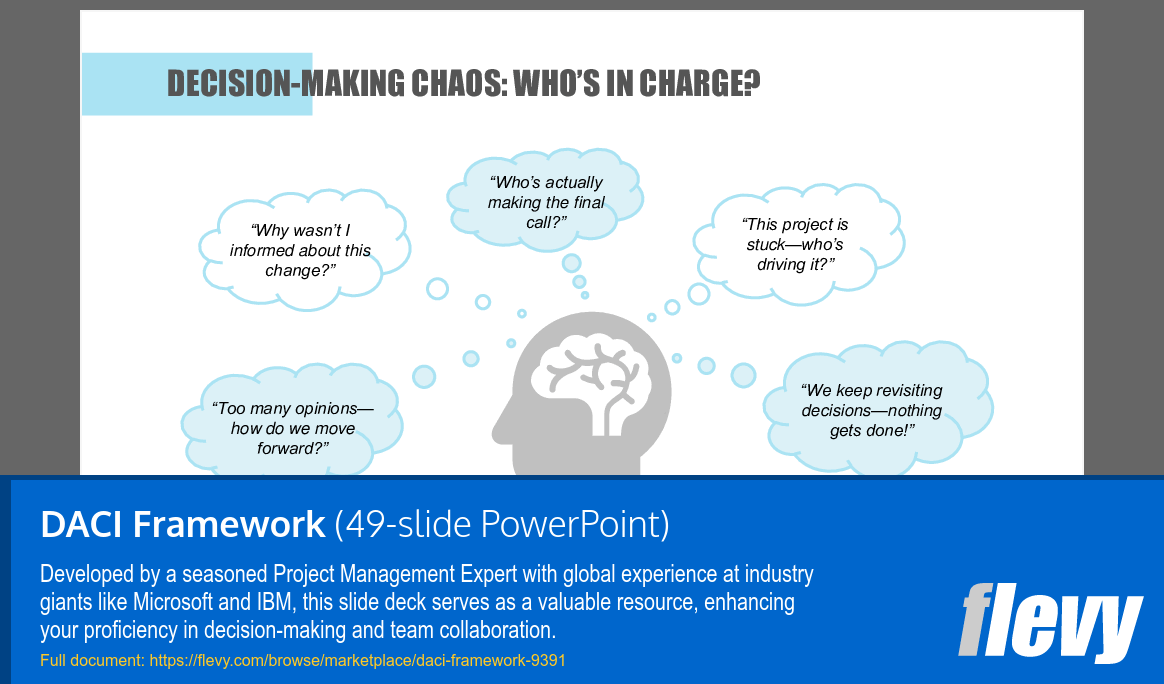

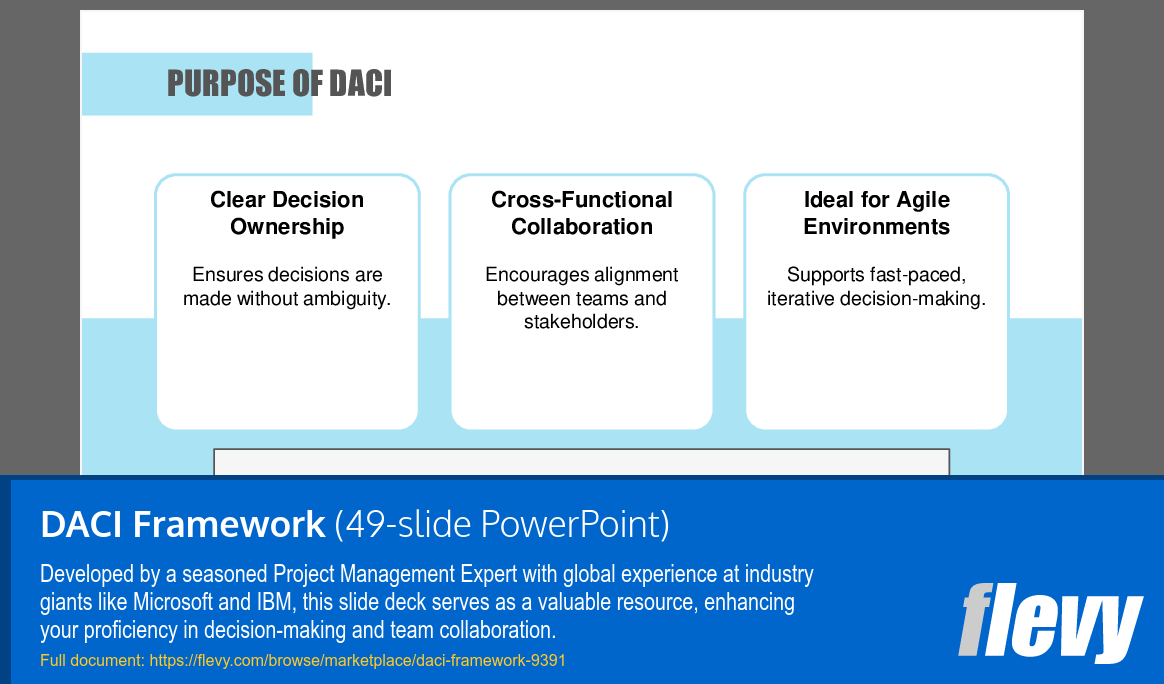

The DACI Framework Training Presentation is a facilitation-ready deck that introduces the DACI decision-making framework – a structured approach to clarify roles and responsibilities in group decision-making.
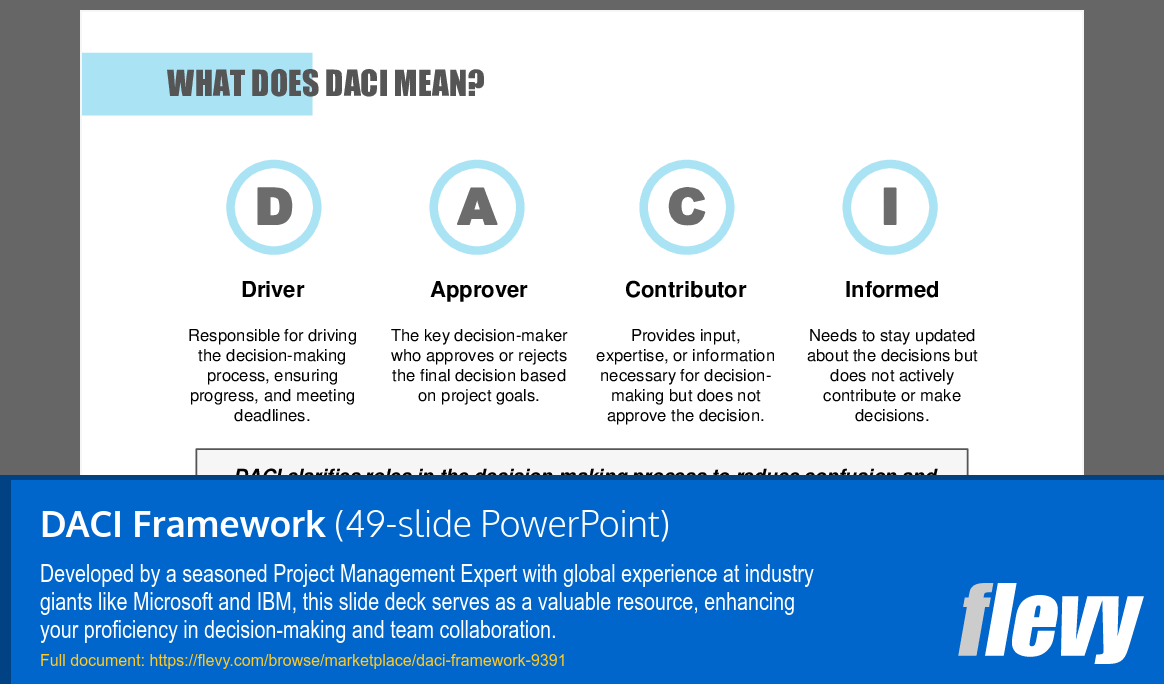
DACI stands for:
• Driver – Leads the decision-making process and ensures progress.
• Approver – Has final authority to approve or reject decisions.
• Contributor – Provides input, expertise, and recommendations.
• Informed – Receives updates and outcomes but does not actively participate.
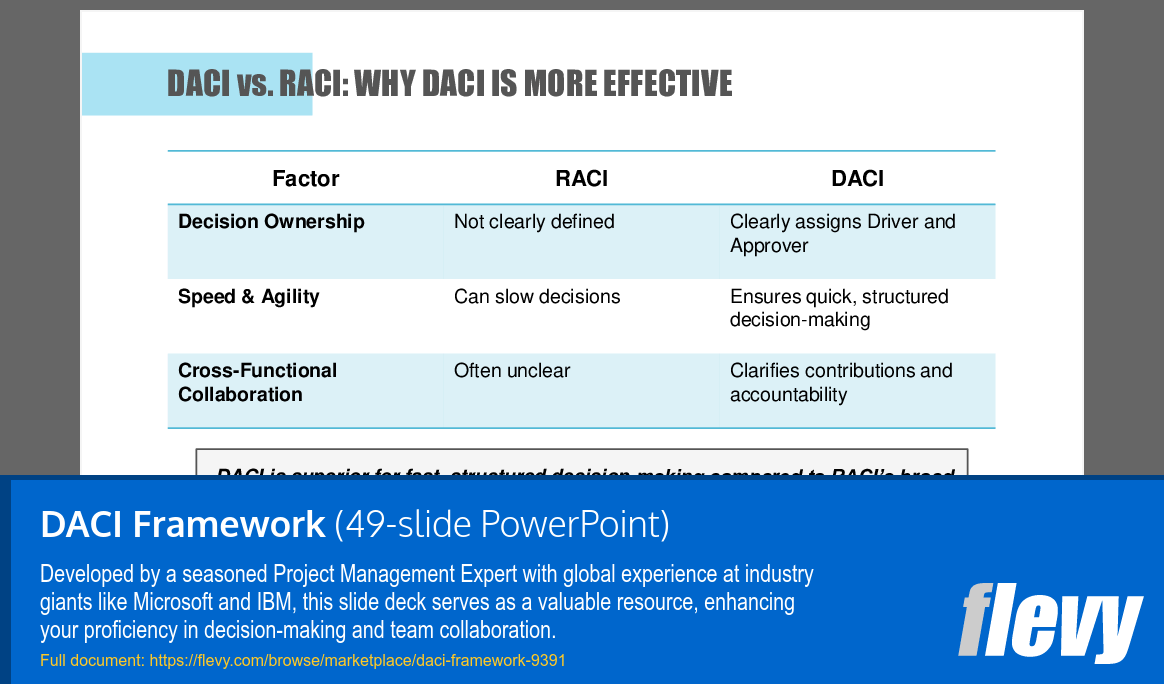
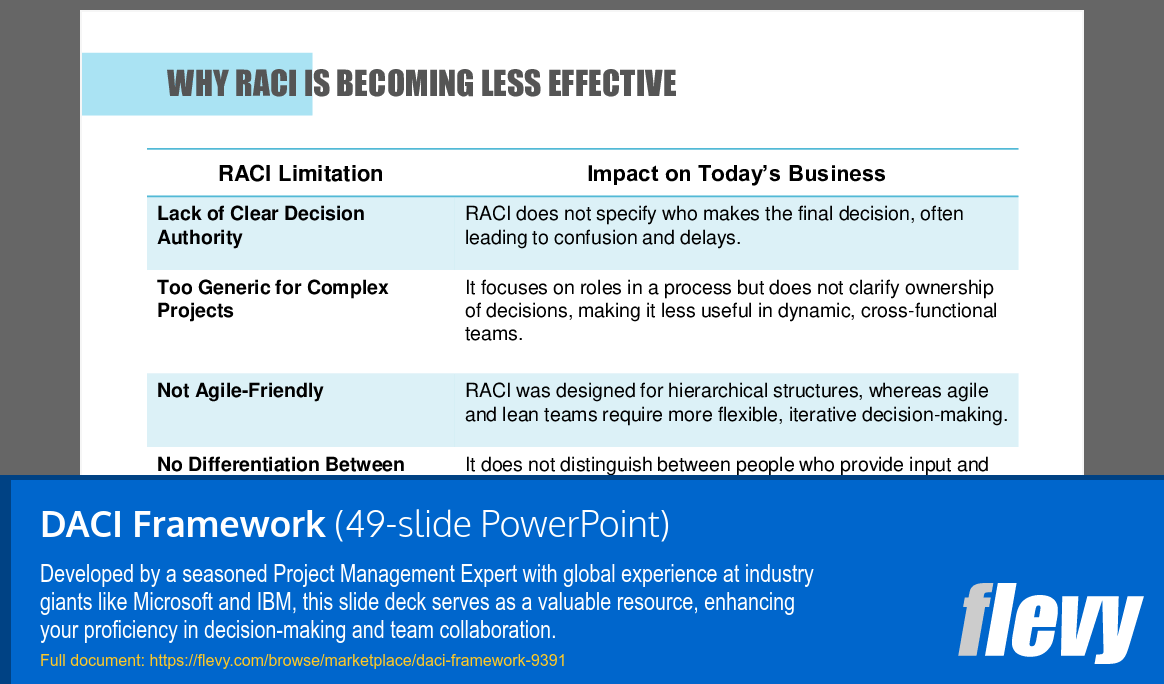
While DACI builds on the well-known RACI Responsibility Assignment Matrix, it provides greater clarity and accountability by designating a single Driver and Approver. This deck explains both frameworks and highlights when DACI is more effective than RACI, making it a valuable resource for teams seeking to improve collaboration and decision-making.

LEARNING OBJECTIVES
1. Understand the DACI framework and its four roles.
2. Learn how DACI improves decision-making clarity and accountability.
3. Compare DACI with RACI to identify strengths and use cases.
4. Apply DACI to real-world scenarios and team projects.
5. Practice role assignment and decision-making exercises.
CONTENTS
1. Introduction to DACI Framework
• Origins and purpose
• Why DACI matters in decision-making
2. The Four Roles in DACI
• Driver
• Approver
• Contributor
• Informed
3. DACI vs. RACI Comparison
• Definitions of both frameworks
• Key differences (Driver vs. Responsible, Approver vs. Accountable)
• When to use DACI vs. RACI
4. Applications of DACI
• Project management
• Product development
• Organizational decision-making
5. Exercises and Examples
• Role assignment activities
• Case illustrations
6. Guidelines for Effective Use
• Best practices for applying DACI
• Pitfalls to avoid
Got a question about the product? Email us at support@flevy.com or ask the author directly by using the "Ask the Author a Question" form. If you cannot view the preview above this document description, go here to view the large preview instead.
Executive Summary
The DACI Framework presentation is a structured decision-making tool designed to clarify roles and responsibilities within teams, enhancing accountability and accelerating execution. Developed by Operational Excellence Consulting, this slide deck equips users with the knowledge to implement the DACI model effectively, ensuring that each decision has a designated Driver, Approver, Contributor, and Informed party. By utilizing the DACI framework, organizations can streamline their decision-making processes, reduce confusion, and improve collaboration across cross-functional teams.
Who This Is For and When to Use
• Project Managers overseeing cross-functional teams
• Team Leaders responsible for decision-making clarity
• Consultants aiming to improve client decision-making processes
• Executives seeking to enhance organizational efficiency
Best-fit moments to use this deck:
• During project kick-offs to establish clear decision-making roles
• In team meetings to resolve decision-making bottlenecks
• When implementing new processes or initiatives that require structured collaboration
Learning Objectives
• Understand the DACI framework and its role in decision-making
• Learn how to apply DACI in various contexts
• Avoid common pitfalls and implement DACI best practices
• Define roles clearly to enhance accountability
• Facilitate faster decision-making in agile environments
• Improve cross-functional collaboration through structured processes
Table of Contents
• Introduction to DACI (page 6)
• Purpose of DACI (page 12)
• When to Use DACI (page 13)
• What Does DACI Mean? (page 14)
• DACI vs. RACI (page 15)
• Key Points to Note During a DACI Session (page 20)
• Step-by-Step Guide to Creating a DACI Matrix (page 22)
• Applying DACI: Use Cases and Best Practices (page 25)
• Common Pitfalls to Avoid When Using DACI (page 41)
• Best Practices for Implementing DACI (page 42)
Primary Topics Covered
• DACI Framework Overview - A structured decision-making framework that clarifies roles and improves accountability in teams.
• Role Definitions - Clear definitions of Driver, Approver, Contributor, and Informed roles to enhance decision-making clarity.
• Comparison with RACI - DACI is more effective than RACI for fast-paced, cross-functional decision-making environments.
• Use Cases - Practical applications of DACI in various industries, including marketing, product development, and service redesign.
• Implementation Best Practices - Strategies for effectively implementing DACI to maximize its impact on decision-making efficiency.
Deliverables, Templates, and Tools
• DACI matrix template for mapping roles in decision-making
• Guidelines for conducting DACI sessions effectively
• Best practices checklist for implementing DACI
• Real-world scenarios for applying DACI in team settings
• Case studies demonstrating successful DACI implementation
Slide Highlights
• Overview of the DACI framework and its purpose
• Comparison of DACI and RACI highlighting their effectiveness
• Step-by-step guide for creating a DACI matrix
• Use case examples illustrating DACI in action across industries
• Common pitfalls and best practices for successful DACI application
Potential Workshop Agenda
DACI Framework Introduction (30 minutes)
• Overview of DACI and its importance
• Discussion on roles and responsibilities
DACI Matrix Creation (45 minutes)
• Group activity to create a DACI matrix for a real-world scenario
• Share and discuss matrices with the larger group
Best Practices and Pitfalls (30 minutes)
• Review common pitfalls when using DACI
• Discuss best practices for effective implementation
Customization Guidance
• Tailor the DACI matrix template to fit specific project needs
• Adjust role definitions based on team dynamics and project scope
• Modify examples and scenarios to align with organizational context
Secondary Topics Covered
• Agile decision-making processes
• Cross-functional team collaboration techniques
• Importance of accountability in decision-making
• Strategies for overcoming decision-making bottlenecks
Topic FAQ
Document FAQ
These are questions addressed within this presentation.
What is the DACI framework?
DACI is a decision-making framework that clarifies roles and responsibilities, ensuring structured decisions and accountability within teams.
How does DACI differ from RACI?
DACI focuses specifically on who drives and approves decisions, making it more suitable for agile and cross-functional environments compared to RACI.
When should I use DACI?
Use DACI in situations requiring clear decision ownership, especially in complex or fast-paced projects involving multiple stakeholders.
What are common pitfalls when implementing DACI?
Common pitfalls include unclear role assignments, having too many approvers, and failing to adapt the framework to team workflows.
How can I ensure effective DACI implementation?
Clearly define roles at the start, limit the number of approvers, and regularly review DACI assignments to maintain clarity and efficiency.
Can DACI be customized?
Yes, DACI can be tailored to fit specific organizational needs and project requirements, enhancing its effectiveness.
What types of projects benefit from DACI?
DACI is beneficial for projects in marketing, product development, customer service, and any initiative requiring structured decision-making.
How do I create a DACI matrix?
Define the decision scope, assign roles, map responsibilities, communicate with stakeholders, and monitor effectiveness regularly.
Glossary
• DACI - A decision-making framework defining roles: Driver, Approver, Contributor, Informed.
• Driver - The person responsible for driving the decision-making process.
• Approver - The key decision-maker who approves or rejects the final decision.
• Contributor - Individuals providing input or expertise necessary for decision-making.
• Informed - Those who need to stay updated about decisions, but do not actively contribute.
• RACI - A responsibility assignment matrix defining roles as Responsible, Accountable, Consulted, and Informed.
• Agile - A project management methodology emphasizing flexibility and iterative progress.
• Cross-Functional Team - A group composed of members from different departments working towards a common goal.
• Decision-Making Bottleneck - A situation where decision-making is delayed due to unclear roles or too many approvers.
• Best Practices - Established methods that are recognized as the most effective way to achieve a desired outcome.
• Customization - The process of modifying a framework or tool to better fit specific needs or contexts.
• Stakeholders - Individuals or groups with an interest in the outcome of a project or decision.
Source: Best Practices in Decision Making PowerPoint Slides: DACI (Driver, Approver, Contributor, Informed) Framework PowerPoint (PPTX) Presentation Slide Deck, Operational Excellence Consulting
|
Download our FREE Strategy & Transformation Framework Templates
Download our free compilation of 50+ Strategy & Transformation slides and templates. Frameworks include McKinsey 7-S, Balanced Scorecard, Disruptive Innovation, BCG Curve, and many more. |