
Unlock the full potential of your organization with this comprehensive Objectives and Key Results (OKRs) PowerPoint deck. Crafted for leaders, teams, and business professionals, this slide deck takes you from foundational OKR principles to advanced strategies, activities, and examples tailored for diverse organizations, including MNCs, small businesses, and non-profits. Unlike the outdated MBO (Management by Objectives) model, which is rigid and lacks adaptability to fast-changing environments, OKRs offer a more agile, transparent, and outcome-focused approach. By combining ambitious, measurable objectives with adaptable, short-term cycles, OKRs empower organizations to remain responsive in today's dynamic business world.
Designed for companies that prioritize speed, alignment, and transparency, OKRs ensure everyone contributes meaningfully to top priorities while staying agile in the face of change.
With visually engaging slides and practical activities, this presentation guides users through:
✅ Core OKR Principles & Key Concepts – Gain a deep understanding of the building blocks of OKRs, from purpose-driven Objectives to actionable Key Results.
✅ Top Management Process Overview – Understand the strategic role of leadership in aligning OKRs with company-wide goals, fostering alignment, and ensuring accountability.
✅ The Continuous Set-Track-Adapt-Review Cycle (STAR) – Learn how to implement OKRs in a way that enables agility and responsiveness at all organizational levels.
✅ Real-World OKR Case Studies & Examples – Explore practical, impactful OKR examples from Google and other industry leaders, with new examples added for various organizational types.
✅ Interactive OKR Activities – Kickstart team engagement and alignment with activities designed to identify current goal-setting challenges and set strategic OKRs for impact.
✅ Limitations and Future Trends of OKRs – Stay ahead by understanding the evolving role of OKRs and how continuous performance management is transforming modern businesses.
Complete with visually stunning designs and thoughtful flow, this deck not only educates but also inspires, making it ideal for team workshops, executive briefings, or self-paced learning.
This OKR presentation is your ultimate toolkit to drive high-impact goal-setting and foster a results-oriented culture.
LEARNING OBJECTIVES
1. Acquire knowledge on the key concepts and principles of OKR (Objectives and Key Results).
2. Understand the importance of setting clear, measurable objectives and key results for alignment.
3. Describe the OKR approach to setting quarterly objectives, defining measurable outcomes, and tracking progress.
4. Define the OKR process and its use as a framework for transparency and accountability.
CONTENTS
1. Key Concepts and Principles of OKRs
2. The OKR Process and Structure
3. Best Practices and Comparisons
4. Case Studies and Examples
5. Challenges and Building a Continuous Improvement Culture
6. Limitations and Future of OKRs
Got a question about the product? Email us at support@flevy.com or ask the author directly by using the "Ask the Author a Question" form. If you cannot view the preview above this document description, go here to view the large preview instead.
Executive Summary
This presentation on Objectives and Key Results (OKRs) serves as a comprehensive training tool designed to help organizations translate aspirations into actionable goals. Developed by Operational Excellence Consulting, the deck outlines the OKR framework, emphasizing its role in enhancing transparency, accountability, and alignment across teams. Users will learn to define clear, measurable objectives and key results, enabling effective tracking of progress and fostering a culture of continuous improvement.
Who This Is For and When to Use
• Corporate executives seeking to implement a structured goal-setting framework
• Team leaders aiming to enhance alignment and accountability within their teams
• HR professionals looking to integrate OKRs into performance management processes
• Consultants advising organizations on strategic planning and execution
Best-fit moments to use this deck:
• During organizational training sessions on goal-setting methodologies
• When introducing OKRs as part of a strategic planning initiative
• In workshops focused on aligning team objectives with company vision
Learning Objectives
• Acquire knowledge on the key concepts and principles of OKR (Objectives and Key Results)
• Define the OKR process and its use as a framework for transparency and accountability
• Understand the importance of setting clear, measurable objectives and key results for alignment
• Describe the OKR approach to setting quarterly objectives, defining measurable outcomes, and tracking progress
• Identify common challenges in goal-setting and how to overcome them
• Explore best practices for implementing and sustaining an OKR culture
Table of Contents
• Key Concepts and Principles of OKRs (page 5)
• The OKR Process and Structure (page 23)
• Best Practices and Comparisons (page 50)
• Case Studies and Examples (page 58)
• Challenges and Building a Continuous Improvement Culture (page 74)
• Limitations and Future of OKRs (page 83)
Primary Topics Covered
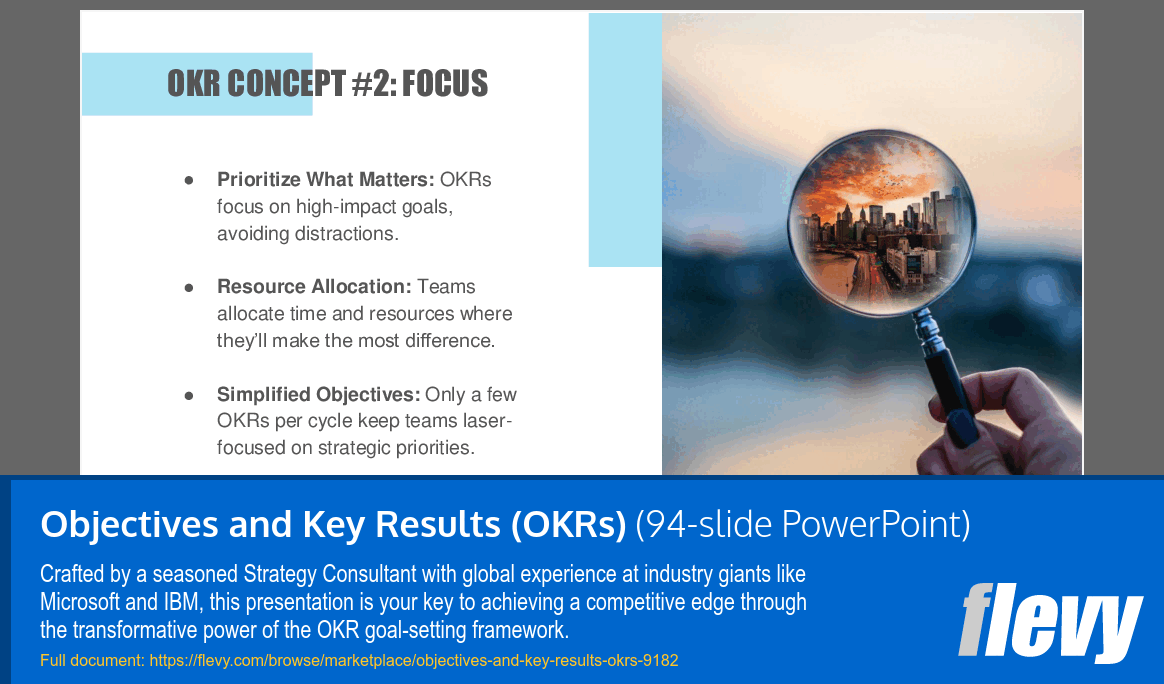
• OKR Framework - A structured approach for setting and tracking objectives and key results, enhancing organizational focus and alignment.
• Measurable Outcomes - Emphasizes the importance of defining key results in quantifiable terms to facilitate progress tracking.
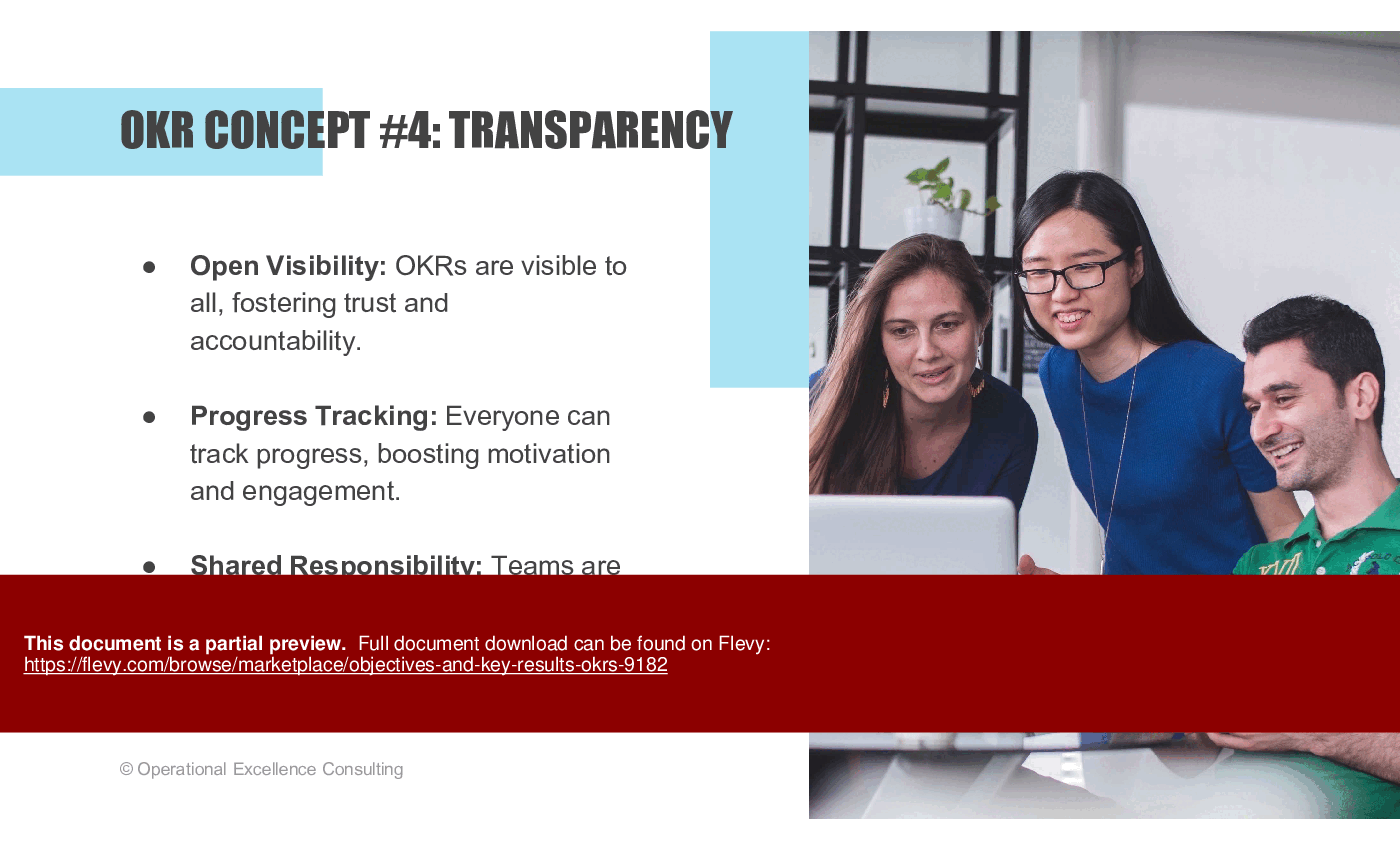
• Alignment and Transparency - OKRs promote visibility across teams, fostering a culture of accountability and shared responsibility.
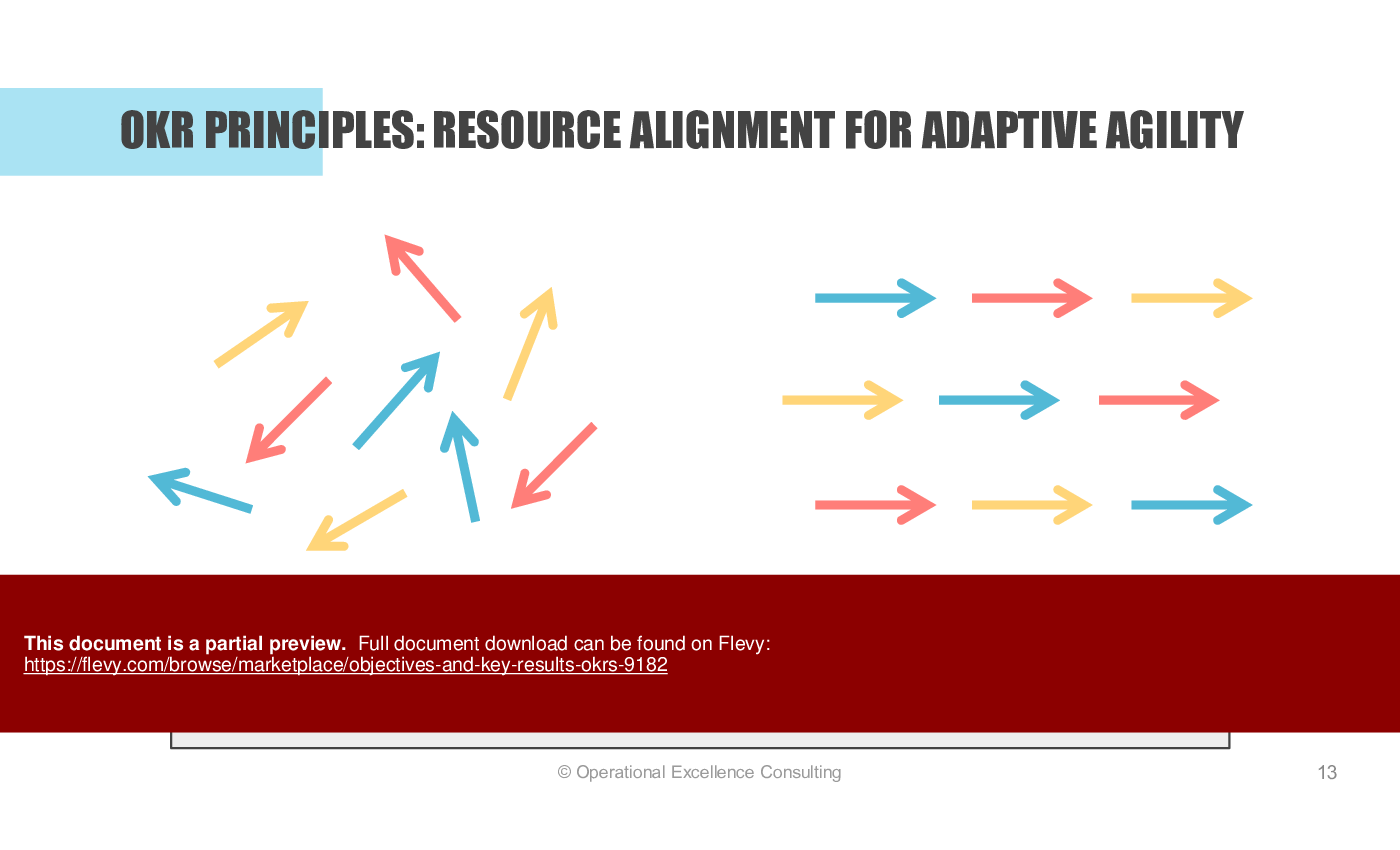
• Adaptive Agility - The framework allows for flexibility, enabling teams to adjust objectives in response to changing business needs.
• Continuous Improvement - Encourages regular reviews and feedback loops to refine objectives and enhance performance.
• Cultural Integration - Highlights the role of leadership in championing OKRs and fostering a supportive environment for their implementation.
Deliverables, Templates, and Tools
• OKR worksheet for defining objectives and key results
• Template for tracking progress and accountability
• Guidelines for conducting regular check-ins and reviews
• Case studies illustrating successful OKR implementations
• Best practice recommendations for sustaining an OKR culture
• Tools for measuring qualitative and quantitative outcomes
Slide Highlights
• Overview of the OKR framework and its significance in modern organizations
• Key concepts of clarity, focus, alignment, transparency, and agility in OKRs
• Comparative analysis of OKRs with other goal-setting methodologies like MBOs and KPIs
• Real-world case studies showcasing successful OKR applications in various industries
• Common challenges in implementing OKRs and strategies for overcoming them
Potential Workshop Agenda
Introduction to OKRs (30 minutes)
• Overview of the OKR framework and its benefits
• Discussion on the importance of measurable outcomes
Group Activity: Defining OKRs (60 minutes)
• Break into groups to create sample OKRs
• Share and discuss group findings
Best Practices and Challenges (30 minutes)
• Review common pitfalls in OKR implementation
• Strategies for fostering a culture of continuous improvement
Conclusion and Next Steps (30 minutes)
• Recap of key takeaways
• Action planning for implementing OKRs in participants' organizations
Customization Guidance
• Tailor the OKR templates to fit specific organizational needs and industry contexts
• Adjust the frequency of check-ins and reviews based on team dynamics and project timelines
• Incorporate company-specific terminology and metrics to enhance relevance
• Modify case studies to reflect industry-specific challenges and solutions
Secondary Topics Covered
• The role of leadership in driving OKR adoption
• Integration of OKRs with performance management systems
• Strategies for maintaining engagement and motivation among team members
• The impact of organizational culture on OKR success
• Future trends in goal-setting frameworks and methodologiesDocument FAQ
These are questions addressed within this presentation.
What are OKRs?
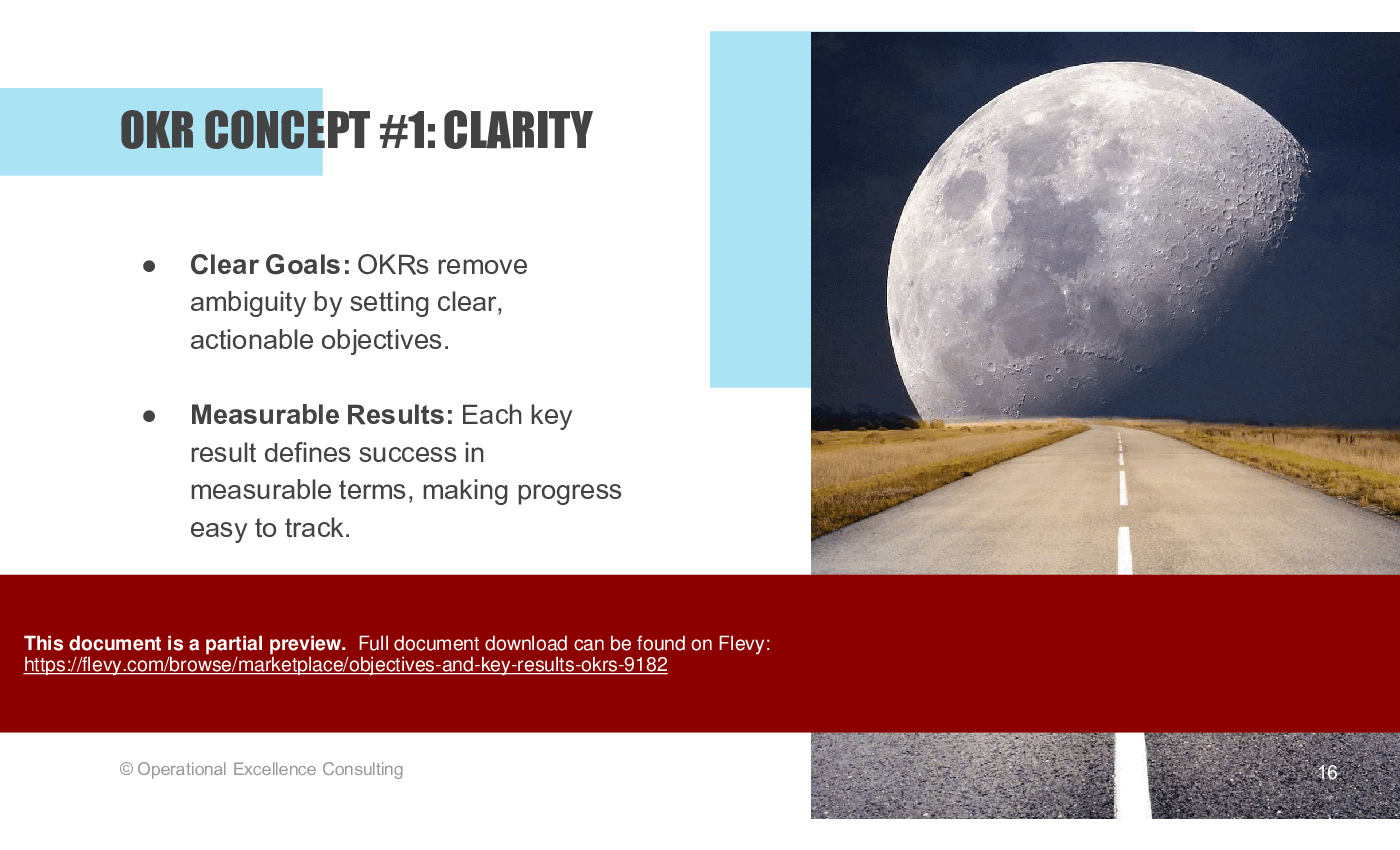
OKRs (Objectives and Key Results) are a goal-setting framework that helps organizations define clear, ambitious objectives and measurable key results to track progress.
How do OKRs differ from traditional goal-setting methods?
OKRs emphasize measurable outcomes and adaptability, allowing organizations to align efforts across teams and respond to changing business needs.
What are the key components of an effective OKR?
An effective OKR consists of a clear objective that defines what you want to achieve and measurable key results that quantify how success will be tracked.
How often should OKRs be reviewed?
Regular check-ins, typically weekly or bi-weekly, are recommended to track progress and make necessary adjustments.
Can OKRs be used in any industry?
Yes, OKRs are versatile and can be adapted to various industries and organizational contexts.
What are common challenges in implementing OKRs?
Common challenges include setting too many objectives, lack of alignment, inconsistent check-ins, and failing to stretch for ambitious goals.
How can leadership support the OKR process?
Leadership can champion the OKR system by setting clear objectives, ensuring alignment with company goals, and fostering a culture of transparency and accountability.
What is the future of OKRs?
Future trends include integration with agile frameworks, AI-driven analytics for tracking, and a focus on aligning personal development goals with organizational OKRs.
Glossary
• OKR - Objectives and Key Results, a goal-setting framework.
• Objective - A clear, actionable goal.
• Key Result - Specific, measurable outcomes that define success.
• Alignment - Ensuring that all levels of the organization are working towards shared goals.
• Transparency - Making OKRs visible to foster accountability.
• Agility - The ability to adapt objectives based on changing business needs.
• CFR - Conversations, Feedback, and Recognition, supporting continuous improvement.
• MBO - Management by Objectives, a traditional goal-setting method.
• KPI - Key Performance Indicator, a metric for measuring ongoing performance.
• Continuous Improvement - Ongoing efforts to enhance products, services, or processes.
• Stretch Goals - Ambitious targets that encourage teams to aim higher.
• Feedback Loop - A process for receiving and acting on feedback to improve performance.

• Cultural Integration - Aligning OKRs with the organization's mission and values.
• Performance Management - The process of ensuring that goals are met efficiently and effectively.
• Vision - The long-term direction of the organization.
• Mission - The organization's purpose and primary objectives.
• Engagement - The level of commitment and involvement of employees in their work.
• Metrics - Quantifiable measures used to track performance.
• Accountability - The obligation to report, explain, or justify outcomes.
• Adaptability - The capacity to adjust to new conditions or changes.
• Collaboration - Working together to achieve shared goals.
Source: Best Practices in Objectives and Key Results PowerPoint Slides: Objectives and Key Results (OKRs) PowerPoint (PPTX) Presentation Slide Deck, Operational Excellence Consulting
|
Download our FREE Strategy & Transformation Framework Templates
Download our free compilation of 50+ Strategy & Transformation slides and templates. Frameworks include McKinsey 7-S, Balanced Scorecard, Disruptive Innovation, BCG Curve, and many more. |