
 Click main image to view in full screen. Unlock all 8 preview images:
Competing Values Framework – PowerPoint PPT Template
PowerPoint (PPT) 21 Slides FlevyPro Document


LEADERSHIP PPT TEMPLATE DESCRIPTION
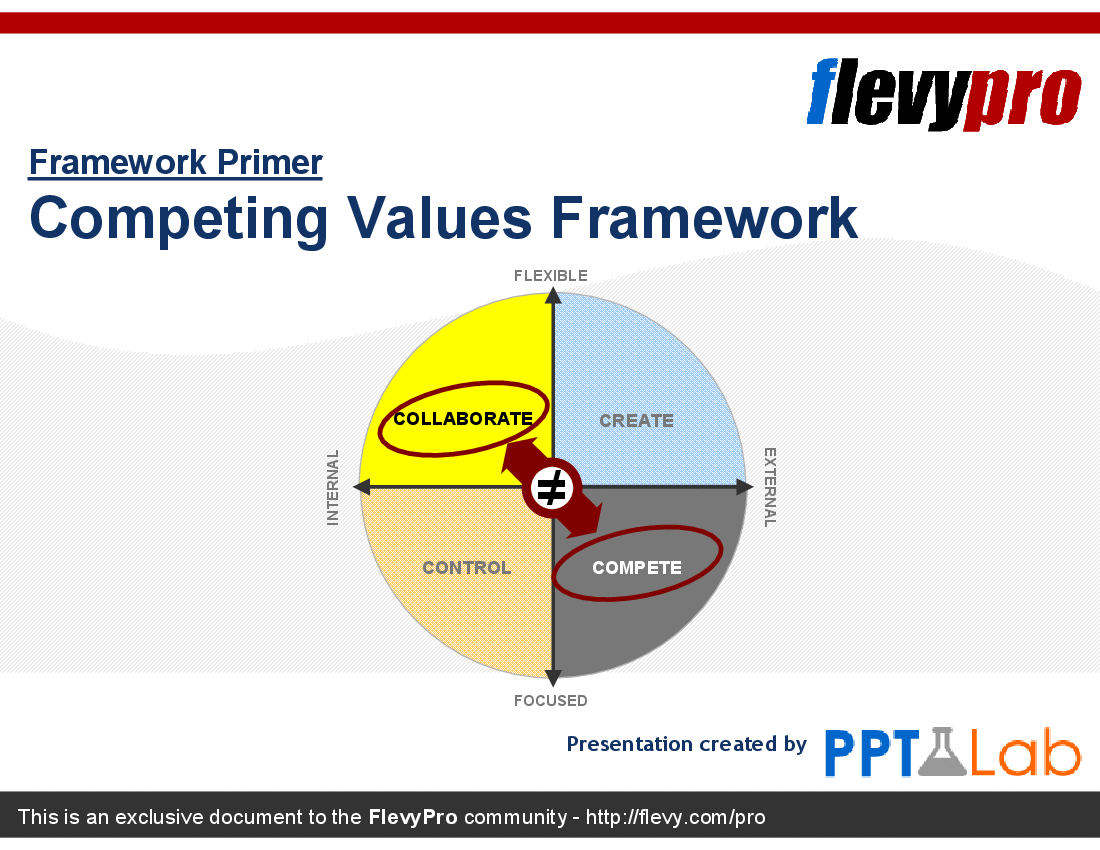
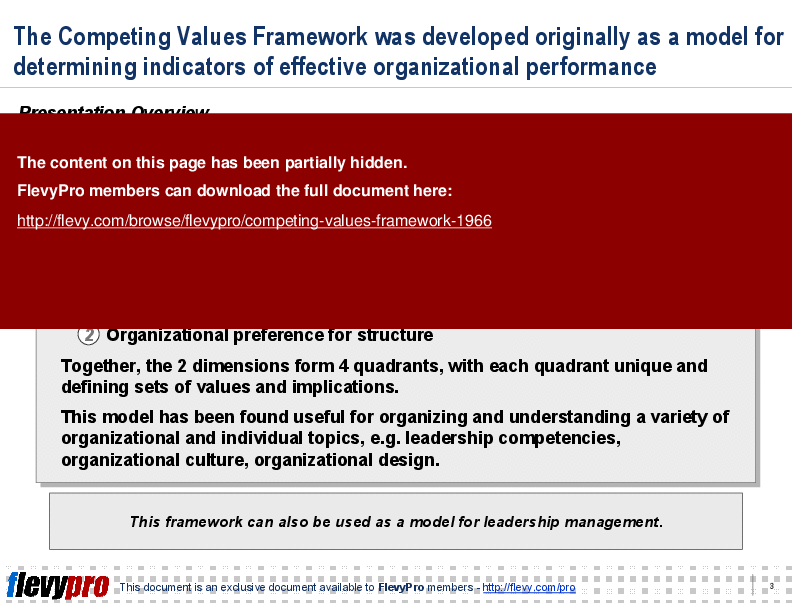
The Competing Values Framework, developed by Robert Quinn and Jon Rohrbaugh, is a theory that was developed initially from research done on the major indicators of effective organizational performance.
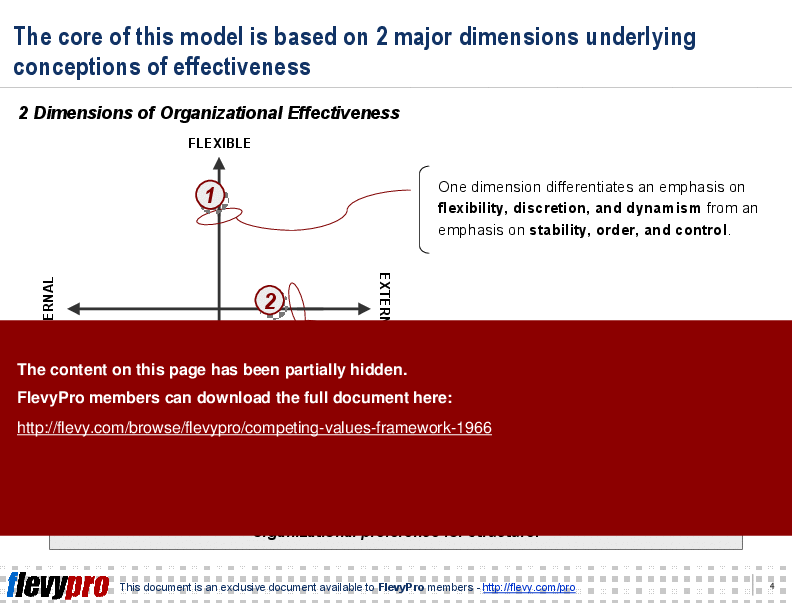
Based on statistical analyses of a comprehensive list of effectiveness indicators, Quinn and Rohrbaugh discovered 2 major dimensions underlying conceptions of effectiveness, focused on:
1. Organizational focus
2. Organizational preference for structure
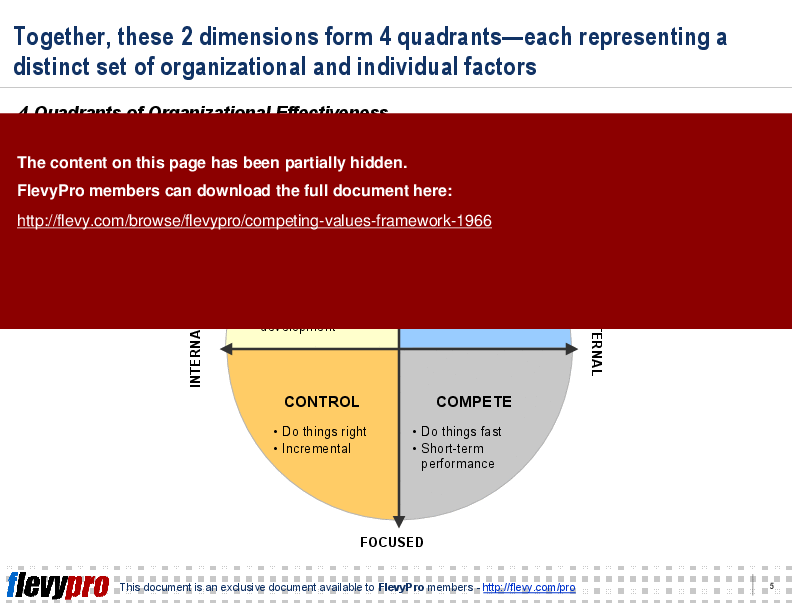
Together, the 2 dimensions form 4 quadrants, with each quadrant unique and defining sets of values and implications.
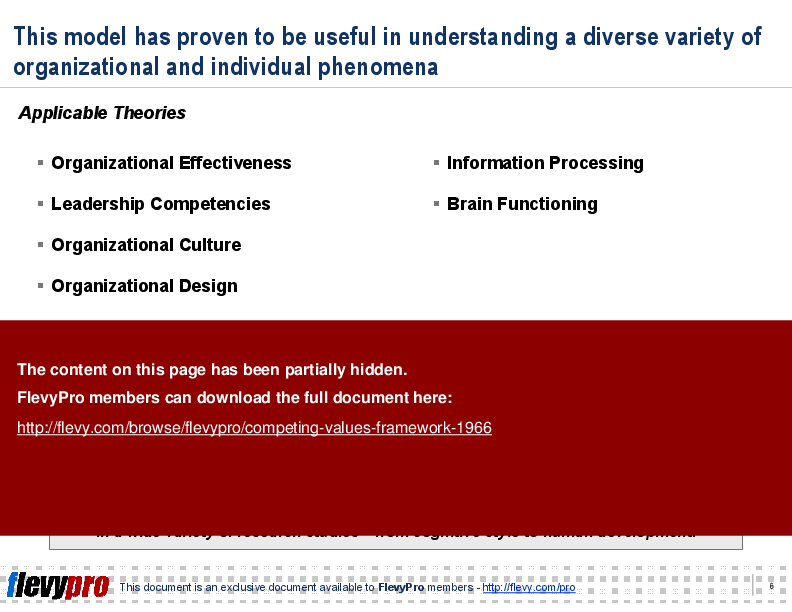
This model has been found useful for organizing and understanding a variety of organizational and individual topics, e.g. leadership competencies, organizational culture, organizational design.
This framework can also be used as a model for leadership management.
The Competing Values Framework is not just a theoretical model; it's a practical tool for dissecting and enhancing organizational effectiveness. The framework divides organizational effectiveness into four quadrants: Human Relations, Open Systems, Internal Process, and Rational Goal models. Each quadrant emphasizes different values and assumptions, providing a comprehensive view of organizational dynamics. This segmentation allows leaders to identify and leverage specific competencies and behaviors that align with their strategic objectives.
The Human Relations Model, for instance, focuses on internal flexibility and emphasizes cohesion, morale, and human resource development. Techniques like teamwork, collaboration, and talent management are highlighted as critical components. On the other hand, the Open Systems Model stresses external flexibility, prioritizing innovation, vision, and agility. Leaders in this quadrant are often seen as visionaries and entrepreneurs, driving constant change and transformation.
The Internal Process Model and Rational Goal Model emphasize control, both internally and externally. The Internal Process Model focuses on efficiency, stability, and control through structured processes and quality enhancement. The Rational Goal Model, however, targets goal achievement and profitability, with leaders acting as hard-driving competitors. This dual focus on flexibility and control across internal and external dimensions makes the Competing Values Framework a versatile tool for leadership development and organizational analysis.
Got a question about this document? Email us at flevypro@flevy.com.
TOPIC FAQ
What are the core dimensions of the Competing Values Framework?
The framework is based on 2 core dimensions: organizational focus (internal vs. external) and preference for structure (flexibility vs. control). These 2 axes form the conceptual basis for distinguishing competing values in organizations and create the model’s 2 dimensions.What do the 4 quadrants represent in the Competing Values Framework?
The 4 quadrants—Human Relations, Open Systems, Internal Process, and Rational Goal—each represent distinct value sets and assumptions about effectiveness, such as cohesion and morale versus goal achievement and profitability; the model organizes these into 4 quadrants.How can the Competing Values Framework be applied to leadership development?
The framework helps map leadership competencies to quadrant-based behaviors (e.g., vision and innovation in Open Systems, teamwork in Human Relations). It can guide development objectives by identifying which quadrant competencies need strengthening and informing leadership management practices across the 4 quadrants.How does the Competing Values Framework help diagnose organizational culture?
By plotting cultural preferences along the flexibility–control and internal–external axes, the framework surfaces tensions and dominant value sets, enabling leaders to compare current culture against strategic needs and identify misalignment across the 4 quadrants.What should I look for in a Competing Values Framework slide deck or resource?
Seek a resource that explains the 2 core dimensions, describes all 4 quadrants and their implications for leadership and culture, and includes examples of how to apply the model; Flevy’s Competing Values Framework PowerPoint presents these elements across a 21-slide PowerPoint.How do I evaluate a compact Competing Values Framework deliverable when I have limited time?
Prioritize materials that concisely define the 2 dimensions and 4 quadrants, show practical leadership or culture applications, and are ready for presentation; a concise PowerPoint that lays out the quadrants and use cases—such as a 21-slide deck—supports fast uptake.I’m reorganizing after a merger—how can the Competing Values Framework guide integration decisions?
Use the framework to map each merging unit’s dominant values and preferred structure (flexibility vs. control, internal vs. external), identify areas of cultural and leadership mismatch, and target interventions to balance competing values across the 4 quadrants.We’re seeing low morale and poor collaboration—which quadrant should we focus on first?
Low morale and collaboration align with the Human Relations quadrant, which emphasizes internal flexibility, cohesion, morale, human resource development, teamwork, collaboration, and talent management within the four-quadrant model.LEADERSHIP PPT TEMPLATES
Source: Best Practices in Leadership, Organizational Design, Corporate Culture PowerPoint Slides: Competing Values Framework PowerPoint (PPT) Presentation Slide Deck, PPT Lab
Did you need more documents?
Consider a FlevyPro subscription from $39/month. View plans here.
For $10.00 more, you can download this document plus 2 more FlevyPro documents. That's just $13 each.




























