
This framework is developed by a team of former McKinsey and Big 4 consultants. The presentation follows the headline-body-bumper slide format used by global consulting firms.
Editor Summary
Competing Values Framework is a 21-slide PowerPoint by PPT Lab presenting Robert Quinn and Jon Rohrbaugh’s two-dimensional model of organizational effectiveness.
Read moreIt maps the 2 core dimensions—organizational focus and preference for structure—into 4 quadrants: Human Relations, Open Systems, Internal Process, and Rational Goal, and describes implications for leadership competencies, culture, and design. Sold as a digital download on Flevy; used by HR leaders, leadership development professionals, organizational designers, and management consultants.
Use this framework when leaders need to diagnose tensions between flexibility and control, align leadership behaviors with strategy, or clarify cultural and design trade-offs during transformation, redesign, or leadership development programs.
HR leaders conducting competency mapping by aligning desired behaviors to quadrants such as Human Relations or Rational Goal to inform talent programs.
Leadership development professionals designing workshops to shift managers toward innovation or control behaviors based on quadrant gaps.
Organizational designers assessing cultural fit and structural preferences during redesign initiatives to reduce misalignment.
Management consultants recommending leadership-management approaches tied to strategic priorities and performance indicators.
The model’s two-dimensional quadrant diagnostic, derived from statistical analysis of effectiveness indicators, reflects empirical diagnostic techniques used in organizational consulting.
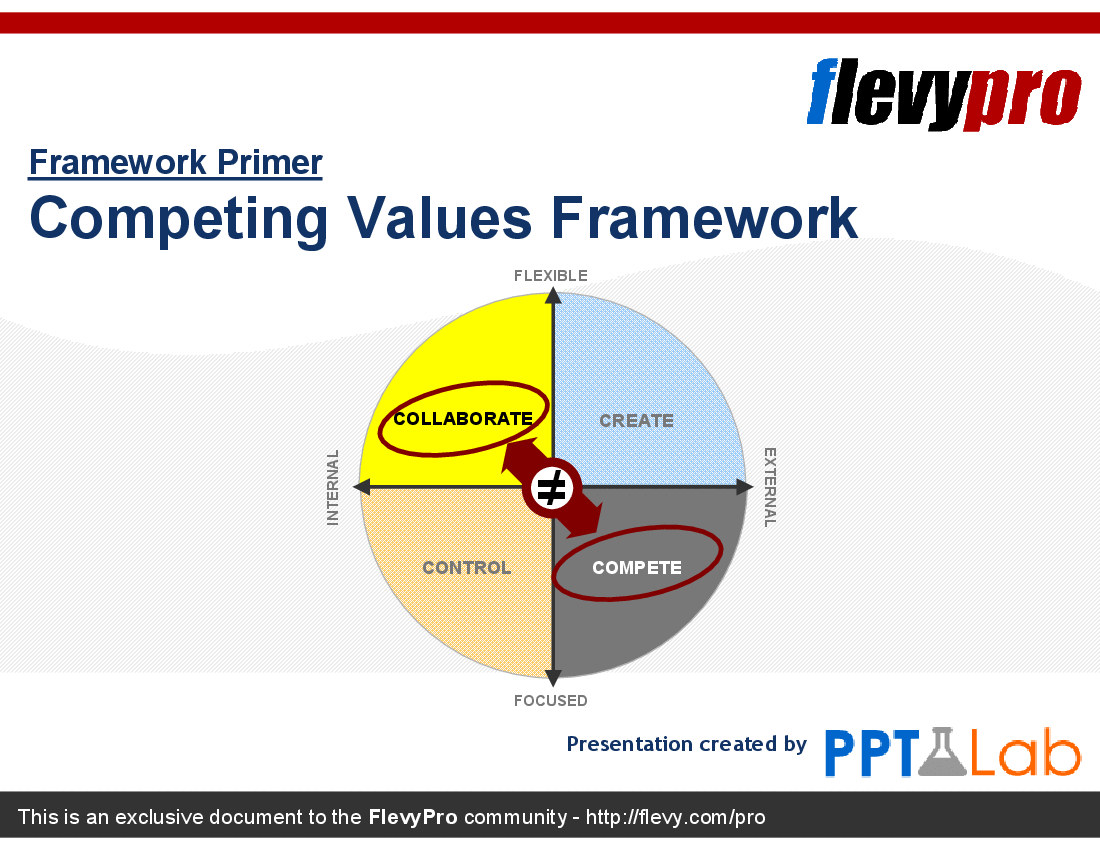
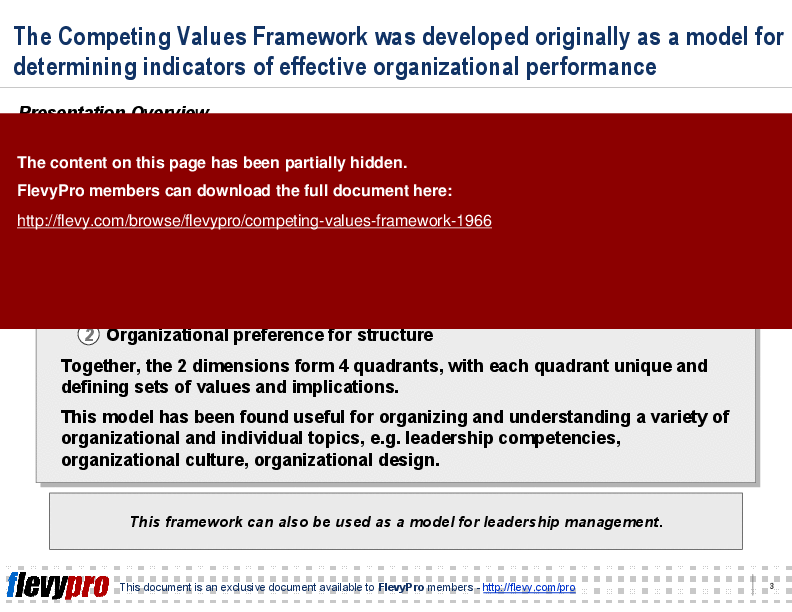
The Competing Values Framework, developed by Robert Quinn and Jon Rohrbaugh, is a theory that was developed initially from research done on the major indicators of effective organizational performance.
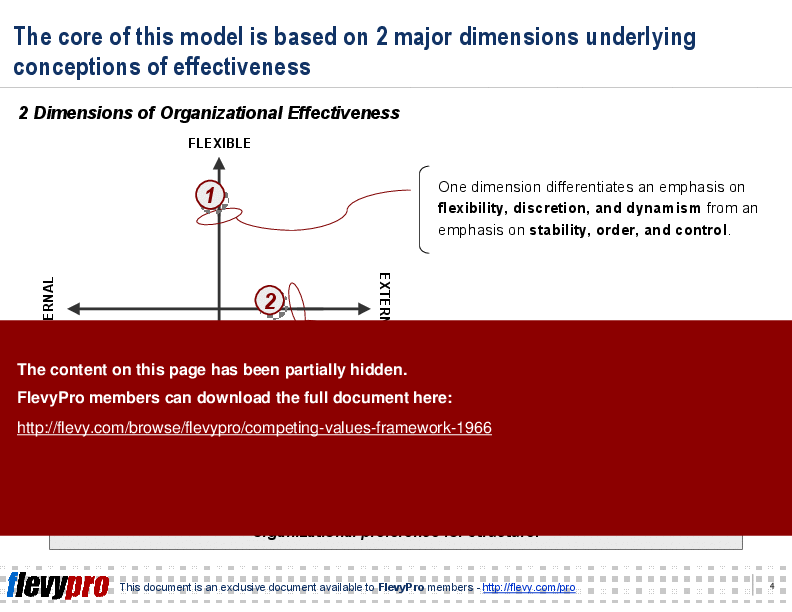
Based on statistical analyses of a comprehensive list of effectiveness indicators, Quinn and Rohrbaugh discovered 2 major dimensions underlying conceptions of effectiveness, focused on:
1. Organizational focus
2. Organizational preference for structure
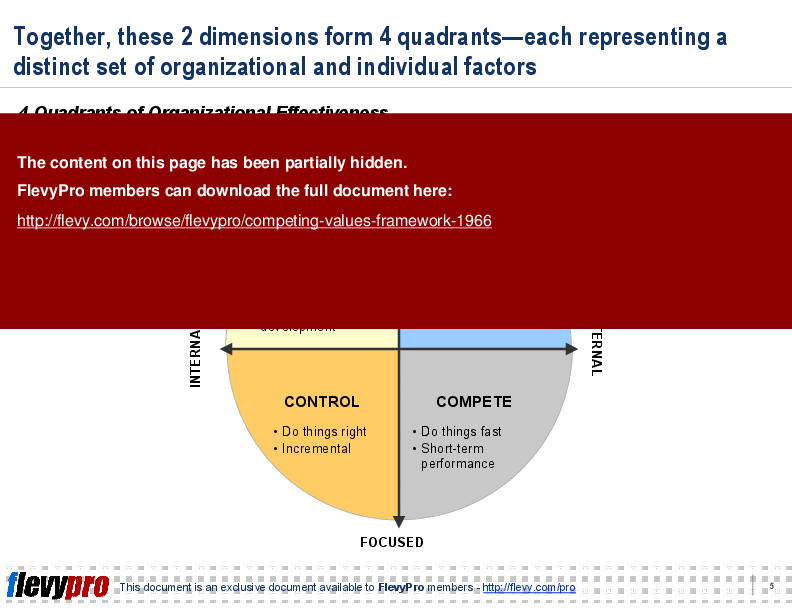
Together, the 2 dimensions form 4 quadrants, with each quadrant unique and defining sets of values and implications.
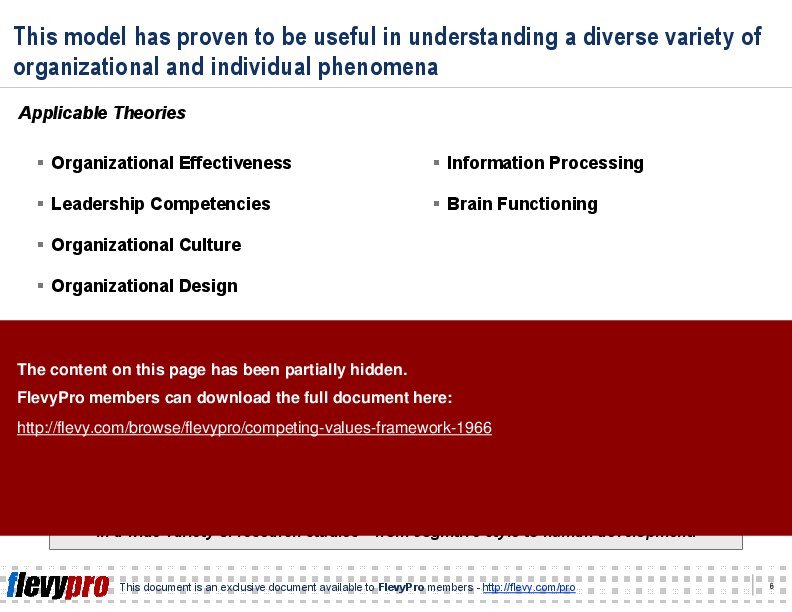
This model has been found useful for organizing and understanding a variety of organizational and individual topics, e.g. leadership competencies, organizational culture, organizational design.
This framework can also be used as a model for leadership management.
The Competing Values Framework is not just a theoretical model; it's a practical tool for dissecting and enhancing organizational effectiveness. The framework divides organizational effectiveness into four quadrants: Human Relations, Open Systems, Internal Process, and Rational Goal models. Each quadrant emphasizes different values and assumptions, providing a comprehensive view of organizational dynamics. This segmentation allows leaders to identify and leverage specific competencies and behaviors that align with their strategic objectives.
The Human Relations Model, for instance, focuses on internal flexibility and emphasizes cohesion, morale, and human resource development. Techniques like teamwork, collaboration, and talent management are highlighted as critical components. On the other hand, the Open Systems Model stresses external flexibility, prioritizing innovation, vision, and agility. Leaders in this quadrant are often seen as visionaries and entrepreneurs, driving constant change and transformation.
The Internal Process Model and Rational Goal Model emphasize control, both internally and externally. The Internal Process Model focuses on efficiency, stability, and control through structured processes and quality enhancement. The Rational Goal Model, however, targets goal achievement and profitability, with leaders acting as hard-driving competitors. This dual focus on flexibility and control across internal and external dimensions makes the Competing Values Framework a versatile tool for leadership development and organizational analysis.
What are the core dimensions of the Competing Values Framework?
The framework is based on 2 core dimensions: organizational focus (internal vs. external) and preference for structure (flexibility vs. control). These 2 axes form the conceptual basis for distinguishing competing values in organizations and create the model’s 2 dimensions.
What do the 4 quadrants represent in the Competing Values Framework?
The 4 quadrants—Human Relations, Open Systems, Internal Process, and Rational Goal—each represent distinct value sets and assumptions about effectiveness, such as cohesion and morale versus goal achievement and profitability; the model organizes these into 4 quadrants.
How can the Competing Values Framework be applied to leadership development?
The framework helps map leadership competencies to quadrant-based behaviors (e.g., vision and innovation in Open Systems, teamwork in Human Relations). It can guide development objectives by identifying which quadrant competencies need strengthening and informing leadership management practices across the 4 quadrants.
How does the Competing Values Framework help diagnose organizational culture?
By plotting cultural preferences along the flexibility–control and internal–external axes, the framework surfaces tensions and dominant value sets, enabling leaders to compare current culture against strategic needs and identify misalignment across the 4 quadrants.
What should I look for in a Competing Values Framework slide deck or resource?
Seek a resource that explains the 2 core dimensions, describes all 4 quadrants and their implications for leadership and culture, and includes examples of how to apply the model; Flevy’s Competing Values Framework PowerPoint presents these elements across a 21-slide PowerPoint.
How do I evaluate a compact Competing Values Framework deliverable when I have limited time?
Prioritize materials that concisely define the 2 dimensions and 4 quadrants, show practical leadership or culture applications, and are ready for presentation; a concise PowerPoint that lays out the quadrants and use cases—such as a 21-slide deck—supports fast uptake.
I’m reorganizing after a merger—how can the Competing Values Framework guide integration decisions?
Use the framework to map each merging unit’s dominant values and preferred structure (flexibility vs. control, internal vs. external), identify areas of cultural and leadership mismatch, and target interventions to balance competing values across the 4 quadrants.
We’re seeing low morale and poor collaboration—which quadrant should we focus on first?
Low morale and collaboration align with the Human Relations quadrant, which emphasizes internal flexibility, cohesion, morale, human resource development, teamwork, collaboration, and talent management within the four-quadrant model.
The Open Systems Model, located in the top-right quadrant of a broader framework, emphasizes flexibility and external focus, prioritizing adaptability and responsiveness to dynamic markets. Key components include the "Adhocracy" culture type, which fosters innovation and creativity, and a "Create" orientation that proactively generates new ideas. Leadership types associated with this model are Innovator, Entrepreneur, and Visionary, underscoring the importance of change-driven leadership. Value drivers such as Innovative Outputs, Transformation, and Agility are essential for maintaining a competitive edge. The theory of effectiveness highlights that innovativeness, vision, and the ability to embrace change are fundamental to organizational success.
This PPT slide illustrates the Competing Values Framework, focusing on eight leadership roles categorized within a two-by-two matrix of internal versus external orientations and flexible versus controlled approaches. The quadrants are labeled: Human Relations Model, Internal Process Model, Rational Goal Model, and Open System Model. The Human Relations Model includes the Mentor and Facilitator roles, emphasizing interpersonal relationships. The Rational Goal Model features the Director and Producer roles, concentrating on results and efficiency. The Innovator and Broker roles in the top right quadrant highlight adaptability, while the Monitor and Coordinator roles in the bottom left reflect a structured, process-oriented approach. This framework aids organizations in identifying and developing leadership competencies aligned with strategic objectives.
The Human Relations Model, located in the top-left quadrant of a broader framework, emphasizes flexibility and an internal focus, prioritizing cohesion, morale, and human resource development as indicators of effectiveness. The Culture Type "CLAN" reflects family-like relationships, valuing loyalty and belonging among employees. The Orientation "COLLABORATE" underscores the importance of teamwork for achieving organizational goals. Key Leader Types include Facilitator, Mentor, and Teambuilder, highlighting the role of leaders in nurturing relationships and empowering team members. Value Drivers are Commitment, Communication, and Development, advocating for strong relationships and open communication to foster continuous improvement. The Theory of Effectiveness posits that human development and high commitment lead to enhanced organizational performance, promoting a people-centric approach for success through collaboration.
The Rational Goal Model, located in the bottom-left quadrant of a larger framework, emphasizes control and external focus in organizational strategy. Key components include planning, goal setting, productivity, and efficiency, which enhance competitiveness and quick response times. The model categorizes the culture type as "Market," indicating a focus on market share and profitability, with an orientation labeled "Compete" that drives organizations to outperform rivals. The "Leader Type" descriptors—Hard-driver, Competitor, and Producer—suggest assertive, results-oriented leadership pushing teams to achieve aggressive targets. Primary "Value Drivers" are market share, goal achievement, and profitability. The "Theory of Effectiveness" posits that aggressive competition and customer focus lead to organizational effectiveness, aligning strategies with these principles to drive performance.
Source: Best Practices in Leadership, Organizational Design, Robert Quinn, Competing Values Framework, Jon Rohrbaugh PowerPoint Slides: Competing Values Framework PowerPoint (PPT) Presentation Slide Deck, PPT Lab
This framework is developed by a team of former McKinsey and Big 4 consultants. The presentation follows the headline-body-bumper slide format used by global consulting firms.
For $10.00 more, you can download this document plus 2 more FlevyPro documents. That's just $13 each.
ABOUT FLEVYPRO
This document is part of the FlevyPro Library, a curated knowledge base of documents for our FlevyPro subscribers.
FlevyPro is a subscription service for on-demand business frameworks and analysis tools. FlevyPro subscribers receive access to an exclusive library of curated business documents—business framework primers, presentation templates, Lean Six Sigma tools, and more—among other exclusive benefits.
The average daily rate of a McKinsey consultant is $6,625 (not including expenses). The average price of a Flevy document is $65.
Trusted by over 10,000+ Client Organizations
Since 2012, we have provided business templates to over 10,000 businesses and organizations of all sizes, from startups and small businesses to the Fortune 100, in over 130 countries.
"As a consulting firm, we had been creating subject matter training materials for our people and found the excellent materials on Flevy, which saved us 100's of hours of re-creating what already exists on the Flevy materials we purchased."
– Michael Evans, Managing Director at Newport LLC
"As a consultant requiring up to date and professional material that will be of value and use to my clients, I find Flevy a very reliable resource.
The variety and quality of material available through Flevy offers a very useful and commanding source for information. Using Flevy saves me time, enhances my expertise and ends up being a good decision."
– Dennis Gershowitz, Principal at DG Associates
"Flevy is now a part of my business routine. I visit Flevy at least 3 times each month.
Flevy has become my preferred learning source, because what it provides is practical, current, and useful in this era where the business world is being rewritten.

many challenges and there is the need to make the right decisions in a short time, with so much scattered information, we are fortunate to have Flevy. Flevy investigates, selects, and puts at our disposal the best of the best to help us be successful in our work.
"
– Omar Hernán Montes Parra, CEO at Quantum SFE
"Flevy is our 'go to' resource for management material, at an affordable cost. The Flevy library is comprehensive and the content deep, and typically provides a great foundation for us to further develop and tailor our own service offer."
– Chris McCann, Founder at Resilient.World
"Last Sunday morning, I was diligently working on an important presentation for a client and found myself in need of additional content and suitable templates for various types of graphics. Flevy.com proved to be a treasure trove for both content and design at a reasonable price, considering the time I
saved. I encountered a download issue during the ordering process. However, a quick email to Flevy's support team, even on a Sunday (!!!), resulted in assistance within less than an hour, allowing me to download the content I needed. Fantastic job, Flevy! I give 5 stars for both content/price and customer service. Thank you!
"
– M. E., Chief Commercial Officer, International Logistics Service Provider
"Flevy.com has proven to be an invaluable resource library to our Independent Management Consultancy, supporting and enabling us to better serve our enterprise clients.
The value derived from our [FlevyPro] subscription in terms of the business it has helped to gain far exceeds the investment made, making a subscription a no-brainer for any growing consultancy – or in-house strategy team."
– Dean Carlton, Chief Transformation Officer, Global Village Transformations Pty Ltd.
"FlevyPro has been a brilliant resource for me, as an independent growth consultant, to access a vast knowledge bank of presentations to support my work with clients. In terms of RoI, the value I received from the very first presentation I downloaded paid for my subscription many times over! The
quality of the decks available allows me to punch way above my weight – it's like having the resources of a Big 4 consultancy at your fingertips at a microscopic fraction of the overhead.
"
– Roderick Cameron, Founding Partner at SGFE Ltd
"FlevyPro provides business frameworks from many of the global giants in management consulting that allow you to provide best in class solutions for your clients."
– David Harris, Managing Director at Futures Strategy
Download our free compilation of 50+ slides and templates on Organizational Design, Change Management, and Corporate Culture. Methodologies include ADKAR, Burke-Litwin Change Model, McKinsey 7-S, Competing Values Framework, etc.