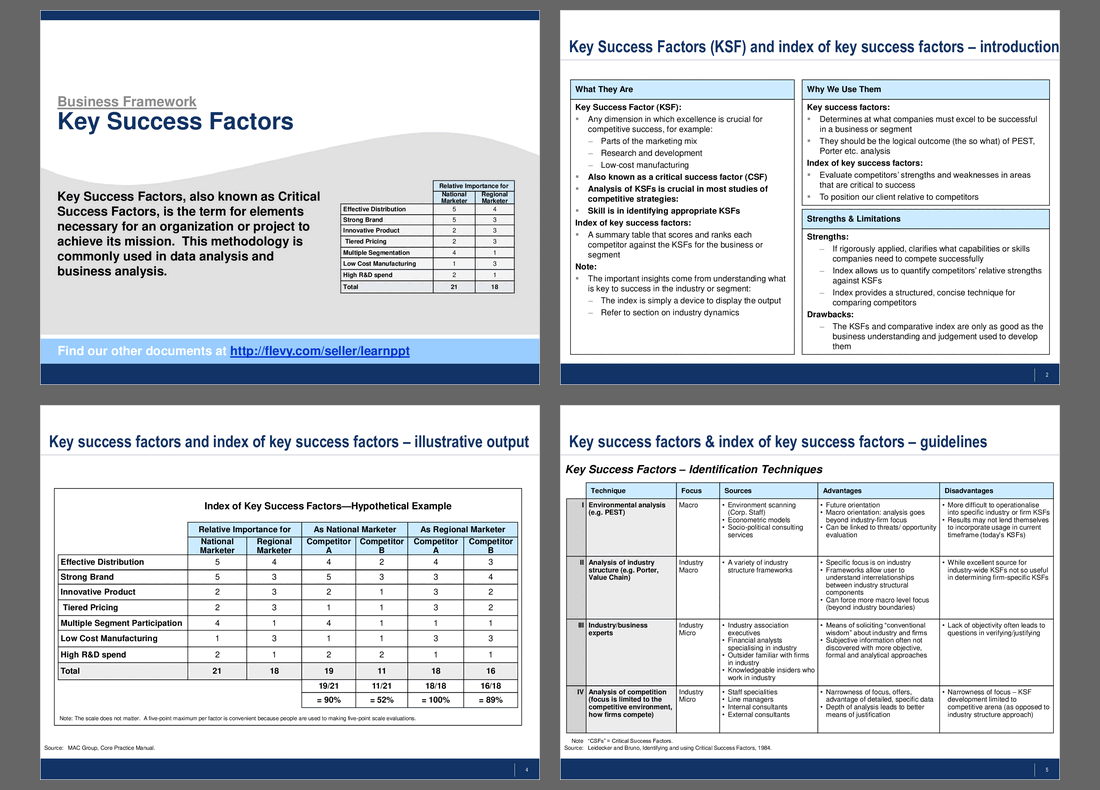
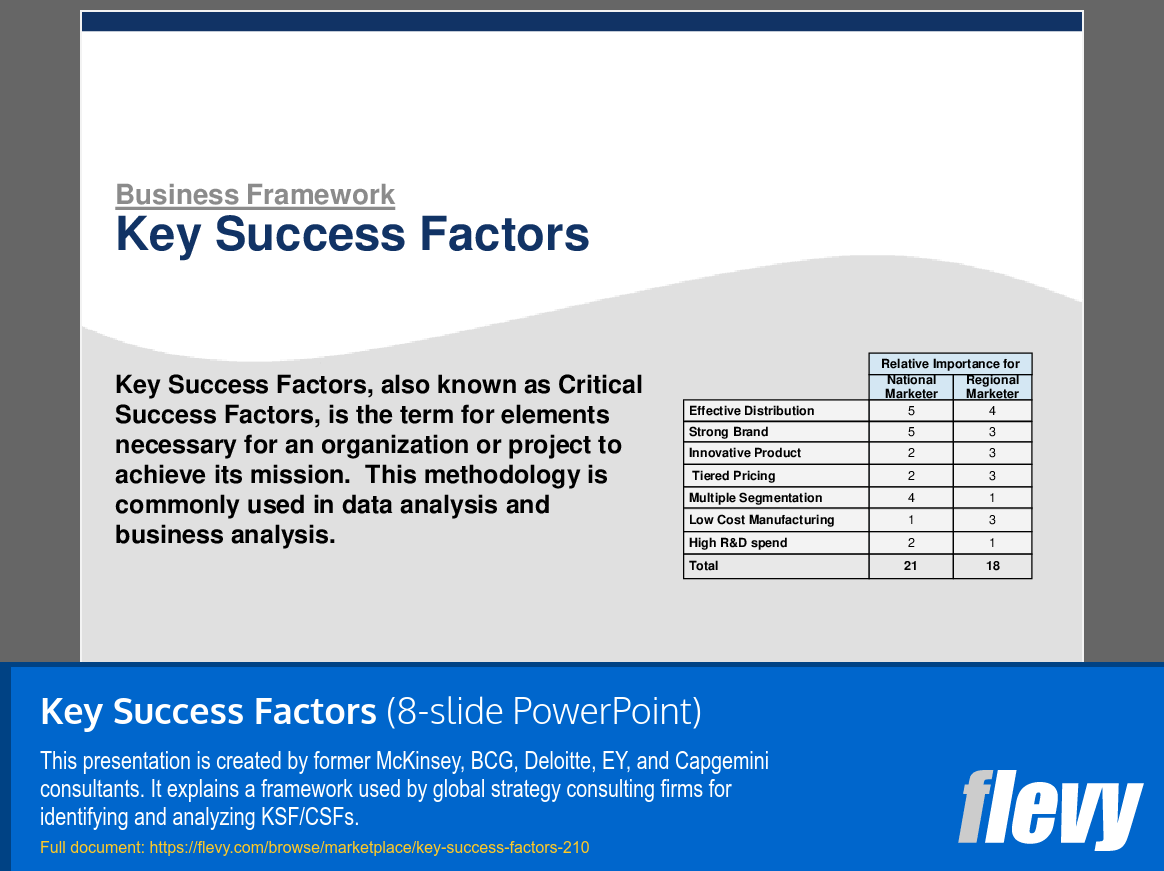
Key Success Factors (KSF), also known as Critical Success Factors (CSF), is the term for elements necessary for an organization or project to achieve its mission. This methodology is commonly used in data analysis and business analysis.

This document provides a comprehensive framework for identifying and evaluating key success factors across various market roles, including national and regional marketers. The illustrative output table offers a clear, comparative analysis of how different factors such as effective distribution, strong branding, and innovative products are weighted and prioritized. This allows executives to pinpoint critical areas for strategic focus and resource allocation.
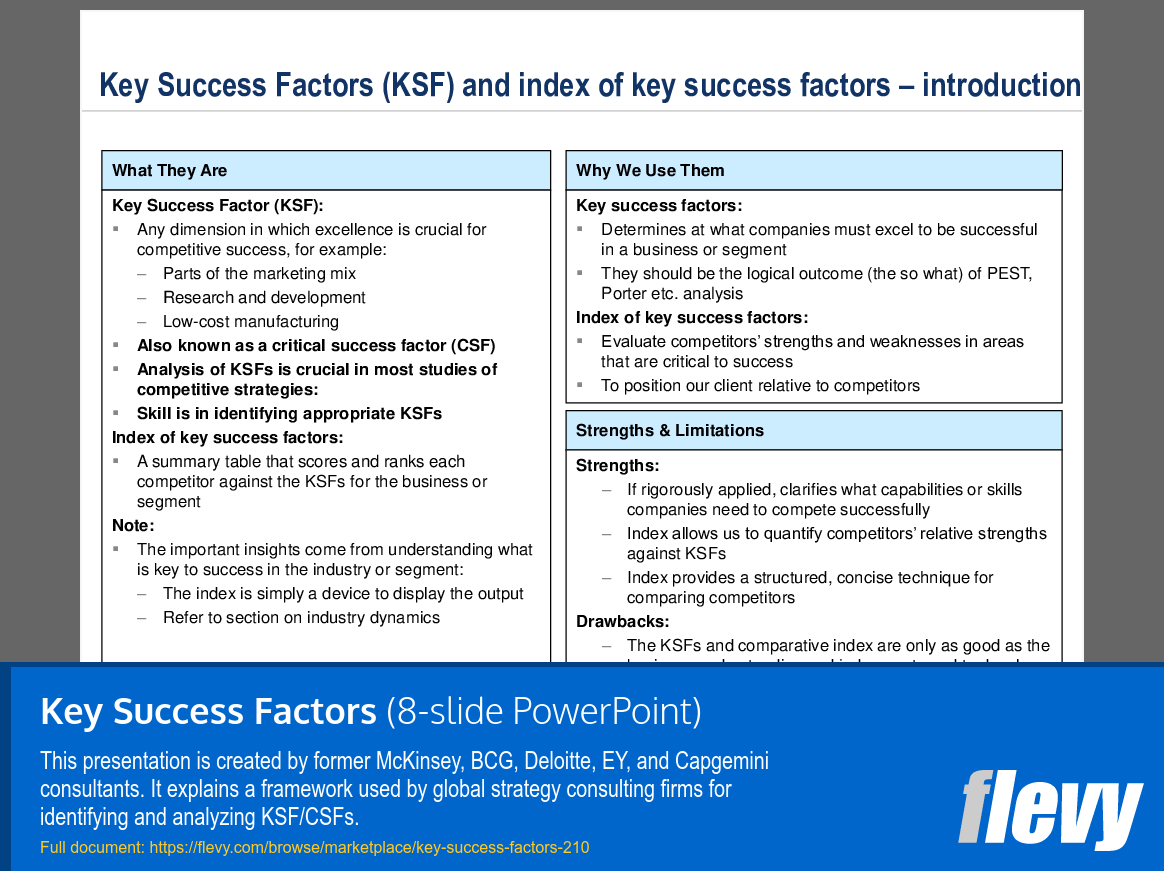
The insights section emphasizes the importance of a thorough understanding of the business segment to determine which capabilities need strengthening or defending. It also highlights the necessity of recognizing competitor positioning and estimating their relative performance. This enables a more informed decision-making process, ensuring that strategic initiatives are both targeted and effective.
Practical tips are provided to guide users in drawing up the right key success factors and choosing a simple scale for weighting criteria. The document underscores the importance of quantifying judgments and making data-driven decisions. Executives will find this resource invaluable for developing robust strategies that align with their organizational goals and competitive landscape.
Got a question about the product? Email us at support@flevy.com or ask the author directly by using the "Ask the Author a Question" form. If you cannot view the preview above this document description, go here to view the large preview instead.
Executive Summary
The Key Success Factors (KSF) presentation provides a structured framework for identifying and analyzing the critical elements necessary for organizational success. Developed by former consultants from leading firms like McKinsey, BCG, and Deloitte, this presentation equips corporate executives and consultants with the tools to define, evaluate, and prioritize KSFs within their industries. By utilizing this professional template, users can enhance their strategic management capabilities, enabling informed decision-making that drives competitive advantage.
Who This Is For and When to Use
• Corporate executives seeking to improve strategic planning and execution
• Business analysts focused on competitive analysis and performance metrics
• Consultants advising clients on operational efficiency and market positioning
• Marketing teams aiming to refine their strategies based on competitive insights
Best-fit moments to use this deck:
• During strategic planning sessions to identify key operational priorities
• When conducting competitive analysis to benchmark against industry leaders
• In workshops aimed at refining marketing strategies and product development
Learning Objectives
• Define Key Success Factors and their significance in strategic management
• Analyze competitors’ strengths and weaknesses relative to identified KSFs
• Develop a structured index to quantify and rank KSFs for competitive analysis
• Apply various analytical techniques to identify relevant KSFs in specific industries
• Establish a clear methodology for prioritizing KSFs based on organizational goals
• Utilize insights from KSF analysis to inform strategic decision-making
Table of Contents
• Introduction to Key Success Factors (page 1)
• Strengths and Limitations of KSF Analysis (page 2)
• How to Apply KSFs (page 3)
• Illustrative Output of KSF Index (page 4)
• Guidelines for Identifying KSFs (page 5)
• Techniques for KSF Identification (page 6)
• Top Tips for KSF Analysis (page 7)
• Data Sources and Related Analytics (page 8)
Primary Topics Covered
• Key Success Factors Definition - KSFs are essential elements that organizations must excel in to achieve their strategic objectives.
• Strengths and Limitations - KSF analysis clarifies necessary capabilities, but relies heavily on the quality of business judgment used in its development.
• Application of KSFs - A structured approach to identifying KSFs involves understanding customer needs, competitive dynamics, and industry trends.
• Index of Key Success Factors - A scoring system that ranks competitors based on their performance against identified KSFs, providing a comparative analysis tool.
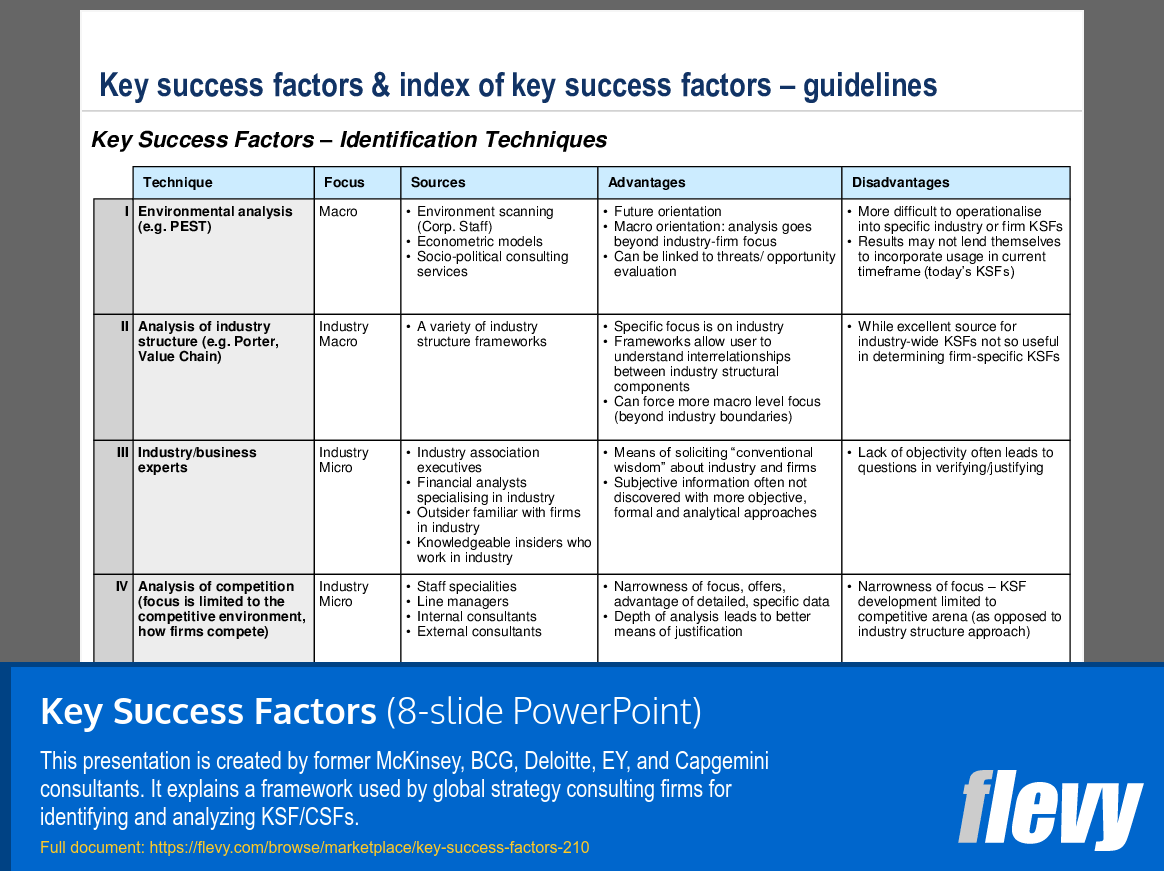
• Identification Techniques - Various methods for identifying KSFs, including environmental analysis, industry structure analysis, and expert insights.
• Quantifying KSFs - The process of scoring and weighting KSFs to evaluate relative importance and performance across competitors.
Deliverables, Templates, and Tools
• KSF index template for scoring and ranking competitors
• Framework for conducting environmental analysis to identify KSFs
• Guidelines for developing a structured approach to KSF analysis
• Example scoring system to quantify competitor performance against KSFs
• Checklist for identifying relevant KSFs based on industry dynamics
• Template for documenting insights and rationales behind KSF scores
Slide Highlights
• Overview of Key Success Factors and their importance in strategic planning
• Comparative analysis of competitors based on KSF performance
• Visual representation of KSF identification techniques and their applications
• Structured index output illustrating competitor rankings against KSFs
• Guidelines for effective KSF analysis and prioritization
Potential Workshop Agenda
Introduction to Key Success Factors (30 minutes)
• Overview of KSFs and their relevance in strategic management
• Discussion on the importance of identifying KSFs
Identifying Key Success Factors (60 minutes)
• Group exercise on applying various identification techniques
• Sharing insights and findings from the exercise
Analyzing Competitor Performance (45 minutes)
• Workshop on scoring and ranking competitors based on KSFs
• Presentation of findings and group discussion
Customization Guidance
• Tailor the KSF index template to reflect specific industry dynamics and competitive landscapes
• Adjust scoring criteria based on organizational priorities and strategic objectives
• Incorporate relevant data sources and insights from internal stakeholders to enrich KSF analysis
Secondary Topics Covered
• Competitive landscape analysis techniques
• Trends affecting KSFs in various industries
• The role of customer insights in defining KSFs
• Limitations of KSF analysis and common pitfalls to avoid
Topic FAQ
Document FAQ
These are questions addressed within this presentation.
What are Key Success Factors?
Key Success Factors are essential elements that organizations must excel in to achieve their strategic objectives and maintain competitive advantage.
How do I identify relevant KSFs for my industry?
Identifying KSFs requires a thorough understanding of your industry, customer needs, and competitive dynamics. Techniques include environmental analysis and expert consultations.
What is the purpose of a KSF index?
A KSF index provides a structured way to score and rank competitors based on their performance against identified KSFs, facilitating comparative analysis.
How can KSF analysis improve strategic decision-making?
By clarifying which capabilities are critical for success, KSF analysis enables organizations to focus their resources and efforts on areas that drive competitive advantage.
What are the limitations of KSF analysis?
KSF analysis is only as good as the business understanding and judgment used to develop it, which can lead to subjective interpretations and potential biases.
How do I score competitors against KSFs?
Scoring involves assessing each competitor's performance against each KSF, documenting the rationale for each score, and calculating total scores for comparative analysis.
What techniques can I use to identify KSFs?
Techniques include environmental analysis, industry structure analysis, expert consultations, and competitive analysis focused on how firms compete.
How can I ensure the relevance of my KSFs over time?
Regularly review and update KSFs based on changes in market dynamics, customer preferences, and competitive actions to maintain their relevance.
Glossary
• Key Success Factors - Essential elements necessary for achieving strategic objectives.
• Competitive Analysis - The assessment of competitors' strengths and weaknesses relative to KSFs.
• Index of Key Success Factors - A scoring system that ranks competitors based on their performance against KSFs.
• Environmental Analysis - A method for identifying external factors affecting business success.
• Industry Structure Analysis - An examination of the competitive landscape and dynamics within an industry.
• Scoring System - A framework for quantifying competitor performance against KSFs.
• Customer Insights - Information derived from understanding customer needs and preferences.
• Expert Consultation - Engaging industry experts to gain insights into KSFs.
• Quantitative Data - Numerical data used to support KSF analysis and scoring.
• Subjective Interpretation - Personal judgments that may influence KSF analysis outcomes.
• Market Dynamics - Changes in the market environment that affect business operations.
• Strategic Objectives - Goals that guide an organization's direction and decision-making.
Source: Best Practices in Key Performance Indicators PowerPoint Slides: Key Success Factors PowerPoint (PPT) Presentation Slide Deck, LearnPPT Consulting
|
Download our FREE Strategy & Transformation Framework Templates
Download our free compilation of 50+ Strategy & Transformation slides and templates. Frameworks include McKinsey 7-S, Balanced Scorecard, Disruptive Innovation, BCG Curve, and many more. |