

 Click main image to view in full screen. Unlock all 8 preview images:
Causal Model of Organizational Performance and Change – PowerPoint PPT Template
PowerPoint (PPT) 17 Slides FlevyPro Document


CHANGE MANAGEMENT PPT TEMPLATE DESCRIPTION
The Causal Model of Organizational Performance and Change, otherwise known as the Burke-Litwin Model (after its authors), is a framework for understanding organizational change. This model identifies 12 factors of change and argues that there are certain consistent causal linkages among classes of events. It is more robust than the McKinsey 7-S organizational design model, which only captures 7 factors.
This model can be leveraged for the following purposes:
• Analyze Organizational Change
• Understand Organizational Change
• Manage Organizational Change
• Predict Organizational Change
The Causal Model of Organizational Performance and Change is based on Open Systems Theory.
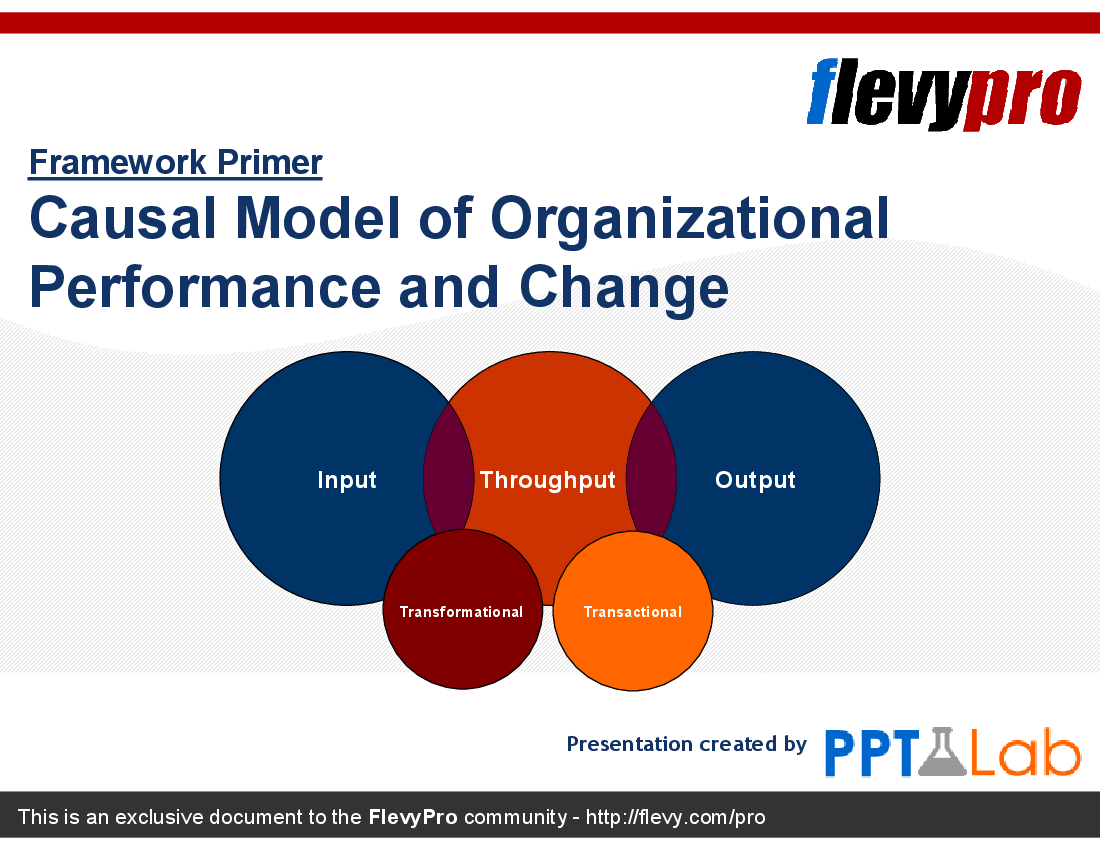
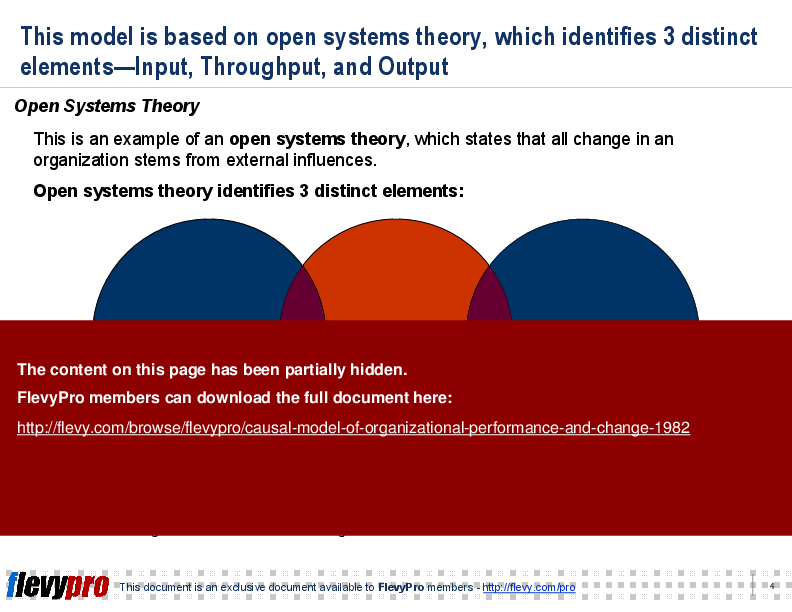
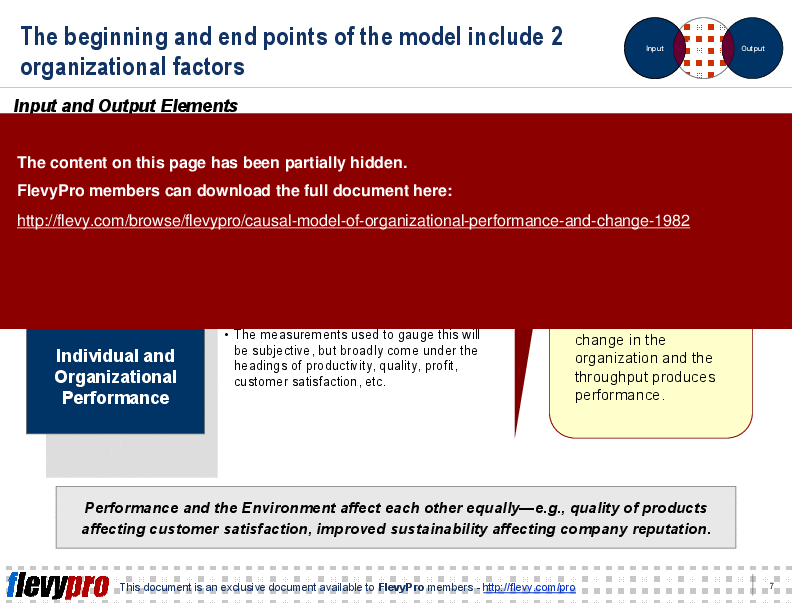
The Causal Model of Organizational Performance and Change delves into the intricacies of organizational dynamics by breaking down change into input, throughput, and output elements. The model emphasizes the importance of external influences on organizational change, making it a comprehensive tool for leaders aiming to navigate complex environments. By understanding the distinct elements of input, throughput, and output, executives can better predict and manage the ripple effects of change within their organizations.
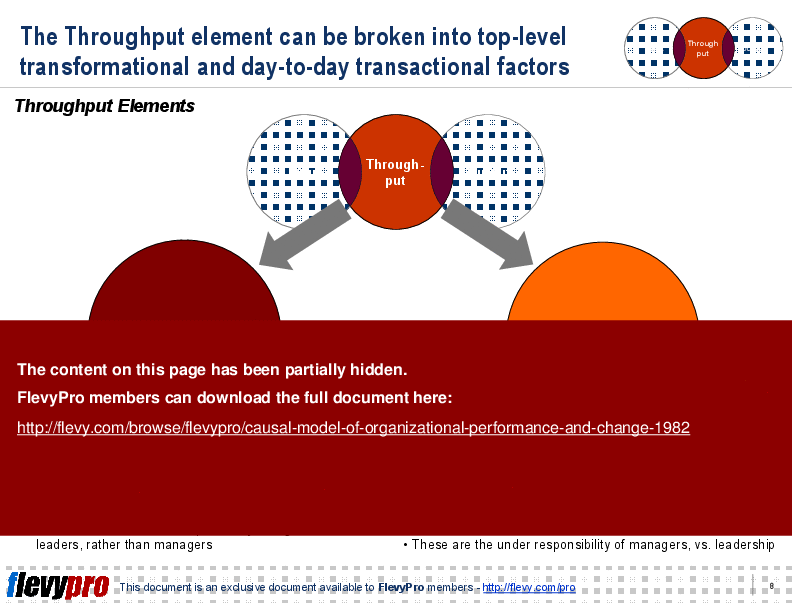
This PPT also highlights the transformational and transactional factors that drive organizational performance. Transformational factors such as leadership, mission and strategy, and organizational culture are explored in depth, providing insights into how these elements shape long-term success. Transactional factors, including management practices, systems, and work unit climate, are also examined, offering a balanced view of both high-level strategic and day-to-day operational influences on performance.
The model's visual representation aids in grasping the hierarchical structure and logical flow of influence among various factors. This clarity allows executives to pinpoint areas requiring intervention and to understand the interconnected nature of organizational elements. The document serves as a practical guide for those seeking to implement structured change initiatives, ensuring that all critical aspects are considered and addressed.
Got a question about this document? Email us at flevypro@flevy.com.
TOPIC FAQ
What are the main components of the Burke-Litwin Causal Model of Organizational Performance and Change?
The Burke-Litwin model identifies 12 factors organized around input, throughput, and output elements, emphasizes external influences, and separates transformational factors (e.g., leadership, mission, culture) from transactional factors (e.g., management practices, systems). It is grounded in Open Systems Theory and models 12 factors.How do transformational and transactional factors differ in this model?
Transformational factors drive long-term direction and identity—examples given are leadership, mission and strategy, and organizational culture—while transactional factors shape day-to-day operation, such as management practices, organizational systems, and work unit climate. The model explicitly separates these 2 groups of factors.How can input, throughput, and output elements be used to analyze organizational change?
Analysts map external influences as inputs, trace how organizational processes and structures (throughput) transmit those effects, and measure resulting performance or behavioral outcomes (output). This mapping helps predict ripple effects and prioritize interventions using the input–throughput–output framework.What should I look for when choosing an organizational change framework for a consulting engagement?
Prioritize models that show causal linkages, incorporate external influences, differentiate strategic versus operational levers, and provide clear visuals for stakeholder workshops; the Causal Model of Organizational Performance and Change provides a visual representation and models 12 factors useful for consulting diagnostics.Are PowerPoint templates for organizational change models useful for internal teams compared to custom analysis?
Templates standardize diagnostics, speed stakeholder communication, and illustrate causal flows during workshops. Their value depends on customization needs, team capability, and workshop cadence; the Causal Model of Organizational Performance and Change is provided as a 17-slide PPT suitable for presentation and discussion.I need to diagnose performance decline after a merger — which parts of the model should I focus on?
Emphasize external influences from the merger, transformational factors that shift direction or culture (leadership, mission and strategy, organizational culture), and transactional elements that affect daily execution (management practices, systems, work unit climate) to map causal impacts across the organization.How does the Burke-Litwin model compare to the McKinsey 7-S for organizational diagnosis?
The Burke-Litwin model identifies 12 interrelated factors and models causal linkages with stronger emphasis on external influences, whereas McKinsey 7-S captures 7 factors; Burke-Litwin therefore expands and links more variables in its diagnostic view, using 12 factors versus 7 factors.Where can I find a slide deck of the Burke-Litwin model for use in workshops?
A ready-to-use slide deck titled "Causal Model of Organizational Performance and Change" by PPT Lab is available as a PowerPoint sold on Flevy and offered as an immediate digital download in a 17-slide PPT.CHANGE MANAGEMENT PPT TEMPLATES
Source: Best Practices in Change Management, Organizational Design PowerPoint Slides: Causal Model of Organizational Performance and Change PowerPoint (PPT) Presentation Slide Deck, PPT Lab
Did you need more documents?
Consider a FlevyPro subscription from $39/month. View plans here.
For $10.00 more, you can download this document plus 2 more FlevyPro documents. That's just $13 each.




























