
This framework is developed by a team of former McKinsey and Big 4 consultants. The presentation follows the headline-body-bumper slide format used by global consulting firms.
Editor Summary
The Causal Model of Organizational Performance and Change is a 17-slide PowerPoint (PPT Lab) presenting the Burke-Litwin Model, which maps 12 factors of change and their causal linkages.
Read moreThe deck covers input–throughput–output elements, external influences, and distinguishes transformational (leadership, mission and strategy, culture) and transactional (management practices, systems, work unit climate) factors. Used for analyzing, understanding, managing, and predicting organizational change. Sold as a digital download on Flevy with immediate digital download.
Use this model when an organization faces complex change driven by external pressures, strategic shifts, mergers, or persistent performance issues that require mapping causal linkages across multiple organizational factors.
CHROs diagnosing how leadership, mission, or culture changes affect long-term performance by mapping transformational factors to outcomes.
Change managers tracing how external shocks propagate through input, throughput, and output elements to prioritize interventions.
Management consultants designing interventions that separate strategic (transformational) from operational (transactional) levers.
The approach models causal relationships and external inputs consistent with Open Systems Theory and extends the 7-factor view of McKinsey 7-S by using 12 interconnected factors.
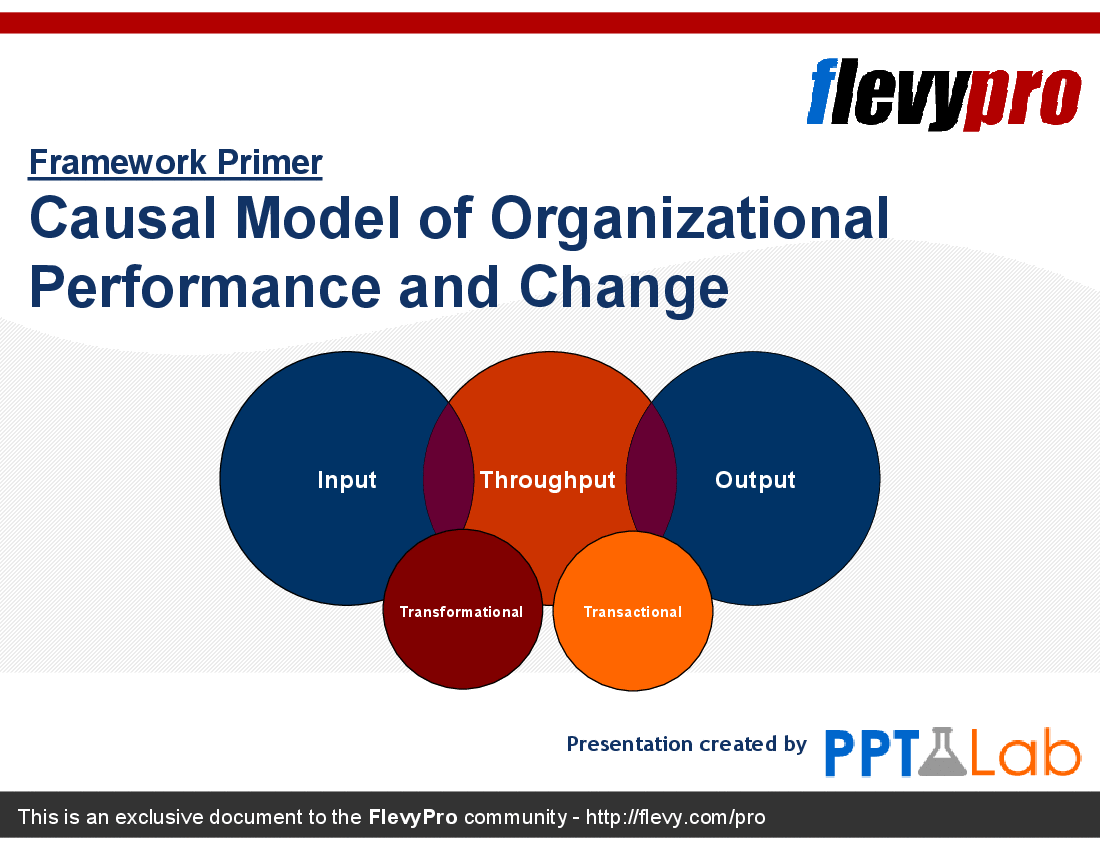
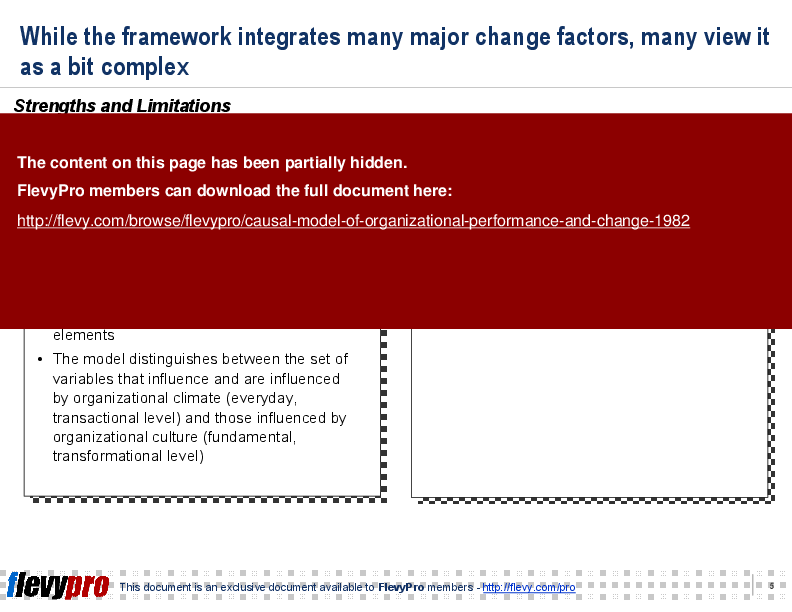
The Causal Model of Organizational Performance and Change, otherwise known as the Burke-Litwin Model (after its authors), is a framework for understanding organizational change. This model identifies 12 factors of change and argues that there are certain consistent causal linkages among classes of events. It is more robust than the McKinsey 7-S organizational design model, which only captures 7 factors.
This model can be leveraged for the following purposes:
• Analyze Organizational Change
• Understand Organizational Change
• Manage Organizational Change
• Predict Organizational Change
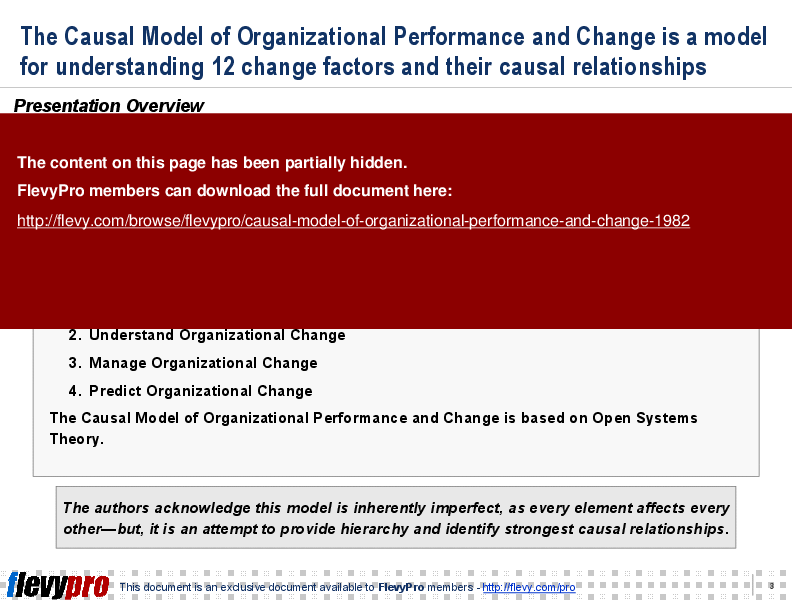
The Causal Model of Organizational Performance and Change is based on Open Systems Theory.
The Causal Model of Organizational Performance and Change delves into the intricacies of organizational dynamics by breaking down change into input, throughput, and output elements. The model emphasizes the importance of external influences on organizational change, making it a comprehensive tool for leaders aiming to navigate complex environments. By understanding the distinct elements of input, throughput, and output, executives can better predict and manage the ripple effects of change within their organizations.
This PPT also highlights the transformational and transactional factors that drive organizational performance. Transformational factors such as leadership, mission and strategy, and organizational culture are explored in depth, providing insights into how these elements shape long-term success. Transactional factors, including management practices, systems, and work unit climate, are also examined, offering a balanced view of both high-level strategic and day-to-day operational influences on performance.
The model's visual representation aids in grasping the hierarchical structure and logical flow of influence among various factors. This clarity allows executives to pinpoint areas requiring intervention and to understand the interconnected nature of organizational elements. The document serves as a practical guide for those seeking to implement structured change initiatives, ensuring that all critical aspects are considered and addressed.
What are the main components of the Burke-Litwin Causal Model of Organizational Performance and Change?
The Burke-Litwin model identifies 12 factors organized around input, throughput, and output elements, emphasizes external influences, and separates transformational factors (e.g., leadership, mission, culture) from transactional factors (e.g., management practices, systems). It is grounded in Open Systems Theory and models 12 factors.
How do transformational and transactional factors differ in this model?
Transformational factors drive long-term direction and identity—examples given are leadership, mission and strategy, and organizational culture—while transactional factors shape day-to-day operation, such as management practices, organizational systems, and work unit climate. The model explicitly separates these 2 groups of factors.
How can input, throughput, and output elements be used to analyze organizational change?
Analysts map external influences as inputs, trace how organizational processes and structures (throughput) transmit those effects, and measure resulting performance or behavioral outcomes (output). This mapping helps predict ripple effects and prioritize interventions using the input–throughput–output framework.
What should I look for when choosing an organizational change framework for a consulting engagement?
Prioritize models that show causal linkages, incorporate external influences, differentiate strategic versus operational levers, and provide clear visuals for stakeholder workshops; the Causal Model of Organizational Performance and Change provides a visual representation and models 12 factors useful for consulting diagnostics.
Are PowerPoint templates for organizational change models useful for internal teams compared to custom analysis?
Templates standardize diagnostics, speed stakeholder communication, and illustrate causal flows during workshops. Their value depends on customization needs, team capability, and workshop cadence; the Causal Model of Organizational Performance and Change is provided as a 17-slide PPT suitable for presentation and discussion.
I need to diagnose performance decline after a merger — which parts of the model should I focus on?
Emphasize external influences from the merger, transformational factors that shift direction or culture (leadership, mission and strategy, organizational culture), and transactional elements that affect daily execution (management practices, systems, work unit climate) to map causal impacts across the organization.
How does the Burke-Litwin model compare to the McKinsey 7-S for organizational diagnosis?
The Burke-Litwin model identifies 12 interrelated factors and models causal linkages with stronger emphasis on external influences, whereas McKinsey 7-S captures 7 factors; Burke-Litwin therefore expands and links more variables in its diagnostic view, using 12 factors versus 7 factors.
Where can I find a slide deck of the Burke-Litwin model for use in workshops?
A ready-to-use slide deck titled "Causal Model of Organizational Performance and Change" by PPT Lab is available as a PowerPoint sold on Flevy and offered as an immediate digital download in a 17-slide PPT.
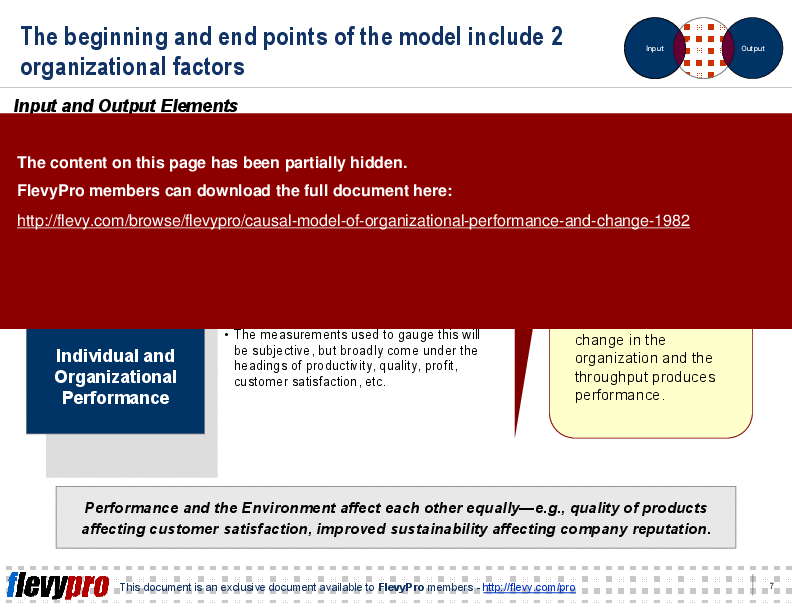
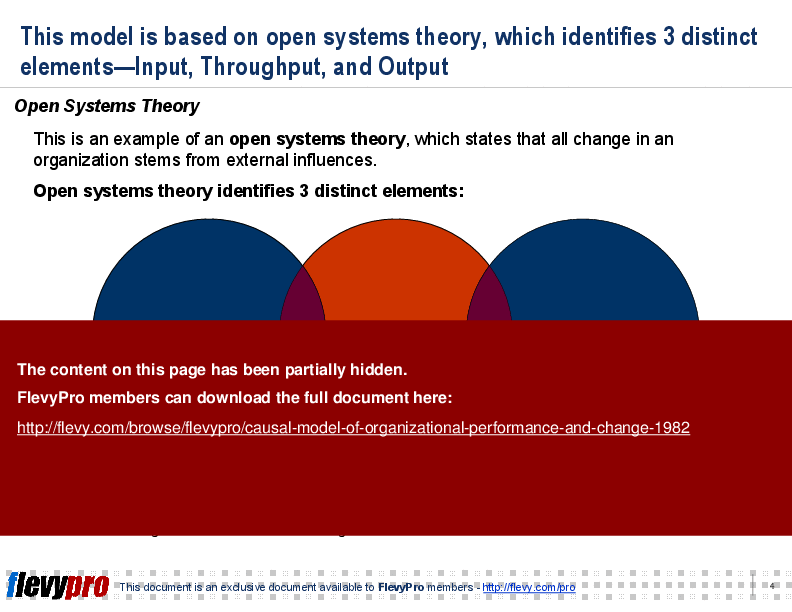
This PPT slide outlines a model emphasizing 2 organizational factors: the external environment and individual and organizational performance. The external environment includes forces like customer satisfaction, marketplace dynamics, regulatory changes, and economic conditions that impact organizational performance. Individual and organizational performance metrics, such as productivity, quality, profit, and customer satisfaction, are essential for evaluating effectiveness. The right side of the slide connects these elements, illustrating that they represent the input and output components of open systems theory. External factors instigate changes within the organization, while throughput processes yield performance outcomes. This dynamic interplay highlights the necessity for organizations to adjust strategies and operations in response to changes in external conditions.
This PPT slide outlines 3 critical transformational factors for organizational effectiveness: Leadership, Mission & Strategy, and Organizational Culture. Leadership emphasizes influence and service over traditional command-and-control, allowing leadership to emerge from any level within the organization, fostering an engaged workforce. Mission defines the organization's core purpose, while strategy outlines methods to achieve that purpose, distinguishing between immediate mission and long-term vision. Organizational Culture consists of the norms and values shaping employee behavior, including explicit policies and unwritten rules. Understanding these factors is essential for effective change management and organizational growth.
This PPT slide outlines key transactional factors influencing organizational performance, categorized into 4 elements: Management Practices, Structure, Systems, and Work Unit Climate. Management Practices involve daily managerial behaviors that impact strategy execution, particularly in fostering creativity and goal-setting, which affect employee engagement and productivity. Structure pertains to the organization’s departmental divisions and the importance of defined responsibilities for operational efficiency, enhancing communication and collaboration. Systems include policies and procedures, such as technology and performance management, essential for providing employees with necessary resources. Work Unit Climate reflects team perceptions of the working environment, including management style and performance management, which can enhance engagement and communication, critical for achieving organizational goals.
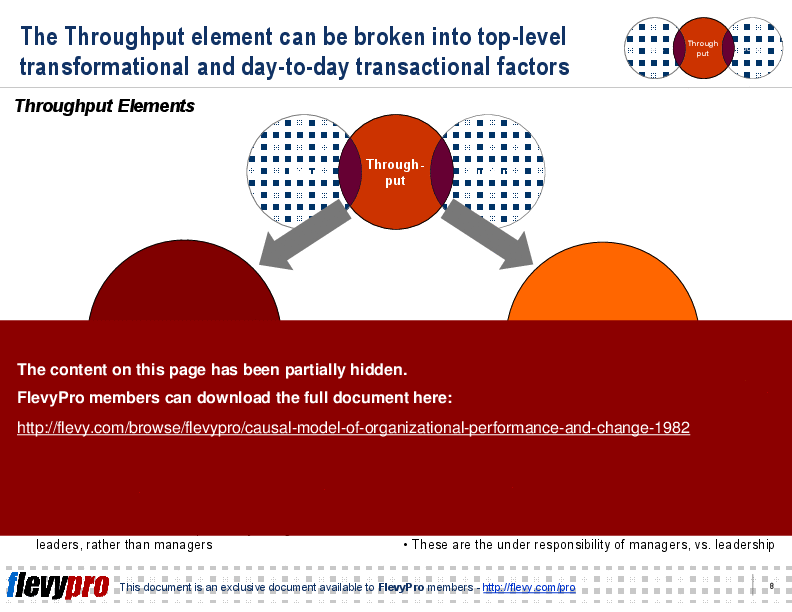
This PPT slide outlines the concept of "Throughput" in organizations, categorized into transformational and transactional elements. Transformational elements require significant changes in strategy or operations, indicating that organizations must be prepared for substantial shifts. In contrast, transactional elements are operational and routine, shaped by transformational factors while influencing them. This dynamic relationship highlights that operational aspects can be affected by strategic changes, yet they maintain stability within the organization. The visual representation emphasizes the interconnectedness of these elements, essential for effective throughput. Balancing revolutionary changes with ongoing operational realities is crucial for managing organizational change.
This PPT slide presents a causal model illustrating interconnected factors influencing organizational performance and change. The model emphasizes a hierarchical structure where the external environment is the primary driver, prompting leadership to adapt management practices. This adaptation affects work unit climate, which shapes employee motivation and performance outcomes. Leadership and organizational culture mediate external influences and internal practices, while management practices, policies, and procedures are essential mechanisms for leadership decisions. Individual factors, including task requirements, skills, and personal values, directly impact motivation, highlighting the critical role of individual experience in driving performance. Feedback loops indicate dynamic relationships, where changes in performance lead to adjustments in leadership and management practices, fostering continuous improvement.
Source: Best Practices in Change Management, Organizational Design, Causal Model of Organizational Performance and Change PowerPoint Slides: Causal Model of Organizational Performance and Change PowerPoint (PPT) Presentation Slide Deck, PPT Lab
This framework is developed by a team of former McKinsey and Big 4 consultants. The presentation follows the headline-body-bumper slide format used by global consulting firms.
For $10.00 more, you can download this document plus 2 more FlevyPro documents. That's just $13 each.
ABOUT FLEVYPRO
This document is part of the FlevyPro Library, a curated knowledge base of documents for our FlevyPro subscribers.

FlevyPro is a subscription service for on-demand business frameworks and analysis tools. FlevyPro subscribers receive access to an exclusive library of curated business documents—business framework primers, presentation templates, Lean Six Sigma tools, and more—among other exclusive benefits.
The average daily rate of a McKinsey consultant is $6,625 (not including expenses). The average price of a Flevy document is $65.
Trusted by over 10,000+ Client Organizations
Since 2012, we have provided business templates to over 10,000 businesses and organizations of all sizes, from startups and small businesses to the Fortune 100, in over 130 countries.
"If you are looking for great resources to save time with your business presentations, Flevy is truly a value-added resource. Flevy has done all the work for you and we will continue to utilize Flevy as a source to extract up-to-date information and data for our virtual and onsite presentations!"
– Debbi Saffo, President at The NiKhar Group
"I am extremely grateful for the proactiveness and eagerness to help and I would gladly recommend the Flevy team if you are looking for data and toolkits to help you work through business solutions."
– Trevor Booth, Partner, Fast Forward Consulting
"As a niche strategic consulting firm, Flevy and FlevyPro frameworks and documents are an on-going reference to help us structure our findings and recommendations to our clients as well as improve their clarity, strength, and visual power. For us, it is an invaluable resource to increase our impact and value."
– David Coloma, Consulting Area Manager at Cynertia Consulting
"FlevyPro has been a brilliant resource for me, as an independent growth consultant, to access a vast knowledge bank of presentations to support my work with clients. In terms of RoI, the value I received from the very first presentation I downloaded paid for my subscription many times over! The
quality of the decks available allows me to punch way above my weight – it's like having the resources of a Big 4 consultancy at your fingertips at a microscopic fraction of the overhead.
"
– Roderick Cameron, Founding Partner at SGFE Ltd
"Flevy.com has proven to be an invaluable resource library to our Independent Management Consultancy, supporting and enabling us to better serve our enterprise clients.
The value derived from our [FlevyPro] subscription in terms of the business it has helped to gain far exceeds the investment made, making a subscription a no-brainer for any growing consultancy – or in-house strategy team."
– Dean Carlton, Chief Transformation Officer, Global Village Transformations Pty Ltd.
"I have used FlevyPro for several business applications. It is a great complement to working with expensive consultants. The quality and effectiveness of the tools are of the highest standards."
– Moritz Bernhoerster, Global Sourcing Director at Fortune 500
"[Flevy] produces some great work that has been/continues to be of immense help not only to myself, but as I seek to provide professional services to my clients, it gives me a large "tool box" of resources that are critical to provide them with the quality of service and outcomes they are expecting."
– Royston Knowles, Executive with 50+ Years of Board Level Experience
"FlevyPro provides business frameworks from many of the global giants in management consulting that allow you to provide best in class solutions for your clients."
– David Harris, Managing Director at Futures Strategy
Download our free compilation of 50+ slides and templates on Organizational Design, Change Management, and Corporate Culture. Methodologies include ADKAR, Burke-Litwin Change Model, McKinsey 7-S, Competing Values Framework, etc.