
This framework is developed by a team of former McKinsey and Big 4 consultants. The presentation follows the headline-body-bumper slide format used by global consulting firms.
Explore the Business Model Innovation (BMI) framework by ex-McKinsey and Big 4 consultants. Understand the Business Model Journey and key components for sustainable growth. BMI: Business Model Journey is a 29-slide PPT PowerPoint presentation slide deck (PPTX) available for immediate download upon purchase.
Innovative Business Models can reshape industries and drive tremendous growth. In fact, if executed successfully, Business Model Transformation can make organizations resilient in the face of Disruption and create Growth unbounded by the limitations of its businesses.
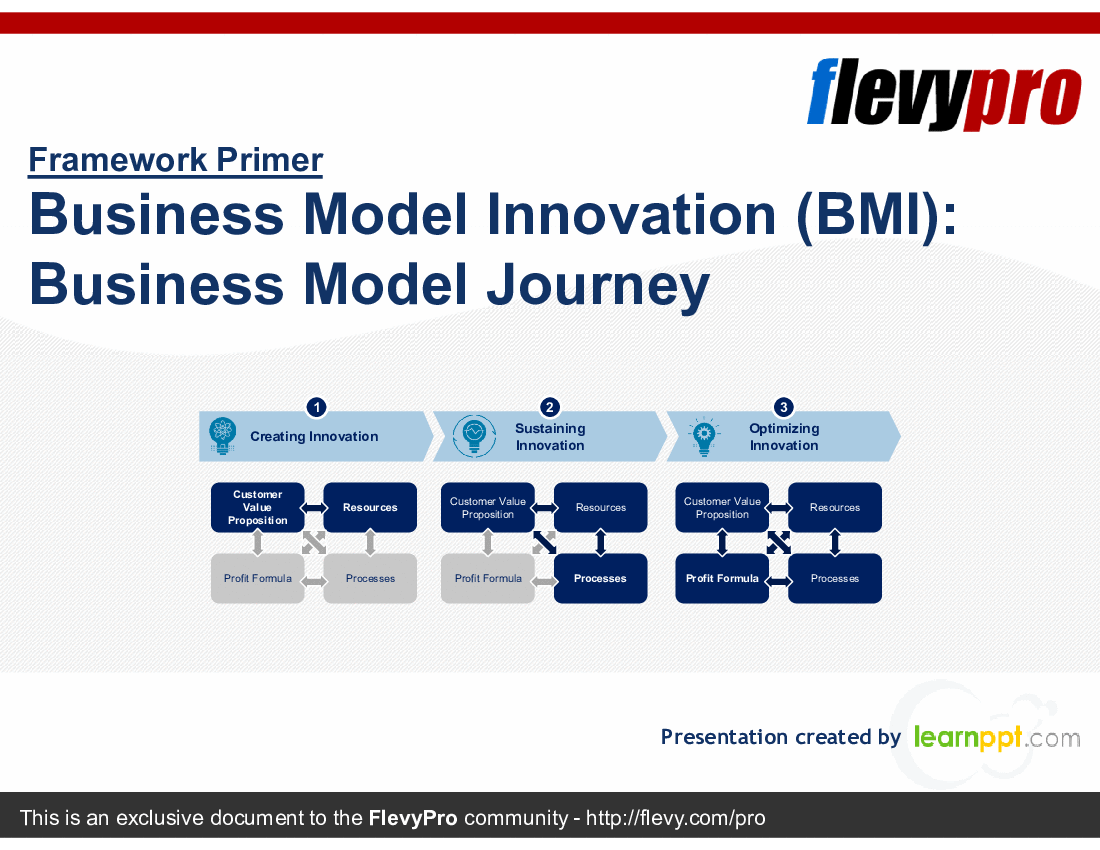
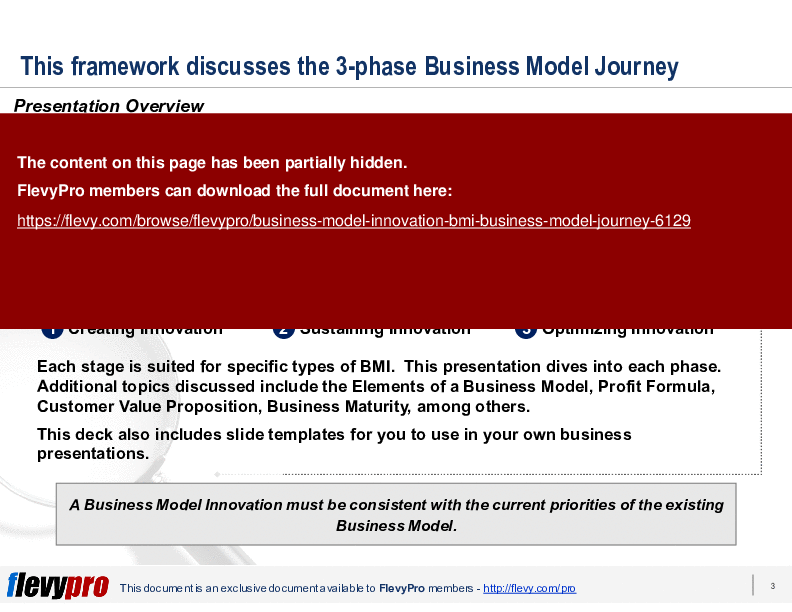
However, Corporate Renewal and Business Model Innovation (BMI) is difficult, as many executives do not understand what truly drives BMI. In this framework, we discuss the Business Model Journey, which shows us how Business Models develop through 3 predictable stages over time:
Each stage is suited for specific types of BMI. A Business Model Innovation must be consistent with the current priorities of the existing Business Model.
This presentation dives into each phase. Additional topics discussed include the Elements of a Business Model, Profit Formula, Customer Value Proposition, Business Maturity, among others.
This deck also includes slide templates for you to use in your own business presentations.
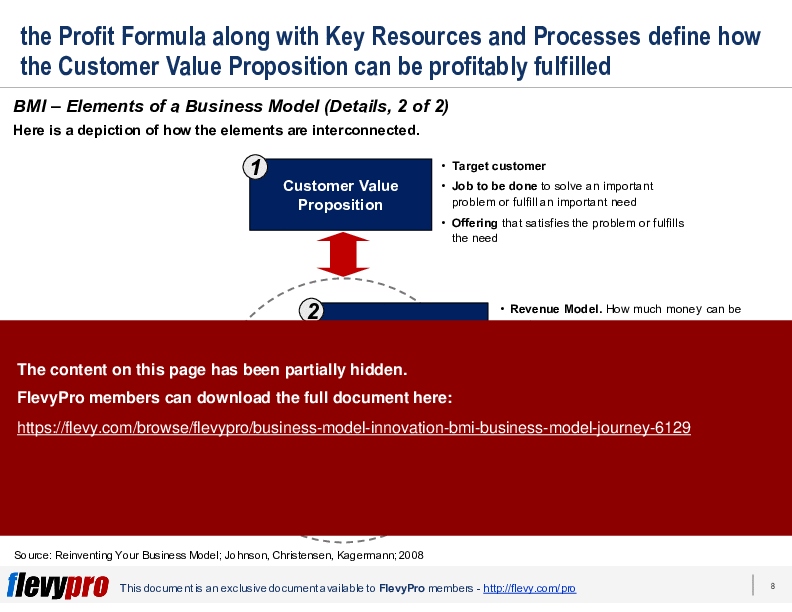
This comprehensive presentation also delves into the intricacies of the Profit Formula, Key Resources, and Key Processes, which are critical components of any robust business model. It provides a clear depiction of how these elements interconnect to deliver a compelling Customer Value Proposition. The PPT is designed to help you understand the dynamics between these elements and how they evolve as your business matures.
The deck includes practical templates that can be customized to fit your organization's specific needs. These templates are invaluable tools for illustrating your business model's journey from creation to optimization. By leveraging these resources, you can effectively communicate your strategic vision and operational plans to stakeholders, ensuring alignment and buy-in across the board.
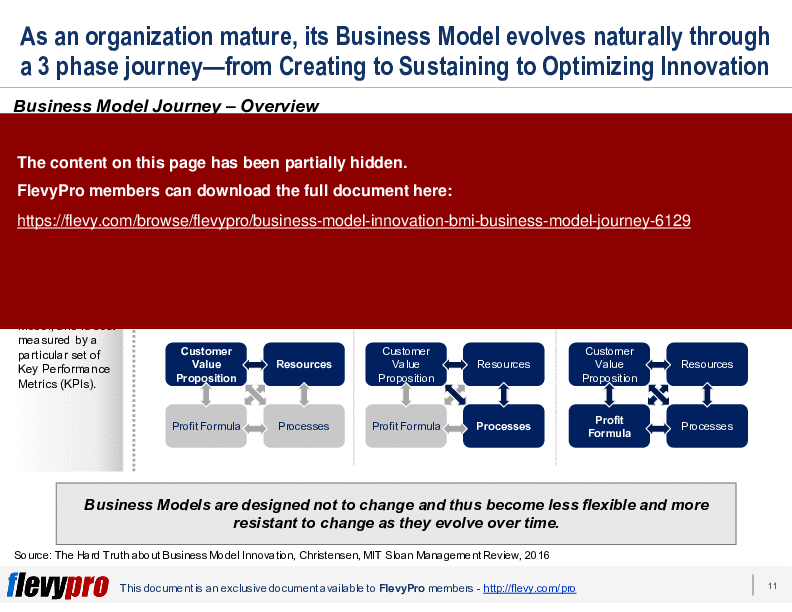
This PPT slide outlines a structured approach to business model evolution through 3 phases: Creating Innovation, Sustaining Innovation, and Optimizing Innovation. In the Creating Innovation phase, the focus is on establishing a market presence by forming a business model that integrates customer value propositions, resources, profit formulas, and processes. The Sustaining Innovation phase emphasizes refining the business model to adapt to market changes and operational demands, with more defined processes addressing recurring tasks. Finally, the Optimizing Innovation phase drives efficiencies and maximizes returns, optimizing the business model to meet investor expectations while addressing potential performance oversupply and the need for a modular structure to enhance agility. Business models must evolve to avoid resistance to change, crucial for sustaining long-term growth.
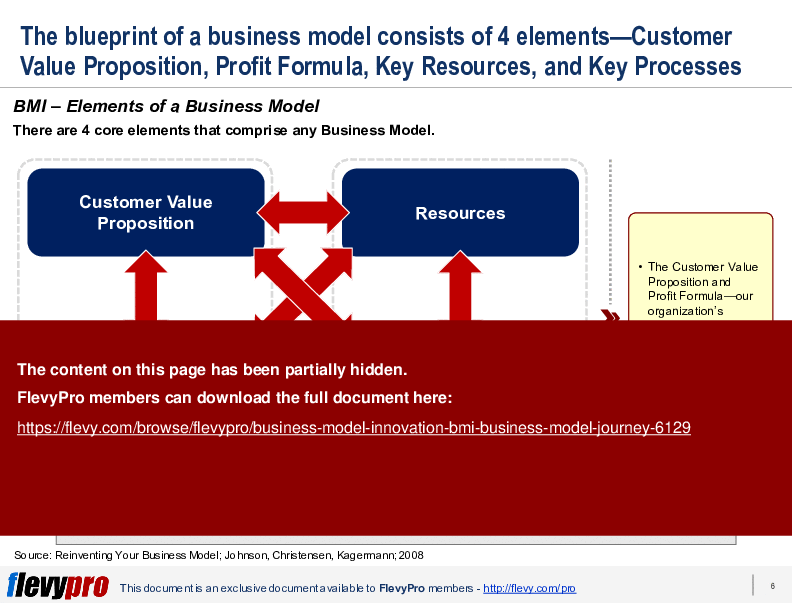
This PPT slide outlines the fundamental components of a business model: Customer Value Proposition, Profit Formula, Key Resources, and Key Processes. The Customer Value Proposition attracts and retains customers by addressing their needs. The Profit Formula details revenue generation and cost management, ensuring business sustainability. Key Resources encompass the assets required to deliver the value proposition, including human resources and technology. Key Processes involve operational workflows that maintain quality and efficiency in service delivery. Interconnections between these elements indicate that changes in one area impact others, such as adjustments in Key Resources or Processes following a shift in the Customer Value Proposition. Priorities guide organizations in balancing these elements to create value for customers and the business.
The final phase of the Business Model Journey, "Optimizing Innovation," focuses on enhancing process efficiencies and achieving cost savings. As businesses mature, investments in product performance yield diminishing returns, leading to operational changes that drive efficiencies. Strategies include eliminating labor costs, redesigning products, and outsourcing activities. Consolidating operations leverages economies of scale, crucial for maximizing profitability. Stakeholder priorities shift, with shareholder interests becoming more prominent than customer needs, emphasizing financial performance metrics and improving the Balance Sheet to maximize shareholder value. Data collection centers on costs and efficiency metrics, and adopting a modular structure can enhance efficiency, though it may reduce flexibility. An increase in merger and acquisition activities occurs as businesses with excess cash flow seek growth opportunities, while organic growth avenues may become limited, necessitating a strategic approach to M&A. Balancing efficiency with flexibility remains essential while focusing on shareholder value.
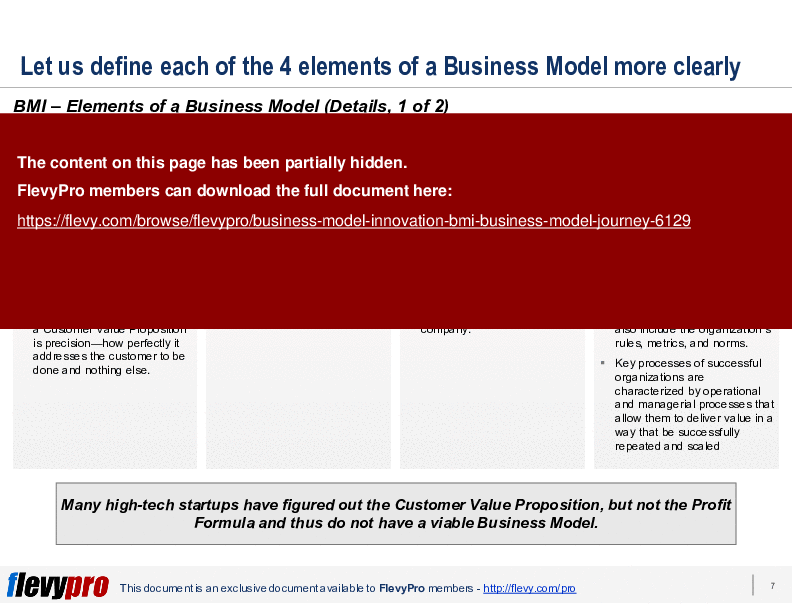
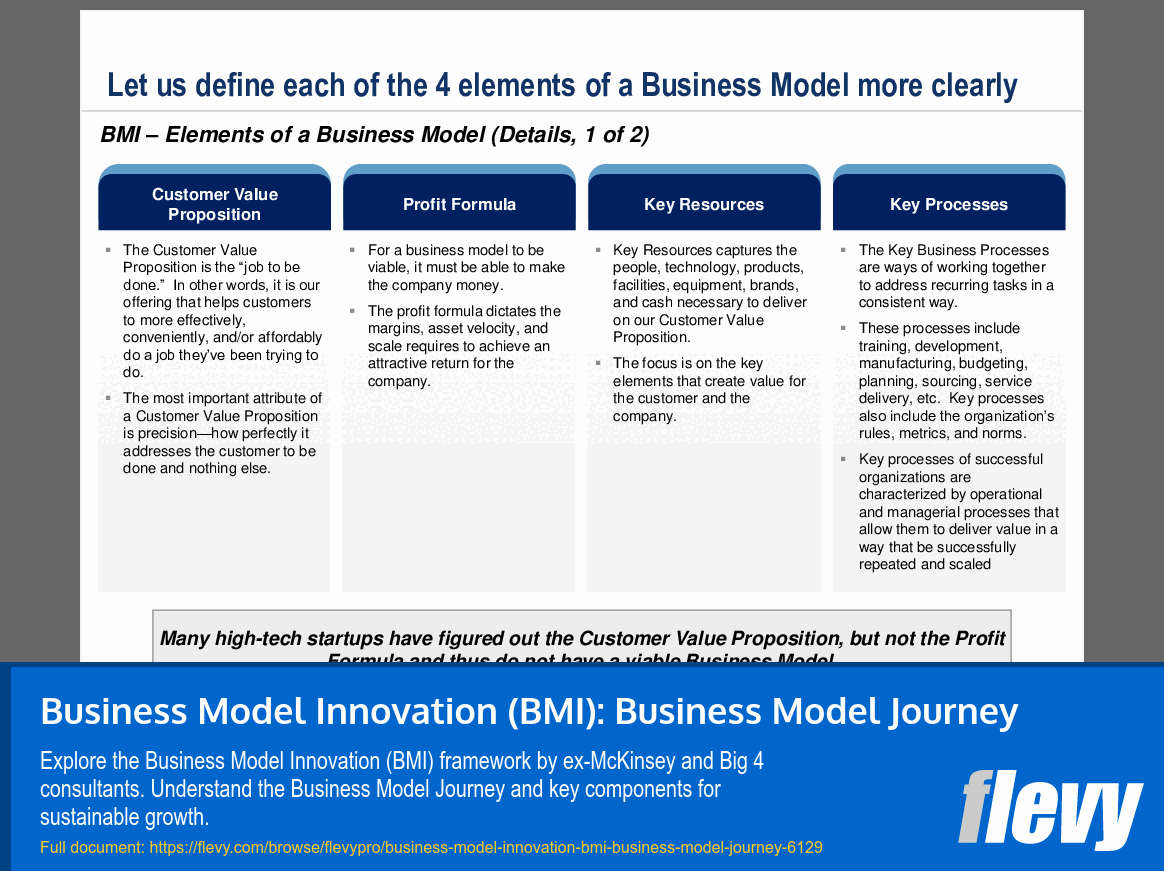
This PPT slide outlines the 4 fundamental components of a business model: Customer Value Proposition, Profit Formula, Key Resources, and Key Processes. The Customer Value Proposition addresses specific customer needs, with its effectiveness determined by how well it meets expectations. The Profit Formula ensures revenue generation by specifying necessary margins, asset velocity, and scale for satisfactory returns. Key Resources include physical assets, human resources, technology, and financial capital essential for delivering value. Key Processes encompass operational frameworks that enable efficient functioning, including training, service delivery, and budgeting. High-tech startups often excel in defining their Customer Value Proposition, but may struggle with the Profit Formula, jeopardizing overall business viability.
This PPT slide outlines the interconnected components of a business model: the Profit Formula, Key Resources, and Key Processes that align to fulfill the Customer Value Proposition. The Customer Value Proposition consists of 3 elements: target customer, job to be done, and offering. The Profit Formula determines financial viability, including the Revenue Model for income streams, Cost Structure for expense management, and Margin Model for expected net profit. Resource Velocity highlights efficient resource utilization. Key Resources include people, technology, equipment, information, channels, and partnerships, essential for delivering the value proposition. Key Processes cover operational aspects, established rules, performance metrics, and decision-making norms, providing a comprehensive view of aligning resources and processes for value delivery and profitability.
This PPT slide presents a framework for evolving business models, focusing on key areas: customer value proposition, profit formula, resources, and processes. It illustrates the interdependencies among these elements and their influence on one another. Key questions guide executives in assessing innovation opportunities, including enhancing the value proposition, expanding market reach, optimizing profit structures, and evaluating current capabilities. While achieving product-market fit is important, adaptability within the profit formula is essential for sustaining innovation. Emphasizing strong business processes indicates a strategic shift towards operational excellence, crucial for maintaining relevance in a dynamic market. This structured approach to business model dynamics provides a pathway for refining strategies and enhancing market position.
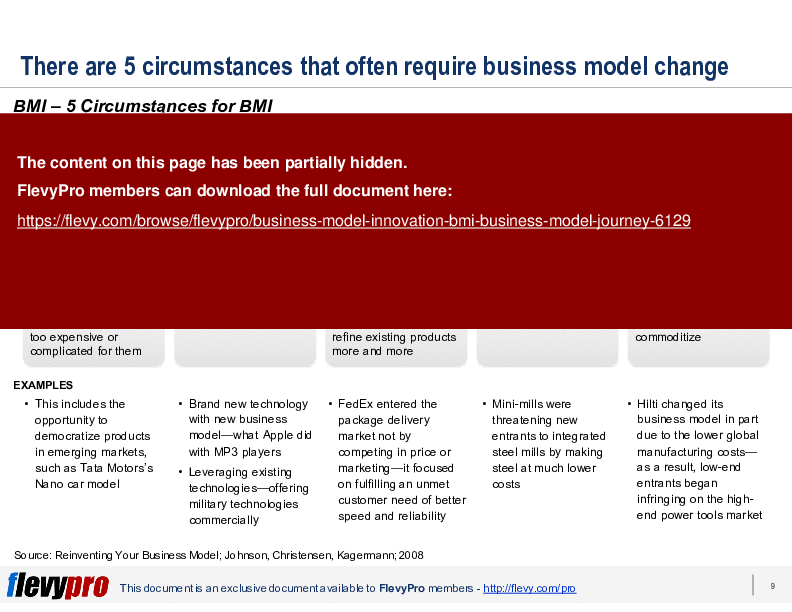
This PPT slide outlines 5 key circumstances prompting business model changes, categorized into opportunities and needs. The first circumstance is disruptive innovation, targeting underserved customer segments due to high costs or complexity, indicating a market gap for innovative solutions. The second highlights new technologies, where companies can develop models around novel technologies or apply existing ones in new markets for growth. The third focuses on the "job-to-be-done" approach, urging businesses to identify unmet customer needs rather than just refining products. The fourth addresses the threat of low-end disruptors offering lower-cost solutions that can erode market share. Lastly, it notes the commoditization of market segments over time, necessitating proactive strategies to maintain relevance and profitability.
This PPT slide outlines the initial phase of the Business Model Journey, focusing on "Creating Innovation" and developing a compelling Customer Value Proposition. The objective is to identify unmet market needs and achieve product-market fit. Resources are typically scarce, with a founding team, limited funding, and potential technology or intellectual property. This scarcity requires a flexible approach to understand the Customer Journey and enhance Customer Experience. Metrics center on defining the Customer Value Proposition and the specific jobs customers need accomplished, with limited data reflecting the nascent market. As the link between the Value Proposition and Key Resources forms, the Business Model remains unstructured, and the Profit Formula is in early stages, allowing exploration of growth avenues.
Source: Best Practices in Maturity Model, Innovation, Business Model Innovation PowerPoint Slides: Business Model Innovation (BMI): Business Model Journey PowerPoint (PPTX) Presentation Slide Deck, LearnPPT Consulting
This framework is developed by a team of former McKinsey and Big 4 consultants. The presentation follows the headline-body-bumper slide format used by global consulting firms.
For $10.00 more, you can download this document plus 2 more FlevyPro documents. That's just $13 each.
ABOUT FLEVYPRO
This document is part of the FlevyPro Library, a curated knowledge base of documents for our FlevyPro subscribers.
FlevyPro is a subscription service for on-demand business frameworks and analysis tools. FlevyPro subscribers receive access to an exclusive library of curated business documents—business framework primers, presentation templates, Lean Six Sigma tools, and more—among other exclusive benefits.
Since 2012, we have provided business templates to over 10,000 businesses and organizations of all sizes, from startups and small businesses to the Fortune 100, in over 130 countries.
"FlevyPro has been a brilliant resource for me, as an independent growth consultant, to access a vast knowledge bank of presentations to support my work with clients. In terms of RoI, the value I received from the very first presentation I downloaded paid for my subscription many times over! The
quality of the decks available allows me to punch way above my weight – it's like having the resources of a Big 4 consultancy at your fingertips at a microscopic fraction of the overhead.
"
– Roderick Cameron, Founding Partner at SGFE Ltd
"As an Independent Management Consultant, I find Flevy to add great value as a source of best practices, templates and information on new trends. Flevy has matured and the quality and quantity of the library is excellent. Lastly the price charged is reasonable, creating a win-win value for
the customer, Flevy and the various authors. This is truly a service that benefits the consulting industry and associated clients. Thanks for providing this service.
"
– Jim Schoen, Principal at FRC Group
"As a niche strategic consulting firm, Flevy and FlevyPro frameworks and documents are an on-going reference to help us structure our findings and recommendations to our clients as well as improve their clarity, strength, and visual power. For us, it is an invaluable resource to increase our impact and value."
– David Coloma, Consulting Area Manager at Cynertia Consulting
"I am extremely grateful for the proactiveness and eagerness to help and I would gladly recommend the Flevy team if you are looking for data and toolkits to help you work through business solutions."
– Trevor Booth, Partner, Fast Forward Consulting
"FlevyPro provides business frameworks from many of the global giants in management consulting that allow you to provide best in class solutions for your clients."
– David Harris, Managing Director at Futures Strategy
"As a consultant requiring up to date and professional material that will be of value and use to my clients, I find Flevy a very reliable resource.
The variety and quality of material available through Flevy offers a very useful and commanding source for information. Using Flevy saves me time, enhances my expertise and ends up being a good decision."
– Dennis Gershowitz, Principal at DG Associates
"I like your product. I'm frequently designing PowerPoint presentations for my company and your product has given me so many great ideas on the use of charts, layouts, tools, and frameworks. I really think the templates are a valuable asset to the job."
– Roberto Fuentes Martinez, Senior Executive Director at Technology Transformation Advisory
"Flevy is now a part of my business routine. I visit Flevy at least 3 times each month.
Flevy has become my preferred learning source, because what it provides is practical, current, and useful in this era where the business world is being rewritten.

many challenges and there is the need to make the right decisions in a short time, with so much scattered information, we are fortunate to have Flevy. Flevy investigates, selects, and puts at our disposal the best of the best to help us be successful in our work.
"
– Omar Hernán Montes Parra, CEO at Quantum SFE
Save with Bundles
This document is available as part of the following discounted bundle(s):
Download our free compilation of 50+ slides and templates on Organizational Design, Change Management, and Corporate Culture. Methodologies include ADKAR, Burke-Litwin Change Model, McKinsey 7-S, Competing Values Framework, etc.