
What is Behavioral Strategy?
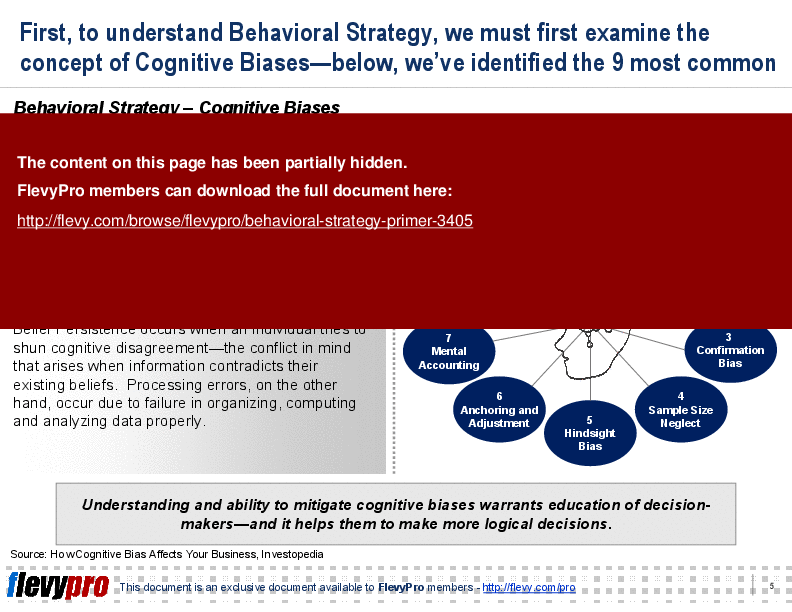
First, to understand Behavioral Strategy, we must first examine the concept of Cognitive Biases. There are 2 different types of biases in people that cause them to stray from rational decision making: cognitive and emotional. Cognitive biases arise due to incomplete information or the inability to analyze the available data. These preconceived notions can be categorized as either Belief Persistence or Processing Errors.
This PowerPoint presentation on Behavioral Strategy begins with an explanation of Cognitive Biases and identifies the 9 most common Cognitive Biases. The purpose of Behavioral Strategy is to mitigate against our cognitive biases.
However, research reveals that executives tend to overlook human biases while making decisions. These biases cause the people to move away from rational decision making. In order to better manage these tendencies, executives need to identify the biases prevalent in their organizations and embrace practices to minimize their bearing on strategic decisions. This is where Behavioral Strategy comes in.
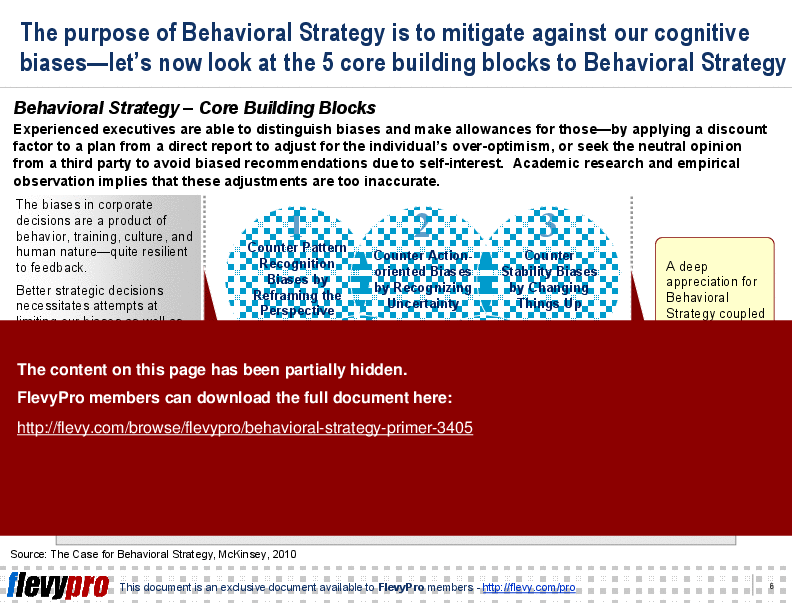
To understand and develop an effective Behavioral Strategy, we first examine the 5 building blocks of Behavioral Strategy. They provide key principles and practices to neutralize Cognitive Biases. These building blocks represent specific counter actions leaders should take to remove potential biases.
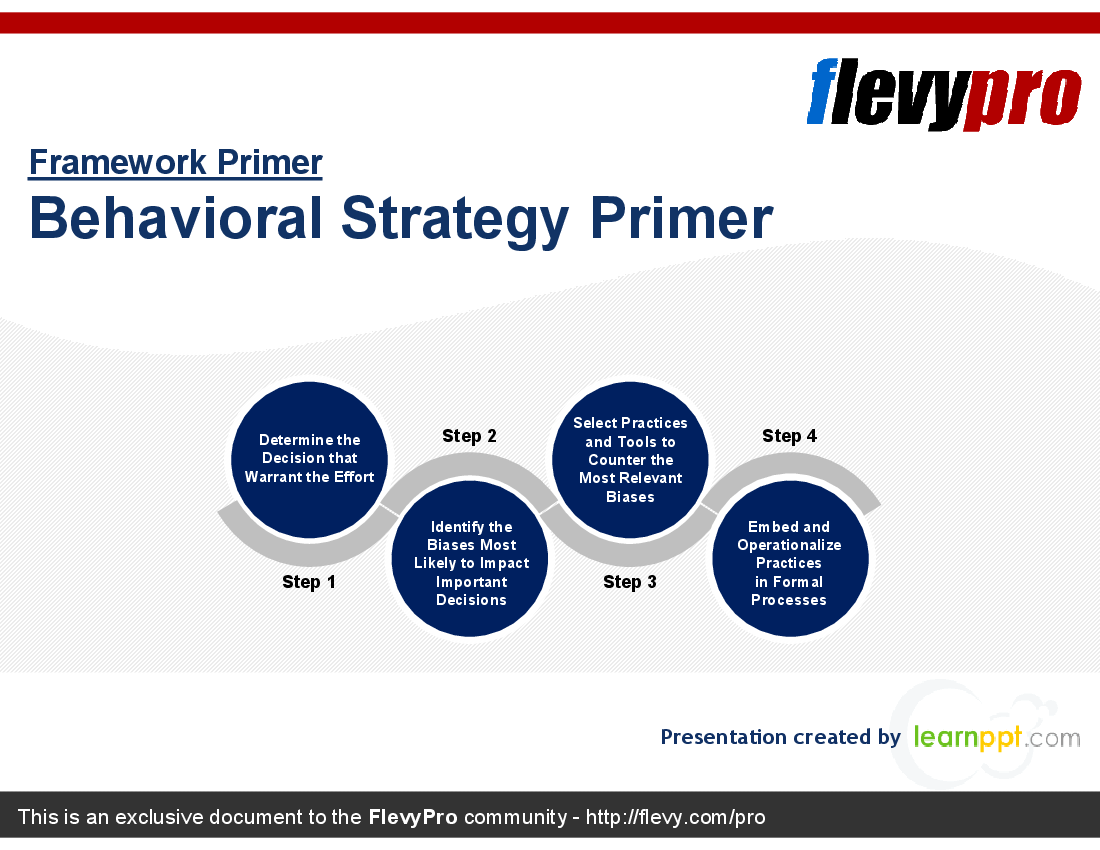
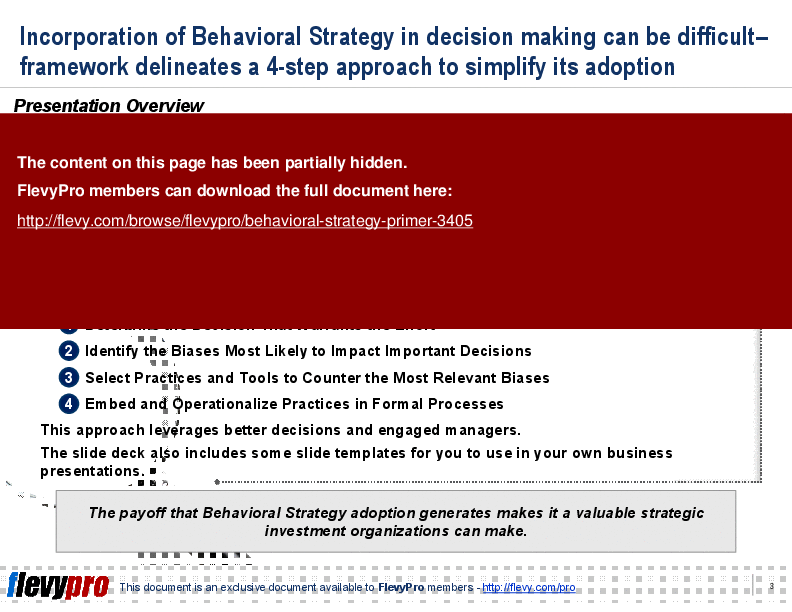
This Behavioral Strategy PPT also presents a 4-step approach to adopting Behavioral Strategy in Decision Making:
1. Determine the Decision That Warrants the Effort
2. Identify the Biases Most Likely to Impact Important Decisions
3. Select Practices and Tools to Counter the Most Relevant Biases
4. Embed and Operationalize Practices in Formal Processes
This approach leverages better decisions and engaged managers. Each step is explained in depth. To truly improve decision making and overcome biases, we need to follow this structured approach to formulate and implement an actual Behavioral Strategy.
This Behavioral Strategy PPT deck also includes some slide templates illustrating the 5 Building Blocks of Behavioral Strategy and the 4-step Approach to Behavioral Strategy. In fact, you can re-purpose the majority of these Behavioral Strategy slides in your own business presentations.
This presentation provides a comprehensive overview of the 9 most common cognitive biases and the 5 core building blocks to mitigate them. It also includes actionable templates that can be easily repurposed for your own strategic initiatives.
Got a question about this document? Email us at flevypro@flevy.com.
Executive Summary
The Behavioral Strategy Primer is a comprehensive presentation designed to enhance decision-making processes by addressing cognitive biases that often hinder rational thinking. Created by former consultants from McKinsey and the Big 4, this resource outlines a structured 4-step approach for embedding behavioral strategies within organizations. Executives will learn to identify critical decisions, recognize biases, select appropriate countermeasures, and operationalize these practices to improve decision quality and foster a culture of engagement.
Who This Is For and When to Use
• Corporate executives seeking to enhance decision-making frameworks
• Strategy teams focused on integrating behavioral insights into business processes
• Change management leaders aiming to foster a culture of open dialogue and critical thinking
• Consultants advising organizations on strategic decision-making improvements
Best-fit moments to use this deck:
• During strategic planning sessions to refine decision-making processes
• When addressing past decision failures to identify and mitigate biases
• In workshops aimed at fostering a culture of critical thinking and engagement
Learning Objectives
• Define the concept of Behavioral Strategy and its importance in decision-making
• Identify common cognitive biases that affect organizational decisions
• Develop strategies to counteract identified biases in decision-making processes
• Implement a structured approach to embed behavioral practices within formal processes
• Foster a culture of open discussion regarding biases and decision-making challenges
• Evaluate the effectiveness of behavioral strategies in improving decision outcomes
Table of Contents
• Overview (page 3)
• Behavioral Strategy (page 5)
• Approach to Behavioral Strategy Adoption (page 10)
• Templates (page 15)
Primary Topics Covered
• Cognitive Biases - Understanding how cognitive biases, such as confirmation bias and anchoring, impact decision-making processes.
• Behavioral Strategy Framework - A structured approach to integrating behavioral insights into strategic decisions.
• 4-Step Adoption Process - A clear methodology for implementing behavioral strategies: determining key decisions, identifying biases, selecting countermeasures, and embedding practices.
• Cultural Change - The significance of fostering a culture that encourages open discussions about biases and decision-making.
• Practical Tools - Templates and tools to assist in the application of behavioral strategies in real-world scenarios.
Deliverables, Templates, and Tools
• Decision-making framework template for identifying critical decisions
• Bias identification checklist to evaluate decision-making processes
• Action plan template for selecting and implementing countermeasures
• Guidelines for embedding behavioral practices into organizational processes
• Workshop materials for engaging teams in discussions about cognitive biases
Slide Highlights
• Overview of cognitive biases and their implications for decision-making
• The 4-step approach to adopting Behavioral Strategy illustrated with practical examples
• Case studies showcasing the impact of behavioral strategies in organizations
• Templates designed for immediate application in business contexts
Potential Workshop Agenda
Understanding Cognitive Biases (60 minutes)
• Introduction to cognitive biases and their effects on decision-making
• Group discussion on personal experiences with biases in decision processes
Implementing Behavioral Strategies (90 minutes)
• Overview of the 4-step adoption process
• Breakout sessions to develop action plans for embedding strategies
Evaluating Decision Outcomes (60 minutes)
• Sharing insights on the effectiveness of implemented strategies
• Identifying areas for continuous improvement in decision-making
Customization Guidance
• Tailor the decision-making framework to align with your organization's specific strategic priorities
• Adjust bias identification tools to reflect the unique challenges faced by your teams
• Incorporate organizational terminology and metrics into templates for consistency
Secondary Topics Covered
• The role of emotional biases in decision-making
• Strategies for fostering a culture of critical thinking
• Techniques for measuring the effectiveness of behavioral strategies
• Insights into the long-term benefits of adopting a Behavioral Strategy
Topic FAQ
Document FAQ
These are questions addressed within this presentation.
What is Behavioral Strategy?
Behavioral Strategy is an approach that integrates insights from behavioral economics to improve decision-making by addressing cognitive biases.
How can this presentation help my organization?
This presentation provides a structured framework for identifying and mitigating biases in decision-making, leading to improved strategic outcomes.
What are cognitive biases?
Cognitive biases are systematic patterns of deviation from norm or rationality in judgment, which can adversely affect decision-making.
How do I implement the 4-step approach?
Begin by determining key decisions, identify relevant biases, select appropriate countermeasures, and embed these practices into formal processes.
Can this framework be customized for my organization?
Yes, the templates and tools provided can be tailored to fit your organization's specific needs and context.
What types of decisions should I focus on?
Focus on repetitive yet high-risk decisions and one-off strategic decisions that significantly impact your organization.
How do I measure the effectiveness of Behavioral Strategy?
Evaluate decision outcomes and team engagement levels before and after implementing the strategy to assess its impact.
What resources are included in the presentation?
The presentation includes templates, checklists, and action plans that can be directly applied to your organization's decision-making processes.
Glossary
• Cognitive Bias - A systematic pattern of deviation from norm or rationality in judgment.
• Behavioral Strategy - An approach that incorporates behavioral insights to enhance decision-making.
• Decision-Making Framework - A structured process for making strategic decisions.
• Bias Identification Checklist - A tool for recognizing cognitive biases in decision processes.
• Action Plan - A detailed strategy for implementing behavioral practices.
• Cultural Change - The shift in organizational culture to support open discussions about biases.
• Engagement - The involvement and commitment of team members in decision-making processes.
• Templates - Pre-designed documents to facilitate the application of strategies.
• Workshop Materials - Resources for conducting training sessions on behavioral strategies.
• Continuous Improvement - Ongoing efforts to enhance decision-making processes.
• Emotional Bias - Biases that arise from emotional responses rather than rational analysis.
• Long-Term Benefits - The sustained advantages gained from implementing behavioral strategies.
• Strategic Priorities - The key focus areas that guide organizational decision-making.
• Team Dynamics - The interactions and relationships among team members that affect decision outcomes.
• Performance Metrics - Measures used to evaluate the effectiveness of strategies.
• Stakeholder Engagement - The involvement of individuals or groups that have an interest in the decision-making process.
• Risk Assessment - The identification and evaluation of potential risks in decision-making.
• Feedback Mechanisms - Processes for gathering input and insights on decision outcomes.
• Implementation Strategy - A plan for executing behavioral practices within the organization.
• Best Practices - Proven methods or techniques that lead to superior outcomes in decision-making.
Source: Best Practices in Decision Making, Cognitive Bias, Behavioral Economics PowerPoint Slides: Behavioral Strategy Primer PowerPoint (PPT) Presentation Slide Deck, LearnPPT Consulting
Did you need more documents?
Consider a FlevyPro subscription from $39/month. View plans here.
For $10.00 more, you can download this document plus 2 more FlevyPro documents. That's just $13 each.
|
Download our FREE Strategy & Transformation Framework Templates
Download our free compilation of 50+ Strategy & Transformation slides and templates. Frameworks include McKinsey 7-S, Balanced Scorecard, Disruptive Innovation, BCG Curve, and many more. |










