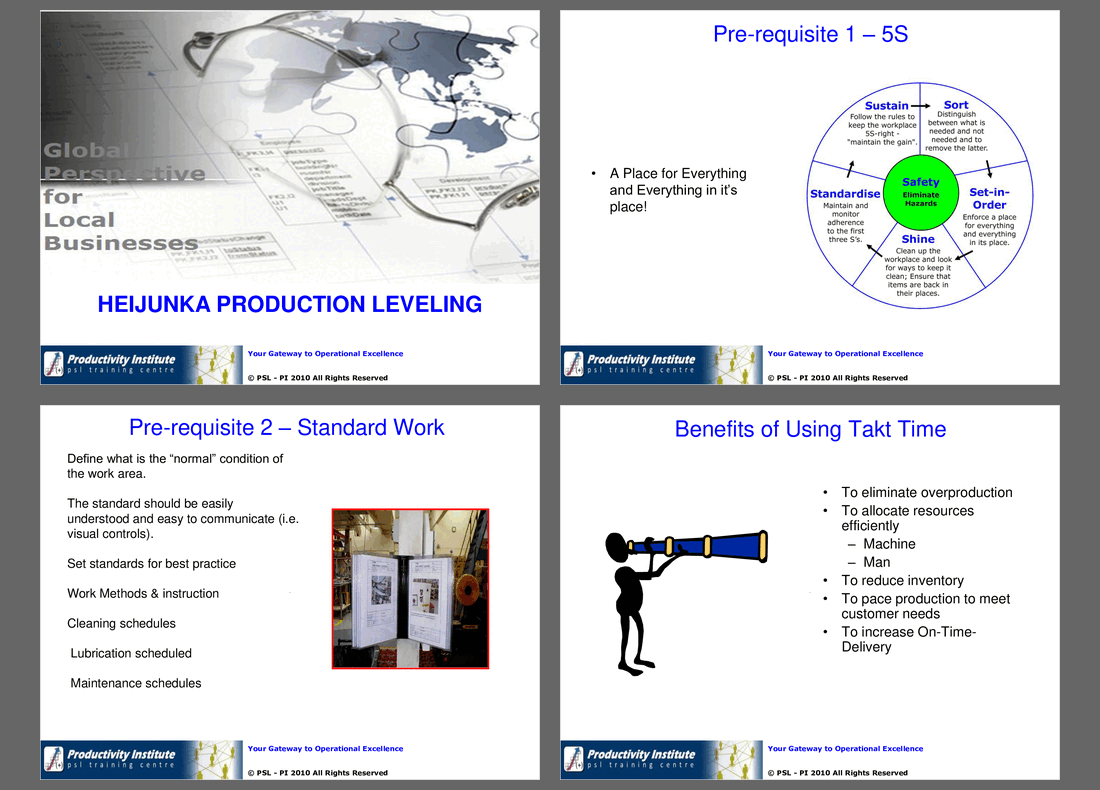

This presentation is particularly aimed at the businesses having varying demand and are required to satisfy customer demand with short lead times. Businesses can implement Heijunka or Load Leveling to meet customer demand.

This presentation covers the following topics:
Pre-requisites to implementing Heijunka (5S, Standard Work and Quick Changeovers)
Concept of JIT
Takt Time
Continuous Flow
Pull Systems
Kanban
Production Levelling
JIT / Heijunka Simulation Game
In all this presentation has 54 slides.
Also, this presentation comes with a JIT – Heijunka simulation is uploaded as a secondary document.
This presentation delves into the critical aspects of Heijunka and JIT, providing a comprehensive overview of how to balance production to meet customer demand efficiently. It emphasizes the importance of establishing standard work conditions, utilizing visual controls, and setting best practice standards to ensure a streamlined workflow. The PPT also highlights the significance of takt time in aligning production pace with customer demand, ensuring that manufacturing processes are both responsive and efficient.
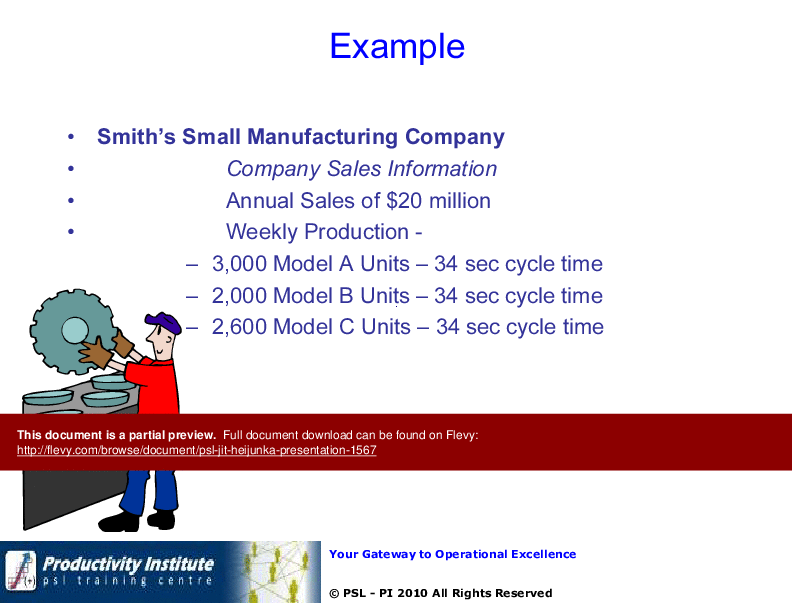
The presentation includes practical examples, such as Smith’s Small Manufacturing Company, to illustrate the application of Heijunka in real-world scenarios. This example demonstrates how production can be leveled across different product models to meet varying cycle times, ensuring a balanced and efficient production schedule. The document also covers success factors, such as obtaining accurate customer demand data and establishing standardized work for different demand scenarios, to ensure the effective implementation of Heijunka.
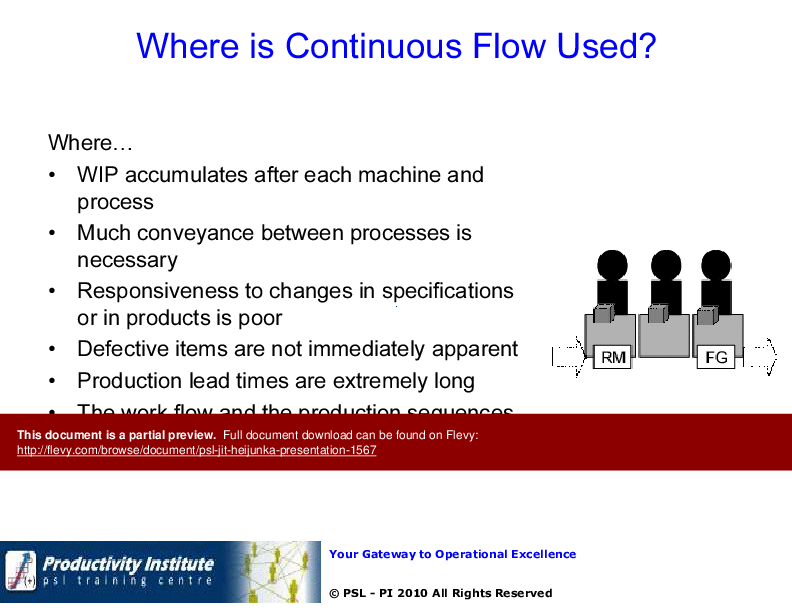
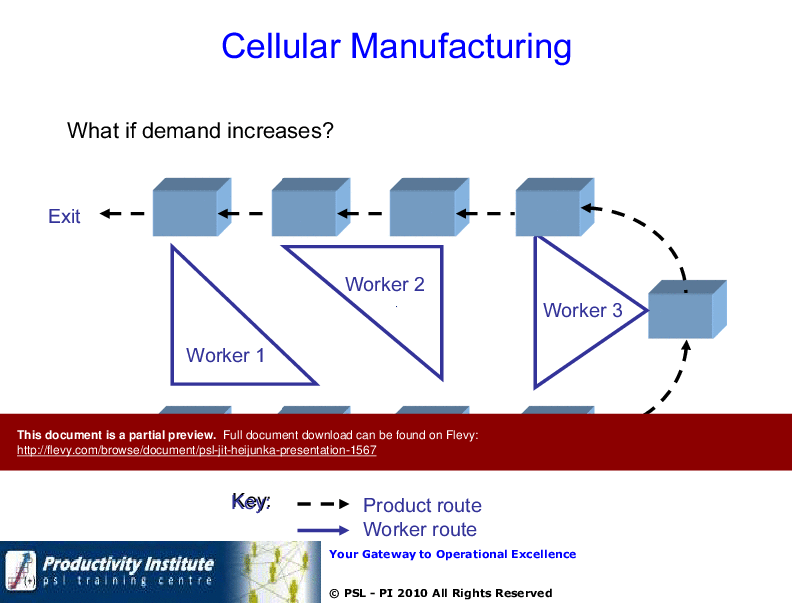
Key concepts like continuous flow, cellular manufacturing, and pull systems are thoroughly explained, providing a clear understanding of their roles in achieving operational excellence. The presentation outlines where continuous flow is most beneficial, the advantages of cellular manufacturing, and how pull systems can eliminate overproduction and synchronize production processes. This detailed approach ensures that businesses can effectively implement these strategies to enhance their production efficiency and responsiveness to customer demand.
Got a question about the product? Email us at support@flevy.com or ask the author directly by using the "Ask the Author a Question" form. If you cannot view the preview above this document description, go here to view the large preview instead.
Executive Summary
The PSL - JIT Heijunka Presentation (PPT) is a comprehensive training tool designed to facilitate understanding and implementation of Lean manufacturing principles, specifically focusing on Just-In-Time (JIT) and Heijunka production leveling. Developed by a certified LSS Master Black Belt with extensive global training experience, this presentation equips corporate executives, integration leaders, and consultants with the knowledge to optimize production processes. Users will learn to implement essential Lean tools like Takt Time, Continuous Flow, Pull Systems, and Kanban, enhancing operational efficiency and responsiveness to customer demand.
Who This Is For and When to Use
• Corporate executives seeking to improve operational efficiency
• Lean practitioners and consultants focused on process optimization
• Production managers aiming to implement JIT and Heijunka principles
• Teams involved in continuous improvement initiatives
Best-fit moments to use this deck:
• During Lean training sessions for staff at all levels
• When planning the implementation of Lean tools in manufacturing
• For workshops aimed at enhancing production flow and reducing waste
Learning Objectives
• Define the principles of Just-In-Time (JIT) manufacturing
• Establish Takt Time to align production with customer demand
• Build a Continuous Flow system to minimize Work In Process (WIP)
• Implement Pull Systems to regulate inventory levels
• Utilize Kanban for effective flow control in production
• Apply Heijunka to level production and enhance flexibility
Table of Contents
• Introduction to Heijunka (page 3)
• Pre-requisites for Implementing Heijunka (page 4)
• Understanding Just-In-Time (JIT) (page 5)
• Takt Time Calculation and Application (page 6)
• Continuous Flow Principles (page 10)
• Pull Systems Overview (page 12)
• Kanban Implementation (page 14)
• Production Leveling Techniques (page 16)
• JIT/Heijunka Simulation Game (page 20)
Primary Topics Covered
• Heijunka - A method for leveling production to optimize resource use and meet customer demand efficiently.
• Just-In-Time (JIT) - A production strategy that aligns manufacturing with customer demand, minimizing waste and inventory.
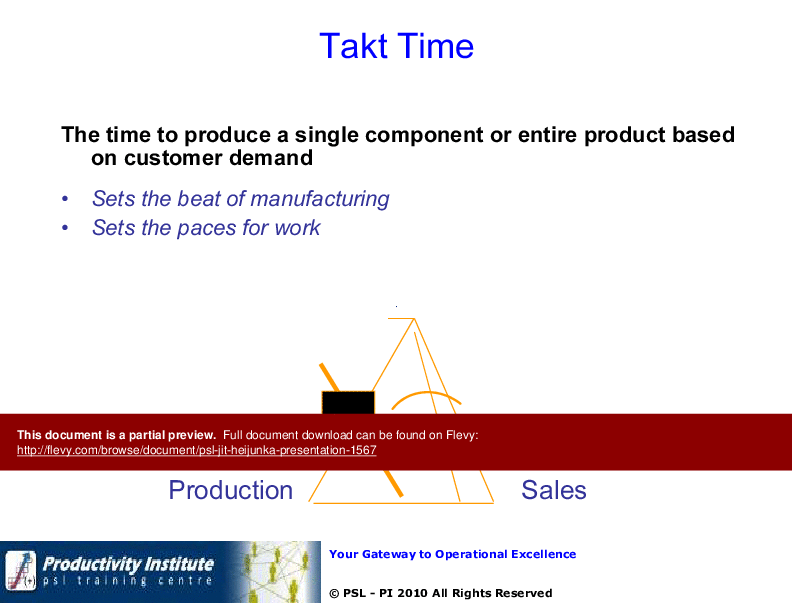
• Takt Time - The calculated time available to produce a product based on customer demand, guiding production pace.
• Continuous Flow - A production method that ensures parts move through processes without delays, enhancing efficiency.
• Pull Systems - A system where production is based on actual consumption rather than forecasts, reducing overproduction.
• Kanban - A visual signaling tool that regulates production flow and inventory levels, supporting JIT principles.
• Production Leveling - A scheduling approach that intersperses different products to balance workload and reduce fluctuations.
Deliverables, Templates, and Tools
• Takt Time calculation template for aligning production with demand
• Kanban card examples for regulating inventory and production flow
• Production Leveling sequence table for scheduling diverse products
• JIT/Heijunka simulation game instructions for practical learning
• Continuous Flow mapping tools to visualize process improvements
• Pull System implementation guides to streamline operations
Slide Highlights
• Overview of Heijunka and its benefits for production efficiency
• Detailed explanation of Takt Time and its role in JIT manufacturing
• Visual representation of Continuous Flow versus traditional batch manufacturing
• Examples of Pull Systems in various industries, illustrating practical applications
• Case studies demonstrating successful implementation of Lean principles
Potential Workshop Agenda
Introduction to Lean Manufacturing (30 minutes)
• Overview of Lean principles and their importance
• Discussion on the role of JIT and Heijunka in operational excellence
Takt Time and Continuous Flow Workshop (60 minutes)
• Hands-on calculation of Takt Time based on real-world scenarios
• Group activity to design a Continuous Flow process
Kanban and Pull Systems Implementation (45 minutes)
• Interactive session on creating effective Kanban cards
• Case studies on successful Pull System applications
Production Leveling Techniques (30 minutes)
• Workshop on scheduling using Production Leveling methods
• Discussion on overcoming challenges in production leveling
Customization Guidance
• Adjust Takt Time calculations based on specific production environments and customer demand
• Tailor Kanban card templates to fit unique product lines and inventory needs
• Modify the simulation game scenarios to reflect actual operational challenges faced by the organization
• Incorporate company-specific terminology and metrics into the presentation materials
Secondary Topics Covered
• 5S methodology as a foundation for Lean practices
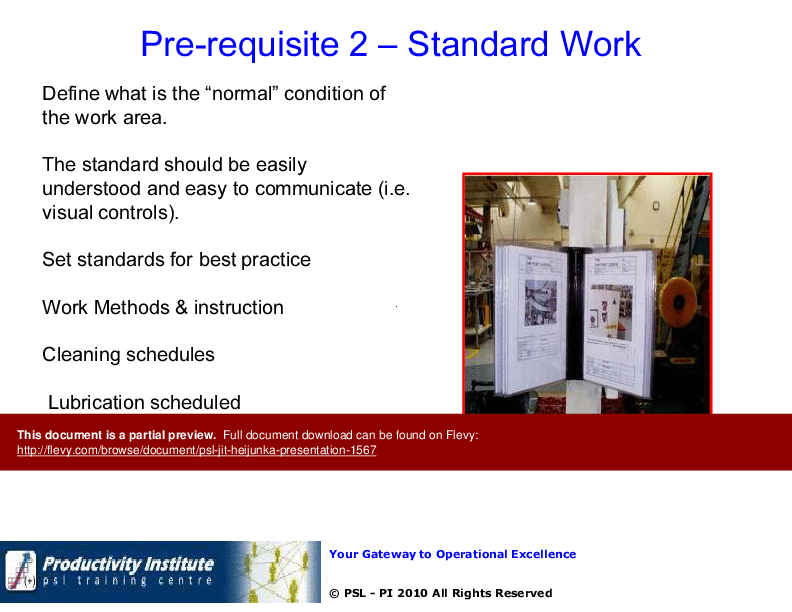
• Standard Work documentation for maintaining consistency
• Quick Changeover techniques to reduce setup times
• Benefits of Cellular Manufacturing in enhancing flexibility
• Strategies for effective communication in Lean initiativesDocument FAQ
These are questions addressed within this presentation.
What is Heijunka?
Heijunka is a Lean manufacturing technique that levels production by distributing different products over time, reducing fluctuations and enhancing efficiency.
How is Takt Time calculated?
Takt Time is calculated by dividing the available production time by the total customer demand, ensuring production aligns with demand.
What are the benefits of Pull Systems?
Pull Systems help eliminate overproduction, control inventory levels, and synchronize production processes, leading to a more efficient manufacturing environment.
How does Kanban support JIT?
Kanban acts as a visual signal that regulates production flow, ensuring that materials are only produced when needed, which is a core principle of JIT.
What is the role of Continuous Flow in Lean?
Continuous Flow minimizes Work In Process (WIP) and lead times by ensuring that each part moves through the production process without delays.
When should Production Leveling be used?
Production Leveling is ideal in environments with high variability in customer demand or product models, allowing for efficient resource utilization.
Can this presentation be customized for specific industries?
Yes, the presentation can be tailored to reflect industry-specific challenges and terminology, enhancing relevance for the audience.
What is a JIT/Heijunka simulation game?
The simulation game demonstrates the advantages of one-piece flow over batch production, allowing participants to experience Lean principles in action.
Glossary
• Heijunka - Production leveling to optimize resource use.
• Just-In-Time (JIT) - Manufacturing aligned with customer demand.
• Takt Time - Time per unit based on customer demand.
• Continuous Flow - Uninterrupted movement of products through processes.
• Pull System - Production based on actual consumption.
• Kanban - Visual signal for regulating production flow.
• Production Leveling - Scheduling method for balancing workload.
• 5S - Workplace organization method for efficiency.
• Standard Work - Documentation of best practices for consistency.
• Quick Changeover - Techniques to minimize setup times.
• Cellular Manufacturing - Production layout for efficiency.
• WIP (Work In Process) - Inventory of partially finished goods.
• Pitch - Pack-out container time for scheduling.
• Value Stream Mapping - Tool for visualizing process flows.
• Simulation Game - Interactive exercise to demonstrate Lean principles.
• Cross-Training - Training workers to perform multiple tasks.
• Bottleneck - A stage in production that limits overall output.
• Lead Time - Time taken from order to delivery.
• Inventory Levels - Amount of stock held at any time.
• Flexibility - Ability to adapt production to changing demands.
• Waste - Any activity that does not add value to the product.
Source: Best Practices in JIT, Takt Time PowerPoint Slides: PSL - JIT Heijunka Presentation PowerPoint (PPT) Presentation Slide Deck, OpEx Academy NZ
|
Receive our FREE presentation on Operational Excellence
This 50-slide presentation provides a high-level introduction to the 4 Building Blocks of Operational Excellence. Achieving OpEx requires the implementation of a Business Execution System that integrates these 4 building blocks. |