
This framework is developed by a team of former McKinsey and Big 4 consultants. The presentation follows the headline-body-bumper slide format used by global consulting firms.
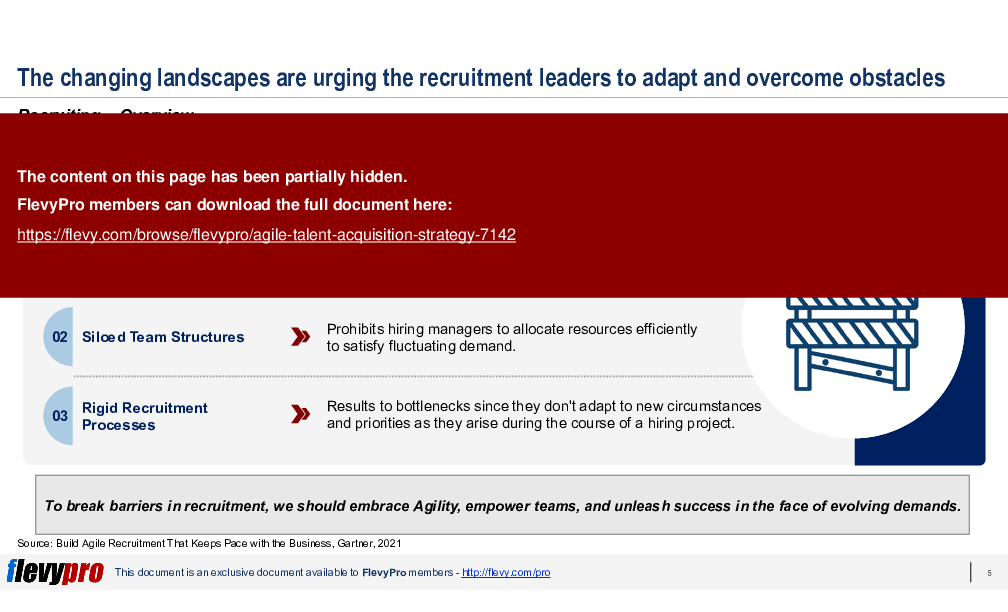
Recruitment is facing an unprecedented challenge as organizations undergo rapid Transformations. Despite the recognition that the credibility of the function relies on its capacity to swiftly adapt to evolving organization needs, recruiting is currently struggling to keep up with the pace. With an extremely dynamic organization, recruiting leaders are required to adopt a more flexible operating model.
To recruit the high-quality talent needed today, Agility is no longer just nice to have. It's a make-or-break capability for recruiting.
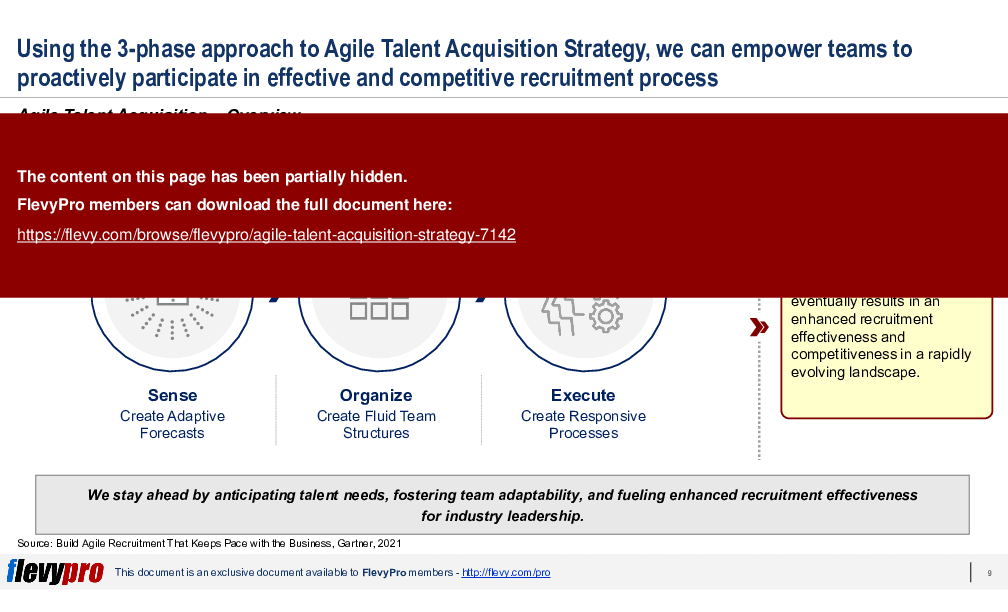
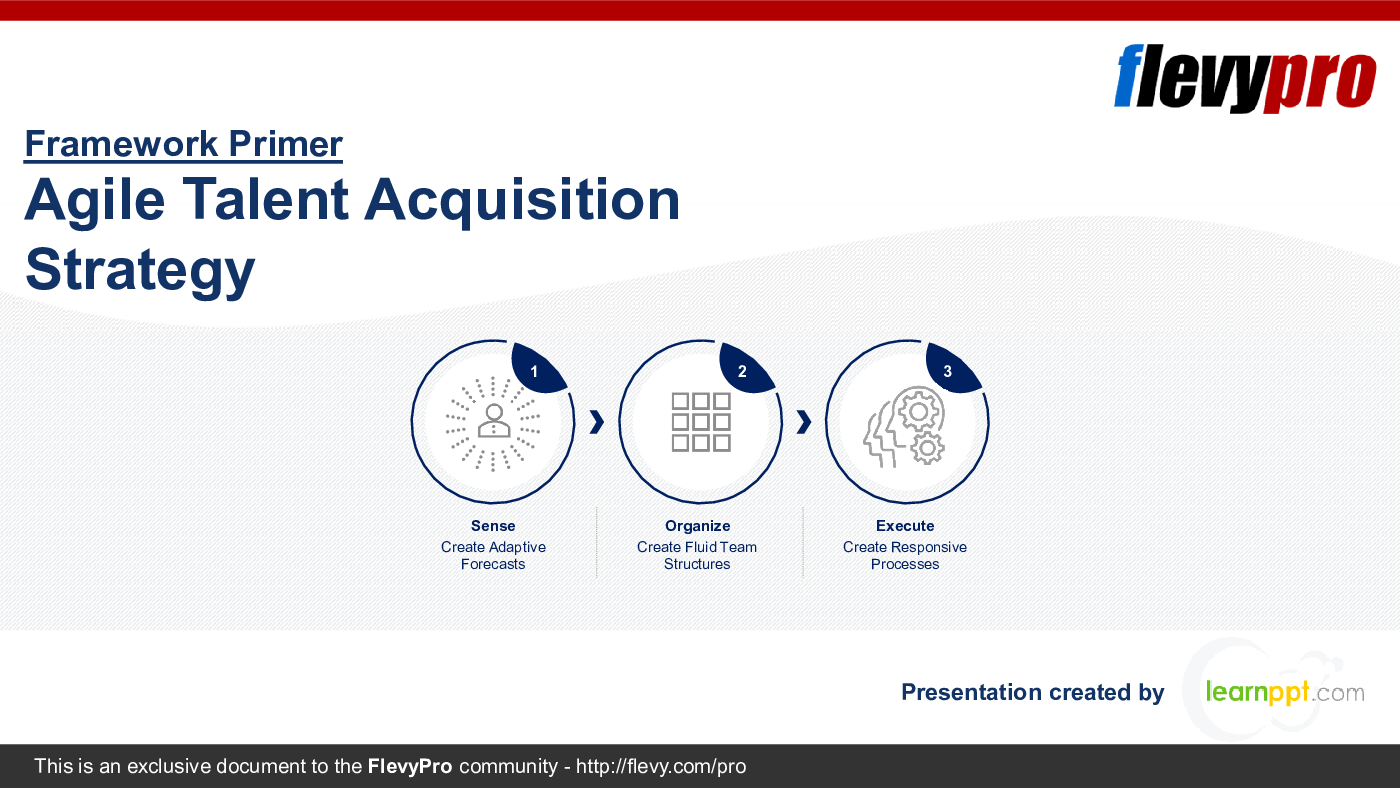
By employing this 3-phase process, recruiting leaders can develop Agile processes that would allow breakthrough on designing Agile processes that are more responsive to the evolving organization requirements. This PowerPoint presentation breaks down this 3-phase process to Agile Talent Acquisition Strategy in detail:
1. Sense – Create Adaptive Forecasts
The recruiting function has persistently struggled with a lack of visibility into hiring demand. Recent surveys showed 1/4 of the recruiting executives indicate that visibility of the organization's hiring needs for the year was high.
2. Organize – Create Fluid Team Structures
Creating fluid teams emphasizes the importance of flexible and adaptable team structures within an organizational setting. It aims to optimize collaboration and productivity by creating teams that can quickly and efficiently respond to evolving challenges, opportunities, and changing work dynamics.
3. Execute – Create Responsive Processes
The execution of a design responsive process involves implementing a methodology that adapts to the ever-evolving needs and preferences of users, ensuring the creation of effective and user-centered designs.
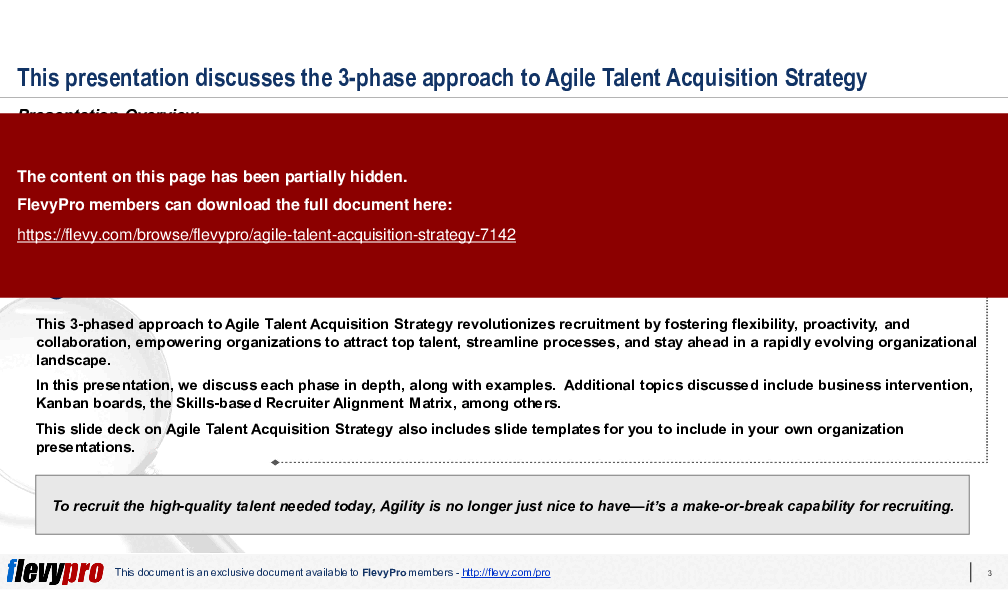
This 3-phased approach to Agile Talent Acquisition Strategy revolutionizes recruitment by fostering flexibility, proactivity, and collaboration, empowering organizations to attract top talent, streamline processes, and stay ahead in a rapidly evolving organizational landscape.
In this PowerPoint presentation, we discuss each phase in depth, along with examples. Additional topics discussed include business intervention, Kanban boards, the Skills-based Recruiter Alignment Matrix, among others.
This slide deck on Agile Talent Acquisition Strategy also includes slide templates for you to include in your own organization presentations.
This presentation equips C-level executives with actionable insights to transform their talent acquisition approach. By leveraging the outlined Agile framework, organizations can enhance their responsiveness to market shifts and internal demands, ensuring they attract and retain top talent effectively.
This PPT slide outlines a structured approach to Agile methodologies in talent acquisition using a Kanban board. Organizations must be responsive and adaptable to uncertainty, employing iterative and transparent processes that align with client requirements. Charles Schwab's implementation of Agile Scrum illustrates this, featuring diverse scrum teams with roles such as talent counselor, sourcing advisor, business liaison, and Scrum Master. These teams conduct short-term "recruiting sprints" to reassess goals and make adjustments. Daily scrum meetings are essential for reviewing progress, planning tasks, troubleshooting bottlenecks, and sharing best practices, fostering accountability and alignment. Soliciting feedback from hiring managers during these meetings enables real-time corrections to recruitment strategies, enhancing efficiency and responsiveness in talent acquisition.
This PPT slide outlines a case study on Commonwealth Bank's talent acquisition strategy to address challenges in adaptability. The bank implemented a talent acquisition strategy manager to align hiring forecasts with actual requisitions. Proactive engagement is critical, as these managers identify gaps between forecasted and actual hiring numbers, facilitating timely interventions with business stakeholders. A structured approach to adaptive demand planning enables recruiters to receive real-time updates on demand changes, allowing swift adjustments in strategies and resources. Actionable options for managing demand shifts include providing additional resourcing support, prioritizing essential requisitions, and accepting longer fill times for increased volume. This case study illustrates the necessity of strategic interventions and collaborative planning in enhancing adaptability in talent acquisition.
This PPT slide outlines a structured framework for Agile Talent Acquisition, featuring a three-phase approach: "Sense," "Organize," and "Execute." In the "Sense" phase, organizations create adaptive forecasts to anticipate talent needs, leveraging data to predict future skills and roles. The "Organize" phase focuses on developing fluid team structures, moving away from rigid hierarchies to enhance adaptability and collaboration. Finally, the "Execute" phase emphasizes responsive processes that swiftly adapt to market changes, improving recruitment effectiveness. This framework enhances talent acquisition strategies, ensuring organizations attract and retain the right talent in a competitive environment.
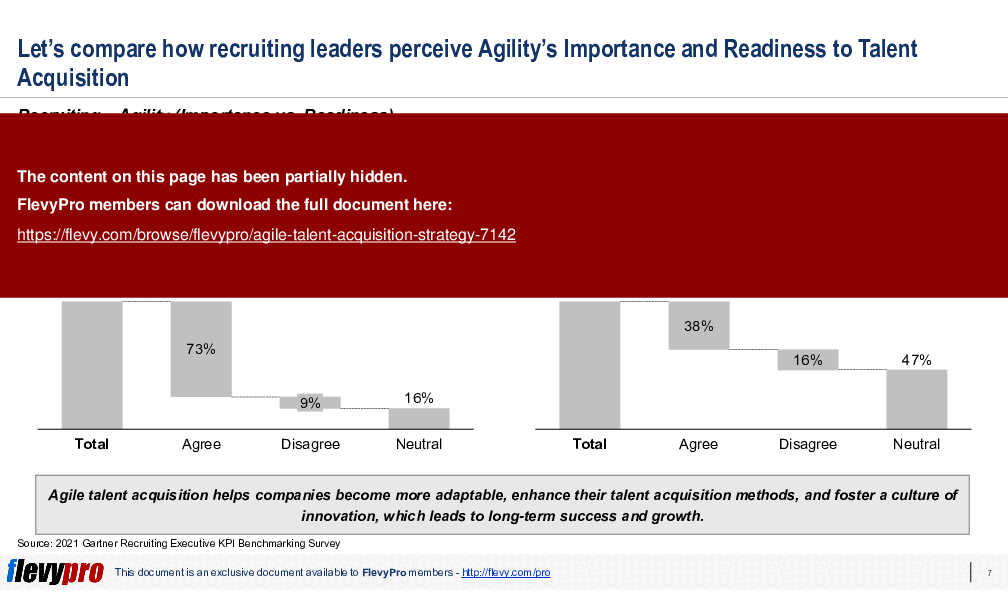
This PPT slide analyzes the gap between recruiting leaders' perceptions of agility in talent acquisition and their readiness to implement agile practices. In "Agility's Importance," 98% agree that recruitment credibility depends on adapting to changing business needs, with only 9% dissenting. Conversely, "Readiness in Talent Acquisition" reveals that only 38% feel their recruiting model allows for quick responses to changes, while 47% are neutral and 16% disagree. This discrepancy highlights a critical disconnect between the recognized importance of agility and actual preparedness, suggesting organizations need to enhance their recruiting frameworks to effectively meet evolving business demands.
Organizations must adopt flexible team structures to enhance collaboration and productivity in response to changing hiring demands, particularly influenced by external factors like the COVID-19 pandemic. While some sectors saw a drop in hiring, others, such as digital sales and delivery, experienced increased demand, highlighting the need for agile recruitment strategies. Traditional recruiting frameworks often confine recruiters to specific units or locations, creating inefficiencies and limiting resource allocation. Key challenges include a lack of support for recruiters facing new demands, confusion over unfamiliar skills, and time consumed in acquiring this knowledge. To thrive in a dynamic market, organizations must embrace fluid recruitment processes that address immediate challenges and support long-term success.
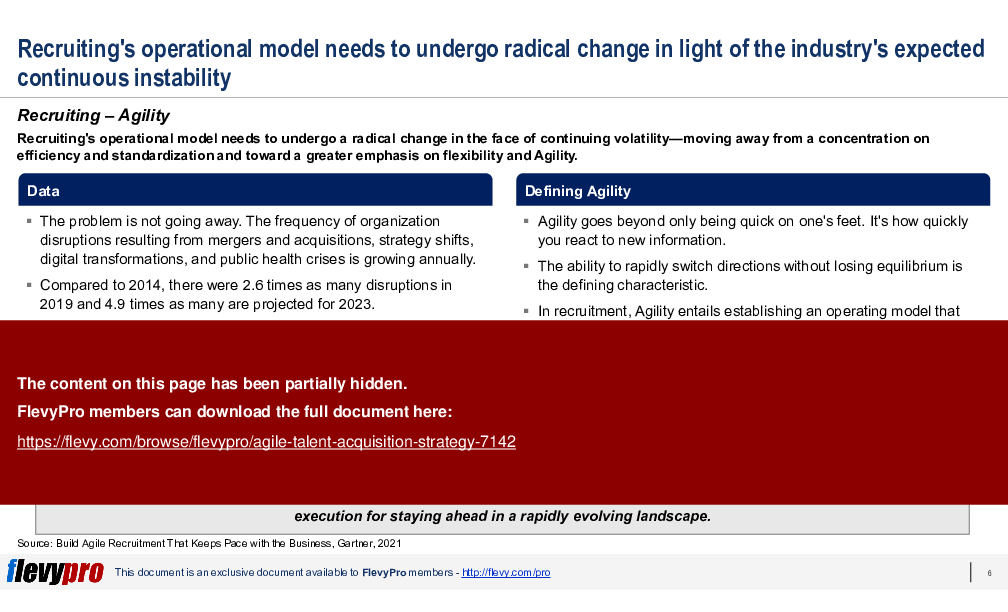
This PPT slide addresses the urgent need for a transformation in recruitment's operational model due to increasing industry volatility from mergers and acquisitions. Data shows that disruptions have escalated significantly since 2014, with projections for further increases in 2023. Agility in recruitment is defined as the capacity to adapt quickly to new information and changing circumstances, allowing teams to detect shifts in demand early and execute tasks with processes that support frequent adjustments. Traditional methods focused on efficiency are insufficient; organizations must embrace flexibility and responsiveness to manage fluctuating hiring needs and varying skill requirements. Adopting agile practices positions organizations to better respond to the unpredictable nature of the current business environment.
This framework is developed by a team of former McKinsey and Big 4 consultants. The presentation follows the headline-body-bumper slide format used by global consulting firms.
For $10.00 more, you can download this document plus 2 more FlevyPro documents. That's just $13 each.
ABOUT FLEVYPRO
This document is part of the FlevyPro Library, a curated knowledge base of documents for our FlevyPro subscribers.

FlevyPro is a subscription service for on-demand business frameworks and analysis tools. FlevyPro subscribers receive access to an exclusive library of curated business documents—business framework primers, presentation templates, Lean Six Sigma tools, and more—among other exclusive benefits.
The average daily rate of a McKinsey consultant is $6,625 (not including expenses). The average price of a Flevy document is $65.
Trusted by over 10,000+ Client Organizations
Since 2012, we have provided business templates to over 10,000 businesses and organizations of all sizes, from startups and small businesses to the Fortune 100, in over 130 countries.
"As a small business owner, the resource material available from FlevyPro has proven to be invaluable. The ability to search for material on demand based our project events and client requirements was great for me and proved very beneficial to my clients. Importantly, being able to easily edit and tailor
the material for specific purposes helped us to make presentations, knowledge sharing, and toolkit development, which formed part of the overall program collateral. While FlevyPro contains resource material that any consultancy, project or delivery firm must have, it is an essential part of a small firm or independent consultant's toolbox.
"
– Michael Duff, Managing Director at Change Strategy (UK)
"I have used Flevy services for a number of years and have never, ever been disappointed. As a matter of fact, David and his team continue, time after time, to impress me with their willingness to assist and in the real sense of the word. I have concluded in fact
that it is not at all just a repository of documents/resources but, in the way that David and his team manage the firm, it is like dealing with consultants always ready to assist, advise and direct you to what you really need, and they always get it right.
I am an international hospitality accomplished senior executive who has worked and lived during the past 35 years in 23 countries in 5 continents and I can humbly say that I know what customer service is, trust me.
Aside from the great and professional service that Flevy's team provide, their wide variety of material is of utmost great quality, professionally put together and most current.
Well done Flevy, keep up the great work and I look forward to continue working with you in the future and to recommend you to a variety of colleagues around the world.
"
– Roberto Pelliccia, Senior Executive in International Hospitality
"As a consultant requiring up to date and professional material that will be of value and use to my clients, I find Flevy a very reliable resource.
The variety and quality of material available through Flevy offers a very useful and commanding source for information. Using Flevy saves me time, enhances my expertise and ends up being a good decision."
– Dennis Gershowitz, Principal at DG Associates
"I like your product. I'm frequently designing PowerPoint presentations for my company and your product has given me so many great ideas on the use of charts, layouts, tools, and frameworks. I really think the templates are a valuable asset to the job."
– Roberto Fuentes Martinez, Senior Executive Director at Technology Transformation Advisory
"Flevy.com has proven to be an invaluable resource library to our Independent Management Consultancy, supporting and enabling us to better serve our enterprise clients.
The value derived from our [FlevyPro] subscription in terms of the business it has helped to gain far exceeds the investment made, making a subscription a no-brainer for any growing consultancy – or in-house strategy team."
– Dean Carlton, Chief Transformation Officer, Global Village Transformations Pty Ltd.
"As a niche strategic consulting firm, Flevy and FlevyPro frameworks and documents are an on-going reference to help us structure our findings and recommendations to our clients as well as improve their clarity, strength, and visual power. For us, it is an invaluable resource to increase our impact and value."
– David Coloma, Consulting Area Manager at Cynertia Consulting
"I have found Flevy to be an amazing resource and library of useful presentations for lean sigma, change management and so many other topics. This has reduced the time I need to spend on preparing for my performance consultation. The library is easily accessible and updates are regularly provided. A wealth of great information."
– Cynthia Howard RN, PhD, Executive Coach at Ei Leadership
"I have used FlevyPro for several business applications. It is a great complement to working with expensive consultants. The quality and effectiveness of the tools are of the highest standards."
– Moritz Bernhoerster, Global Sourcing Director at Fortune 500
Download our free compilation of 50+ slides and templates on Organizational Design, Change Management, and Corporate Culture. Methodologies include ADKAR, Burke-Litwin Change Model, McKinsey 7-S, Competing Values Framework, etc.