

 Click main image to view in full screen. Unlock all 14 preview images:
Hiring for Success – PowerPoint PPTX Template
PowerPoint (PPTX) 122 Slides


BENEFITS OF THIS DOWNLOADABLE POWERPOINT DOCUMENT
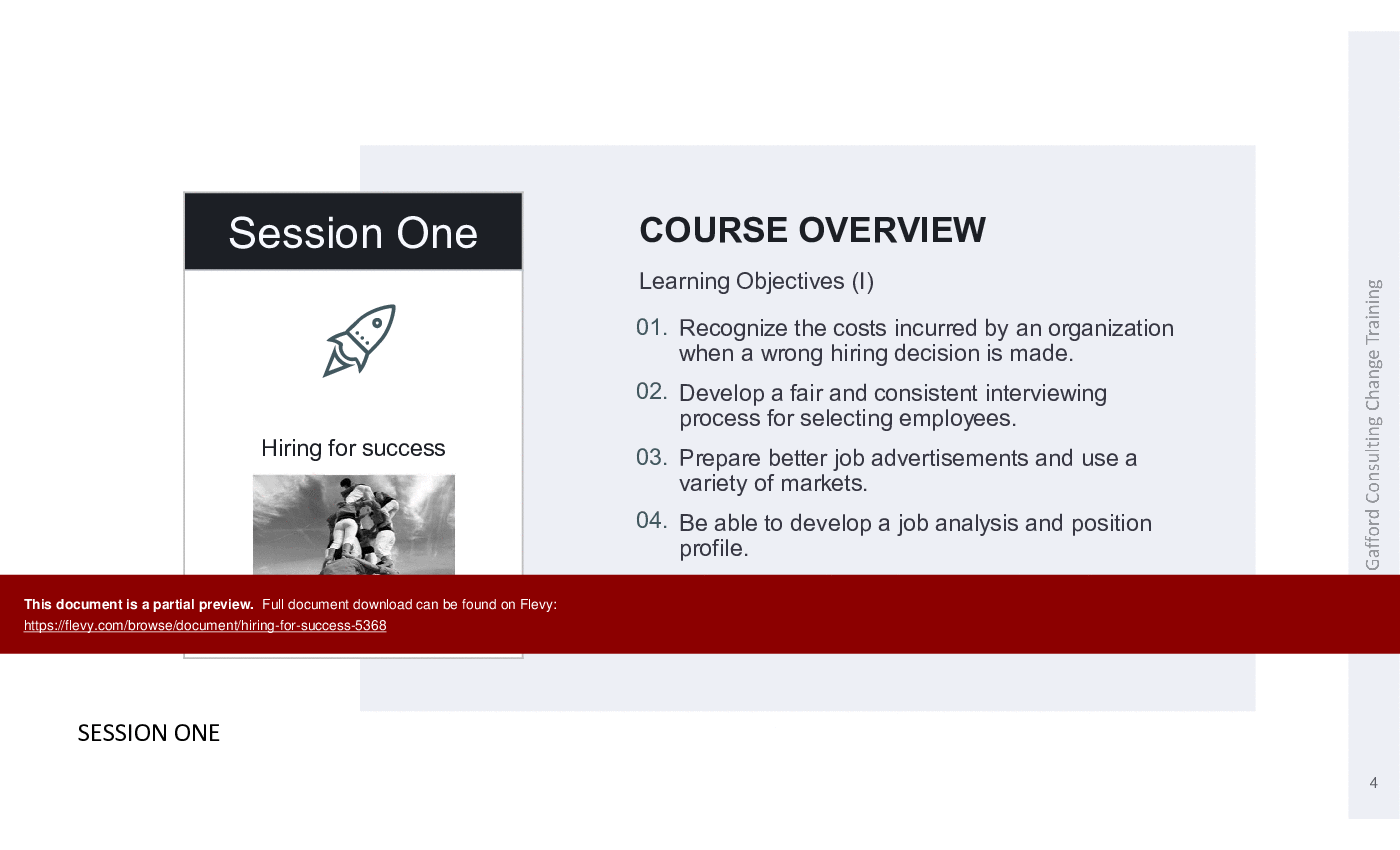
- Recognize the costs incurred by an organization when a wrong hiring decision is made
- Develop a fair and consistent interviewing process for selecting employees
- Prepare better job advertisements and use a variety of markets
TALENT MANAGEMENT PPT TEMPLATE DESCRIPTION
Interviewing sounds easy enough: you arrange for a conversation between you and potential candidates, and then select the best person for a particular position. But what if you could refine the process in such a way that you were confident that you are selecting the right person? How do you separate the good from the great, when they have similar work experience and strengths to offer? This workshop will give you the skills and tools to hire successful candidates.
This two-day workshop will help you teach participants how to:
• Recognize the costs incurred by an organization when a wrong hiring decision is made.
• Develop a fair and consistent interviewing process for selecting employees.
• Prepare better job advertisements and use a variety of markets.
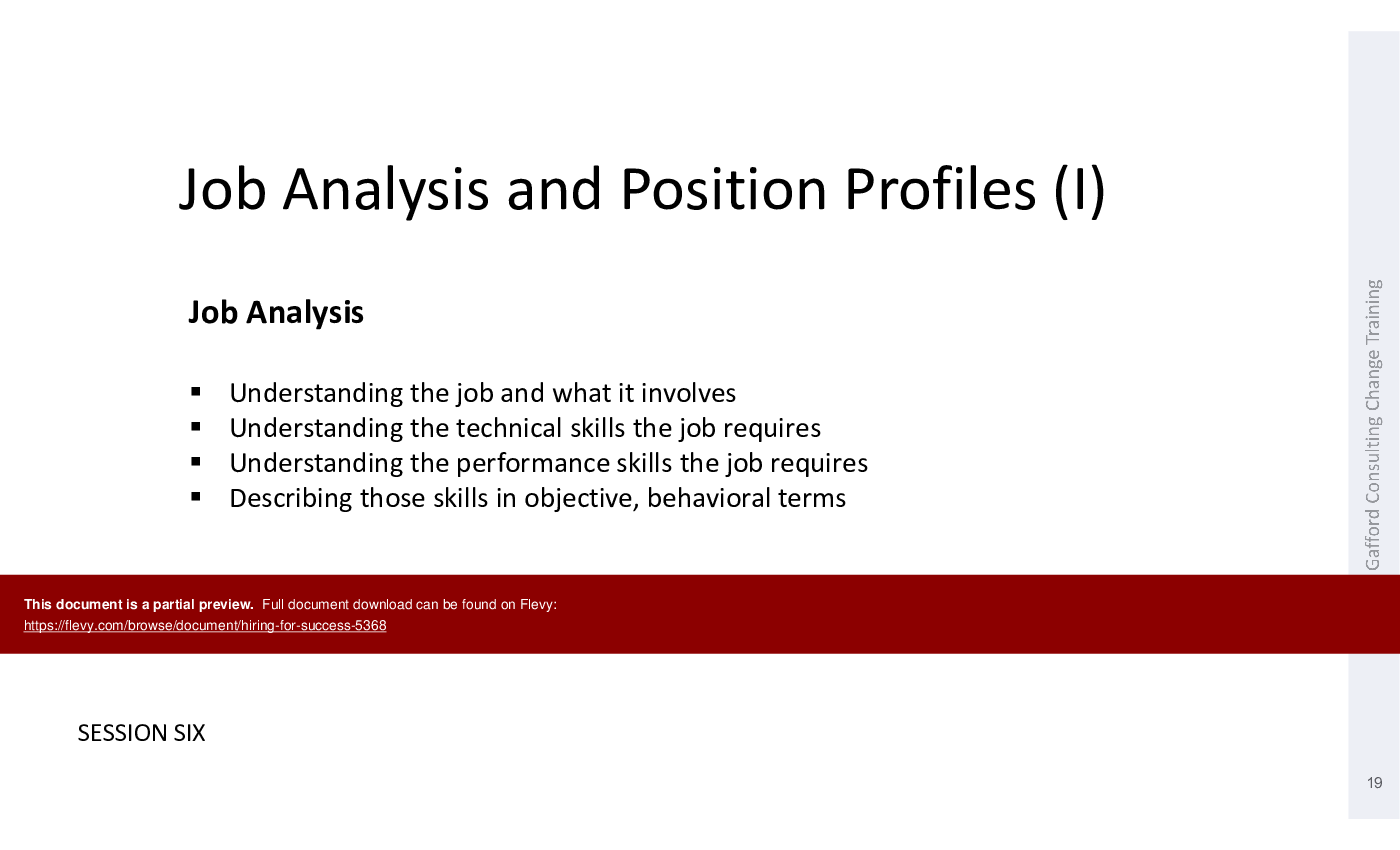
• Be able to develop a job analysis and position profile.
• Use traditional, behavioral, achievement oriented, holistic, and situational (critical incident) interview questions.
• Enhance communication skills that are essential for a skilled recruiter.
• Effectively interview difficult applicants.
• Check references more effectively.
• Understand the basic employment and human rights laws that can affect the hiring process.
Drawing from our deep professional network and years of experience, Gafford Consulting delivers the leadership and subject matter expertise you need to effectively navigate your organizational change. We partner with you to create a customized solution that helps mitigate risk, promote acceptance and accelerate performance.
Got a question about the product? Email us at support@flevy.com or ask the author directly by using the "Ask the Author a Question" form. If you cannot view the preview above this document description, go here to view the large preview instead.
TOPIC FAQ
What are the core components of a fair, consistent interviewing process?
A fair, consistent interviewing process centers on clarity about the role and selection criteria: develop a job analysis and position profile, prepare well-targeted job advertisements, source from multiple markets, use standardized question types (traditional, behavioral, achievement-oriented, holistic, situational), conduct reference checks, and consider employment law, with job analysis and position profile as foundational details.What types of interview questions should organizations train interviewers to use?
Organizations should train interviewers in a mix of traditional, behavioral, achievement-oriented, holistic, and situational (critical incident) questions so they can probe past performance and critical scenarios; Hiring for Success explicitly includes guidance on these 5 question types as part of interviewer techniques and practice.How does job analysis and a position profile improve hiring decisions?
Job analysis and position profiles create objective role definitions and selection criteria that reduce subjectivity during interviews, support fair comparisons between candidates, and help avoid costly hiring mistakes; the workshop teaches how to develop these artifacts as part of interview preparation and selection.What basic employment and human rights considerations should interviewers be aware of?
Interviewers should understand foundational employment and human rights laws that can affect question scope, documentation, and selection decisions; the workshop includes coverage of these basic legal considerations so interviewers can apply them during candidate assessment and reference checks.What should I look for in downloadable interviewer-training materials for a hiring-manager team?
Look for materials that include facilitator slides, a structured agenda, job analysis and position-profile templates, a range of interview question types, guidance on difficult applicants and reference checks, plus legal reminders; Hiring for Success is packaged as a two-day, 122-slide workshop that matches those needs.How much practical readiness does a prebuilt workshop provide versus building from scratch on a tight timeline?
A prebuilt workshop supplies ready-to-deliver content, slide flow, and practice exercises so internal trainers can run sessions immediately rather than create materials; Hiring for Success is designed as a two-day facilitator kit in a 122-slide PPTX format to accelerate delivery under time constraints.What training topics help managers interview difficult or challenging applicants more effectively?
Effective training covers communication techniques for sensitive interactions, structured questioning to probe behaviors and incidents, tactics for maintaining fairness, and reference-checking strategies; the workshop lists effective interviewing of difficult applicants alongside communication skills as core training areas.How can my team improve job advertisements and broaden sourcing beyond our usual channels?
Improving advertisements means clarifying role purpose and selection criteria and tailoring messaging for different markets; the workshop explicitly teaches how to prepare better job advertisements and use a variety of markets to reach a broader candidate pool.Source: Best Practices in Talent Management, Hiring PowerPoint Slides: Hiring for Success PowerPoint (PPTX) Presentation Slide Deck, Gafford Consulting
ABOUT THE AUTHOR

Drawing from our deep professional network and years of experience, Gafford Consulting delivers the leadership and subject matter expertise you need to effectively navigate your organizational change. We partner with you to create a customized solution that helps mitigate risk, promote acceptance and accelerate performance.
Ask the Author a Question
You must be logged in to contact the author.




























