
This framework is developed by a team of former McKinsey and Big 4 consultants. The presentation follows the headline-body-bumper slide format used by global consulting firms.
Explore Agile methodologies with this expert PPT by ex-McKinsey consultants. Learn key principles, best practices, and overcome barriers to Agile success. Agile Organization is a 24-slide PPT PowerPoint presentation slide deck (PPT) available for immediate download upon purchase.
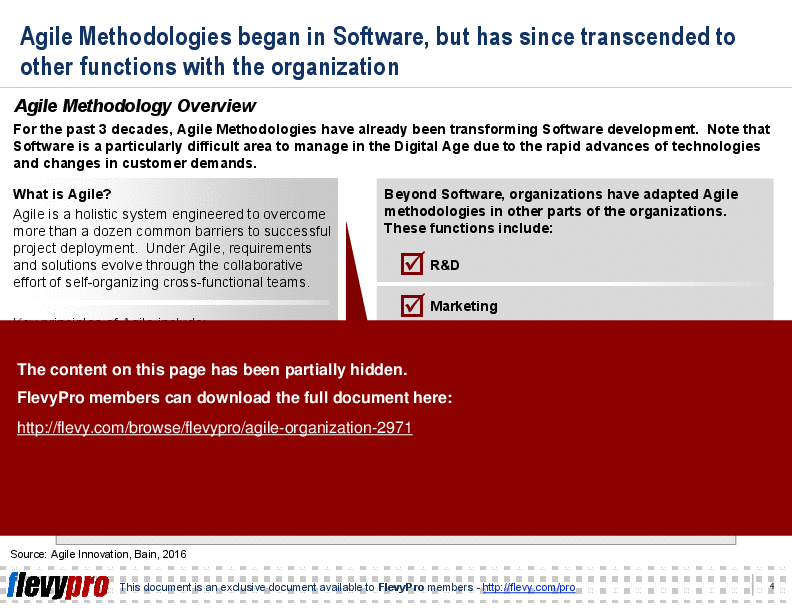
For the past 3 decades, Agile Methodologies have already been transforming Software development. Within Software, Agile has increased the average success rates from 11% to 39%.
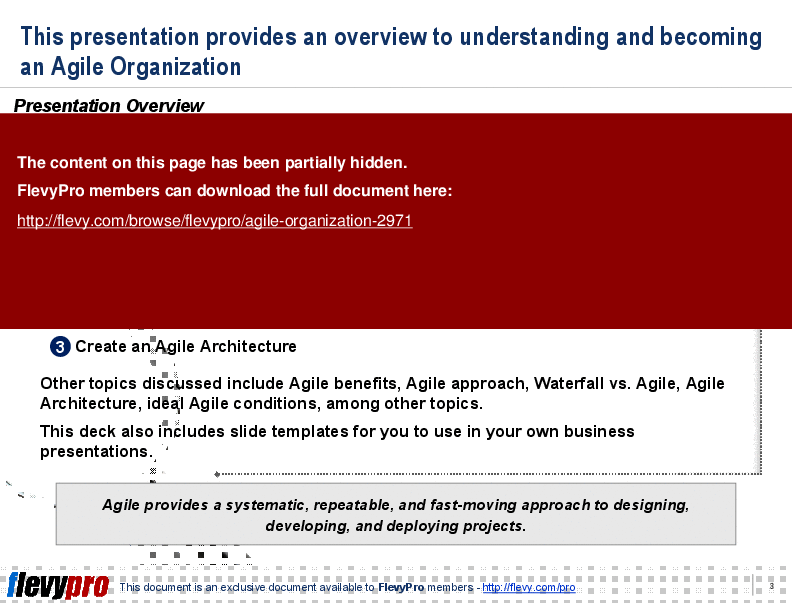
Beyond Software, organizations have adapted Agile methodologies in other parts of the organizations, including R&D, Marketing, Operations, and Corporate Strategy. Agile provides a systematic, repeatable, and fast-moving approach to designing, developing, and deploying projects.
This presentation provides an introduction to the concept of Agile, its key benefits, and best practices to becoming an Agile Organization:
1. Adhere to Agile Principles
2. Start Small and Scale Up
3. Create an Agile Architecture
Other topics discussed include Agile benefits, Agile approach, Waterfall vs. Agile, Agile Architecture, ideal Agile conditions, among other topics.
This deck also includes slide templates for you to use in your own business presentations.
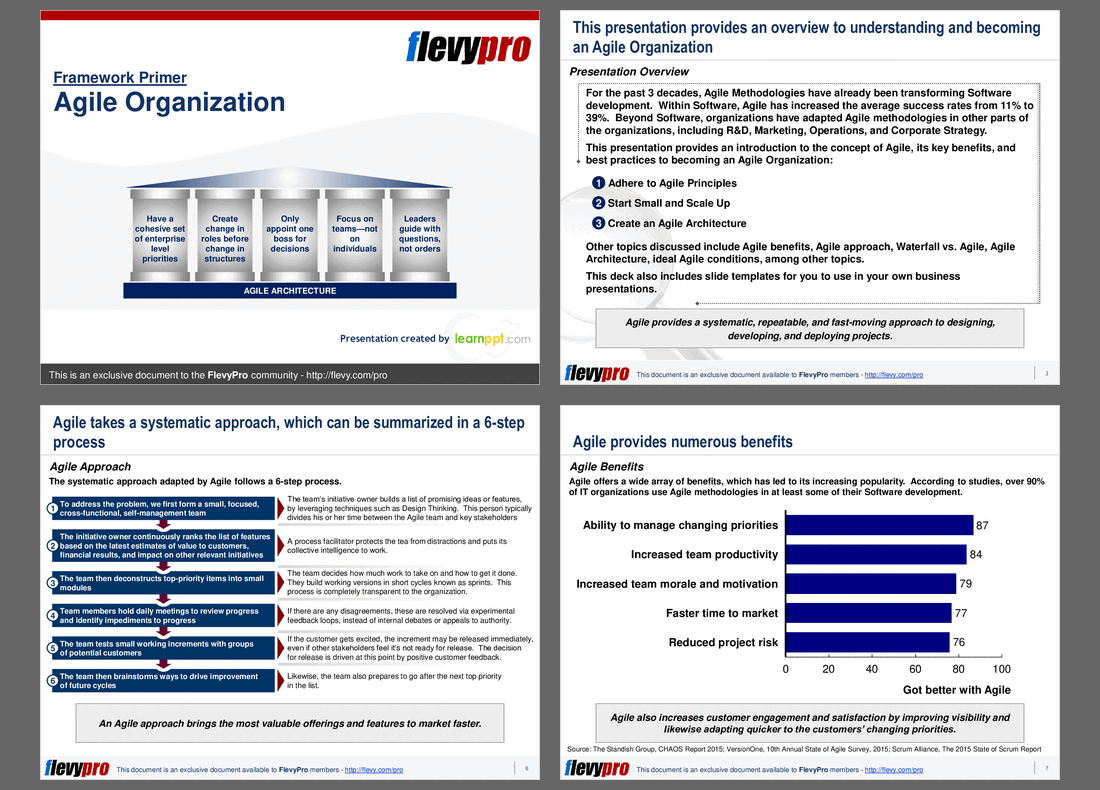
This comprehensive presentation delves into the systematic approach of Agile, breaking it down into a six-step process. It emphasizes the importance of forming small, cross-functional teams that continuously rank features based on customer value and financial impact. The deck also highlights the necessity of deconstructing top-priority items into manageable modules, ensuring transparency and collaboration throughout the organization.
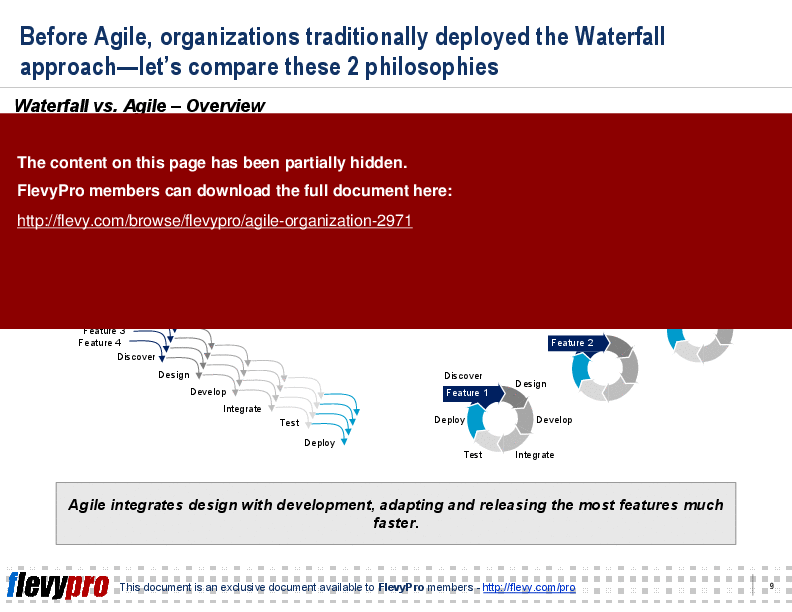
The PPT provides a detailed comparison between the traditional Waterfall approach and Agile methodologies. It outlines how Agile integrates design with development, allowing for faster adaptation and release of features. The presentation also discusses the core principles driving both approaches, focusing on team structure, customer involvement, and design philosophy.
Barriers to Agile success are also addressed, categorizing them into three main groups: unwillingness to apply Agile, lack of leadership support, and insufficient Agile experience. The presentation offers insights into overcoming these barriers, ensuring a successful Agile deployment by adhering to principles, starting small, and creating an Agile architecture. This deck is an essential resource for organizations aiming to transition to Agile and achieve higher project success rates.
Agile Architecture is essential for organizations scaling Agile methodologies beyond team levels. Legacy architectures can hinder this transition. Five core pillars support Agile Architecture development:
1. Cohesive enterprise-level priorities ensure alignment for successful Agile implementation.
2. Role clarity must be established before altering organizational structures to facilitate smoother transitions.
3. Centralizing decision-making under one authority streamlines processes and reduces confusion.
4. Focusing on teams promotes collaboration and collective responsibility.
5. Leaders should guide with questions, fostering a culture of inquiry and empowerment.
Adopting Agile Architecture requires a fundamental shift in organizational mindset and structure to achieve successful Agile transformation.
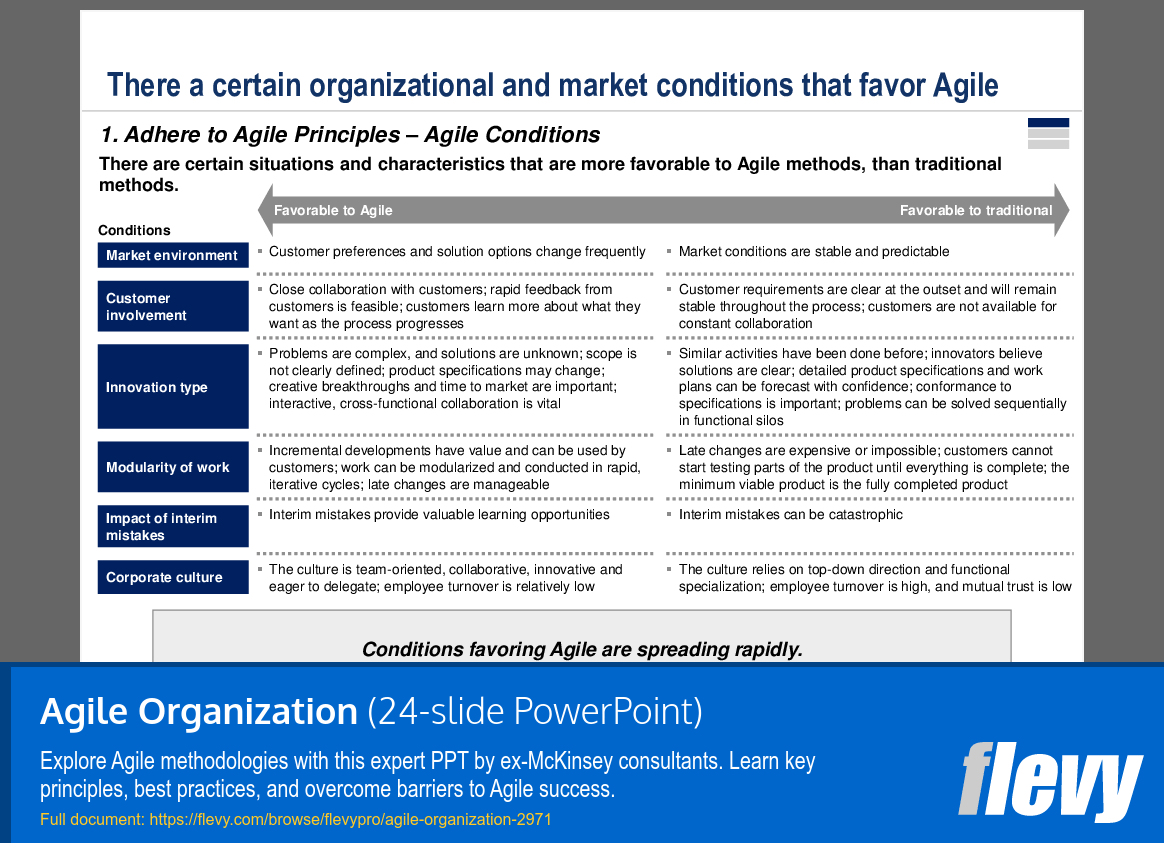
This PPT slide outlines conditions favoring Agile methodologies versus traditional methods, categorizing factors into 2 columns. Agile thrives in dynamic market environments with changing customer preferences, while traditional methods excel in stable conditions. Customer involvement is crucial; Agile benefits from close collaboration and rapid feedback, whereas traditional approaches assume fixed requirements. The "Innovation Type" section highlights Agile's advantage in complex problem-solving, contrasting with traditional methods that work best with known solutions. Agile supports incremental development, allowing for quick adaptations, while traditional methods struggle with late changes. Agile views interim mistakes as learning opportunities, while traditional methods see them as catastrophic. Corporate culture influences methodology choice; Agile flourishes in collaborative environments, whereas traditional methods depend on top-down direction and functional specialization.
This PPT slide compares 2 software development methodologies: Waterfall and Agile. The Waterfall approach is characterized by a linear, sequential process with distinct phases—Discover, Design, Develop, Integrate, Test, and Deploy—relying on predictive planning and extensive documentation, often resulting in rigidity. In contrast, Agile is a flexible, iterative methodology that integrates design and development, allowing for continuous adaptation to changing requirements and market conditions. Agile emphasizes collaboration, customer feedback, and rapid delivery of functional software, contrasting sharply with Waterfall’s structured process. Organizations seeking to enhance software development may find Agile more beneficial due to its adaptability, leading to improved customer satisfaction and efficient resource use.
This PPT slide outlines critical rules for implementing Agile methodologies, divided into "DON'T DO" and "DO THESE" sections. In the "DON'T DO" section, key pitfalls include resistance to Agile practices, lack of leadership support, and conflicts between Agile principles and existing operating models. These issues can severely hinder Agile initiatives. The "DO THESE" section offers actionable recommendations: strictly adhere to Agile principles, start small and scale up for manageable implementation, and create an Agile architecture to support effective team operations. This dual approach identifies common barriers while providing clear steps to foster a successful Agile environment.
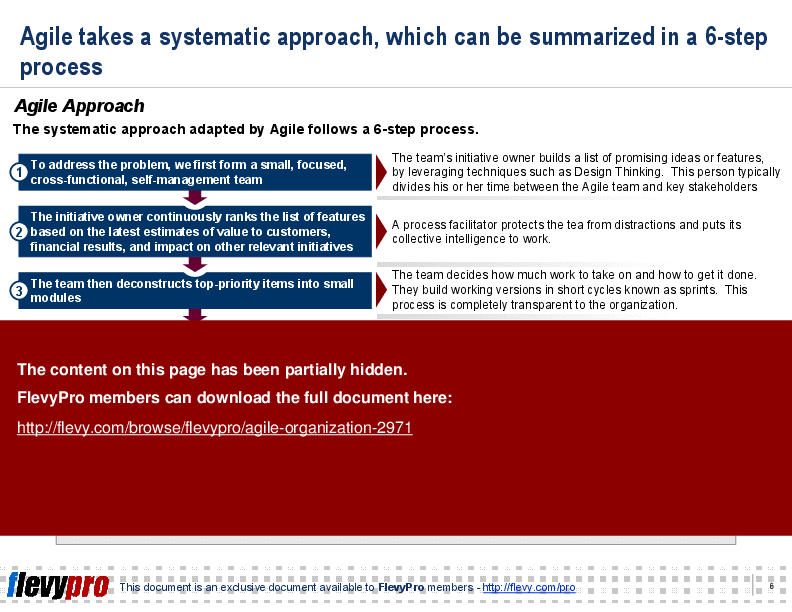
This PPT slide outlines a six-step Agile process to enhance project execution and responsiveness. It begins with forming a small, cross-functional team to prioritize initiatives based on customer value and financial implications. The second step involves continuous ranking of features by the initiative owner, ensuring impactful items are prioritized. The third step breaks down high-priority items into manageable modules. Daily meetings in the fourth step foster transparency and collaboration by reviewing progress and identifying obstacles. The fifth step tests small increments of work with potential customers for immediate feedback. Finally, the sixth step promotes continuous improvement by brainstorming ways to enhance future cycles. This Agile approach streamlines development and aligns teams with customer needs and market demands.
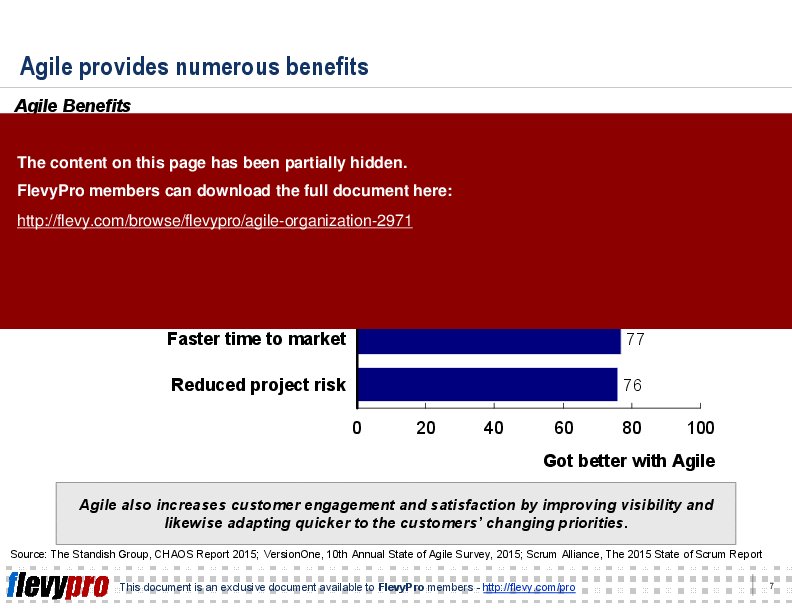
This PPT slide outlines the benefits of Agile methodologies, which are adopted by over 90% of IT organizations for software development. Key benefits include: "Ability to manage changing priorities" (87%), indicating Agile's effectiveness in adapting to shifting demands; "Increased team productivity" (84%), showing how Agile streamlines processes; "Increased team morale and motivation" (79%), highlighting its role in fostering engagement; "Faster time to market" (77%), emphasizing accelerated product delivery; and "Reduced project risk" (76%), critical for mitigating uncertainties in project execution. These data-driven insights support decision-making for organizations considering Agile adoption.
Source: Best Practices in IT Strategy, Agile, Agile Management PowerPoint Slides: Agile Organization PowerPoint (PPT) Presentation Slide Deck, LearnPPT Consulting
This framework is developed by a team of former McKinsey and Big 4 consultants. The presentation follows the headline-body-bumper slide format used by global consulting firms.
For $10.00 more, you can download this document plus 2 more FlevyPro documents. That's just $13 each.
ABOUT FLEVYPRO
This document is part of the FlevyPro Library, a curated knowledge base of documents for our FlevyPro subscribers.

FlevyPro is a subscription service for on-demand business frameworks and analysis tools. FlevyPro subscribers receive access to an exclusive library of curated business documents—business framework primers, presentation templates, Lean Six Sigma tools, and more—among other exclusive benefits.
The average daily rate of a McKinsey consultant is $6,625 (not including expenses). The average price of a Flevy document is $65.
Trusted by over 10,000+ Client Organizations
Since 2012, we have provided business templates to over 10,000 businesses and organizations of all sizes, from startups and small businesses to the Fortune 100, in over 130 countries.
"I have used FlevyPro for several business applications. It is a great complement to working with expensive consultants. The quality and effectiveness of the tools are of the highest standards."
– Moritz Bernhoerster, Global Sourcing Director at Fortune 500
"FlevyPro provides business frameworks from many of the global giants in management consulting that allow you to provide best in class solutions for your clients."
– David Harris, Managing Director at Futures Strategy
"Flevy.com has proven to be an invaluable resource library to our Independent Management Consultancy, supporting and enabling us to better serve our enterprise clients.
The value derived from our [FlevyPro] subscription in terms of the business it has helped to gain far exceeds the investment made, making a subscription a no-brainer for any growing consultancy – or in-house strategy team."
– Dean Carlton, Chief Transformation Officer, Global Village Transformations Pty Ltd.
"The wide selection of frameworks is very useful to me as an independent consultant. In fact, it rivals what I had at my disposal at Big 4 Consulting firms in terms of efficacy and organization."
– Julia T., Consulting Firm Owner (Former Manager at Deloitte and Capgemini)
"[Flevy] produces some great work that has been/continues to be of immense help not only to myself, but as I seek to provide professional services to my clients, it gives me a large "tool box" of resources that are critical to provide them with the quality of service and outcomes they are expecting."
– Royston Knowles, Executive with 50+ Years of Board Level Experience
"My FlevyPro subscription provides me with the most popular frameworks and decks in demand in today’s market. They not only augment my existing consulting and coaching offerings and delivery, but also keep me abreast of the latest trends, inspire new products and service offerings for my practice, and educate me
in a fraction of the time and money of other solutions. I strongly recommend FlevyPro to any consultant serious about success.
"
– Bill Branson, Founder at Strategic Business Architects
"Flevy is our 'go to' resource for management material, at an affordable cost. The Flevy library is comprehensive and the content deep, and typically provides a great foundation for us to further develop and tailor our own service offer."
– Chris McCann, Founder at Resilient.World
"One of the great discoveries that I have made for my business is the Flevy library of training materials.
As a Lean Transformation Expert, I am always making presentations to clients on a variety of topics: Training, Transformation, Total Productive Maintenance, Culture, Coaching, Tools, Leadership Behavior, etc. Flevy
It is well worth the money to purchase these presentations. Sure, I have the knowledge and information to make my point. It is another thing to create a presentation that captures what I want to say. Flevy has saved me countless hours of preparation time that is much better spent with implementation that will actually save money for my clients.
"
– Ed Kemmerling, Senior Lean Transformation Expert at PMG
Download our FREE Digital Transformation Templates
Download our free compilation of 50+ Digital Transformation slides and templates. DX concepts covered include Digital Leadership, Digital Maturity, Digital Value Chain, Customer Experience, Customer Journey, RPA, etc.