
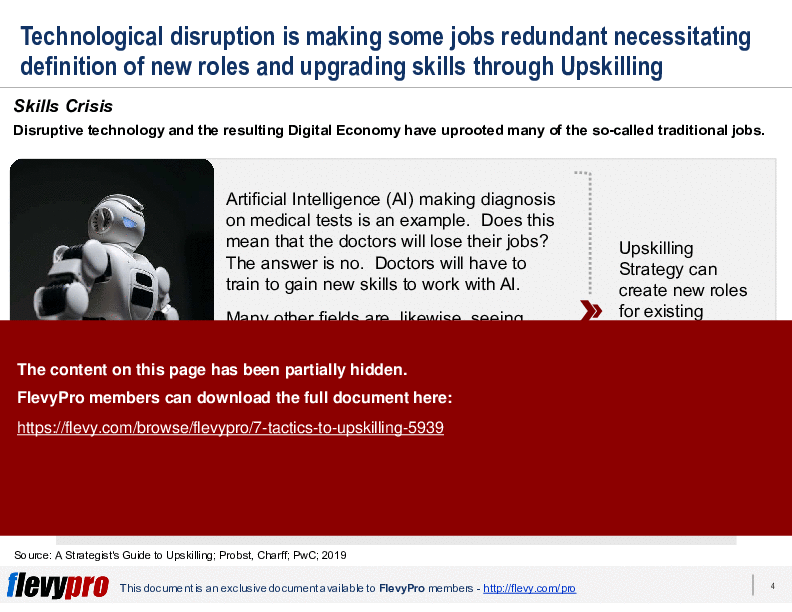


Disruptive technology is re-shaping the present-day work environment. Technological advances are making job roles—that have been long-standing—superfluous.
A change in job roles with the help of Upskilling has become necessary in light of the evolving disruption.
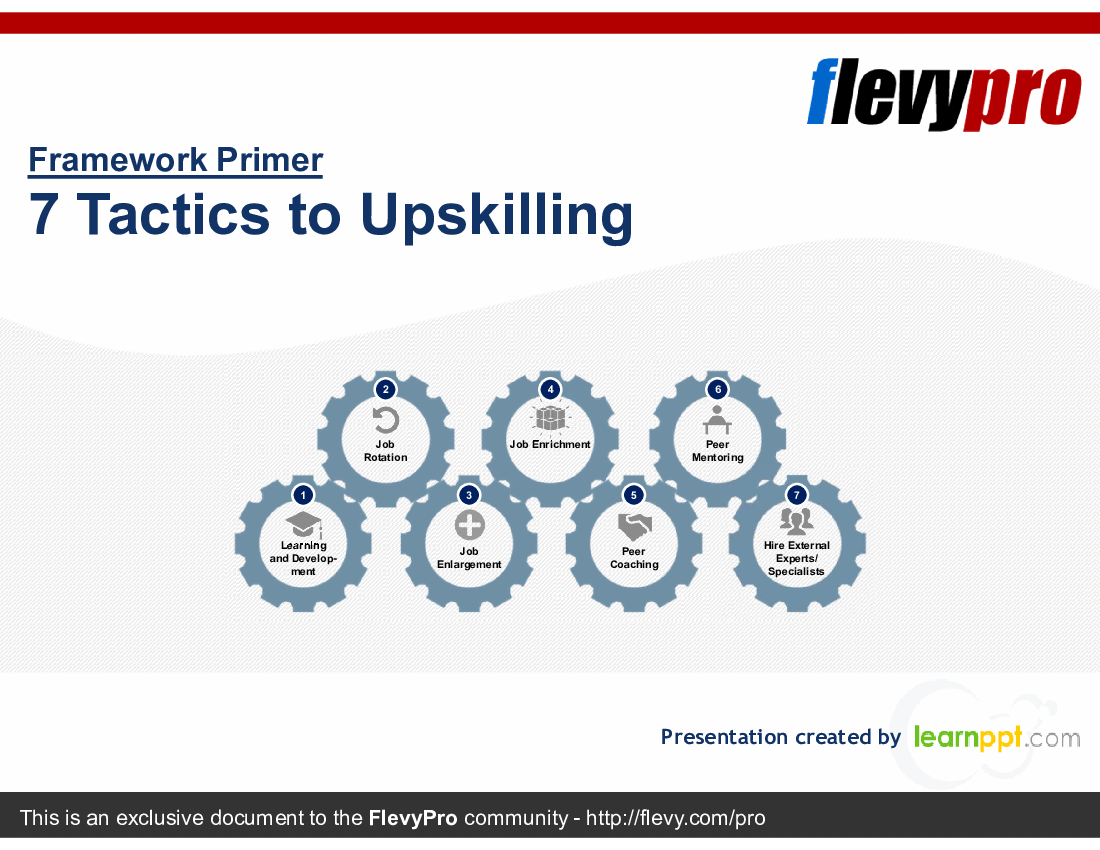
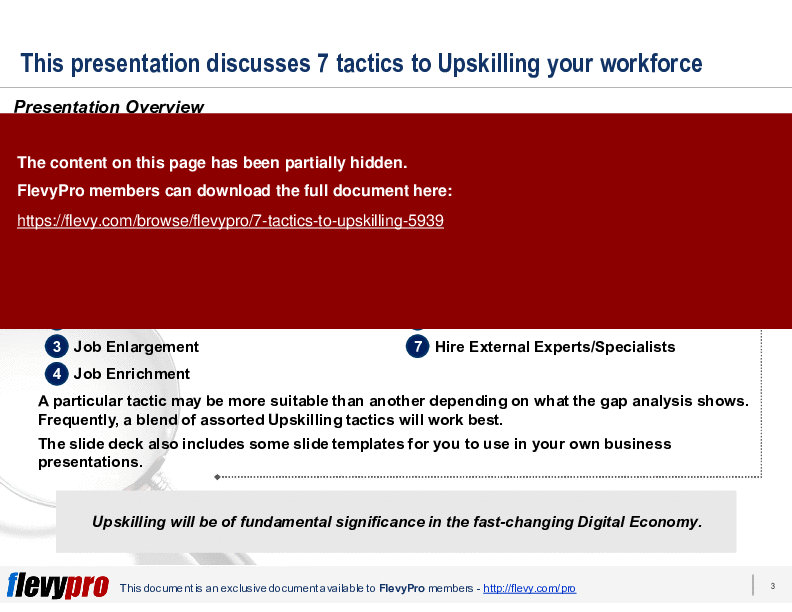
Having a robust Upskilling strategy in place is the first step towards a successful Upskilling effort. However, the brass tacks of an effective Upskilling effort are the following 7 tactics to Upskilling:
1. Learning and Development (L&D)
2. Job Rotation
3. Job Enlargement
4. Job Enrichment
5. Peer Coaching
6. Peer Mentoring
7. Hire External Experts/Specialists
A particular tactic may be more suitable than another depending on what the gap analysis shows. Frequently, a blend of assorted Upskilling tactics will work best.
The slide deck also includes some slide templates for you to use in your own business presentations.
Upskilling is not just a buzzword; it’s a strategic imperative in today’s fast-paced digital economy. This presentation delves into the nuances of implementing an effective upskilling strategy, highlighting the importance of aligning tactics with organizational goals. The PPT provides a detailed examination of each tactic, from Learning and Development to Hiring External Experts, ensuring you have a comprehensive toolkit to address skill gaps within your workforce.
The presentation also includes real-world case studies from leading organizations like Arla Foods and PwC, showcasing how these companies have successfully navigated the complexities of upskilling. These examples provide valuable insights into the practical application of the tactics discussed, offering a roadmap for other organizations to follow. The inclusion of these case studies underscores the tangible benefits of upskilling, such as enhanced employee engagement, increased productivity, and a stronger competitive edge.
For those looking to integrate these tactics into their own business presentations, the slide deck comes equipped with customizable templates. These templates are designed to facilitate the seamless incorporation of upskilling strategies into your organizational framework. Whether you are a seasoned HR professional or a C-level executive, this presentation offers the tools and insights needed to drive meaningful change and ensure your workforce remains agile and future-ready.
Got a question about this document? Email us at flevypro@flevy.com.
Executive Summary
The "7 Tactics to Upskilling" presentation provides a strategic framework for enhancing workforce capabilities in response to the demands of the Digital Economy. As technological advancements render traditional job roles obsolete, organizations must adopt effective upskilling strategies. This presentation outlines 7 essential tactics—Learning and Development (L&D), Job Rotation, Job Enlargement, Job Enrichment, Peer Coaching, Peer Mentoring, and Hiring External Experts. By implementing these tactics, organizations can bridge skills gaps, enhance employee engagement, and foster a culture of continuous learning.
Who This Is For and When to Use
• HR leaders focused on talent development and workforce agility
• Learning and Development (L&D) teams designing training programs
• Organizational leaders seeking to enhance employee capabilities
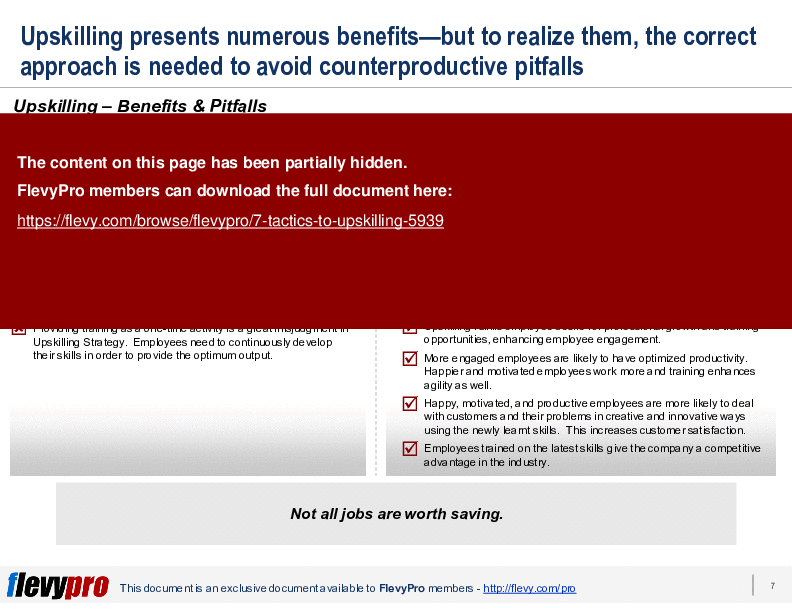
• Change management professionals addressing skills gaps due to technological disruption
Best-fit moments to use this deck:
• During strategic planning sessions for workforce development
• When assessing skills gaps and identifying upskilling needs
• In workshops aimed at designing or refining L&D initiatives
• For presentations to stakeholders on the importance of upskilling
Learning Objectives
• Define upskilling and its significance in the modern workforce
• Identify the 7 tactics for effective upskilling
• Develop a tailored upskilling strategy based on organizational needs
• Implement job rotation and enrichment techniques to enhance employee skills
• Foster a culture of peer coaching and mentoring within teams
• Evaluate the impact of upskilling initiatives on employee performance
Table of Contents
• Overview (page 3)
• Upskilling (page 4)
• Upskilling Tactics (page 10)
• Upskilling Case Examples (page 15)
• Templates (page 19)
Primary Topics Covered
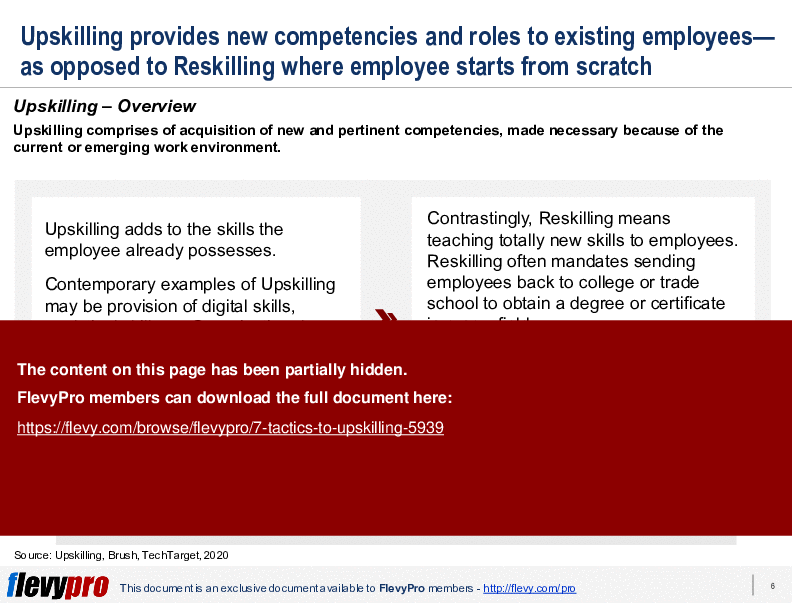
• Upskilling Definition - Upskilling refers to the process of enhancing existing employee skills to meet current and future job demands, as opposed to reskilling, which involves teaching entirely new skills.
• Learning and Development (L&D) - L&D programs are foundational for upskilling, focusing on training needs analysis, learning objectives, and evaluation methods.
• Job Rotation - This tactic involves moving employees between roles to develop new skills and competencies, enhancing their understanding of the organization.
• Job Enlargement - Job enlargement adds more responsibilities at the same level, encouraging employees to broaden their skill sets and increase engagement.
• Job Enrichment - This tactic enhances roles by adding more responsibilities and opportunities for autonomy, leading to greater job satisfaction.
• Peer Coaching - Peer coaching facilitates informal skill transfer among employees, promoting a collaborative learning environment.
• Peer Mentoring - Experienced employees mentor others, sharing insights and knowledge that may not be documented in formal training.
• Hiring External Experts - When internal capabilities are lacking, organizations can hire specialists to fill knowledge gaps and provide targeted training.
Deliverables, Templates, and Tools
• L&D strategy development template outlining phases from needs analysis to evaluation
• Job rotation framework for implementing employee movement across roles
• Job enlargement and enrichment guidelines to enhance employee responsibilities
• Peer coaching and mentoring program structure for knowledge sharing
• External expert engagement plan to facilitate targeted upskilling initiatives
• Evaluation metrics for assessing the effectiveness of upskilling programs
Slide Highlights
• Overview of the 7 tactics for upskilling, visually represented for clarity
• Detailed breakdown of L&D strategy phases and their importance
• Case studies illustrating successful upskilling initiatives in various organizations
• Templates for practical implementation of upskilling tactics
• Visual aids demonstrating the impact of upskilling on employee engagement and productivity
Potential Workshop Agenda
Introduction to Upskilling (30 minutes)
• Overview of upskilling and its relevance in today's workforce
• Discussion on the skills gap and its implications
Tactics Deep Dive (60 minutes)
• Detailed exploration of each of the 7 tactics
• Group activities to brainstorm implementation strategies
Case Study Analysis (45 minutes)
• Review of successful upskilling initiatives
• Discussion on lessons learned and best practices
Action Planning (30 minutes)
• Develop a tailored upskilling plan for your organization
• Identify key stakeholders and resources needed for implementation
Customization Guidance
• Tailor the L&D strategy to align with organizational goals and employee needs
• Adjust job rotation and enrichment plans based on departmental requirements
• Incorporate specific metrics for evaluating the success of upskilling initiatives
• Modify peer coaching and mentoring frameworks to fit organizational culture
• Adapt external expert engagement strategies to address immediate skills gaps
Secondary Topics Covered
• The role of technology in facilitating upskilling
• Strategies for fostering a culture of continuous learning
• The importance of employee engagement in successful upskilling
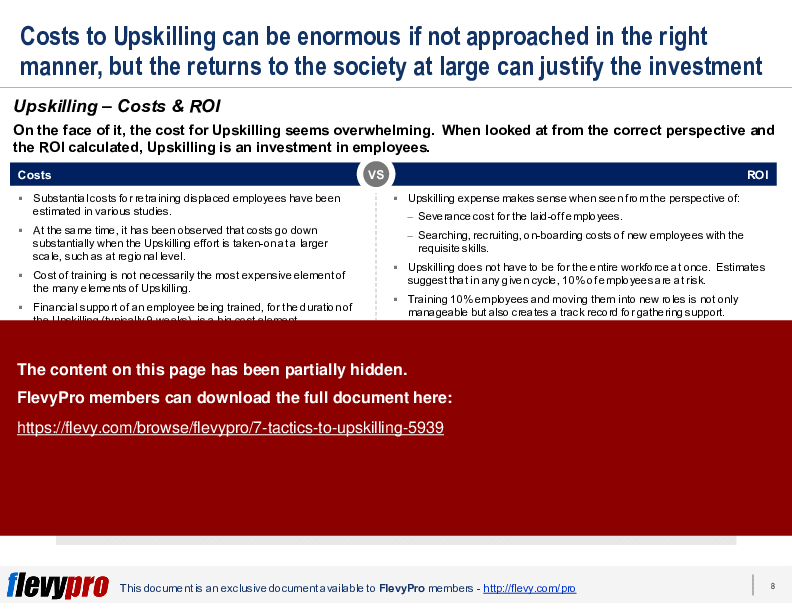
• Cost-benefit analysis of upskilling initiatives
• Trends in workforce development and skills training
Topic FAQ
Document FAQ
These are questions addressed within this presentation.
What is the difference between upskilling and reskilling?
Upskilling enhances existing skills, while reskilling involves teaching entirely new skills to employees.
How can organizations assess their upskilling needs?
Conduct a skills gap analysis to identify areas where employees require additional training or development.
What are the benefits of job rotation?
Job rotation helps employees gain a broader understanding of the organization, enhances their skill sets, and prepares them for future roles.
How can peer coaching be implemented effectively?
Establish a structured program that pairs employees for skill sharing and provides guidelines for effective coaching interactions.
What metrics should be used to evaluate upskilling initiatives?
Metrics may include employee performance improvements, engagement levels, retention rates, and overall impact on organizational goals.
How can external experts contribute to upskilling efforts?
External experts can provide specialized knowledge and training that may not be available internally, helping to fill immediate skills gaps.
What role does technology play in upskilling?
Technology facilitates access to online training resources, learning management systems, and virtual coaching opportunities, making upskilling more flexible and scalable.
How can organizations ensure continuous learning?
Create a culture that encourages ongoing training and development, offering regular opportunities for skill enhancement and professional growth.
Glossary
• Upskilling - The process of enhancing existing skills to meet current and future job demands.
• Reskilling - Teaching entirely new skills to employees for different job roles.
• Learning and Development (L&D) - Programs designed to improve employee skills and competencies.
• Job Rotation - Moving employees between different roles to develop new skills.
• Job Enlargement - Adding more responsibilities at the same level to enhance employee engagement.
• Job Enrichment - Enhancing roles by adding responsibilities and opportunities for autonomy.
• Peer Coaching - Informal skill transfer between employees.
• Peer Mentoring - Knowledge sharing from experienced employees to less experienced ones.
• External Experts - Specialists hired to provide targeted training and fill skills gaps.
• Skills Gap Analysis - Assessment of the difference between current employee skills and required skills.
• Employee Engagement - The level of commitment and involvement an employee has towards their organization.
• Continuous Learning - Ongoing training and development opportunities for employees.
Source: Best Practices in Training, Learning Organization, Upskilling PowerPoint Slides: 7 Tactics to Upskilling PowerPoint (PPTX) Presentation Slide Deck, LearnPPT Consulting
Did you need more documents?
Consider a FlevyPro subscription from $39/month. View plans here.
For $10.00 more, you can download this document plus 2 more FlevyPro documents. That's just $13 each.
|
Download our FREE Organization, Change, & Culture, Templates
Download our free compilation of 50+ slides and templates on Organizational Design, Change Management, and Corporate Culture. Methodologies include ADKAR, Burke-Litwin Change Model, McKinsey 7-S, Competing Values Framework, etc. |