
Editor Summary
Toolkit for Commercial Due Diligence is a 28-slide PowerPoint deck developed by Affinity Consulting Partners to support commercial due diligence in M&A, described as comparable to McKinsey, Bain, and BCG-quality frameworks (not affiliated).
Read moreIncludes specific tools: market attractiveness assessment template, customer segmentation analysis framework, competitive positioning matrix, growth opportunity identification tool, and a management forecast review checklist. Target users include corporate executives, integration leaders, financial analysts, and M&A consultants. Used to evaluate market attractiveness, competitive positioning, and growth potential; available on Flevy with immediate digital download.
Use this deck in M&A situations requiring structured commercial assessment — for target screening, market evaluation, negotiation prep, or post-acquisition integration planning.
Corporate development leads sizing market attractiveness and validating strategic fit during target screening using a market attractiveness assessment template.
Integration leaders prioritizing integration initiatives by mapping customer segments to expected revenue contributions with a customer segmentation analysis framework.
Financial analysts stress-testing management forecasts and assumptions with a management forecast review checklist.
M&A consultants benchmarking competitive position and identifying growth initiatives with a competitive positioning matrix.
The deck’s progression from strategic context through market attractiveness, customer segmentation, competitive assessment, growth opportunities, and forecast review mirrors the phased commercial-due-diligence approach comparable to McKinsey, Bain, and BCG.
This PowerPoint deck titled "Toolkit for Commercial Due Diligence" is a comprehensive, structured guide designed to equip professionals with the tools and methodologies needed to conduct thorough commercial due diligence in the context of mergers, acquisitions, and investments. The deck is a practical resource for analysts, investors, and corporate decision-makers who must evaluate a target company's market position, competitive advantages, and growth potential.
The presentation is organized into clear sections, each focusing on a critical aspect of the due diligence process. The first section introduces the concept of commercial due diligence and its importance in mitigating risks and identifying transaction opportunities. It outlines the key objectives, such as understanding the target's market landscape, evaluating its business model, and assessing the sustainability of its competitive advantages.
Subsequent slides detail the core components of a robust due diligence toolkit. These include market analysis techniques, such as assessing market size, growth trends, customer segmentation, and competitor analysis methodologies. The toolkit also covers financial performance analysis, including revenue streams, profitability, and potential risks related to pricing and customer concentration.
Much of the deck focuses on qualitative factors such as management and leadership evaluation, company culture, and customer satisfaction. Interviewing key stakeholders, including customers, suppliers, and industry experts, is emphasized as a way to gain deeper insights into the company's operational effectiveness and market reputation.
The deck also provides practical lessons learned by practitioners and potential red flags, and formulating actionable recommendations based on findings.
Overall, the "Toolkit for Commercial Due Diligence" PowerPoint deck is an essential resource for professionals seeking a holistic understanding of a target company and its potential for long-term success.
Got a question about the product? Email us at support@flevy.com or ask the author directly by using the "Ask the Author a Question" form. If you cannot view the preview above this document description, go here to view the large preview instead.
MARCUS OVERVIEW
This synopsis was written by Marcus [?] based on the analysis of the full 28-slide presentation.
Executive Summary
The Toolkit for Commercial Due Diligence is a structured PowerPoint presentation designed for M&A professionals, emphasizing the critical role of due diligence in the acquisition process. This consulting-grade toolkit, comparable to McKinsey, Bain, or BCG-quality frameworks (not affiliated), equips users to evaluate market attractiveness, competitive positioning, and growth potential. It enables corporate executives and consultants to make informed decisions, assess risks, and identify value creation opportunities during mergers and acquisitions.
Who This Is For and When to Use
• Corporate executives involved in M&A strategy and execution
• Integration leaders responsible for post-acquisition activities
• Financial analysts assessing investment opportunities
• Consultants specializing in M&A advisory services
Best-fit moments to use this deck:
• During the initial assessment phase of potential acquisitions
• When evaluating market opportunities and competitive landscapes
• In preparation for negotiations and closing activities
• For guiding post-merger integration planning
Learning Objectives
• Define the components of commercial due diligence and their importance in M&A.
• Analyze market attractiveness and competitive positioning for target companies.
• Identify growth potential and operational improvement opportunities.
• Assess risks and opportunities associated with acquisitions.
• Develop actionable insights and recommendations based on due diligence findings.
• Create a structured approach to conducting due diligence efficiently.
Table of Contents
• Considering the Strategic Context (page 2)
• Components of a Due Diligence (page 8)
• Market Attractiveness (page 10)
• Customer Segmentation (page 12)
• Competitive Positioning (page 15)
• Growth Opportunities (page 22)
• Review of Management Forecasts (page 26)
• Lessons Learned (page 28)
Primary Topics Covered
• Strategic Context - Understanding the rationale behind mergers and acquisitions, including shareholder value creation and market positioning.
• Due Diligence Components - Key activities involved in the due diligence process, such as market research, competitor analysis, and customer interviews.
• Market Attractiveness - Evaluating market size, growth trends, and profitability to assess the viability of potential acquisitions.
• Customer Segmentation - Analyzing customer dynamics and segmentation to identify target market opportunities.
• Competitive Positioning - Assessing the target's competitive landscape and operational capabilities.
• Growth Opportunities - Identifying potential areas for growth and operational improvements post-acquisition.
Deliverables, Templates, and Tools
• Market attractiveness assessment template for evaluating potential acquisition targets.
• Customer segmentation analysis framework to identify key market segments.
• Competitive positioning matrix for benchmarking against industry peers.
• Growth opportunity identification tool to prioritize strategic initiatives.
• Management forecast review checklist to validate assumptions and projections.
• Lessons learned documentation to capture best practices from past due diligence efforts.
Slide Highlights
• Overview of the strategic context for M&A and its implications for due diligence.
• Detailed breakdown of the components involved in a typical due diligence process.
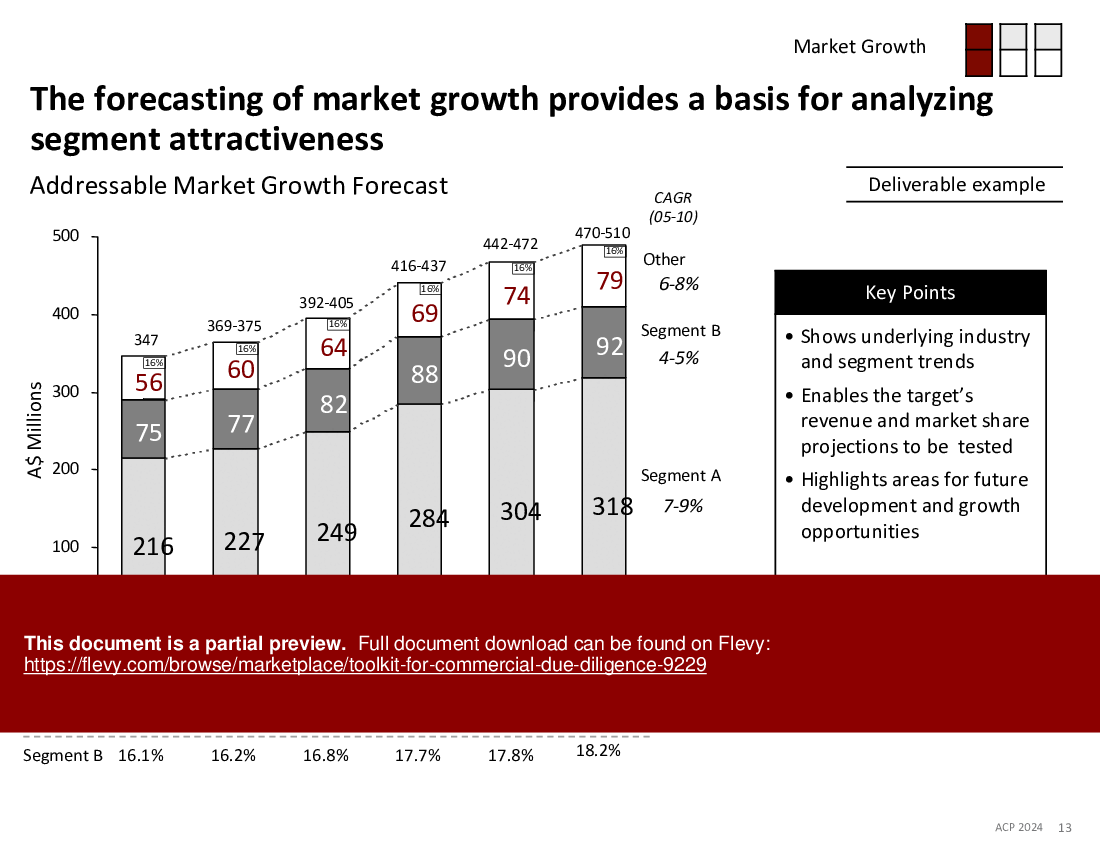
• Visual representation of market attractiveness factors, including size and growth trends.
• Customer segmentation analysis showcasing target revenue contributions by segment.
• Competitive positioning slide illustrating the target's strengths and weaknesses relative to competitors.
Potential Workshop Agenda
Due Diligence Overview Session (90 minutes)
• Introduce the importance of commercial due diligence in M&A
• Discuss key components and phases of the due diligence process
• Review case studies highlighting successful due diligence outcomes
Market Attractiveness Analysis Workshop (60 minutes)
• Analyze market size and growth trends for potential targets
• Conduct a competitive landscape assessment
• Identify key risks and opportunities in the target market
Customer Segmentation and Competitive Positioning Session (60 minutes)
• Segment customers to understand dynamics and revenue contributions
• Evaluate the target's competitive positioning and operational capabilities
• Discuss implications for integration and value creation
Customization Guidance
• Tailor market attractiveness assessments to reflect specific industry dynamics and trends.
• Adjust customer segmentation frameworks to align with the target's unique market characteristics.
• Modify competitive positioning matrices to include relevant competitors and market players.
• Update growth opportunity identification tools based on the target's strategic goals and capabilities.
Secondary Topics Covered
• Financial leverage considerations in M&A transactions.
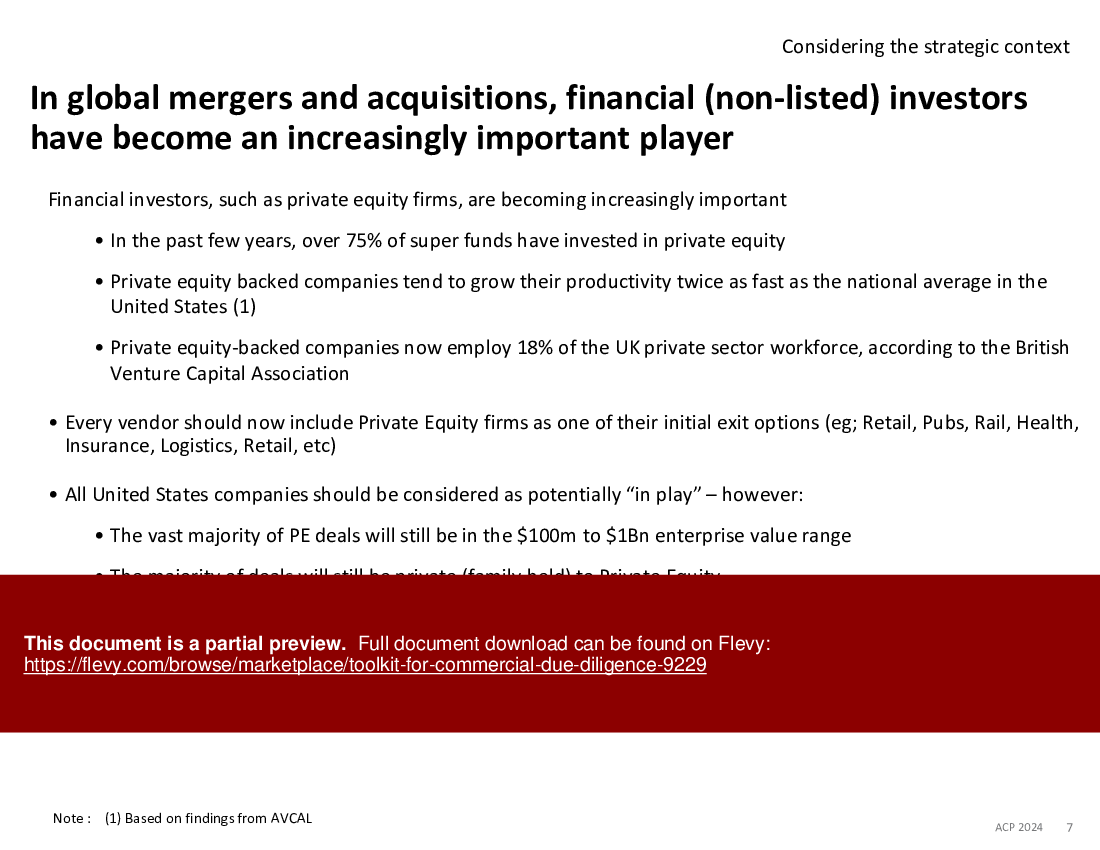
• The role of private equity in the acquisition landscape.
• Effective strategies for merger integration and synergy realization.
• Importance of stakeholder engagement throughout the due diligence process.
Topic FAQ
What are the main components of commercial due diligence I should cover before an acquisition?
Commercial due diligence typically covers market research, competitor analysis, customer interviews, and financial performance review to assess attractiveness and risks. It also examines customer segmentation, competitive positioning, growth opportunities, and management forecasts, aligning with components such as market research and financial performance reviews.
How long does a typical commercial due diligence effort take for a mid-market target?
The duration depends on target complexity and data availability; the overview notes a typical commercial due diligence process generally spans 2 to 6 weeks, with longer timelines for more complex targets or limited data access ending in a 2 to 6 week range.
What factors should I use to evaluate market attractiveness during due diligence?
Market attractiveness is assessed by market size, growth trends, profitability, customer dynamics, and competitive intensity. These criteria help determine whether a target operates in a viable market and are the basis for templates like the market attractiveness assessment template.
How do I evaluate a target’s competitive positioning in a diligence review?
Evaluate market share, pricing strategy, operational capabilities, and barriers to entry to determine competitive strengths and weaknesses. A competitive positioning matrix can benchmark the target against peers and is a specific tool included in the Toolkit for Commercial Due Diligence.
What should I look for when choosing a commercial due diligence toolkit for an upcoming buy-side process?
Buyers should confirm the toolkit contains templates matching needed activities (market attractiveness, customer segmentation, competitive benchmarking, growth identification, forecast review), is in a usable format for the team (PPTX slides), and allows customization to industry dynamics, such as the market attractiveness assessment template and management forecast review checklist.
How can I decide whether to buy a prebuilt due diligence deck or build templates in-house with a small team?
Consider whether a prebuilt deck provides the specific templates and structure you need and fits your timeline and team capacity; a ready PowerPoint organized into sections and templates (market attractiveness, customer segmentation, competitive positioning) can reduce upfront setup for a small team.
I need to size market opportunity for a potential acquisition—what framework elements should I include?
Include market sizing and growth trend analysis, customer segmentation to understand revenue concentration, competitor mapping for share and pricing context, and identification of growth opportunities. Tools that support these steps include a market attractiveness assessment template and a customer segmentation analysis framework.
How does customer segmentation analysis influence integration planning after an acquisition?
Customer segmentation clarifies which segments contribute most revenue, where retention or cross-sell opportunities exist, and which segments require prioritized operational changes, informing integration sequencing and resource allocation; the Toolkit for Commercial Due Diligence includes a customer segmentation analysis framework to support this work.
Document FAQ
These are questions addressed within this presentation.
What is the purpose of commercial due diligence?
Commercial due diligence aims to assess the market attractiveness, competitive position, and growth potential of a target company, ensuring informed decision-making in M&A transactions.
How long does the due diligence process typically take?
The due diligence process generally spans 2 to 6 weeks, depending on the complexity of the target and the availability of data.
What are the key components of a due diligence assessment?
Key components include market research, customer and supplier interviews, competitor analysis, and financial performance reviews.
How can customer segmentation impact acquisition decisions?
Understanding customer segmentation helps identify revenue potential and growth opportunities, guiding strategic decisions during the acquisition process.
What factors contribute to market attractiveness?
Market attractiveness is influenced by size, growth trends, profitability, customer dynamics, and competitive intensity.
How do you assess a target's competitive position?
Assessing competitive position involves analyzing market share, pricing strategies, operational capabilities, and barriers to entry.
What are common challenges in conducting due diligence?
Challenges include obtaining critical data, aligning stakeholder interests, and validating management forecasts against market realities.
How can lessons learned from past due diligence efforts improve future assessments?
Documenting lessons learned helps refine processes, enhance data collection strategies, and improve overall due diligence effectiveness.
Glossary
• Commercial Due Diligence - The process of evaluating a target company's market position and potential during an acquisition.
• Market Attractiveness - The overall appeal of a market based on size, growth, and profitability.
• Customer Segmentation - The process of dividing a customer base into distinct groups based on characteristics and behaviors.
• Competitive Positioning - Analyzing a target's strengths and weaknesses relative to its competitors.
• Growth Opportunities - Potential areas for expansion or improvement identified during due diligence.
• Financial Leverage - The use of borrowed funds to increase the potential return on investment.
• Private Equity - Investment firms that acquire and manage private companies, often focusing on operational improvements and growth.
• Stakeholder Engagement - The process of involving key stakeholders in decision-making during M&A activities.
• Synergy Realization - The process of achieving cost savings or revenue enhancements through the integration of merged entities.
• Management Forecasts - Projections made by a company's management regarding future financial performance.
• Barriers to Entry - Obstacles that make it difficult for new competitors to enter a market.
• Market Share - The percentage of total sales in a market captured by a company or product.
This PPT slide outlines the strategic rationale behind acquisitions, centered on "Shareholder Value Creation." It categorizes strategies into "Business Unit" and "Corporate." Under "Business Unit," key strategies include Revenue Enhancements, focusing on improved pricing and volume for top-line growth, and Cost Reduction, emphasizing operational efficiencies to enhance profitability. The "Corporate" category discusses value creation through Portfolio Synergies, which involve shared costs and streamlined operations; Restructuring, addressing divestments and mergers to optimize corporate structure; and Tax and Financial strategies, leveraging excess cash and increasing borrowing capacity for financial flexibility and growth support.
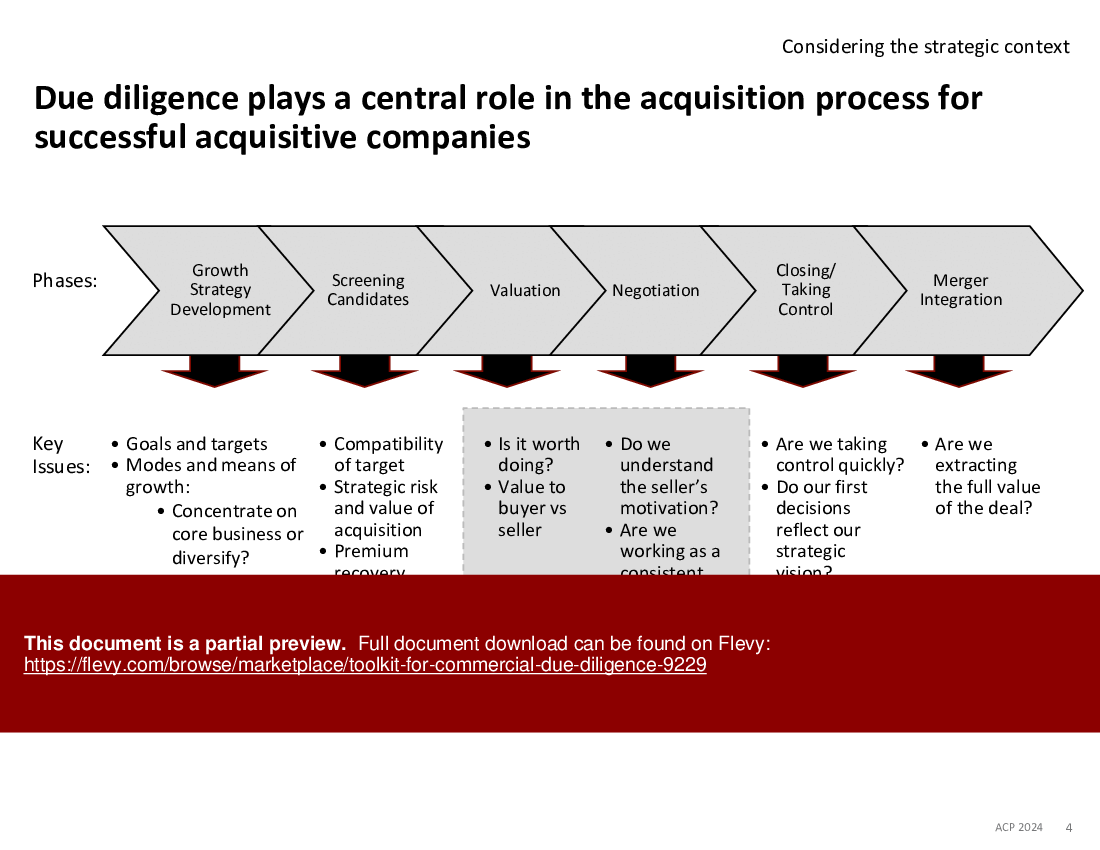
This PPT slide outlines the acquisition process for growth-focused companies, structured into key phases: Growth Strategy Development, Screening Candidates, Valuation, Negotiation, Closing/Taking Control, and Merger Integration.
In Growth Strategy Development, organizations clarify goals, deciding between core focus or diversification, and domestic or international opportunities, considering acquisition, alliance, or joint venture options.
Screening Candidates emphasizes assessing compatibility and strategic risks, alongside target valuation and premium recovery.
Valuation evaluates whether an acquisition aligns with the strategic vision of the buyer and seller.
Negotiation requires understanding the seller’s motivations and ensuring collaboration.
Closing/Taking Control highlights the need for swift alignment with strategic objectives post-acquisition.
Finally, Merger Integration focuses on effective strategies to extract full deal value.
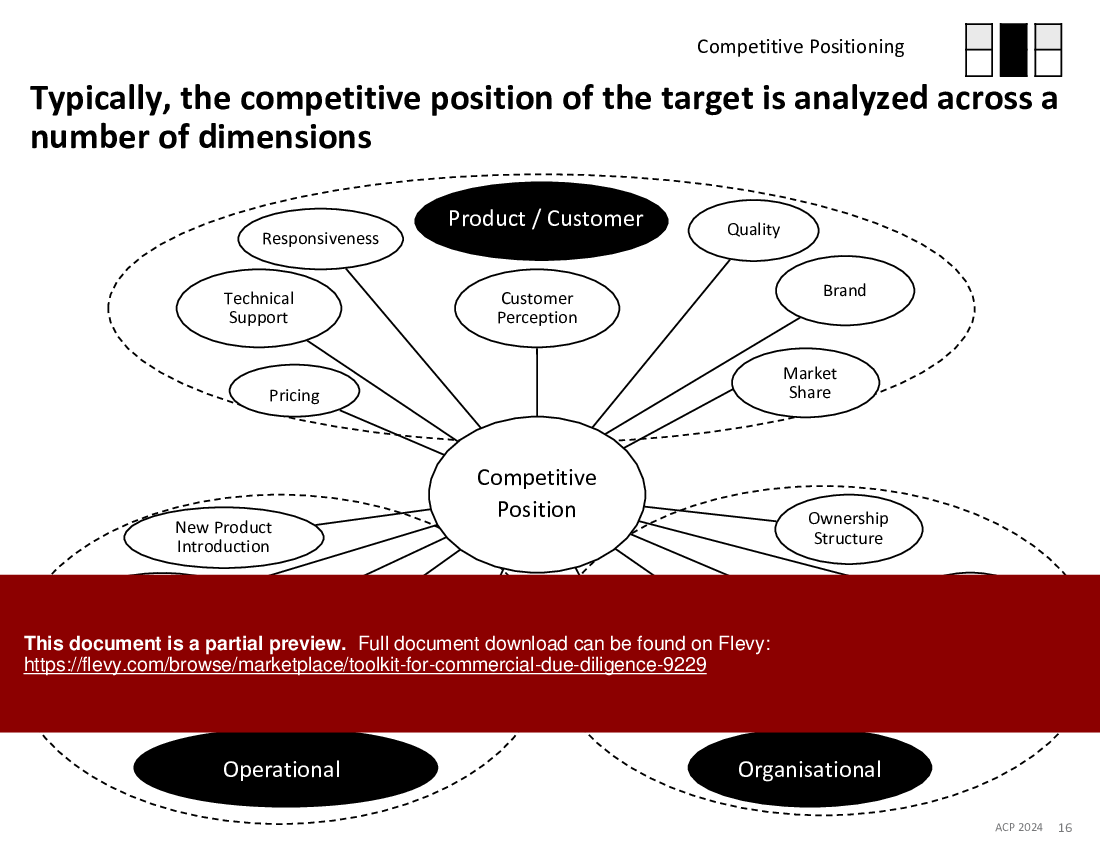
This PPT slide outlines the dimensions for assessing a target entity's competitive position. Central to this assessment is "Competitive Position," surrounded by factors such as "Product / Customer," which includes responsiveness, technical support, pricing, and customer perception. Quality is essential for establishing market presence. Additional dimensions include brand strength, market share, and ownership structure, which inform market positioning and growth potential. Operational factors like infrastructure, safety, innovation, and research and development (R&D) evaluate internal capabilities. Network, location, scale, and staffing contribute to understanding operational effectiveness and strategic advantages. This framework aids in analyzing multiple facets of a target's position for informed decision-making.
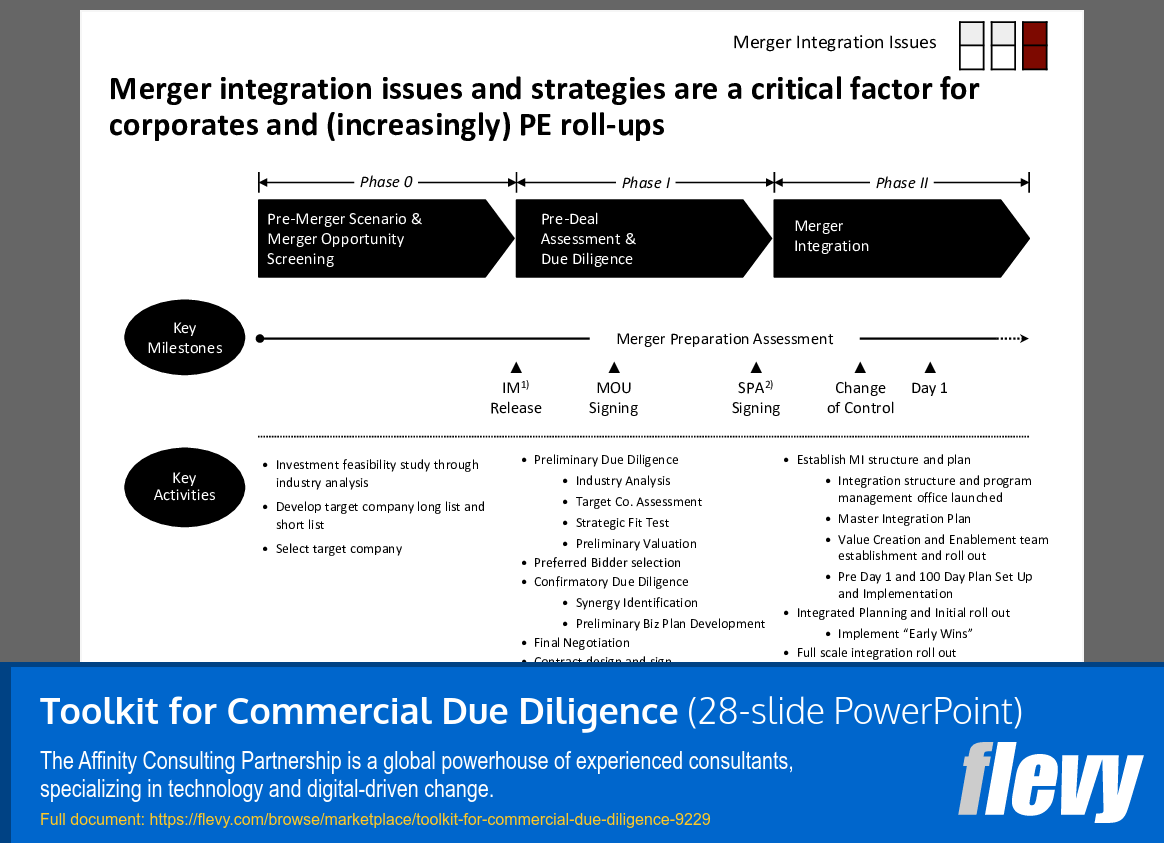
This PPT slide outlines the critical phases of merger integration for corporate entities and private equity roll-ups, divided into 3 main phases: Phase 0, Phase I, and Phase II.
Phase 0 focuses on pre-merger scenario analysis and opportunity screening, involving investment feasibility studies, industry analysis, and target company selection.
Phase I covers pre-deal assessment and due diligence, highlighting milestones such as the Information Memorandum (IM), Memorandum of Understanding (MOU), and Sale and Purchase Agreement (SPA). Key activities include thorough due diligence, strategic fit testing, and preliminary valuation, culminating in the selection of a preferred bidder.
Phase II emphasizes actual merger integration, establishing the integration structure, launching a program management office, and developing a master integration plan. Activities include setting up value creation teams and planning initial rollouts to ensure a smooth transition.
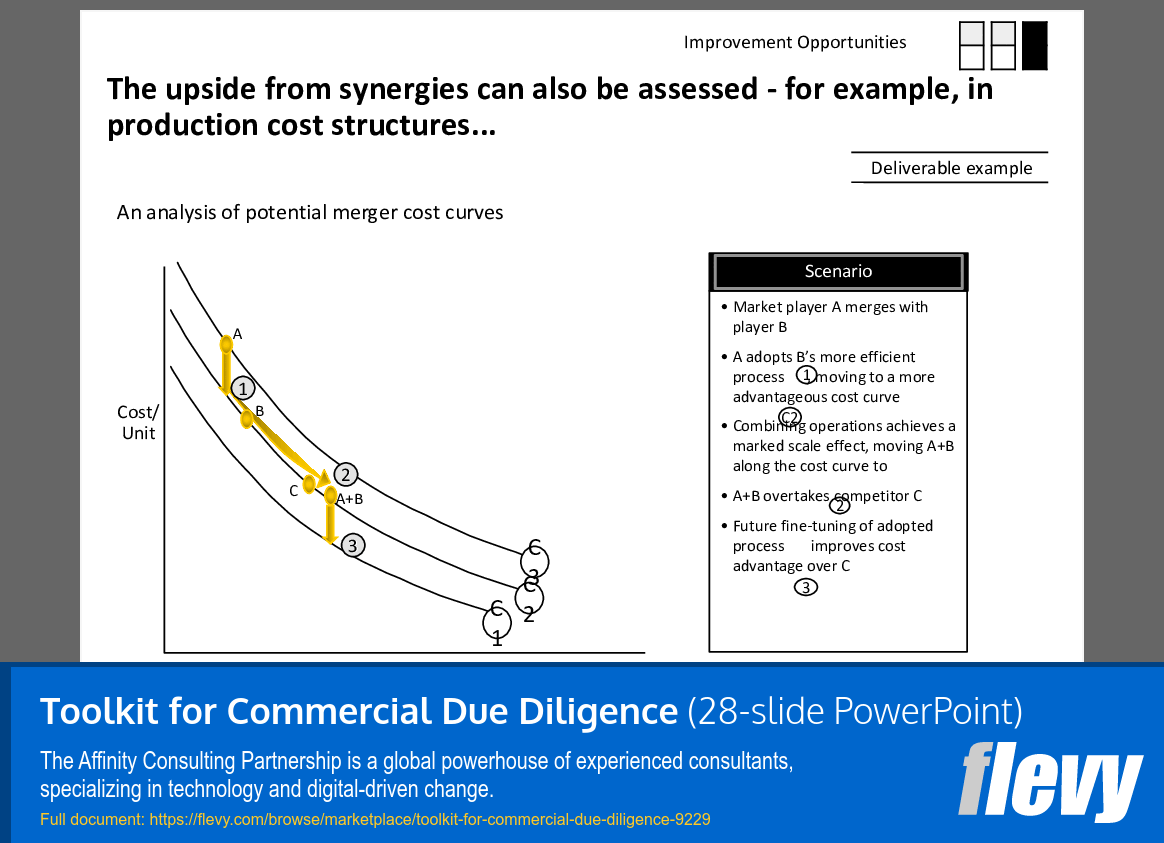
This PPT slide analyzes potential cost synergies from the merger of market players A and B. Integration of operations can improve production cost structures, illustrated by various cost curves. The first scenario shows player A adopting player B's efficient production process, resulting in a downward shift in costs per unit. The second scenario highlights combined operations achieving significant scale effects, enhancing cost efficiency as the merged entity A+B reduces costs with increased production. The third scenario indicates A+B's potential to surpass competitor C, improving cost structures and market competitiveness. Further optimization of processes could yield additional cost advantages over competitor C.
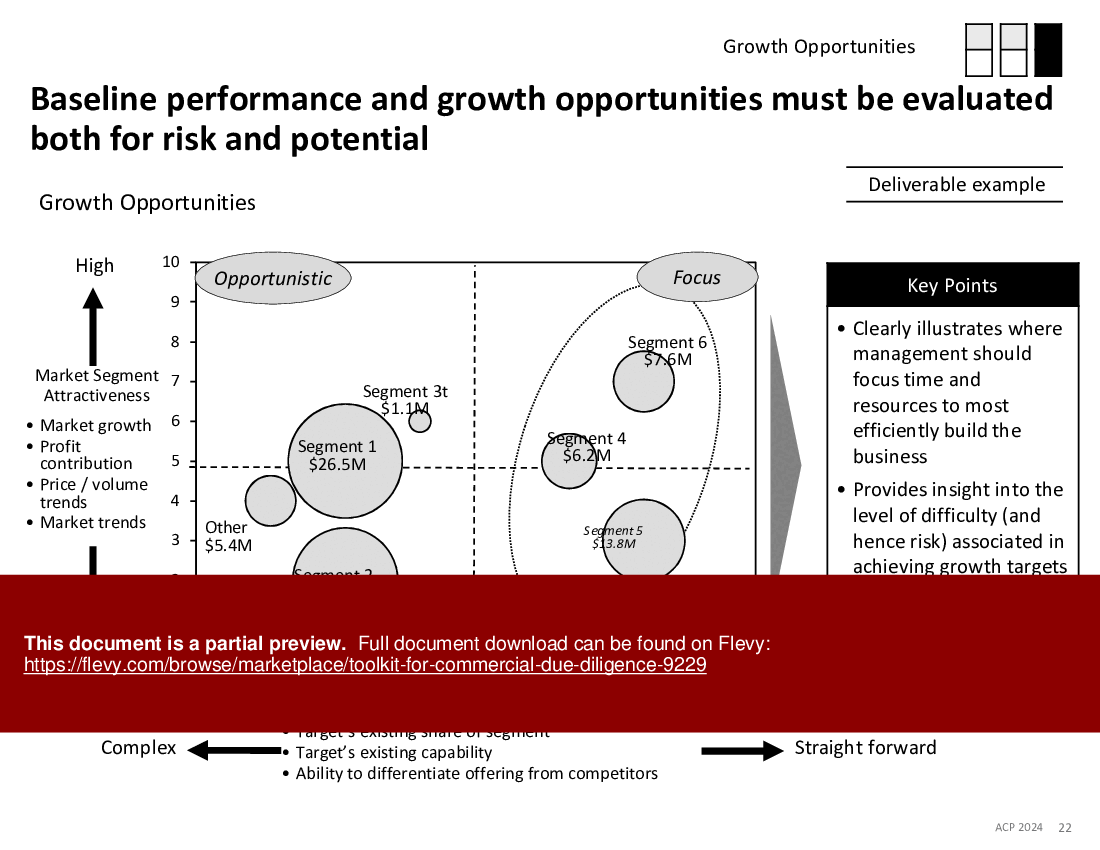
This PPT slide presents a framework for evaluating baseline performance and identifying growth opportunities using a two-dimensional matrix. The vertical axis represents "Market Segment Attractiveness," while the horizontal axis indicates "Ease of Execution." The matrix is divided into 4 quadrants: "Opportunistic," "Focus," "Selective," and "Ignore." Segments in the "Opportunistic" quadrant, such as Segment 1 ($26.5M) and Segment 2 ($22.5M), show high attractiveness and easier execution, indicating substantial growth potential with manageable risk. In contrast, the "Focus" quadrant includes segments like Segment 6 ($7.6M) and Segment 4 ($6.2M), which require more attention due to execution difficulty. The "Selective" quadrant contains moderately attractive segments needing careful consideration, while the "Ignore" quadrant has segments that are neither attractive nor easy to execute, like Segment 3 ($1.1M). This structured approach aids in strategic decision-making and resource allocation to maximize growth.
Customer retention is critical in mergers and acquisitions, as even a 5% loss of customers can jeopardize financial viability. Losing 10% of customers is common, with some mergers experiencing losses up to 20%, highlighting the fragility of customer relationships. A one-percentage-point reduction in attrition among the top 20% of customers can boost overall profits by 5% to 10%, making high-value customer retention essential for profitability. A graph illustrates the relationship between retention performance and merger economics, featuring metrics like Target Value, Minimum ROE Value, and Budget. It shows that increasing customer defection diminishes the potential for achieving target financial outcomes, with critical thresholds labeled as "Budgeted Break Even" and "Equal value." Prioritizing customer retention strategies during mergers is vital for long-term financial health.
Mergers hinge on evaluating key capabilities between the acquiring organization and the target company. This PPT slide features a framework for assessing strengths and weaknesses across operational domains: R&D, procurement, operations, logistics, marketing and sales, and after-sales service. A matrix illustrates the comparative evaluation of capabilities, with axes for the acquiring company and the acquisition target. For example, "Technology transfer/synergy" indicates a strong position for the acquiring company, suggesting effective technology leverage, while "Investment needed" highlights potential weaknesses requiring significant resources for post-merger alignment. The arrows connecting strengths and weaknesses reveal areas for potential synergies or challenges, guiding strategic planning and resource allocation during the merger process.
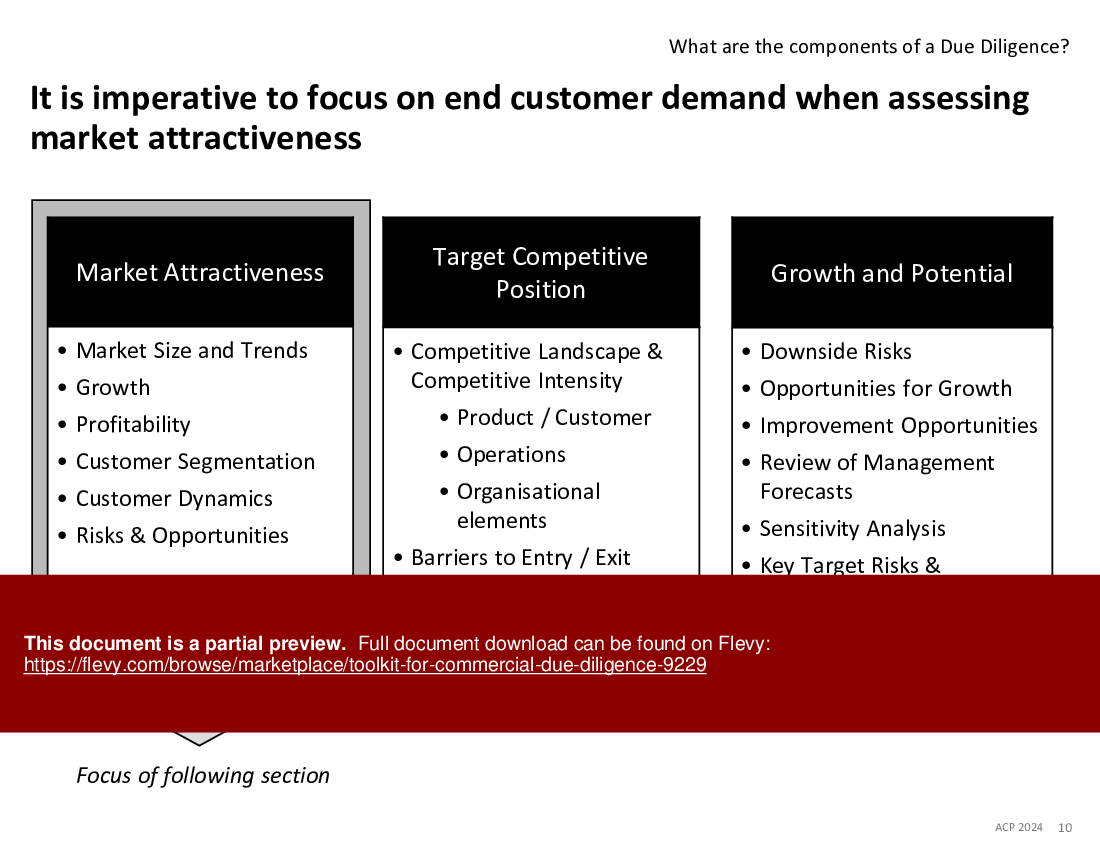
This PPT slide outlines 3 essential modules in commercial due diligence: market attractiveness, competitive position, and growth potential.
The first module, "Analyze the attractiveness of the market," assesses market conditions and segment appeal to identify risks and opportunities impacting market viability.
The second module, "Review Target Competitive Position," evaluates the competitive landscape, focusing on volume and value drivers to understand the target's market position relative to competitors.
The final module, "Analyze Growth & Value Potential," examines the target's growth prospects and operational efficiencies, validating the business plan against market realities and exploring exit options.
This structured approach enables informed investment decisions aligned with strategic objectives.
Source: Best Practices in Due Diligence PowerPoint Slides: Toolkit for Commercial Due Diligence PowerPoint (PPTX) Presentation Slide Deck, Affinity Consulting Partners
The Affinity Consulting Partnership is a global powerhouse of experienced consultants, specializing in technology and digital-driven change.
Our team is comprised of individuals across the globe who have extensive expertise and a proven track record in guiding large corporations across the globe through complex business transformations. Our partners were all at some stage senior consulting
... [read more] professionals at tier 1 global consulting firms over half our staff have been equity partners in the past at these firms.
With a combined experience of over 120 years, our partners bring a wealth of knowledge and insights to the table. Each member of our team has a distinguished background, having served as a top-level executive and trusted advisor to the C-suite of major corporations. Our partners have honed their skills and expertise through years of hands-on experience, leading successful consulting engagements across a wide range of industries, including finance, healthcare, retail, manufacturing, and more.
Our partners have a keen eye for identifying emerging trends and disruptions in the business landscape and are adept at developing innovative strategies to help our clients stay ahead of the curve.

As a team, we are dedicated to driving meaningful results for our clients, helping them navigate the complexities of technology and digital-driven change, and unlocking new opportunities for growth and success. Our partners are trusted advisors and thought leaders in the industry, and we are committed to providing exceptional service and creating lasting partnerships with our clients.

The average daily rate of a McKinsey consultant is $6,625 (not including expenses). The average price of a Flevy document is $65.
Trusted by over 10,000+ Client Organizations
Since 2012, we have provided business templates to over 10,000 businesses and organizations of all sizes, from startups and small businesses to the Fortune 100, in over 130 countries.
"As a consultant requiring up to date and professional material that will be of value and use to my clients, I find Flevy a very reliable resource.
The variety and quality of material available through Flevy offers a very useful and commanding source for information. Using Flevy saves me time, enhances my expertise and ends up being a good decision."
– Dennis Gershowitz, Principal at DG Associates
"I have found Flevy to be an amazing resource and library of useful presentations for lean sigma, change management and so many other topics. This has reduced the time I need to spend on preparing for my performance consultation. The library is easily accessible and updates are regularly provided. A wealth of great information."
– Cynthia Howard RN, PhD, Executive Coach at Ei Leadership
"FlevyPro has been a brilliant resource for me, as an independent growth consultant, to access a vast knowledge bank of presentations to support my work with clients. In terms of RoI, the value I received from the very first presentation I downloaded paid for my subscription many times over! The
quality of the decks available allows me to punch way above my weight – it's like having the resources of a Big 4 consultancy at your fingertips at a microscopic fraction of the overhead.
"
– Roderick Cameron, Founding Partner at SGFE Ltd
"FlevyPro provides business frameworks from many of the global giants in management consulting that allow you to provide best in class solutions for your clients."
– David Harris, Managing Director at Futures Strategy
"Last Sunday morning, I was diligently working on an important presentation for a client and found myself in need of additional content and suitable templates for various types of graphics. Flevy.com proved to be a treasure trove for both content and design at a reasonable price, considering the time I
saved. I encountered a download issue during the ordering process. However, a quick email to Flevy's support team, even on a Sunday (!!!), resulted in assistance within less than an hour, allowing me to download the content I needed. Fantastic job, Flevy! I give 5 stars for both content/price and customer service. Thank you!
"
– M. E., Chief Commercial Officer, International Logistics Service Provider
"My FlevyPro subscription provides me with the most popular frameworks and decks in demand in today’s market. They not only augment my existing consulting and coaching offerings and delivery, but also keep me abreast of the latest trends, inspire new products and service offerings for my practice, and educate me
in a fraction of the time and money of other solutions. I strongly recommend FlevyPro to any consultant serious about success.
"
– Bill Branson, Founder at Strategic Business Architects
"As a small business owner, the resource material available from FlevyPro has proven to be invaluable. The ability to search for material on demand based our project events and client requirements was great for me and proved very beneficial to my clients. Importantly, being able to easily edit and tailor
the material for specific purposes helped us to make presentations, knowledge sharing, and toolkit development, which formed part of the overall program collateral. While FlevyPro contains resource material that any consultancy, project or delivery firm must have, it is an essential part of a small firm or independent consultant's toolbox.
"
– Michael Duff, Managing Director at Change Strategy (UK)
"One of the great discoveries that I have made for my business is the Flevy library of training materials.
As a Lean Transformation Expert, I am always making presentations to clients on a variety of topics: Training, Transformation, Total Productive Maintenance, Culture, Coaching, Tools, Leadership Behavior, etc. Flevy
It is well worth the money to purchase these presentations. Sure, I have the knowledge and information to make my point. It is another thing to create a presentation that captures what I want to say. Flevy has saved me countless hours of preparation time that is much better spent with implementation that will actually save money for my clients.
"
– Ed Kemmerling, Senior Lean Transformation Expert at PMG
Download our free compilation of 50+ Strategy & Transformation slides and templates. Frameworks include McKinsey 7-S, Balanced Scorecard, Disruptive Innovation, BCG Curve, and many more.