
Problem Management Process is a part of Service Operation.
This PowerPoint presentation contains detailed description of the Problem Management Process, including process steps, roles, KPIs, CSFs, interfaces with other processes.
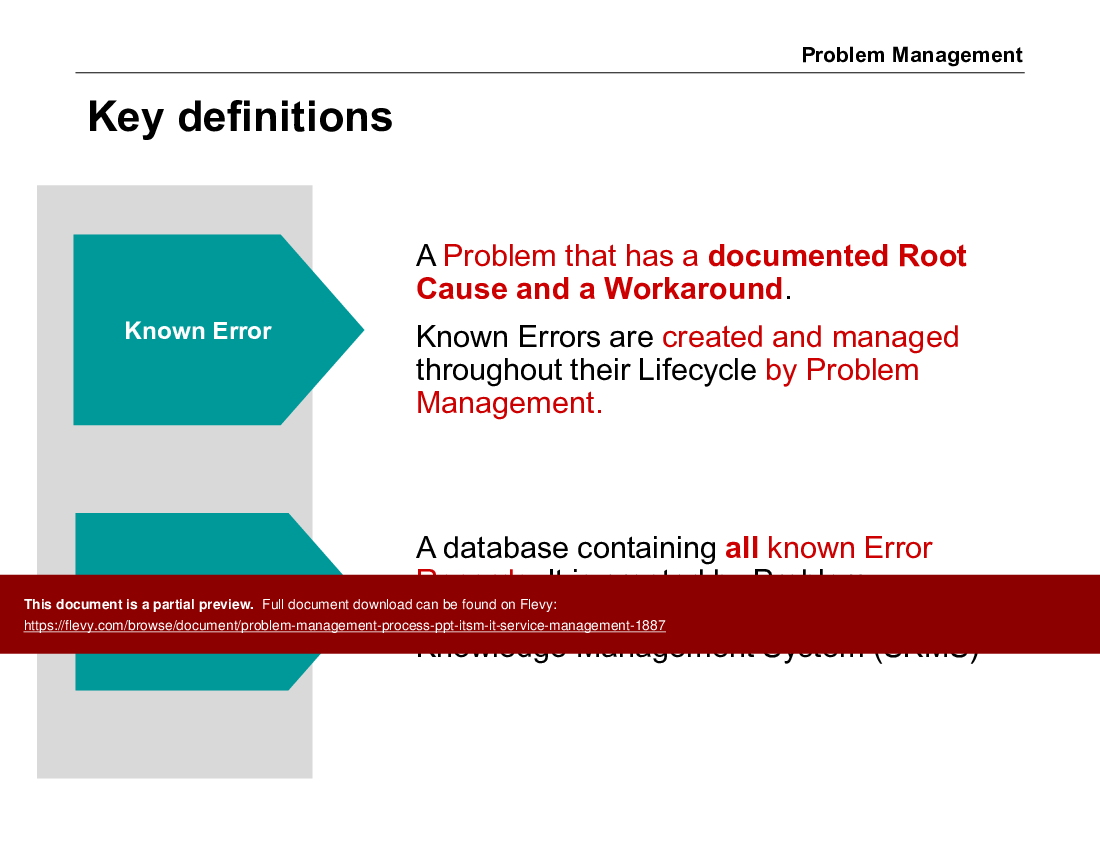
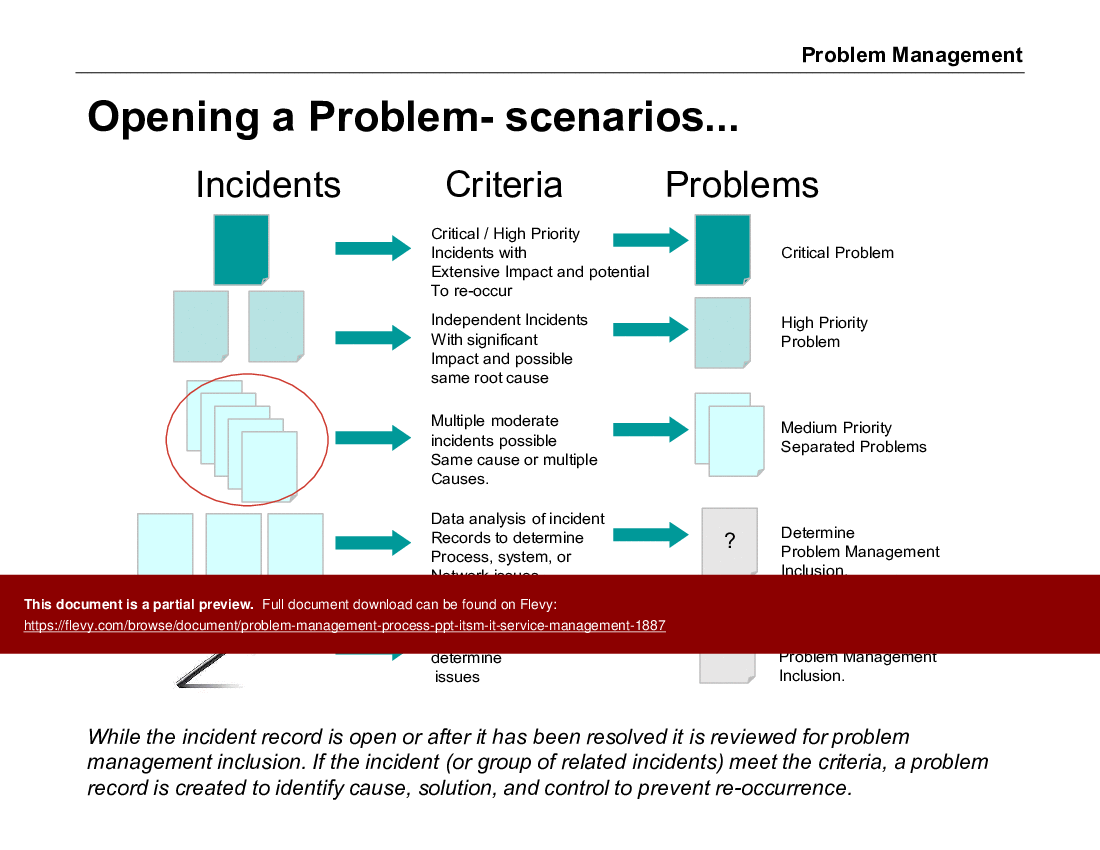
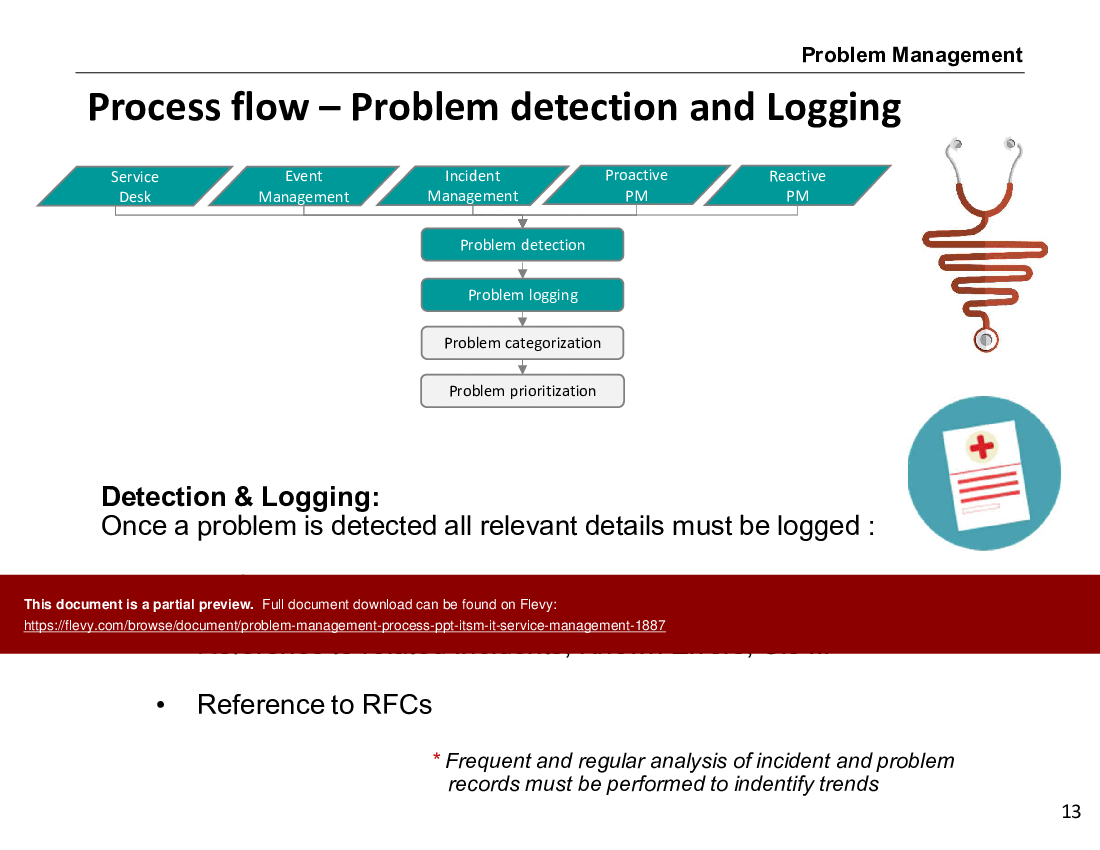
This presentation provides a comprehensive overview of key definitions and scenarios for opening a problem, ensuring that your team can effectively identify and manage critical issues. It includes detailed criteria for categorizing incidents and problems, enabling a structured approach to problem prioritization. The PPT also outlines the process flow for problem detection and logging, emphasizing the importance of thorough documentation and regular analysis to identify trends.
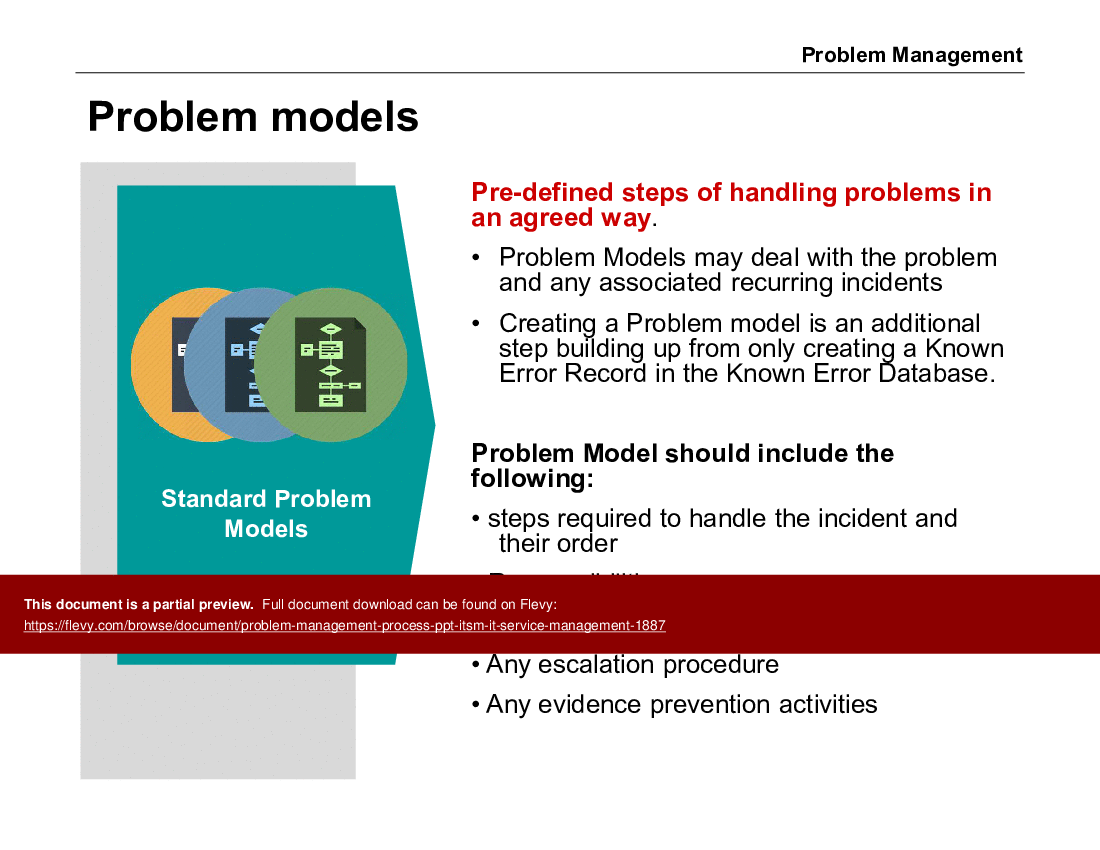
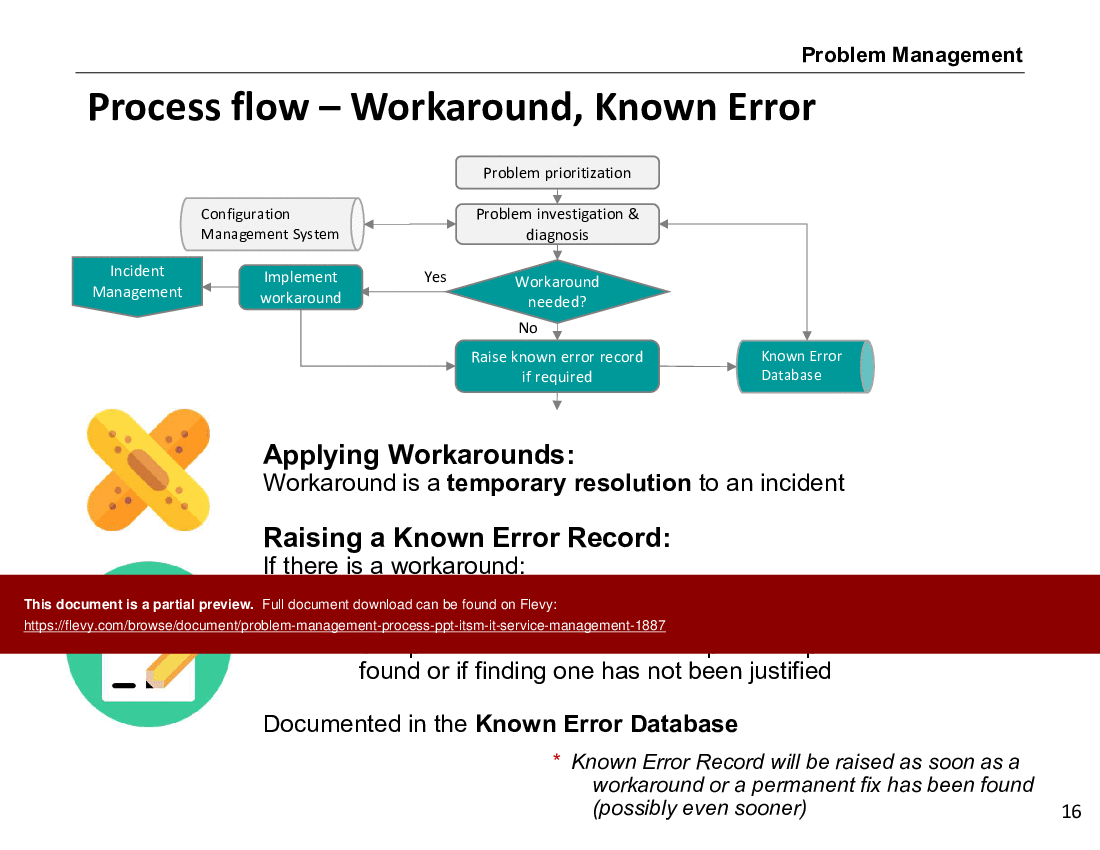
The Problem Models section offers pre-defined steps for handling problems in a consistent manner. This ensures that recurring incidents are managed efficiently, with clear escalation procedures and prevention activities. The presentation also covers the creation and management of Known Error Records, highlighting the importance of documenting temporary resolutions and permanent fixes in the Known Error Database.
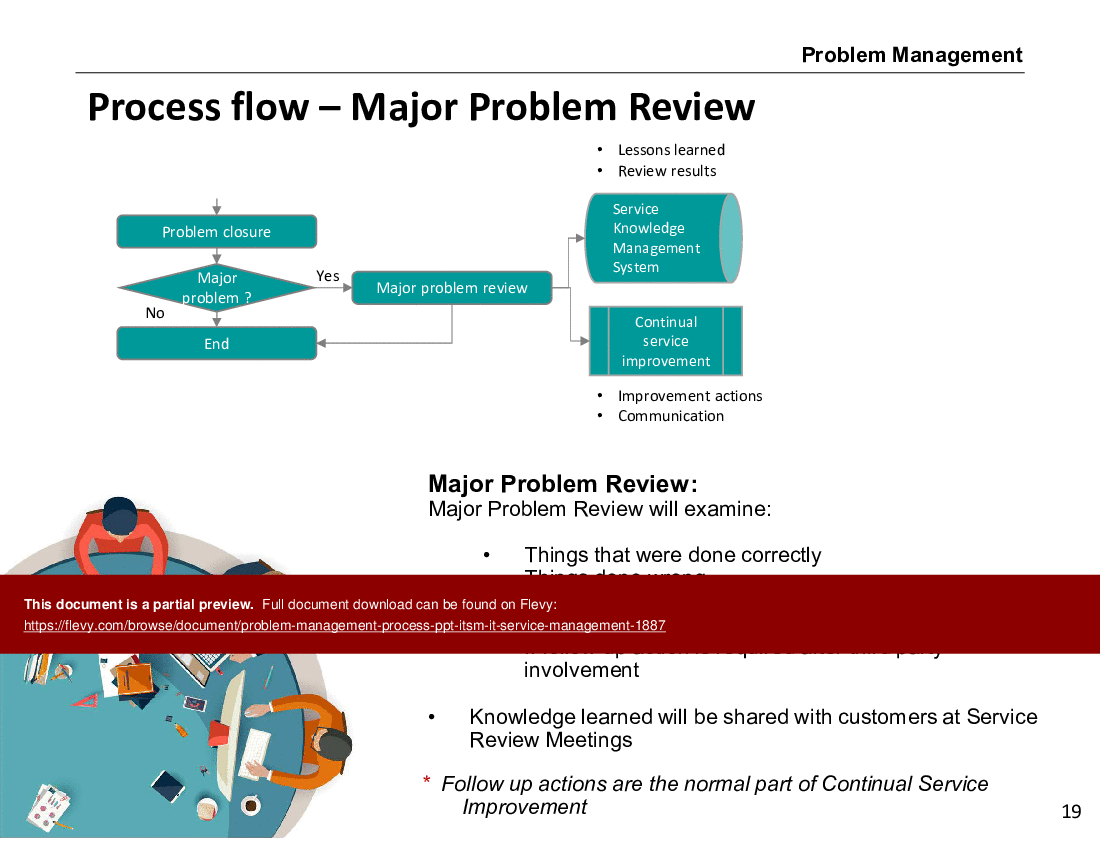
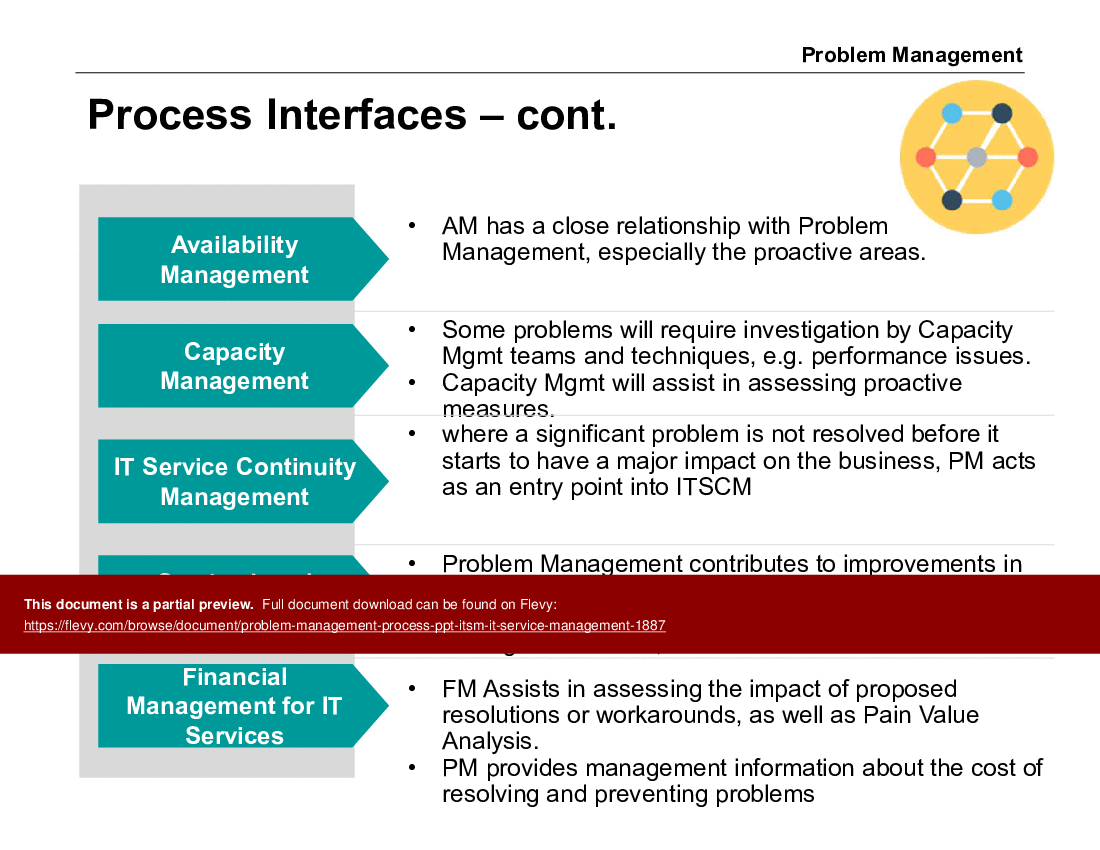
Major Problem Reviews are also addressed, providing a framework for examining lessons learned and implementing continual service improvements. The document details the interfaces with other processes such as Availability Management, Capacity Management, and IT Service Continuity Management. Critical Success Factors and Key Performance Indicators are included to measure the impact and effectiveness of the Problem Management Process, ensuring alignment with business objectives and maintaining high IT service quality.
Got a question about the product? Email us at support@flevy.com or ask the author directly by using the "Ask the Author a Question" form. If you cannot view the preview above this document description, go here to view the large preview instead.
Executive Summary
The Problem Management Process presentation provides a comprehensive overview of the methodologies and practices essential for effective IT Service Management (ITSM). It is designed to help organizations identify and resolve the root causes of incidents, thereby minimizing future disruptions and enhancing service quality. This presentation aligns with ITIL and ISO 20000 standards, ensuring that your organization adheres to best practices in problem management. By utilizing this resource, teams can systematically manage the lifecycle of problems, implement effective resolutions, and maintain a robust knowledge management system.
Who This Is For and When to Use
• IT Service Managers overseeing problem management initiatives
• Incident Management teams seeking to enhance incident resolution processes
• Change Management professionals coordinating with problem management
• IT Operations teams focused on minimizing service disruptions
Best-fit moments to use this deck:
• During training sessions for new ITSM team members
• When implementing or reviewing problem management processes
• In workshops aimed at improving incident and problem resolution efficiency
• For strategic planning sessions focused on IT service quality improvement
Learning Objectives
• Define the Problem Management process and its significance in ITSM.
• Identify and categorize problems based on incident data analysis.
• Implement effective root cause analysis techniques to resolve issues.
• Establish a Known Error Database (KEDB) to streamline future resolutions.
• Develop proactive measures to prevent recurring incidents.
• Collaborate with Change Management to ensure seamless implementation of solutions.
Table of Contents
• Introduction to Problem Management (page 1)
• Key Definitions (page 2)
• Problem Management Process Overview (page 3)
• Purpose and Objectives (page 5)
• Problem Models and Their Importance (page 10)
• Process Flow of Problem Management (page 12)
• Investigation and Diagnosis Techniques (page 15)
• Workarounds and Known Errors (page 16)
• Problem Resolution and Closure (page 17)
• Major Problem Review Process (page 19)
• Challenges and Risks in Problem Management (page 24)
• Roles and Responsibilities (page 26)
Primary Topics Covered
• Problem Management Process - A structured approach to managing the lifecycle of problems, including identification, diagnosis, resolution, and closure.
• Root Cause Analysis - Techniques to identify the underlying causes of incidents to prevent future occurrences.
• Known Error Database (KEDB) - A repository for documenting known errors and workarounds to facilitate quicker incident resolution.
• Proactive vs. Reactive Management - Strategies for addressing problems before they escalate versus responding to incidents as they occur.
• Integration with Change Management - The necessity of coordinating with Change Management to implement solutions effectively.
• Performance Metrics - Key performance indicators (KPIs) to measure the effectiveness of the Problem Management process.
Deliverables, Templates, and Tools
• Problem Record Template for documenting the lifecycle of problems.
• Known Error Record Template for maintaining a database of known issues and workarounds.
• Problem Categorization and Prioritization Matrix for efficient resource allocation.
• Process Flow Diagrams illustrating the steps in Problem Management.
• Major Problem Review Checklist to ensure thorough analysis and documentation.
• Incident and Problem Management Integration Framework for aligning processes.
Slide Highlights
• Overview of the Problem Management Process, detailing key phases and activities.
• Flowchart illustrating the steps from problem detection to resolution and closure.
• Examples of categorization and prioritization criteria for effective problem handling.
• Visual representation of the relationship between Incident Management and Problem Management.
• Key performance indicators (KPIs) for measuring the success of Problem Management initiatives.
Potential Workshop Agenda
Introduction to Problem Management (30 minutes)
• Overview of the Problem Management process
• Discussion on the importance of root cause analysis
Hands-On Problem Identification (60 minutes)
• Group activity to categorize and prioritize sample incidents
• Review of real-world examples and case studies
Implementing Solutions and Workarounds (90 minutes)
• Strategies for developing effective workarounds
• Collaborative session on documenting known errors
Review and Continuous Improvement (60 minutes)
• Major Problem Review process and its significance
• Discussion on KPIs and performance measurement
Customization Guidance
• Tailor the Problem Record Template to reflect your organization's specific processes and terminology.
• Adjust the prioritization criteria based on your business's unique impact and urgency factors.
• Incorporate organizational branding and specific examples into the presentation slides.
Secondary Topics Covered
• The role of Configuration Management in Problem Management
• Techniques for effective communication during problem resolution
• The importance of training and ongoing support for IT staff
• Strategies for integrating Problem Management with other ITSM processes
Topic FAQ
Document FAQ
These are questions addressed within this presentation.
What is the primary goal of Problem Management?
The primary goal of Problem Management is to identify and eliminate the root causes of incidents to prevent future occurrences and minimize their impact on the business.
How does Problem Management differ from Incident Management?
Problem Management focuses on identifying and resolving the underlying causes of incidents, while Incident Management is concerned with restoring service as quickly as possible.
What is a Known Error Database (KEDB)?
A KEDB is a repository that stores known errors and their workarounds, enabling faster resolution of incidents related to those errors.
How do we prioritize problems?
Problems are prioritized based on their impact on the business and the urgency of resolving them, often using a categorization matrix.
What are the key performance indicators (KPIs) for Problem Management?
KPIs may include the number of known errors added to the KEDB, average incident resolution time, and the percentage of problems resolved within SLA targets.
What is a Major Problem Review?
A Major Problem Review is a structured process to analyze significant problems, assess what was done correctly or incorrectly, and identify improvements for the future.
How can we ensure effective communication during problem resolution?
Establish clear communication channels and protocols among all stakeholders involved in the problem resolution process.
What training is necessary for staff involved in Problem Management?
Staff should receive training in root cause analysis techniques, the use of the KEDB, and the integration of Problem Management with other ITSM processes.
Glossary
• Problem - The unknown cause of one or more incidents.
• Problem Record - A record containing the details of the lifecycle of a single problem.
• Known Error - A problem that has a documented root cause and a workaround.
• Known Error Database (KEDB) - A database containing all known error records.
• Root Cause Analysis - A method for identifying the fundamental cause of problems.
• Change Management - The process of managing changes to IT services.
• Incident Management - The process of restoring normal service operation as quickly as possible.
• Service Knowledge Management System (SKMS) - A system that stores and manages knowledge and information related to IT services.
• Configuration Management System (CMS) - A system that maintains information about configuration items required to deliver IT services.
• Critical Success Factors (CSF) - Key areas that must be managed effectively to achieve success in Problem Management.
• Key Performance Indicators (KPI) - Metrics used to evaluate the success of an organization in achieving its objectives.
• Proactive Problem Management - Activities aimed at preventing problems before they occur.
• Reactive Problem Management - Activities focused on resolving problems after they have occurred.
• Service Level Agreement (SLA) - A contract that defines the level of service expected from a service provider.
• Major Problem Review - A review process to analyze significant problems and improve future responses.
• Incident - An unplanned interruption to an IT service or reduction in the quality of an IT service.
• Workaround - A temporary solution to an incident or problem.
• Trend Analysis - The process of analyzing incident records to identify patterns and recurring issues.
• Problem Management Process Owner - The individual accountable for the Problem Management process.
• Problem Manager - The person responsible for managing the lifecycle of problems and ensuring their resolution.
Source: Best Practices in ITIL, Problem Management, SLM, ITSM PowerPoint Slides: Problem Management Process PPT (ITSM, IT Service Management) PowerPoint (PPTX) Presentation Slide Deck, ITSM Consulting
This document is available as part of the following discounted bundle(s):

Save %!
Problem Management Process, ITSM ( PPT and Proces guide)
This bundle contains 2 total documents. See all the documents to the right.
Save %!
Service Operation Bundle (ITSM) - 3 processes PPT
This bundle contains 3 total documents. See all the documents to the right.
Save %!
IT Service Operation - 5 Processes
This bundle contains 5 total documents. See all the documents to the right.
|
Download our FREE Digital Transformation Templates
Download our free compilation of 50+ Digital Transformation slides and templates. DX concepts covered include Digital Leadership, Digital Maturity, Digital Value Chain, Customer Experience, Customer Journey, RPA, etc. |









