
Warehouse Automation: 10 Technologies   26-slide PPT PowerPoint presentation slide deck (PPTX)
$29.00

Warehouse Automation: 10 Technologies (26-slide PPT PowerPoint presentation slide deck (PPTX)) Preview Image
Log in to unlock full preview.
Warehouse Automation: 10 Technologies (26-slide PPT PowerPoint presentation slide deck (PPTX)) Preview Image
Arrow   Click main image to view in full screen.

Warehouse Automation: 10 Technologies (PowerPoint PPTX Slide Deck)

PowerPoint (PPTX) 26 Slides FlevyPro Document

#2 in Warehouse Management $29.00
FlevyPro price: FREE (included in subscription)
This framework is developed by a team of former McKinsey and Big 4 consultants. The presentation follows the headline-body-bumper slide format used by global consulting firms.
Add to Cart


Immediate download
Free lifetime updates

LOGISTICS PPT DESCRIPTION

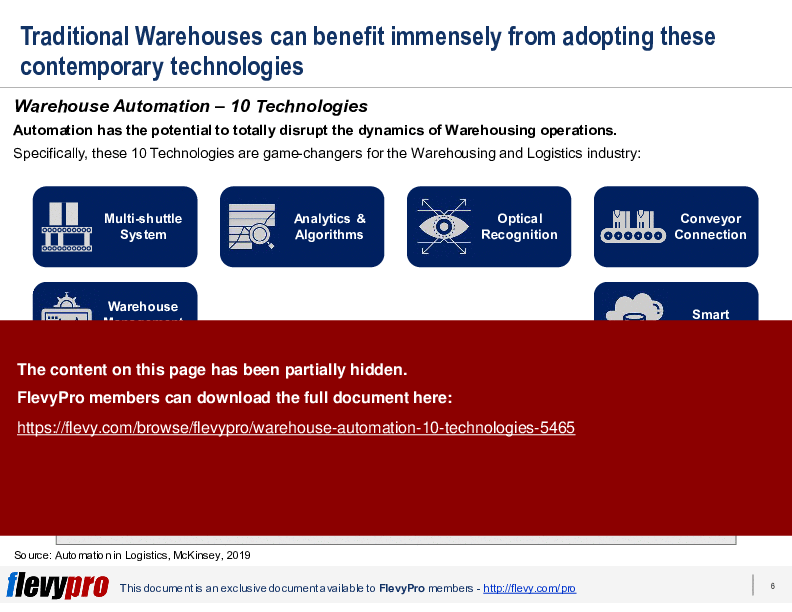
Editor Summary Warehouse Automation: 10 Technologies is a 26-slide PowerPoint (PPTX) presenting ten modern technologies for warehouse operations, including Multi-shuttle System, Analytics & Algorithms, Optical Recognition, Conveyor Connection, Warehouse Management Systems, Smart Storage, 3-D Printing, Swarm AGV Robots, Smart Glasses, and Picking Robots. Read more

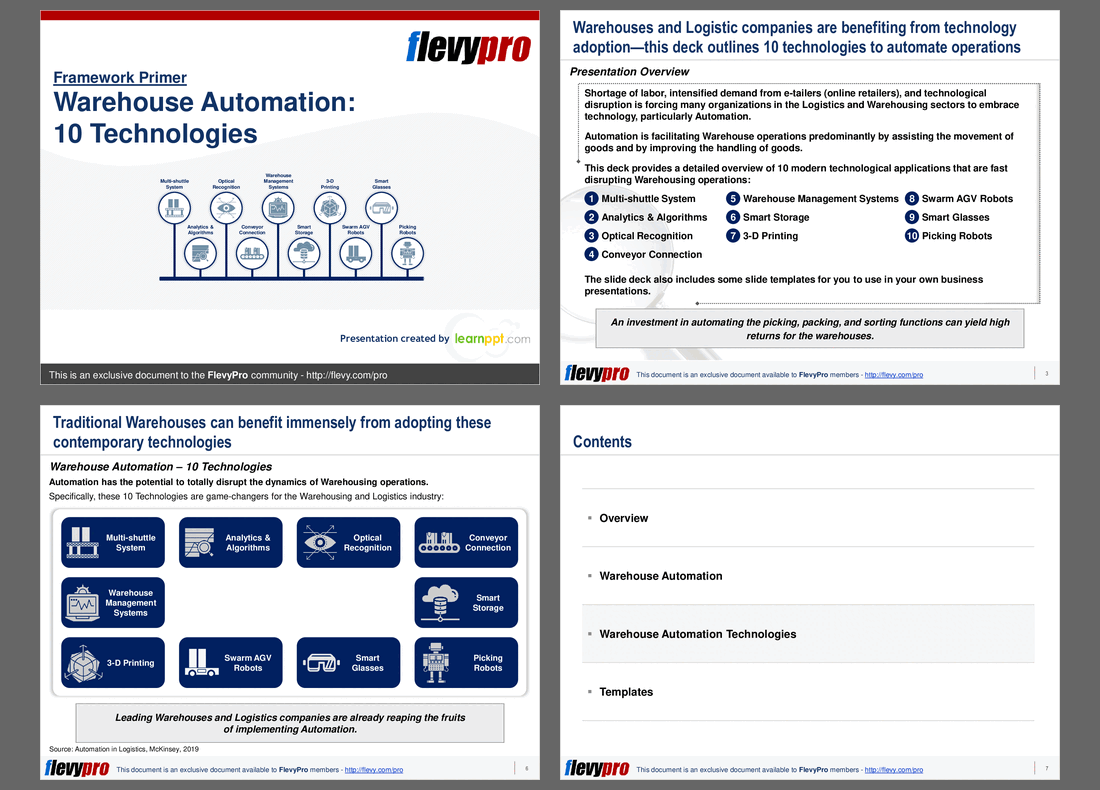
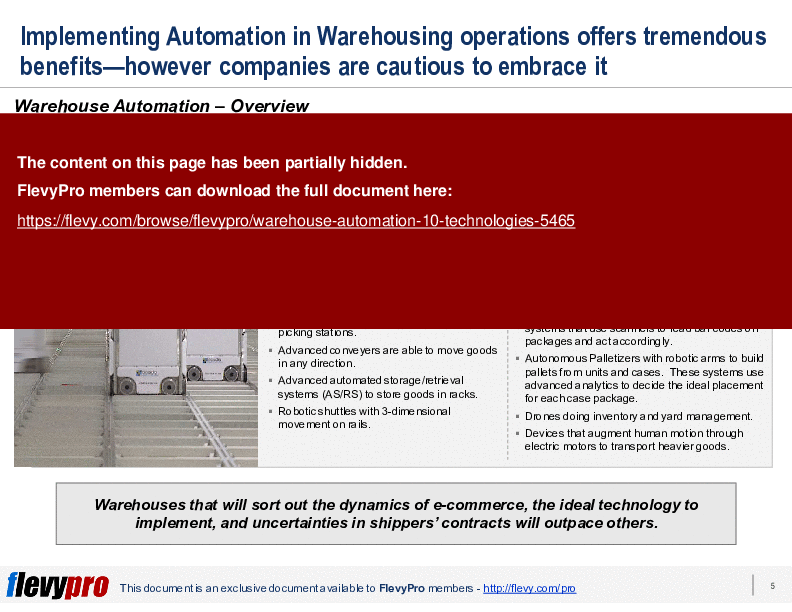
Shortage of labor, intensified demand from e-tailers (online retailers), and technological disruption is forcing many organizations in the Logistics and Warehousing sectors to embrace technology, particularly Automation.

Automation is facilitating Warehouse operations predominantly by assisting the movement of goods and by improving the handling of goods.

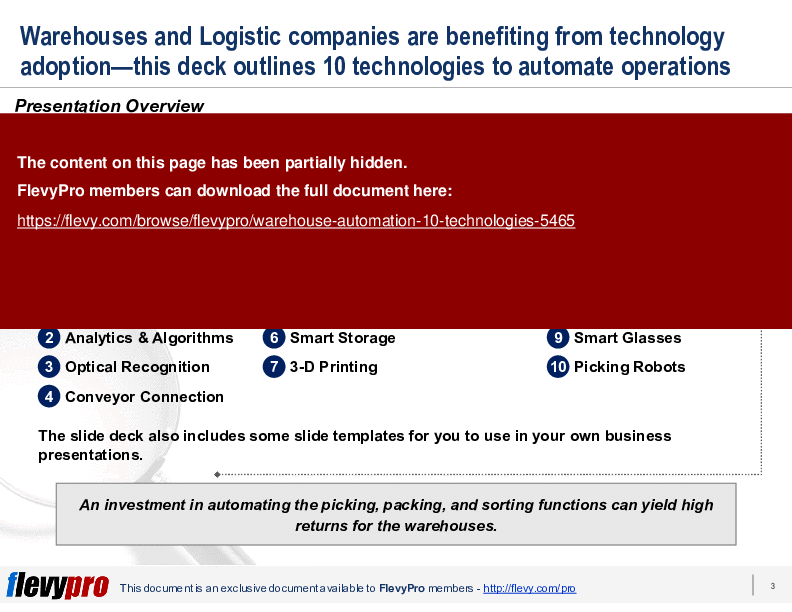
This deck provides a detailed overview of 10 modern technological applications that are fast disrupting Warehousing operations (e.g. Smart Storage, 3D Printing, Smart Glasses, Picking Robots, etc.). An investment in these technologies that drive automating the picking, packing, and sorting functions can yield high returns for Warehouses.

The slide deck also includes some slide templates for you to use in your own business presentations.

The PPT delves into the intricacies of Warehouse Automation, offering a comprehensive analysis of 10 pivotal technologies. It highlights the critical role of Multi-shuttle Systems in enhancing throughput and storage efficiency. Analytics & Algorithms are underscored for their ability to predict trends and optimize operations, making them indispensable for modern warehousing. The inclusion of Optical Recognition technology showcases how real-time data and quality monitoring can streamline processes and reduce errors.

The presentation also explores the benefits of Conveyor Connection systems, which facilitate the smooth and efficient movement of goods within various warehouse configurations. Warehouse Management Systems (WMS) are detailed, emphasizing their importance in inventory control and operational efficiency. Smart Storage solutions are presented as key to flexible and scalable inventory management, leveraging advanced analytics and digital tools.

3-D Printing technology is discussed for its potential to revolutionize production and customization processes. Swarm AGV Robots are highlighted for their role in optimizing space and improving picking efficiency. Smart Glasses are introduced as a futuristic tool for enhancing worker productivity and accuracy. Picking Robots are examined for their ability to automate and expedite order fulfillment processes, mirroring human movements with precision.

Got a question about this document? Email us at flevypro@flevy.com.

MARCUS OVERVIEW

This synopsis was written by Marcus [?] based on the analysis of the full 26-slide presentation.


Executive Summary
The "Warehouse Automation: 10 Technologies" presentation provides a comprehensive overview of modern technologies that are revolutionizing warehouse operations. It focuses on the critical need for automation in the logistics sector, driven by labor shortages and increasing demand from e-commerce. This deck outlines ten key technologies that enhance efficiency in warehousing, including automated systems for picking, packing, and sorting. By leveraging these technologies, organizations can significantly improve their operational capabilities and meet the evolving demands of the market.

Who This Is For and When to Use
•  Warehouse managers seeking to implement automation solutions
•  Logistics executives aiming to enhance operational efficiency
•  Supply chain professionals interested in modern technologies
•  Consultants advising clients on warehouse optimization strategies

Best-fit moments to use this deck:
•  During strategic planning sessions for warehouse upgrades
•  When evaluating technology investments in logistics
•  For training sessions on automation technologies in warehousing

Learning Objectives
•  Define the role of automation in modern warehouse operations
•  Identify and explain the ten key technologies transforming warehousing
•  Analyze the benefits of implementing automation technologies
•  Develop a roadmap for integrating automation into existing warehouse systems
•  Evaluate case studies of successful warehouse automation implementations
•  Create a framework for assessing technology investments in logistics

Table of Contents
•  Overview (page 3)
•  Warehouse Automation (page 5)
•  Warehouse Automation Technologies (page 6)
•  Templates (page 19)

Primary Topics Covered
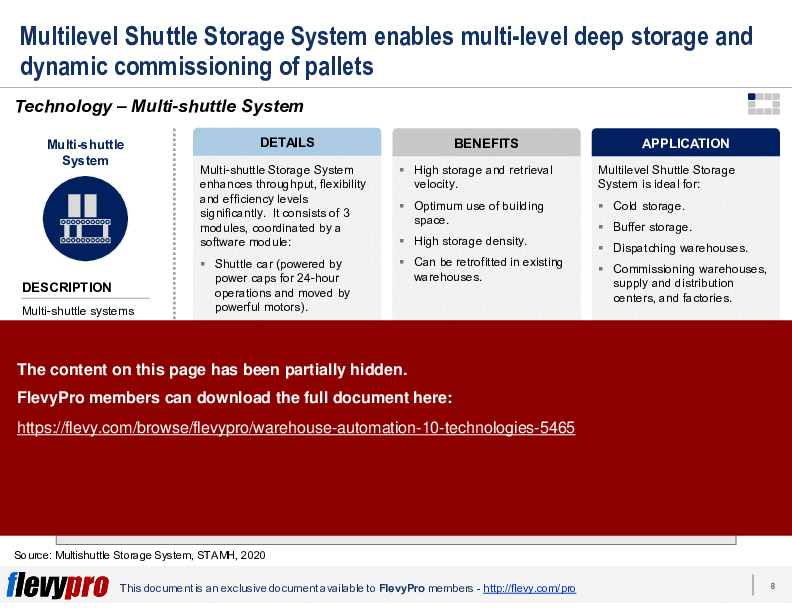
•  Multi-shuttle System - A system that enhances throughput and efficiency by automating the storage and retrieval of goods using shuttles and vertical lifts.
•  Analytics & Algorithms - Tools that process large data sets to predict trends and improve decision-making in warehouse operations.
•  Optical Recognition - Technology that scans items and converts them into digital data, facilitating faster processing and inventory management.
•  Conveyor Connection - Advanced systems that automate product handling and improve material flow through various handling processes.
•  Warehouse Management Systems - Software solutions that optimize inventory management and streamline warehouse operations.
•  Smart Storage - Solutions that utilize advanced technologies for efficient storage and retrieval of goods based on real-time data.
•  3-D Printing - A method for producing items on-demand, reducing inventory costs and enabling customization.
•  Swarm AGV Robots - Autonomous vehicles that navigate warehouses to transport goods efficiently, enhancing operational flexibility.
•  Smart Glasses - Wearable technology that provides real-time information and directions to workers, improving picking efficiency.
•  Picking Robots - Robotic systems that automate the picking process, reducing labor costs and increasing accuracy in order fulfillment.

Deliverables, Templates, and Tools
•  Multi-shuttle system implementation guide
•  Analytics and algorithms framework for warehouse optimization
•  Optical recognition technology assessment template
•  Conveyor system integration checklist
•  Warehouse management system evaluation criteria
•  Smart storage solutions implementation plan

Slide Highlights
•  Overview of the ten key technologies transforming warehouse operations
•  Detailed explanation of the multi-shuttle system and its benefits
•  Case studies showcasing successful automation implementations
•  Visual representations of analytics and algorithms in action
•  Comparative analysis of traditional vs. automated warehousing

Potential Workshop Agenda
Introduction to Warehouse Automation (30 minutes)
•  Overview of current challenges in warehousing
•  Introduction to key technologies

Technology Deep Dive (90 minutes)
•  Detailed exploration of each technology
•  Discussion on implementation strategies

Case Studies and Best Practices (60 minutes)
•  Review of successful automation projects
•  Lessons learned and key takeaways

Customization Guidance
•  Tailor the technology assessment templates to fit specific warehouse needs
•  Adjust case studies to reflect industry-specific challenges and solutions
•  Modify the implementation roadmap based on organizational capacity and resources

Secondary Topics Covered
•  Integration of IoT in warehouse operations
•  Future trends in warehouse automation
•  Impact of e-commerce on logistics strategies
•  Risk management in technology adoption

Topic FAQ

What are the main technologies currently disrupting warehouse operations?

Modern warehouse disruption centers on ten technologies cited in the overview: Multi-shuttle System, Analytics & Algorithms, Optical Recognition, Conveyor Connection, Warehouse Management Systems, Smart Storage, 3-D Printing, Swarm AGV Robots, Smart Glasses, and Picking Robots, totaling ten technologies.

How do multi-shuttle systems improve throughput and storage efficiency in warehouses?

Multi-shuttle systems automate storage and retrieval using shuttles and vertical lifts, enabling higher density storage and faster access to SKUs; the deck highlights throughput and efficiency gains associated with a multi-shuttle system.

What role do analytics and algorithms play in warehouse automation?

Analytics and algorithms process large data sets to predict demand trends, optimize routing, and inform decision-making across operations; the presentation includes an analytics and algorithms framework for warehouse optimization.

In what ways can 3-D printing be applied within warehouse operations?

3-D printing enables on-demand production that can reduce held inventory and support customized or replacement parts manufacturing, lowering inventory costs and enabling customization through 3-D printing.

When operating under a constrained budget, what factors should influence technology selection for automation?

Selection should weigh specific operational needs, upfront costs, scalability, and retrofit potential; the description notes challenges such as upfront costs and training, making budget, scalability, and retrofit capability key factors.

How should I compare Warehouse Management Systems when evaluating software options for automation?

Compare inventory control features, integration capability with automation hardware, and scalability to operational volume; the product supplies a Warehouse Management System evaluation criteria template to support that comparison.

Which warehouse automation technologies are commonly retrofit-friendly for existing facilities?

The overview states many automation solutions can be integrated into existing systems; examples covered in the deck that are often retrofit-friendly include conveyor connections, optical recognition, smart glasses, and WMS integration.

How can smart glasses and picking robots be combined to improve picking accuracy and productivity?

Smart glasses provide real-time picking instructions and navigation assistance to workers while picking robots automate repetitive retrieval tasks; combining wearable guidance with robotic picking can reduce errors and labor requirements using smart glasses and picking robots.

Document FAQ
These are questions addressed within this presentation.

What are the main benefits of warehouse automation?
Automation enhances efficiency, reduces labor costs, and improves accuracy in inventory management.

How do I choose the right technology for my warehouse?
Evaluate your specific operational needs, budget, and scalability of the technology solutions.

What is the role of analytics in warehouse automation?
Analytics helps in making informed decisions by processing large amounts of data to identify trends and optimize operations.

Can existing warehouses integrate these technologies?
Yes, many automation solutions can be retrofitted into existing systems to enhance operational capabilities.

What are the challenges of implementing warehouse automation?
Challenges include upfront costs, training staff, and potential disruptions during the transition period.

How do smart glasses improve warehouse operations?
Smart glasses provide real-time information and navigation assistance, reducing inefficiencies in product searching.

What is the significance of 3-D printing in warehousing?
3-D printing allows for on-demand production, reducing the need for large inventories and enabling customization.

How do swarm AGV robots operate?
Swarm AGV robots navigate autonomously within warehouses, transporting goods based on pre-defined paths and instructions.

Glossary
•  Automation - The use of technology to perform tasks without human intervention.
•  AGV (Automated Guided Vehicle) - A mobile robot used to transport materials within a facility.
•  WMS (Warehouse Management System) - Software that manages warehouse operations and inventory.
•  IoT (Internet of Things) - Network of interconnected devices that communicate and exchange data.
•  Analytics - The systematic computational analysis of data.
•  3-D Printing - A manufacturing process that creates objects layer by layer from a digital model.
•  Smart Storage - Advanced storage solutions that optimize space and retrieval processes.
•  Optical Recognition - Technology that converts images of text into machine-readable data.
•  Conveyor System - A mechanical system that transports materials from one location to another.
•  Picking Robots - Automated systems that assist in selecting and retrieving items in a warehouse.
•  Multi-shuttle System - An automated system for storing and retrieving goods efficiently.
•  Swarm Intelligence - A collective behavior of decentralized systems, often used in robotics.
•  Smart Glasses - Wearable technology that overlays digital information onto the physical world.
•  Logistics - The detailed organization and implementation of a complex operation.
•  E-commerce - Buying and selling goods or services using the internet.
•  Inventory Management - The supervision of non-capitalized assets and stock items.
•  Labor Costs - The total cost of employing workers, including wages and benefits.
•  Operational Efficiency - The ability to deliver products or services in the most cost-effective manner.
•  Supply Chain - The entire system of production, processing, and distribution of goods.

LOGISTICS PPT SLIDES

Transformative Technologies for Warehouse Automation

Enhancing Warehouse Efficiency with Picking Robots

Connected Conveyor Systems: Enhancing Warehouse Efficiency

Optimizing Warehouse Efficiency with Smart Storage Solutions

Harnessing Analytics and Algorithms for Strategic Insights

Source: Best Practices in Automation, Warehousing, Logistics PowerPoint Slides: Warehouse Automation: 10 Technologies PowerPoint (PPTX) Presentation Slide Deck, LearnPPT Consulting


$29.00
FlevyPro price: FREE (included in subscription)
This framework is developed by a team of former McKinsey and Big 4 consultants. The presentation follows the headline-body-bumper slide format used by global consulting firms.
Add to Cart
  

Did you need more documents?

Consider a FlevyPro subscription from $39/month. View plans here.

For $10.00 more, you can download this document plus 2 more FlevyPro documents. That's just $13 each.

ABOUT FLEVYPRO

This document is part of the FlevyPro Library, a curated knowledge base of documents for our FlevyPro subscribers.

FlevyPro is a subscription service for on-demand business frameworks and analysis tools. FlevyPro subscribers receive access to an exclusive library of curated business documents—business framework primers, presentation templates, Lean Six Sigma tools, and more—among other exclusive benefits.

Click here to learn more about FlevyPro and its benefits.

Did you know?
The average daily rate of a McKinsey consultant is $6,625 (not including expenses). The average price of a Flevy document is $65.


Trusted by over 10,000+ Client Organizations
Since 2012, we have provided business templates to over 10,000 businesses and organizations of all sizes, from startups and small businesses to the Fortune 100, in over 130 countries.
AT&T GE Cisco Intel IBM Coke Dell Toyota HP Nike Samsung Microsoft Astrazeneca JP Morgan KPMG Walgreens Walmart 3M Kaiser Oracle SAP Google E&Y Volvo Bosch Merck Fedex Shell Amgen Eli Lilly Roche AIG Abbott Amazon PwC T-Mobile Broadcom Bayer Pearson Titleist ConEd Pfizer NTT Data Schwab


Read Customer Testimonials

 
"I like your product. I'm frequently designing PowerPoint presentations for my company and your product has given me so many great ideas on the use of charts, layouts, tools, and frameworks. I really think the templates are a valuable asset to the job."

– Roberto Fuentes Martinez, Senior Executive Director at Technology Transformation Advisory
 
"Last Sunday morning, I was diligently working on an important presentation for a client and found myself in need of additional content and suitable templates for various types of graphics. Flevy.com proved to be a treasure trove for both content and design at a reasonable price, considering the time I "

– M. E., Chief Commercial Officer, International Logistics Service Provider
 
"As a consulting firm, we had been creating subject matter training materials for our people and found the excellent materials on Flevy, which saved us 100's of hours of re-creating what already exists on the Flevy materials we purchased."

– Michael Evans, Managing Director at Newport LLC
 
"One of the great discoveries that I have made for my business is the Flevy library of training materials.

As a Lean Transformation Expert, I am always making presentations to clients on a variety of topics: Training, Transformation, Total Productive Maintenance, Culture, Coaching, Tools, Leadership Behavior, etc. Flevy "

– Ed Kemmerling, Senior Lean Transformation Expert at PMG
 
"Flevy.com has proven to be an invaluable resource library to our Independent Management Consultancy, supporting and enabling us to better serve our enterprise clients.

The value derived from our [FlevyPro] subscription in terms of the business it has helped to gain far exceeds the investment made, making a subscription a no-brainer for any growing consultancy – or in-house strategy team."

– Dean Carlton, Chief Transformation Officer, Global Village Transformations Pty Ltd.
 
"I am extremely grateful for the proactiveness and eagerness to help and I would gladly recommend the Flevy team if you are looking for data and toolkits to help you work through business solutions."

– Trevor Booth, Partner, Fast Forward Consulting
 
"FlevyPro provides business frameworks from many of the global giants in management consulting that allow you to provide best in class solutions for your clients."

– David Harris, Managing Director at Futures Strategy
 
"FlevyPro has been a brilliant resource for me, as an independent growth consultant, to access a vast knowledge bank of presentations to support my work with clients. In terms of RoI, the value I received from the very first presentation I downloaded paid for my subscription many times over! The "

– Roderick Cameron, Founding Partner at SGFE Ltd


Customers Also Bought These Documents


Customers Also Like These Documents

Explore Templates on Related Management Topics


Your Recently Viewed Documents
Receive our FREE presentation on Operational Excellence

This 50-slide presentation provides a high-level introduction to the 4 Building Blocks of Operational Excellence. Achieving OpEx requires the implementation of a Business Execution System that integrates these 4 building blocks.