
Team Resilience   22-slide PPT PowerPoint presentation slide deck (PPTX)
$29.00

Team Resilience (22-slide PPT PowerPoint presentation slide deck (PPTX)) Preview Image
Log in to unlock full preview.
Team Resilience (22-slide PPT PowerPoint presentation slide deck (PPTX)) Preview Image
Arrow   Click main image to view in full screen.

Team Resilience (PowerPoint PPTX Slide Deck)

PowerPoint (PPTX) 22 Slides FlevyPro Document

#3 in Business Resilience $29.00
FlevyPro price: FREE (included in subscription)
This framework is developed by a team of former McKinsey and Big 4 consultants. The presentation follows the headline-body-bumper slide format used by global consulting firms.
Add to Cart


Immediate download
Free lifetime updates

TEAM MANAGEMENT PPT DESCRIPTION

Editor Summary The Team Resilience presentation is a 22-slide PowerPoint framework developed by former consultants from McKinsey and the Big 4 that presents a 4-phase model for creating a network of resilient teams. Read more

Uncertain times spur leaders to reflect on what kind of organization, culture, and operating model they need to put in place. This is to avoid returning to previous patterns of behavior and, instead, be able to embrace the next normal.

In this rapidly changing environment, people in organizations need to respond with urgency, without senior executives and traditional governance slowing things down. Waiting to decide, or even waiting for approval, is the worst thing to happen. Today, some level of coordination across teams and activities is crucial for the organization's response to be effective.

To survive catastrophic disruptive events like the Coronavirus (COVID-19) pandemic, businesses need to evolve into Resilient Organizations. Developing Team Resilience is one element to this effort.

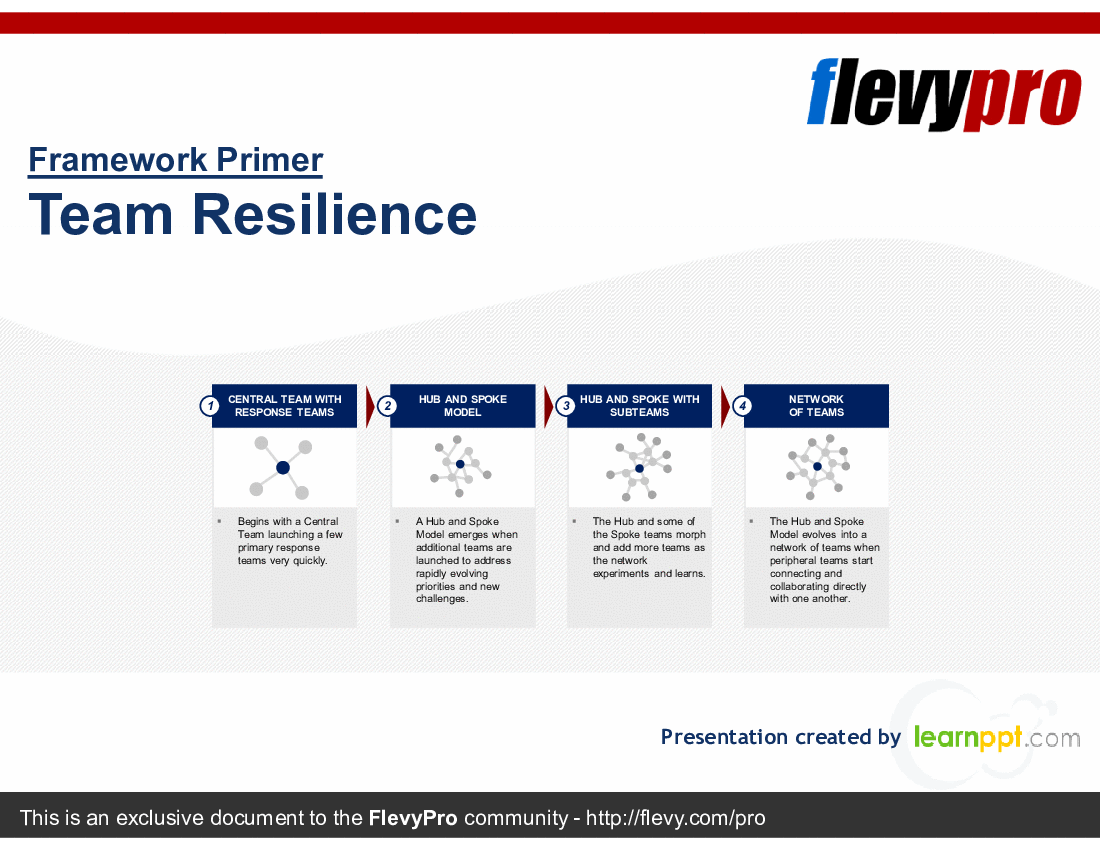
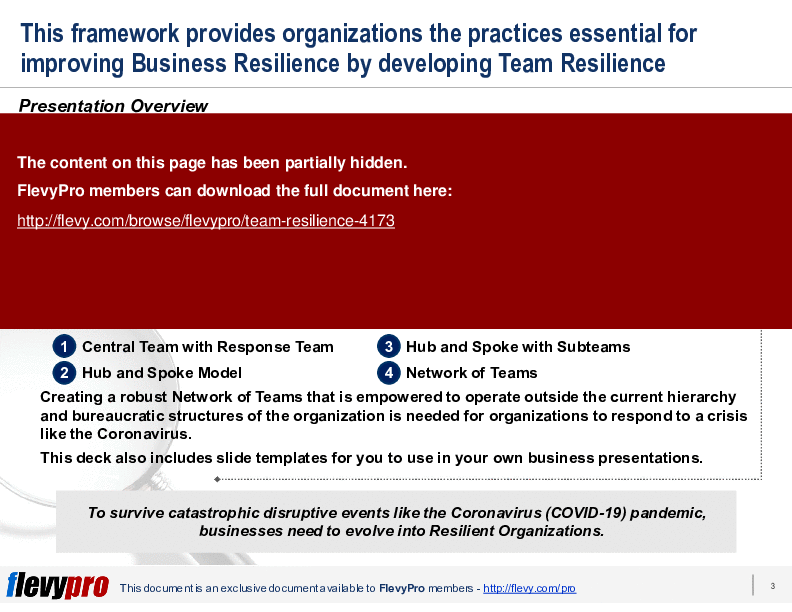
This framework provides organizations the practices essential for building resilience by developing Team Resilience. It breaks down a 4-phase approach to creating a network of teams essential to achieving Business Resilience. These phases are:

1. Central Team with Response Team
2. Hub and Spoke Model
3. Hub and Spoke with Subteams
4. Network of Teams

Creating a robust Network of Teams that is empowered to operate outside the current hierarchy and bureaucratic structures of the organization is needed for organizations to respond to a crisis like the Coronavirus.


This deck also includes slide templates for you to use in your own business presentations.

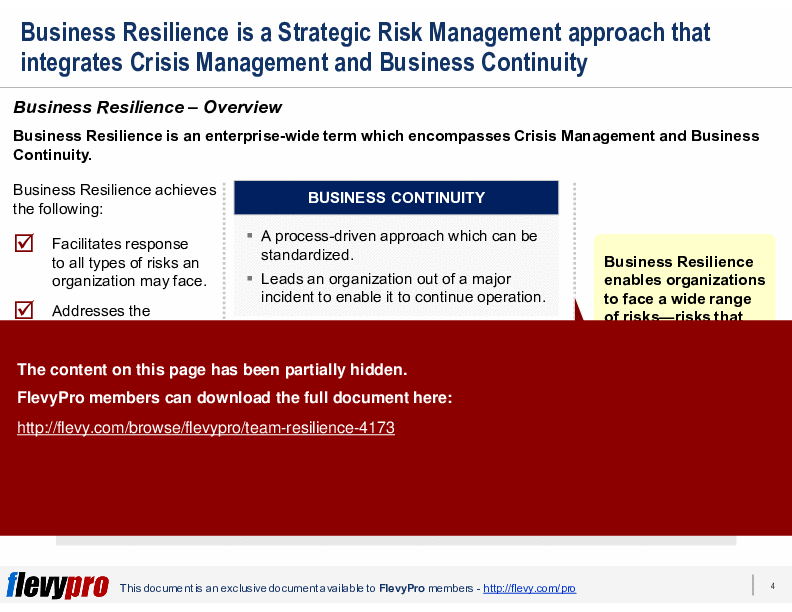
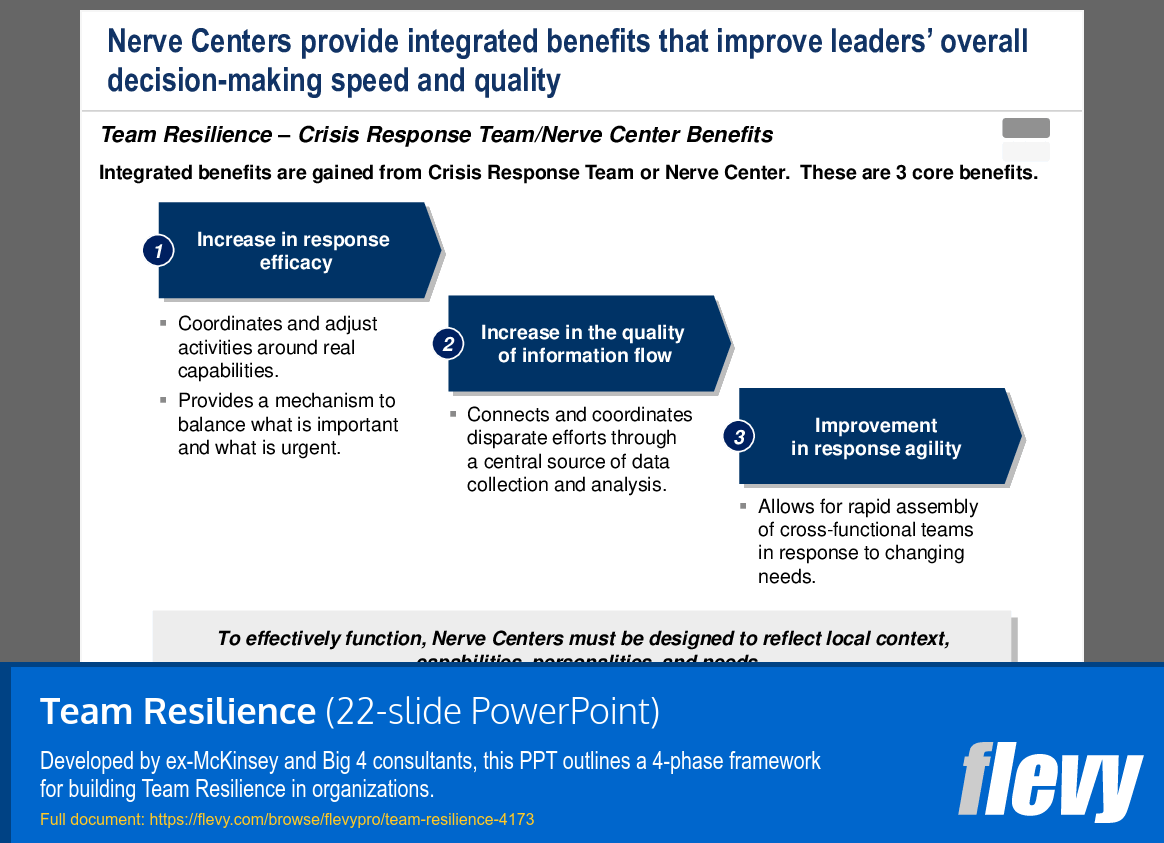
This PPT dives deep into the critical aspects of Business Resilience, emphasizing a strategic risk management approach that integrates crisis management and business continuity. It outlines the importance of setting up a centralized response system, such as a Crisis Response Team or Nerve Center, to enhance decision-making speed and quality. The framework also highlights the necessity for leaders to champion radical transparency and authenticity, ensuring teams are empowered and agile. This comprehensive guide provides actionable insights and templates, making it an invaluable resource for any organization aiming to build a resilient and adaptive network of teams.

Got a question about this document? Email us at flevypro@flevy.com.

MARCUS OVERVIEW

This synopsis was written by Marcus [?] based on the analysis of the full 22-slide presentation.


Executive Summary
The "Team Resilience" presentation is a strategic framework designed to enhance organizational resilience through a structured approach to team dynamics. Developed by former consultants from McKinsey and the Big 4, this presentation outlines a 4-phase model that enables organizations to build a robust network of teams capable of responding effectively to crises, such as the COVID-19 pandemic. By implementing this framework, leaders can foster agility, improve decision-making, and ensure that teams are empowered to operate beyond traditional hierarchies, ultimately enhancing overall business resilience.

Who This Is For and When to Use
•  Corporate executives seeking to enhance organizational resilience
•  Team leaders responsible for crisis management and response
•  Change management professionals focused on team dynamics
•  HR leaders aiming to develop resilient team structures

Best-fit moments to use this deck:
•  During crisis management planning sessions
•  When establishing a new team structure in response to disruptive events
•  In workshops aimed at improving team collaboration and agility
•  For training sessions on building effective crisis response teams

Learning Objectives
•  Define the concept of Team Resilience and its importance in crisis situations
•  Build a cohesive network of teams that can adapt to rapidly changing circumstances
•  Establish a Crisis Response Team to enhance decision-making speed and quality
•  Implement a Hub and Spoke Model to facilitate communication and coordination among teams
•  Foster an environment of radical transparency and psychological safety within teams
•  Create a framework for continuous learning and adaptation in team dynamics

Table of Contents
•  Overview (page 3)
•  Team Resilience (page 6)
•  Building a Network of Teams (page 9)
•  Templates (page 16)

Primary Topics Covered
•  Crisis Response Team - Establishing a centralized team to manage critical operations during crises, ensuring rapid decision-making and adaptability.
•  Hub and Spoke Model - A framework for launching additional teams that address evolving priorities while maintaining communication with a central hub.
•  Hub and Spoke with Subteams - Expanding the initial model by adding subteams that foster collaboration and innovation among various teams.
•  Network of Teams - Developing a self-sustaining network of teams that can mobilize effectively in response to challenges, enhancing overall organizational resilience.

Deliverables, Templates, and Tools
•  Crisis Response Team structure template for organizing critical operations
•  Hub and Spoke Model framework to visualize team interactions and communications
•  Subteam integration guide to facilitate collaboration among teams
•  Network of Teams blueprint for establishing a self-managing team structure
•  Training materials for fostering psychological safety and transparency within teams

Slide Highlights
•  Overview of the 4-phase approach to building Team Resilience
•  Visual representation of the Hub and Spoke Model and its evolution
•  Key considerations for establishing a Crisis Response Team
•  Strategies for fostering radical transparency and collaboration among teams

Potential Workshop Agenda
Crisis Management Overview (60 minutes)
•  Discuss the importance of Team Resilience in crisis situations
•  Review the structure and roles of a Crisis Response Team

Building the Hub and Spoke Model (90 minutes)
•  Identify key teams and their responsibilities
•  Develop a communication plan for team interactions

Fostering Collaboration and Transparency (60 minutes)
•  Explore strategies for creating a psychologically safe environment
•  Share best practices for encouraging open communication among teams

Customization Guidance
•  Tailor the Crisis Response Team structure to fit your organization’s specific needs and capabilities
•  Adjust the Hub and Spoke Model to reflect existing team dynamics and communication channels
•  Incorporate relevant metrics and KPIs to track team performance and resilience

Secondary Topics Covered
•  The role of leadership in fostering Team Resilience
•  Techniques for managing team dynamics during crises
•  Best practices for continuous learning and adaptation in team structures

Topic FAQ

What are the phases of a Team Resilience program?

A typical Team Resilience program moves through 4 phases: establish a Central Team with a Crisis Response Team, implement a Hub and Spoke Model, expand to Hub and Spoke with Subteams, and evolve into a self-managing Network of Teams. The model is presented as a 4-phase approach.

How does a Crisis Response Team improve decision-making during a crisis?

A Crisis Response Team centralizes critical operations and assembles necessary skills and capabilities to make faster, better-informed decisions without waiting for traditional approvals. Centralization improves coordination and speed, and the deck includes a Crisis Response Team structure template.

What is the Hub and Spoke Model and when should organizations use it?

The Hub and Spoke Model organizes teams around a central hub that maintains oversight and communication while spokes tackle evolving priorities. It’s used when launching additional teams that must remain coordinated with a central decision point and is illustrated by the Hub and Spoke Model framework.

If I need ready-to-use templates for crisis teams with a tight timeline, what should I look for?

Prioritize templates that define a Crisis Response Team structure, a Hub and Spoke visual, a communication plan, and subteam integration guidance, plus short workshop agendas and training materials. Look for slide-ready assets that can be adapted quickly, such as a 22-slide deck with Crisis Response Team templates.

We just experienced a disruptive event and need to restructure team communications quickly—what’s a practical first step?

Create a central Crisis Response Team or nerve center to coordinate urgent decision-making and draft a short communication plan aligning hub and spoke roles. Start by defining the Central Team with Response Team responsibilities to establish immediate channels for decisions.

How can I assess the ROI or value of purchasing a resilience toolkit?

Assess value by tracking improvements in decision speed, team adaptability, and collaboration effectiveness against the toolkit cost. Look for tools that support measurable KPIs and provide templates to capture those metrics; Team Resilience includes templates and guidance for tracking KPIs such as team performance and adaptability.

How do you implement subteams without creating silos?

Maintain a link back to the hub, enforce a communication plan, and design subteams to share outcomes and learnings across the network. Foster radical transparency and psychological safety so information flows freely; use a subteam integration guide to preserve cross-team collaboration.

What training topics should I include when running a resilience workshop?

Key topics include a crisis management overview, roles and structure of a Crisis Response Team, building the Hub and Spoke model and communication plan, and fostering psychological safety and continuous learning. The product provides a sample workshop agenda with sessions of 60–90 minutes.

Document FAQ
These are questions addressed within this presentation.

What is Team Resilience?
Team Resilience refers to the ability of teams to adapt and thrive in the face of challenges, particularly during crises. It involves creating a supportive environment that fosters collaboration and innovation.

How can a Crisis Response Team improve decision-making?
A Crisis Response Team centralizes critical operations, allowing for faster and more informed decision-making by bringing together key organizational skills and capabilities.

What is the Hub and Spoke Model?
The Hub and Spoke Model is a framework that organizes teams around a central hub, facilitating communication and coordination as additional teams are launched to address evolving priorities.

How do I implement the Network of Teams?
To implement a Network of Teams, establish a self-sustaining structure where teams can mobilize and collaborate directly, enhancing responsiveness to challenges.

What are the key benefits of fostering radical transparency?
Radical transparency encourages open communication, allowing team members to express concerns and share information freely, which enhances trust and collaboration.

How can I measure Team Resilience?
Team Resilience can be measured through various metrics, including team performance, adaptability to change, and the effectiveness of communication and collaboration.

What role does leadership play in building Team Resilience?
Leadership is crucial in setting the tone for collaboration, fostering a culture of transparency, and empowering teams to make decisions and take risks.

What challenges might arise when implementing this framework?
Challenges may include resistance to change, difficulties in communication, and the need for ongoing training to ensure teams are equipped to adapt to new dynamics.

Glossary
•  Crisis Response Team - A centralized team that manages critical operations during crises.
•  Hub and Spoke Model - A framework for organizing teams around a central hub to facilitate communication.
•  Network of Teams - A self-sustaining structure where teams collaborate directly to respond to challenges.
•  Radical Transparency - An approach that encourages open communication and information sharing within teams.
•  Team Resilience - The ability of teams to adapt and thrive in challenging situations.
•  Psychological Safety - An environment where team members feel safe to take risks and express their thoughts.
•  Continuous Learning - The ongoing process of adapting and improving team dynamics based on experiences.
•  Agility - The ability to respond quickly and effectively to changing circumstances.
•  Collaboration - Working together across teams to achieve common goals.
•  Empowerment - Granting teams the authority and autonomy to make decisions.
•  Adaptability - The capacity to adjust to new conditions and challenges.
•  Communication Plan - A strategy for ensuring effective information flow among teams.
•  Key Performance Indicators (KPIs) - Metrics used to measure team performance and resilience.
•  Leadership Support - The role of leaders in guiding and facilitating team dynamics.
•  Team Dynamics - The interactions and relationships among team members.
•  Innovation - The process of creating new ideas or methods to improve team performance.
•  Collaboration Tools - Resources used to facilitate communication and teamwork.
•  Crisis Management - The process of preparing for and responding to emergencies or disruptions.
•  Business Resilience - The ability of an organization to adapt and recover from disruptions.
•  Organizational Structure - The arrangement of teams and roles within an organization.
•  Empowered Teams - Teams that have the authority to make decisions and take actions independently.

TEAM MANAGEMENT PPT SLIDES

Launching Central Teams for Agile Response

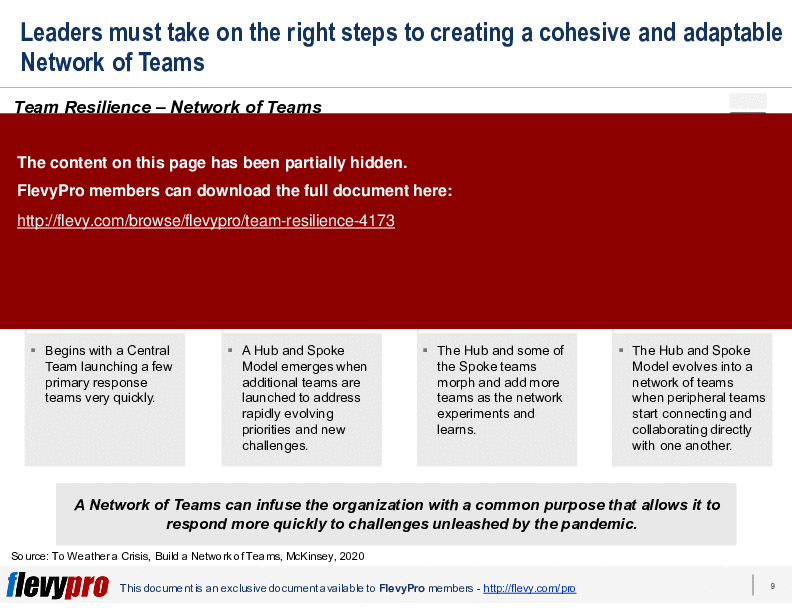
Enhancing Team Dynamics through Hub and Spoke Model

Four-Phase Framework for Building Team Resilience

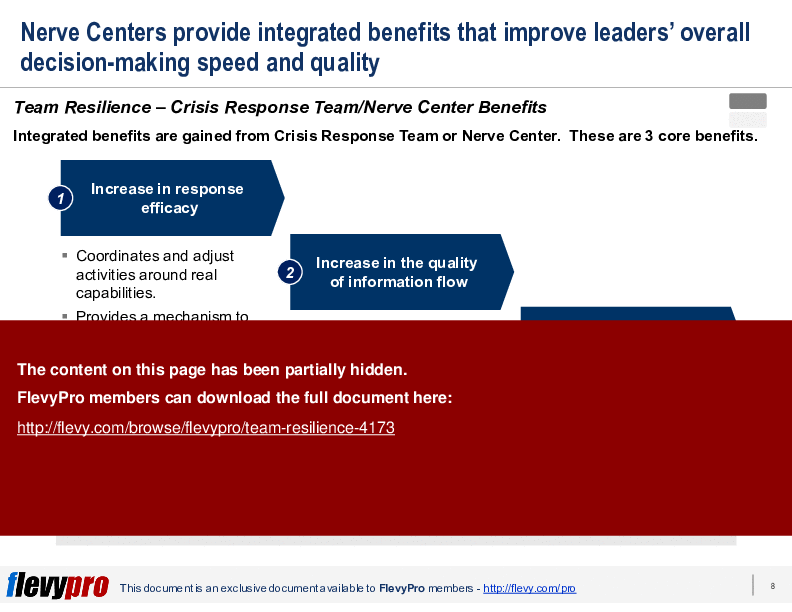
Core Benefits of Nerve Centers in Crisis Management

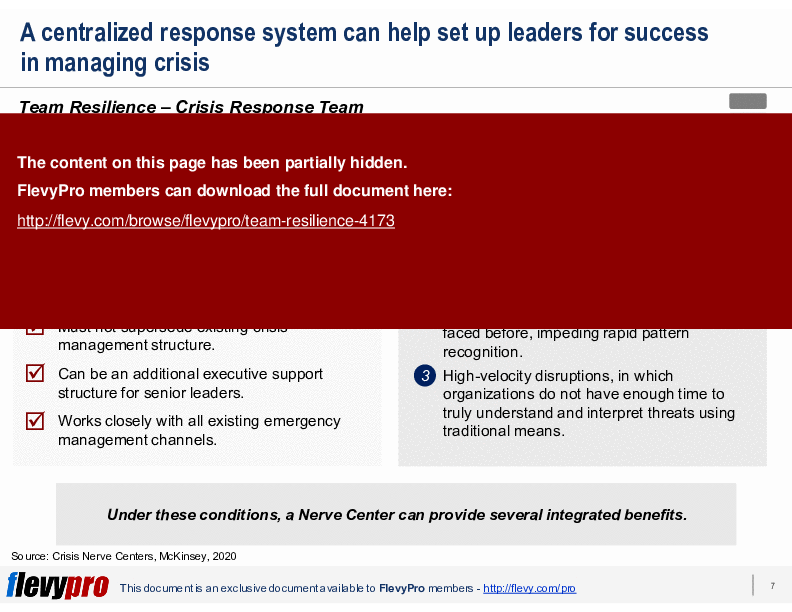
Enhancing Organizational Resilience During Disruptive Crises

Source: Best Practices in Team Building, Coronavirus, Business Resilience PowerPoint Slides: Team Resilience PowerPoint (PPTX) Presentation Slide Deck, LearnPPT Consulting


$29.00
FlevyPro price: FREE (included in subscription)
This framework is developed by a team of former McKinsey and Big 4 consultants. The presentation follows the headline-body-bumper slide format used by global consulting firms.
Add to Cart
  

Did you need more documents?

Consider a FlevyPro subscription from $39/month. View plans here.

For $10.00 more, you can download this document plus 2 more FlevyPro documents. That's just $13 each.

ABOUT FLEVYPRO

This document is part of the FlevyPro Library, a curated knowledge base of documents for our FlevyPro subscribers.

FlevyPro is a subscription service for on-demand business frameworks and analysis tools. FlevyPro subscribers receive access to an exclusive library of curated business documents—business framework primers, presentation templates, Lean Six Sigma tools, and more—among other exclusive benefits.

Click here to learn more about FlevyPro and its benefits.

Did you know?
The average daily rate of a McKinsey consultant is $6,625 (not including expenses). The average price of a Flevy document is $65.


Trusted by over 10,000+ Client Organizations
Since 2012, we have provided business templates to over 10,000 businesses and organizations of all sizes, from startups and small businesses to the Fortune 100, in over 130 countries.
AT&T GE Cisco Intel IBM Coke Dell Toyota HP Nike Samsung Microsoft Astrazeneca JP Morgan KPMG Walgreens Walmart 3M Kaiser Oracle SAP Google E&Y Volvo Bosch Merck Fedex Shell Amgen Eli Lilly Roche AIG Abbott Amazon PwC T-Mobile Broadcom Bayer Pearson Titleist ConEd Pfizer NTT Data Schwab


Read Customer Testimonials

 
"I am extremely grateful for the proactiveness and eagerness to help and I would gladly recommend the Flevy team if you are looking for data and toolkits to help you work through business solutions."

– Trevor Booth, Partner, Fast Forward Consulting
 
"I have found Flevy to be an amazing resource and library of useful presentations for lean sigma, change management and so many other topics. This has reduced the time I need to spend on preparing for my performance consultation. The library is easily accessible and updates are regularly provided. A wealth of great information."

– Cynthia Howard RN, PhD, Executive Coach at Ei Leadership
 
"Last Sunday morning, I was diligently working on an important presentation for a client and found myself in need of additional content and suitable templates for various types of graphics. Flevy.com proved to be a treasure trove for both content and design at a reasonable price, considering the time I "

– M. E., Chief Commercial Officer, International Logistics Service Provider
 
"[Flevy] produces some great work that has been/continues to be of immense help not only to myself, but as I seek to provide professional services to my clients, it gives me a large "tool box" of resources that are critical to provide them with the quality of service and outcomes they are expecting."

– Royston Knowles, Executive with 50+ Years of Board Level Experience
 
"As a niche strategic consulting firm, Flevy and FlevyPro frameworks and documents are an on-going reference to help us structure our findings and recommendations to our clients as well as improve their clarity, strength, and visual power. For us, it is an invaluable resource to increase our impact and value."

– David Coloma, Consulting Area Manager at Cynertia Consulting
 
"As an Independent Management Consultant, I find Flevy to add great value as a source of best practices, templates and information on new trends. Flevy has matured and the quality and quantity of the library is excellent. Lastly the price charged is reasonable, creating a win-win value for "

– Jim Schoen, Principal at FRC Group
 
"FlevyPro has been a brilliant resource for me, as an independent growth consultant, to access a vast knowledge bank of presentations to support my work with clients. In terms of RoI, the value I received from the very first presentation I downloaded paid for my subscription many times over! The "

– Roderick Cameron, Founding Partner at SGFE Ltd
 
"Flevy.com has proven to be an invaluable resource library to our Independent Management Consultancy, supporting and enabling us to better serve our enterprise clients.

The value derived from our [FlevyPro] subscription in terms of the business it has helped to gain far exceeds the investment made, making a subscription a no-brainer for any growing consultancy – or in-house strategy team."

– Dean Carlton, Chief Transformation Officer, Global Village Transformations Pty Ltd.


Customers Also Bought These Documents


Customers Also Like These Documents

Explore Templates on Related Management Topics


Your Recently Viewed Documents
Download our FREE Organization, Change, & Culture, Templates

Download our free compilation of 50+ slides and templates on Organizational Design, Change Management, and Corporate Culture. Methodologies include ADKAR, Burke-Litwin Change Model, McKinsey 7-S, Competing Values Framework, etc.