
Provide a framework for developing a Capital Scrubbing and Optimization Strategy
COST REDUCTION ASSESSMENT PPT DESCRIPTION
This product (Complete Capital Optimization Guide) is a 126-slide PPT PowerPoint presentation slide deck (PPTX) with a supplemental Excel document, which you can download immediately upon purchase.
It's no secret that cost overruns and delays run rampant in large capital projects. But a lack of internal discipline, in both the proposal and management stages of a project, further raises costs—both of individual projects and entire portfolios of investment. According to McKinsey & Company, the capital expenditure spend category typically receives insufficient management attention or control, causing inefficient capital allocation and poorly prioritized project portfolios.
Effective capital planning decisions can lead to significant competitive advantages. Capital optimization can lower wasted resources on unnecessary projects and lead to improved profitability.
Companies across the world are already looking for methods and techniques to improve their current processes.
There is increasing pressure in companies to reduce costs, through capital optimization initiatives including stay-in-business (SIB) capital spend. It requires that a process is developed to prioritize, select, and successfully execute the necessary SIB projects to support operations in delivering on their business plans.
The design and processes playbook is developed in accordance with the methodology of a top-tier consulting firm in the SIB execution environment and will assist in assessing if capital optimization potential exists.
It covers the following sections:
1. Business Value Proposition
2. Core Business Processes
3. Governance and Performance structures (which includes but is not limited to organization design)
4. Change management
5. Implementation Roadmap
The Capital Optimization Guide delves into the intricacies of optimizing Stay-In-Business (SIB) capital spend, addressing the challenges at the project, portfolio, and organizational levels. It highlights the importance of clear project justification, front-end loading, and comprehensive optimization of individual projects. The guide also emphasizes the need for robust governance and performance management structures, including standardized tools and templates, to ensure efficient gate governance and budgeting processes. The PPT provides a detailed roadmap for creating business value through capital scrubbing, portfolio management, and stage gate implementation, supported by a well-defined organizational structure and roles.
Got a question about the product? Email us at support@flevy.com or ask the author directly by using the "Ask the Author a Question" form. If you cannot view the preview above this document description, go here to view the large preview instead.
MARCUS OVERVIEW
This synopsis was written by Marcus [?] based on the analysis of the full 126-slide presentation.
Executive Summary
The Complete Capital Optimization Guide is a consulting-grade framework designed to enhance the efficiency of Stay in Business (SIB) capital expenditures across various industries. Developed by a team of expert consultants, this guide provides a structured approach to prioritizing, selecting, and executing SIB projects, ensuring alignment with operational goals and maximizing shareholder value. It embodies the quality and rigor expected from top-tier consulting firms like McKinsey, Bain, or BCG (not affiliated). Buyers will gain insights into optimizing capital allocation, improving governance processes, and enhancing project execution effectiveness.
Who This Is For and When to Use
• Corporate executives responsible for capital budgeting and project oversight
• Integration leaders managing SIB project execution
• Finance teams focused on capital effectiveness and portfolio management
• Project managers overseeing SIB initiatives across various operational areas
Best-fit moments to use this deck:
• During annual capital budgeting cycles to align projects with strategic objectives
• When assessing the effectiveness of current SIB projects and identifying optimization opportunities
• In preparation for governance reviews to enhance decision-making processes
Learning Objectives
• Define the strategic importance of SIB capital optimization for operational success
• Build a robust framework for evaluating and prioritizing SIB projects
• Establish effective governance structures for capital allocation and project execution
• Identify key performance indicators (KPIs) for measuring capital effectiveness
• Implement standardized tools and templates for project evaluation and reporting
• Foster a culture of continuous improvement in capital management practices
Table of Contents
• Background (page 1)
• Business Value Proposition (page 6)
• Core Business Processes (page 14)
• Governance and Performance Management (page 48)
• Mindsets and Capabilities (page 101)
• Implementation Roadmap (page 112)
• Continuous Improvement (page 122)
Primary Topics Covered
• Background - Overview of the need for optimizing SIB capital spend and the strategic initiatives involved.
• Business Value Proposition - Identification of challenges hindering capital excellence and the role of the SIB Capital Excellence Team (CET).
• Core Business Processes - Detailed processes for project scrubbing, portfolio management, and gate governance.
• Governance and Performance Management - Framework for ensuring compliance and effective decision-making in capital projects.
• Mindsets and Capabilities - Development of skills and capabilities necessary for effective capital management.
• Implementation Roadmap - Step-by-step guide for transitioning to optimized capital processes.
• Continuous Improvement - Strategies for ongoing enhancement of capital management practices.
Deliverables, Templates, and Tools
• Project registration form for SIB projects
• Standardized economic model/business case template
• Early engagement report format for project justification
• Scrubbing report template for project evaluations
• Optimized vote pack/funding application format
• Project impact review format for post-implementation assessments
Slide Highlights
• Overview of the SIB Capital Excellence Team and its role in optimizing capital spend
• Detailed process architecture integrating CET and PMO steps for effective project governance
• Visual representation of the governance and performance management framework
• Key performance indicators (KPIs) for measuring capital effectiveness and project success
Potential Workshop Agenda
SIB Capital Optimization Kickoff (90 minutes)
• Introduce the SIB Capital Excellence framework and its objectives
• Discuss the roles of CET and PMO in capital project governance
• Outline the process for project registration and early engagement
Project Scrubbing and Optimization Session (120 minutes)
• Review project proposals and identify optimization opportunities
• Conduct group discussions on best practices and lessons learned from previous projects
• Develop action plans for implementing scrubbing recommendations
Governance and Performance Management Workshop (90 minutes)
• Define governance structures and approval processes for capital projects
• Establish KPIs for measuring project performance and capital effectiveness
• Create a roadmap for continuous improvement in capital management practices
Customization Guidance
• Tailor project registration forms to reflect specific organizational requirements and project types
• Modify economic model templates to align with industry standards and internal financial practices
• Adapt governance processes to fit the unique structure and culture of the organization
Secondary Topics Covered
• Risk management strategies for SIB projects
• Stakeholder engagement techniques for project sponsors and teams
• Integration of financial and operational data for improved decision-making
• Training programs for enhancing project management capabilities
FAQ What is the purpose of the SIB Capital Excellence Team?
The SIB Capital Excellence Team (CET) is responsible for evaluating project proposals, optimizing capital allocation, and ensuring effective governance throughout the project lifecycle.
How does the framework support capital project governance?
The framework provides standardized processes and templates for project registration, evaluation, and approval, ensuring that all capital projects align with strategic objectives and governance requirements.
What are the key deliverables of the SIB Capital Optimization Guide?
Key deliverables include project registration forms, economic model templates, scrubbing reports, and standardized tools for project evaluation and impact assessment.
How can organizations measure the effectiveness of their capital projects?
Organizations can utilize KPIs such as NPV, project completion rates, and adherence to budget and schedule to assess the effectiveness of their capital projects.
What training is available for project teams?
Training programs focus on scrubbing and optimization techniques, project management principles, and effective communication skills to enhance team capabilities.
What is the role of Investco in the capital approval process?
Investco plays a critical role in reviewing and approving capital projects, ensuring that decisions are based on thorough evaluations and align with organizational priorities.
How does the guide facilitate continuous improvement?
The guide emphasizes the importance of regular workshops and feedback sessions to identify best practices and areas for improvement in capital management processes.
What challenges does the guide address in capital budgeting?
The guide addresses challenges such as unclear project justifications, insufficient optimization of individual projects, and fragmented visibility across the project portfolio.
Glossary
• SIB - Stay in Business
• CET - Capital Excellence Team
• PMO - Project Management Office
• NPV - Net Present Value
• KPIs - Key Performance Indicators
• Scrubbing - The process of evaluating and optimizing project proposals
• Portfolio Management - The process of managing a collection of projects to maximize value
• Governance - The framework for decision-making and accountability in project management
• Continuous Improvement - Ongoing efforts to enhance processes and outcomes in capital management
• Economic Model - A tool for evaluating the financial viability of projects
• Stakeholder Engagement - The process of involving relevant parties in project discussions and decisions
• Risk Management - The identification and mitigation of potential project risks
• Value Engineering - A systematic method to improve the value of a project by optimizing its function and cost
• Project Impact Review - An assessment of the outcomes and lessons learned from completed projects
• Early Engagement - Initial discussions to establish project justification and scope
• Approval Path - The defined process for obtaining project approvals at various stages
• Implementation Roadmap - A strategic plan outlining steps for executing capital projects
• Governance Structure - The organizational framework for managing capital projects and decision-making processes
The slide outlines a training framework for CET capabilities, highlighting structured learning and ongoing coaching. The CET leader oversees monthly formal training sessions, complemented by continuous on-the-job coaching to enhance technical and soft skills. The program aims to increase the employee value proposition and foster a mindset of continuous improvement. Training content focuses on 3 areas: formal functional skill training, including scrubbing and optimization techniques like valuation and root cause problem-solving; formal soft skill training, covering leadership, facilitation, communication, and relationship-building; and on-the-job coaching, which emphasizes individual strengths, areas for improvement, and regular feedback for practical skill application. This comprehensive strategy develops well-rounded professionals within the CET framework.
This slide presents a framework for project segmentation based on complexity and size, highlighting their influence on portfolio performance. Segment B projects dominate, accounting for 80% of total project count and 67% of total value, indicating a concentration of resources. The two-dimensional graph illustrates project value (10 million to 250 million) on the vertical axis and complexity on the horizontal axis, revealing the relationship between these factors. Procurement-related projects are noted across all complexity levels. For FY15, total project value reached 2,629 million, with 428 projects in total. While Segment B is substantial, segments like IT and Other contribute less than 10% of total capital, suggesting the need for further evaluation. This analysis informs strategic decisions and resource allocation, emphasizing Segment B's role in driving portfolio performance.
This slide presents a framework for classifying projects by resource intensity using a two-dimensional matrix with "Value" on the vertical axis and "Complexity" on the horizontal axis. The value scale ranges from R10 million to over R250 million, while complexity categorizes projects from basic procurement to intricate construction and maintenance activities. The lower left quadrant focuses on procurement, distinguishing between "off the shelf" and "specified" options, indicating lower resource intensity. As complexity increases, project types expand to fabrication, installation, and specialized maintenance. The upper right quadrant highlights projects exceeding R250 million, indicating high resource demands. Current projects constitute 80% of the portfolio and 57% of total value, underscoring the need for effective management to optimize resource allocation and ensure successful execution. This classification system aids executives in prioritizing initiatives and guiding strategic planning.
The slide outlines core business processes in capital governance and implementation within the SIB CET and SIB PMO frameworks, structured into 4 main sections of the capital management lifecycle.
"Capital Scrubbing and Optimisation" focuses on early engagement, data collection, and information accuracy to optimize projects and provide actionable recommendations.
"Portfolio Management" involves data gathering, project prioritization, and capital budget allocation, culminating in budget approval and reporting for effective financial resource management.
"Gate Governance" details the approval process, including the approval path, quality submissions, and closing out gate conditions, crucial for aligning projects with strategic objectives.
"Projects Execution" covers steps from registration to execution and handover, emphasizing feasibility studies and concept validation for effective project initiation and execution.
Interactions with engineering, finance, supply chain, and operations highlight a collaborative approach essential for successful project delivery.
The slide outlines the capital process, detailing key phases: Business Planning & Screening (FEL 0), Scope Selection (FEL 1), Preliminary Engineering (FEL 2), Detailed Engineering (FEL 3), Construction, Start-up/Commissioning, and Close Out. Delays in design approval during the Business Planning phase hinder procurement, indicating a need for efficient decision-making. The Scope Selection phase reveals an overwhelming number of deliverables for project managers, suggesting a potential for streamlined project management. The Detailed Engineering phase feedback highlights late-discovered deficiencies in field verification, raising concerns about oversight and communication. The Construction phase feedback points to a lack of contractor input, risking repeated mistakes. The Start-up/Commissioning phase shows a disconnect among operations, construction, and maintenance teams, leading to delays, underscoring the need for cross-functional collaboration. The Close Out phase reflects inadequate project oversight, emphasizing the necessity for continuous improvement and accountability throughout the capital process.
This slide presents an organizational framework for executing Strategic Investment Business (SIB) initiatives, divided into 3 sections: Value Chain Split, Project Stage Split, and Geographical Split. The Value Chain Split focuses on mining and processing projects, highlighting advantages such as full ownership, specialization based on technical skills, and alignment with operations management, while noting risks of silo mentality and inefficiencies. The Project Stage Split emphasizes front-end project stages, offering benefits like improved project specialization and documentation,, but warns of potential handover issues and reduced ownership. The Geographical Split discusses regional hubs for integrating value chains, enhancing project credibility,, but cautions against resource-intensive structures and limited cross-regional learning.
The slide outlines a structured governance and approval process for Segment B projects in engineering and construction with budgets from $0 to $250 million. The framework consists of 5 phases:
1. Early Engagement focuses on validating the problem or opportunity, establishing root causes, and documenting execution steps and approval paths.
2. Concept (FEL1) Scrubbing and Optimization assesses the value of the problem, reviews high-level solutions, and provides preliminary cost estimates, determining if multiple solutions should be explored.
3. Pre-feasibility (FEL2) Check-in and Optimization estimates capital and operating costs for various solutions, examining business cases and interdependencies.
4. Feasibility (FEL3) Scrubbing involves a thorough economic evaluation, revisiting capex and opex estimates, and refining project scope and KPIs.
5. Project Impact Review assesses the overall project report against key performance indicators (KPIs) and budget.
This structured approach minimizes risks and enhances successful project execution.
This slide outlines a structured process for scrubbing report sign-off within a one-week timeframe, divided into 5 phases. On Day 1, the CET Leader reviews the report and provides comments within 24 hours, setting the tone for revisions. Day 2 involves internal sign-off, where the CET reviewer updates the report based on feedback and secures the CET Leader's signature for internal approval. Days 3 to 5 focus on issuing the signed report to the sponsor, with a best practice of arranging a face-to-face meeting for transparency, especially if recommendations are unfavorable. On Day 5, the scrubbing report is submitted to Investco, ensuring all stakeholders are aligned and the document is thoroughly vetted before reaching the sponsor.
The slide outlines a structured framework for the Stage Gate Implementation Process in the EPCM (Engineering, Procurement, and Construction Management) model, consisting of 5 main steps: Registration, Concept, Pre-feasibility, Feasibility, and Execution. Each step has defined timing, responsible parties, key activities, and outputs. Registration takes 5 man-days, while the Concept phase lasts 2 weeks with 3 people, leading to Execution, which varies by project. Key activities include problem identification and project charter creation, with later phases focusing on risk assessment, financial modeling, and optimizing engineering options. Outputs include preliminary business proposals and approvals, ensuring informed decision-making and risk minimization throughout the project lifecycle. This framework enhances project execution efficiency and clarifies roles and responsibilities for stakeholders.
This slide presents a framework for aligning key performance indicators (KPIs) among 3 roles: Sponsor, GM SIB, and CET, focusing on project governance and performance management. It categorizes KPIs into 4 areas: Portfolio, Governance, FEL (Front-End Loading), and Execution. The first KPI, NPV/Investment of project portfolio, is relevant to all roles for evaluating project viability. The second KPI on unplanned spending indicates accountability gaps, as GM SIB is not responsible. The slide highlights the percentage of projects scrubbed before approval gates, emphasizing early-stage scrutiny. The KPI regarding scope changes post-contract award reveals misalignment for GM SIB, risking project overruns. Differences between projected and actual NPV stress the need for accurate forecasting. Metrics on stage-gate submissions and budget overruns provide insights into operational efficiency, while post-project reviews indicate a commitment to continuous improvement.
This slide outlines a structured approach for evaluating potential projects using a tool to capture direct and indirect benefits. The "Option direct benefits" section requires users to document cost savings and production enhancements, including detailed metrics like tonnes and associated cost changes, to assess the financial impact. The "Option indirect benefits" section addresses projects vital for maintaining production levels, necessitating a comparative analysis of metrics before and after project implementation. By distinguishing between direct and indirect benefits, this tool aids stakeholders in understanding the multifaceted impacts of their decisions, enhancing capital allocation and project prioritization processes.
The slide outlines the execution phase of an EPCM (Engineering, Procurement, and Construction Management) model, focusing on Gates 3-4. Key activities include resource assignment with roles such as project engineers, planners, cost controllers, and supply chain managers, ensuring clear accountability within the engineering and project management teams. The design approval process emphasizes the importance of engineering input, while the project manager oversees construction management to maintain timelines and budgets. Contracting for construction involves collaboration between the project manager and supply chain manager. Site preparation and construction phases are managed by designated leaders, culminating in operational readiness that incorporates maintenance considerations for comprehensive project execution.
The SIB Business Case Template is a quantitative evaluation tool for project assessment, consisting of 4 key sections: when to use it, what to complete, why to use it, and how to get help. The "When to use it?" section stresses filling out the template before the initial scrubbing session to capture all known information and updating it as the project evolves. The "What to complete?" section specifies necessary inputs, including project parameters and team details, with optional components for expansionary or cost-saving projects. The "Why use it?" segment quantifies project benefits in monetary terms, flagging projects with negative payback periods as less likely to receive approval. The "How do I get help?" section outlines resources for assistance, including CET training, a dedicated FAQ page on Eureka, and direct support options.
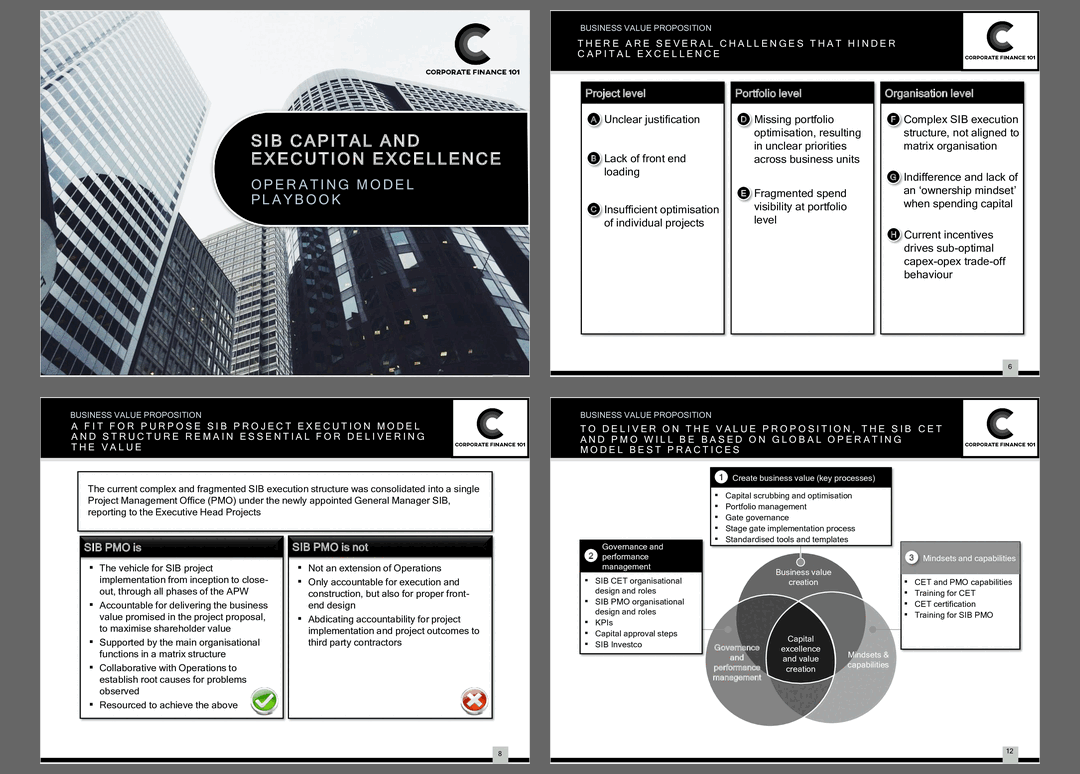
The SIB Project Management Office (PMO) centralizes project execution, enhancing accountability under the General Manager SIB. It serves as the primary vehicle for project implementation, guiding projects through all phases of the APW and delivering promised business value to maximize shareholder value. The PMO operates within a matrix structure, collaborating with Operations to identify and address root causes of issues during execution. Importantly, the PMO is not an extension of Operations; it ensures proper front-end design and cannot delegate accountability for project outcomes to third-party contractors. This distinction highlights the PMO's critical role in maintaining oversight and ensuring project success.
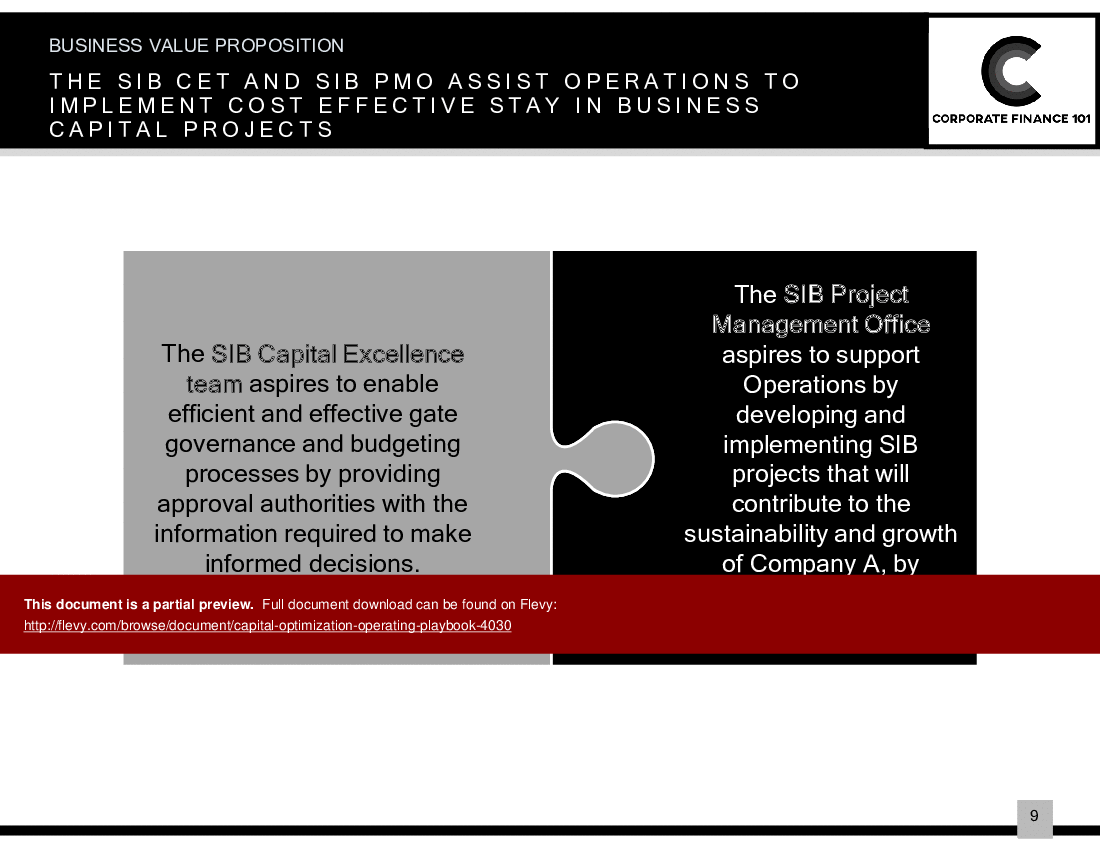
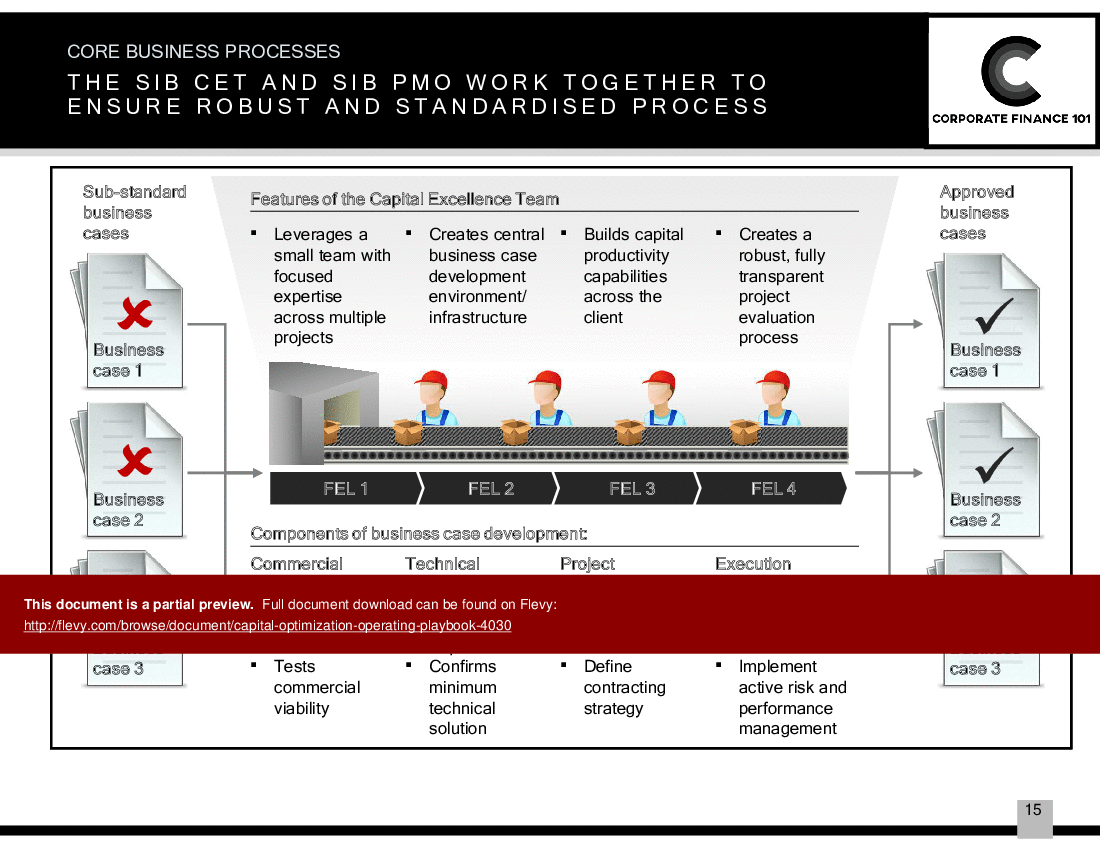
The slide outlines the collaborative framework between the SIB CET and SIB PMO, focusing on a standardized process for evaluating business cases. Key features of the Capital Excellence Team include a specialized group that provides expertise across projects, creating a centralized environment for business case development. The business case development process consists of 4 phases: Commercial validation, Technical validation, Project management, and Execution readiness. Commercial validation defines desired outcomes and assesses commercial viability, while Technical validation ensures projects meet capacity requirements and technical specifications. Project management optimizes schedules and defines contracting strategies, and Execution readiness establishes organizational structure and risk management. The visual representation of the process illustrates the systematic approach, enhancing transparency and stakeholder confidence in decision-making.
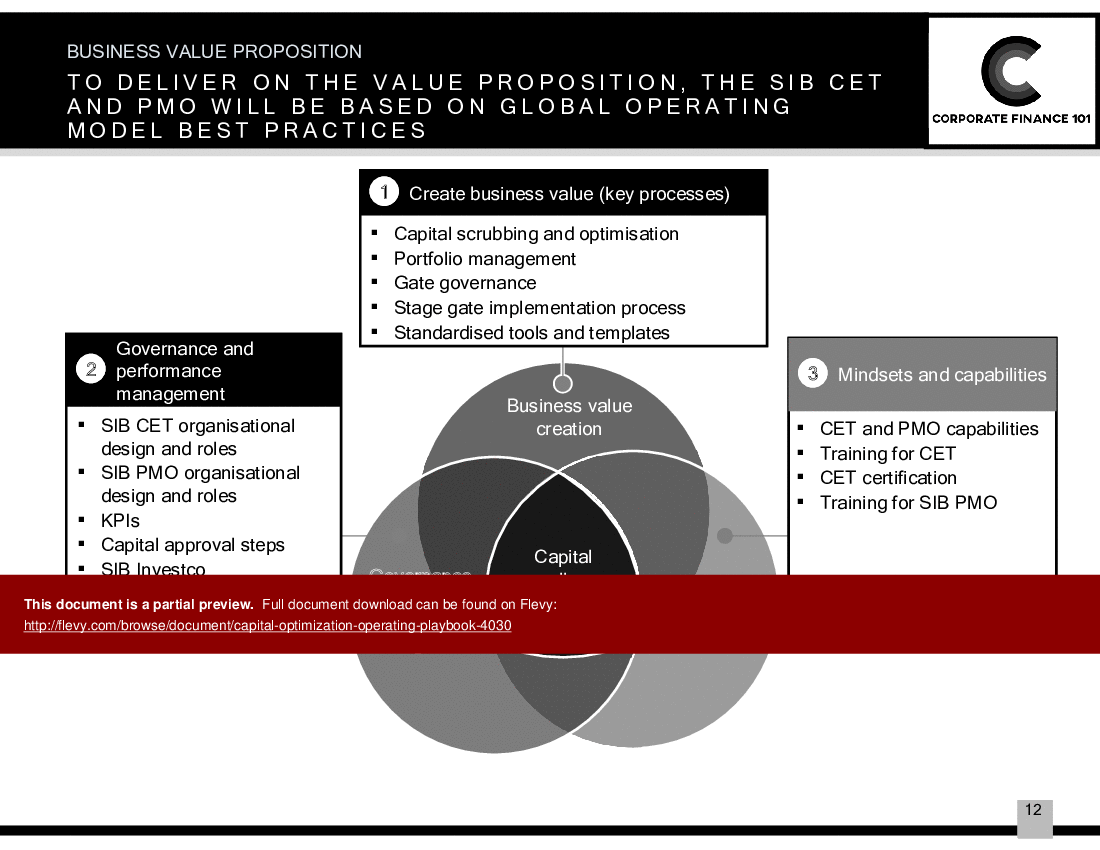
This slide outlines a structured approach to delivering business value through a comprehensive framework integrating key processes, governance, and capabilities. The first component focuses on creating business value through capital scrubbing, optimization, and portfolio management, emphasizing efficient investment strategies and project management via gate governance and stage gate implementation. The second component addresses governance and performance management, detailing the roles of the SIB CET and SIB PMO, along with Key Performance Indicators (KPIs) and capital approval steps for measurable outcomes. The third component highlights the importance of CET and PMO capabilities, training, and certification programs to build necessary skills. This cohesive strategy enhances business value through structured processes, robust governance, and capability development.
This slide outlines a structured approach to project prioritization and budgeting using a portfolio optimization tool. It begins with importing project business case data for centralized analysis and validating projects for data errors and interdependencies. This validation maintains portfolio integrity. The tool generates an initial portfolio ranked by profitability index, enabling quick identification of high-return projects. Evaluation of portfolio KPIs—financial, strategic, and composition—provides a comprehensive performance view. Users can manually modify the portfolio, selecting, excluding, or adjusting project timing based on evolving business needs. Risk sensitivity evaluation and portfolio comparison offer insights into vulnerabilities and opportunities. Visual elements depict project validation statuses, rankings, and dependency logs, aiding in understanding project interrelations and overall portfolio health.
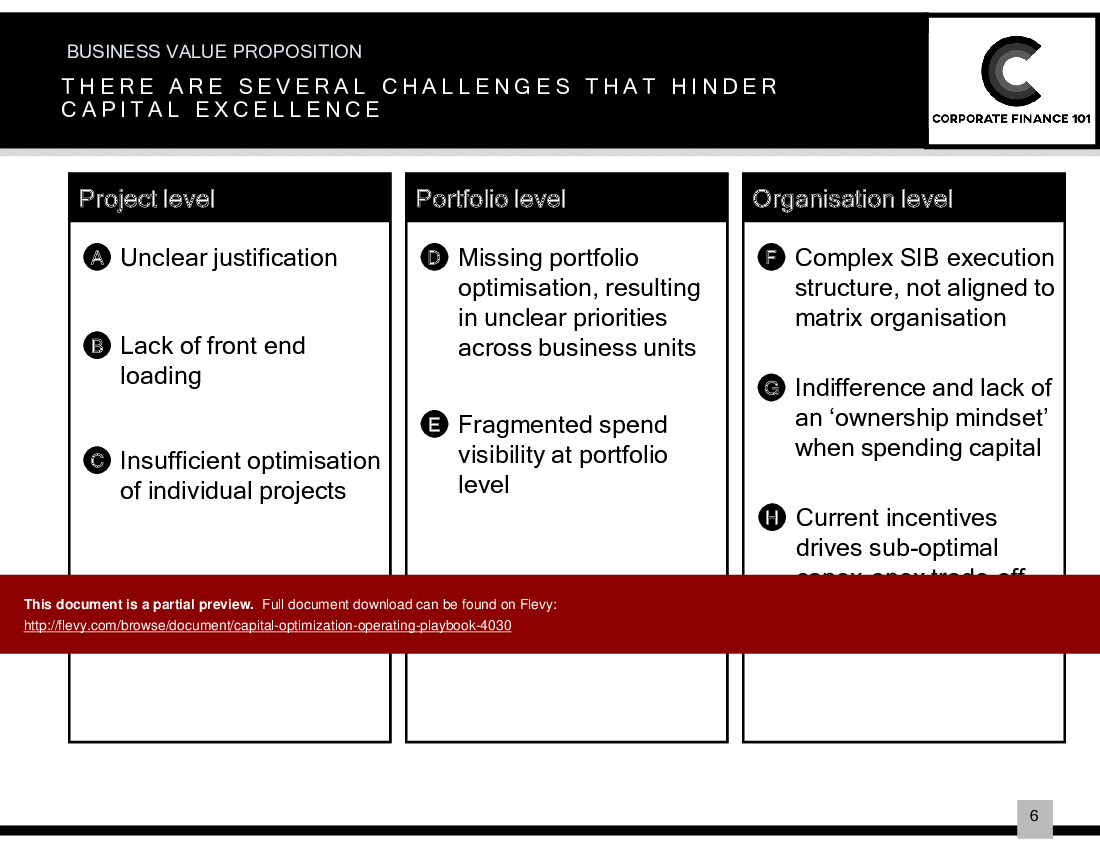
This slide outlines challenges to achieving capital excellence across 3 levels: project, portfolio, and organization. At the project level, key issues include "Unclear justification," leading to resource misallocation; "Lack of front end loading," which hinders project success due to insufficient initial planning; and "Insufficient optimization of individual projects," resulting in wasted investments. At the portfolio level, challenges are "Missing portfolio optimization," which affects resource alignment, and "Fragmented spend visibility," complicating financial assessment. At the organizational level, barriers include "Complex SIB execution structure," which hampers decision-making; "Indifference and lack of an ownership mindset" regarding capital spending; and "Current incentives driving sub-optimal capex-opex trade-off behavior," complicating capital management.
This slide outlines a structured approach to achieving capital excellence through a multi-phase rollout strategy: Proof of Concept, Proof of Feasibility, and Embedding. The Proof of Concept phase focuses on piloting scrubbing and optimization of projects within Company A's Strategic Investment Business (SIB) portfolio, emphasizing change management and capability building. The Proof of Feasibility phase expands to 4 remaining business units, optimizing the SIB portfolio by leveraging resources from the pilot phase while tailoring strategies to each unit's structure. The Embedding phase integrates solutions into all projects, focusing on optimizing the full capital portfolio, sustaining value, standardizing processes, and enhancing portfolio visibility. This roadmap enhances capital management strategies, ensuring each phase builds on the previous one for comprehensive success.
This slide outlines a performance management framework using Key Performance Indicators (KPIs) categorized by Balanced Scorecard (BSC) dimensions. The "Operational, financial and technical results" dimension, weighted at 30%, emphasizes logical project structures and identifying key drivers. "Leadership and growth results," also at 10%, focuses on mentoring relationships and influencing skills. "Management results," weighted at 10%, highlights organizational skills and task management. The "Customer and relationship results" dimension, at 30%, stresses building strong relationships with team members. Lastly, "Innovation and improvement results," weighted at 20%, underscores continuous optimization and effective execution of ideas. This structured approach ensures comprehensive evaluation across critical performance areas.
The matrix structure enhances collaboration among functions supporting the SIB CET and SIB PMO teams. The Supply Chain function optimizes processes, manages budget quotes, and contractor appointments, ensuring effective resource allocation. The Risk function assesses potential risks in the SIB portfolio, including project-level risk assessments and risk mitigation strategies to safeguard outcomes. The Legal function provides opinions on legislation for mandatory projects, ensuring compliance and reducing future complications. Engineering defines project scopes, optimizing execution and aligning technical requirements with strategic goals. The SIB Investco function focuses on capital requests and approvals, aligning financial resources with project needs. Finance manages financial control and reporting, maintaining budget transparency. The Project Functional Support function delivers project support services, including cost control and joint reviews, essential for project integrity and accountability. This structure streamlines processes and enhances collaboration, driving project success.
The slide outlines key capabilities supporting the SIB PMO value proposition, structured into 5 categories. "Front-end loading" focuses on root cause analysis, business acumen, and optioneering for informed decision-making. "Project management principles" includes value engineering and project planning, essential for optimizing outcomes and resource allocation, with early procurement involvement enhancing cost-effectiveness. "Contractor management" emphasizes ownership in scope definition and proactive oversight, alongside in-house verification of cost estimates and effective management of costs and schedules. "Construction and commissioning" highlights seamless integration with operations to minimize disruptions, along with safety and quality control. Finally, "Project close-out" addresses contractual and financial aspects, technical documentation, and a project impact review report for systematic evaluation and learning. This framework enhances organizational project management capabilities.
The Manager of the SIB Capital Excellence Team focuses on governance and performance management in capital projects, emphasizing effective capital allocation and decision-making for stay-in-business (SIB) projects. Responsibilities include overseeing capital scrutiny, implementing standardized budgeting models, and ensuring rigorous capital approval processes. A critical aspect is optimizing projects to maximize net present value (NPV), highlighting the importance of financial acumen. The manager coordinates post-implementation reviews to capture lessons learned for future projects. Strong interpersonal skills are essential for building connections across business units and engaging with senior leadership to generate consensus on capital allocation. Qualifications include extensive management experience, knowledge of portfolio management principles, and risk management skills, blending technical expertise with strategic leadership.
This slide outlines the organizational structure and roles of a Corporate Efficiency Team (CET) with 3 staffing options: a permanent team, a fully rotating model, and a hybrid model. The permanent team employs full-time members, providing dedicated resources, but facing challenges in talent retention and knowledge transfer. The fully rotating model allows members to serve 1-2 years, enhancing employee involvement and fresh perspectives,, but complicates workload management and may disrupt ongoing projects. The hybrid model features 4 full-time and 6 rotating members, aiming for continuity while managing the balance of responsibilities. Each model presents distinct trade-offs for decision-makers regarding optimal CET staffing.
Source: Best Practices in Cost Reduction Assessment, Capital Structure PowerPoint Slides: Complete Capital Optimization Guide PowerPoint (PPTX) Presentation Slide Deck, Corporate Finance 101
Corporate Finance 101 consists of ex EY and Grant Thornton consultants who have experience helping professionals across disciplines, with a focus on strategy consulting and transaction advisory.
These documents are prepared to help you increase the impact of your business communication and save you valuable time.
The documents are based upon techniques learned while working at
... [read more] multinational consultancy firms. The products were then refined during the course of consulting engagements with organisations across the world.
The average daily rate of a McKinsey consultant is $6,625 (not including expenses). The average price of a Flevy document is $65.
Trusted by over 10,000+ Client Organizations
Since 2012, we have provided best practices to over 10,000 businesses and organizations of all sizes, from startups and small businesses to the Fortune 100, in over 130 countries.
"I like your product. I'm frequently designing PowerPoint presentations for my company and your product has given me so many great ideas on the use of charts, layouts, tools, and frameworks. I really think the templates are a valuable asset to the job."
– Roberto Fuentes Martinez, Senior Executive Director at Technology Transformation Advisory
"FlevyPro has been a brilliant resource for me, as an independent growth consultant, to access a vast knowledge bank of presentations to support my work with clients. In terms of RoI, the value I received from the very first presentation I downloaded paid for my subscription many times over! The
quality of the decks available allows me to punch way above my weight – it's like having the resources of a Big 4 consultancy at your fingertips at a microscopic fraction of the overhead.
"
– Roderick Cameron, Founding Partner at SGFE Ltd
"Flevy is now a part of my business routine. I visit Flevy at least 3 times each month.
Flevy has become my preferred learning source, because what it provides is practical, current, and useful in this era where the business world is being rewritten.
many challenges and there is the need to make the right decisions in a short time, with so much scattered information, we are fortunate to have Flevy. Flevy investigates, selects, and puts at our disposal the best of the best to help us be successful in our work.
"
– Omar Hernán Montes Parra, CEO at Quantum SFE
"As an Independent Management Consultant, I find Flevy to add great value as a source of best practices, templates and information on new trends. Flevy has matured and the quality and quantity of the library is excellent. Lastly the price charged is reasonable, creating a win-win value for
the customer, Flevy and the various authors. This is truly a service that benefits the consulting industry and associated clients. Thanks for providing this service.
"
– Jim Schoen, Principal at FRC Group
"My FlevyPro subscription provides me with the most popular frameworks and decks in demand in today’s market. They not only augment my existing consulting and coaching offerings and delivery, but also keep me abreast of the latest trends, inspire new products and service offerings for my practice, and educate me
in a fraction of the time and money of other solutions. I strongly recommend FlevyPro to any consultant serious about success.
"
– Bill Branson, Founder at Strategic Business Architects
"I have found Flevy to be an amazing resource and library of useful presentations for lean sigma, change management and so many other topics. This has reduced the time I need to spend on preparing for my performance consultation. The library is easily accessible and updates are regularly provided. A wealth of great information."
– Cynthia Howard RN, PhD, Executive Coach at Ei Leadership
"As a consultant requiring up to date and professional material that will be of value and use to my clients, I find Flevy a very reliable resource.
The variety and quality of material available through Flevy offers a very useful and commanding source for information. Using Flevy saves me time, enhances my expertise and ends up being a good decision."
– Dennis Gershowitz, Principal at DG Associates
"I am extremely grateful for the proactiveness and eagerness to help and I would gladly recommend the Flevy team if you are looking for data and toolkits to help you work through business solutions."
Receive our FREE presentation on Operational Excellence
This 50-slide presentation provides a high-level introduction to the 4 Building Blocks of Operational Excellence. Achieving OpEx requires the implementation of a Business Execution System that integrates these 4 building blocks.










