
Strategy Map   20-slide PPT PowerPoint presentation slide deck (PPT)
$29.00

Strategy Map (20-slide PPT PowerPoint presentation slide deck (PPT)) Preview Image
Log in to unlock full preview.
Strategy Map (20-slide PPT PowerPoint presentation slide deck (PPT)) Preview Image
Arrow   Click main image to view in full screen.

Strategy Map (PowerPoint PPT Slide Deck)

PowerPoint (PPT) 20 Slides FlevyPro Document

Top 1,000 Best Practice $29.00
FlevyPro price: FREE (included in subscription)
This framework is developed by a team of former McKinsey and Big 4 consultants. The presentation follows the headline-body-bumper slide format used by global consulting firms.
Add to Cart


Immediate download
Free lifetime updates

BALANCED SCORECARD PPT DESCRIPTION

Editor Summary Strategy Map (PPT) is a 20-slide PowerPoint framework by PPT Lab that uses the Balanced Scorecard to visually map strategic objectives and their cause-and-effect links across 4 perspectives: Financial, Customer, Internal Processes, and Learning & Growth. Read more
Explore Slides inside the Deck:
Core Principles of Effective Strategy Maps

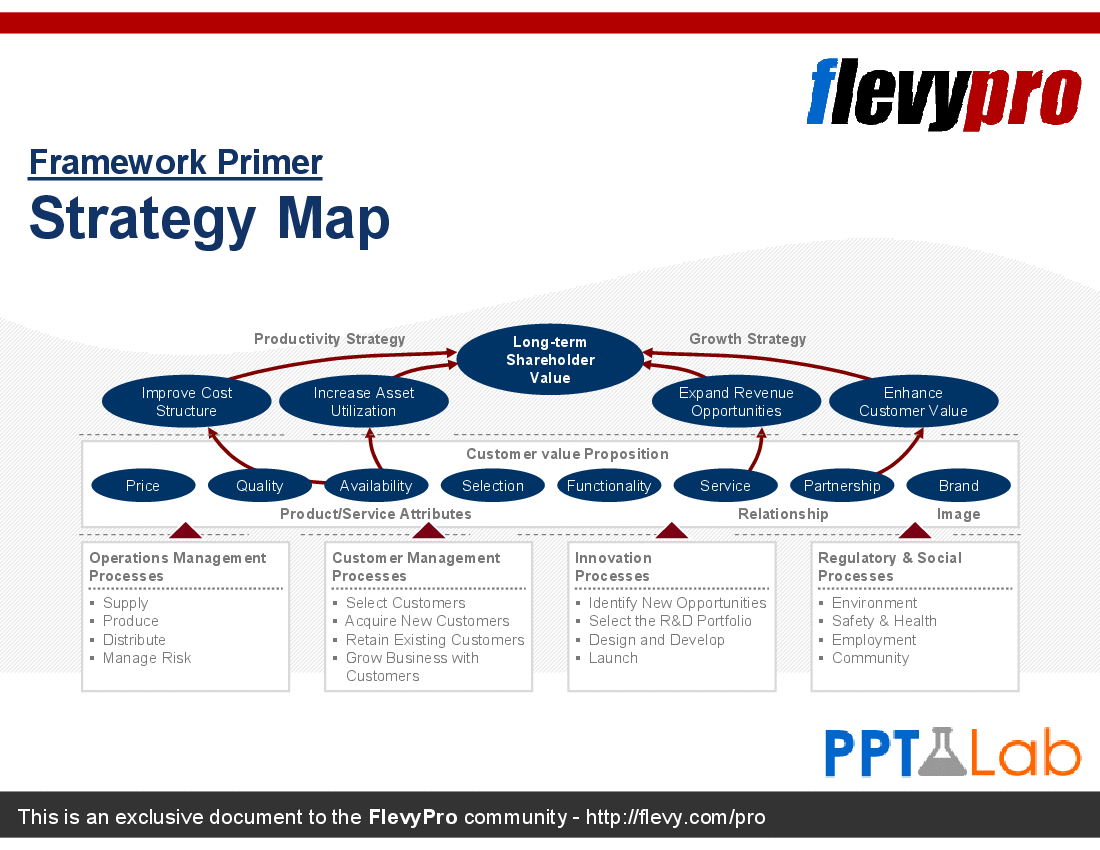
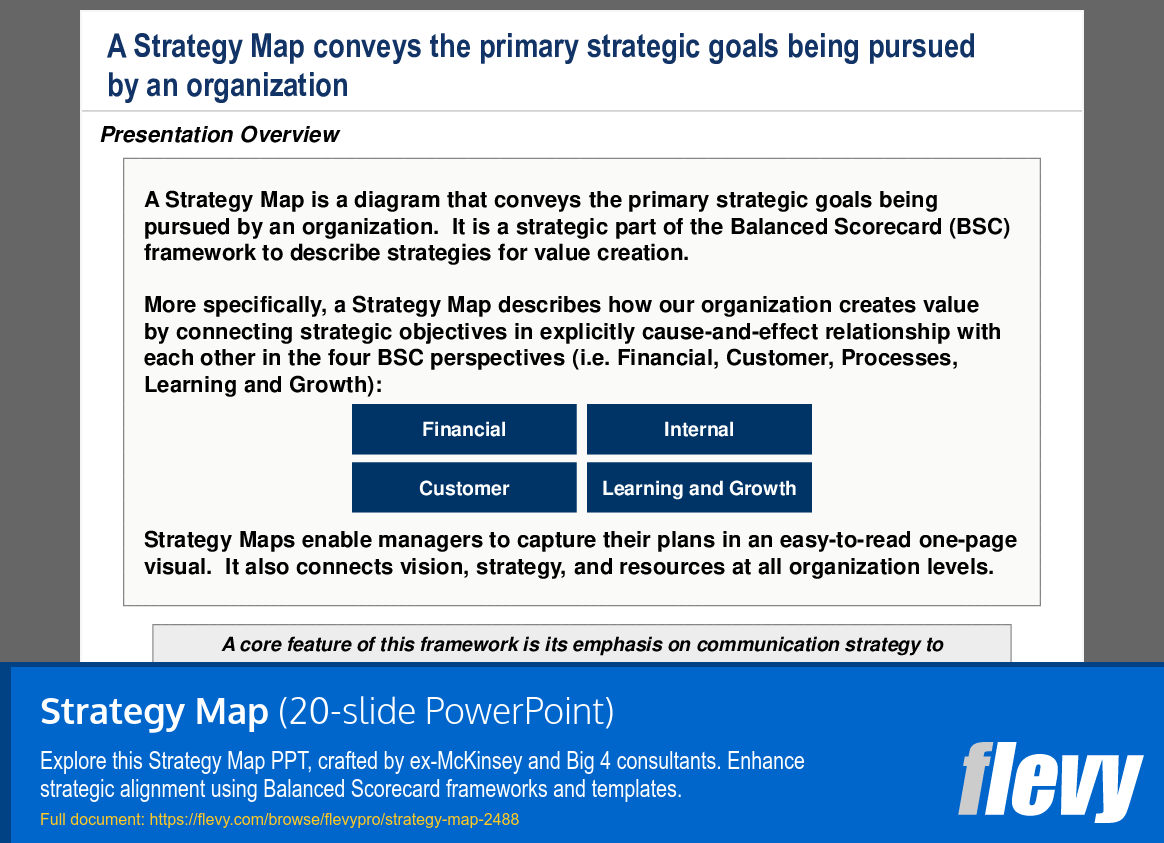
A Strategy Map is a diagram that conveys the primary strategic goals being pursued by an organization. It is a strategic part of the Balanced Scorecard (BSC) framework to describe strategies for value creation. More specifically, a Strategy Map describes how our organization creates value by connecting strategic objectives in explicitly cause-and-effect relationship with each other in the four BSC objectives Financial, Customer, Processes, Learning and Growth).

Strategy Maps enable managers to capture their plans in an easy-to-read one-page visual. It also connects vision, strategy, and resources at all organization levels. A core feature of this framework is its emphasis on communication strategy to the whole workforce.

This document provides an introduction to Strategy Maps, Balanced Scorecards, and also includes Strategy Map templates you can use in your own presentations.

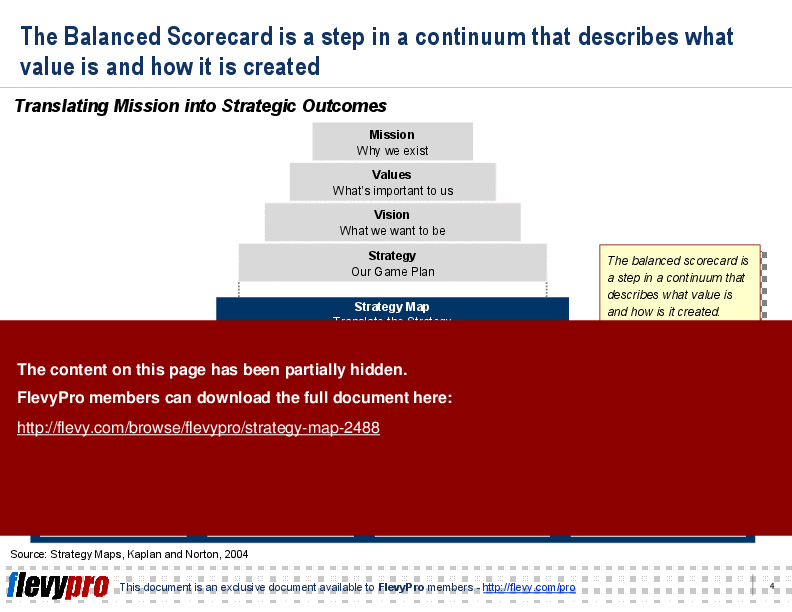
This PPT delves deep into the Balanced Scorecard framework, providing a comprehensive overview of its core components and processes. It includes a detailed examination of how to translate mission and values into strategic outcomes, ensuring alignment across all organizational levels. The Strategy Map is presented as a critical tool for visualizing and communicating these strategic objectives, linking intangible assets and processes to tangible financial and customer outcomes.

The Strategy Map templates included are meticulously designed to help you create a clear and concise visual representation of your strategic goals. These templates cover various perspectives, including financial, customer, internal processes, and learning and growth, making it easier to align your strategic initiatives with your overall business objectives. The guidelines provided ensure that your Strategy Map is not only effective, but also easy to understand and communicate across your organization.

This resource is essential for executives looking to streamline their strategic planning process. By using these templates and guidelines, you can ensure that your strategic objectives are clearly defined and effectively communicated, driving better alignment and execution across your organization. This document is a valuable asset for any leader aiming to enhance their strategic management capabilities.

Got a question about this document? Email us at flevypro@flevy.com.

MARCUS OVERVIEW

This synopsis was written by Marcus [?] based on the analysis of the full 20-slide presentation.


Executive Summary
The Strategy Map (PPT) is designed to facilitate strategic alignment within organizations by visually representing primary strategic goals and their interconnections. Developed by experienced consultants, this presentation leverages the Balanced Scorecard (BSC) framework to articulate how organizations create value through a clear cause-and-effect relationship among strategic objectives across 4 perspectives: Financial, Customer, Internal Processes, and Learning & Growth. By utilizing this Strategy Map, executives can effectively communicate their vision and strategy, ensuring all levels of the organization are aligned and focused on achieving long-term shareholder value.

Who This Is For and When to Use
•  Corporate executives responsible for strategic planning and execution
•  Strategy teams looking to enhance organizational alignment
•  Consultants advising clients on strategic frameworks and performance management
•  Business leaders aiming to communicate strategy effectively across teams

Best-fit moments to use this deck:
•  During strategic planning sessions to visualize and align objectives
•  In workshops focused on developing or refining organizational strategies
•  When presenting strategic initiatives to stakeholders for buy-in and clarity

Learning Objectives
•  Define the components and purpose of a Strategy Map within the BSC framework
•  Build a comprehensive Strategy Map that aligns with organizational goals
•  Establish clear cause-and-effect relationships among strategic objectives
•  Communicate strategic initiatives effectively to all organizational levels
•  Identify key performance indicators (KPIs) for tracking strategic progress
•  Foster a culture of strategic alignment and accountability across teams

Table of Contents
•  Overview (page 3)
•  Balanced Scorecard (page 6)
•  Strategy Map Deep Dive (page 9)
•  Templates (page 16)

Primary Topics Covered
•  Strategy Map Overview - A visual representation of strategic goals that connects objectives across the BSC perspectives, facilitating communication and alignment.
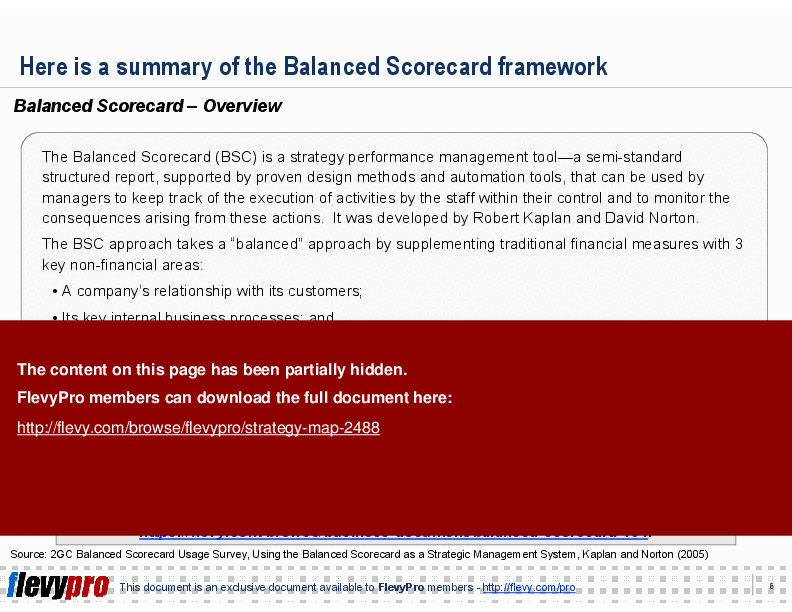
•  Balanced Scorecard Framework - An overview of the BSC as a performance management tool that integrates financial and non-financial measures to track organizational performance.
•  Cause-and-Effect Relationships - Explanation of how strategic objectives are interlinked, demonstrating the impact of one objective on another within the Strategy Map.
•  Strategic Alignment - The importance of aligning all organizational activities with the overarching strategy to achieve long-term shareholder value.
•  Communication Strategy - Techniques for effectively communicating the Strategy Map to ensure understanding and buy-in from all stakeholders.
•  Implementation Guidelines - Best practices for constructing and utilizing a Strategy Map to enhance strategic execution and monitoring.

Deliverables, Templates, and Tools
•  Strategy Map template for visualizing strategic objectives
•  Balanced Scorecard framework template for performance tracking
•  Guidelines for establishing cause-and-effect relationships among objectives
•  Communication plan template for presenting the Strategy Map to stakeholders
•  KPI development framework to measure strategic progress
•  Workshop agenda template for Strategy Map development sessions

Slide Highlights
•  Overview of the Strategy Map and its role within the BSC framework
•  Visual representation of the cause-and-effect relationships among strategic objectives
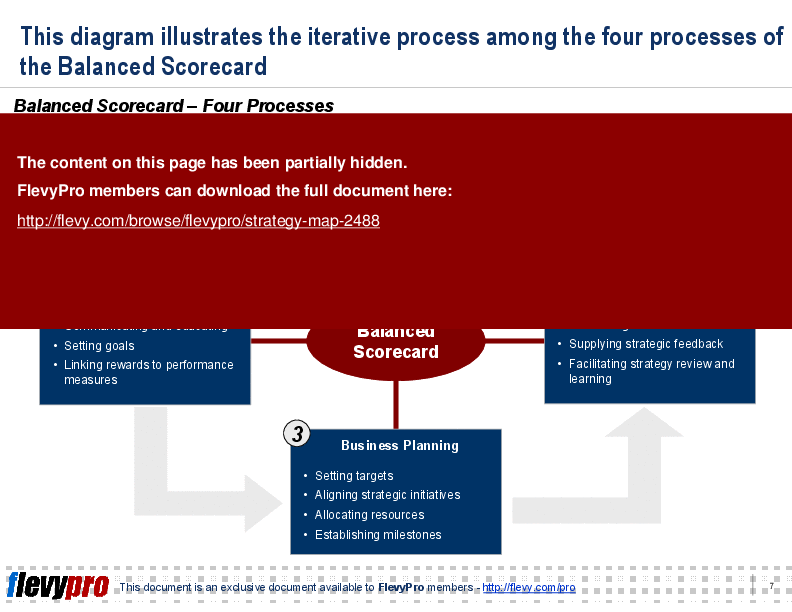
•  Detailed explanation of the 4 perspectives of the Balanced Scorecard
•  Guidelines for constructing an effective Strategy Map
•  Examples of strategic objectives linked to performance measures

Potential Workshop Agenda
Strategy Map Development Session (90 minutes)
•  Introduce the concept of the Strategy Map and its importance
•  Collaboratively identify strategic objectives across the 4 BSC perspectives
•  Establish cause-and-effect relationships among identified objectives

Balanced Scorecard Overview (60 minutes)
•  Discuss the components of the Balanced Scorecard
•  Align organizational goals with performance measures
•  Develop a plan for tracking and reporting on strategic progress

Customization Guidance
•  Tailor the Strategy Map template to reflect specific organizational goals and objectives
•  Adjust performance measures and KPIs to align with industry standards and organizational priorities
•  Incorporate organizational terminology and branding into the Strategy Map for consistency

Secondary Topics Covered
•  Importance of stakeholder engagement in strategy development
•  Techniques for fostering a culture of accountability and performance tracking
•  Role of leadership in driving strategic alignment and execution
•  Best practices for revising and updating the Strategy Map as organizational needs evolve

Topic FAQ

What are the core components of a Strategy Map?

A Strategy Map is a one‑page visual that links strategic objectives across 4 Balanced Scorecard perspectives: Financial, Customer, Internal Processes, and Learning & Growth. It emphasizes explicit cause‑and‑effect relationships among objectives and connects vision, strategy, and resources in a single diagram covering 4 perspectives.

How does the Balanced Scorecard support performance measurement?

The Balanced Scorecard integrates financial and non‑financial measures to track organizational performance, ensuring objectives across the 4 perspectives are monitored with KPIs. Organizations map objectives visually and assign measures so performance tracking spans Financial, Customer, Internal Processes, and Learning & Growth perspectives.

How do I establish cause‑and‑effect links between strategic objectives?

Start by identifying how progress in learning and growth enables better processes, which improves customer outcomes and ultimately financial results; use arrows to show directionality. Guidance typically includes mapping dependencies and validating links during workshops using a cause‑and‑effect guidelines tool.

How often should a Strategy Map be reviewed and updated?

Strategy Maps should be reviewed regularly, particularly during strategic planning sessions or after significant organizational changes, to ensure objectives and KPIs remain aligned with current priorities. Review cadence is commonly tied to strategic planning cycles and major shifts in strategy.

What should I look for when choosing a Strategy Map template?

Look for templates that represent all 4 BSC perspectives, provide cause‑and‑effect guidance, include a KPI development framework, and offer a communication plan or workshop agenda for stakeholder alignment. A useful package will include a Strategy Map template, Balanced Scorecard template, and KPI framework.

How can I decide between building my own Strategy Map slides and buying templates?

Buying templates saves time on layout, framework consistency, and workshop materials, while building in‑house may suit highly bespoke language or branding. Evaluate internal capacity, timeline, and need for facilitation materials; ready decks often include slides, templates, and a workshop agenda across 20 slides.

I need to run a 90‑minute Strategy Map workshop — what steps should I follow?

A typical 90‑minute agenda introduces the Strategy Map concept, collaboratively identifies objectives across the 4 BSC perspectives, and establishes cause‑and‑effect links among those objectives. Close with prioritization and next steps for KPI selection, following a 90‑minute workshop structure.

How do I link KPIs to strategic objectives on a Strategy Map?

For each objective, define 1–3 measurable indicators that reflect desired outcomes and map them to the corresponding BSC perspective. Use a KPI development framework to ensure indicators are specific, measurable, and aligned with objectives; a KPI framework helps document these links.

Document FAQ
These are questions addressed within this presentation.

What is a Strategy Map?
A Strategy Map is a visual representation of an organization's strategic goals and the relationships among them, designed to enhance understanding and alignment across the organization.

How does the Balanced Scorecard relate to the Strategy Map?
The Balanced Scorecard provides a framework for measuring organizational performance across multiple perspectives, while the Strategy Map visually connects strategic objectives within that framework.

What are the benefits of using a Strategy Map?
Using a Strategy Map helps organizations communicate their strategy clearly, align activities with strategic goals, and track progress toward achieving long-term objectives.

How can I customize the Strategy Map for my organization?
You can customize the Strategy Map by incorporating specific organizational goals, adjusting performance measures, and using relevant terminology that resonates with your team.

What are the key components of the Balanced Scorecard?
The Balanced Scorecard includes 4 perspectives: Financial, Customer, Internal Processes, and Learning & Growth, each providing insights into different aspects of organizational performance.

How do I establish cause-and-effect relationships in the Strategy Map?
Identify how achieving one strategic objective impacts others, and use arrows to connect these objectives visually within the Strategy Map.

What role do KPIs play in the Strategy Map?
KPIs are used to measure progress toward achieving strategic objectives outlined in the Strategy Map, ensuring accountability and performance tracking.

How often should the Strategy Map be updated?
The Strategy Map should be reviewed and updated regularly, especially during strategic planning sessions or when significant organizational changes occur.

Glossary
•  Balanced Scorecard - A strategic performance management tool that integrates financial and non-financial measures.
•  Strategy Map - A visual representation of an organization's strategic objectives and their interconnections.
•  KPI - Key Performance Indicator, a measurable value that demonstrates how effectively an organization is achieving key business objectives.
•  Strategic Alignment - The process of aligning organizational activities with strategic goals to ensure coherence and focus.
•  Cause-and-Effect Relationship - A connection that shows how one strategic objective influences another.
•  Stakeholder Engagement - The process of involving individuals or groups who have an interest in the organization's strategy and performance.
•  Performance Measures - Metrics used to assess the effectiveness and efficiency of organizational activities.
•  Organizational Capital - The intangible assets that contribute to an organization's value, including culture, leadership, and teamwork.
•  Strategic Objectives - Specific goals that an organization aims to achieve as part of its overall strategy.
•  Communication Strategy - A plan for effectively conveying the organization's strategy to stakeholders.
•  Workshop Agenda - A structured outline of topics and activities to be covered during a workshop session.
•  Customization Guidance - Recommendations for tailoring templates and frameworks to meet specific organizational needs.

BALANCED SCORECARD PPT SLIDES

Core Principles of Effective Strategy Maps

Source: Best Practices in Balanced Scorecard, Strategy Map PowerPoint Slides: Strategy Map PowerPoint (PPT) Presentation Slide Deck, PPT Lab


$29.00
FlevyPro price: FREE (included in subscription)
This framework is developed by a team of former McKinsey and Big 4 consultants. The presentation follows the headline-body-bumper slide format used by global consulting firms.
Add to Cart
  

Did you need more documents?

Consider a FlevyPro subscription from $39/month. View plans here.

For $10.00 more, you can download this document plus 2 more FlevyPro documents. That's just $13 each.

ABOUT FLEVYPRO

This document is part of the FlevyPro Library, a curated knowledge base of documents for our FlevyPro subscribers.

FlevyPro is a subscription service for on-demand business frameworks and analysis tools. FlevyPro subscribers receive access to an exclusive library of curated business documents—business framework primers, presentation templates, Lean Six Sigma tools, and more—among other exclusive benefits.

Click here to learn more about FlevyPro and its benefits.

Did you know?
The average daily rate of a McKinsey consultant is $6,625 (not including expenses). The average price of a Flevy document is $65.


Trusted by over 10,000+ Client Organizations
Since 2012, we have provided business templates to over 10,000 businesses and organizations of all sizes, from startups and small businesses to the Fortune 100, in over 130 countries.
AT&T GE Cisco Intel IBM Coke Dell Toyota HP Nike Samsung Microsoft Astrazeneca JP Morgan KPMG Walgreens Walmart 3M Kaiser Oracle SAP Google E&Y Volvo Bosch Merck Fedex Shell Amgen Eli Lilly Roche AIG Abbott Amazon PwC T-Mobile Broadcom Bayer Pearson Titleist ConEd Pfizer NTT Data Schwab


Read Customer Testimonials

 
"I have found Flevy to be an amazing resource and library of useful presentations for lean sigma, change management and so many other topics. This has reduced the time I need to spend on preparing for my performance consultation. The library is easily accessible and updates are regularly provided. A wealth of great information."

– Cynthia Howard RN, PhD, Executive Coach at Ei Leadership
 
"I am extremely grateful for the proactiveness and eagerness to help and I would gladly recommend the Flevy team if you are looking for data and toolkits to help you work through business solutions."

– Trevor Booth, Partner, Fast Forward Consulting
 
"Last Sunday morning, I was diligently working on an important presentation for a client and found myself in need of additional content and suitable templates for various types of graphics. Flevy.com proved to be a treasure trove for both content and design at a reasonable price, considering the time I "

– M. E., Chief Commercial Officer, International Logistics Service Provider
 
"FlevyPro provides business frameworks from many of the global giants in management consulting that allow you to provide best in class solutions for your clients."

– David Harris, Managing Director at Futures Strategy
 
"Flevy is our 'go to' resource for management material, at an affordable cost. The Flevy library is comprehensive and the content deep, and typically provides a great foundation for us to further develop and tailor our own service offer."

– Chris McCann, Founder at Resilient.World
 
"As a young consulting firm, requests for input from clients vary and it's sometimes impossible to provide expert solutions across a broad spectrum of requirements. That was before I discovered Flevy.com.

Through subscription to this invaluable site of a plethora of topics that are key and crucial to consulting, I "

– Nishi Singh, Strategist and MD at NSP Consultants
 
"The wide selection of frameworks is very useful to me as an independent consultant. In fact, it rivals what I had at my disposal at Big 4 Consulting firms in terms of efficacy and organization."

– Julia T., Consulting Firm Owner (Former Manager at Deloitte and Capgemini)
 
"[Flevy] produces some great work that has been/continues to be of immense help not only to myself, but as I seek to provide professional services to my clients, it gives me a large "tool box" of resources that are critical to provide them with the quality of service and outcomes they are expecting."

– Royston Knowles, Executive with 50+ Years of Board Level Experience


Customers Also Bought These Documents


Customers Also Like These Documents

Explore Templates on Related Management Topics


Your Recently Viewed Documents
Receive our FREE presentation on Operational Excellence

This 50-slide presentation provides a high-level introduction to the 4 Building Blocks of Operational Excellence. Achieving OpEx requires the implementation of a Business Execution System that integrates these 4 building blocks.