
Advances in technology and communication, combine with the explosive growth in data information, have given rise to a more empowered global consumer. Recent economic and political events highlight the need for companies to understand how consumers view the world and the most important attributes for their purchasing decisions.
Responding effectively to rapidly changing consumer needs has become one of the top strategic agenda items of organizations, alongside regulatory change and talent management. The value of Customer-centricity has become direly important today. Customer attitudes and behavior can determine how customers view and interact with the industry, as well as their expectation for the future. Organizations who respond best to what customers want now are most likely to succeed. A clear understanding of customer needs and behaviors across the organization will help drive profitable growth strategies and provide the confidence to invest in opportunities at a time when staying within budget is extremely difficult.
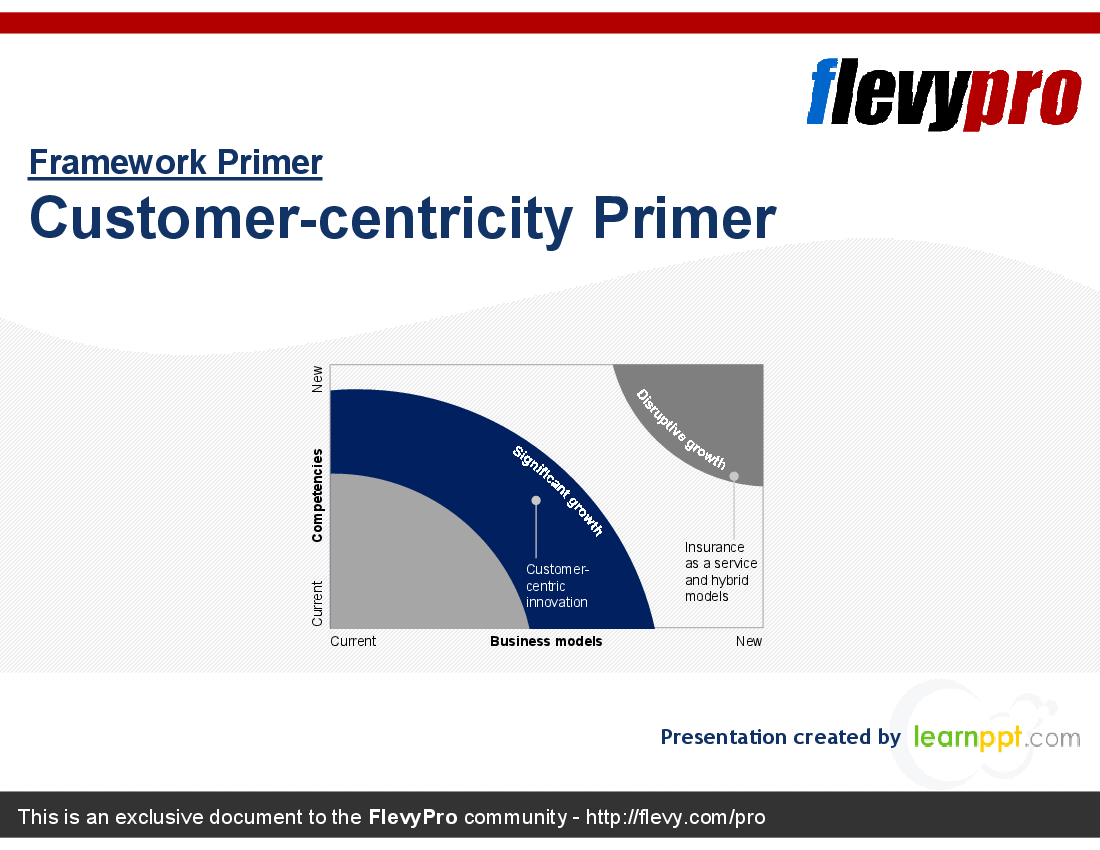
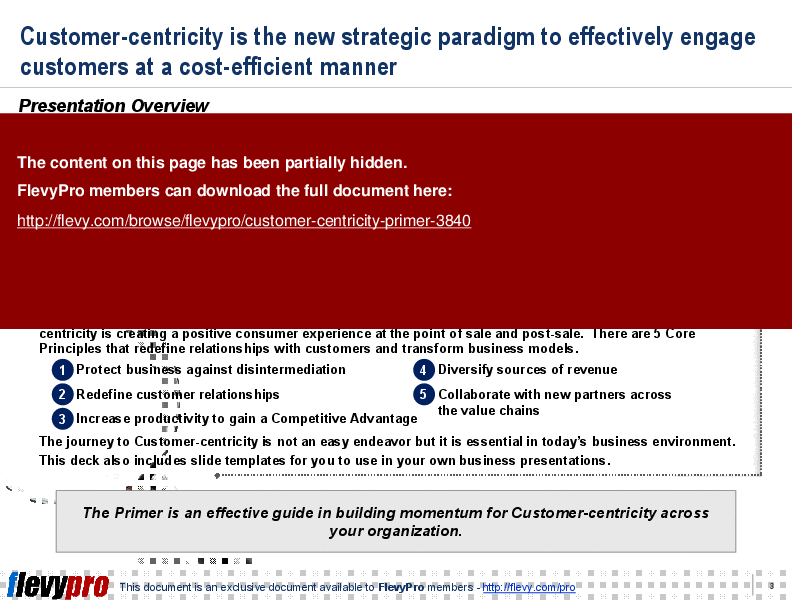
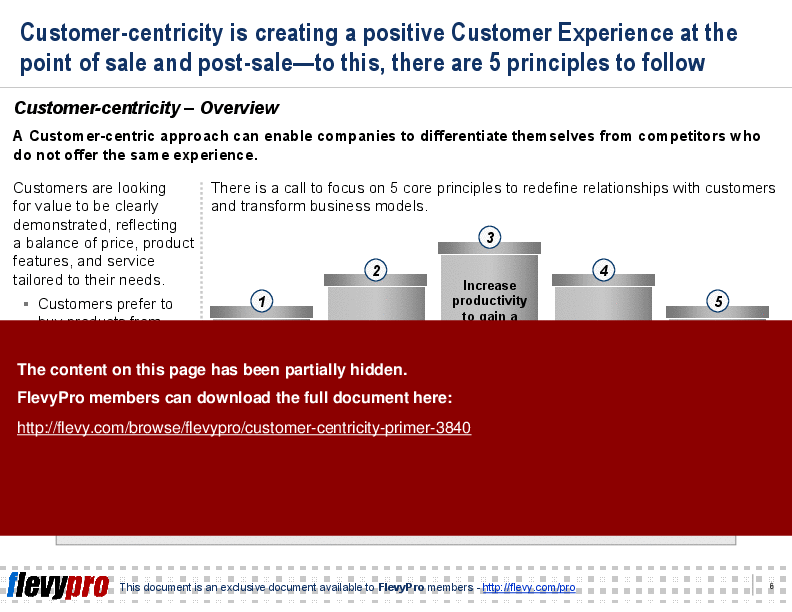
This framework serves as a guide for organizations in their journey towards Customer-centricity. Customer-centricity is creating a positive consumer experience at the point of sale and post-sale. There are 5 Core Principles that redefine relationships with customers and transform business models.
1. Protect business against disintermediation
2. Redefine customer relationships
3. Increase productivity to gain a Competitive Advantage
4. Diversify sources of revenue
5. Collaborate with new partners across the Value Chains
The journey to Customer-centricity is not an easy endeavor but it is essential in today's business environment.
This deck also includes slide templates for you to use in your own business presentations.
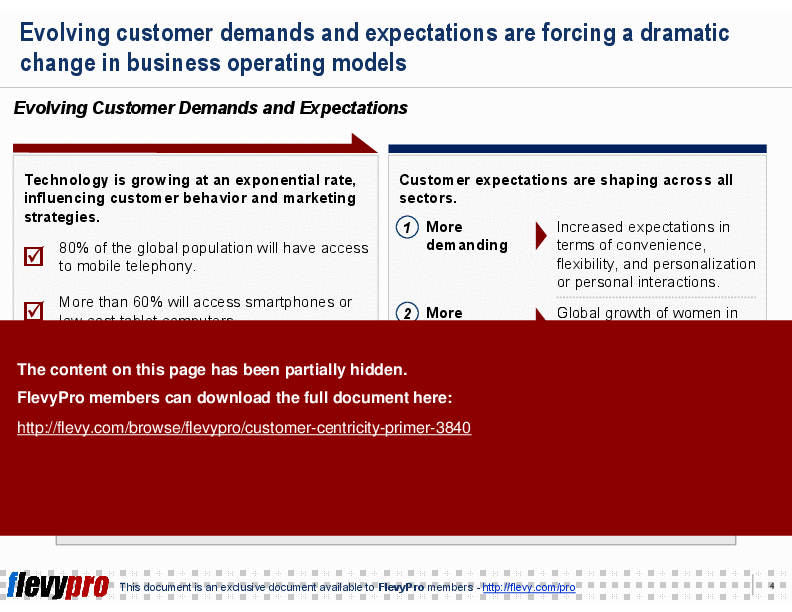
The Primer provides a detailed analysis of evolving customer demands and expectations. It includes practical steps and templates for implementing a Customer-centric Operating Model.
Got a question about this document? Email us at flevypro@flevy.com.
Executive Summary
The Customer-centricity Primer is a strategic presentation designed to guide organizations in adopting a customer-centric approach. Developed by former McKinsey and Big 4 consultants, this deck provides insights into evolving consumer demands and actionable strategies for enhancing customer engagement. It outlines the importance of understanding customer needs and behaviors, which are critical for driving profitable growth and successful business transformation. The framework emphasizes 5 core principles that redefine customer relationships and encourage innovation, making it an essential tool for executives aiming to enhance customer experiences and operational efficiency.
Who This Is For and When to Use
• Corporate executives seeking to implement customer-centric strategies across their organizations
• Integration leaders focused on transforming business models to meet evolving customer expectations
• Marketing and sales teams aiming to enhance customer engagement and loyalty
• Data analysts and business strategists interested in leveraging customer insights for decision-making
• Change management professionals guiding organizations through customer-centric transformations
Best-fit moments to use this deck:
• During strategic planning sessions focused on customer engagement initiatives
• When launching new products or services that require a deep understanding of customer needs
• In workshops aimed at fostering a customer-centric culture within the organization
• For training sessions on customer experience best practices and methodologies
Learning Objectives
• Define customer-centricity and its significance in today’s business landscape
• Identify and analyze evolving customer demands and expectations
• Develop strategies to enhance customer engagement throughout the customer lifecycle
• Implement the 5 core principles of customer-centricity to transform business models
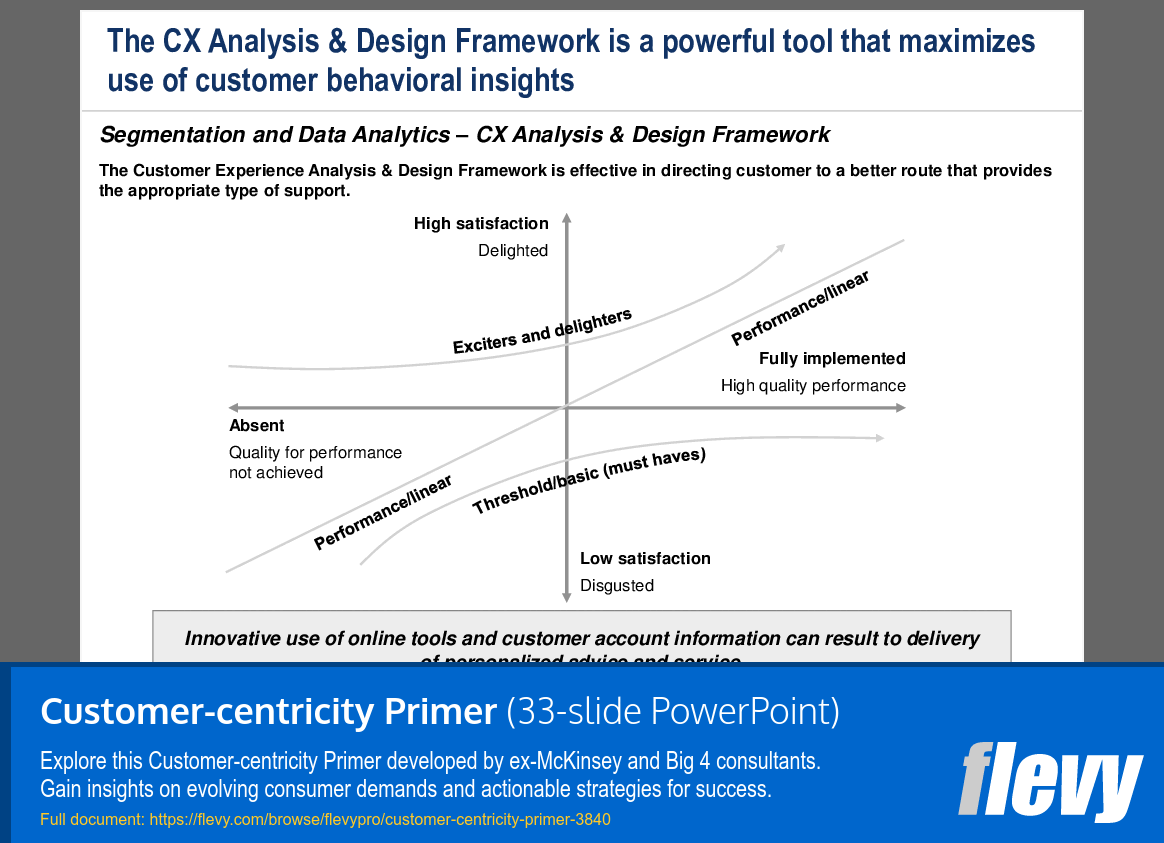
• Utilize segmentation and data analytics to optimize customer experiences
• Foster a culture of innovation that prioritizes customer needs and feedback
Table of Contents
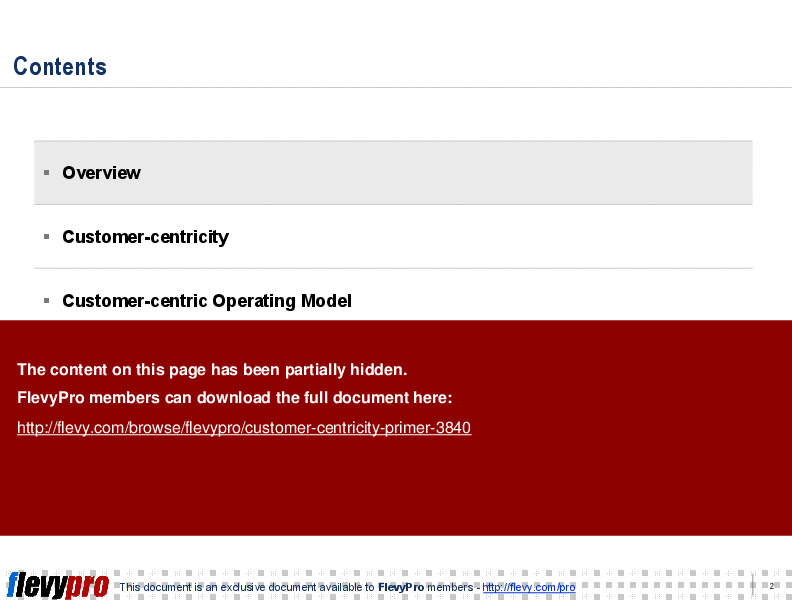
• Overview (page 3)
• Customer-centricity (page 3)
• Customer-centric Operating Model (page 11)
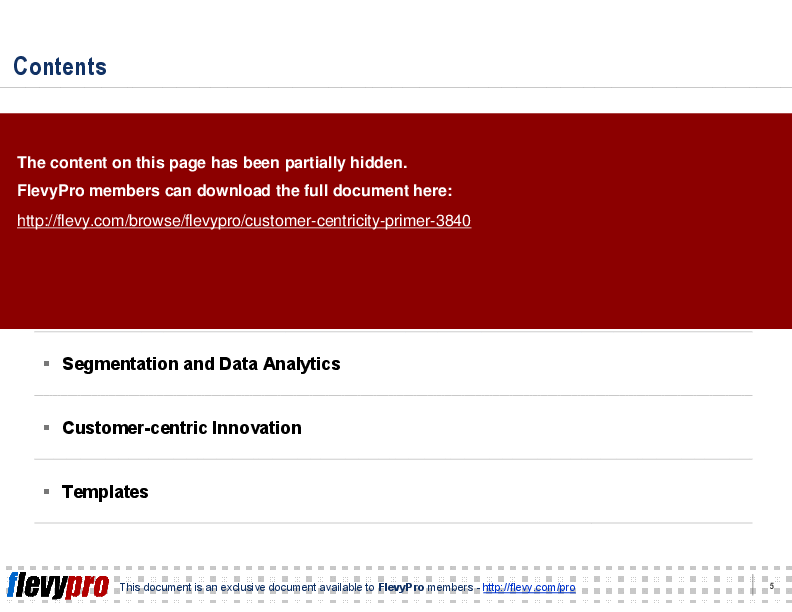
• Segmentation and Data Analytics (page 16)
• Customer-centric Innovation (page 21)
• Templates (page 24)
Primary Topics Covered
• Customer-centricity - A strategic approach that emphasizes understanding and responding to customer needs to drive business success.
• Customer-centric Operating Model - A framework that shifts traditional business practices to prioritize customer engagement and satisfaction.
• Segmentation and Data Analytics - Techniques for analyzing customer data to tailor experiences and improve satisfaction.
• Customer-centric Innovation - Strategies for fostering a culture of innovation that aligns with customer expectations and market trends.
• Five Core Principles - Key tenets that guide organizations in redefining customer relationships and enhancing value delivery.
Deliverables, Templates, and Tools
• Customer-centricity framework template for strategic planning
• Segmentation model for analyzing customer demographics and behaviors
• Customer experience analysis and design framework for optimizing interactions
• Innovation roadmap template for guiding customer-centric initiatives
• Practical steps checklist for implementing customer-centric strategies
• Data analytics toolkit for measuring customer satisfaction and engagement
Slide Highlights
• Overview of customer-centricity and its relevance in modern business
• Illustration of evolving customer demands and expectations
• Framework for the customer-centric operating model
• Key principles for fostering customer relationships and loyalty
• Data analytics strategies for enhancing customer experiences
Potential Workshop Agenda
Customer-Centricity Overview Session (60 minutes)
• Introduce the concept of customer-centricity and its importance
• Discuss evolving customer demands and expectations
• Explore the 5 core principles of customer-centricity
Segmentation and Data Analytics Workshop (90 minutes)
• Analyze customer data to identify key segments
• Develop strategies for enhancing customer engagement
• Create actionable plans based on data insights
Innovation and Change Management Session (120 minutes)
• Discuss the role of innovation in customer-centricity
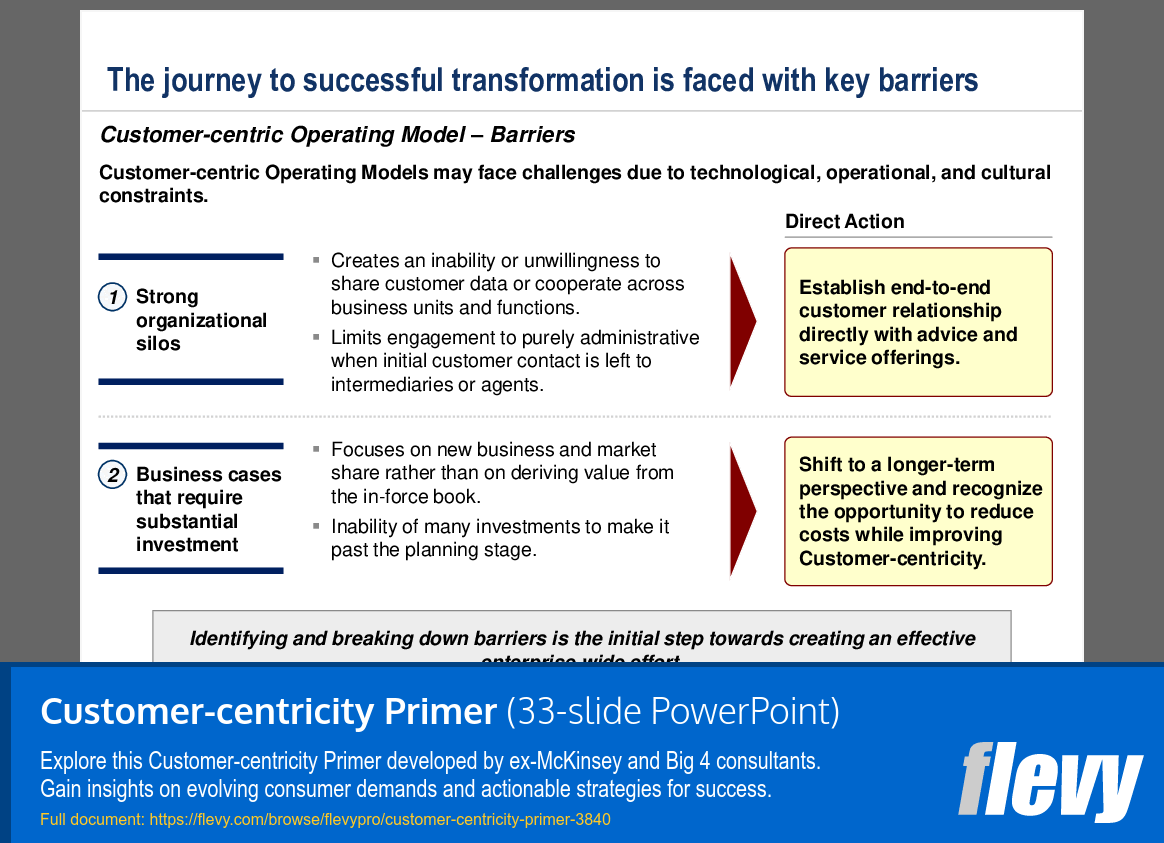
• Identify barriers to transformation and strategies to overcome them
• Develop a roadmap for implementing customer-centric initiatives
Customization Guidance
• Tailor the customer-centricity framework to align with specific organizational goals and customer segments
• Adjust the segmentation model to reflect unique customer demographics and behaviors
• Incorporate company-specific metrics and KPIs into the data analytics toolkit
• Modify the innovation roadmap to align with existing business strategies and objectives
Secondary Topics Covered
• The impact of digital transformation on customer engagement
• Best practices for leveraging customer feedback in decision-making
• Case studies of successful customer-centric transformations
• Techniques for measuring and tracking customer satisfaction
Topic FAQ
Document FAQ
These are questions addressed within this presentation.
What is customer-centricity?
Customer-centricity is a strategic approach that prioritizes understanding and responding to customer needs to enhance engagement and drive business success.
Why is customer-centricity important?
In today's competitive landscape, organizations that effectively engage with customers are more likely to succeed, as customer attitudes and behaviors significantly influence purchasing decisions.
What are the 5 core principles of customer-centricity?
The 5 core principles are: protect business against disintermediation, redefine customer relationships, increase productivity for competitive advantage, diversify sources of revenue, and collaborate with new partners across value chains.
How can segmentation and data analytics improve customer experiences?
Segmentation and data analytics allow organizations to tailor experiences to specific customer needs, leading to increased satisfaction and loyalty.
What is the customer-centric operating model?
The customer-centric operating model is a framework that shifts traditional business practices to focus on delivering value and positive experiences to customers at every touchpoint.
How can organizations foster a culture of innovation?
Organizations can foster a culture of innovation by encouraging collaboration, leveraging insights from other sectors, and adopting a long-term strategic decision-making mindset.
What challenges might organizations face in becoming customer-centric?
Common challenges include strong organizational silos, resistance to change, and the need for substantial investment in customer-centric initiatives.
How can this primer be used in training sessions?
This primer can serve as a foundational resource for training sessions focused on customer-centric strategies, providing frameworks, templates, and best practices for implementation.
Glossary
• Customer-centricity - A strategic approach focused on understanding and responding to customer needs.
• Customer Experience - The overall perception a customer has of a brand based on their interactions.
• Segmentation - The process of dividing a customer base into distinct groups based on shared characteristics.
• Data Analytics - The use of data to gain insights and inform decision-making.
• Innovation - The process of developing new ideas or improving existing products and services.
• Maturity Model - A framework for assessing the development level of an organization's capabilities.
• Customer Engagement - The interaction between a customer and a brand throughout the customer lifecycle.
• Value Proposition - The promise of value to be delivered to customers.
• Feedback Loop - A system for collecting and analyzing customer feedback to inform improvements.
• Competitive Advantage - A condition that allows a company to perform better than its competitors.
• Transformation - A significant change in an organization's structure, strategy, or operations.
• Operational Efficiency - The ability to deliver products or services in the most cost-effective manner.
• Customer Lifetime Value - The total revenue a business can expect from a single customer account.
• Touchpoint - Any interaction between a customer and a brand.
• Market Trends - Patterns and movements in consumer behavior and preferences.
• Strategic Planning - The process of defining an organization's direction and making decisions on allocating resources.
• Collaboration - Working together with others to achieve a common goal.
• Business Model - The plan implemented by a company to generate revenue and make a profit.
• Customer Insights - Understanding gained from analyzing customer data and behaviors.
• Customer Journey - The complete experience a customer has with a brand, from awareness to purchase and beyond.
Source: Best Practices in Competitive Advantage, Customer-centric Organization PowerPoint Slides: Customer-centricity Primer PowerPoint (PPT) Presentation Slide Deck, LearnPPT Consulting
Did you need more documents?
Consider a FlevyPro subscription from $39/month. View plans here.
For $10.00 more, you can download this document plus 2 more FlevyPro documents. That's just $13 each.
|
Download our FREE Digital Transformation Templates
Download our free compilation of 50+ Digital Transformation slides and templates. DX concepts covered include Digital Leadership, Digital Maturity, Digital Value Chain, Customer Experience, Customer Journey, RPA, etc. |