
 Click main image to view in full screen. Unlock all 9 preview images:
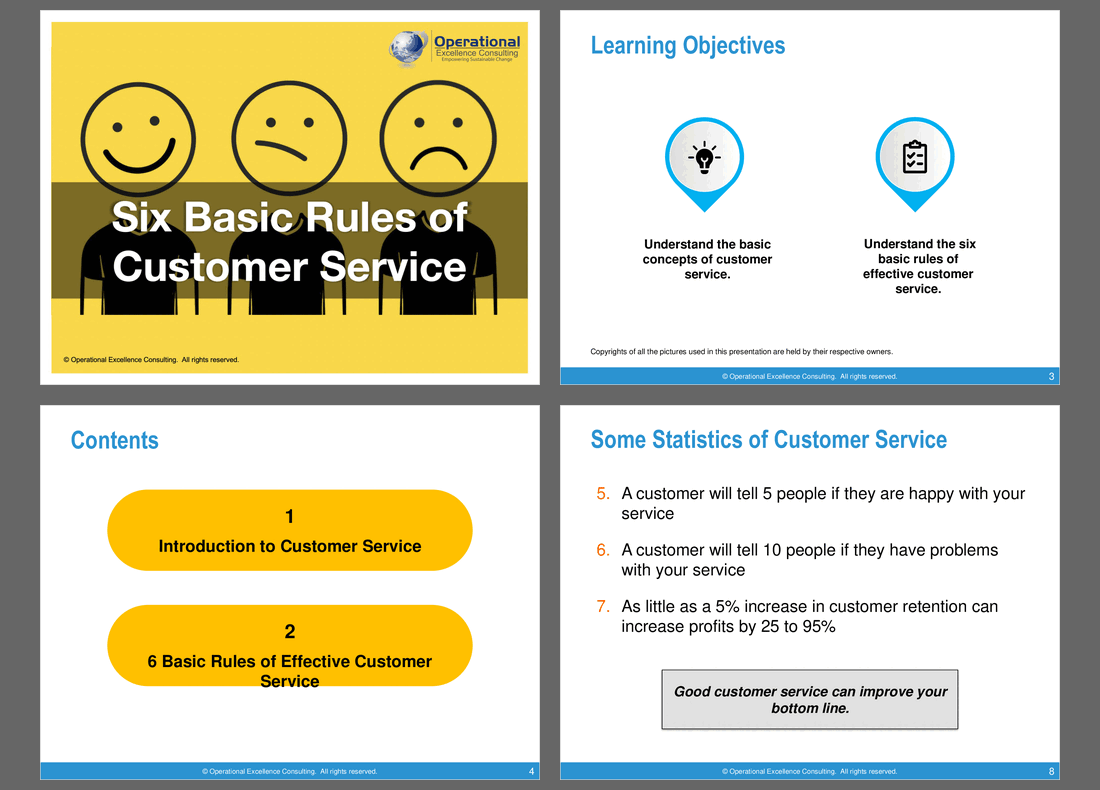
Six Basic Rules of Effective Customer Service – PowerPoint PPTX Template
PowerPoint (PPTX) + supplemental PDF 32 Slides


BENEFITS OF THIS DOWNLOADABLE POWERPOINT DOCUMENT
- Provides a simple tool to educate your customer service staff and new hires on the basic concepts of customer service.
- Provides guidelines on the six basic rules of customer service to delight customers.
CUSTOMER SERVICE PPT TEMPLATE DESCRIPTION
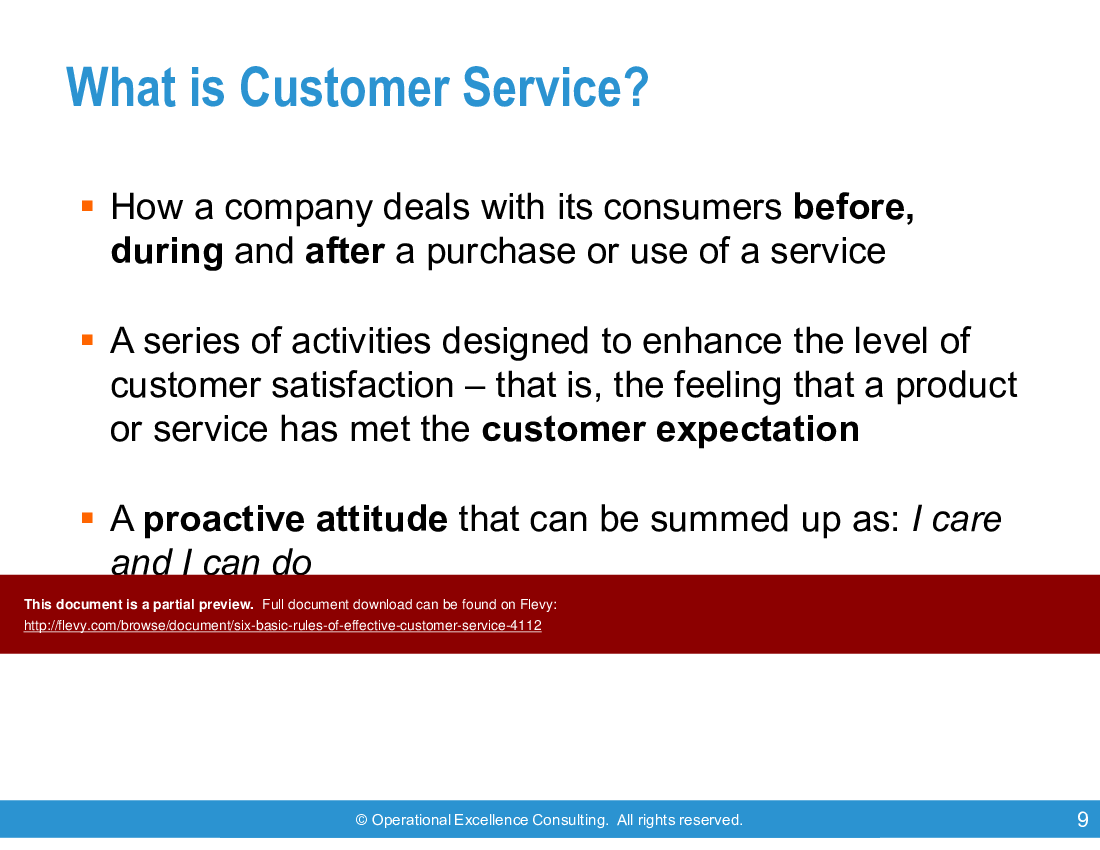
Customer service is about how a company deals with its consumers before, during and after a purchase of a product or use of a service. It is a series of activities designed to enhance the level of customer satisfaction – that is, the feeling that a product or service has met the customer expectation. A combination of knowledge, attitude, techniques and skills are essential for the customer service professional to provide a holistic and quality customer experience.
However, we hear more complaints about customer service today than ever before. In today's competitive marketplace, effective customer service is essential to the survival of any business. You can lose more business due to poor service than from your product quality or cost problems.
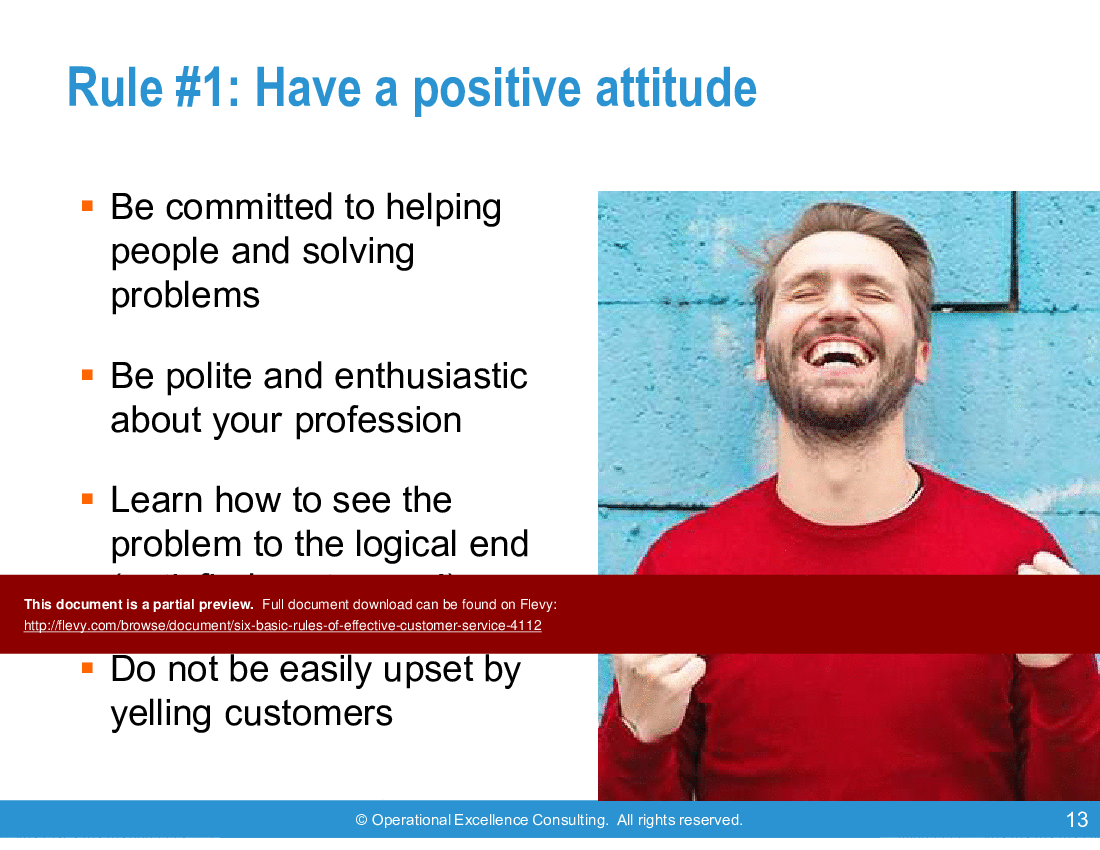
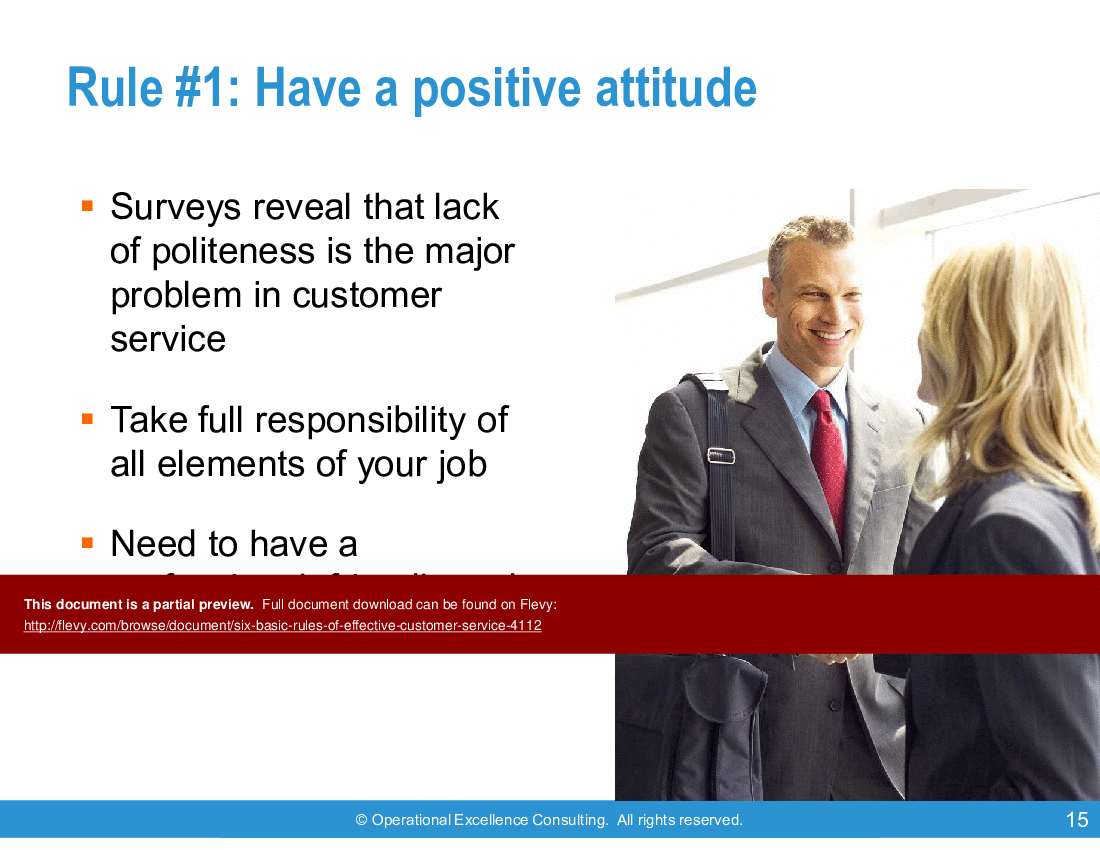
The six basic customer service rules are essential knowledge and skill for all customer service providers. They include having a positive attitude, knowing your product or service, listening to your customer, maintaining communications, solving the problem and following up.
This short and simple customer service PPT training presentation can be used to train all existing and new customer service providers and advisors within an hour. Moreover, the materials are kept generic so that you can easily blend it to your organization's service excellence training programs to form the foundation module.
||||||||||||||||||||||||||||||||||||||||||||||||||||||||||||||||||||||||||||||||||||||||||||||||||||||||||||||||||||||||||||||||||||||||||||||||||||||
NOTE: This training package includes:
1. Six Basic Rules of Effective Customer Service PPT training presentation (PowerPoint format)
2. Six Basic Rules of Effective Customer Service poster (PDF format, in color and monochrome, printable in A3 size)
||||||||||||||||||||||||||||||||||||||||||||||||||||||||||||||||||||||||||||||||||||||||||||||||||||||||||||||||||||||||||||||||||||||||||||||||||||||
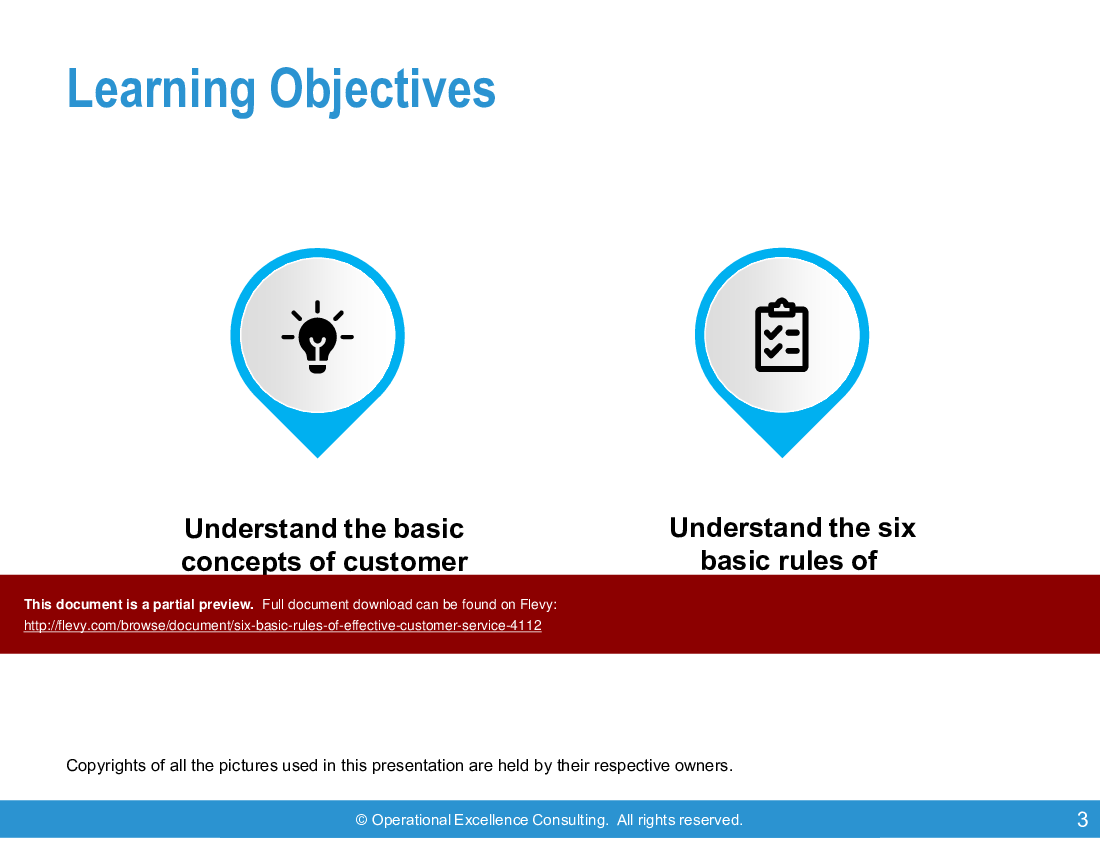
LEARNING OBJECTIVES
1. Understand the basic concepts of customer service.
2. Understand the six basic rules of effective customer service.
CONTENTS
1. Introduction to Customer Service
• Introduction
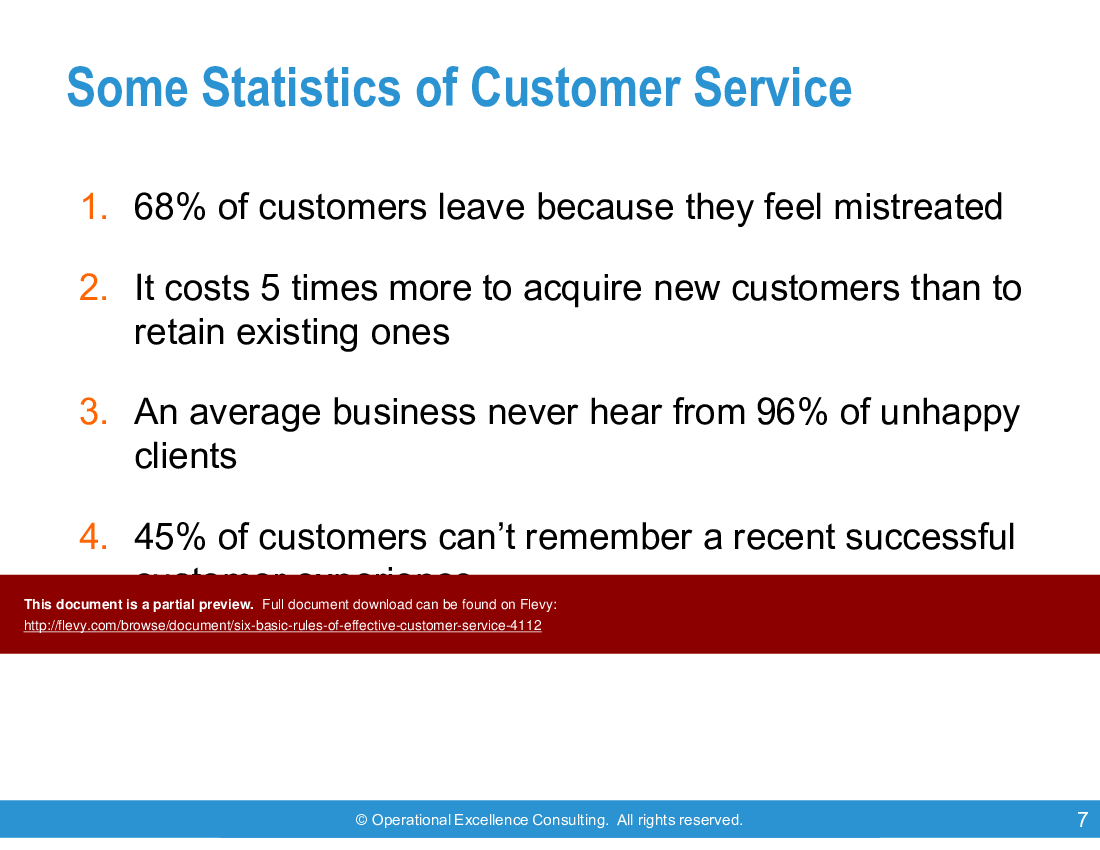
• Some statistics of customer service
• What is customer service?
• Why does customer service matter?
2. 6 Basic Rules of Effective Customer Service
• The six rules of customer service
• Rule #1: Have a positive attitude
• Rule #2: Know your product or service
• Rule #3: Listen to the customer
• Rule #4: Maintain communications
• Rule #5: Solve the problem
• Rule #6: Always follow up
• Summary
The presentation includes compelling statistics that highlight the critical importance of customer service in retaining clients and reducing costs. It also emphasizes the necessity of a proactive attitude and comprehensive product knowledge for effective customer interactions.
Got a question about the product? Email us at support@flevy.com or ask the author directly by using the "Ask the Author a Question" form. If you cannot view the preview above this document description, go here to view the large preview instead.
TOPIC FAQ
What are the core rules that define effective customer service in basic training materials?
Basic customer service training typically centers on 6 rules: have a positive attitude, know your product or service, listen to the customer, maintain communications, solve the problem, and always follow up. These 6 rules are the primary structure of the Six Basic Rules of Effective Customer Service presentation.How can I run a one-hour introductory customer service workshop using a slide deck?
Structure a one-hour workshop with a brief introduction and statistics on service importance, then sequentially cover each of the 6 rules with examples and a summary. Use the included slides and printable A3 poster to reinforce key behavior points; the package is designed for a one-hour session and contains a 32-slide PowerPoint.What techniques should be emphasized to teach active listening and problem solving to agents?
Training should explicitly present listening and problem-solving as distinct rules—"Listen to the customer" and "Solve the problem"—and explain expectations for each. The Six Basic Rules deck frames these as core competencies to be taught during the foundational session and reinforced with the A3 poster.What features should I look for when choosing a basic customer service training template?
For short foundational training, prioritize a template that is concise enough for a one-hour delivery, includes introductory statistics to set context, is generic so you can adapt it to your organization, and provides reusable assets like a printable A3 poster for reinforcement.How can a short, generic PPT be incorporated into onboarding for new service staff?
Use the short, generic PPT as a foundation module within a larger onboarding program: deliver the one-hour session early in onboarding to establish core behaviors, then layer role-specific procedures and systems training afterward. The product is intended to be blended into broader training programs as a foundational module.How does the cost-to-value tradeoff typically look for short customer service templates?
Value from short templates often comes from rapid deployment and repeatability: a brief one-hour module plus a printable poster can standardize baseline behaviors quickly. The Six Basic Rules package is positioned as a short training plus an A3 poster to support repeatable delivery and reinforcement.If customer complaints have recently increased, what immediate frontline steps align with basic service rules?
Immediate steps include reinforcing positive attitude expectations, ensuring agents have up-to-date product knowledge, reminding teams to listen actively, keep customers informed, focus on resolving issues, and confirm follow-up actions. These 6 focus areas form the practical checklist taught in the Six Basic Rules materials.What evidence or data components should a basic customer service deck include to justify training time?
A basic deck should include statistics that demonstrate customer service impact and context for why training matters. The Six Basic Rules presentation explicitly includes compelling statistics to highlight the importance of customer service and to justify a one-hour foundational training session.Source: Best Practices in Customer Service PowerPoint Slides: Six Basic Rules of Effective Customer Service PowerPoint (PPTX) Presentation Slide Deck, Operational Excellence Consulting
ABOUT THE AUTHOR

Operational Excellence Consulting, founded in 2009 by Allan Ung, draws from extensive experience at Microsoft, IBM, and Underwriters Laboratories (UL). We specialize in strategy deployment, customer experience design, and operational excellence, applying Design Thinking, Lean, and Systems Thinking to maximize customer value and minimize waste.
Our
... [read more]
Ask the Author a Question
You must be logged in to contact the author.




























