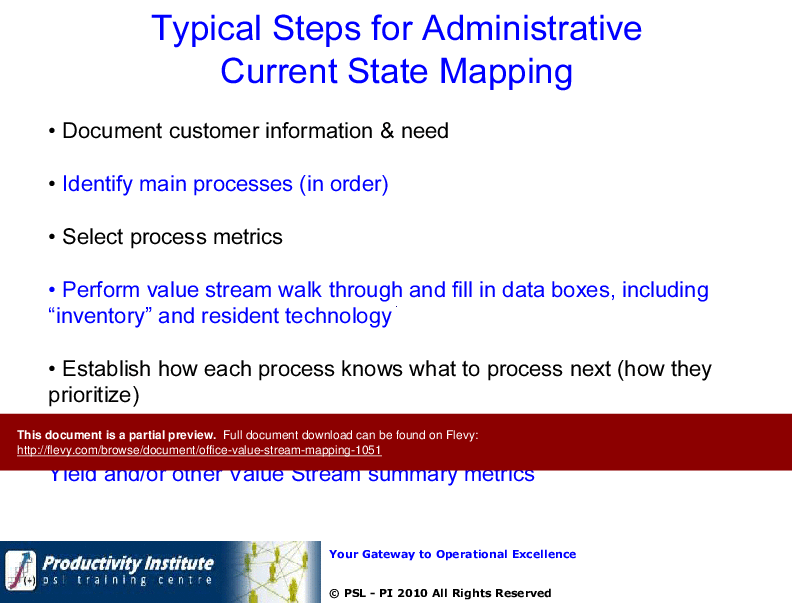

This presentation has 42 slides and explains the process of value stream mapping for the office and administrative functions.
Contents:
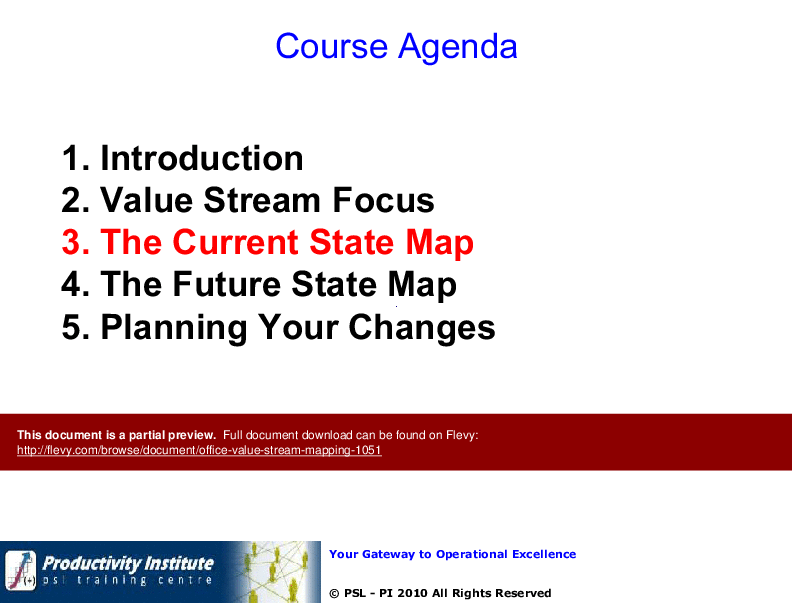
1. Introduction
2. Value Stream Focus
3. The Current State Map
4. The Future State Map
5. Planning Your Changes
Also included with this document is a bonus zip of 41 Lean documents (includes templates, case studies, articles, posters, charts, and more).
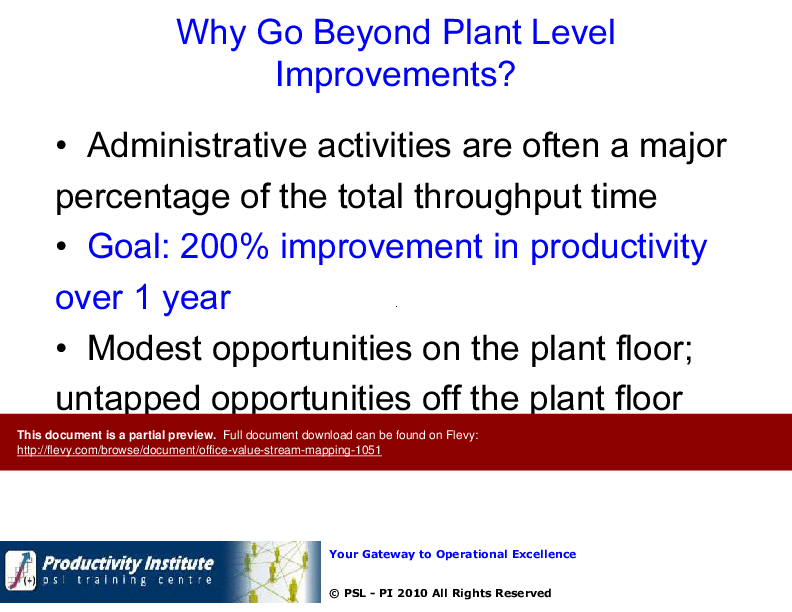
The Office Value Stream Mapping presentation dives deep into the intricacies of optimizing administrative functions. It highlights the significant impact of administrative activities on total throughput time and sets an ambitious goal of a 200% productivity improvement within a year. This document identifies untapped opportunities beyond the plant floor, emphasizing the potential for substantial gains in office environments.

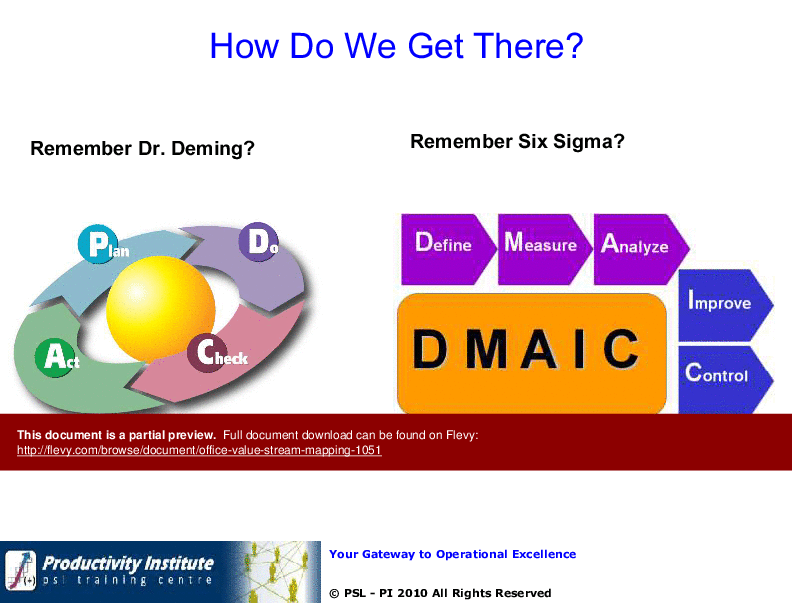
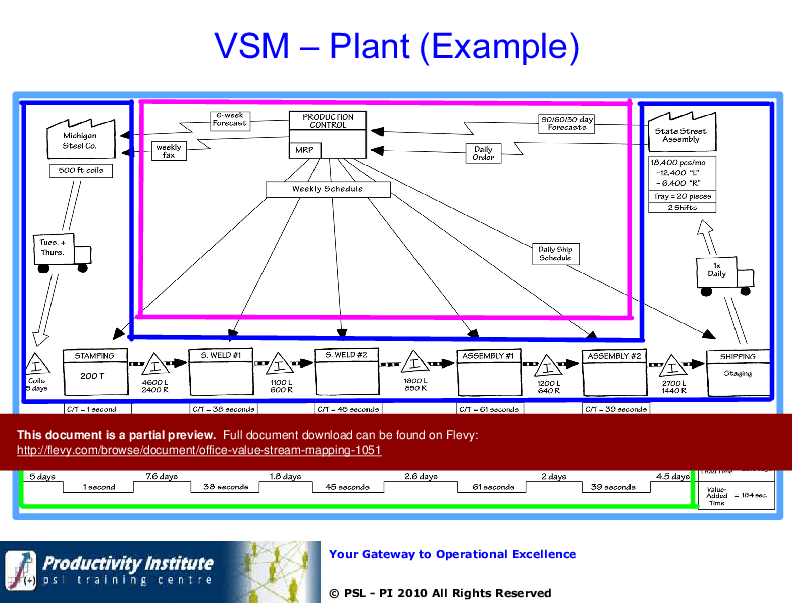
The presentation revisits foundational principles such as Dr. Deming's Plan-Do-Check-Act cycle and Six Sigma's DMAIC framework. It provides a comprehensive example of a plant-level value stream map, illustrating the detailed process flow and identifying areas for improvement. The document also outlines the critical steps for administrative current state mapping, including documenting customer information, selecting process metrics, and conducting value stream walkthroughs.
The future state map section focuses on creating a flexible, reactive system that adapts to changing customer needs, eliminating waste, and minimizing handoffs and silos. It stresses the importance of frequent performance reviews and visual progress checks to ensure the system meets customer needs and desired service levels. The document concludes with practical steps for implementing process improvements, from paperwork redesign to new technology adoption, and managing the implementation using the PDCA cycle.
Got a question about the product? Email us at support@flevy.com or ask the author directly by using the "Ask the Author a Question" form. If you cannot view the preview above this document description, go here to view the large preview instead.
Executive Summary
The Office Value Stream Mapping (VSM) presentation is designed to empower organizations to enhance their administrative processes through Lean methodologies. Developed by a Lean expert and certified LSS Master Black Belt, this presentation provides a structured approach to identifying waste, optimizing workflows, and aligning processes with business objectives. By utilizing tools like the Current State Map and Future State Map, participants will learn to visualize their processes, pinpoint inefficiencies, and implement actionable improvements that can lead to significant productivity gains.
Who This Is For and When to Use
• Executives and managers in operational roles seeking to streamline administrative functions
• Lean practitioners and consultants focused on process improvement
• Cross-functional teams involved in organizational change initiatives
• Project managers leading process optimization efforts
Best-fit moments to use this deck:
• During strategic planning sessions to align operational improvements with business goals
• When initiating Lean transformations within administrative departments
• For training sessions aimed at building Lean capabilities across teams
Learning Objectives
• Define Lean principles and their application to administrative processes
• Identify value-adding and non-value-adding steps within workflows
• Create Current State and Future State Maps to visualize process flows
• Develop actionable plans to eliminate waste and improve efficiency
• Establish metrics to track process performance and improvements
• Foster a culture of continuous improvement within teams
Table of Contents
• Introduction (page 3)
• Value Stream Focus (page 4)
• The Current State Map (page 5)
• The Future State Map (page 6)
• Planning Your Changes (page 7)
Primary Topics Covered
• Lean Thinking - Focuses on maximizing value while minimizing waste, emphasizing customer perspectives in defining value.
• Value Stream Mapping (VSM) - A method to visualize all steps in a process, identifying both value-added and non-value-added activities.
• Current State Map - A snapshot of existing processes, completed by a cross-functional team to highlight inefficiencies.
• Future State Map - A blueprint for desired process improvements, aimed at creating a flexible and responsive system.
• Implementation Strategies - Guidance on using PDCA (Plan-Do-Check-Act) for managing process changes effectively.
• Office Metrics - Key performance indicators to measure process efficiency, including lead time, setup time, and accuracy rates.
Deliverables, Templates, and Tools
• Current State Map template for documenting existing processes
• Future State Map template for visualizing desired improvements
• Metrics dashboard for tracking key performance indicators
• Action plan template for implementing process changes
• Guidelines for conducting value stream walks and assessments
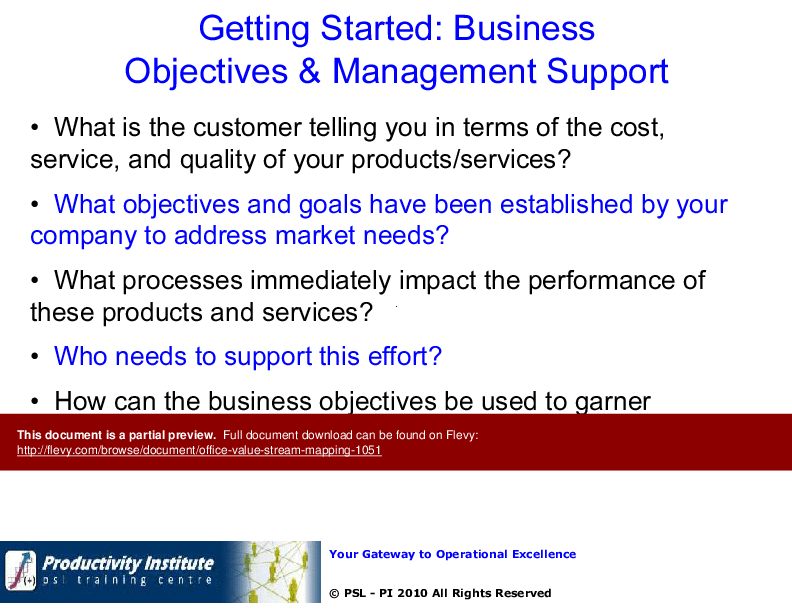
• Checklist for securing management support and alignment
Slide Highlights
• Overview of Lean Thinking principles and their relevance to administrative processes
• Visual representation of the Current State Map illustrating inefficiencies in order processing
• Future State Map highlighting streamlined workflows and reduced waste
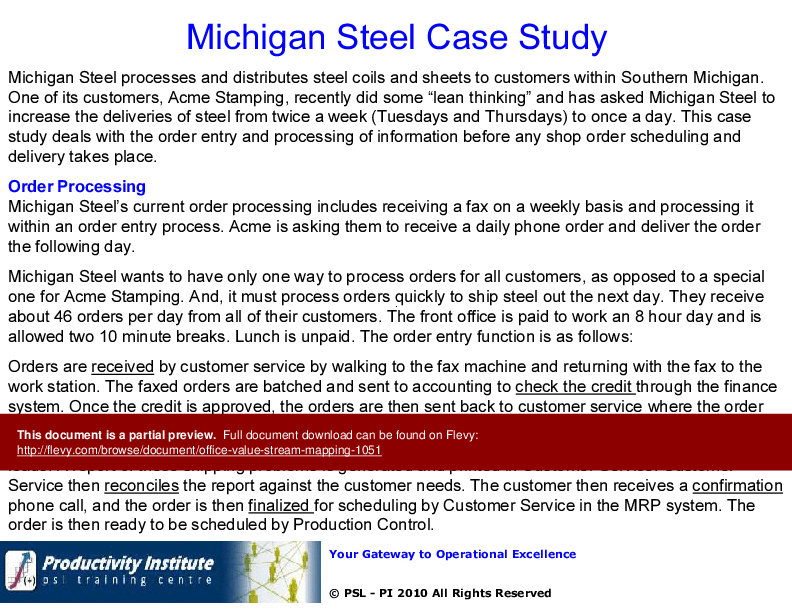
• Case study example demonstrating successful application of VSM in a real-world scenario
• Metrics slide detailing key performance indicators for measuring process success
Potential Workshop Agenda
Introduction to Lean Principles (30 minutes)
• Overview of Lean thinking and its application to administrative processes
• Discussion on the importance of value stream mapping
Current State Mapping Session (60 minutes)
• Hands-on activity to create Current State Maps for existing processes
• Identification of waste and inefficiencies
Future State Planning (60 minutes)
• Collaborative session to develop Future State Maps
• Establishing actionable steps for implementation
Implementation and Metrics (30 minutes)
• Discussion on using PDCA for managing changes
• Setting up metrics to track progress and success
Customization Guidance
• Tailor the Current and Future State Map templates to reflect specific organizational processes
• Adjust metrics to align with departmental goals and objectives
• Incorporate company-specific terminology and frameworks into the presentation
• Modify case studies and examples to resonate with the audience's industry context
Secondary Topics Covered
• The role of management support in successful Lean transformations
• Techniques for engaging cross-functional teams in process improvement
• Challenges and solutions in identifying waste in administrative processes
• Strategies for sustaining improvements over time
FAQ
What is Value Stream Mapping?
Value Stream Mapping is a Lean tool used to visualize all steps in a process, identifying both value-added and non-value-added activities to improve efficiency.
How can this presentation help my organization?
This presentation provides a structured approach to identifying waste and optimizing workflows, leading to enhanced productivity and alignment with business objectives.
Who should participate in the VSM workshops?
Cross-functional teams, including executives, managers, and staff involved in administrative processes, should participate to ensure comprehensive insights and buy-in.
What are the expected outcomes of implementing VSM?
Participants can expect to see improved process efficiency, reduced waste, and enhanced alignment of administrative activities with strategic goals.
How long does it take to complete a Current State Map?
Typically, a Current State Map can be completed in a single day by a cross-functional team.
What metrics should we track post-implementation?
Key metrics include process time, lead time, accuracy rates, and the number of reworks or revisions.
Can this approach be applied to non-manufacturing processes?
Yes, Value Stream Mapping is highly applicable to administrative and service-oriented processes, where waste is often less visible.
What is the role of management in this process?
Management support is crucial for aligning objectives, providing resources, and fostering a culture of continuous improvement.
Glossary
• Lean Thinking - A methodology focused on maximizing value while minimizing waste.
• Value Stream Mapping (VSM) - A visual representation of all steps in a process.
• Current State Map - A depiction of existing processes to identify inefficiencies.
• Future State Map - A blueprint for desired process improvements.
• PDCA - Plan-Do-Check-Act; a framework for managing process changes.
• Waste (Muda) - Non-value-added activities that do not contribute to customer value.
• Metrics - Measurements used to assess process performance.
• Cross-Functional Team - A group composed of members from different departments working together on a common goal.
• Process Time - The time taken to complete a specific task within a process.
• Lead Time - The total time from the beginning to the end of a process.
• First Pass Yield - The percentage of products or services that meet quality standards without rework.
• Continuous Flow - A process design that minimizes interruptions and maximizes efficiency.
• Customer Value - The perceived benefit that a customer receives from a product or service.
• Administrative Processes - Non-manufacturing activities that support business operations.
• Service Level - The expected performance standard for delivering services to customers.
• Process Improvement - Efforts aimed at enhancing the efficiency and effectiveness of processes.
• Operational Excellence - A philosophy of leadership, teamwork, and problem-solving resulting in continuous improvement throughout the organization.
• Change Management - The approach to transitioning individuals, teams, and organizations to a desired future state.
• Business Objectives - Specific goals that an organization aims to achieve within a defined timeframe.
• Management Support - The backing and resources provided by leadership to facilitate change initiatives.
Source: Best Practices in Value Stream Mapping PowerPoint Slides: Office Value Stream Mapping PowerPoint (PPT) Presentation Slide Deck, OpEx Academy NZ
|
Receive our FREE presentation on Operational Excellence
This 50-slide presentation provides a high-level introduction to the 4 Building Blocks of Operational Excellence. Achieving OpEx requires the implementation of a Business Execution System that integrates these 4 building blocks. |