How to Conduct Value Stream Mapping (VSM)   10-page Word document
$20.00

How to Conduct Value Stream Mapping (VSM) (10-page Word document) Preview Image
Flevy is the marketplace for business best practices.
How to Conduct Value Stream Mapping (VSM) (10-page Word document) Preview Image
Arrow   Click main image to view in full screen.

How to Conduct Value Stream Mapping (VSM) (Word DOCX)

Word (DOCX) 10 Pages

Top 1,000 Best Practice $20.00

Add to Cart


Immediate download
Fully editable Word
Free lifetime updates

BENEFITS OF THIS WORD DOCUMENT

  1. Give a clear and succinct understanding of Value Stream Mapping (VSM)
  2. Gives an understanding of how to conduct a VSM exercise
  3. Showcases examples of VSM exercise

VALUE STREAM MAPPING WORD DESCRIPTION

Editor Summary How to Conduct Value Stream Mapping (VSM) is a 10-page DOCX guide by Shaleen Sinha that explains Toyota-origin lean techniques for identifying and eliminating waste in processes. Read more

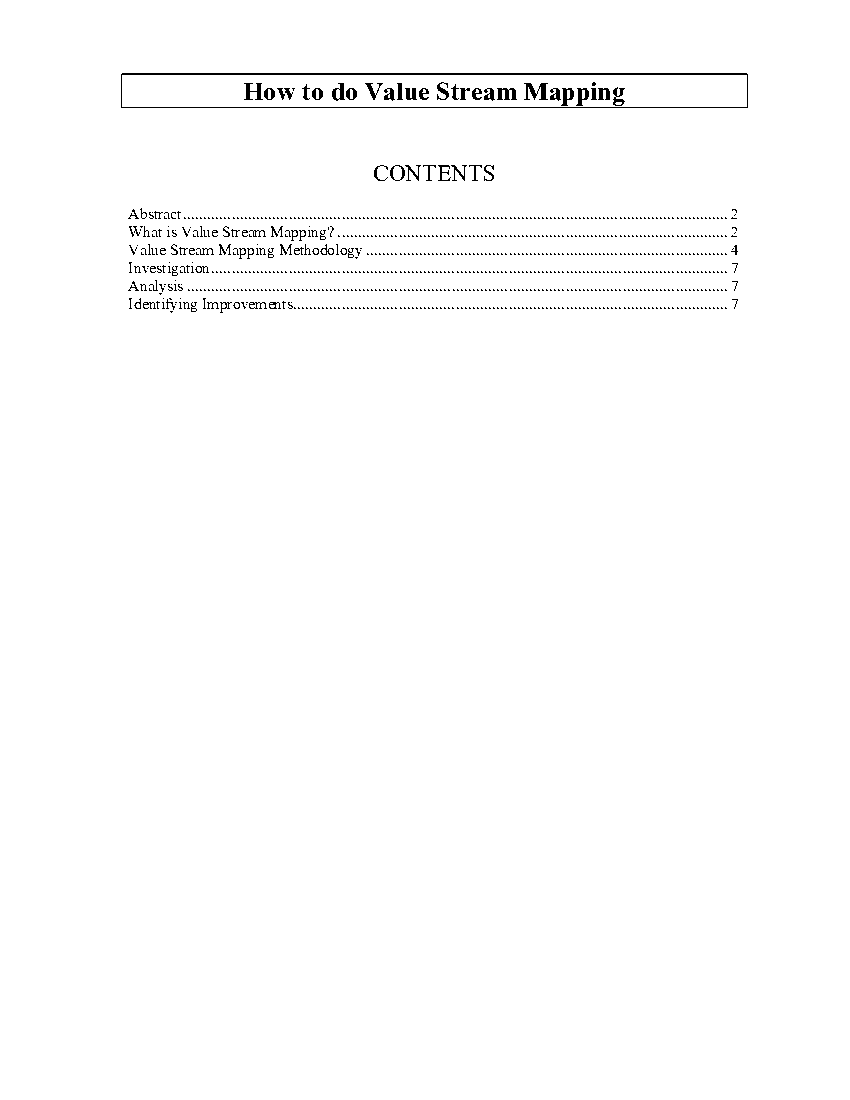
Value Stream Mapping has the reputation of uncovering waste in manufacturing, production and business processes by identifying and removing or streamlining non-value-adding steps. A flow diagram showing the process is drawn to reflect the current state of the operation. The non-value actions are identified in each step and between each step by their waste of time and resources. The process is analysed for opportunity to drastically reduce and simplify it to the fewest actions necessary. By reducing wastefulness the proportion of value adding time in the whole process rises and the process throughput speed is increased. This makes the redesigned process more effective (the right things are being done) and more efficient (needing fewer resources). The reengineered process is flow charted in its future state with process steps and information flows redesigned, simplified and made less expensive.

This document gives a clear an succinct understanding of the following:
What is Value Stream Mapping?
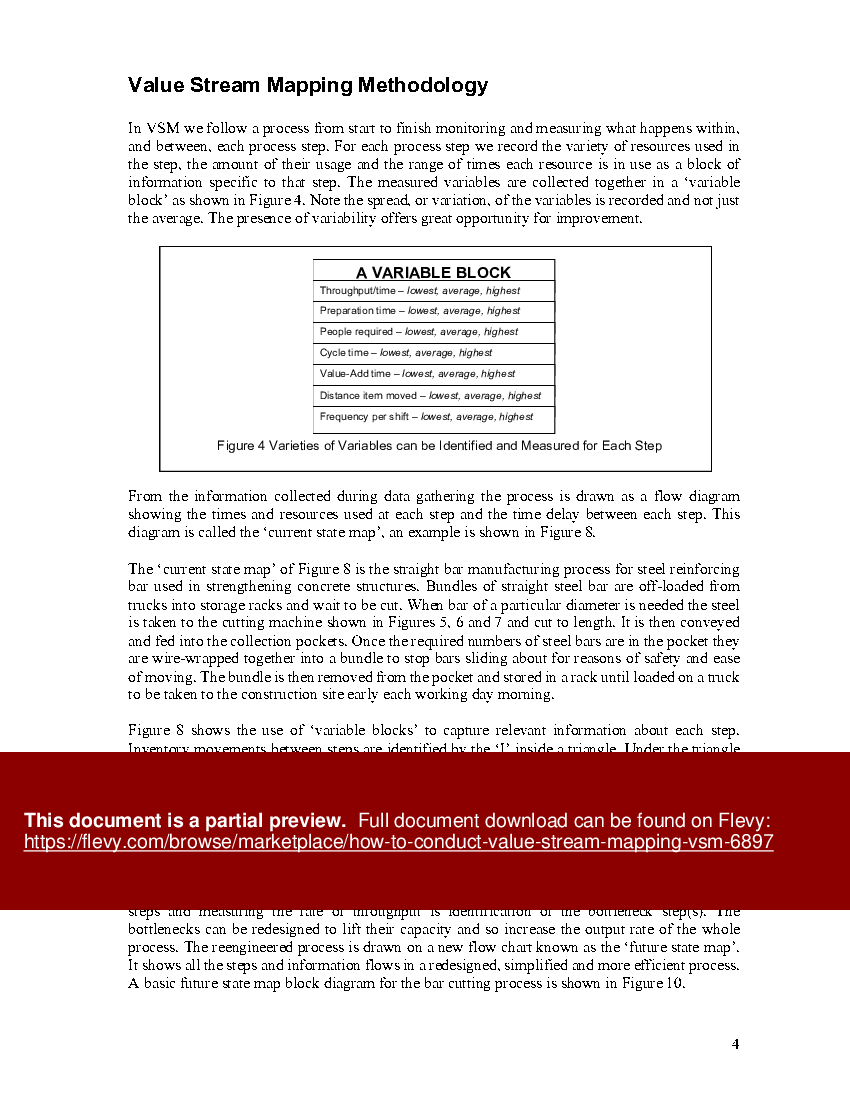
Value Stream Mapping Methodology
Example Investigation
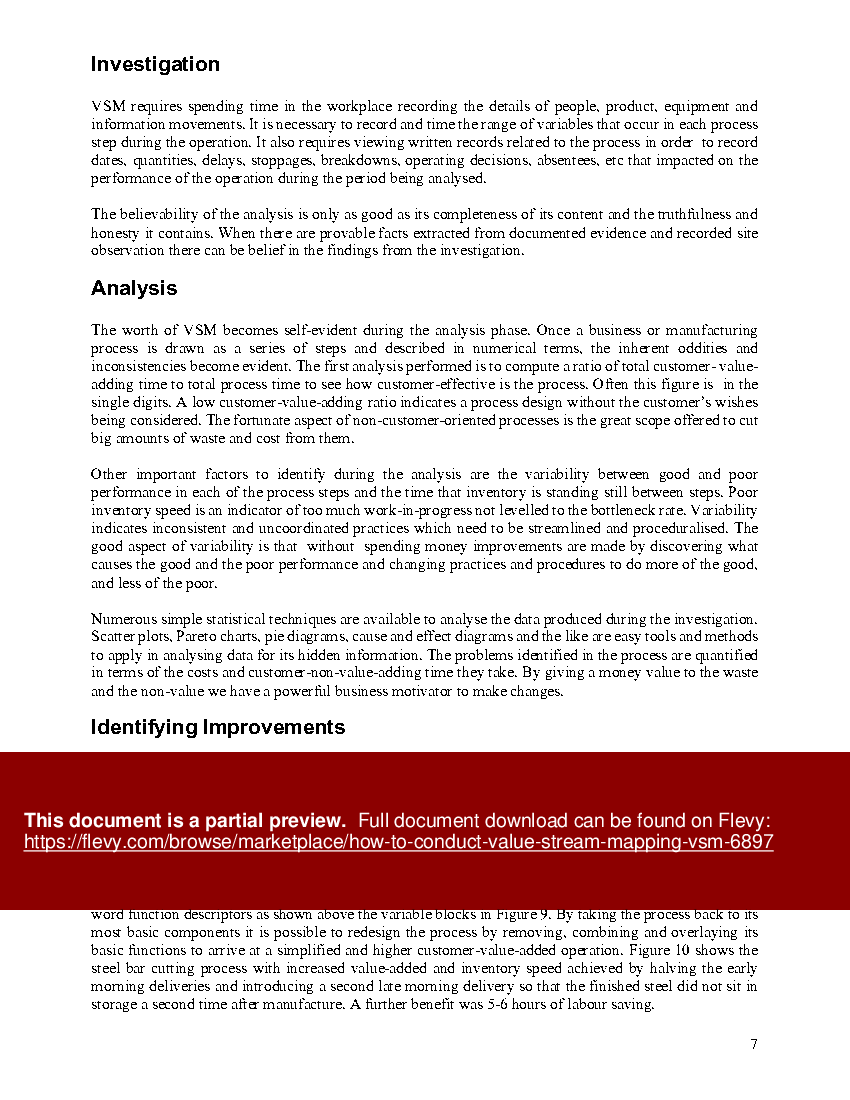
Example Analysis
How to identify Improvements

Value Stream Mapping is not just a tool; it's a strategic approach to optimizing processes across various sectors. The Word document includes practical examples and detailed methodologies that empower teams to pinpoint inefficiencies and implement targeted improvements. By utilizing variable blocks, organizations can measure critical metrics such as cycle time and throughput, enabling a data-driven approach to process enhancement.

This guide equips executives with the knowledge to lead their teams in conducting effective VSM sessions. It emphasizes the importance of collaboration and communication during the mapping process, ensuring that all stakeholders are aligned on goals and outcomes. The insights gained from this document can drive significant operational improvements, making it an essential resource for leaders looking to streamline their processes and boost overall performance.

Got a question about the product? Email us at support@flevy.com or ask the author directly by using the "Ask the Author a Question" form. If you cannot view the preview above this document description, go here to view the large preview instead.

MARCUS OVERVIEW

This synopsis was written by Marcus [?] based on the analysis of the full 10-slide presentation.


Executive Summary
The "How to Conduct Value Stream Mapping (VSM)" document provides a structured approach to identifying and eliminating waste in business processes. Originating from Toyota's methodologies, VSM serves as a powerful tool for analyzing operations, enhancing efficiency, and streamlining workflows. This document guides users through the VSM process, detailing methodologies for mapping current states, identifying inefficiencies, and designing future states that maximize value. By employing VSM, organizations can significantly reduce non-value-adding activities, thereby improving overall productivity and customer satisfaction.

Who This Is For and When to Use
•  Operations managers seeking to optimize manufacturing processes
•  Business analysts focused on process improvement
•  Lean practitioners implementing continuous improvement initiatives
•  Project managers overseeing efficiency projects

Best-fit moments to use this deck:
•  During process audits to identify inefficiencies
•  When initiating lean transformation projects
•  In workshops aimed at training teams on VSM methodologies
•  For strategic planning sessions focused on operational excellence

Learning Objectives
•  Define Value Stream Mapping and its significance in process improvement
•  Identify and categorize waste within business processes
•  Analyze current state maps to pinpoint inefficiencies
•  Develop future state maps that enhance value creation
•  Implement actionable improvements based on VSM findings
•  Foster a culture of continuous improvement within teams

Table of Contents
•  Abstract (page 2)
•  What is Value Stream Mapping? (page 2)
•  Value Stream Mapping Methodology (page 4)
•  Investigation (page 7)
•  Analysis (page 7)
•  Identifying Improvements (page 7)

Primary Topics Covered
•  Value Stream Mapping Definition - A systematic methodology for identifying waste in processes, enhancing efficiency, and streamlining operations.
•  VSM Methodology - A structured approach to mapping processes, recording resource usage, and identifying areas for improvement.
•  Investigation Techniques - Methods for gathering data on processes, including time tracking and resource utilization.
•  Analysis of Current State - Techniques for evaluating the effectiveness of processes and identifying bottlenecks.
•  Identifying Improvements - Strategies for proposing actionable changes to enhance efficiency and reduce waste.
•  Future State Mapping - The process of designing an optimized workflow that minimizes non-value-adding activities.

Deliverables, Templates, and Tools
•  Current state map template for visualizing existing processes
•  Future state map template for redesigning optimized workflows
•  Waste identification checklist for assessing processes
•  Data collection forms for tracking resource usage and time
•  Improvement proposal template for documenting suggested changes
•  Process flow diagrams for visual representation of workflows

Slide Highlights
•  Overview of VSM and its historical significance in lean manufacturing
•  Flow diagrams illustrating current state versus future state processes
•  Examples of waste categories identified in manufacturing settings
•  Visual representations of bottlenecks and inefficiencies in processes
•  Case studies demonstrating successful VSM implementations

Potential Workshop Agenda
Introduction to Value Stream Mapping (30 minutes)
•  Overview of VSM principles and benefits
•  Discussion of historical context and applications

Hands-On Current State Mapping (60 minutes)
•  Group activity to create current state maps
•  Identification of waste and inefficiencies

Future State Design (60 minutes)
•  Collaborative redesign of processes for improved efficiency
•  Presentation of proposed future state maps

Customization Guidance
•  Tailor the current state map to reflect specific organizational processes
•  Adjust waste categories based on industry-specific challenges
•  Incorporate relevant metrics and KPIs for tracking improvements
•  Modify templates to align with organizational branding and terminology

Secondary Topics Covered
•  Lean principles and their application in VSM
•  Techniques for engaging teams in the VSM process
•  Tools for measuring process performance and efficiency
•  Strategies for sustaining improvements over time

Topic FAQ

What are the key steps in conducting a value stream mapping exercise?

A typical VSM exercise begins with creating a current state map to visualize materials and information flows, collecting data on cycle time and resources, analyzing the map to identify waste and bottlenecks, designing a future state that reduces non-value steps, and documenting improvements for implementation, ending with current-state mapping, analysis, waste identification, and future-state design.

What types of waste does value stream mapping identify in processes?

VSM identifies common manufacturing and process wastes that reduce value and throughput: overproduction, waiting, unnecessary transport, over-processing, excess inventory, unnecessary movement, and defects, which are collectively referred to as the 7 types of waste.

How should a team measure and record process performance during VSM?

Teams should use simple data collection forms and time tracking to capture cycle time, lead time, resource utilization, and throughput for each process step, then visualize these metrics on the current state map and compare them against targets using KPIs such as cycle time and throughput metrics.

Can value stream mapping be applied outside manufacturing environments?

Yes. The methodology applies to service, healthcare, and administrative processes by mapping information and work flows, identifying non-value steps, and redesigning processes to reduce waste; the document cites applications in healthcare, service sectors, and administrative processes.

What should I look for in a VSM toolkit if I need to run a half-day workshop?

For a short workshop, prioritize a toolkit that includes an introductory overview, ready-made current and future state map templates, a workshop agenda, data collection forms, and a waste checklist; the "How to Conduct Value Stream Mapping (VSM)" guide includes a suggested 30/60/60 minute workshop agenda.

Which VSM templates are most useful for a small team with limited data-collection capacity?

Small teams benefit from concise current and future state map templates, a straightforward waste identification checklist, simplified data collection forms, and an improvement proposal template that captures suggested changes; these are provided in the Flevy "How to Conduct Value Stream Mapping (VSM)" document as named templates.

If my goal is to reduce lead time on an assembly line, where should VSM focus its analysis?

Focus VSM on mapping the full current-state flow, measuring cycle and wait times at each step, identifying bottlenecks and non-value activities between steps, and redesigning the sequence to minimize wait and handoff delays—prioritizing cycle time reduction and bottleneck resolution.

What operational benefits can organizations expect from running VSM sessions?

Organizations can expect to increase the proportion of value-adding time within a process, simplify workflows, and raise overall throughput speed by reducing non-value-adding activities; these outcomes are achieved through current-state analysis and future-state redesign aimed at increasing value-added time and throughput speed.

Document FAQ
These are questions addressed within this presentation.

What is Value Stream Mapping?
Value Stream Mapping is a lean management tool used to visualize and analyze the flow of materials and information in a process, aiming to identify and eliminate waste.

How does VSM help in process improvement?
VSM helps by providing a clear visual representation of processes, allowing teams to identify inefficiencies and areas for improvement, ultimately leading to enhanced productivity.

What are the key steps in conducting VSM?
The key steps include mapping the current state, analyzing the flow of processes, identifying waste, and designing a future state that optimizes efficiency.

What types of waste does VSM identify?
VSM identifies 7 types of waste: overproduction, waiting time, unnecessary transport, over-processing, excess inventory, unnecessary movement, and defects.

How can teams ensure successful implementation of VSM?
Teams can ensure success by engaging all stakeholders, providing adequate training, and fostering a culture of continuous improvement.

What tools are recommended for VSM?
Recommended tools include flowchart software, data collection templates, and visual mapping tools to create current and future state maps.

How often should VSM be conducted?
VSM should be conducted regularly, especially during process audits, lean initiatives, or when significant changes occur in operations.

Can VSM be applied outside of manufacturing?
Yes, VSM can be applied in various industries, including healthcare, service sectors, and administrative processes, to identify and eliminate waste.

Glossary
•  Value Stream Mapping - A visual tool for analyzing the flow of materials and information in a process.
•  Current State Map - A visual representation of existing processes and workflows.
•  Future State Map - A redesigned process flow that aims to enhance efficiency and reduce waste.
•  Waste - Any activity that does not add value to the customer.
•  Bottleneck - A stage in a process that limits overall performance and throughput.
•  Lean Principles - A set of practices aimed at minimizing waste and maximizing value.
•  Process Flow Diagram - A visual representation of the sequence of steps in a process.
•  Continuous Improvement - Ongoing efforts to enhance products, services, or processes.
•  Efficiency - The ability to accomplish a task with minimal waste of resources.
•  Stakeholders - Individuals or groups with an interest in the outcome of a process or project.
•  KPI (Key Performance Indicator) - A measurable value that demonstrates how effectively a company is achieving key business objectives.
•  Engagement - The involvement and commitment of team members in a process improvement initiative.
•  Data Collection - The process of gathering information to analyze and improve processes.
•  Process Audit - A systematic examination of a process to identify inefficiencies and areas for improvement.
•  Operational Excellence - The execution of the business strategy more consistently and reliably than the competition.
•  Simplification - The process of making something less complex or easier to understand.
•  Resource Utilization - The effective and efficient use of resources in a process.
•  Customer Value - The perceived benefit that a customer receives from a product or service.
•  Process Improvement - The proactive task of identifying, analyzing, and improving existing business processes.
•  Visual Management - The use of visual signals to communicate information about processes and performance.
•  Cycle Time - The total time from the beginning to the end of a process.

Source: Best Practices in Value Stream Mapping Word: How to Conduct Value Stream Mapping (VSM) Word (DOCX) Document, Shaleen Sinha


$20.00

Add to Cart
  

ABOUT THE AUTHOR

Author: Shaleen Sinha
Additional documents from author: 5

Ask the Author a Question

You must be logged in to contact the author.

Click here to log in Click here register

Did you know?
The average daily rate of a McKinsey consultant is $6,625 (not including expenses). The average price of a Flevy document is $65.


Trusted by over 10,000+ Client Organizations
Since 2012, we have provided business templates to over 10,000 businesses and organizations of all sizes, from startups and small businesses to the Fortune 100, in over 130 countries.
AT&T GE Cisco Intel IBM Coke Dell Toyota HP Nike Samsung Microsoft Astrazeneca JP Morgan KPMG Walgreens Walmart 3M Kaiser Oracle SAP Google E&Y Volvo Bosch Merck Fedex Shell Amgen Eli Lilly Roche AIG Abbott Amazon PwC T-Mobile Broadcom Bayer Pearson Titleist ConEd Pfizer NTT Data Schwab


Read Customer Testimonials

 
"As a small business owner, the resource material available from FlevyPro has proven to be invaluable. The ability to search for material on demand based our project events and client requirements was great for me and proved very beneficial to my clients. Importantly, being able to easily edit and tailor "

– Michael Duff, Managing Director at Change Strategy (UK)
 
"If you are looking for great resources to save time with your business presentations, Flevy is truly a value-added resource. Flevy has done all the work for you and we will continue to utilize Flevy as a source to extract up-to-date information and data for our virtual and onsite presentations!"

– Debbi Saffo, President at The NiKhar Group
 
"Flevy.com has proven to be an invaluable resource library to our Independent Management Consultancy, supporting and enabling us to better serve our enterprise clients.

The value derived from our [FlevyPro] subscription in terms of the business it has helped to gain far exceeds the investment made, making a subscription a no-brainer for any growing consultancy – or in-house strategy team."

– Dean Carlton, Chief Transformation Officer, Global Village Transformations Pty Ltd.
 
"I have used FlevyPro for several business applications. It is a great complement to working with expensive consultants. The quality and effectiveness of the tools are of the highest standards."

– Moritz Bernhoerster, Global Sourcing Director at Fortune 500
 
"As an Independent Management Consultant, I find Flevy to add great value as a source of best practices, templates and information on new trends. Flevy has matured and the quality and quantity of the library is excellent. Lastly the price charged is reasonable, creating a win-win value for "

– Jim Schoen, Principal at FRC Group
 
"One of the great discoveries that I have made for my business is the Flevy library of training materials.

As a Lean Transformation Expert, I am always making presentations to clients on a variety of topics: Training, Transformation, Total Productive Maintenance, Culture, Coaching, Tools, Leadership Behavior, etc. Flevy "

– Ed Kemmerling, Senior Lean Transformation Expert at PMG
 
"FlevyPro provides business frameworks from many of the global giants in management consulting that allow you to provide best in class solutions for your clients."

– David Harris, Managing Director at Futures Strategy
 
"As a consultant requiring up to date and professional material that will be of value and use to my clients, I find Flevy a very reliable resource.

The variety and quality of material available through Flevy offers a very useful and commanding source for information. Using Flevy saves me time, enhances my expertise and ends up being a good decision."

– Dennis Gershowitz, Principal at DG Associates


Customers Also Bought These Documents


Customers Also Like These Documents

Explore Templates on Related Management Topics


Your Recently Viewed Documents
Receive our FREE presentation on Operational Excellence

This 50-slide presentation provides a high-level introduction to the 4 Building Blocks of Operational Excellence. Achieving OpEx requires the implementation of a Business Execution System that integrates these 4 building blocks.









