
Total Productive Maintenance (TPM) Frameworks   85-slide PPT PowerPoint presentation slide deck (PPTX)
$59.00

Total Productive Maintenance (TPM) Frameworks (85-slide PPT PowerPoint presentation slide deck (PPTX)) Preview Image
Log in to unlock full preview.
Total Productive Maintenance (TPM) Frameworks (85-slide PPT PowerPoint presentation slide deck (PPTX)) Preview Image
Arrow   Click main image to view in full screen.

Total Productive Maintenance (TPM) Frameworks (PowerPoint PPTX Slide Deck)

PowerPoint (PPTX) 85 Slides

$59.00
Developed by a renowned JIPM-certified TPM Instructor with extensive experience at industry leaders like Continental and Micron, this collection serves as your guide to achieving streamlined TPM implementation success.
Add to Cart


Immediate download
Fully editable PowerPoint
Free lifetime updates

BENEFITS OF THIS POWERPOINT DOCUMENT

  1. Provides 24 different TPM frameworks and methodologies for manufacturing excellence.
  2. Serves as rough orientation for business leaders, senior executives and other experts.

TPM PPT DESCRIPTION

Editor Summary Total Productive Maintenance (TPM) Frameworks is an 85-slide PowerPoint collection by Operational Excellence Consulting and a JIPM-certified TPM instructor with experience at Continental and Micron, containing 24 TPM models and diagrams. Read more

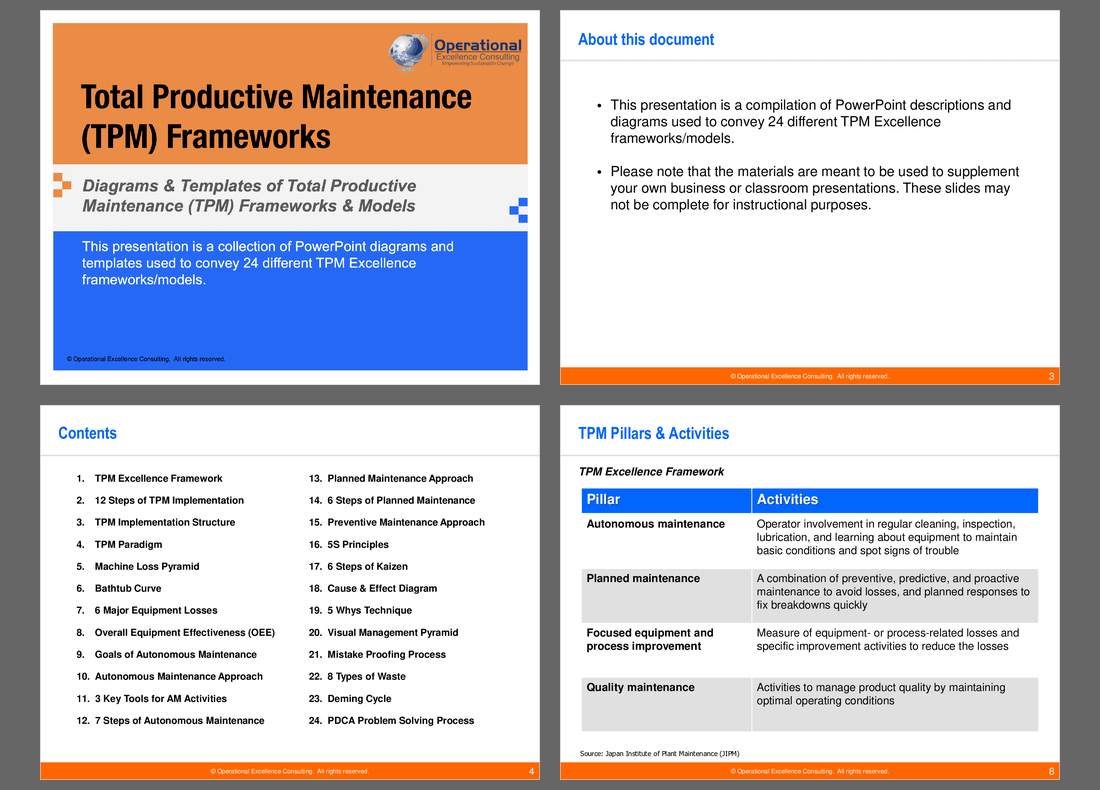
This presentation is a collection of PowerPoint diagrams and templates used to convey 24 different Total Productive Maintenance (TPM) Excellence frameworks/models. (Please note that these are diagrams and charts that are to be used in your own business or classroom presentations. These are not instructional slides.)

INCLUDED FRAMEWORKS/MODELS:

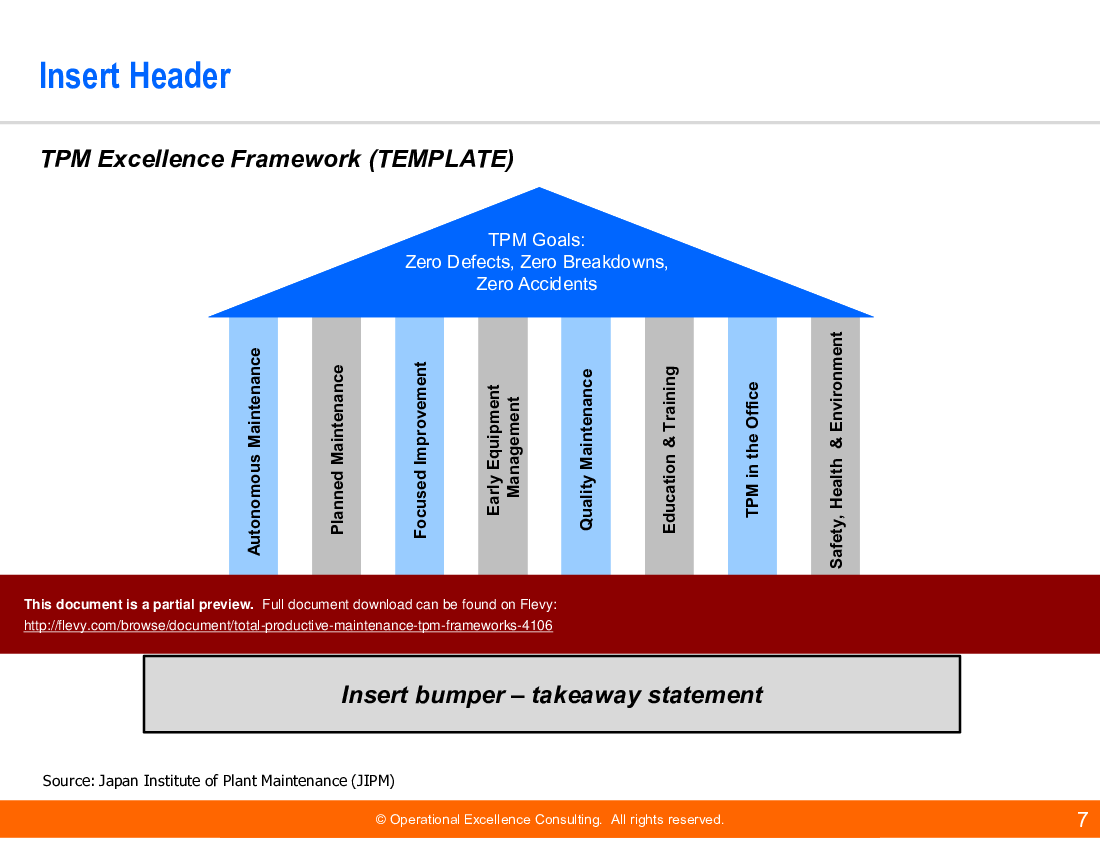
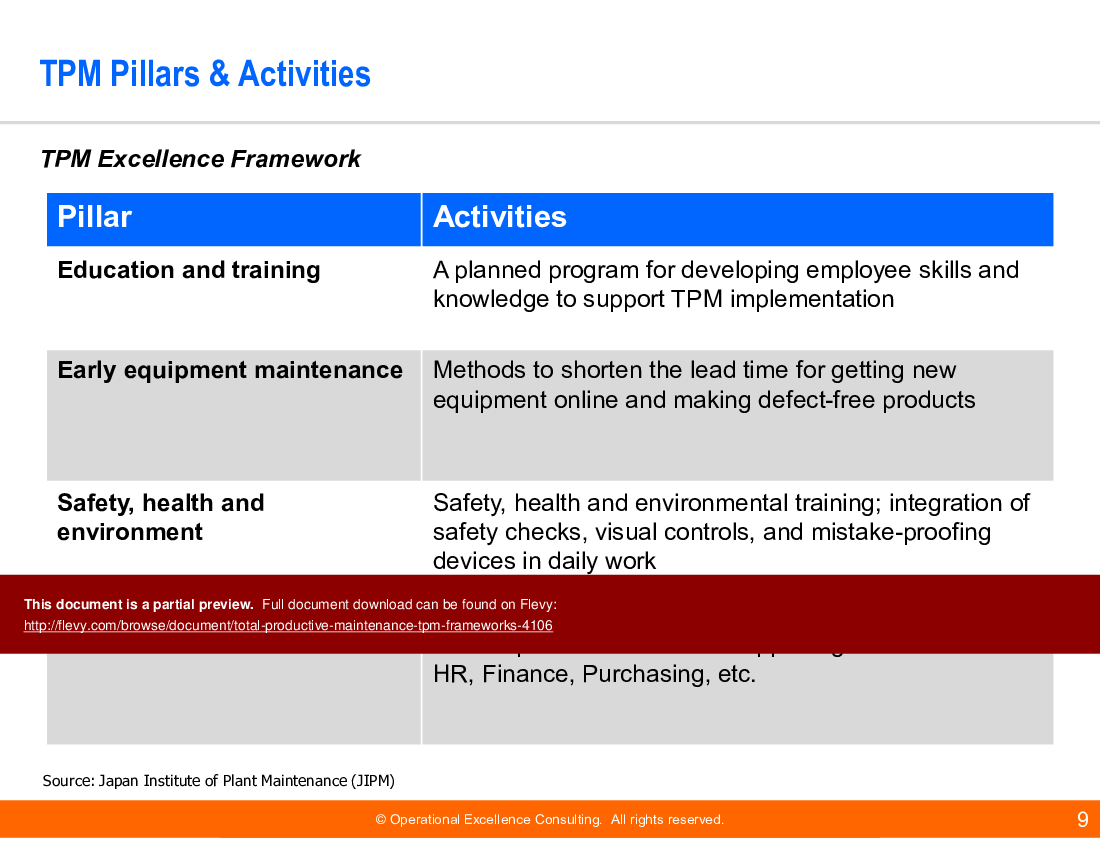
1. TPM Excellence Framework
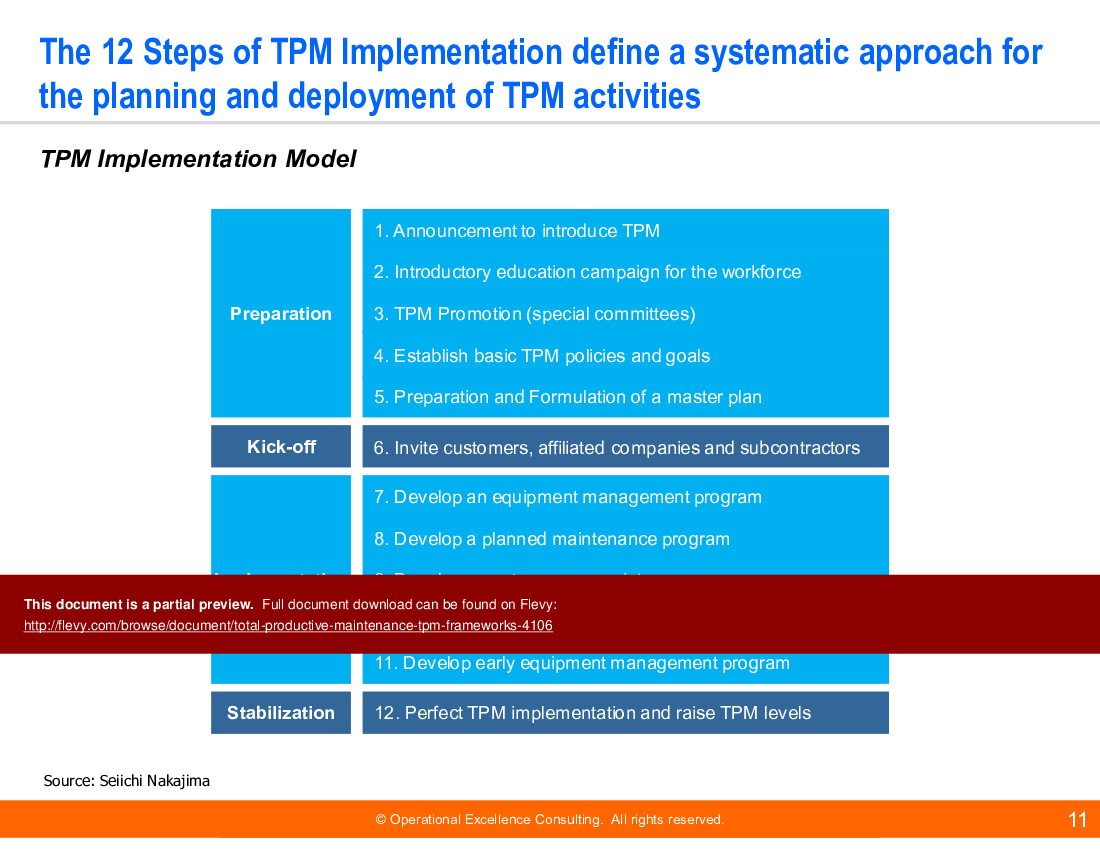
2. 12 Steps of TPM Implementation
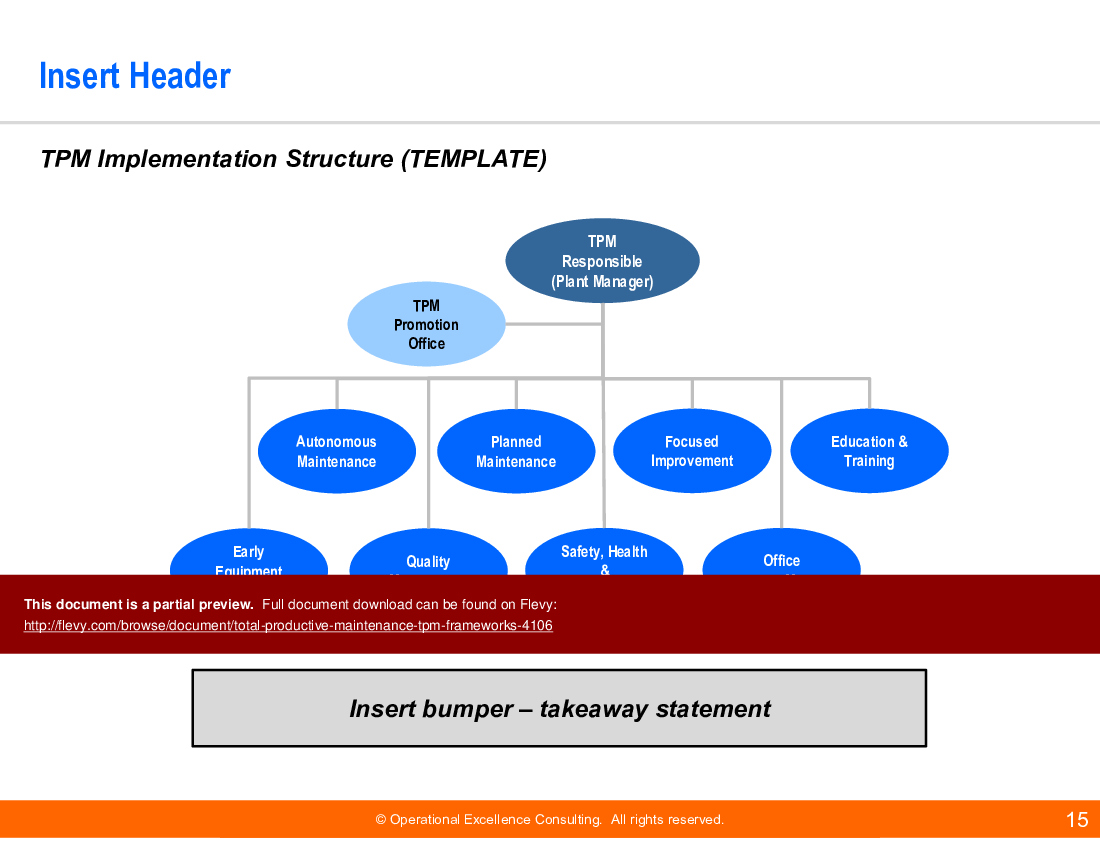
3. TPM Implementation Structure
4. TPM Paradigm
5. Machine Loss Pyramid
6. The Bathtub Curve
7. 6 Major Equipment Losses
8. Overall Equipment Effectiveness (OEE)
9. 3 Goals of Autonomous Maintenance
10. Autonomous Maintenance Approach
11. 3 Key Tools for AM Activities
12. 7 Steps of Autonomous Maintenance
13. Planned Maintenance Approach
14. 6 Steps of Planned Maintenance
15. Preventive Maintenance Approach
16. 5S Principles
17. 6 Steps of Kaizen
18. Cause & Effect Diagram
19. 5 Whys Technique
20. Visual Management Pyramid
21. Mistake Proofing Process
22. 8 Types of Waste
23. The Deming Cycle
24. PDCA Problem Solving Process

Concepts covered include the various frameworks, models, methods and tools based on the TPM Excellence Framework.

Got a question about the product? Email us at support@flevy.com or ask the author directly by using the "Ask the Author a Question" form. If you cannot view the preview above this document description, go here to view the large preview instead.

MARCUS OVERVIEW

This synopsis was written by Marcus [?] based on the analysis of the full 85-slide presentation.


Executive Summary
This presentation on Total Productive Maintenance (TPM) Frameworks provides a structured approach to enhancing operational efficiency through 24 distinct TPM models and diagrams. Designed for organizations aiming to implement TPM effectively, this resource outlines critical frameworks, including the TPM Excellence Framework, 12 Steps of TPM Implementation, and various maintenance strategies. Users will gain insights into improving equipment effectiveness, reducing downtime, and fostering a culture of continuous improvement, ultimately driving towards the goals of zero defects, zero breakdowns, and zero accidents.

Who This Is For and When to Use
•  Operations Managers overseeing maintenance and production efficiency
•  TPM Coordinators responsible for implementing TPM initiatives
•  Quality Assurance Teams focused on defect reduction and process improvement
•  Training and Development Teams implementing TPM education programs
•  Safety Officers ensuring compliance with safety and health standards

Best-fit moments to use this deck:
•  During TPM training sessions for staff at all levels
•  For strategic planning meetings on maintenance and operational excellence
•  When introducing TPM concepts to new teams or departments
•  As a reference during TPM implementation phases

Learning Objectives
•  Define the Total Productive Maintenance (TPM) framework and its significance
•  Identify the 12 steps necessary for effective TPM implementation
•  Develop a structured approach to autonomous and planned maintenance
•  Analyze the Machine Loss Pyramid to understand equipment failures
•  Implement the 5S principles to enhance workplace organization
•  Utilize the PDCA cycle for continuous improvement in processes

Table of Contents
•  TPM Excellence Framework (page 6)
•  12 Steps of TPM Implementation (page 11)
•  TPM Implementation Structure (page 14)
•  TPM Paradigm (page 17)
•  Machine Loss Pyramid (page 20)
•  Bathtub Curve (page 23)
•  6 Major Equipment Losses (page 26)
•  Overall Equipment Effectiveness (OEE) (page 29)
•  Goals of Autonomous Maintenance (page 32)
•  Autonomous Maintenance Approach (page 35)
•  3 Key Tools for AM Activities (page 38)
•  7 Steps of Autonomous Maintenance (page 41)
•  Planned Maintenance Approach (page 44)
•  6 Steps of Planned Maintenance (page 47)
•  Preventive Maintenance Approach (page 50)
•  5S Principles (page 53)
•  6 Steps of Kaizen (page 57)
•  Cause & Effect Diagram (page 61)
•  5 Whys Technique (page 64)
•  Visual Management Pyramid (page 67)
•  Mistake Proofing Process (page 70)
•  8 Types of Waste (page 73)
•  Deming Cycle (page 76)
•  PDCA Problem Solving Process (page 79)

Primary Topics Covered
•  TPM Excellence Framework - A holistic approach to improving capital productivity through integrated maintenance strategies and employee involvement.
•  12 Steps of TPM Implementation - A systematic model guiding organizations through the planning and execution of TPM activities.
•  Machine Loss Pyramid - A visual representation emphasizing the importance of addressing minor issues before they escalate into major breakdowns.
•  Overall Equipment Effectiveness (OEE) - A metric that evaluates how effectively a manufacturing operation is utilized compared to its potential.
•  5S Principles - A foundational methodology for workplace organization that supports TPM initiatives.
•  PDCA Cycle - A continuous improvement framework that guides organizations in refining processes and achieving operational excellence.

Deliverables, Templates, and Tools
•  TPM Excellence Framework diagram for visualizing key components
•  Template for the 12 Steps of TPM Implementation
•  Machine Loss Pyramid visual for identifying equipment issues
•  OEE calculation template to assess operational performance
•  5S implementation checklist for workplace organization
•  PDCA cycle template for structured problem-solving

Slide Highlights
•  Overview of the TPM Excellence Framework illustrating its core pillars
•  Detailed breakdown of the 12 Steps of TPM Implementation
•  Visual representation of the Machine Loss Pyramid emphasizing proactive maintenance
•  Graphical depiction of the Bathtub Curve showcasing equipment life cycles
•  Summary of the 5S Principles for effective workplace management

Potential Workshop Agenda
TPM Introduction and Overview (60 minutes)
•  Present the TPM Excellence Framework and its importance
•  Discuss the 12 Steps of TPM Implementation

Hands-On TPM Implementation (90 minutes)
•  Break down the Machine Loss Pyramid and its implications
•  Engage in group activities to apply the 5S Principles

Continuous Improvement Techniques (60 minutes)
•  Introduce the PDCA cycle and its application in TPM
•  Explore the 5 Whys Technique for root cause analysis

Customization Guidance
•  Adapt the TPM Excellence Framework to align with specific organizational goals
•  Modify the 12 Steps of TPM Implementation to fit unique operational contexts
•  Tailor the OEE metrics to reflect industry-specific performance indicators
•  Update the 5S checklist based on the specific needs of different departments

Secondary Topics Covered
•  Autonomous Maintenance strategies and their implementation
•  Planned Maintenance approaches and their benefits
•  Kaizen events for continuous improvement initiatives
•  Visual Management techniques to enhance operational transparency

Topic FAQ

What are the core steps to implement Total Productive Maintenance in a plant?

A commonly used structured approach is the 12 Steps of TPM Implementation, which guides planning, pilot activities, autonomous and planned maintenance, and scaling. The Flevy deck includes a template and a detailed breakdown of the 12 Steps to support sequencing and role allocation.

How is Overall Equipment Effectiveness (OEE) calculated and used in TPM programs?

OEE measures availability, performance, and quality to assess how effectively equipment is used versus its potential; it helps prioritize losses and improvement targets. The resource provides an OEE calculation template to quantify and track those 3 components.

What is the Machine Loss Pyramid and why is it important for maintenance prioritization?

The Machine Loss Pyramid is a visual tool that categorizes losses from minor stops to major breakdowns, emphasizing early attention to small issues to prevent escalation. Teams use the Pyramid to triage interventions and focus on preventing losses identified in the Machine Loss Pyramid.

How do 5S and PDCA support ongoing TPM activities on the shop floor?

5S organizes the workplace (Sort, Set in Order, Shine, Standardize, Sustain) to reduce inefficiencies and defects, while PDCA provides a cycle for testing and standardizing improvements. The deck includes a 5S implementation checklist and a PDCA cycle template to structure those activities.

What should I look for when buying a TPM slide deck for a training workshop?

Prioritize decks that include core TPM frameworks, visual aids, and practical templates you can re-use in workshops — for example, the TPM Excellence Framework, 12 Steps of TPM Implementation, OEE template, and 5S checklist. Flevy's Total Productive Maintenance (TPM) Frameworks contains 24 models and templates.

Do ready-made TPM templates save time compared to creating slides from scratch?

Ready-made templates provide prepared diagrams, checklists, and calculation tools you can adapt for presentations and workshops, reducing slide-creation time. Flevy's Total Productive Maintenance (TPM) Frameworks is delivered as PowerPoint diagrams and templates covering 24 distinct TPM frameworks and charts.

I have one hour to introduce TPM to a production crew—what key concepts should I cover?

Focus on TPM goals (zero defects, zero breakdowns, zero accidents), the TPM Excellence Framework, OEE basics, the value of 5S for workplace order, and the PDCA cycle for continuous improvement. These core concepts are reflected in the TPM Excellence Framework, OEE, 5S, and PDCA slides.

After a merger, how can I prioritize maintenance actions to reduce overall downtime quickly?

Start with an OEE baseline to identify worst-performing lines, then use the Machine Loss Pyramid to classify frequent small losses versus major failures; apply targeted autonomous and planned maintenance steps to address root causes. The approach uses OEE metrics and the Machine Loss Pyramid to prioritize actions.

Document FAQ
These are questions addressed within this presentation.

What is Total Productive Maintenance (TPM)?
TPM is a holistic approach aimed at improving productivity by integrating maintenance into the daily operations of a manufacturing environment.

How can I implement TPM in my organization?
Utilize the 12 Steps of TPM Implementation as a guide to systematically introduce TPM principles and practices within your teams.

What are the key goals of TPM?
The primary goals of TPM are to achieve zero defects, zero breakdowns, and zero accidents in the workplace.

What is Overall Equipment Effectiveness (OEE)?
OEE is a metric that measures the efficiency of a manufacturing process by evaluating availability, performance, and quality.

How does the 5S methodology support TPM?
The 5S methodology provides a structured approach to workplace organization, which is essential for maintaining efficiency and effectiveness in TPM practices.

What is the significance of the Machine Loss Pyramid?
The Machine Loss Pyramid highlights the importance of addressing minor issues to prevent larger breakdowns, promoting proactive maintenance strategies.

How can I measure the success of TPM implementation?
Success can be measured through improvements in OEE, reductions in downtime, and enhanced employee engagement in maintenance activities.

What role does training play in TPM?
Training is crucial for equipping employees with the skills and knowledge necessary to implement and sustain TPM practices effectively.

What are the benefits of using the PDCA cycle in TPM?
The PDCA cycle facilitates continuous improvement by providing a structured framework for problem-solving and process enhancement.

Glossary
•  Total Productive Maintenance (TPM) - A maintenance philosophy aimed at maximizing equipment effectiveness.
•  Overall Equipment Effectiveness (OEE) - A measure of how well a manufacturing operation is utilized.
•  5S - A workplace organization method consisting of Sort, Set in Order, Shine, Standardize, and Sustain.
•  Kaizen - A continuous improvement strategy involving all employees.
•  PDCA Cycle - A four-step model for continuous improvement: Plan, Do, Check, Act.
•  Autonomous Maintenance - A TPM pillar focused on empowering operators to take responsibility for maintaining their equipment.
•  Planned Maintenance - A systematic approach to maintenance that includes preventive and predictive strategies.
•  Machine Loss Pyramid - A visual tool for understanding equipment failures and losses.
•  Visual Management - Techniques for making processes and performance visible to enhance communication and efficiency.
•  Mistake Proofing - A process designed to prevent errors or defects in manufacturing.
•  Deming Cycle - Another name for the PDCA cycle, emphasizing continuous improvement.
•  8 Types of Waste - Categories of waste identified in Lean manufacturing: overproduction, waiting, transport, extra processing, inventory, motion, defects, and unused talent.
•  5 Whys Technique - A problem-solving method that involves asking "why" multiple times to identify root causes.
•  Cause & Effect Diagram - A tool used to identify potential causes of a problem.
•  Bathtub Curve - A graph representing the failure rates of equipment over time.
•  TPM Excellence Framework - A structured approach to achieving operational excellence through TPM principles.
•  TPM Implementation Structure - The organizational framework for governing TPM activities.
•  Focused Improvement - A TPM strategy aimed at reducing specific losses in production processes.
•  Safety, Health & Environment - A TPM pillar focused on integrating safety and environmental considerations into daily operations.

Source: Best Practices in TPM PowerPoint Slides: Total Productive Maintenance (TPM) Frameworks PowerPoint (PPTX) Presentation Slide Deck, Operational Excellence Consulting


$59.00
Developed by a renowned JIPM-certified TPM Instructor with extensive experience at industry leaders like Continental and Micron, this collection serves as your guide to achieving streamlined TPM implementation success.
Add to Cart
  

ABOUT THE AUTHOR

Author image
Additional documents from author: 257
Terms of usage (for all documents from this author)

Operational Excellence Consulting, founded in 2009 by Allan Ung, draws from extensive experience at Microsoft, IBM, and Underwriters Laboratories (UL). We specialize in strategy deployment, customer experience design, and operational excellence, applying Design Thinking, Lean, and Systems Thinking to maximize customer value and minimize waste.

Our ... [read more]

Ask the Author a Question

You must be logged in to contact the author.

Click here to log in Click here register

Did you know?
The average daily rate of a McKinsey consultant is $6,625 (not including expenses). The average price of a Flevy document is $65.


Trusted by over 10,000+ Client Organizations
Since 2012, we have provided business templates to over 10,000 businesses and organizations of all sizes, from startups and small businesses to the Fortune 100, in over 130 countries.
AT&T GE Cisco Intel IBM Coke Dell Toyota HP Nike Samsung Microsoft Astrazeneca JP Morgan KPMG Walgreens Walmart 3M Kaiser Oracle SAP Google E&Y Volvo Bosch Merck Fedex Shell Amgen Eli Lilly Roche AIG Abbott Amazon PwC T-Mobile Broadcom Bayer Pearson Titleist ConEd Pfizer NTT Data Schwab


Read Customer Testimonials

 
"If you are looking for great resources to save time with your business presentations, Flevy is truly a value-added resource. Flevy has done all the work for you and we will continue to utilize Flevy as a source to extract up-to-date information and data for our virtual and onsite presentations!"

– Debbi Saffo, President at The NiKhar Group
 
"FlevyPro provides business frameworks from many of the global giants in management consulting that allow you to provide best in class solutions for your clients."

– David Harris, Managing Director at Futures Strategy
 
"One of the great discoveries that I have made for my business is the Flevy library of training materials.

As a Lean Transformation Expert, I am always making presentations to clients on a variety of topics: Training, Transformation, Total Productive Maintenance, Culture, Coaching, Tools, Leadership Behavior, etc. Flevy "

– Ed Kemmerling, Senior Lean Transformation Expert at PMG
 
"As a young consulting firm, requests for input from clients vary and it's sometimes impossible to provide expert solutions across a broad spectrum of requirements. That was before I discovered Flevy.com.

Through subscription to this invaluable site of a plethora of topics that are key and crucial to consulting, I "

– Nishi Singh, Strategist and MD at NSP Consultants
 
"I have used FlevyPro for several business applications. It is a great complement to working with expensive consultants. The quality and effectiveness of the tools are of the highest standards."

– Moritz Bernhoerster, Global Sourcing Director at Fortune 500
 
"My FlevyPro subscription provides me with the most popular frameworks and decks in demand in today’s market. They not only augment my existing consulting and coaching offerings and delivery, but also keep me abreast of the latest trends, inspire new products and service offerings for my practice, and educate me "

– Bill Branson, Founder at Strategic Business Architects
 
"As a niche strategic consulting firm, Flevy and FlevyPro frameworks and documents are an on-going reference to help us structure our findings and recommendations to our clients as well as improve their clarity, strength, and visual power. For us, it is an invaluable resource to increase our impact and value."

– David Coloma, Consulting Area Manager at Cynertia Consulting
 
"As an Independent Management Consultant, I find Flevy to add great value as a source of best practices, templates and information on new trends. Flevy has matured and the quality and quantity of the library is excellent. Lastly the price charged is reasonable, creating a win-win value for "

– Jim Schoen, Principal at FRC Group


Customers Also Bought These Documents


Customers Also Like These Documents

Explore Templates on Related Management Topics


Your Recently Viewed Documents
Receive our FREE presentation on Operational Excellence

This 50-slide presentation provides a high-level introduction to the 4 Building Blocks of Operational Excellence. Achieving OpEx requires the implementation of a Business Execution System that integrates these 4 building blocks.