
Total Productive Maintenance (TPM)   74-slide PPT PowerPoint presentation slide deck (PPT)
$29.99

Total Productive Maintenance (TPM) (74-slide PPT PowerPoint presentation slide deck (PPT)) Preview Image
Log in to unlock full preview.
Total Productive Maintenance (TPM) (74-slide PPT PowerPoint presentation slide deck (PPT)) Preview Image
Arrow   Click main image to view in full screen.

Total Productive Maintenance (TPM) (PowerPoint PPT Slide Deck)

PowerPoint (PPT) 74 Slides

$29.99

Add to Cart


Immediate download
Fully editable PowerPoint
Free lifetime updates

BENEFITS OF THIS POWERPOINT DOCUMENT

  1. Ready presentation for TPM implementation at Shop floor
  2. This module can be modified as per business requirement
  3. Step by Step Pillar implementation

TPM PPT DESCRIPTION

Editor Summary 74-slide PowerPoint presentation on Total Productive Maintenance (TPM) covering TPM principles, the eight pillars, and implementation strategies, authored by Nishil Josh. Read more

Total Productive Maintenance (TPM) is a systematic approach for minimizing machine "downtime" resulting from unexpected breakdowns.
This document to aim to make awareness about TPM and 8 Pillar approach.
This is Contains
Overview of TPM
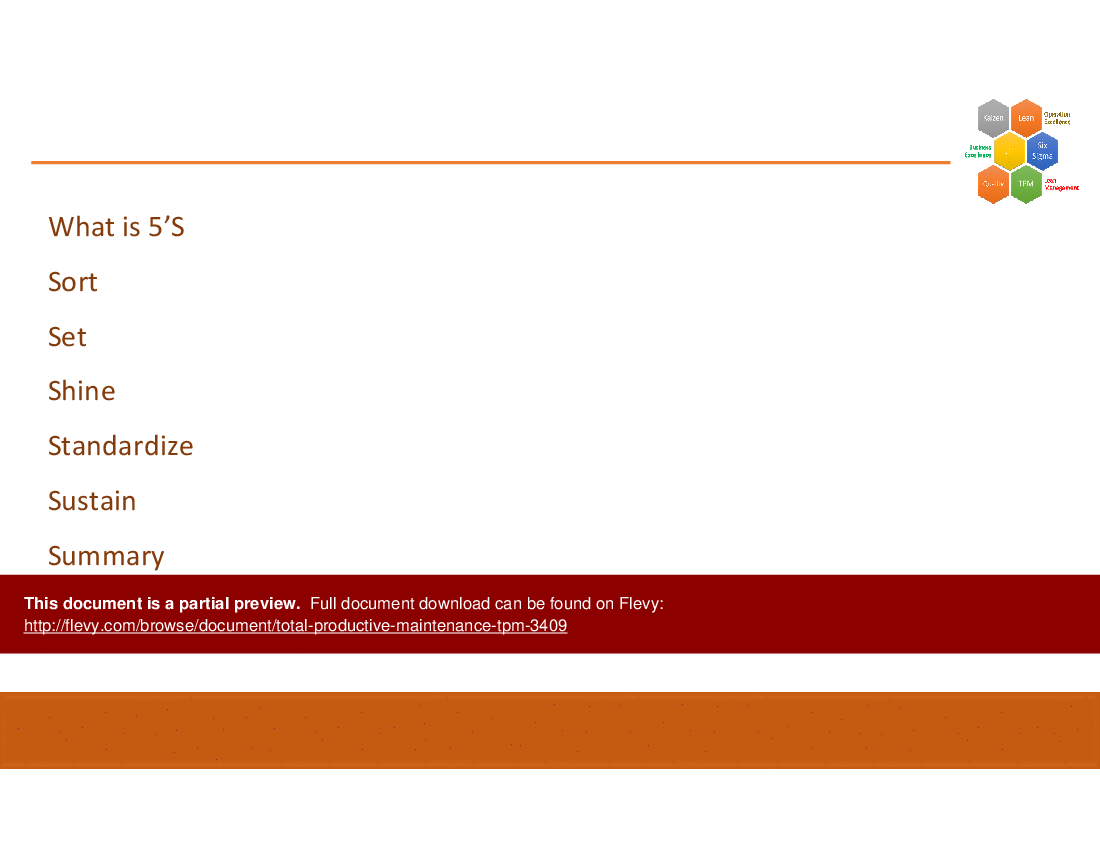
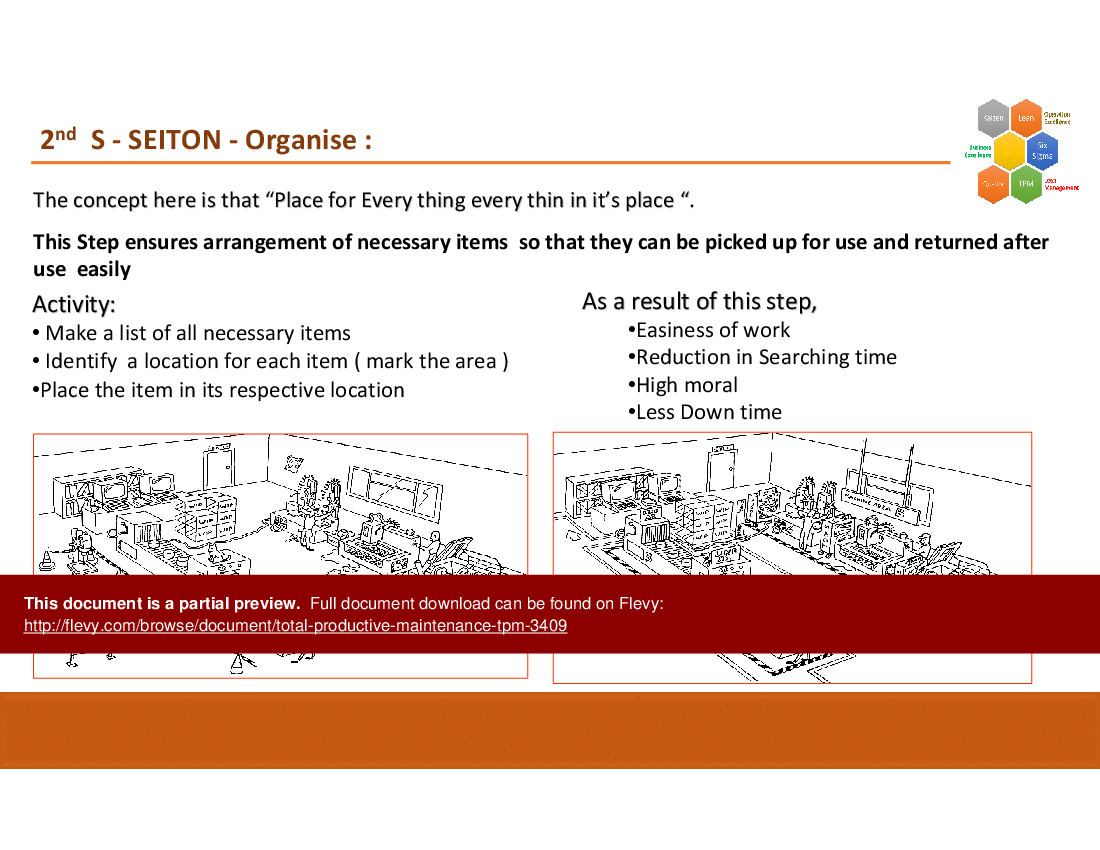
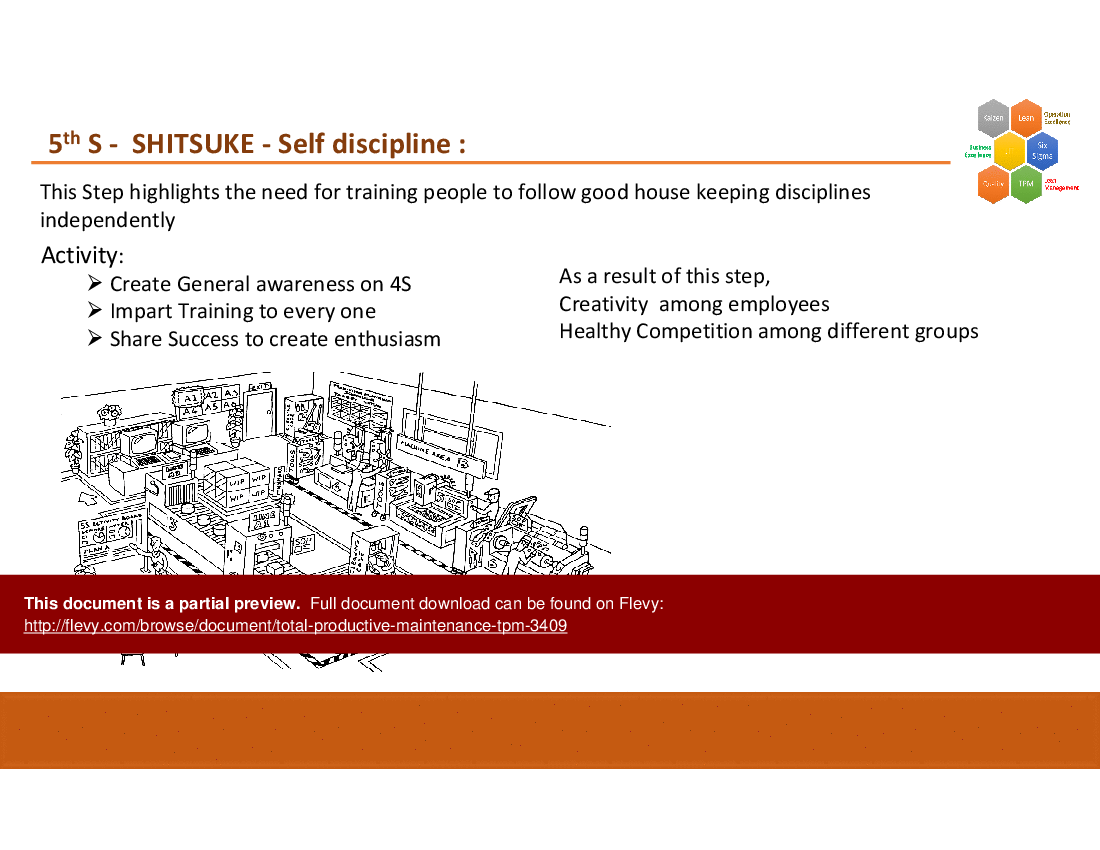
TPM Foundations: 5S & Visual Management
Equipment Loss & Overall Equipment Effectiveness (OEE)
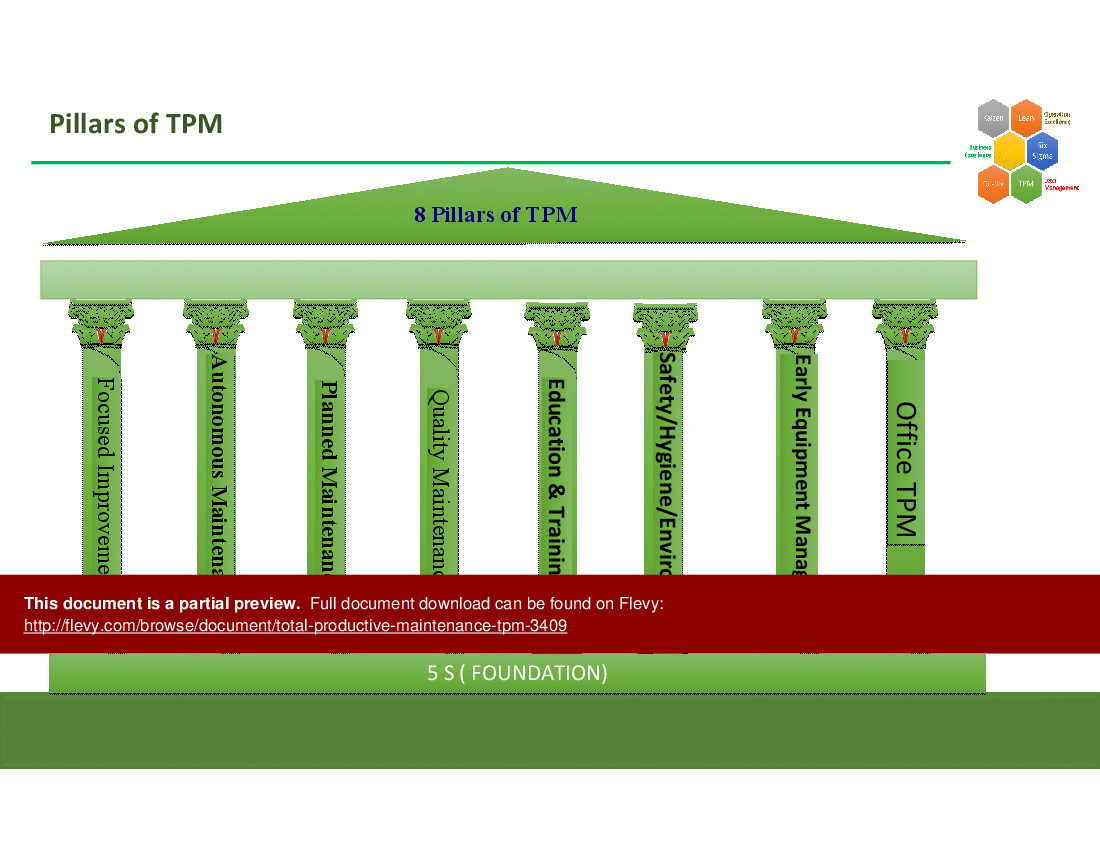
Eight Pillars of TPM
TPM Implementation

Learning Objectives :-

1. Understand the concept and management philosophy of TPM as a foundation for Lean Transformation
2. Learn the 8 pillars of TPM activities, TPM implementation strategy
3. Learn how to kick-start TPM deployment with Autonomous Maintenance, Planned Maintenance, Focused Improvement and Education & Training activities to improve equipment reliability
4. Understand the roles of a TPM implementation organization and the critical success factors

Got a question about the product? Email us at support@flevy.com or ask the author directly by using the "Ask the Author a Question" form. If you cannot view the preview above this document description, go here to view the large preview instead.

MARCUS OVERVIEW

This synopsis was written by Marcus [?] based on the analysis of the full 74-slide presentation.


Executive Summary
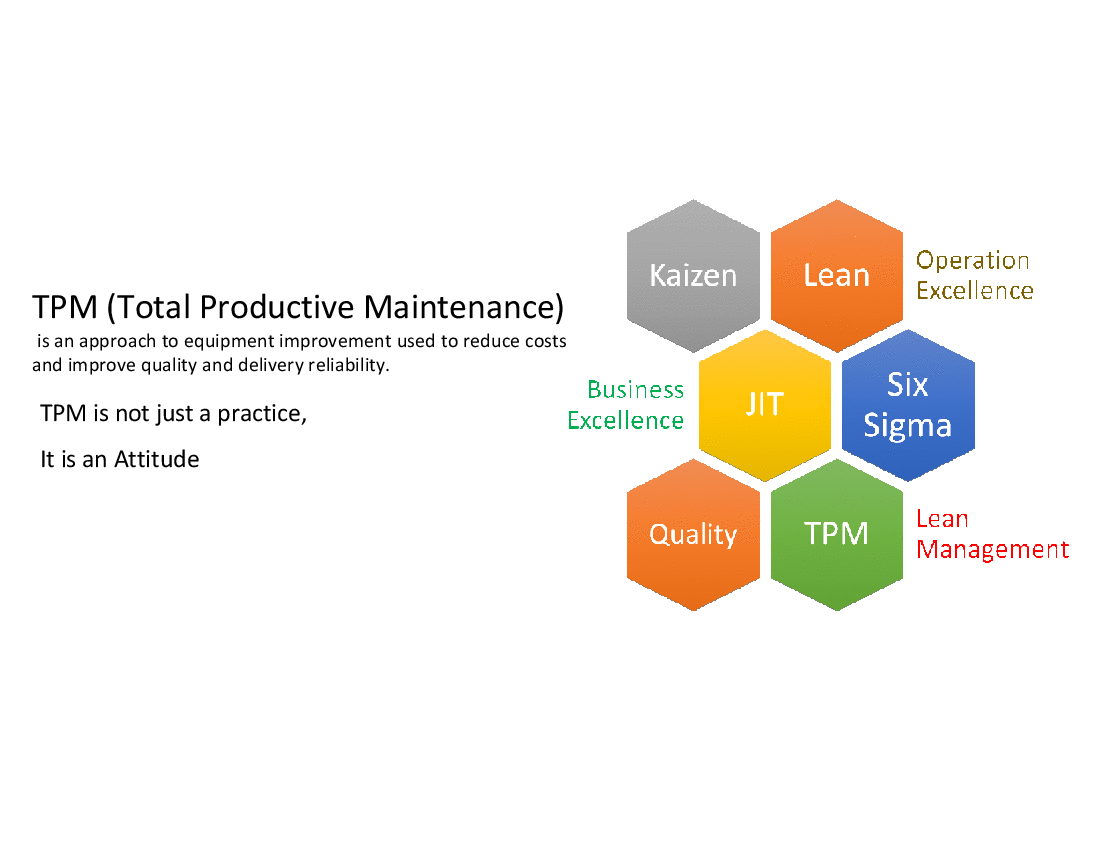
Total Productive Maintenance (TPM) is a comprehensive approach aimed at enhancing equipment efficiency, reducing costs, and improving quality and delivery reliability. This presentation provides a detailed overview of TPM principles, including its pillars, the Jishu Hozen (Autonomous Maintenance) framework, and implementation strategies. By adopting TPM, organizations can foster a culture of continuous improvement, engage all employees in maintenance activities, and achieve operational excellence through systematic loss elimination.

Who This Is For and When to Use
•  Operations Managers overseeing manufacturing processes
•  Maintenance Teams responsible for equipment reliability
•  Quality Assurance Professionals focused on defect reduction
•  Lean Management Practitioners aiming for efficiency improvements

Best-fit moments to use this deck:
•  During TPM training sessions for new employees
•  In workshops aimed at improving operational efficiency
•  When launching continuous improvement initiatives across departments

Learning Objectives
•  Define Total Productive Maintenance and its significance in manufacturing.
•  Identify the key pillars of TPM and their roles in operational excellence.
•  Develop a structured approach for implementing TPM in various functions.
•  Establish a culture of continuous improvement through employee engagement.
•  Analyze and mitigate production losses using TPM methodologies.
•  Implement Jishu Hozen practices to enhance equipment maintenance.

Table of Contents
•  Introduction to TPM (page 3)
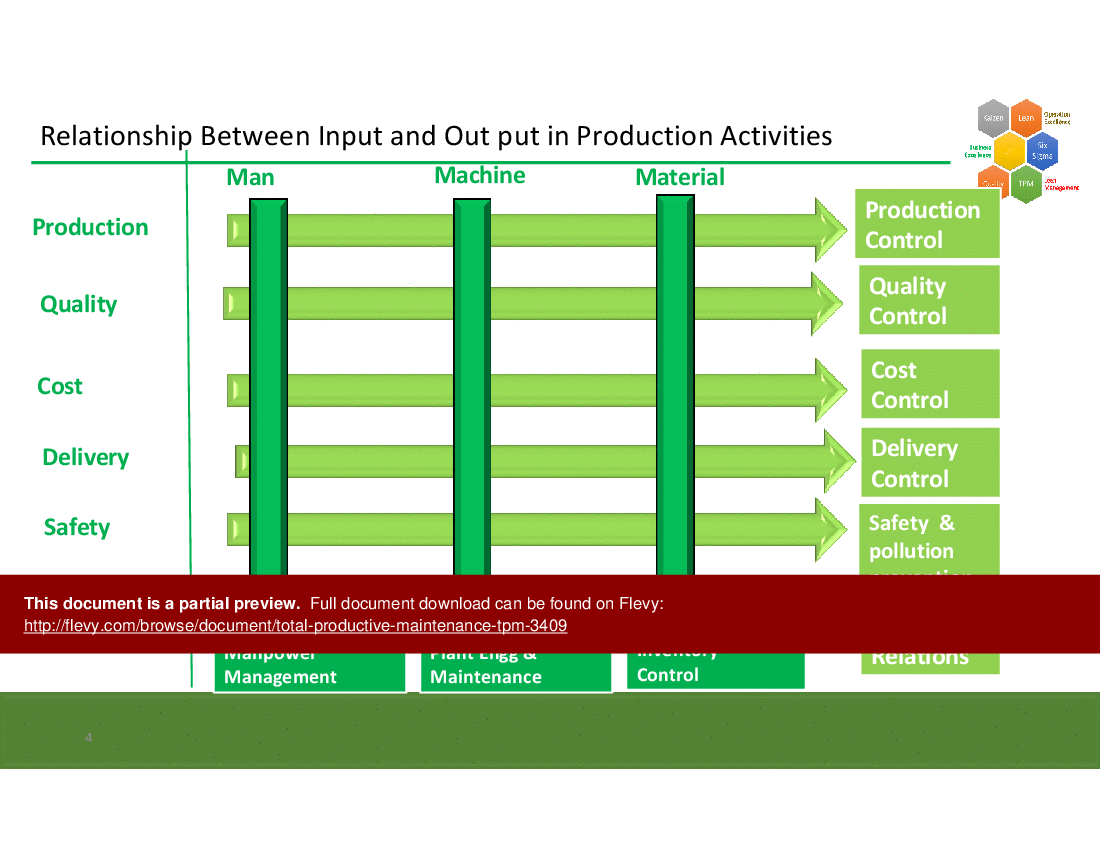
•  Key Principles of TPM (page 5)
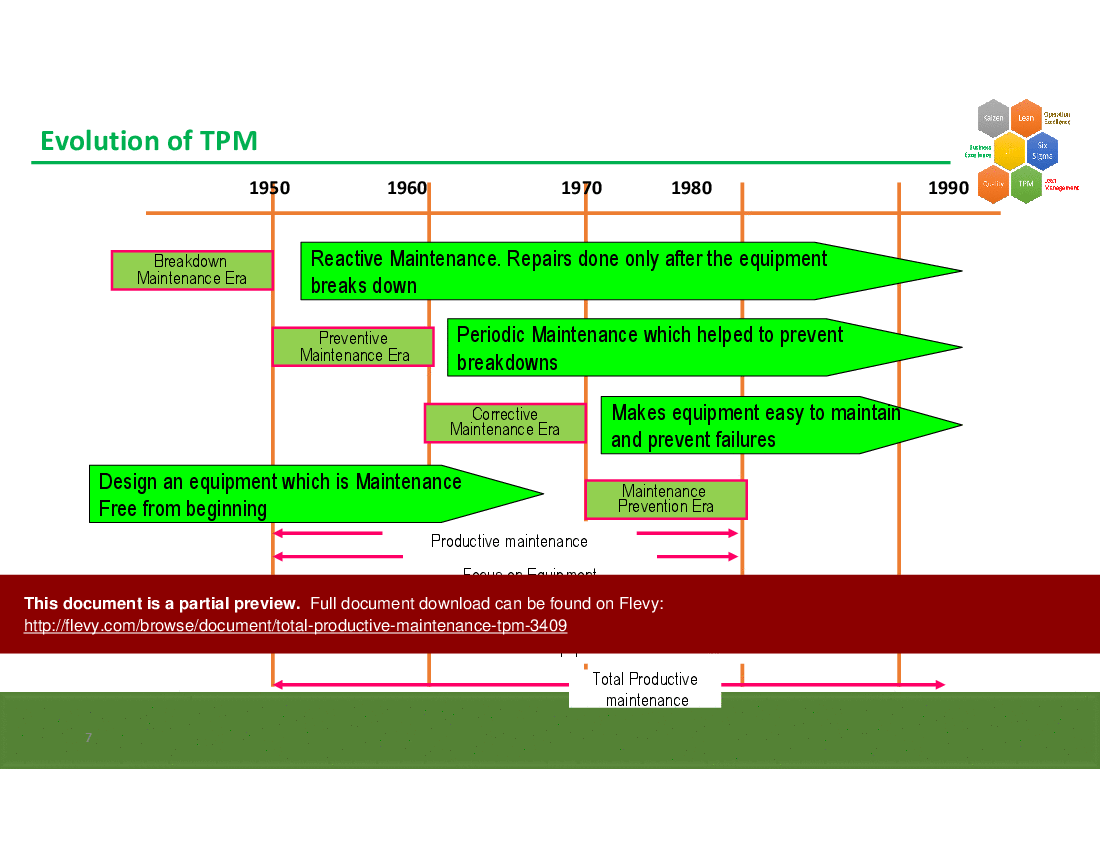
•  Evolution of Maintenance Practices (page 7)
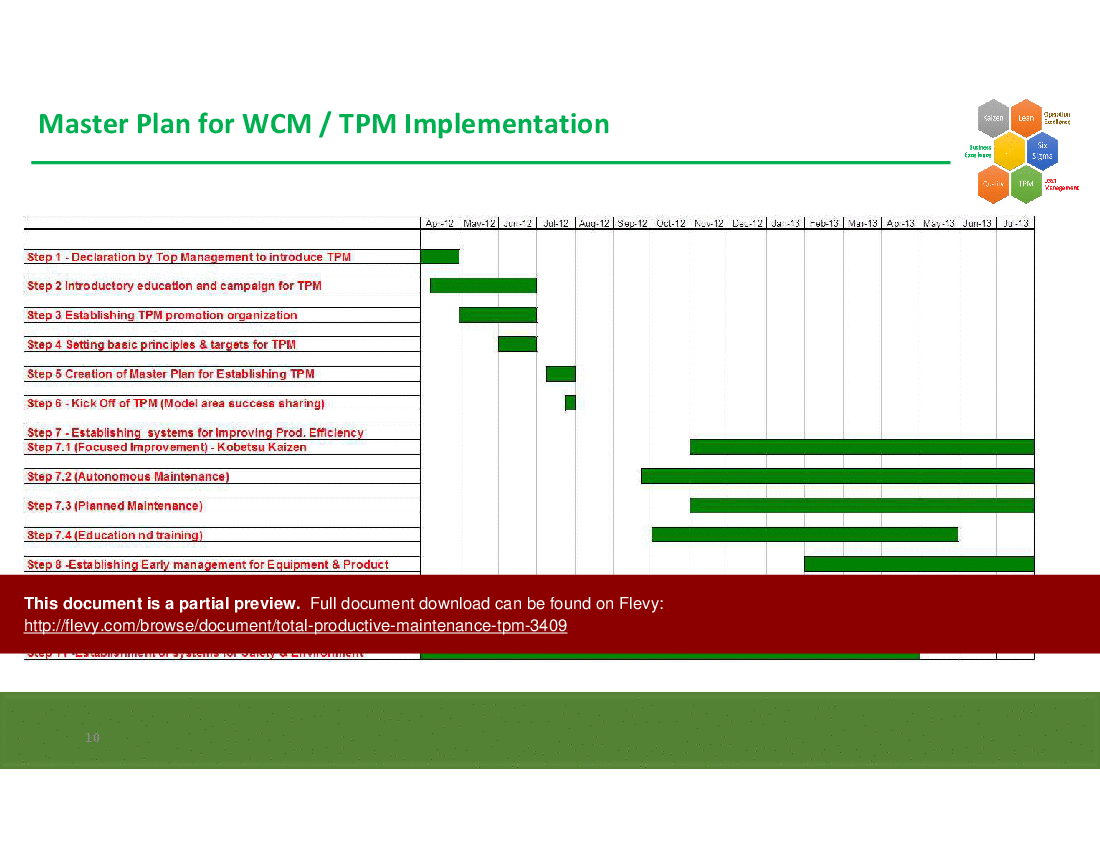
•  Implementation Steps for TPM (page 10)
•  Pillars of TPM (page 14)
•  Jishu Hozen (Autonomous Maintenance) (page 25)
•  Kobetsu Kaizen (Focus Area Improvement) (page 32)
•  Planned Maintenance Strategies (page 39)
•  Safety, Health, and Environment in TPM (page 70)
•  Education and Training for TPM (page 73)

Primary Topics Covered
•  Total Productive Maintenance - A holistic approach to maximize equipment efficiency by involving all employees in maintenance activities and focusing on eliminating losses.
•  Jishu Hozen - A framework that empowers operators to maintain their equipment, enhancing ownership and reducing breakdowns through daily checks and maintenance tasks.
•  Kobetsu Kaizen - Focused improvement initiatives aimed at eliminating specific losses in production to enhance overall effectiveness.
•  Planned Maintenance - Strategies to reduce breakdowns and extend equipment lifespan through systematic maintenance practices.
•  Safety, Health, and Environment - TPM's commitment to creating a safe workplace and minimizing environmental impact through reliable maintenance processes.
•  Education and Training - Programs designed to enhance employee skills, promote safety awareness, and support TPM initiatives.

Deliverables, Templates, and Tools
•  TPM implementation roadmap template for structured rollout.
•  Jishu Hozen training materials for operator education.
•  Kobetsu Kaizen project plan template for focused improvement initiatives.
•  Maintenance planning checklists for preventive maintenance activities.
•  Safety audit templates to assess workplace conditions.
•  Training modules for skill enhancement in maintenance practices.

Slide Highlights
•  Overview of TPM principles emphasizing a culture of continuous improvement.
•  Visual representation of the evolution of maintenance practices from reactive to proactive approaches.
•  Detailed steps for implementing TPM, including management commitment and employee engagement strategies.
•  Pillars of TPM illustrated with clear definitions and objectives.
•  Case studies showcasing successful TPM implementations in leading organizations.

Potential Workshop Agenda
TPM Introduction and Overview (90 minutes)
•  Discuss the principles and benefits of TPM.
•  Review the role of each pillar in achieving operational excellence.

Jishu Hozen Implementation Workshop (60 minutes)
•  Train operators on autonomous maintenance practices.
•  Develop action plans for daily equipment checks and maintenance tasks.

Kobetsu Kaizen Focus Session (90 minutes)
•  Identify specific production losses and set improvement targets.
•  Create a project plan for implementing focused improvements.

Customization Guidance
•  Tailor the TPM implementation roadmap to align with organizational goals and timelines.
•  Adjust training materials to reflect specific equipment and processes used within the organization.
•  Incorporate company-specific examples and case studies into the workshop sessions.

Secondary Topics Covered
•  The relationship between TPM and Lean Manufacturing principles.
•  Integration of TPM with Six Sigma methodologies for quality improvement.
•  The role of management in fostering a TPM culture.
•  Strategies for sustaining TPM initiatives over the long term.

Topic FAQ

What are the core pillars of Total Productive Maintenance?

TPM is organized around eight pillars that collectively target equipment reliability and loss elimination. Commonly cited pillars include Jishu Hozen (Autonomous Maintenance), Kobetsu Kaizen (Focused Improvement), Planned Maintenance, Education & Training, 5S/Visual Management, Safety/Health/Environment, Quality Maintenance, and maintenance planning activities, totaling eight pillars.

How does Jishu Hozen (Autonomous Maintenance) work in practice?

Jishu Hozen empowers operators to perform routine inspections, basic cleaning, lubrication, and minor adjustments to prevent breakdowns. It increases operator ownership of equipment and reduces reactive maintenance needs through daily checks and routine tasks, typically implemented via operator training and standardized daily checklists.

How is Overall Equipment Effectiveness (OEE) used to measure TPM success?

OEE quantifies equipment efficiency by combining availability, performance, and quality metrics, allowing teams to track improvements in downtime, speed losses, and defects. TPM initiatives use OEE as a primary performance indicator to measure progress and prioritize loss-elimination activities, specifically tracking OEE metrics.

What should I look for in a TPM training deck or toolkit?

Effective TPM materials should include an implementation roadmap, Jishu Hozen training content, Kobetsu Kaizen project templates, preventive maintenance checklists, safety audit templates, and modular training modules to support workshops and operator education. Look for these deliverables such as a TPM implementation roadmap template.

How should I budget for TPM templates and slide packs versus bespoke consulting support?

Budgeting depends on scope, customization needs, and whether you require facilitation. Off-the-shelf slide packs and templates provide structured materials for training and rollout, while consultancy adds facilitation and tailoring. A common commercial deliverable in the market is a downloadable 74-slide PPT bundle for self-led deployment.

If recurring breakdowns are my problem, which TPM practices should I apply first?

Begin with Autonomous Maintenance (Jishu Hozen) to engage operators in daily checks, then implement Planned/Preventive Maintenance to address systemic failures, and run Kobetsu Kaizen projects to target root causes of recurring losses. These initial steps typically involve Jishu Hozen, Planned Maintenance, and Kobetsu Kaizen.

What are practical steps to sustain TPM after initial rollout?

Sustaining TPM requires ongoing management support, scheduled refresher training, continuous employee engagement, and regular measurement of results (e.g., OEE). Institutionalizing routines such as daily checks, periodic audits, and training updates helps maintain momentum, supported by management commitment and regular training updates.

How can TPM be adapted for non-manufacturing functions like office TPM?

Adapt TPM by translating equipment-focused practices into administrative processes: apply 5S and visual management to workspaces, define preventive "maintenance" for IT and process steps, run focused improvement projects on recurring office delays, and tailor training and templates to administrative workflows for Office TPM application.

Document FAQ
These are questions addressed within this presentation.

What is Total Productive Maintenance (TPM)?
TPM is a holistic approach to equipment maintenance that involves all employees in improving productivity by eliminating losses and enhancing equipment reliability.

How does Jishu Hozen contribute to TPM?
Jishu Hozen empowers operators to take ownership of their equipment, performing routine maintenance tasks that prevent breakdowns and improve overall efficiency.

What are the key benefits of implementing TPM?
Implementing TPM leads to reduced downtime, improved product quality, enhanced employee morale, and lower operational costs.

How can we measure the success of TPM initiatives?
Success can be measured through key performance indicators such as Overall Equipment Effectiveness (OEE), reduction in downtime, and improvements in quality metrics.

What training is necessary for successful TPM implementation?
Training should focus on TPM principles, autonomous maintenance practices, safety protocols, and continuous improvement methodologies.

How can we sustain TPM efforts over time?
Sustaining TPM requires ongoing management support, regular training updates, and continuous engagement of all employees in improvement initiatives.

What role does safety play in TPM?
Safety is a fundamental aspect of TPM, aiming to create a safe working environment while minimizing risks associated with equipment operation and maintenance.

How can we engage employees in TPM initiatives?
Engagement can be fostered through training programs, recognition of contributions, and involving employees in decision-making processes related to maintenance practices.

Glossary
•  Total Productive Maintenance (TPM) - A maintenance philosophy that aims to maximize equipment effectiveness by involving all employees.
•  Jishu Hozen - Autonomous maintenance practices that empower operators to maintain their equipment.
•  Kobetsu Kaizen - Focused improvement initiatives aimed at eliminating specific production losses.
•  Overall Equipment Effectiveness (OEE) - A metric that measures the efficiency of a manufacturing process.
•  Lean Manufacturing - A production practice that considers the expenditure of resources in any aspect other than the direct creation of value for the end customer to be wasteful.
•  Six Sigma - A set of techniques and tools for process improvement aimed at reducing defects and variability.
•  Preventive Maintenance - Scheduled maintenance activities designed to prevent equipment failures.
•  Safety, Health, and Environment (SHE) - Practices aimed at ensuring workplace safety and minimizing environmental impact.
•  Education and Training (E&T) - Programs designed to enhance employee skills and promote continuous improvement.
•  5S - A methodology for organizing and managing the workspace effectively to improve efficiency and safety.
•  Kaizen - A Japanese term meaning "change for better," referring to activities that continuously improve all functions and involve all employees.
•  Autonomous Maintenance - A practice where operators take responsibility for the maintenance of their equipment.
•  Focus Improvement - Targeted initiatives aimed at addressing specific areas of inefficiency or loss.
•  Maintenance Planning - The process of scheduling maintenance activities to ensure optimal equipment performance.
•  Quality Maintenance - Activities aimed at maintaining equipment conditions that prevent quality defects.
•  Office TPM - The application of TPM principles in administrative and support functions to improve efficiency.

Source: Best Practices in TPM PowerPoint Slides: Total Productive Maintenance (TPM) PowerPoint (PPT) Presentation Slide Deck, Nishil Josh


$29.99

Add to Cart
  

ABOUT THE AUTHOR

Author: Nishil Josh
Additional documents from author: 23

I am a Business Excellence Professional with over 25 years of experience in Manufacturing Operations, Quality Assurance & Improvement, and Resource Management across various industry sectors. Throughout my career, I have specialized in managing production activities, optimizing processes, and implementing best practices to enhance operational efficiency and productivity.

My expertise includes ... [read more]

Ask the Author a Question

You must be logged in to contact the author.

Click here to log in Click here register

Did you know?
The average daily rate of a McKinsey consultant is $6,625 (not including expenses). The average price of a Flevy document is $65.
Bundle and save! You can save up to % with bundles!

View bundle(s)


Trusted by over 10,000+ Client Organizations
Since 2012, we have provided business templates to over 10,000 businesses and organizations of all sizes, from startups and small businesses to the Fortune 100, in over 130 countries.
AT&T GE Cisco Intel IBM Coke Dell Toyota HP Nike Samsung Microsoft Astrazeneca JP Morgan KPMG Walgreens Walmart 3M Kaiser Oracle SAP Google E&Y Volvo Bosch Merck Fedex Shell Amgen Eli Lilly Roche AIG Abbott Amazon PwC T-Mobile Broadcom Bayer Pearson Titleist ConEd Pfizer NTT Data Schwab


Read Customer Testimonials

 
"[Flevy] produces some great work that has been/continues to be of immense help not only to myself, but as I seek to provide professional services to my clients, it gives me a large "tool box" of resources that are critical to provide them with the quality of service and outcomes they are expecting."

– Royston Knowles, Executive with 50+ Years of Board Level Experience
 
"As a young consulting firm, requests for input from clients vary and it's sometimes impossible to provide expert solutions across a broad spectrum of requirements. That was before I discovered Flevy.com.

Through subscription to this invaluable site of a plethora of topics that are key and crucial to consulting, I "

– Nishi Singh, Strategist and MD at NSP Consultants
 
"Flevy is now a part of my business routine. I visit Flevy at least 3 times each month.

Flevy has become my preferred learning source, because what it provides is practical, current, and useful in this era where the business world is being rewritten.

In today's environment where there are so "

– Omar Hernán Montes Parra, CEO at Quantum SFE
 
"FlevyPro has been a brilliant resource for me, as an independent growth consultant, to access a vast knowledge bank of presentations to support my work with clients. In terms of RoI, the value I received from the very first presentation I downloaded paid for my subscription many times over! The "

– Roderick Cameron, Founding Partner at SGFE Ltd
 
"As a consulting firm, we had been creating subject matter training materials for our people and found the excellent materials on Flevy, which saved us 100's of hours of re-creating what already exists on the Flevy materials we purchased."

– Michael Evans, Managing Director at Newport LLC
 
"FlevyPro provides business frameworks from many of the global giants in management consulting that allow you to provide best in class solutions for your clients."

– David Harris, Managing Director at Futures Strategy
 
"Flevy is our 'go to' resource for management material, at an affordable cost. The Flevy library is comprehensive and the content deep, and typically provides a great foundation for us to further develop and tailor our own service offer."

– Chris McCann, Founder at Resilient.World
 
"I have found Flevy to be an amazing resource and library of useful presentations for lean sigma, change management and so many other topics. This has reduced the time I need to spend on preparing for my performance consultation. The library is easily accessible and updates are regularly provided. A wealth of great information."

– Cynthia Howard RN, PhD, Executive Coach at Ei Leadership


Save with Bundles

This document is available as part of the following discounted bundle(s):

Save %!
Lean Frequently Used Tools (Best Selling Documents)

This bundle contains 5 total documents. See all the documents to the right.

$49.00


Add Bundle & Save


Customers Also Bought These Documents


Customers Also Like These Documents

Explore Templates on Related Management Topics


Your Recently Viewed Documents
Receive our FREE presentation on Operational Excellence

This 50-slide presentation provides a high-level introduction to the 4 Building Blocks of Operational Excellence. Achieving OpEx requires the implementation of a Business Execution System that integrates these 4 building blocks.









