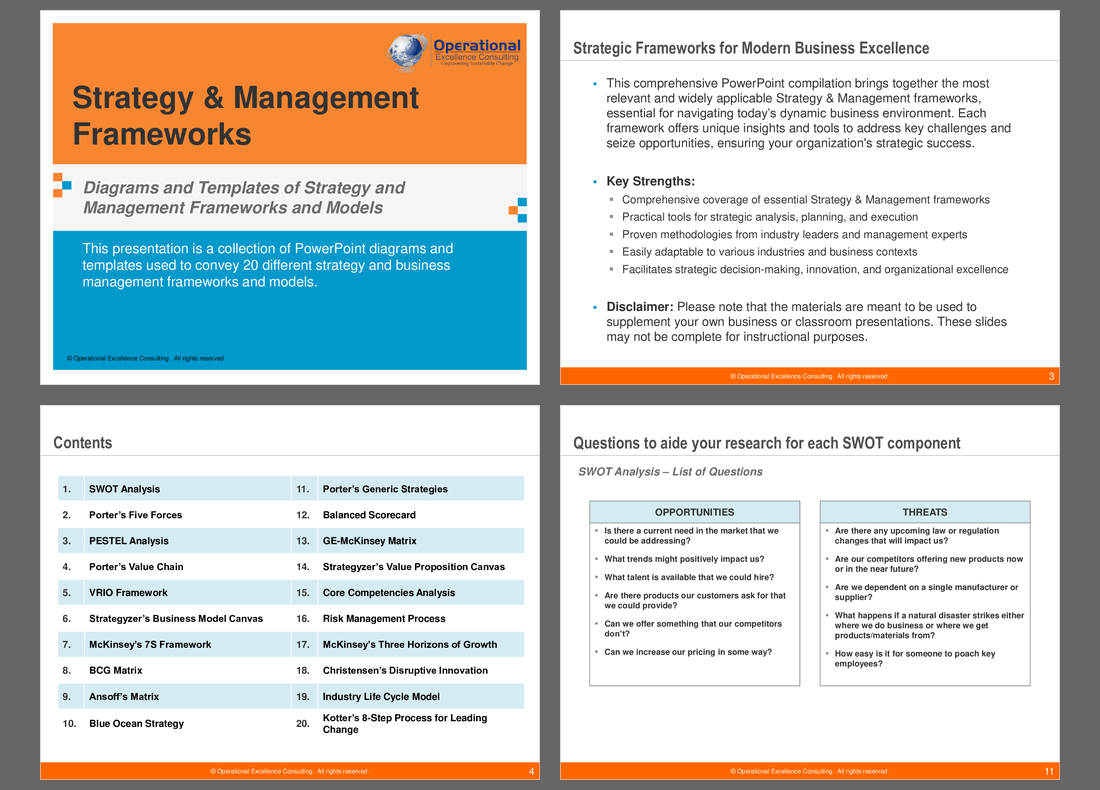
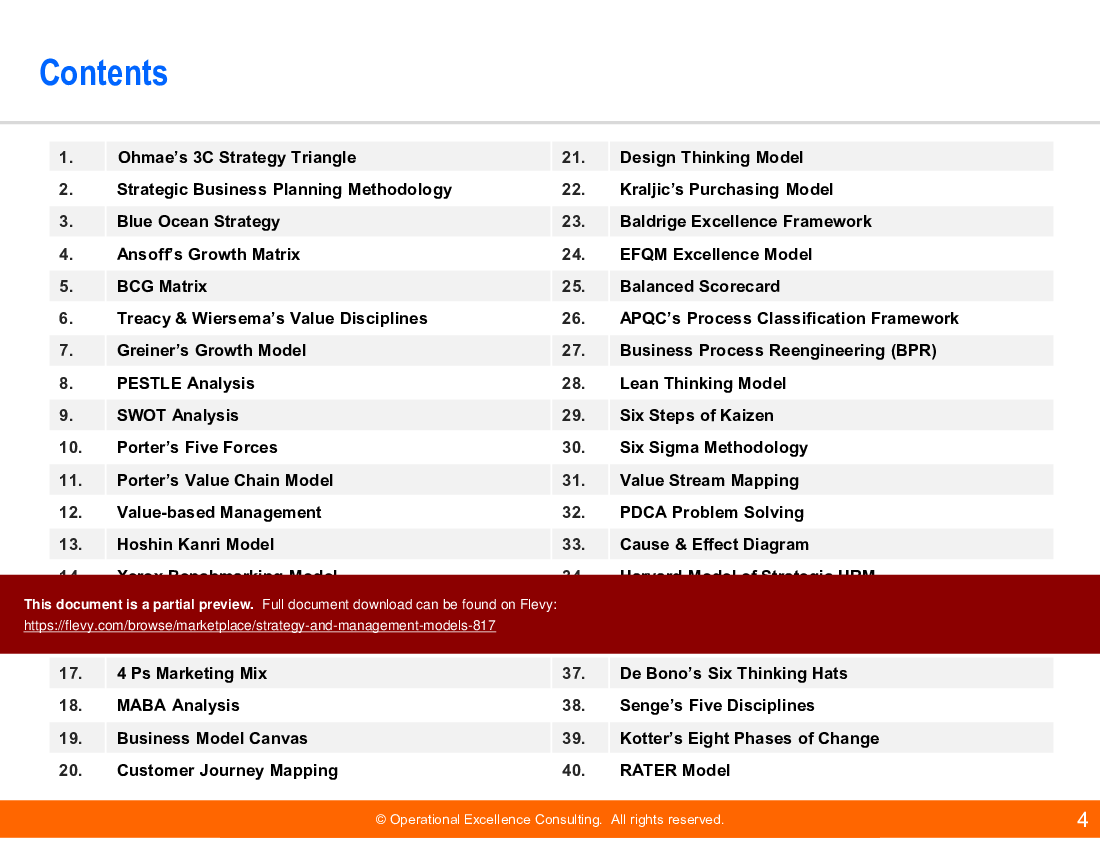
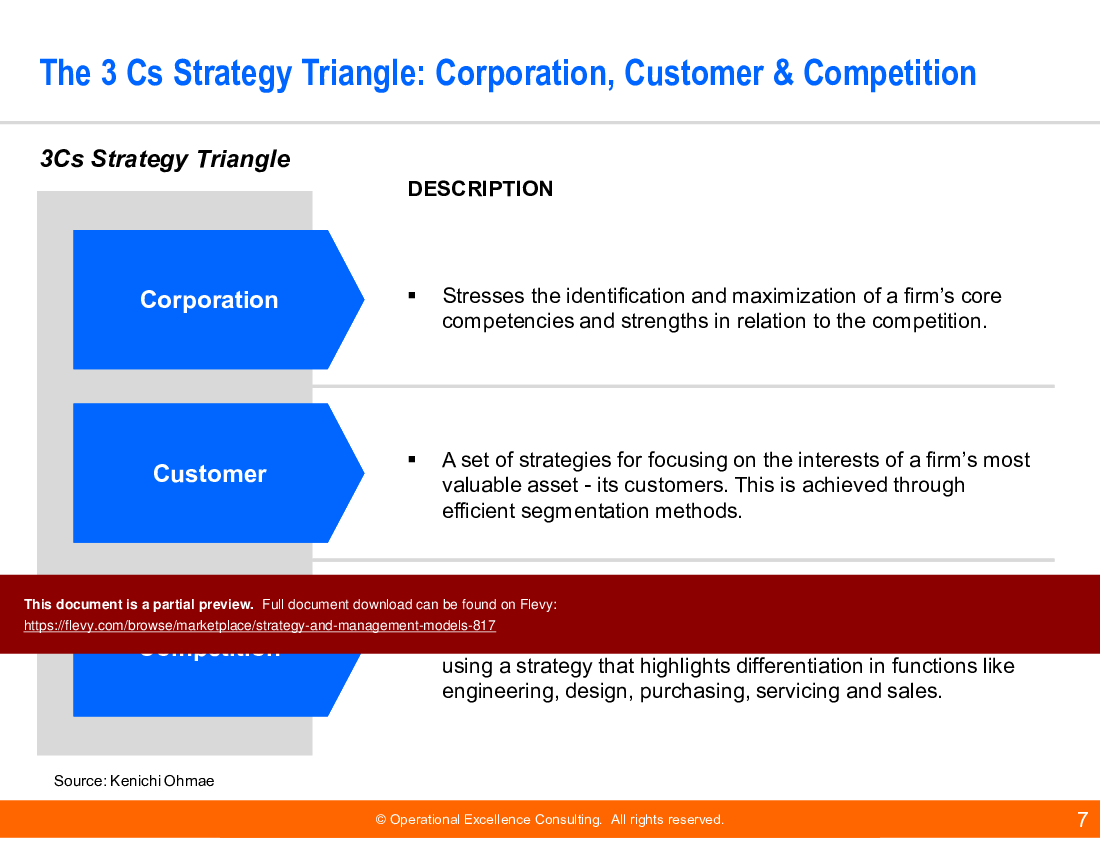
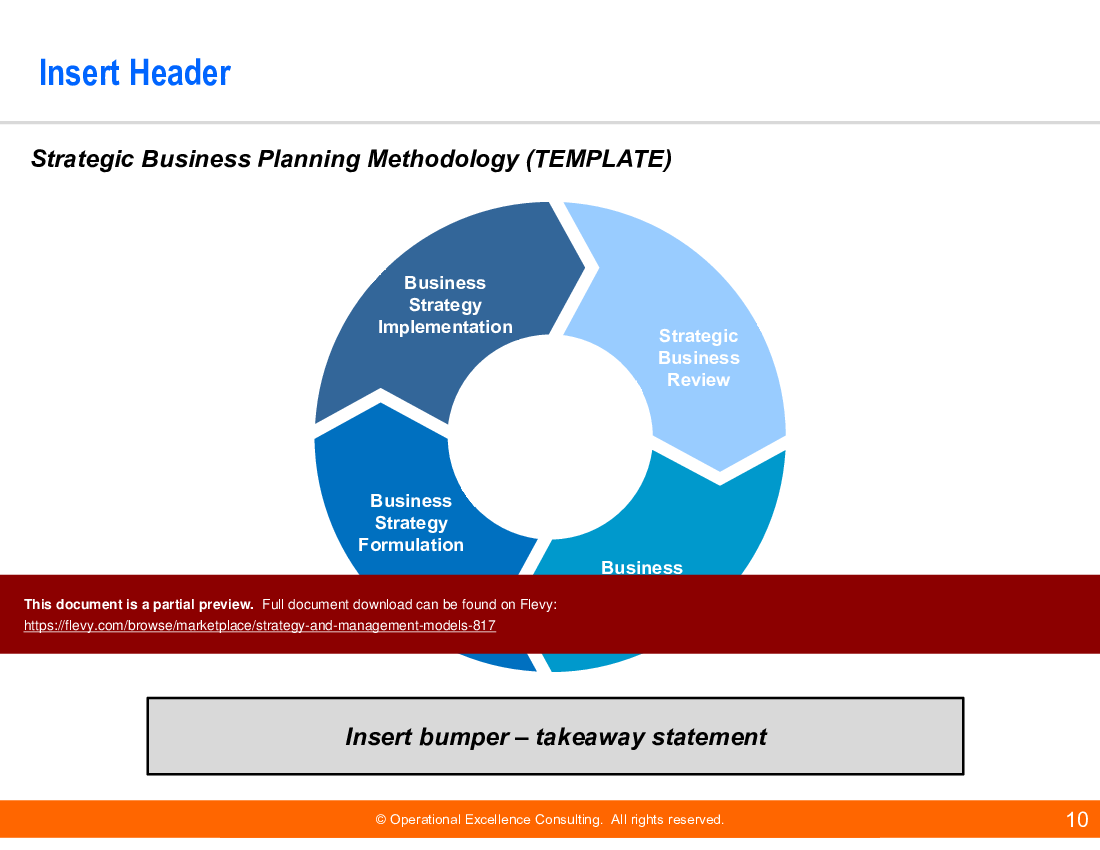
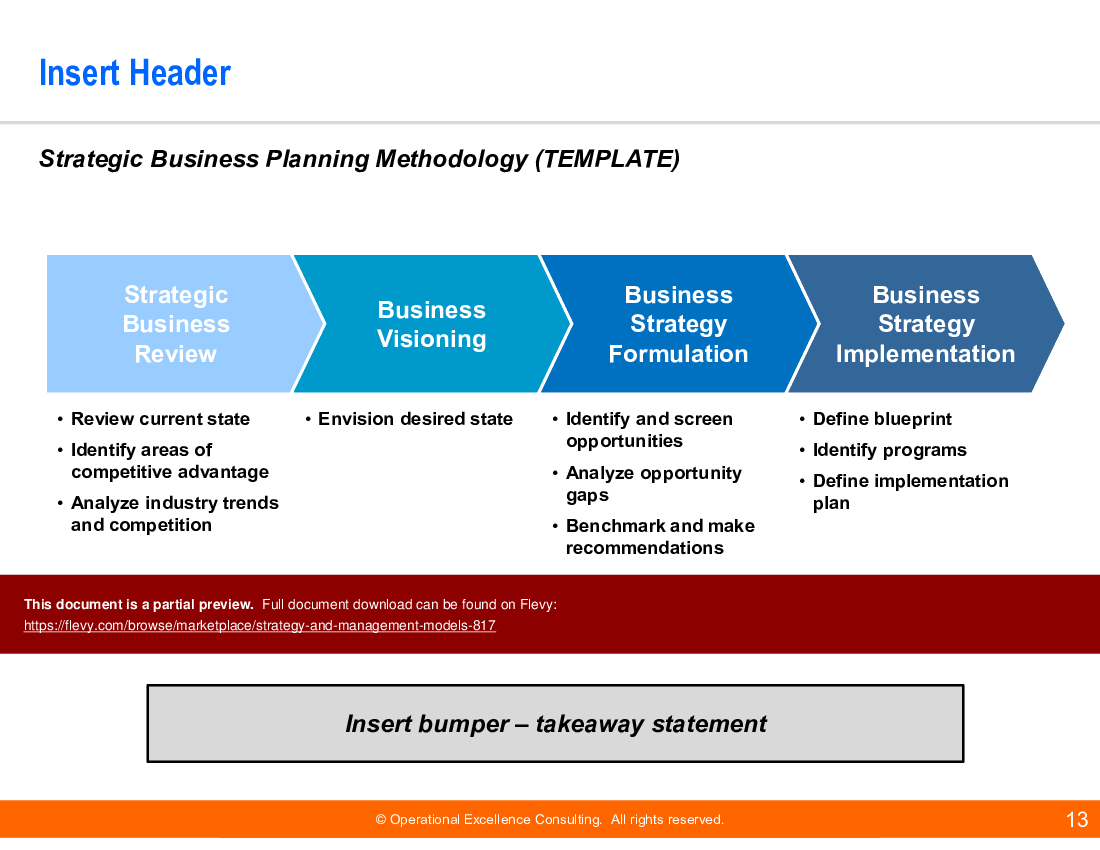

This comprehensive PowerPoint compilation brings together 20 of the most relevant and widely applicable Strategy & Management frameworks. These frameworks are essential for navigating today's dynamic business environment, offering unique insights and tools to address key challenges and seize opportunities, ensuring your organization's strategic success.

The domains covered include Strategic Analysis, Business Model Innovation, Competitive Strategy, Organizational Change and Performance Management.
Key Strengths:
• Comprehensive coverage of essential Strategy & Management frameworks.
• Practical tools for strategic analysis, planning, and execution.
• Proven methodologies from industry leaders and management experts.
• Easily adaptable to various industries and business contexts.
• Facilitates strategic decision-making, innovation, and organizational excellence.
This PowerPoint compilation is a must-have for executives, managers, consultants, and students seeking to enhance their strategic thinking and drive business success in today's competitive landscape.
These materials are perfect for enhancing your business or classroom presentations, offering visual aids to supplement your insights. Please note that while comprehensive, these slides are intended as supplementary resources and may not be complete for standalone instructional purposes.
INCLUDED FRAMEWORKS/MODELS:
1. SWOT Analysis: Evaluate internal strengths and weaknesses, as well as external opportunities and threats, to inform strategic decision-making. (Strategic Analysis)
2. Porter's Five Forces: Analyze industry structure and competitiveness to formulate strategies for sustainable profitability. (Strategic Analysis)
3. PESTLE Analysis: Assess the macro-environmental factors that could impact an organization's strategic decisions. (Strategic Analysis)
4. Porter's Value Chain Analysis: Identify activities that create value and optimize them for competitive advantage. (Business Model Innovation)
5. VRIO Framework: Evaluate the value, rarity, imitability, and organization of resources to determine competitive potential. (Competitive Strategy)
6. Strategyzer's Business Model Canvas: Visualize and innovate business models to create new value propositions. (Business Model Innovation)
7. McKinsey's 7S Framework: Align organizational elements to achieve strategic goals and improve performance. (Organizational Change)
8. BCG Matrix: Manage your product portfolio by analyzing market growth rate and relative market share. (Strategic Analysis)
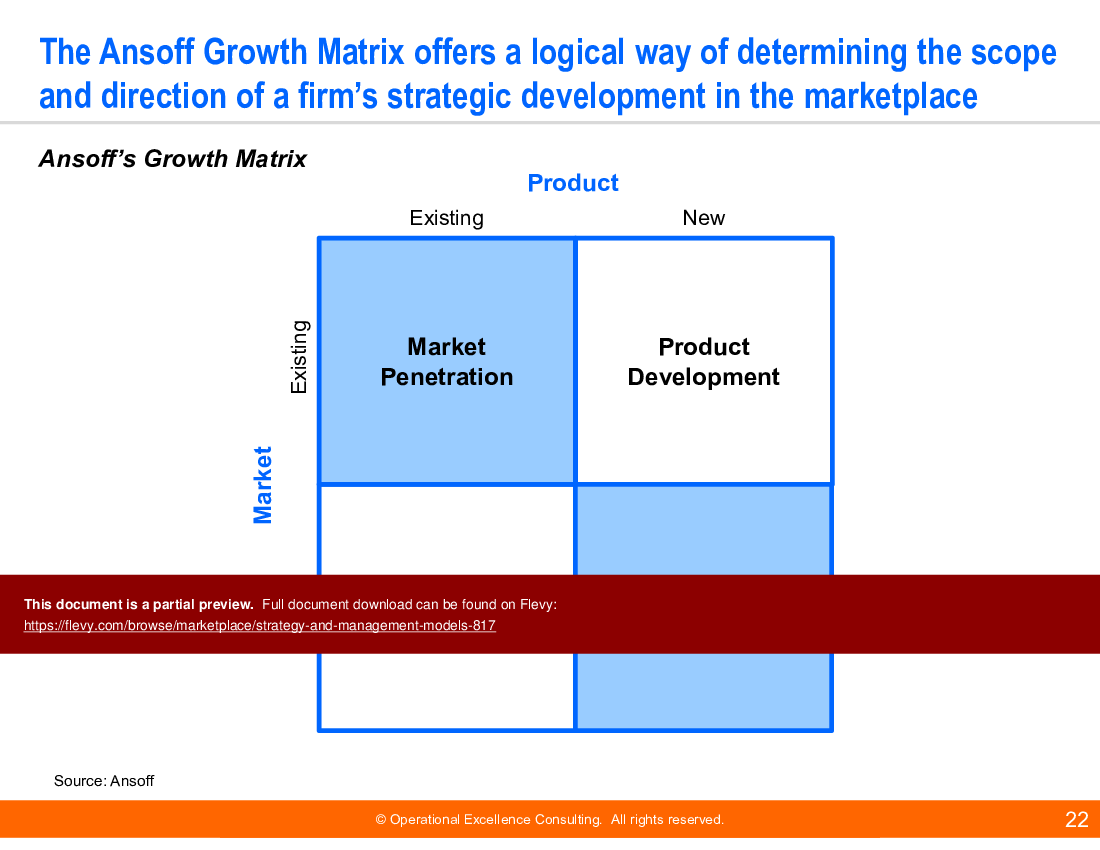
9. Ansoff's Matrix: Develop growth strategies based on market penetration, market development, product development, and diversification. (Competitive Strategy)
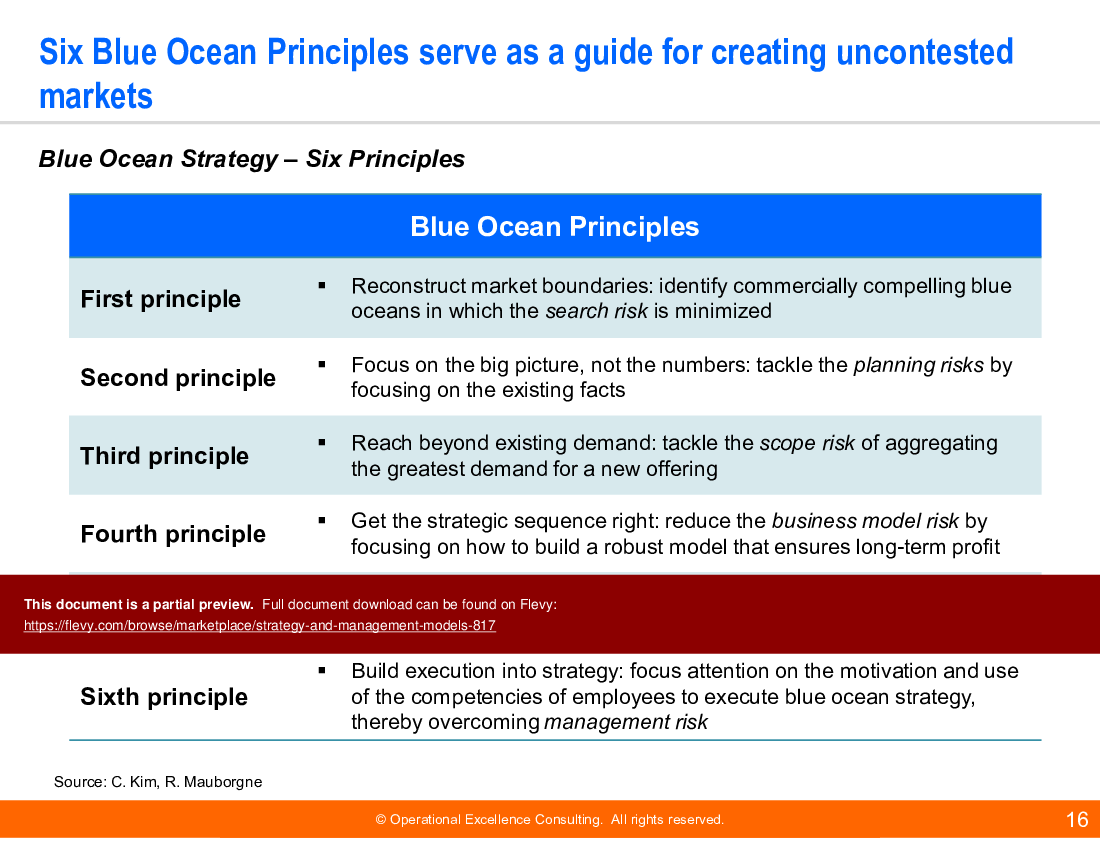
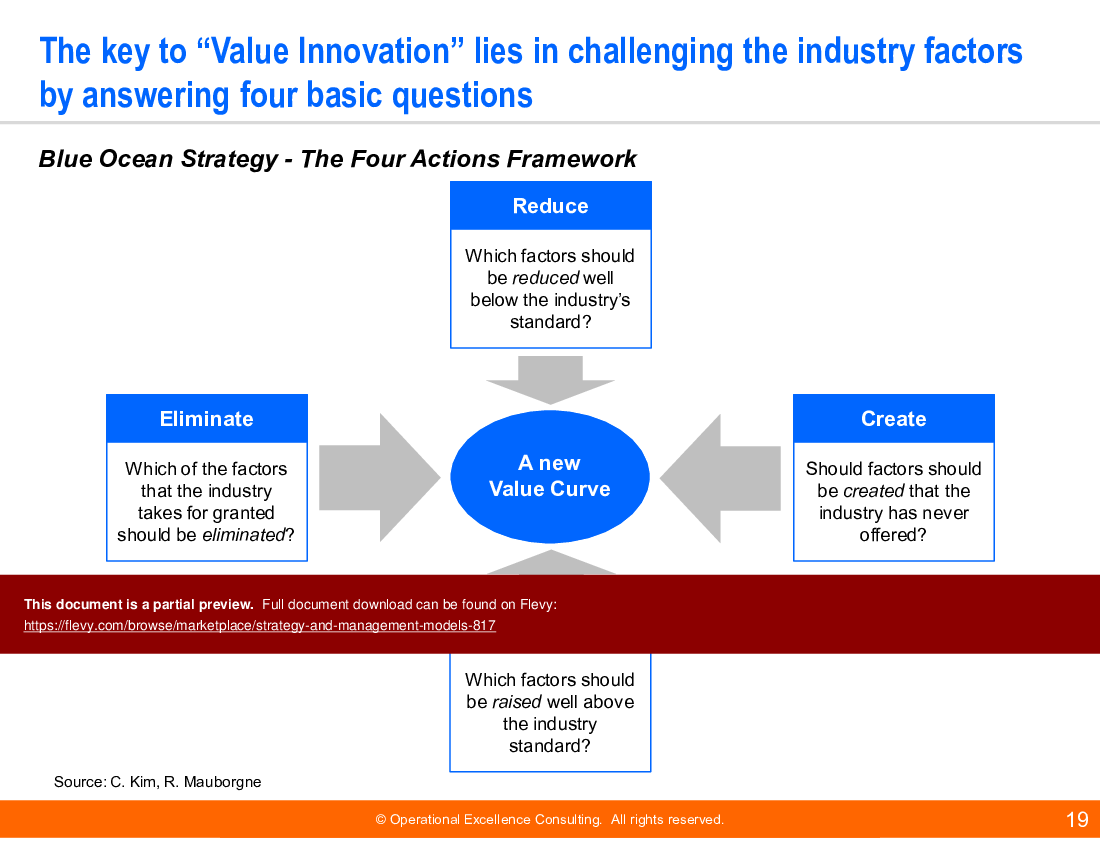
10. Blue Ocean Strategy: Create new market spaces uncontested by competitors. (Competitive Strategy)
11. Porter's Generic Strategies: Choose between cost leadership, differentiation, and focus strategies. (Competitive Strategy)
12. Balanced Scorecard: Align business activities to the vision and strategy of the organization. (Performance Management)
13. GE-McKinsey Matrix: Prioritize business units and allocate resources based on business unit strength and industry attractiveness. (Strategic Analysis)
14. Strategyzer's Value Proposition Canvas: Design products and services that meet customer needs and stand out in the market. (Business Model Innovation)
15. Core Competencies Analysis: Identify and leverage unique capabilities that drive competitive advantage. (Competitive Strategy)
16. Risk Management Process: Identify, assess, and mitigate risks to minimize potential losses and maximize opportunities. (Risk Management)
17. McKinsey's Three Horizons of Growth: Manage innovation and growth across different time horizons. (Business Model Innovation)
18. Christensen's Disruptive Innovation: Recognize and respond to disruptive threats and opportunities. (Business Model Innovation)
19. Industry Life Cycle Model: Understand the stage of industry evolution to make strategic decisions. (Strategic Analysis)
20. Kotter's 8-Step Process for Leading Change: Implement successful organizational change initiatives. (Organizational Change)
Got a question about the product? Email us at support@flevy.com or ask the author directly by using the "Ask the Author a Question" form. If you cannot view the preview above this document description, go here to view the large preview instead.
Executive Summary
The Strategy & Management Frameworks PowerPoint presentation is a robust collection of diagrams and templates designed to facilitate strategic analysis and management within organizations. Developed by Operational Excellence Consulting, this resource encompasses 20 essential frameworks, including SWOT Analysis, Porter’s Five Forces, PESTEL Analysis, and the Business Model Canvas. Each framework is tailored to provide actionable insights, enabling corporate executives and consultants to navigate complex business environments effectively. This presentation serves as a vital tool for strategic planning, operational excellence, and decision-making, ensuring organizations can adapt and thrive in today's dynamic marketplace.
Who This Is For and When to Use
• Corporate executives seeking to enhance strategic planning and execution.
• Strategy consultants looking for proven frameworks to support client engagements.
• Business analysts conducting market assessments and competitive analyses.
• Project managers aiming to align team objectives with organizational strategy.
Best-fit moments to use this deck:
• During strategic planning sessions to align organizational goals with actionable frameworks.
• In workshops focused on team development and operational excellence initiatives.
• When conducting market analysis or competitive assessments to inform decision-making.
Learning Objectives
• Define key strategic frameworks and their applications in business contexts.
• Build comprehensive strategic plans using established methodologies.
• Analyze market conditions and competitive landscapes effectively.
• Establish actionable insights from SWOT, PESTEL, and other analytical frameworks.
• Create value propositions that resonate with target customer segments.
• Implement risk management processes to mitigate potential business threats.
Table of Contents
• SWOT Analysis (page 6)
• Porter’s Five Forces (page 16)
• PESTEL Analysis (page 22)
• Porter’s Value Chain (page 28)
• VRIO Framework (page 36)
• Strategyzer’s Business Model Canvas (page 42)
• McKinsey’s 7S Framework (page 58)
• BCG Matrix (page 77)
• Ansoff’s Matrix (page 82)
• Blue Ocean Strategy (page 89)
• Porter’s Generic Strategies (page 97)
• Balanced Scorecard (page 103)
• GE-McKinsey Matrix (page 112)
• Strategyzer’s Value Proposition Canvas (page 117)
• Core Competencies Analysis (page 125)
• Risk Management Process (page 132)
• McKinsey’s Three Horizons of Growth (page 137)
• Christensen’s Disruptive Innovation (page 144)
• Industry Life Cycle Model (page 150)
• Kotter’s 8-Step Process for Leading Change (page 157)
Primary Topics Covered
• SWOT Analysis - A structured method for evaluating strengths, weaknesses, opportunities, and threats to inform strategic planning.
• Porter’s Five Forces - An analysis framework to assess industry competitiveness and market dynamics.
• PESTEL Analysis - A tool for examining external macro-environmental factors affecting business performance.
• Porter’s Value Chain - A model for identifying value-creating activities within an organization.
• VRIO Framework - An internal analysis tool to evaluate resources and capabilities for competitive advantage.
• Business Model Canvas - A visual framework for developing and articulating business models.
Deliverables, Templates, and Tools
• SWOT Analysis template for identifying internal and external factors.
• Porter’s Five Forces template for assessing industry competitiveness.
• PESTEL Analysis template for evaluating macro-environmental influences.
• Business Model Canvas for visualizing business models and value propositions.
• VRIO Framework for analyzing resources and capabilities.
• Balanced Scorecard for aligning business activities to the vision and strategy.
Slide Highlights
• Comprehensive SWOT Analysis framework with actionable insights.
• Visual representation of Porter’s Five Forces to assess competitive dynamics.
• PESTEL Analysis slide detailing key macro-environmental factors.
• Business Model Canvas illustrating essential components of business strategy.
• VRIO Framework slide for evaluating competitive advantages.
Potential Workshop Agenda
Introduction to Strategic Frameworks (30 minutes)
• Overview of key frameworks and their applications.
• Discussion on the importance of strategic analysis in decision-making.
Hands-on SWOT Analysis Workshop (60 minutes)
• Breakout sessions to conduct SWOT analyses on current projects.
• Group presentations to share insights and findings.
Exploring Market Dynamics with Porter’s Five Forces (45 minutes)
• Interactive session on applying the Five Forces framework to real-world scenarios.
• Case study analysis to illustrate competitive strategies.
Customization Guidance
• Tailor the SWOT Analysis template to reflect specific organizational contexts and objectives.
• Adapt the Business Model Canvas to align with unique value propositions and customer segments.
• Modify the PESTEL Analysis to focus on relevant external factors impacting the industry.
Secondary Topics Covered
• Risk Management Process for identifying and mitigating business risks.
• McKinsey’s 7S Framework for assessing organizational alignment.
• Christensen’s Disruptive Innovation theory for understanding market shifts.
• Industry Life Cycle Model for analyzing business phases and strategic responses.
FAQ
What is the purpose of the SWOT Analysis?
SWOT Analysis helps organizations identify internal strengths and weaknesses, along with external opportunities and threats, to inform strategic planning.
How can Porter’s Five Forces be applied?
Porter’s Five Forces framework is used to analyze industry competitiveness, helping businesses understand market dynamics and develop effective strategies.
What is the significance of the PESTEL Analysis?
PESTEL Analysis evaluates macro-environmental factors—political, economic, social, technological, environmental, and legal—that influence business performance and strategy.
How does the Business Model Canvas work?
The Business Model Canvas is a visual tool that outlines key components of a business model, including value propositions, customer segments, and revenue streams.
What is the VRIO Framework used for?
The VRIO Framework assesses a firm's resources and capabilities to determine their potential for sustainable competitive advantage.
How can the Balanced Scorecard improve performance?
The Balanced Scorecard aligns business activities with the organizational vision and strategy, providing a framework for measuring performance across financial and non-financial outcomes.
What is the GE-McKinsey Matrix?
The GE-McKinsey Matrix is a strategic tool that helps prioritize investments among business units based on industry attractiveness and business unit strength.
What are the key elements of Kotter’s 8-Step Process for Leading Change?
Kotter’s 8-Step Process outlines a roadmap for implementing change, emphasizing the importance of creating urgency, building coalitions, and sustaining momentum.
Glossary
• SWOT Analysis - A strategic planning tool for identifying strengths, weaknesses, opportunities, and threats.
• Porter’s Five Forces - A model for analyzing industry competition and market dynamics.
• PESTEL Analysis - A framework for evaluating external macro-environmental factors.
• VRIO Framework - A tool for assessing resources and capabilities for competitive advantage.
• Business Model Canvas - A visual framework for developing business models.
• Balanced Scorecard - A strategic management tool for aligning business activities to vision and strategy.
• GE-McKinsey Matrix - A prioritization tool for business unit investments.
• Kotter’s 8-Step Process - A model for leading organizational change.
• Core Competencies - Unique strengths and capabilities that provide competitive advantage.
• Disruptive Innovation - Innovations that create new markets by addressing underserved customer needs.
• Industry Life Cycle - The stages of growth and decline that industries experience over time.
• Ansoff’s Matrix - A tool for determining growth strategies based on market and product dimensions.
• Blue Ocean Strategy - A strategy for creating uncontested market space through value innovation.
• McKinsey’s 7S Framework - A model for assessing organizational alignment across 7 elements.
• BCG Matrix - A tool for analyzing business units based on market growth and share.
• Risk Management Process - A systematic approach to identifying, assessing, and mitigating risks.
• Three Horizons of Growth - A model for managing current performance while maximizing future opportunities.
Source: Best Practices in Business Framework PowerPoint Diagrams PowerPoint Slides: Strategy & Management Frameworks PowerPoint (PPTX) Presentation Slide Deck, Operational Excellence Consulting
This document is available as part of the following discounted bundle(s):
Save %!
Strategic Planning & Deployment Toolkit
This bundle contains 3 total documents. See all the documents to the right.
|
Receive our FREE Primer on Lean Management
This 32-page presentation from Operational Excellence Consulting explains the Lean Management philosophy, based on the Toyota Production System (TPS). Learn to eliminate waste. |