
Supply Chain Fundamentals Module 1 - Forecasting   73-slide PPT PowerPoint presentation slide deck (PPTX)
$34.00

Supply Chain Fundamentals Module 1 - Forecasting (73-slide PPT PowerPoint presentation slide deck (PPTX)) Preview Image
Log in to unlock full preview.
Supply Chain Fundamentals Module 1 - Forecasting (73-slide PPT PowerPoint presentation slide deck (PPTX)) Preview Image
Arrow   Click main image to view in full screen.

Supply Chain Fundamentals Module 1 - Forecasting (PowerPoint PPTX Slide Deck)

PowerPoint (PPTX) 73 Slides

$34.00
This presentation is developed by a pioneer in Lean and certified LSS Master Black Belt who has trained over 5,000+ students globally, from Directors, CEOs, GMs, to shop floor staff. He's endorsed by CMI Consortium, NZTE, HERA, NZPICS, CBAFF.
Add to Cart


Immediate download
Fully editable PowerPoint
Free lifetime updates

BENEFITS OF THIS POWERPOINT DOCUMENT

  1. Understand the basics of demand forecasting

SUPPLY CHAIN ANALYSIS PPT DESCRIPTION

Editor Summary Supply Chain Fundamentals Module 1 - Forecasting is a 73-slide PowerPoint (PPTX) module on demand forecasting developed by a Lean pioneer and certified LSS Master Black Belt who has trained 5,000+ students globally. Read more

The Supply Chain Fundamentals Series has 5 modules in all as below:

Module 1 – Forecasting – 73 Slides
Module 2 – Aggregate Planning – 28 Slides
Module 3 – Materials Requirement Planning – 36 Slides
Module 4 – Scheduling – 43 Slides
Module 5 – Inventory Management – 69 Slides

The 1st Module on Forecasting covers the following topics:
Forecasting Approaches
Time Series Forecasting
Methods
Monitoring and Control
Other Sectors

Buy all the 5 modules as a bundle and receive 25% discount!

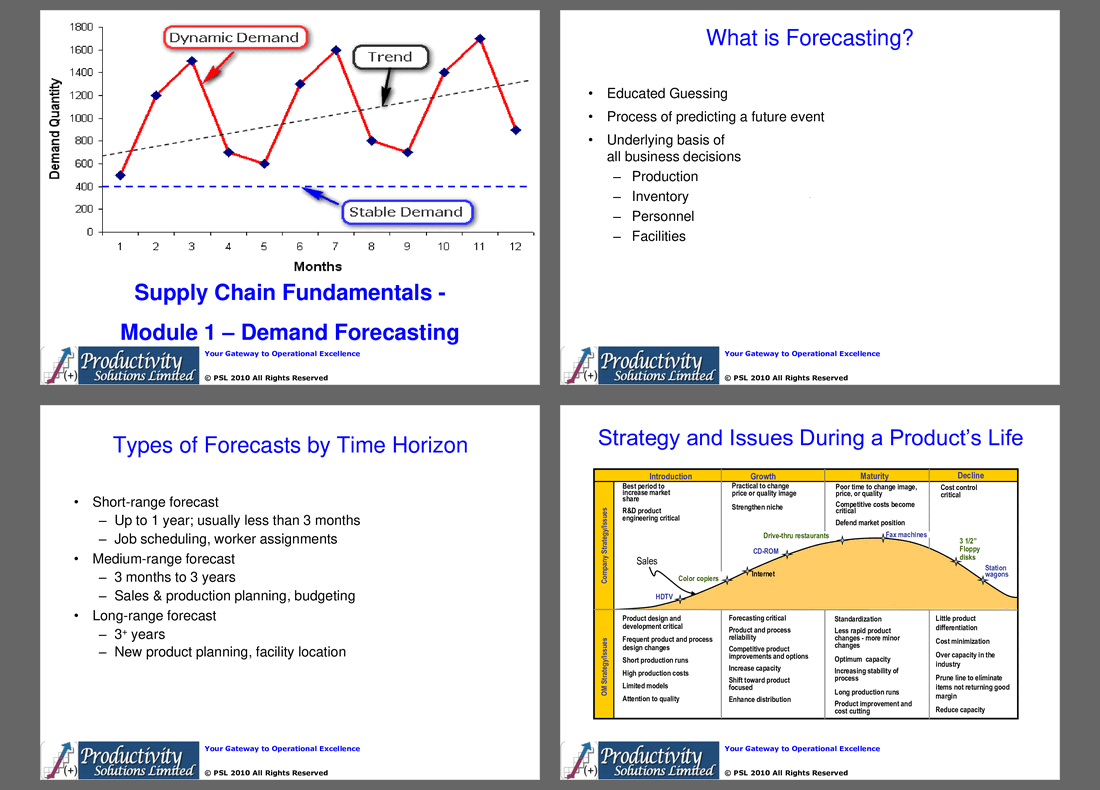
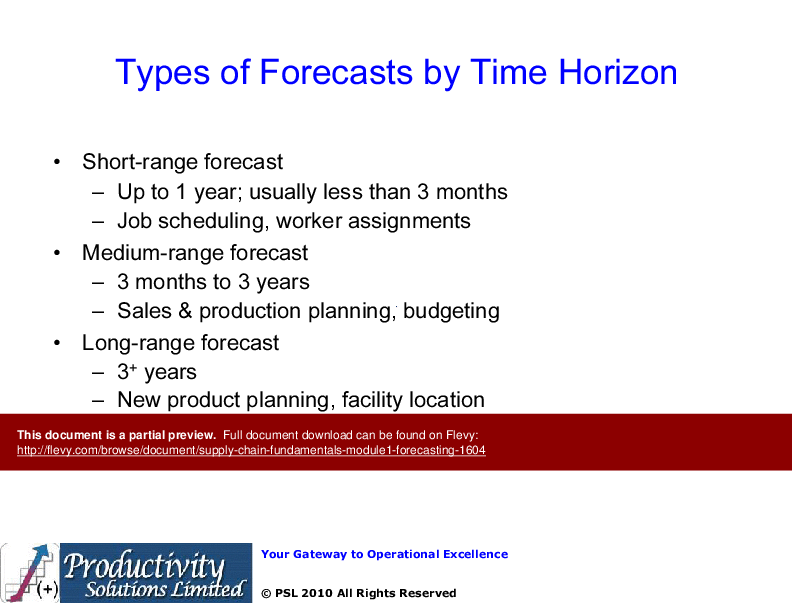
This module dives deep into the types of forecasts segmented by time horizon, covering short-range, medium-range, and long-range forecasts. It provides a comprehensive understanding of when to apply each type of forecast based on specific business needs such as job scheduling, sales planning, and new product development. The detailed breakdown ensures that executives can align their forecasting approach with strategic objectives effectively.

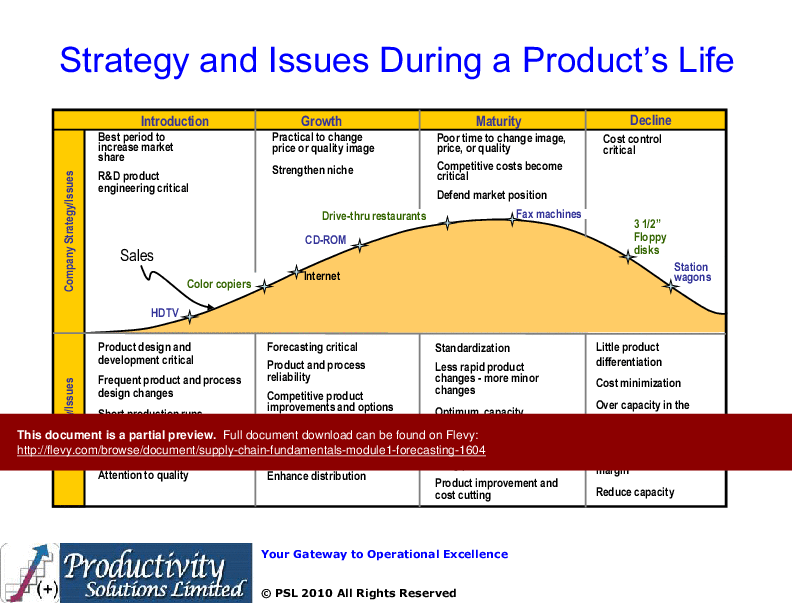
The PPT also addresses the critical strategies and issues encountered during a product's lifecycle. From introduction to decline, it outlines the necessary adjustments in product design, process reliability, and cost control. This lifecycle approach equips leaders with the insights needed to navigate the complexities of market dynamics and product evolution.

Quantitative and qualitative forecasting methods are meticulously explained, providing a balanced view of intuition-based and data-driven techniques. The module includes practical examples like sales force composite and exponential smoothing, making it a valuable resource for refining forecasting accuracy. The inclusion of error measurement equations and tracking signal computation further enhances the robustness of the forecasting process.

Got a question about the product? Email us at support@flevy.com or ask the author directly by using the "Ask the Author a Question" form. If you cannot view the preview above this document description, go here to view the large preview instead.

MARCUS OVERVIEW

This synopsis was written by Marcus [?] based on the analysis of the full 73-slide presentation.


Executive Summary
This presentation, titled "Supply Chain Fundamentals - Module 1 – Demand Forecasting," serves as a comprehensive introduction to demand forecasting within supply chain management. Developed by a Lean pioneer and certified LSS Master Black Belt, this module equips corporate executives and consulting professionals with essential forecasting methodologies. The content covers various forecasting approaches, including time series methods, and emphasizes the importance of monitoring and control in demand forecasting. By leveraging this presentation, users will enhance their ability to make informed business decisions regarding production, inventory, and resource allocation.

Who This Is For and When to Use
•  Supply Chain Managers overseeing demand planning and inventory management
•  Operations Executives responsible for production scheduling and resource allocation
•  Business Analysts focused on data-driven decision-making
•  Consultants advising organizations on supply chain optimization

Best-fit moments to use this deck:
•  During strategic planning sessions to align forecasting methods with business objectives
•  In training workshops for teams new to demand forecasting techniques
•  When implementing new forecasting tools or software in an organization

Learning Objectives
•  Define the key concepts and importance of demand forecasting in supply chain management
•  Build a comprehensive demand forecasting model using various methodologies
•  Establish monitoring and control mechanisms to validate forecasting accuracy
•  Differentiate between short-range, medium-range, and long-range forecasting approaches
•  Analyze the influence of product life cycles on demand forecasting
•  Implement quantitative and qualitative forecasting methods effectively

Table of Contents
•  Introduction to Forecasting (page 3)
•  Types of Forecasts by Time Horizon (page 5)
•  Short-term vs. Longer-term Forecasting (page 7)
•  Influence of Product Life Cycle (page 9)
•  Seven Steps in Forecasting (page 15)
•  Forecasting Approaches (page 20)
•  Quantitative Forecasting Methods (page 25)
•  Realities of Forecasting (page 30)
•  Monitoring and Control (page 35)
•  Forecasting in the Service Sector (page 40)

Primary Topics Covered
•  Forecasting Definition - Forecasting is the process of predicting future events based on historical data, essential for making informed business decisions.
•  Types of Forecasts - Differentiate between economic, technological, and demand forecasts, each serving unique business needs.
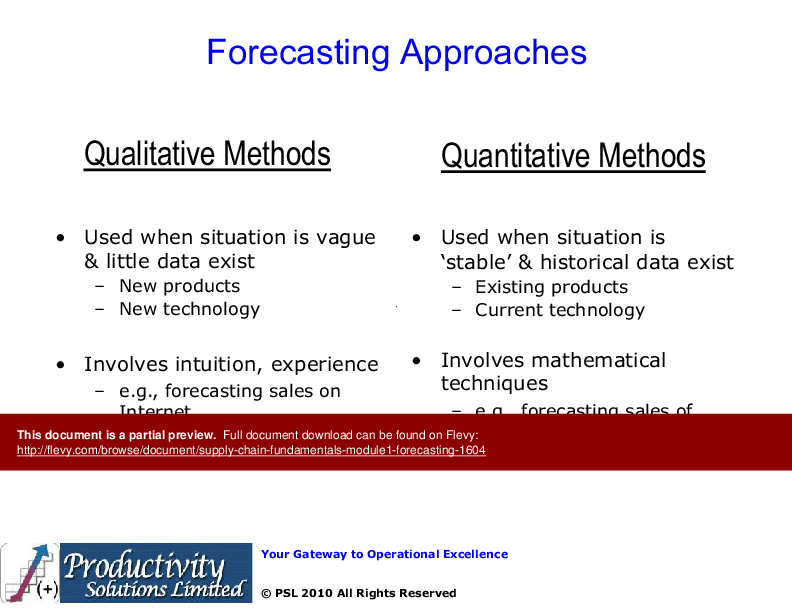
•  Forecasting Approaches - Explore quantitative methods for stable situations and qualitative methods for uncertain scenarios.
•  Time Series Forecasting - Utilize historical data to predict future demand, assuming past patterns will continue.
•  Product Life Cycle Influence - Understand how different stages of a product's life cycle affect forecasting needs and accuracy.
•  Monitoring and Control - Implement tracking signals and error measurement techniques to ensure forecasting reliability.

Deliverables, Templates, and Tools
•  Demand forecasting model template for various time horizons
•  Checklist for the 7 steps in forecasting
•  Error measurement and tracking signal templates
•  Guidelines for selecting appropriate forecasting methods
•  Case studies illustrating successful forecasting implementations

Slide Highlights
•  Overview of forecasting approaches, emphasizing the importance of both qualitative and quantitative methods
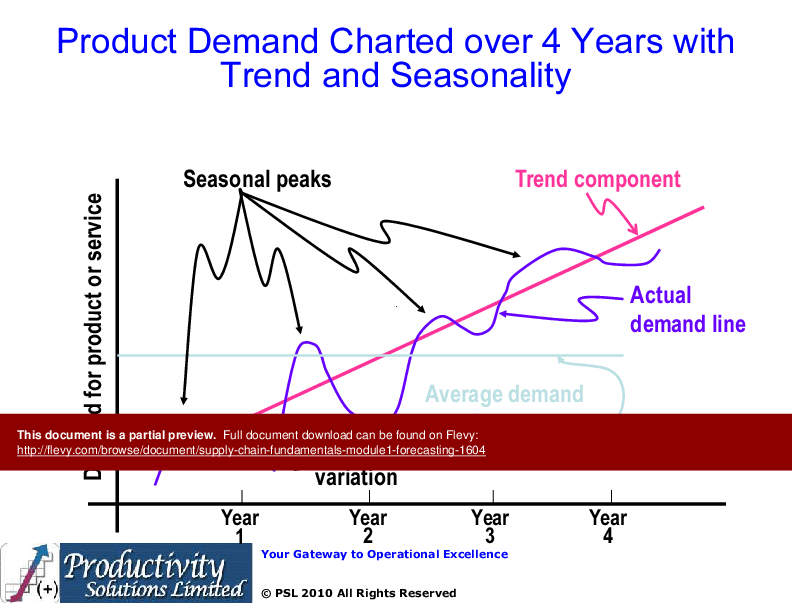
•  Visual representation of demand trends and seasonality over a four-year period
•  Detailed explanation of the 7 steps in forecasting, providing a structured approach
•  Examples of tracking signals and their significance in monitoring forecasting accuracy
•  Insights into the unique challenges of forecasting in the service sector

Potential Workshop Agenda
Introduction to Demand Forecasting (30 minutes)
•  Discuss the importance of forecasting in supply chain management
•  Review key concepts and definitions

Forecasting Methodologies (60 minutes)
•  Explore qualitative and quantitative forecasting methods
•  Hands-on activity to apply forecasting techniques

Monitoring and Control Techniques (30 minutes)
•  Introduce tracking signals and error measurement
•  Group discussion on best practices for monitoring forecasts

Case Study Review (30 minutes)
•  Analyze a real-world example of effective demand forecasting
•  Group discussion on lessons learned and application to participants' organizations

Customization Guidance
•  Tailor the forecasting model template to reflect specific industry metrics and terminology
•  Adjust the time horizon of forecasts based on organizational needs and product life cycles
•  Incorporate company-specific data and historical trends into the forecasting examples

Secondary Topics Covered
•  Economic forecasts and their impact on business planning
•  Technological forecasts predicting advancements and product acceptance
•  The role of consumer market surveys in gathering demand insights
•  The significance of error measurement techniques in forecasting accuracy
•  Challenges faced in forecasting for service-oriented industries

Topic FAQ

What are the typical steps in a demand forecasting process?

A commonly used structure breaks forecasting into 7 steps: determine the forecast’s use, select items to forecast, define the time horizon, choose forecasting models, gather data, make the forecast, and validate results. Flevy’s Supply Chain Fundamentals Module 1 - Forecasting documents these 7 steps in checklist form.

How do short-range and long-range forecasts differ in planning use?

Short-range forecasts focus on immediate operational needs (typically up to one year) for scheduling and order fulfillment, while long-range forecasts support strategic planning over multiple years (often 3 years or more) and capital decisions; the module differentiates short-, medium-, and long-range horizons.

When should I use quantitative forecasting methods versus qualitative methods?

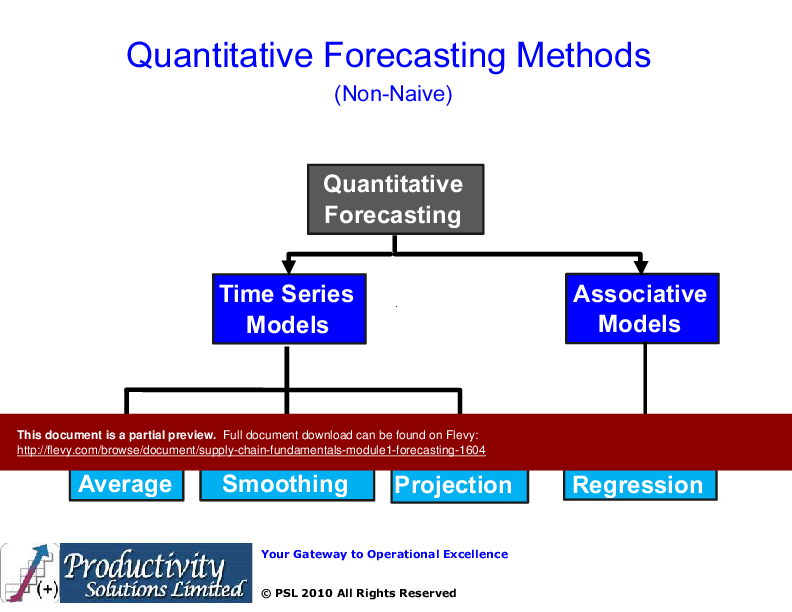
Quantitative methods are appropriate in stable environments with sufficient historical data and include techniques like moving average, weighted moving average, exponential smoothing, and linear regression. Qualitative methods are used when data is limited or for new products, for example sales force composite, as covered in the module.

How do tracking signals and error measurements improve forecast reliability?

Tracking signals compare forecasted values to actual outcomes to detect bias, while error measures such as Mean Absolute Deviation (MAD) and Mean Square Error (MSE) quantify accuracy. Regular monitoring with these metrics enables model adjustments; the module includes tracking signal and error measurement templates.

What should I look for when buying a demand forecasting training deck or toolkit?

Look for coverage of forecasting approaches (quantitative and qualitative), time-series methods, a structured forecasting process, monitoring/control tools, templates for models and error measurement, and practical case studies. Supply Chain Fundamentals Module 1 - Forecasting includes a model template, checklist, error templates, guidelines, and case studies.

How much time should I allocate for a demand forecasting workshop and what agenda works?

A focused workshop can run about 2.5 hours (150 minutes) using the module’s suggested agenda: 30 minutes introduction, 60 minutes forecasting methodologies and hands-on work, 30 minutes monitoring and control, and 30 minutes case study review, enabling practical application of methods.

We launched a new product with no historical data — which forecasting approach is appropriate?

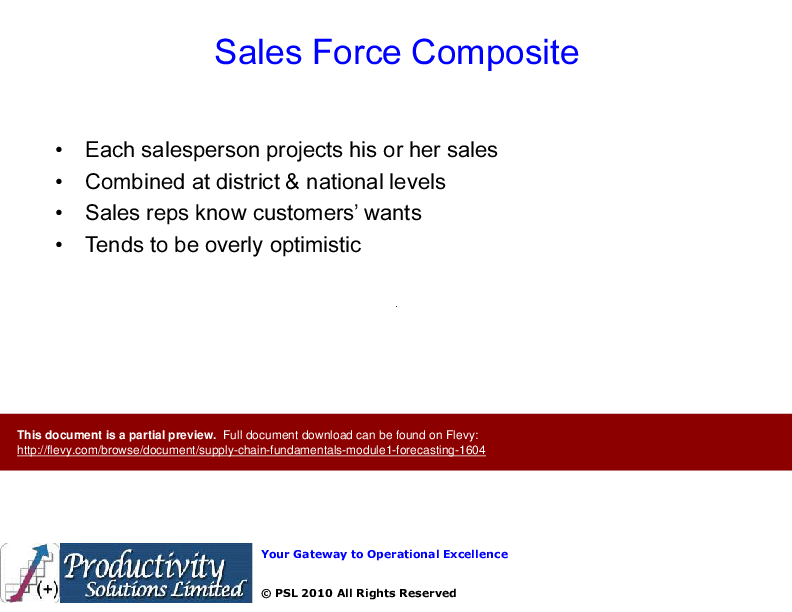
For new products with limited historical data, qualitative methods such as expert judgment or sales force composite are appropriate to estimate demand until data accumulates; the module explains qualitative techniques and includes sales force composite as an example.

How should forecasting adapt across a product’s life cycle?

Forecasting needs change across introduction, growth, maturity, and decline: early stages require qualitative inputs and flexible assumptions; later stages rely more on quantitative trends and error monitoring. The module outlines lifecycle adjustments from introduction to decline and related planning considerations.

Document FAQ
These are questions addressed within this presentation.

What is the primary purpose of demand forecasting?
Demand forecasting aims to predict future product demand to optimize production, inventory, and resource allocation decisions.

How do short-range and long-range forecasts differ?
Short-range forecasts focus on immediate needs, typically up to one year, while long-range forecasts address strategic planning over 3 years or more.

What are the 7 steps in the forecasting process?
The 7 steps include determining the forecast's use, selecting items to forecast, defining the time horizon, choosing forecasting models, gathering data, making the forecast, and validating results.

What are the advantages of using quantitative forecasting methods?
Quantitative methods leverage historical data and mathematical techniques, providing a structured approach that can enhance accuracy in stable environments.

How can tracking signals improve forecasting accuracy?
Tracking signals measure forecast performance against actual demand, allowing organizations to identify deviations and adjust forecasting methods accordingly.

What challenges are unique to forecasting in the service sector?
Service sector forecasting often faces issues such as variable demand patterns, the influence of holidays, and the need for short-term records.

How can organizations validate their forecasting results?
Organizations can validate results by comparing forecasts against actual outcomes and employing error measurement techniques like Mean Absolute Deviation (MAD).

What role does the product life cycle play in forecasting?
The product life cycle influences forecasting needs, as different stages require varying levels of detail and accuracy in predictions.

What is the significance of qualitative forecasting methods?
Qualitative methods are essential when historical data is limited or when predicting new product demand, relying on expert opinions and market insights.

Glossary
•  Demand Forecasting - The process of predicting future customer demand for a product or service.
•  Time Series Forecasting - A method that uses historical data to predict future values based on past trends.
•  Tracking Signal - A measure used to evaluate the accuracy of a forecasting model by comparing forecasted values to actual outcomes.
•  Mean Absolute Deviation (MAD) - A measure of forecast accuracy that calculates the average absolute errors between forecasted and actual values.
•  Qualitative Methods - Forecasting techniques that rely on expert judgment and intuition rather than historical data.
•  Quantitative Methods - Forecasting techniques that utilize mathematical models and historical data to predict future outcomes.
•  Product Life Cycle - The stages a product goes through from introduction to decline, influencing forecasting needs.
•  Error Measurement - Techniques used to assess the accuracy of forecasts, including Mean Square Error (MSE) and MAD.
•  Economic Forecasts - Predictions regarding economic indicators such as inflation rates and market trends.
•  Technological Forecasts - Predictions about the rate of technological advancement and market acceptance of new products.
•  Consumer Market Survey - A method of gathering data directly from customers about their purchasing intentions.
•  Seasonal Component - Fluctuations in demand that occur at regular intervals due to seasonal factors.
•  Cyclical Component - Long-term fluctuations in demand influenced by economic cycles.
•  Random Component - Unpredictable variations in demand due to unforeseen events.
•  Moving Average - A forecasting method that smooths data by averaging values over a specified number of periods.
•  Weighted Moving Average - A forecasting method that assigns different weights to past observations, giving more importance to recent data.
•  Exponential Smoothing - A forecasting technique that applies decreasing weights to past observations, emphasizing the most recent data.
•  Linear Regression - A statistical method used to model the relationship between a dependent variable and one or more independent variables.
•  Coefficient of Correlation - A statistical measure that indicates the strength and direction of a linear relationship between 2 variables.
•  Forecast Error - The difference between the actual demand and the forecasted value.
•  Forecasting Model - A structured approach or method used to predict future demand based on historical data and trends.

Source: Best Practices in Supply Chain Analysis PowerPoint Slides: Supply Chain Fundamentals Module 1 - Forecasting PowerPoint (PPTX) Presentation Slide Deck, OpEx Academy NZ


$34.00
This presentation is developed by a pioneer in Lean and certified LSS Master Black Belt who has trained over 5,000+ students globally, from Directors, CEOs, GMs, to shop floor staff. He's endorsed by CMI Consortium, NZTE, HERA, NZPICS, CBAFF.
Add to Cart
  

ABOUT THE AUTHOR

Author image
Additional documents from author: 88

Vishnu Rayapeddi is an experienced management consultant and trainer specializing in implementing continuous process improvements. Vishnu is a pioneer in Lean Management which combines the power of Lean Thinking, TOC, Six Sigma, TQM, TWI, Balanced Scorecard, cGMP and other best-class methodologies such as, DMAIC, Value Stream Mapping, Root Cause Analysis, 5S, Quick Changeovers, Quality and ... [read more]

Ask the Author a Question

You must be logged in to contact the author.

Click here to log in Click here register

Did you know?
The average daily rate of a McKinsey consultant is $6,625 (not including expenses). The average price of a Flevy document is $65.

Bundle and save! You can save up to % with bundles!

View bundle(s)


Trusted by over 10,000+ Client Organizations
Since 2012, we have provided business templates to over 10,000 businesses and organizations of all sizes, from startups and small businesses to the Fortune 100, in over 130 countries.
AT&T GE Cisco Intel IBM Coke Dell Toyota HP Nike Samsung Microsoft Astrazeneca JP Morgan KPMG Walgreens Walmart 3M Kaiser Oracle SAP Google E&Y Volvo Bosch Merck Fedex Shell Amgen Eli Lilly Roche AIG Abbott Amazon PwC T-Mobile Broadcom Bayer Pearson Titleist ConEd Pfizer NTT Data Schwab


Read Customer Testimonials

 
"As a consulting firm, we had been creating subject matter training materials for our people and found the excellent materials on Flevy, which saved us 100's of hours of re-creating what already exists on the Flevy materials we purchased."

– Michael Evans, Managing Director at Newport LLC
 
"FlevyPro provides business frameworks from many of the global giants in management consulting that allow you to provide best in class solutions for your clients."

– David Harris, Managing Director at Futures Strategy
 
"I have used Flevy services for a number of years and have never, ever been disappointed. As a matter of fact, David and his team continue, time after time, to impress me with their willingness to assist and in the real sense of the word. I have concluded in fact "

– Roberto Pelliccia, Senior Executive in International Hospitality
 
"As a small business owner, the resource material available from FlevyPro has proven to be invaluable. The ability to search for material on demand based our project events and client requirements was great for me and proved very beneficial to my clients. Importantly, being able to easily edit and tailor "

– Michael Duff, Managing Director at Change Strategy (UK)
 
"I like your product. I'm frequently designing PowerPoint presentations for my company and your product has given me so many great ideas on the use of charts, layouts, tools, and frameworks. I really think the templates are a valuable asset to the job."

– Roberto Fuentes Martinez, Senior Executive Director at Technology Transformation Advisory
 
"I have found Flevy to be an amazing resource and library of useful presentations for lean sigma, change management and so many other topics. This has reduced the time I need to spend on preparing for my performance consultation. The library is easily accessible and updates are regularly provided. A wealth of great information."

– Cynthia Howard RN, PhD, Executive Coach at Ei Leadership
 
"My FlevyPro subscription provides me with the most popular frameworks and decks in demand in today’s market. They not only augment my existing consulting and coaching offerings and delivery, but also keep me abreast of the latest trends, inspire new products and service offerings for my practice, and educate me "

– Bill Branson, Founder at Strategic Business Architects
 
"Flevy is now a part of my business routine. I visit Flevy at least 3 times each month.

Flevy has become my preferred learning source, because what it provides is practical, current, and useful in this era where the business world is being rewritten.

In today's environment where there are so "

– Omar Hernán Montes Parra, CEO at Quantum SFE


Save with Bundles

This document is available as part of the following discounted bundle(s):

Save %!
Supply Chain Fundamentals (5 Modules)

This bundle contains 5 total documents. See all the documents to the right.

$105.00


Add Bundle & Save


Customers Also Bought These Documents


Customers Also Like These Documents

Explore Related Management Topics


Your Recently Viewed Documents
Receive our FREE presentation on Operational Excellence

This 50-slide presentation provides a high-level introduction to the 4 Building Blocks of Operational Excellence. Achieving OpEx requires the implementation of a Business Execution System that integrates these 4 building blocks.