
Digital Supply Chain Strategy   25-slide PPT PowerPoint presentation slide deck (PPTX)
$29.00

Digital Supply Chain Strategy (25-slide PPT PowerPoint presentation slide deck (PPTX)) Preview Image
Log in to unlock full preview.
Digital Supply Chain Strategy (25-slide PPT PowerPoint presentation slide deck (PPTX)) Preview Image
Arrow   Click main image to view in full screen.

Digital Supply Chain Strategy (PowerPoint PPTX Slide Deck)

PowerPoint (PPTX) 25 Slides FlevyPro Document

#3 in Supply Chain Resilience $29.00
FlevyPro price: FREE (included in subscription)
This framework is developed by a team of former McKinsey and Big 4 consultants. The presentation follows the headline-body-bumper slide format used by global consulting firms.
Add to Cart


Immediate download
Free lifetime updates

SUPPLY CHAIN ANALYSIS PPT DESCRIPTION

Editor Summary Digital Supply Chain Strategy is a 25-slide PowerPoint (PPTX) framework presenting a two‑pronged digital supply chain approach—Sense and Pivot, and Digitize and Automate—sold as a digital download on Flevy. Read more

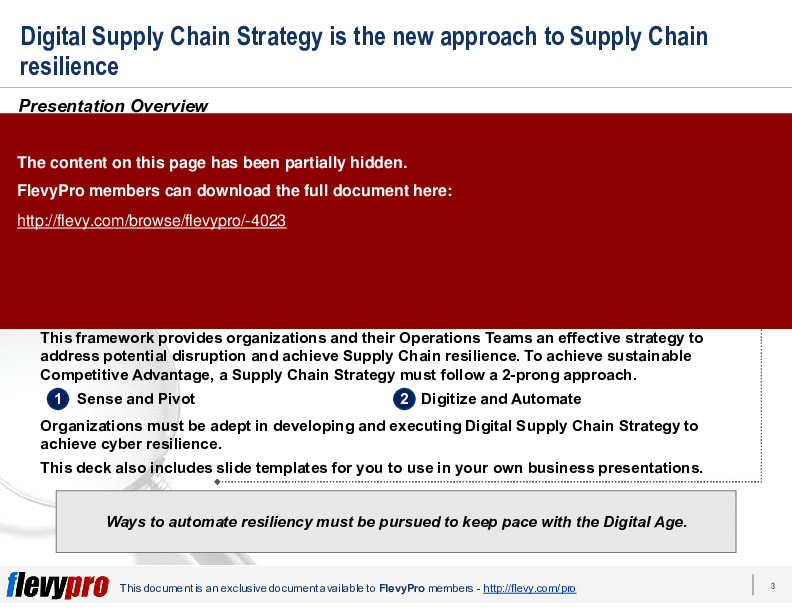
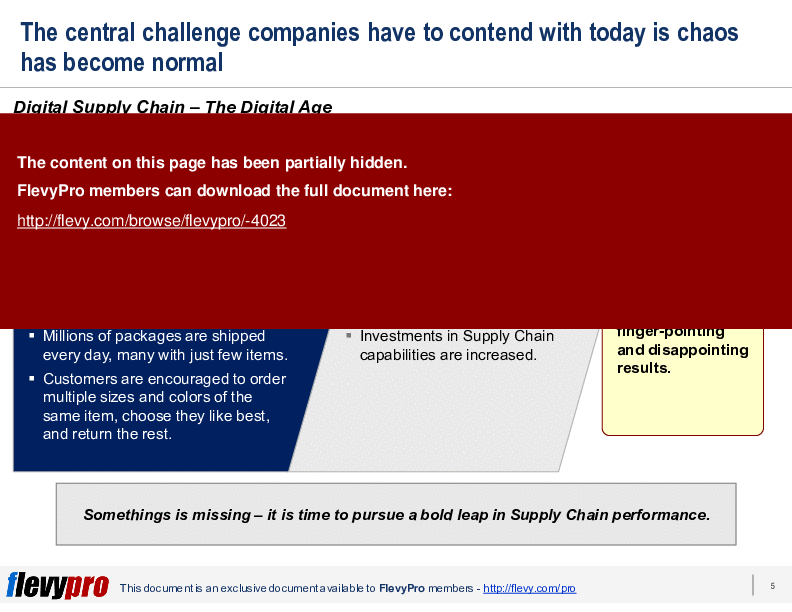
In today's Digital Age, organizations are faced with the changing nature of the demand curve and the element of uncertainty in the Supply Chain. For Operations Teams, the challenge and Competitive Advantage has become: How well we respond and execute against ongoing uncertainty.

With the world being so unpredictable, chaos is now the new normal. Timetables and priorities have shifted. A supplier fails to deliver. Demands on Supply Chains are increasing exponentially. A few years ago, Supply Chain performance was all about batch quantities, timetables, and lead times. Today, millions of packages are shipped a day, with many with just only few items.

In the face of this upheaval, Supply Chains try to predict what will happen, then optimize performance against plan. Most often, those plans are not met. The path forward demands a bold leap in Supply Chain performance.

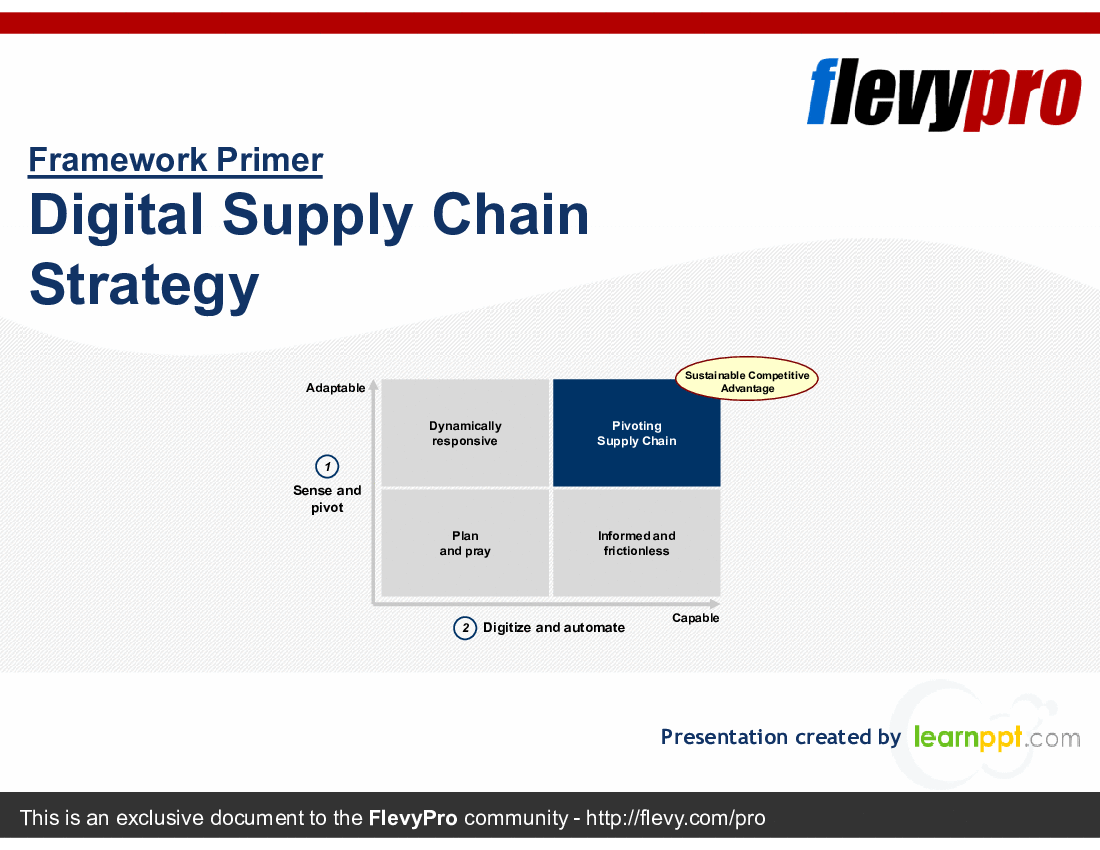
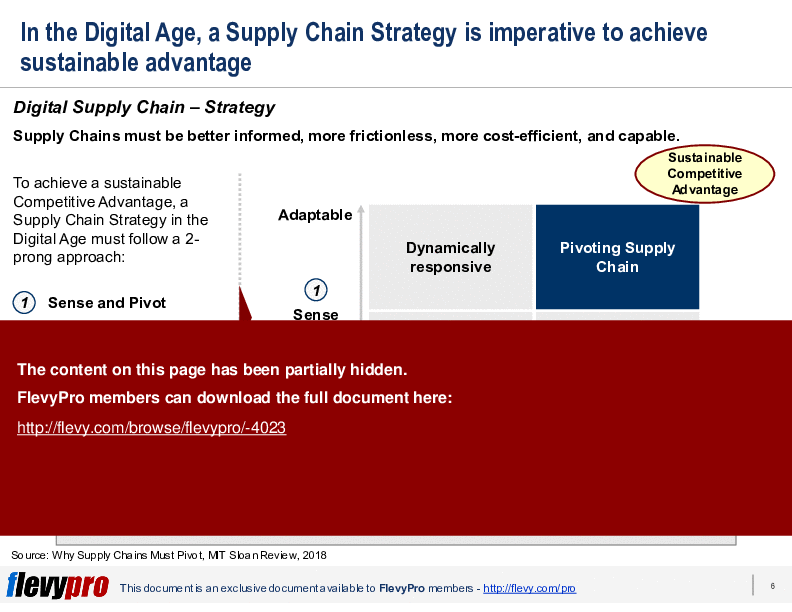
This framework provides organizations and their Operations Teams an effective strategy to address potential disruption and achieve Supply Chain resilience. To achieve sustainable Competitive Advantage, a Supply Chain Strategy must follow a 2-prong approach.

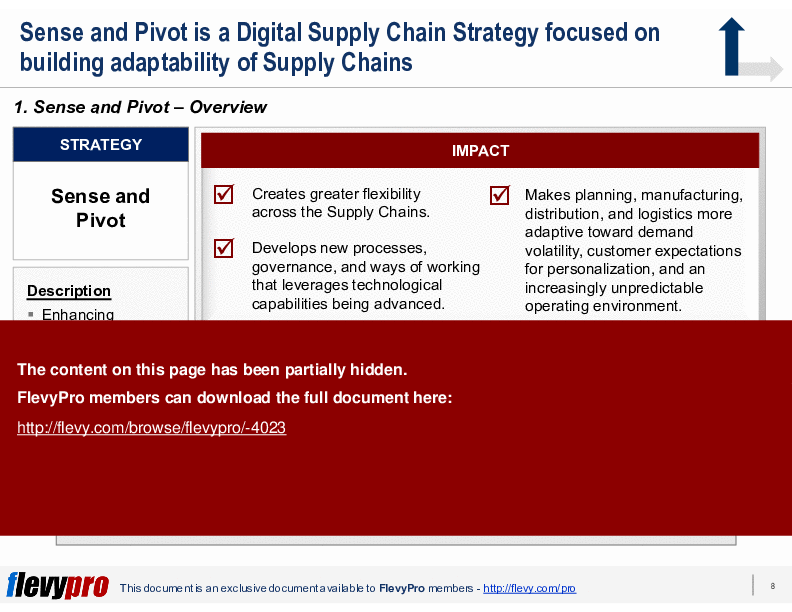
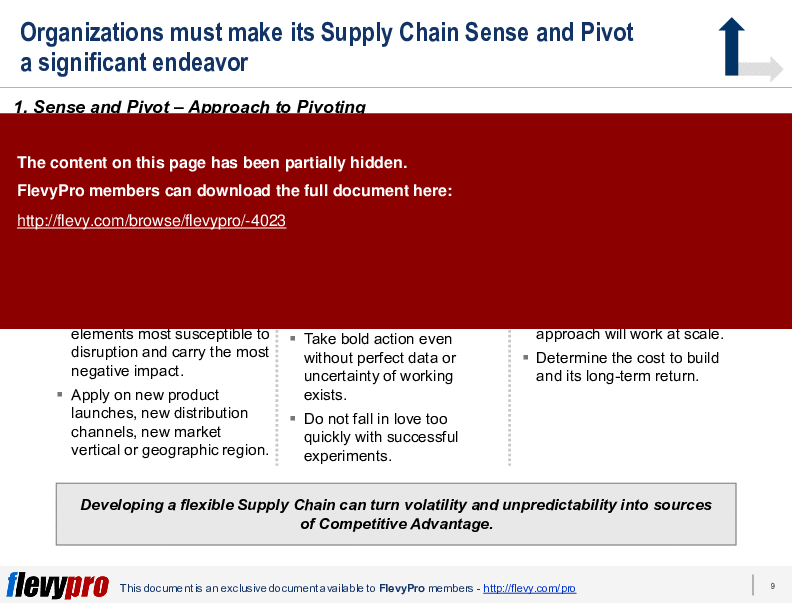
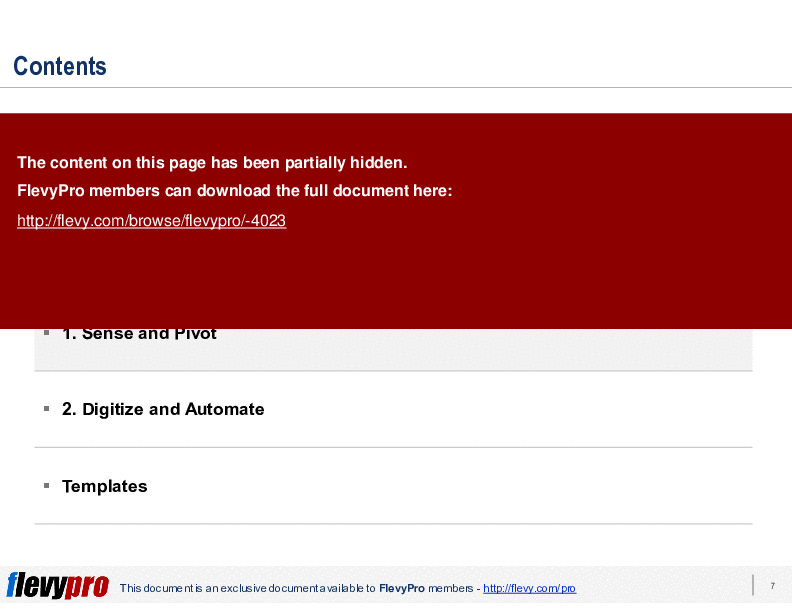
1. Sense and Pivot
2. Digitize and Automate

Organizations must be adept in developing and executing Digital Supply Chain Strategy to achieve cyber resilience.

This deck also includes slide templates for you to use in your own business presentations.

This comprehensive presentation delves into the intricacies of modern Supply Chain management, emphasizing the necessity of adaptability and technological integration. It highlights the importance of leveraging advanced technologies like IoT, RPA, and AI to enhance Supply Chain capabilities and resilience. The PPT outlines actionable strategies for developing a dynamically responsive and pivoting Supply Chain, ensuring organizations can swiftly adapt to market changes and disruptions. With detailed case studies and practical templates, this deck equips your team with the tools needed to drive efficiency and maintain a competitive edge in the Digital Age.

Got a question about this document? Email us at flevypro@flevy.com.

MARCUS OVERVIEW

This synopsis was written by Marcus [?] based on the analysis of the full 25-slide presentation.


Executive Summary
The Digital Supply Chain Strategy presentation provides a comprehensive framework for organizations seeking to enhance their supply chain resilience in the face of increasing uncertainty and demand volatility. Developed by experienced consultants, this presentation outlines a two-pronged approach: "Sense and Pivot" and "Digitize and Automate." It equips operations teams with actionable insights and templates to effectively respond to disruptions, optimize performance, and achieve sustainable competitive advantage in the digital age.

Who This Is For and When to Use
•  Supply Chain Executives responsible for strategic planning and operational execution
•  Operations Managers seeking to enhance supply chain adaptability and efficiency
•  IT Leaders focused on integrating digital technologies into supply chain processes
•  Consultants advising organizations on supply chain transformation and resilience

Best-fit moments to use this deck:
•  During strategic planning sessions to define supply chain objectives
•  When assessing current supply chain capabilities and identifying gaps
•  In workshops aimed at implementing digital transformation initiatives
•  For training sessions on supply chain resilience best practices

Learning Objectives
•  Define the key components of a Digital Supply Chain Strategy.
•  Build a flexible supply chain framework that enhances adaptability.
•  Establish processes for effective decision-making in uncertain environments.
•  Implement digital tools that automate supply chain operations.
•  Analyze case studies to identify best practices in supply chain resilience.
•  Create actionable templates for ongoing supply chain management.

Table of Contents
•  Overview (page 3)
•  Digital Supply Chain (page 3)
•  1. Sense and Pivot (page 8)
•  2. Digitize and Automate (page 11)
•  Templates (page 17)

Primary Topics Covered
•  Digital Supply Chain Overview - An introduction to the importance of digital transformation in supply chain management.
•  Sense and Pivot - Strategies for enhancing adaptability and responsiveness in supply chains.
•  Digitize and Automate - Methods for leveraging digital technologies to improve supply chain efficiency and effectiveness.
•  Resilience Strategies - Four key strategies for building a resilient supply chain: diversification of suppliers, planning for spare transportation capacity, establishing safety stocks, and utilizing automation and smart software.
•  Integration Challenges - Common obstacles organizations face when integrating digital tools into their supply chains.
•  Automation Solutions - Insights into how automation can enhance supply chain performance and resilience.

Deliverables, Templates, and Tools
•  Supply Chain Strategy template for outlining key components and objectives.
•  Sense and Pivot framework for enhancing adaptability in supply chains.
•  Digitize and Automate checklist for implementing digital technologies.
•  Resilience Strategies template for assessing and planning supply chain robustness.
•  Integration Challenges assessment tool to identify potential barriers.
•  Automation Solutions roadmap for implementing smart technologies in supply chains.

Slide Highlights
•  Visual representation of the Digital Supply Chain Strategy framework.
•  Case studies illustrating successful implementation of supply chain resilience strategies.
•  Flowcharts detailing the Sense and Pivot approach to adaptability.
•  Graphs showing the impact of digitization on supply chain performance.
•  Templates for practical application in organizational settings.

Potential Workshop Agenda
Digital Supply Chain Strategy Overview (60 minutes)
•  Introduce the Digital Supply Chain Strategy framework.
•  Discuss the importance of resilience in supply chains.
•  Review case studies of successful implementations.

Sense and Pivot Workshop (90 minutes)
•  Explore the Sense and Pivot approach in detail.
•  Engage participants in identifying adaptability opportunities.
•  Develop action plans for enhancing supply chain flexibility.

Digitize and Automate Session (90 minutes)
•  Discuss the role of digital technologies in supply chain management.
•  Identify automation opportunities within participants' organizations.
•  Create a roadmap for implementing digital solutions.

Customization Guidance
•  Tailor the templates to reflect specific organizational goals and metrics.
•  Adjust case studies to align with industry-specific challenges and solutions.
•  Incorporate internal data and insights to enhance relevance and applicability.

Secondary Topics Covered
•  The impact of COVID-19 on supply chain management practices.
•  Trends in supply chain digitization and automation.
•  Best practices for managing supplier relationships in a digital environment.
•  The role of data analytics in supply chain decision-making.

Topic FAQ

What are the core components of a digital supply chain strategy?

A digital supply chain strategy combines capabilities for rapid sensing and decision-making with technologies that automate operations. This presentation frames the approach as a two‑pronged strategy—Sense and Pivot and Digitize and Automate—supported by resilience strategies and templates for implementation, specifically the Sense and Pivot and Digitize and Automate components.

How does the Sense and Pivot approach improve supply chain responsiveness?

Sense and Pivot improves responsiveness by emphasizing flexibility, new processes, and decentralized decision-making so teams can detect disruptions and reallocate resources quickly. The approach is operationalized through flowcharts and workshop activities to identify adaptability opportunities using the Sense and Pivot framework.

Which technologies should I prioritize when digitizing supply chain processes?

The document highlights Internet of Things (IoT) for real-time monitoring, Robotic Process Automation (RPA) for repetitive tasks, and advanced data analytics (including AI) for decision support. These technologies are shown as core enablers in the Digitize and Automate checklist.

What integration challenges should I expect when implementing digital tools in supply chains?

Common obstacles include lack of standardization across systems, data confidentiality and security concerns, and the need for robust information sharing and cross-stakeholder collaboration. The presentation provides an Integration Challenges assessment tool to identify and plan mitigation for these issues.

What should I look for when buying a digital supply chain toolkit?

Buyers should seek a toolkit that combines a strategic template, measurable objectives, practical checklists, assessment tools, automation roadmaps, and case studies to support workshops and rollouts; Flevy’s Digital Supply Chain Strategy supplies these components in a set of 6 templates/tools.

How much time should I budget for workshops using a digital supply chain deck?

The suggested workshop agenda in the deck outlines a 60‑minute overview session and 2 90‑minute deep dives (Sense and Pivot, Digitize and Automate), so plan for sessions of 60, 90, and 90 minutes when structuring a multi‑part program.

I need to assess capability gaps after a disruption—what tools help with that?

Use an assessment that captures existing processes, integration blockers, and resilience levers; the presentation includes an Integration Challenges assessment tool and a Resilience Strategies template to map gaps and options, with the Supply Chain Strategy template for prioritization.

In practical terms, how can automation increase supply chain resilience?

Automation shortens response times, reduces manual errors, and enables data-driven resource allocation; the deck links these benefits to specific automation initiatives and lays out an Automation Solutions roadmap for sequencing RPA, IoT, and analytics deployments.

Document FAQ
These are questions addressed within this presentation.

What is the Digital Supply Chain Strategy?
The Digital Supply Chain Strategy is a framework designed to enhance supply chain resilience through adaptability and automation, addressing the challenges posed by demand volatility and uncertainty.

How can organizations implement the Sense and Pivot approach?
Organizations can implement the Sense and Pivot approach by focusing on flexibility, developing new processes, and empowering decision-making at all levels of the supply chain.

What technologies are essential for digitizing supply chains?
Key technologies include Internet of Things (IoT), Robotic Process Automation (RPA), and advanced data analytics tools that enable real-time monitoring and decision-making.

What are the main challenges in integrating digital tools into supply chains?
Challenges include lack of standardization, data confidentiality concerns, and the need for robust information sharing and collaboration across stakeholders.

How can automation improve supply chain resilience?
Automation enhances supply chain resilience by enabling faster response times, reducing manual errors, and optimizing resource allocation through data-driven insights.

What are the 4 resilience strategies outlined in the presentation?
The 4 resilience strategies are diversification of the supplier base, establishing safety stocks, planning for spare transportation capacity, and utilizing automation and smart software.

How does the presentation support training and development?
The presentation includes templates and case studies that can be used for training sessions, helping teams understand and apply best practices in supply chain management.

Can the templates be customized for specific industries?
Yes, the templates can be tailored to reflect the unique challenges and requirements of different industries, ensuring relevance and applicability.

What is the expected outcome of implementing this strategy?
The expected outcome is a more resilient, adaptable, and efficient supply chain capable of responding effectively to disruptions and changing market conditions.

Glossary
•  Digital Supply Chain - A supply chain that leverages digital technologies to enhance efficiency and responsiveness.
•  Sense and Pivot - A strategy focused on enhancing adaptability in supply chain operations.
•  Digitize and Automate - The process of integrating digital technologies to improve supply chain capabilities.
•  Resilience Strategies - Approaches to strengthen supply chains against disruptions.
•  Integration Challenges - Obstacles faced when implementing digital tools in supply chains.
•  Automation Solutions - Technologies that automate processes within the supply chain for improved efficiency.
•  Supply Chain Resilience - The ability of a supply chain to anticipate, prepare for, and respond to disruptions.
•  Data Analytics - The process of analyzing data to inform decision-making in supply chain management.
•  IoT (Internet of Things) - A network of interconnected devices that collect and exchange data.
•  RPA (Robotic Process Automation) - Technology that automates repetitive tasks within business processes.
•  Supplier Diversification - The practice of sourcing from multiple suppliers to reduce risk.
•  Safety Stocks - Inventory held to mitigate the risk of stockouts during demand fluctuations.
•  Transportation Capacity - The ability to transport goods efficiently within the supply chain.
•  Business Intelligence (BI) - Tools and systems that analyze business data to support decision-making.
•  Cybersecurity - Measures taken to protect digital systems and data from unauthorized access or attacks.
•  Public-Private Partnerships (P3) - Collaborations between government entities and private sector organizations to achieve common goals.
•  Supply Chain Management (SCM) - The management of the flow of goods and services from suppliers to customers.
•  Competitive Advantage - The favorable position an organization holds over its competitors.
•  Value Chain - The series of steps an organization takes to deliver a product or service to the market.
•  Change Management - The process of managing changes within an organization to minimize disruption and maximize effectiveness.
•  Operational Efficiency - The ability to deliver products or services in the most cost-effective manner without compromising quality.

SUPPLY CHAIN ANALYSIS PPT SLIDES

Structured Approach to Supply Chain Adaptation

Enhancing Supply Chain Adaptability through Digital Strategies

Enhancing Supply Chain Resilience through Digital Strategies

Enhancing Cyber Resilience through Automation Solutions

Framework for Digital Supply Chain Strategy

Enhancing Supply Chain Capabilities through Digital Transformation

Source: Best Practices in Digital Transformation, Supply Chain Management, Digital Supply Chain PowerPoint Slides: Digital Supply Chain Strategy PowerPoint (PPTX) Presentation Slide Deck, LearnPPT Consulting


$29.00
FlevyPro price: FREE (included in subscription)
This framework is developed by a team of former McKinsey and Big 4 consultants. The presentation follows the headline-body-bumper slide format used by global consulting firms.
Add to Cart
  

Did you need more documents?

Consider a FlevyPro subscription from $39/month. View plans here.

For $10.00 more, you can download this document plus 2 more FlevyPro documents. That's just $13 each.

ABOUT FLEVYPRO

This document is part of the FlevyPro Library, a curated knowledge base of documents for our FlevyPro subscribers.

FlevyPro is a subscription service for on-demand business frameworks and analysis tools. FlevyPro subscribers receive access to an exclusive library of curated business documents—business framework primers, presentation templates, Lean Six Sigma tools, and more—among other exclusive benefits.

Click here to learn more about FlevyPro and its benefits.

Did you know?
The average daily rate of a McKinsey consultant is $6,625 (not including expenses). The average price of a Flevy document is $65.


Trusted by over 10,000+ Client Organizations
Since 2012, we have provided business templates to over 10,000 businesses and organizations of all sizes, from startups and small businesses to the Fortune 100, in over 130 countries.
AT&T GE Cisco Intel IBM Coke Dell Toyota HP Nike Samsung Microsoft Astrazeneca JP Morgan KPMG Walgreens Walmart 3M Kaiser Oracle SAP Google E&Y Volvo Bosch Merck Fedex Shell Amgen Eli Lilly Roche AIG Abbott Amazon PwC T-Mobile Broadcom Bayer Pearson Titleist ConEd Pfizer NTT Data Schwab


Read Customer Testimonials

 
"I have used FlevyPro for several business applications. It is a great complement to working with expensive consultants. The quality and effectiveness of the tools are of the highest standards."

– Moritz Bernhoerster, Global Sourcing Director at Fortune 500
 
"As a small business owner, the resource material available from FlevyPro has proven to be invaluable. The ability to search for material on demand based our project events and client requirements was great for me and proved very beneficial to my clients. Importantly, being able to easily edit and tailor "

– Michael Duff, Managing Director at Change Strategy (UK)
 
"As a consulting firm, we had been creating subject matter training materials for our people and found the excellent materials on Flevy, which saved us 100's of hours of re-creating what already exists on the Flevy materials we purchased."

– Michael Evans, Managing Director at Newport LLC
 
"As a consultant requiring up to date and professional material that will be of value and use to my clients, I find Flevy a very reliable resource.

The variety and quality of material available through Flevy offers a very useful and commanding source for information. Using Flevy saves me time, enhances my expertise and ends up being a good decision."

– Dennis Gershowitz, Principal at DG Associates
 
"As an Independent Management Consultant, I find Flevy to add great value as a source of best practices, templates and information on new trends. Flevy has matured and the quality and quantity of the library is excellent. Lastly the price charged is reasonable, creating a win-win value for "

– Jim Schoen, Principal at FRC Group
 
"One of the great discoveries that I have made for my business is the Flevy library of training materials.

As a Lean Transformation Expert, I am always making presentations to clients on a variety of topics: Training, Transformation, Total Productive Maintenance, Culture, Coaching, Tools, Leadership Behavior, etc. Flevy "

– Ed Kemmerling, Senior Lean Transformation Expert at PMG
 
"As a niche strategic consulting firm, Flevy and FlevyPro frameworks and documents are an on-going reference to help us structure our findings and recommendations to our clients as well as improve their clarity, strength, and visual power. For us, it is an invaluable resource to increase our impact and value."

– David Coloma, Consulting Area Manager at Cynertia Consulting
 
"[Flevy] produces some great work that has been/continues to be of immense help not only to myself, but as I seek to provide professional services to my clients, it gives me a large "tool box" of resources that are critical to provide them with the quality of service and outcomes they are expecting."

– Royston Knowles, Executive with 50+ Years of Board Level Experience


Customers Also Bought These Documents


Customers Also Like These Documents

Explore Templates on Related Management Topics


Your Recently Viewed Documents
Receive our FREE presentation on Operational Excellence

This 50-slide presentation provides a high-level introduction to the 4 Building Blocks of Operational Excellence. Achieving OpEx requires the implementation of a Business Execution System that integrates these 4 building blocks.