






This strategic marketing plan template is used by a major consulting firm to develop marketing plan for its clients.
1. EXECUTIVE SUMMARY
2. INTRODUCTION
3. COMPANY BACKGROUND
—— Vision Statement
—— Actions and Key Performance Indicators
4. INDUSTRY ANALYSIS
—— Customers
—— Suppliers
—— Barriers to Entry and Regulations
—— Industry Rivalry
—— Substitute Products and Services
—— Actions and Key Performance Indicators
5. PRODUCTS AND SERVICES
—— Product and Service Differentiation
—— Sales History
—— Product Development History
—— Product Development Facilities
—— Product Improvement and Development Strategies
—— Actions and Key Performance Indicators
6. MARKET ANALYSIS
—— Customer Analysis
—— Market Analysis
—— Actions and Key Performance Indicators
7. DIAGNOSTIC SWOT ANALYSIS
—— Strengths
—— Weaknesses
—— Opportunities
—— Threats
—— Sustainable Competitive Advantage
—— Market Research
—— Actions and Key Performance Indicators
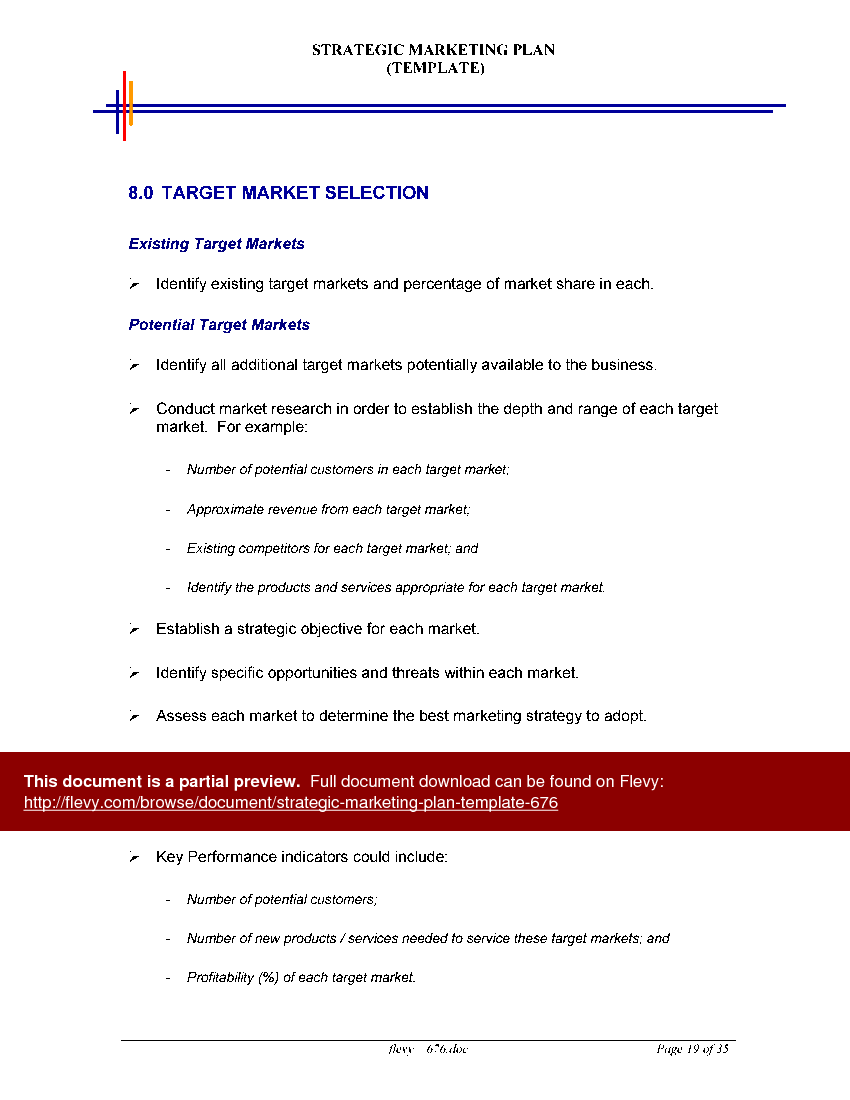
8. TARGET MARKET SELECTION
—— Existing Target Markets
—— Potential Target Markets
—— Actions and Key Performance Indicators
9. STRATEGY DEVELOPMENT
—— Target Markets
—— Market Entry Strategy
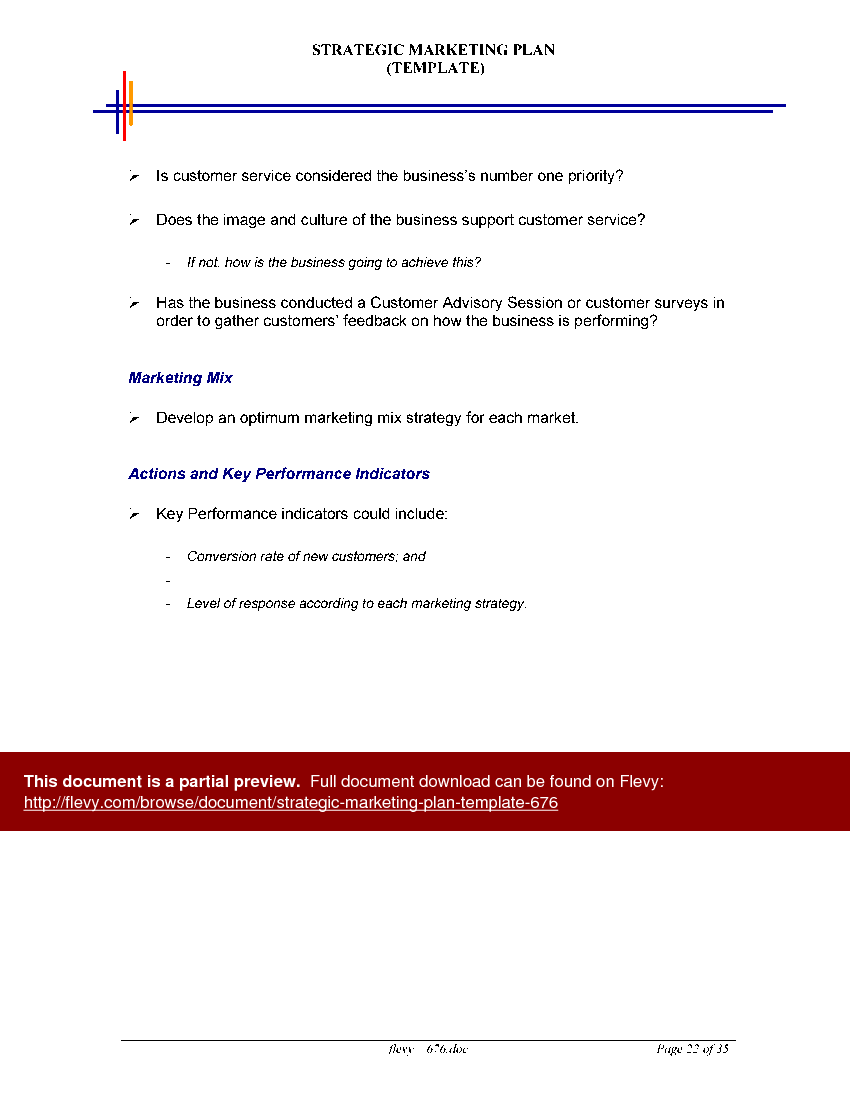
—— Customer Service
—— Marketing Mix
—— Actions and Key Performance Indicators
10. HISTORICAL PERFORMANCE
—— Budgets and Projections
—— Actions and Key Performance Indicators
11. MARKETING STRATEGY
—— Overall Marketing Strategy
—— Executive Summary
—— Business Mission
—— Business Vision
—— Situation Analysis
—— Basis for Market Growth
—— Marketing Objectives
—— Strategies
—— Advertising and Promotion
—— Pricing Strategy
—— Marketing Budget
—— Sales Tactics and Distribution
—— Service/Warranties and Guarantee Policies
—— Actions and Key Performance Indicators
—— Control and Review
12. APPENDIX 1
—— Appendix 1
13. APPENDIX 2
—— KPI Action Plan
14. APPENDIX 3
—— Marketing Activity Schedule
This template includes detailed sections on industry analysis and diagnostic SWOT analysis, ensuring a comprehensive approach. It also provides actionable KPIs to track progress and measure success effectively.
Got a question about the product? Email us at support@flevy.com or ask the author directly by using the "Ask the Author a Question" form. If you cannot view the preview above this document description, go here to view the large preview instead.
Executive Summary
The Strategic Marketing Plan Template is designed to guide businesses in developing effective marketing strategies that drive growth and profitability. This comprehensive document outlines essential components such as market analysis, competitive positioning, and strategic objectives. By utilizing this template, organizations can clearly define their marketing goals, identify key actions, and establish performance metrics to track success. The plan serves as a roadmap for aligning marketing efforts with business objectives, ensuring that resources are allocated efficiently to achieve desired outcomes.
Who This Is For and When to Use
• Marketing executives and managers responsible for developing and implementing marketing strategies
• Business owners seeking to formalize their marketing approach
• Consultants assisting organizations in creating structured marketing plans
• Teams involved in market research and analysis
Best-fit moments to use this deck:
• During the annual planning cycle to set marketing objectives
• When launching new products or entering new markets
• To assess and realign existing marketing strategies based on market conditions
Learning Objectives
• Define the purpose and components of a strategic marketing plan
• Build a comprehensive market analysis to inform strategic decisions
• Establish clear marketing objectives aligned with business goals
• Identify target markets and develop tailored marketing strategies
• Implement key performance indicators to measure success
• Analyze competitive positioning and differentiate products and services
Table of Contents
• Executive Summary (page 3)
• Introduction (page 4)
• Company Background (page 5)
• Industry Analysis (page 7)
• Products and Services (page 11)
• Market Analysis (page 14)
• Diagnostic SWOT Analysis (page 16)
• Target Market Selection (page 19)
• Strategy Development (page 21)
• Historical Performance (page 23)
• Marketing Strategy (page 25)
• Appendix 1 (page 32)
• Appendix 2 (page 33)
• Appendix 3 (page 34)
Primary Topics Covered
• Executive Summary - A concise overview of the marketing strategies and recommended actions for the business.
• Introduction - Clarifies the purpose of the marketing plan and its importance for achieving growth and profitability.
• Company Background - Details the business structure, history, and vision statement to contextualize the marketing strategies.
• Industry Analysis - Examines market dynamics, including customer characteristics, supplier relationships, and competitive landscape.
• Products and Services - Describes offerings, differentiation strategies, and product life cycle stages.
• Market Analysis - Provides insights into target markets, customer demographics, and market trends.
• SWOT Analysis - Identifies strengths, weaknesses, opportunities, and threats affecting the business.
• Target Market Selection - Guides the identification of existing and potential markets for strategic focus.
• Strategy Development - Outlines competitive advantages and market entry strategies for targeted segments.
• Historical Performance - Reviews past financial performance and sets projections for future growth.
• Marketing Strategy - Summarizes the overall marketing approach and specific tactics to achieve objectives.
Deliverables, Templates, and Tools
• Strategic marketing plan template for structured documentation
• SWOT analysis framework for assessing internal and external factors
• Market analysis tools for evaluating target demographics and trends
• Key performance indicator (KPI) tracking sheets for measuring success
• Marketing activity schedule for planning and executing campaigns
• Financial forecasting templates for budgeting and projections
Slide Highlights
• Overview of the strategic marketing plan's purpose and structure
• Detailed SWOT analysis framework for assessing business positioning
• Visual representation of target market segments and characteristics
• Timeline for marketing activities and associated budgets
• Key performance indicators to track marketing effectiveness
Potential Workshop Agenda
Introduction to Strategic Marketing Planning (60 minutes)
• Overview of the strategic marketing plan components
• Discussion on aligning marketing strategies with business objectives
• Group activity to identify key market trends
SWOT Analysis Workshop (90 minutes)
• Breakout sessions to assess strengths, weaknesses, opportunities, and threats
• Presentation of findings and group discussion on strategic implications
Target Market Identification Session (60 minutes)
• Review of existing customer data and market research findings
• Collaborative identification of potential target markets and strategies
Customization Guidance
• Tailor the company background section to reflect specific business history and vision
• Adjust the SWOT analysis to accurately represent current market conditions
• Modify target market selection criteria based on unique business offerings
• Update the marketing activity schedule with specific timelines and budgets relevant to the organization
Secondary Topics Covered
• Competitive analysis techniques and methodologies
• Customer segmentation strategies and criteria
• Pricing strategies and their impact on market positioning
• Promotional tactics and their effectiveness in reaching target audiences
• Monitoring and evaluation processes for ongoing marketing efforts
Topic FAQ
Document FAQ
These are questions addressed within this presentation.
What is the purpose of a strategic marketing plan?
A strategic marketing plan outlines the marketing strategies and actions necessary to achieve business growth and profitability, providing a roadmap for aligning efforts with organizational goals.
How often should the marketing plan be updated?
The marketing plan should be reviewed and updated regularly, ideally annually or whenever significant market changes occur, to ensure continued relevance and effectiveness.
What are key performance indicators (KPIs)?
KPIs are measurable values that help organizations assess the success of their marketing strategies and initiatives, allowing for data-driven decision-making.
How can I differentiate my products from competitors?
Differentiation can be achieved through unique selling propositions, exceptional customer service, innovative marketing strategies, and product features that meet specific customer needs.
What factors should be considered in market analysis?
Key factors include customer demographics, market trends, competitive landscape, pricing strategies, and distribution channels that influence market dynamics.
What is a SWOT analysis?
A SWOT analysis is a strategic planning tool that identifies a business's strengths, weaknesses, opportunities, and threats, helping to inform strategic decision-making.
How do I identify target markets?
Target markets can be identified through market research, customer segmentation, and analysis of demographic and psychographic data to determine the best fit for your products or services.
What is the importance of a marketing budget?
A marketing budget outlines the financial resources allocated for marketing activities, ensuring that spending aligns with strategic objectives and helps track return on investment.
How can I measure the effectiveness of my marketing strategies?
Effectiveness can be measured through KPIs, customer feedback, sales data, and market share analysis to evaluate the impact of marketing efforts on business performance.
What is the role of market research in a marketing plan?
Market research provides insights into customer needs, preferences, and behaviors, informing strategic decisions and helping to identify opportunities for growth.
Glossary
• Strategic Marketing Plan - A comprehensive document outlining marketing strategies and actions to achieve business goals.
• SWOT Analysis - A framework for assessing strengths, weaknesses, opportunities, and threats.
• Key Performance Indicators (KPIs) - Metrics used to measure the success of marketing strategies.
• Target Market - A specific group of consumers identified for marketing efforts.
• Market Analysis - The process of evaluating market dynamics, trends, and customer characteristics.
• Competitive Positioning - The strategy of differentiating a business from its competitors.
• Marketing Budget - A financial plan outlining the allocation of resources for marketing activities.
• Customer Segmentation - The practice of dividing a customer base into distinct groups for targeted marketing.
• Unique Selling Proposition (USP) - A factor that differentiates a product from its competitors.
• Market Research - The process of gathering and analyzing information about consumers and markets.
• Promotional Strategy - The approach taken to communicate and promote products or services to customers.
• Pricing Strategy - The method used to set prices for products or services based on market conditions.
• Marketing Mix - The combination of product, price, place, and promotion strategies used to market a product.
• Brand Awareness - The extent to which consumers recognize and remember a brand.
• Customer Loyalty - The tendency of customers to continue purchasing from a specific brand.
• Sales Forecast - An estimate of future sales based on historical data and market analysis.
• Distribution Channel - The path through which products or services flow from the producer to the consumer.
• Market Share - The portion of a market controlled by a particular company or product.
• Customer Feedback - Information provided by customers about their experiences and satisfaction with a product or service.
Source: Best Practices in Channel Distribution Strategy Example, Marketing Plan Development Word: Strategic Marketing Plan Template Word (DOC) Document, Documents & Files
|
Download our FREE Strategy & Transformation Framework Templates
Download our free compilation of 50+ Strategy & Transformation slides and templates. Frameworks include McKinsey 7-S, Balanced Scorecard, Disruptive Innovation, BCG Curve, and many more. |










