
Includes frameworks to help build a strategic foresight capability
Provides a classification of methods used to monitor change drivers and clarify uncertainties
Breaks down a process for running a strategic foresight project
STRATEGIC PLANNING PPT DESCRIPTION
Enhance your strategic planning with this MBB-style PPT on strategic foresight. Learn methods to navigate VUCA environments and adapt to uncertainty. Strategic Foresight and Uncertainty is a 51-slide PPT PowerPoint presentation slide deck (PPTX) available for immediate download upon purchase.
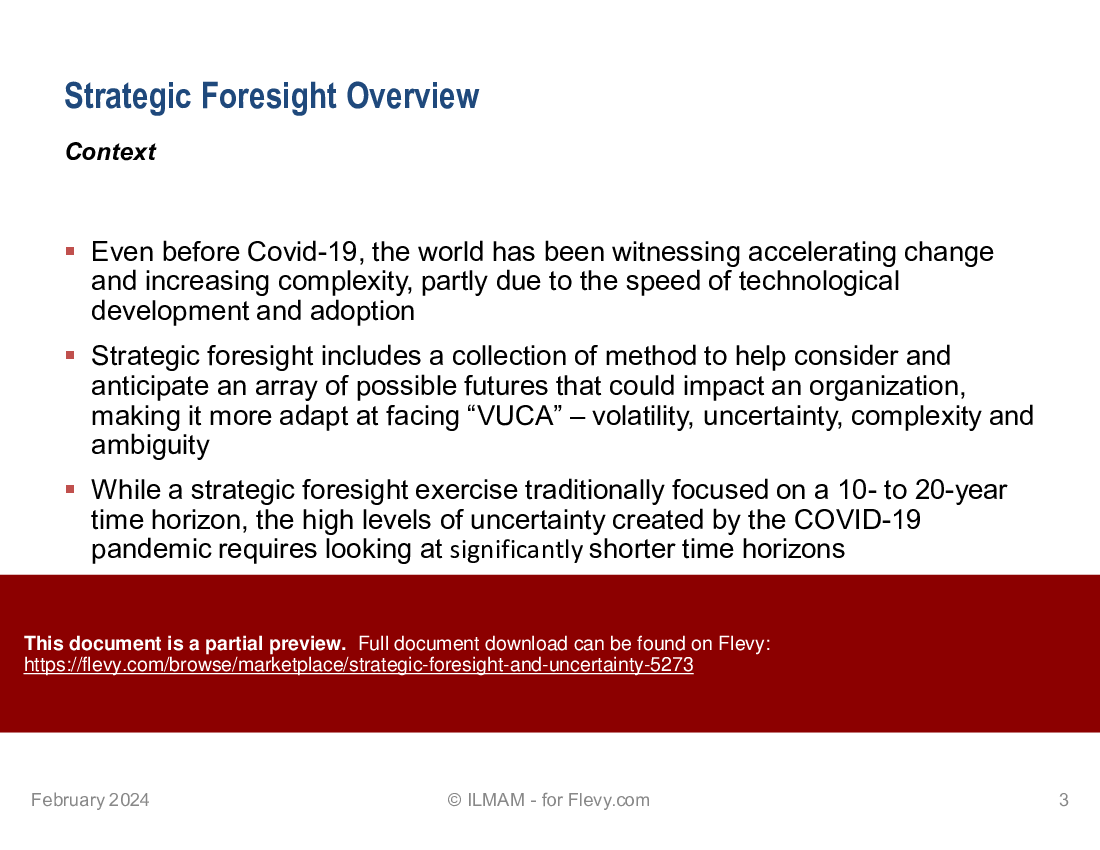
Even before COVID-19, the world has been witnessing accelerating change and increasing complexity, partly due to the speed of technological development and adoption.
Strategic foresight includes a collection of method to help consider and anticipate an array of possible futures that could impact an organization, making it more adapt at facing "VUCA" – volatility, uncertainty, complexity and ambiguity.
While a strategic foresight exercise traditionally focused on a 10- to 20-year time horizon, the high levels of uncertainty created by the COVID-19 pandemic requires looking at significantly shorter time horizons.
With the traditional strategic planning assuming a reasonably stable environment, the strategic planning process can be enhanced by embedding foresight methods and tools.
Contents
1. Strategic Foresight Overview
• Context
• Key definitions
• Why use strategic foresight
• What strategic foresight is not
• Traditional strategic planning versus strategic foresight
• Barriers to strategic foresight and potential counteractions
• Benefits of strategic foresight
• Critical considerations for strategic foresight during a crisis
• A futurist approach to strategic planning for a given uncertainty
2. Strategic Foresight Methods
• The Foresight Diamond
• Examples of foresight methods
• Two directional orientations of foresight methods
• Common tools for corporate foresight practices
3. Strategic Foresight Frameworks
3A. Generic Foresight Process Framework
• Key activities and associated questions
• Key elements and their impact on the process
• Key activities and associated tools
3B. Integrated Foresight Framework
• Key activities and associated tools
• Integrated foresight process
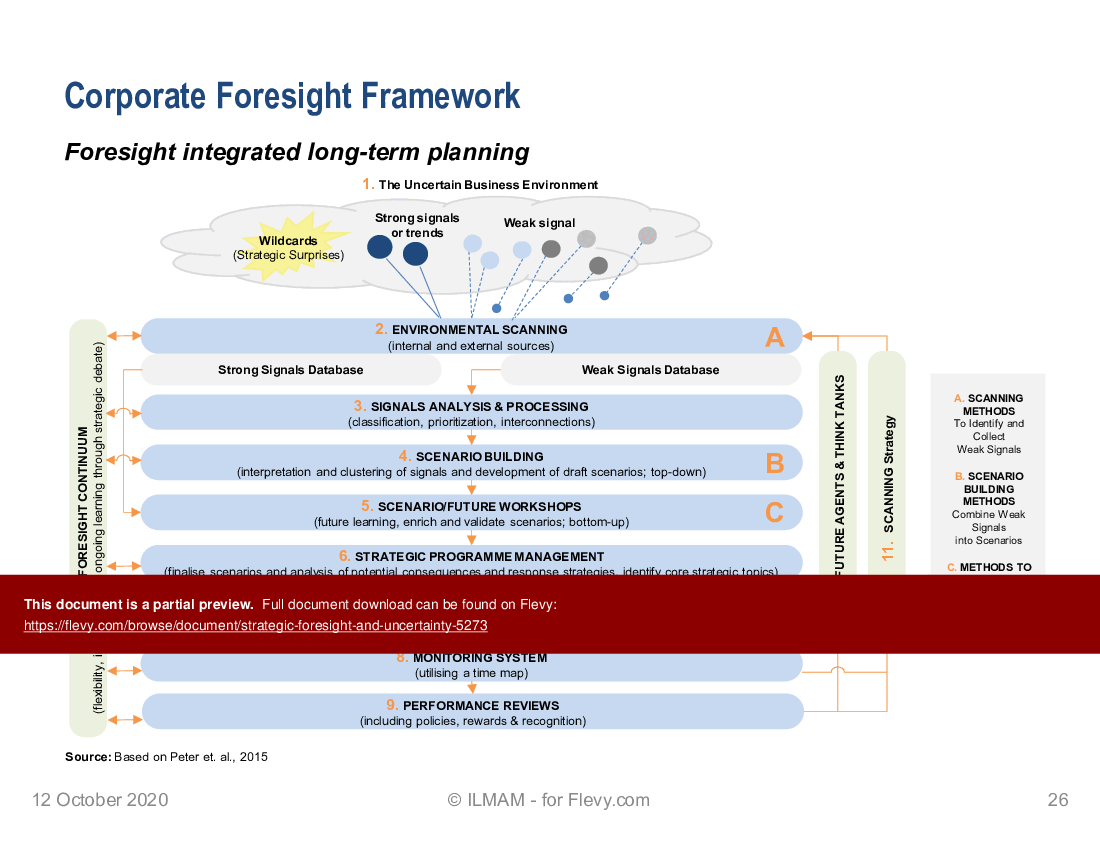
3C. Corporate Foresight Framework
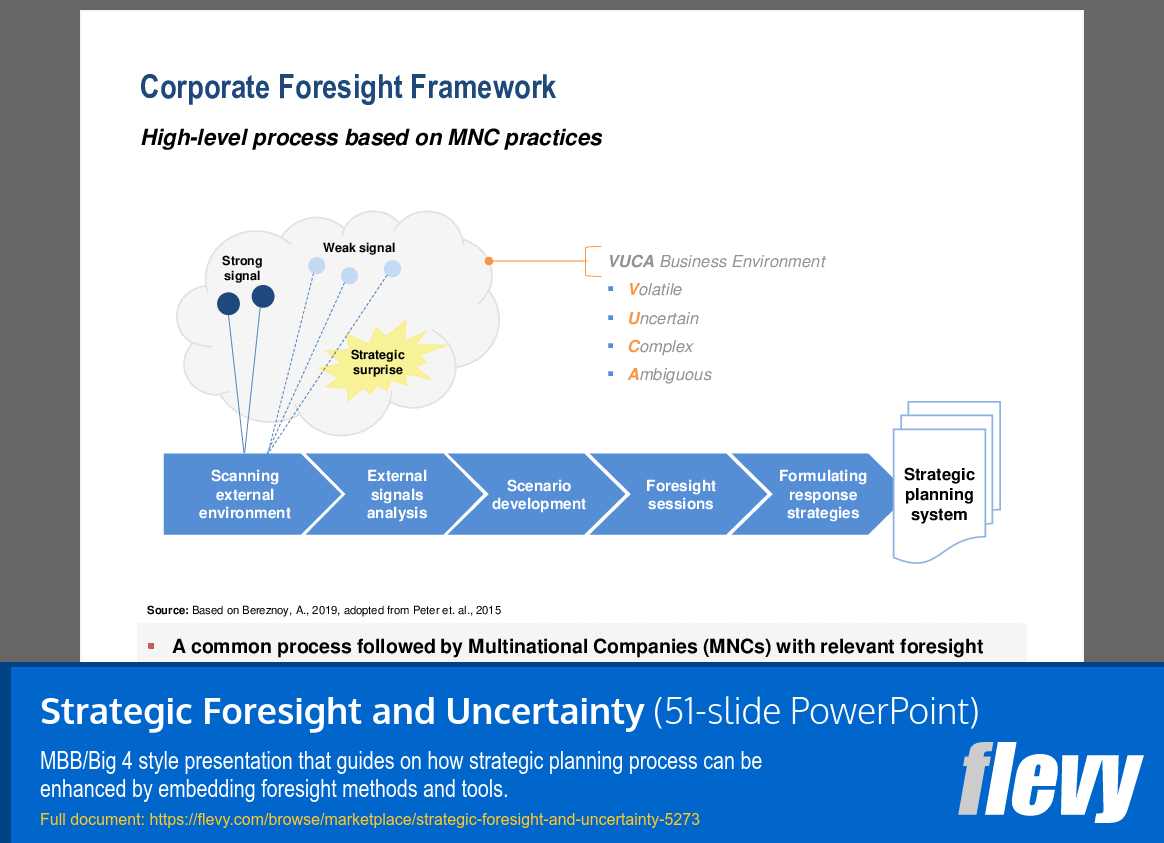
• High-level process based on MNC practices
• Foresight integrated long-term planning
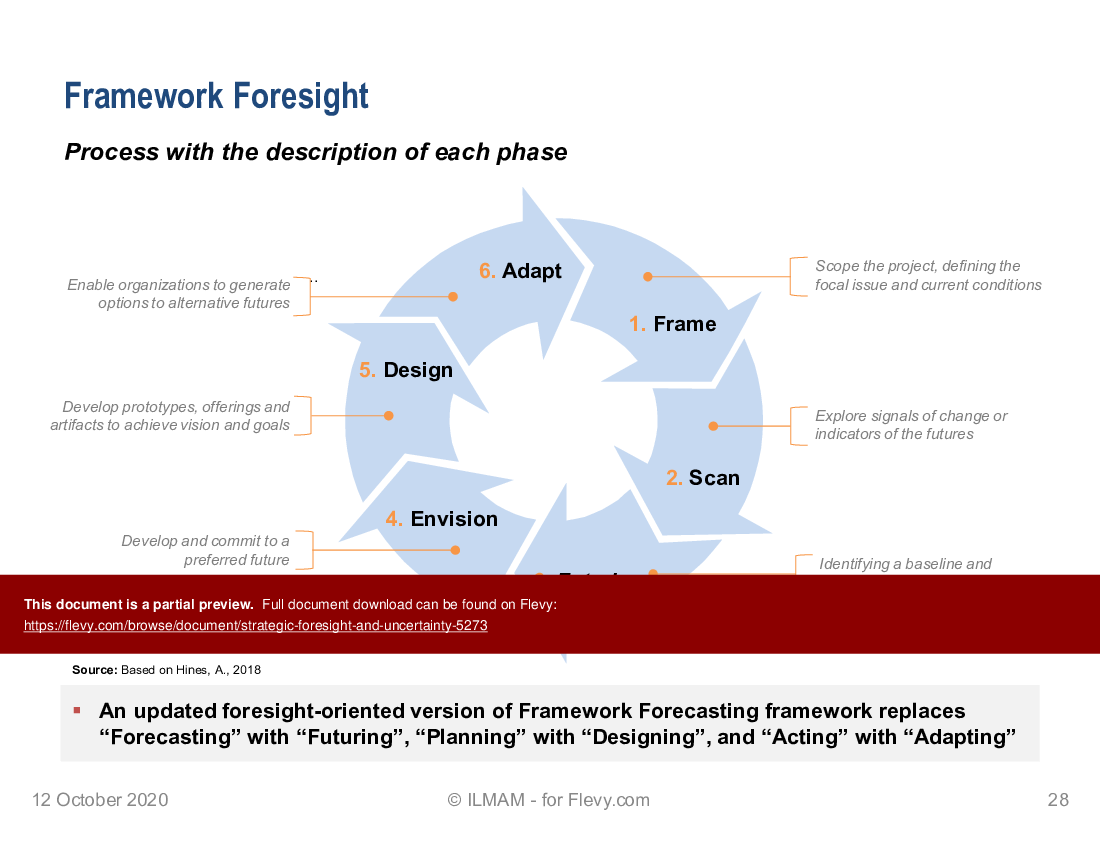
3D. Framework Foresight
• Process with the description of each phase
• Process with the outcome of each phase
4. Undertaking a Strategic Foresight Project
• Phase 1: Frame
• Phase 2: Scan
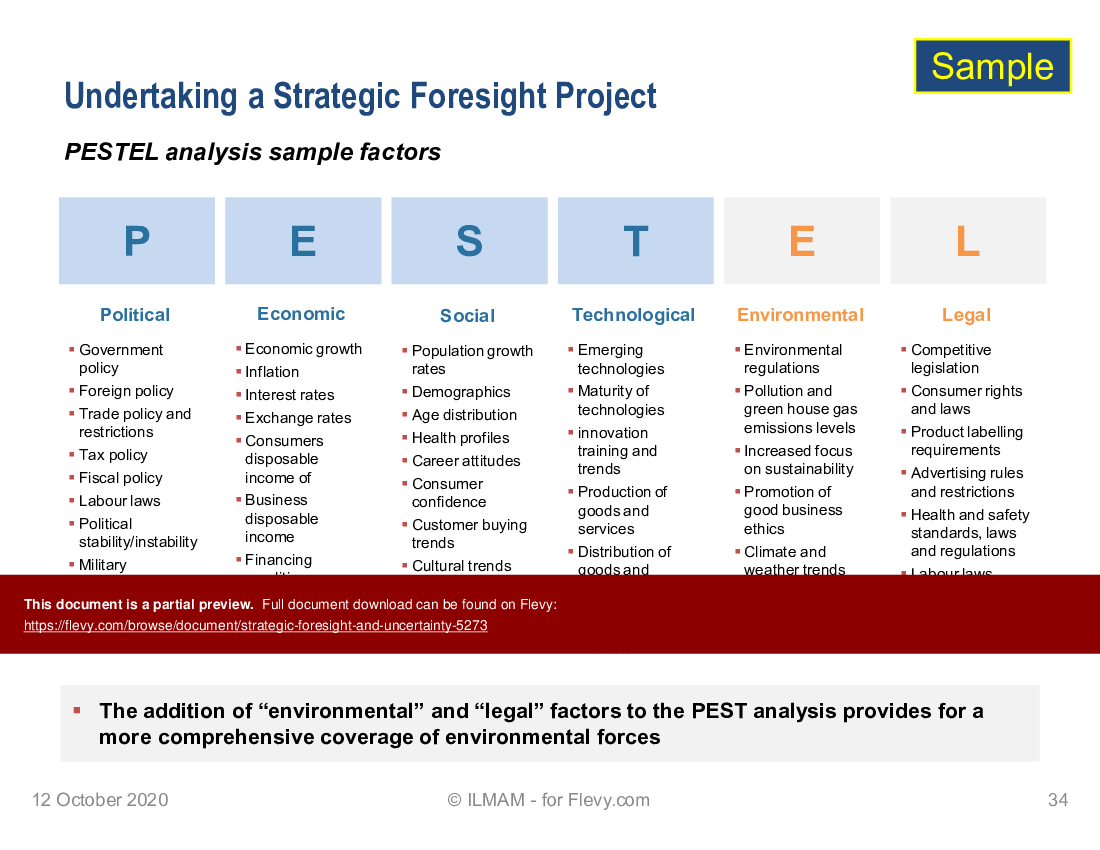
• PESTEL analysis sample factors
• PESTEL analysis factors – summary slide
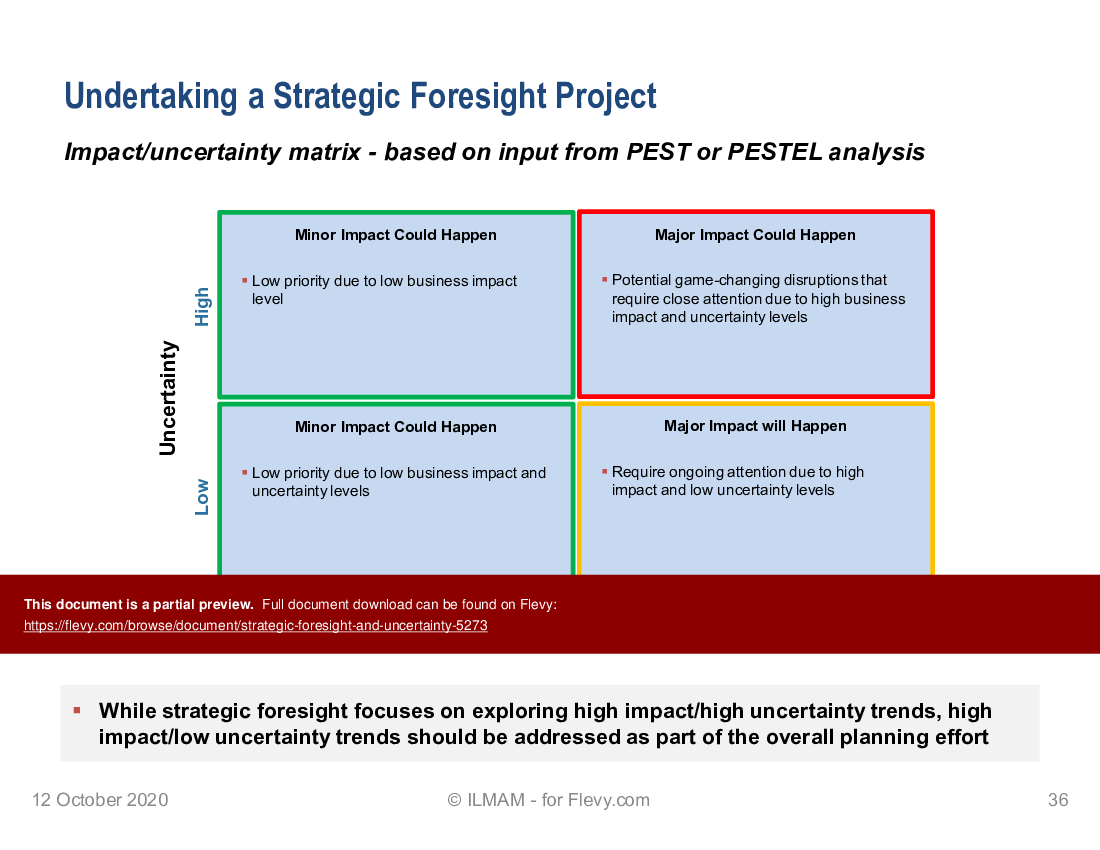
• Impact/uncertainty matrix – based on input from PEST or PESTEL analysis
• Impact/uncertainty matrix – summary slide
• Phase 3: Futurize
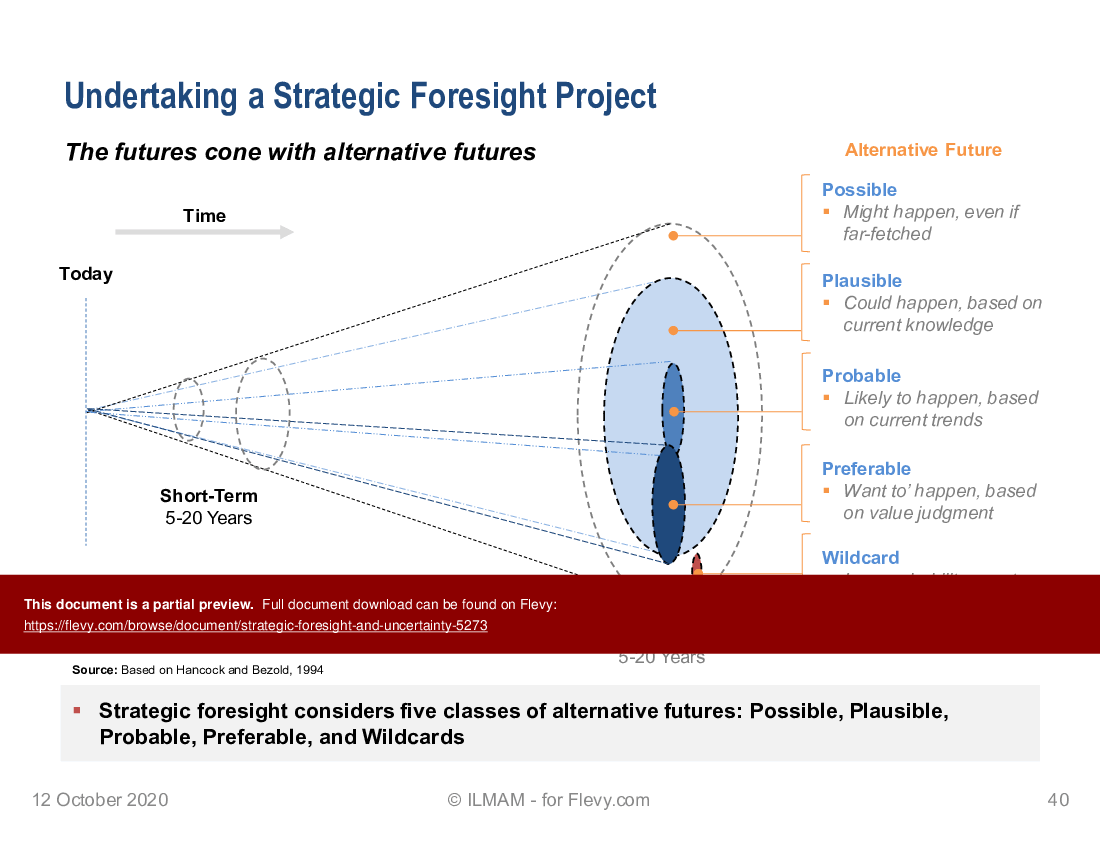
• The futures cone with alternative futures
• 2 x 2 scenario matrix – summary slide
• Identified key scenarios descriptions – summary slide
• Three horizon approach with scenarios embedded
• Phase 4: Envision
• Phase 5: Design
• Backcasting milestones
• Phase 6: Adapt
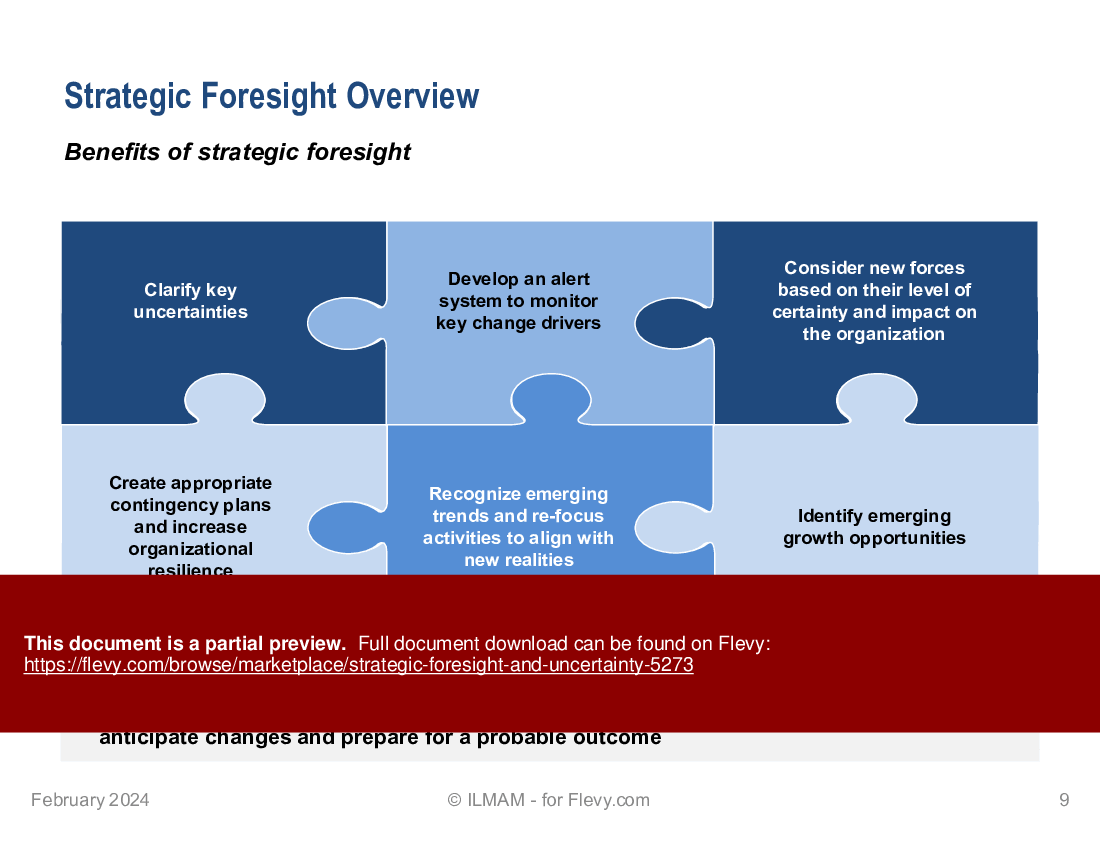
This PPT provides a comprehensive overview of the benefits of strategic foresight, including the ability to clarify key uncertainties and develop an alert system to monitor critical change drivers. It also delves into various foresight methods and frameworks, offering practical tools for corporate foresight practices.
Got a question about the product? Email us at support@flevy.com or ask the author directly by using the "Ask the Author a Question" form. If you cannot view the preview above this document description, go here to view the large preview instead.
MARCUS OVERVIEW
This synopsis was written by Marcus [?] based on the analysis of the full 51-slide presentation.
Executive Summary
This presentation titled "Strategic Foresight and Uncertainty" is crafted in a McKinsey, Bain, or BCG-quality style (consulting-grade; not affiliated) and serves as a comprehensive guide for enhancing strategic planning through foresight methods. It equips corporate executives and integration leaders with the tools to navigate VUCA (volatility, uncertainty, complexity, and ambiguity) environments. The deck emphasizes the importance of adapting strategic planning processes to shorter time horizons, especially in light of recent global disruptions. By utilizing this presentation, organizations can better anticipate potential changes, develop robust contingency plans, and proactively shape their strategic direction.
Who This Is For and When to Use
• Corporate executives looking to integrate foresight into strategic planning
• Integration leaders managing change in uncertain environments
• Strategy teams responsible for long-term planning and risk management
• Consultants advising organizations on strategic foresight and adaptability
Best-fit moments to use this deck:
• During strategic planning sessions to incorporate foresight methods
• When assessing potential impacts of emerging trends on business strategy
• In crisis management scenarios to develop adaptive strategies
• For workshops focused on scenario planning and future-proofing initiatives
Learning Objectives
• Define strategic foresight and its relevance in today’s business environment
• Identify key drivers of change and their implications for organizations
• Develop contingency plans based on plausible future scenarios
• Utilize foresight methods to enhance strategic planning processes
• Recognize emerging trends and adapt organizational strategies accordingly
• Create a framework for ongoing monitoring of change signals
Primary Topics Covered
• Strategic Foresight Overview - An introduction to strategic foresight, emphasizing its role in anticipating change and enhancing adaptability in organizations.
• Strategic Foresight Methods - A classification of various foresight methods, including qualitative, quantitative, and semi-quantitative approaches.
• Generic Foresight Process Framework - A structured approach to foresight that includes inputs, analysis, interpretation, and strategy development.
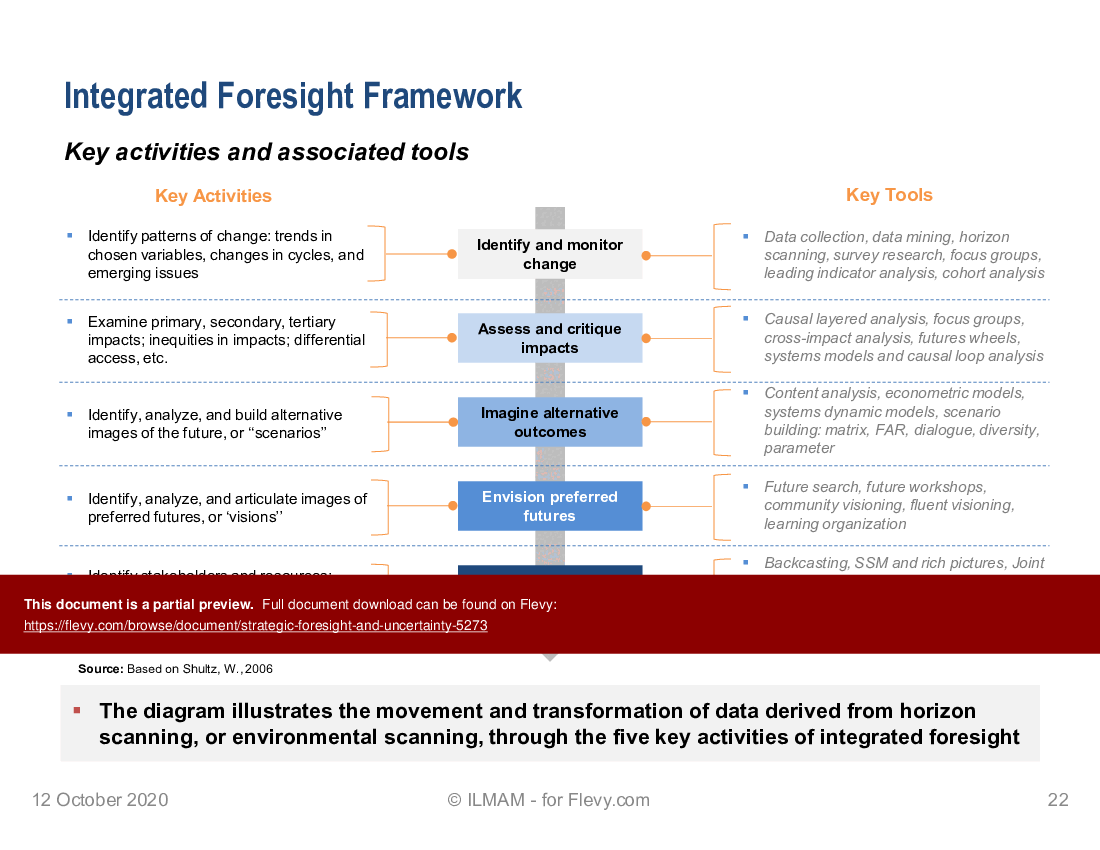
• Integrated Foresight Framework - A model illustrating the transformation of data through key foresight activities, enhancing strategic decision-making.
• Corporate Foresight Framework - A high-level overview of the foresight processes used by multinational companies to navigate VUCA environments.
• Framework Foresight - An updated approach to foresight that emphasizes adaptability and strategic planning.
Deliverables, Templates, and Tools
• Foresight project framing template to define scope, audience, and key questions
• PESTEL analysis framework for identifying external factors impacting strategic planning
• Impact/uncertainty matrix for prioritizing trends based on business impact
• Scenario matrix template for mapping plausible futures based on identified trends
• Backcasting milestones template to track progress toward achieving strategic visions
• Monitoring system framework for ongoing assessment of change signals
Slide Highlights
• Overview of strategic foresight and its significance in a rapidly changing environment
• Comparison between traditional strategic planning and strategic foresight
• The Foresight Diamond illustrating key methods and their classifications
• Integrated Foresight Framework detailing the movement of data through foresight activities
• The futures cone depicting different classes of alternative futures
Potential Workshop Agenda
Foresight Introduction Session (60 minutes)
• Overview of strategic foresight concepts and relevance
• Discussion on the importance of adaptability in strategic planning
• Introduction to key foresight methods and frameworks
Scenario Planning Workshop (90 minutes)
• Identify and analyze key trends impacting the organization
• Develop plausible future scenarios based on identified trends
• Discuss implications of scenarios on strategic direction
Foresight Implementation Session (120 minutes)
• Frame a strategic foresight project tailored to organizational needs
• Develop backcasting milestones for achieving strategic visions
• Establish a monitoring system for ongoing assessment of change signals
Customization Guidance
• Tailor the PESTEL analysis factors to reflect specific organizational contexts
• Adjust the impact/uncertainty matrix based on industry-specific trends
• Incorporate organizational values and goals into scenario planning exercises
• Define specific milestones and timelines for backcasting activities
Secondary Topics Covered
• Key drivers of change impacting strategic foresight
• Barriers to effective foresight and potential counteractions
• The role of stakeholder engagement in foresight activities
• Techniques for effective environmental scanning and trend analysis
FAQ What is strategic foresight?
Strategic foresight is the ability to anticipate and prepare for multiple possible futures, enabling organizations to adapt to change and uncertainty.
How does strategic foresight differ from traditional planning?
While traditional planning focuses on a stable environment and a fixed time horizon, strategic foresight considers multiple potential futures and is adaptable to changing circumstances.
What methods are commonly used in strategic foresight?
Common methods include scenario planning, backcasting, PESTEL analysis, and stakeholder engagement techniques.
How can organizations benefit from strategic foresight?
Organizations can clarify uncertainties, develop contingency plans, identify emerging opportunities, and enhance resilience against disruptions.
What is the importance of scenario planning in foresight?
Scenario planning allows organizations to explore various plausible futures, helping them to prepare for different outcomes and adapt strategies accordingly.
How can I implement a strategic foresight project?
Start by framing the project scope, identifying key trends, developing scenarios, and establishing milestones for tracking progress toward strategic goals.
What tools can assist in the foresight process?
Tools include PESTEL analysis frameworks, impact/uncertainty matrices, scenario matrices, and backcasting templates.
How often should organizations review their foresight strategies?
Regular reviews should be conducted, ideally quarterly or semi-annually, to assess progress and adapt to new signals of change.
Glossary
• Strategic Foresight - The ability to anticipate and prepare for multiple possible futures.
• VUCA - An acronym for volatility, uncertainty, complexity, and ambiguity.
• PESTEL Analysis - A framework for analyzing external factors: Political, Economic, Social, Technological, Environmental, and Legal.
• Scenario Planning - A method for exploring and preparing for multiple plausible futures.
• Backcasting - A planning method that starts with defining a desired future and works backward to identify necessary steps.
• Impact/Uncertainty Matrix - A tool for prioritizing trends based on their potential impact and level of uncertainty.
• Foresight Framework - A structured approach to integrating foresight into strategic planning processes.
• Stakeholder Engagement - The process of involving individuals or groups who may be affected by or can affect a decision.
• Environmental Scanning - The process of monitoring external factors that may impact an organization.
• Transformational Factors - Key elements that can significantly influence an organization's future direction.
• Wildcards - Low-probability events that can have a high impact on an organization.
• Futures Cone - A visual representation of different classes of alternative futures.
This PPT slide presents a framework for strategic foresight, focusing on alternative futures through a "futures cone" that categorizes potential futures by likelihood and impact over time. The cone is divided into short-term (5-20 years) and medium-term (5-20 years) segments. Five classes of alternative futures are defined: Possible (unlikely scenarios), Plausible (scenarios based on current knowledge), Probable (likely events informed by trends), Preferable (desired scenarios based on stakeholder values), and Wildcard (low-probability events with significant impact). This framework aids organizations in preparing for various outcomes, enhancing resilience and adaptability in a rapidly changing environment.
This PPT slide outlines the "Framework Foresight," a six-phase process for strategic planning. The first phase, "Frame," defines the project's scope and central issue. The second phase, "Scan," explores signals of change and indicators that influence future outcomes, identifying trends and potential disruptions. The third phase, "Futurize," establishes a baseline and envisions alternative futures, encouraging creative scenario planning. "Envision" allows teams to commit to a preferred future aligned with actionable goals. The fifth phase, "Design," involves creating prototypes and initiatives to achieve defined objectives. Finally, "Adapt" emphasizes flexibility, enabling organizations to adjust strategies based on new information. This comprehensive framework enhances strategic foresight capabilities, fostering resilience and adaptability.
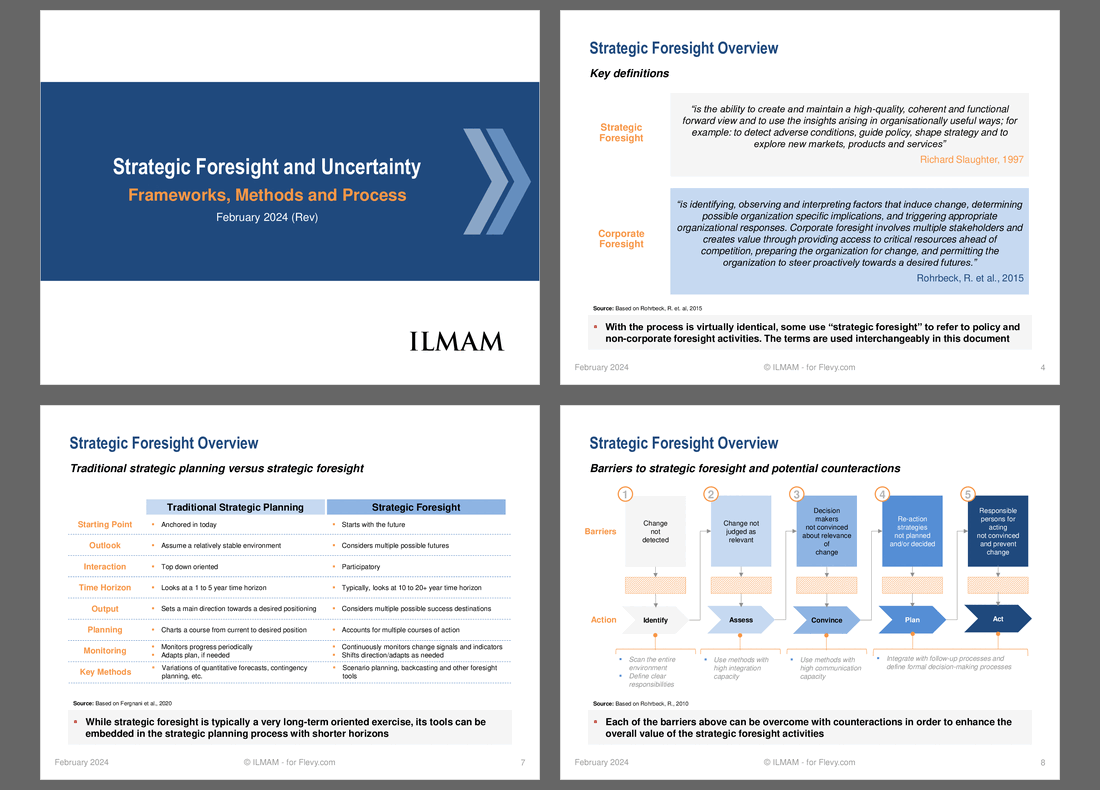
This PPT slide outlines key barriers to implementing strategic foresight and corresponding actions. The first barrier is the failure to detect environmental changes, leading to missed opportunities. The action "Identify" involves scanning the environment and defining responsibilities. The second barrier is the perception that detected changes are irrelevant; the action "Assess" employs analytical tools with high integration capacity to evaluate change significance. The third barrier is convincing decision-makers of the relevance of changes; the action "Convince" emphasizes strong communication methods. The fourth barrier is the lack of planned re-action strategies; the action "Plan" integrates follow-up processes and formal decision-making procedures. Finally, the action "Act" ensures that responsible individuals are engaged and ready to implement necessary changes based on insights gained.
This PPT slide outlines a structured framework for strategic foresight using a three-horizon approach. Horizon 1 addresses immediate responses, Horizon 2 focuses on recovery, and Horizon 3 targets growth. Each horizon is plotted against time, with the x-axis representing the timeline in months and years, while the y-axis indicates the value generated through strategic initiatives. As organizations progress through these horizons, the value created increases at varying rates under different scenarios. Each horizon includes multiple scenarios (Scenario 1 to Scenario 4) to prepare for potential futures and test strategic assumptions. While typically associated with long-term planning, the three-horizon approach can also adapt to crisis situations, enabling organizations to pivot quickly in response to unexpected challenges.
This PPT slide compares traditional strategic planning and strategic foresight across key dimensions. Traditional planning is anchored in the present and assumes a stable environment, leading to rigidity. In contrast, strategic foresight begins with future possibilities, embraces uncertainty, and considers multiple potential futures, enabling organizational agility. Interaction styles differ, with traditional planning being top-down and limiting input, while strategic foresight promotes collaboration and diverse perspectives. The time horizon for traditional planning is typically 1 to 5 years, whereas strategic foresight extends to 10 to 20 years or more, fostering long-term sustainability. Traditional methods set a singular direction, while strategic foresight allows for multiple success destinations and flexible execution. Monitoring practices also vary; traditional methods involve periodic checks, while strategic foresight continuously monitors signals for real-time adjustments. Key methods diverge as well, with traditional planning relying on quantitative forecasts and contingency planning, while strategic foresight employs scenario planning and innovative tools.
The Integrated Foresight Framework outlines a structured approach to strategic foresight, comprising 5 key steps. The first step involves identifying and monitoring change by focusing on trends, drivers, and emerging issues. The second step assesses the impacts of these changes, enabling organizations to evaluate various scenarios. The third step encourages imagining alternative outcomes, fostering creativity in exploring possibilities. Next, organizations envision preferred futures to align strategic goals with desired outcomes. Finally, the framework emphasizes planning and implementing changes based on insights gained, ensuring a proactive approach to shaping the future. The visual representation illustrates the interconnectedness of these steps, reinforcing that foresight is an ongoing process aligned with "Vision, Goals, Values," and "Strategies" for effective strategic planning amidst uncertainty.
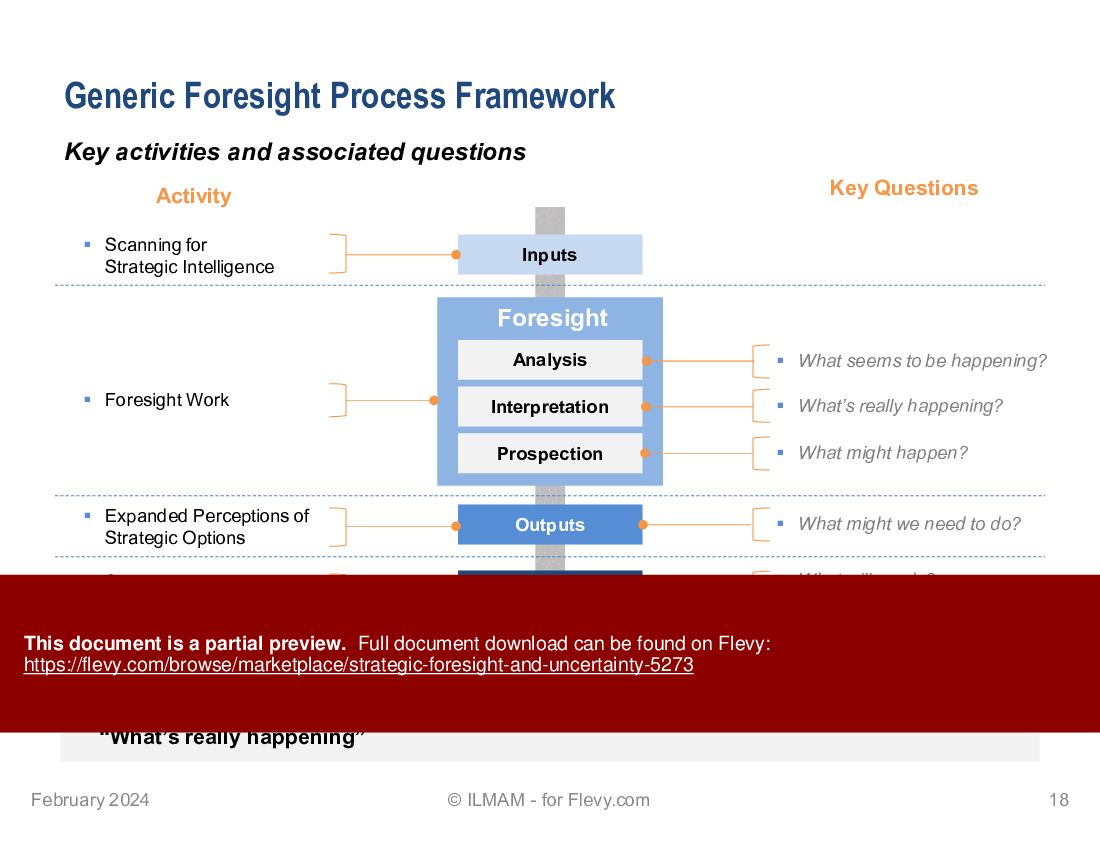
This PPT slide presents a framework for the generic foresight process, categorizing approaches into 4 types: Reactive Strategy Approach, Shallow Foresight Process, Shallow/Narrow Foresight Process, and Robust Foresight Process. The Reactive Strategy Approach relies solely on inputs and analysis, often missing proactive planning opportunities. The Shallow Foresight Process adds a prospecting element, but lacks comprehensive analysis. The Shallow/Narrow Foresight Process incorporates both prospecting and analysis, but still underutilizes foresight methodologies. The Robust Foresight Process integrates interpretation with analysis and prospecting, enabling organizations to better anticipate changes and adapt strategies. It emphasizes the importance of prospecting—asking “What might happen”—and cautions against neglecting interpretation, which can lead to a superficial understanding of potential scenarios and impact strategic effectiveness.
This PPT slide outlines essential considerations for implementing strategic foresight during a crisis, structured into 5 key areas. First, it advocates for short to medium-term scenario planning, projecting possible futures over 6, 12, and 36 months to identify implications and formulate strategies. Second, it emphasizes balancing short- and long-term planning, considering the implications of crisis mitigation actions on future outcomes. Third, organizations should explore multiple options and test preferred alternatives to avoid assuming exclusivity in decision-making. Fourth, studying agile, forward-looking players reveals new possibilities that may emerge during or after a crisis. Finally, accelerating digital and customer experience strategies is vital for aligning services with future needs and technologies, ensuring competitiveness in a rapidly changing environment.
The Foresight Diamond, developed by Popper, categorizes strategic foresight methods into 4 dimensions: Creativity, Expertise, Interaction, and Evidence. Creativity includes methods like Wild Cards, Science Fiction, and Brainstorming, focusing on imaginative thinking to explore future possibilities. Expertise relies on established knowledge through methods such as Roadmapping, Expert Panels, and Morphological Analysis, emphasizing the importance of expert insights for strategic decisions. Interaction involves collaborative techniques like Scenario Workshops and Citizen Panels, highlighting stakeholder engagement in the foresight process. Evidence is divided into Quantitative, Semi-Quantitative, and Qualitative categories, focusing on data-driven insights with methods like Quantitative Scenario Planning and Indicators/TSA. The Foresight Diamond enhances strategic planning capabilities, aiding organizations in navigating uncertainty and aligning decisions with long-term objectives.
This PPT slide outlines a framework for strategic planning amid uncertainty, emphasizing a futurist approach that aligns organizational vision with tactical and strategic initiatives across varying time horizons. The horizontal axis depicts the relationship between data, evidence, and certainty, indicating that certainty diminishes over time. Actions are categorized into "Tactics" for the short term (1-2 years), "Strategies" for the medium term (2-5 years), and "Vision" for long-term planning (5-10 years and beyond). Organizations must adapt planning methods based on initiative timeframes and consider external factors influencing strategic direction. This proactive approach encourages maintaining focus on overarching vision while identifying probable events impacting the strategic landscape.
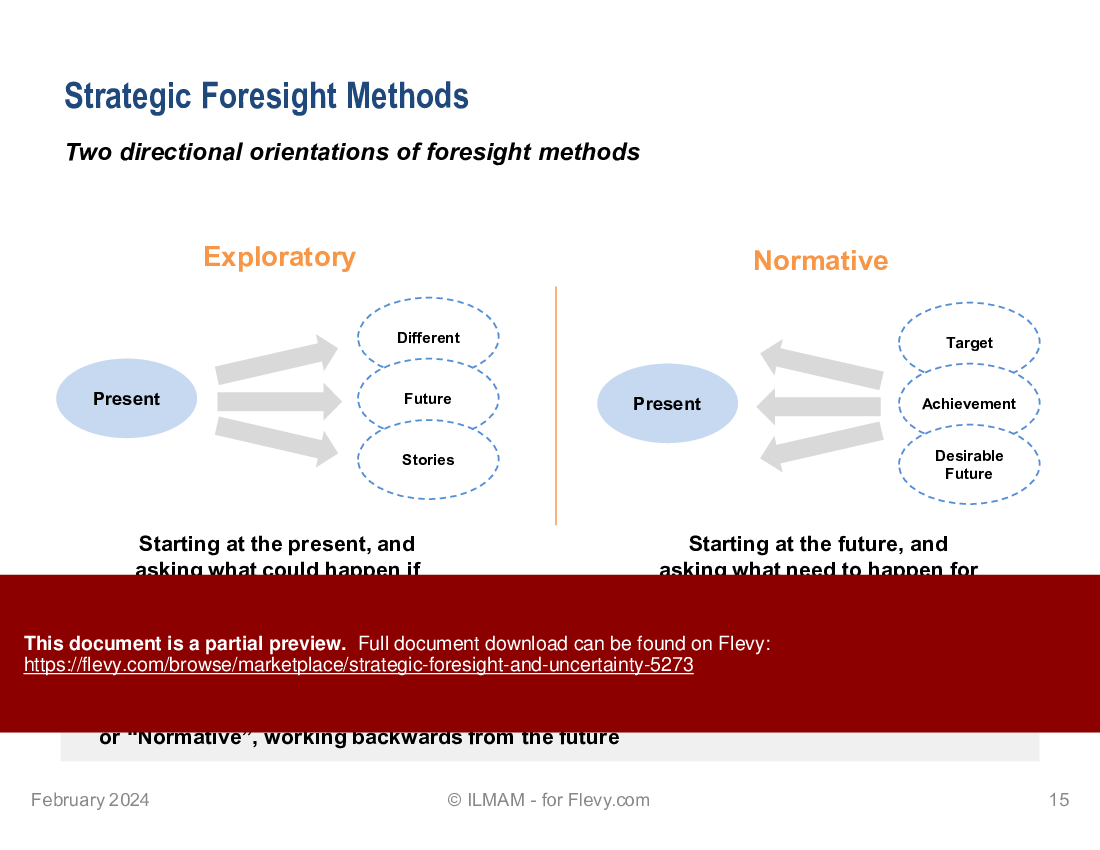
This PPT slide outlines 2 primary orientations of strategic foresight methods: Exploratory and Normative. The Exploratory method begins with the present, prompting organizations to ask, "What could happen if this event occurred?" This approach fosters creative thinking and scenario development, emphasizing diverse perspectives and imaginative storytelling. The Normative method starts with a desired future state, focusing on "What needs to happen for this future to materialize?" This goal-oriented approach identifies targets and actionable steps to achieve them. Both methods are essential for navigating uncertainty, providing frameworks for understanding the present and envisioning future scenarios, ultimately enhancing strategic planning processes.
This PPT slide presents a Corporate Foresight Framework for high-level strategic planning, emphasizing the need to navigate a VUCA (Volatile, Uncertain, Complex, Ambiguous) business environment. The framework begins with "Scanning external environment" to identify strong and weak signals indicating emerging trends or disruptions. This analysis forms the basis for "Scenario development," where various future scenarios are crafted to prepare organizations for potential futures. "Foresight sessions" leverage insights from previous steps to refine strategies, culminating in "Formulating response strategies" that develop actionable plans. Finally, these strategies integrate into a "Strategic planning system," embedding foresight into the organization's overall strategic framework, aiding in anticipating strategic surprises and navigating operational complexities.
This PPT slide outlines the second phase of a strategic foresight project, focusing on the "Scan" process. It begins with identifying trends using frameworks like PEST or PESTEL, emphasizing a structured approach to recognizing relevant trends impacting the organization. The review process retains only trends that are increasing, decreasing, or fundamentally changing, backed by credible sources for reliability. Trends are then prioritized based on potential impact, rated from low to high, and certainty, ranging from uncertain to completely certain. This dual sorting mechanism focuses efforts on impactful and reliable trends. High impact and high uncertainty trends are carried over for proactive risk and opportunity management in the next phase.
This PPT slide defines key concepts of strategic foresight and corporate foresight. Strategic foresight, as defined by Richard Slaughter (1997), is the ability to maintain a coherent view of the future, using insights to identify adverse conditions, guide policy, shape strategy, and explore new markets. Corporate foresight, defined by Rohrbeck et al. (2015), is the process of identifying and interpreting factors that induce organizational change, emphasizing the need for stakeholder collaboration to create value and prepare for change. While similar, organizations may interchangeably use "strategic foresight" for both policy and organizational planning, highlighting the versatility of foresight methodologies in enhancing strategic planning capabilities.
Source: Best Practices in Strategic Planning, COVID-19, Strategic Thinking, STEEPLE PowerPoint Slides: Strategic Foresight and Uncertainty PowerPoint (PPTX) Presentation Slide Deck, ILMAM - Strategy & Management Consulting
ILMAM is a strategy and management consulting provider that specializes in:
• Strategic management, including strategic planning and performance management
• Strategy enablers, such as key business processes and governance
Select top quality guides and tools are offered through to enable you to perform work at your company or support your clients effectively and
... [read more] efficiently.
The average daily rate of a McKinsey consultant is $6,625 (not including expenses). The average price of a Flevy document is $65.
Trusted by over 10,000+ Client Organizations
Since 2012, we have provided business templates to over 10,000 businesses and organizations of all sizes, from startups and small businesses to the Fortune 100, in over 130 countries.
"The wide selection of frameworks is very useful to me as an independent consultant. In fact, it rivals what I had at my disposal at Big 4 Consulting firms in terms of efficacy and organization."
– Julia T., Consulting Firm Owner (Former Manager at Deloitte and Capgemini)
"I am extremely grateful for the proactiveness and eagerness to help and I would gladly recommend the Flevy team if you are looking for data and toolkits to help you work through business solutions."
– Trevor Booth, Partner, Fast Forward Consulting
"I like your product. I'm frequently designing PowerPoint presentations for my company and your product has given me so many great ideas on the use of charts, layouts, tools, and frameworks. I really think the templates are a valuable asset to the job."
– Roberto Fuentes Martinez, Senior Executive Director at Technology Transformation Advisory
"I have found Flevy to be an amazing resource and library of useful presentations for lean sigma, change management and so many other topics. This has reduced the time I need to spend on preparing for my performance consultation. The library is easily accessible and updates are regularly provided. A wealth of great information."
– Cynthia Howard RN, PhD, Executive Coach at Ei Leadership
"I have used FlevyPro for several business applications. It is a great complement to working with expensive consultants. The quality and effectiveness of the tools are of the highest standards."
– Moritz Bernhoerster, Global Sourcing Director at Fortune 500
"[Flevy] produces some great work that has been/continues to be of immense help not only to myself, but as I seek to provide professional services to my clients, it gives me a large "tool box" of resources that are critical to provide them with the quality of service and outcomes they are expecting."
– Royston Knowles, Executive with 50+ Years of Board Level Experience
"As an Independent Management Consultant, I find Flevy to add great value as a source of best practices, templates and information on new trends. Flevy has matured and the quality and quantity of the library is excellent. Lastly the price charged is reasonable, creating a win-win value for
the customer, Flevy and the various authors. This is truly a service that benefits the consulting industry and associated clients. Thanks for providing this service.

"
– Jim Schoen, Principal at FRC Group
"One of the great discoveries that I have made for my business is the Flevy library of training materials.
As a Lean Transformation Expert, I am always making presentations to clients on a variety of topics: Training, Transformation, Total Productive Maintenance, Culture, Coaching, Tools, Leadership Behavior, etc. Flevy

It is well worth the money to purchase these presentations. Sure, I have the knowledge and information to make my point. It is another thing to create a presentation that captures what I want to say. Flevy has saved me countless hours of preparation time that is much better spent with implementation that will actually save money for my clients.
"
– Ed Kemmerling, Senior Lean Transformation Expert at PMG
Download our free compilation of 50+ Strategy & Transformation slides and templates. Frameworks include McKinsey 7-S, Balanced Scorecard, Disruptive Innovation, BCG Curve, and many more.