
This introductory training material explains how Lean tools and techniques could be applied to all office and admin areas to reduce non-vale added processes and improve efficiency.
It comes with 118 slides and a simulation exercise with further 16 slides.
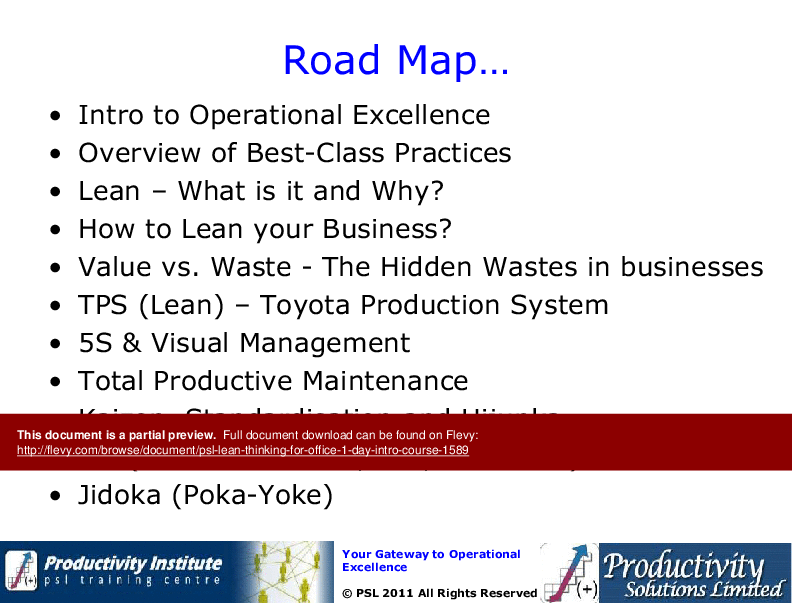
The topics covered are:
Intro to Operational Excellence
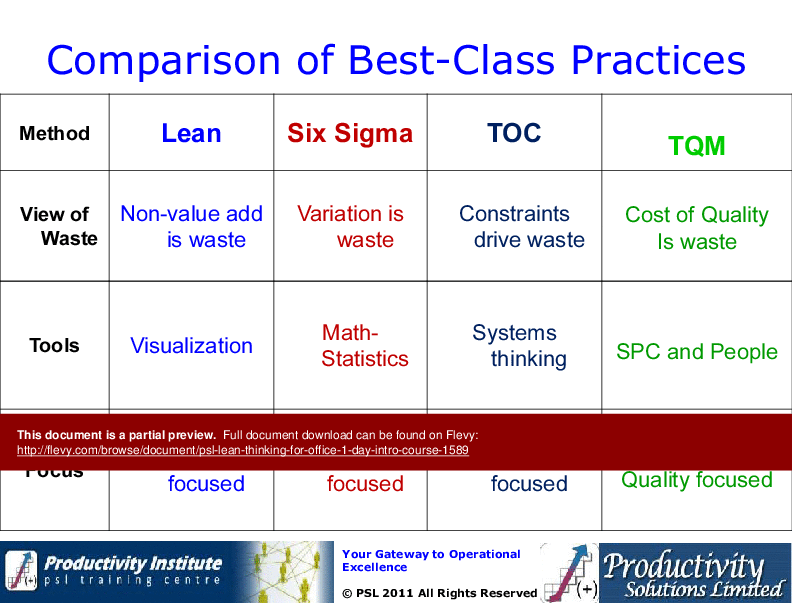
Overview of Best-Class Practices
Lean – What is it and Why?
How to Lean your Business?
Value vs. Waste – The Hidden Wastes in businesses
TPS (Lean) – Toyota Production System
5S & Visual Management
Total Productive Maintenance
Kaizen, Standardisation and Hijunka
JIT (Continuous Flow, Pull, SMED etc)
Jidoka (Poka-Yoke)
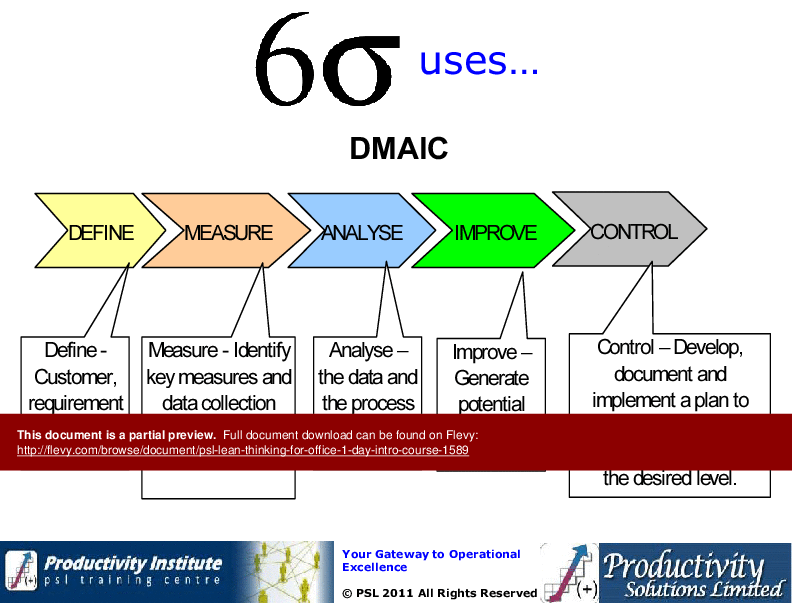
This comprehensive course also includes a detailed exploration of Total Quality Management (TQM), emphasizing the integration of quality into every aspect of your business operations. Participants will learn how to measure and manage quality to meet customer requirements effectively. The course covers the DMAIC methodology of Six Sigma, guiding you through defining, measuring, analyzing, improving, and controlling processes to enhance performance.
The Lean Office module focuses on stabilizing, standardizing, and simplifying administrative processes using the Toyota Production System. This section includes practical tools such as 5S, data collection, and cycle time analysis to streamline office operations. Participants will engage in group activities to identify and eliminate waste, improving overall efficiency and productivity.
This training material also addresses the importance of management commitment and the role of leadership in driving Lean initiatives. Through self-assessment tools and real-world examples, executives will understand the critical steps needed to foster a culture of continuous improvement. This course is designed to equip leaders with the knowledge and skills to implement Lean principles effectively in their office environments.
Got a question about the product? Email us at support@flevy.com or ask the author directly by using the "Ask the Author a Question" form. If you cannot view the preview above this document description, go here to view the large preview instead.
Executive Summary
This presentation titled "Lean Thinking for the Office & Admin Areas" serves as a comprehensive introduction to Lean principles tailored specifically for administrative functions. Developed by Vishnu Rayapeddi, a seasoned consultant with over 21 years of experience, this course equips participants with the tools and methodologies necessary to streamline processes, enhance productivity, and reduce waste in office environments. By implementing Lean practices, organizations can achieve operational excellence, improve employee satisfaction, and foster a culture of continuous improvement.
Who This Is For and When to Use
• Office Managers and Administrators seeking to optimize workflows
• Team Leaders and Supervisors responsible for process improvement
• HR Professionals focused on enhancing employee engagement and productivity
• Executives aiming to implement Lean methodologies across departments
Best-fit moments to use this deck:
• During team training sessions focused on operational excellence
• As part of a strategic initiative to improve administrative efficiency
• When introducing Lean concepts to new employees or teams
Learning Objectives
• Define Lean principles and their application in office settings
• Identify and eliminate non-value-adding activities in administrative processes
• Implement 5S methodology to organize and standardize workspaces
• Develop a culture of continuous improvement through Kaizen practices
• Utilize value stream mapping to visualize and enhance workflow
• Establish metrics for measuring process efficiency and effectiveness
Table of Contents
• Introduction to Operational Excellence (page 3)
• Overview of Best-Class Practices (page 5)
• Lean Principles and Their Importance (page 8)
• Identifying Value vs. Waste (page 12)
• Toyota Production System (TPS) Overview (page 15)
• Implementing 5S and Visual Management (page 20)
• Total Productive Maintenance (TPM) (page 25)
• Kaizen and Standardization (page 28)
• Just-In-Time (JIT) Principles (page 30)
• Mistake Proofing (Poka-Yoke) (page 35)
Primary Topics Covered
• Lean Principles - An evolving philosophy aimed at waste elimination and process improvement, fostering a culture of continuous change.
• 5S Methodology - A systematic approach to organizing and standardizing workspaces, enhancing productivity and employee morale.
• Value Stream Mapping - A visual tool for identifying waste and optimizing workflows, ensuring that processes align with customer demand.
• Kaizen Practices - Continuous improvement initiatives that engage all employees in identifying and implementing enhancements.
• Total Productive Maintenance - Strategies for maintaining equipment and processes to ensure operational efficiency and minimize downtime.
• Just-In-Time (JIT) - A production strategy that aligns inventory levels with customer demand, reducing waste and improving responsiveness.
Deliverables, Templates, and Tools
• Value Stream Mapping templates for visualizing workflows
• 5S implementation checklists for organizing workspaces
• Kaizen event planning templates to facilitate continuous improvement initiatives
• Metrics and KPIs for measuring operational efficiency
• Standard Work documentation for process consistency
• Training materials for Lean principles and practices
Slide Highlights
• Overview of Lean principles and their relevance to office environments
• Visual representation of the 5S methodology and its benefits
• Case studies demonstrating successful Lean implementations in administrative settings
• Charts illustrating the impact of waste reduction on productivity and employee satisfaction
• Interactive activities designed to engage participants in identifying waste
Potential Workshop Agenda
Introduction to Lean Thinking (30 minutes)
• Discuss the importance of Lean in office settings
• Overview of workshop objectives and outcomes
5S Implementation Workshop (60 minutes)
• Hands-on activity to apply 5S principles in a simulated office environment
• Group discussions on challenges and solutions
Value Stream Mapping Session (45 minutes)
• Introduction to value stream mapping techniques
• Collaborative exercise to map current processes and identify areas for improvement
Kaizen and Continuous Improvement (45 minutes)
• Overview of Kaizen principles and their application in daily work
• Group brainstorming session to generate improvement ideas
Customization Guidance
• Tailor the training materials to reflect specific organizational processes and terminology
• Adjust the workshop agenda to focus on particular areas of concern within the organization
• Incorporate case studies relevant to the industry or sector of the participants
Secondary Topics Covered
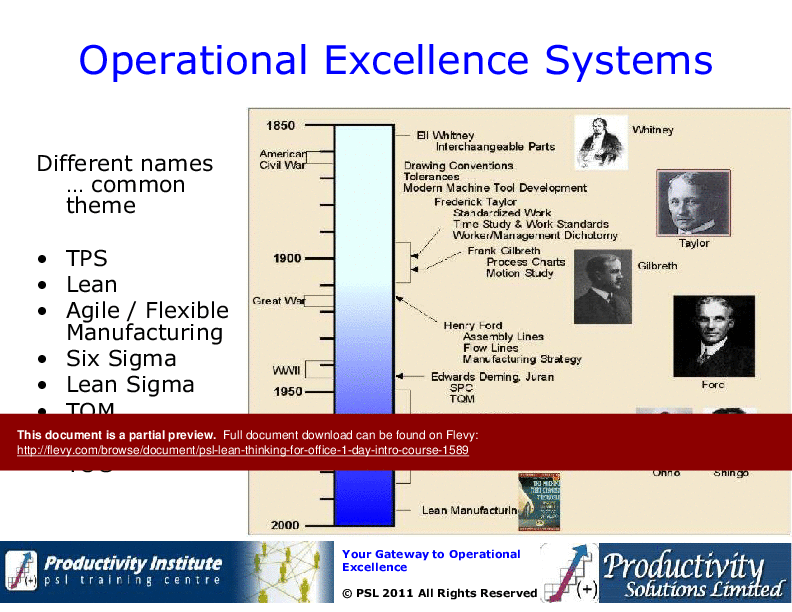
• Theory of Constraints (TOC) and its application in office environments
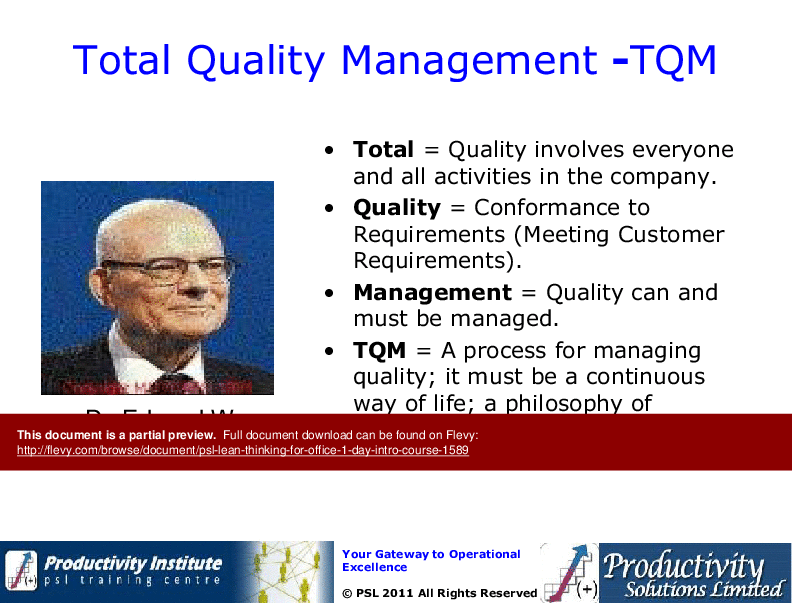
• Total Quality Management (TQM) principles for enhancing service quality
• Agile methodologies for improving responsiveness to change
• Flexible manufacturing concepts applicable to administrative processes
• The role of leadership in fostering a Lean culture
FAQ
What is Lean Thinking?
Lean Thinking is a philosophy focused on eliminating waste and improving processes to enhance value for customers and organizations.
How can Lean principles be applied in an office setting?
Lean principles can streamline administrative processes, reduce waste, and improve employee engagement through structured methodologies like 5S and Kaizen.
What is the 5S methodology?
5S is a Lean tool that stands for Sort, Set in Order, Shine, Standardize, and Sustain, aimed at organizing and maintaining a clean and efficient workspace.
What is value stream mapping?
Value stream mapping is a visual tool that helps identify waste and optimize workflows by mapping out the steps involved in delivering a product or service.
How does Kaizen contribute to continuous improvement?
Kaizen encourages all employees to participate in identifying and implementing small, incremental changes that lead to significant improvements over time.
What are the benefits of implementing Lean in an office?
Implementing Lean can lead to simplified processes, improved quality, increased throughput, reduced costs, and enhanced employee satisfaction.
What metrics should be used to measure Lean success?
Key metrics may include cycle time, throughput, employee engagement scores, and customer satisfaction ratings.
How can I get started with Lean in my organization?
Begin by assessing current processes, identifying areas of waste, and engaging employees in training sessions focused on Lean principles.
Glossary
• Lean - A philosophy focused on waste elimination and continuous improvement.
• 5S - A methodology for organizing and standardizing workspaces.
• Value Stream Mapping - A visual representation of processes to identify waste.
• Kaizen - Continuous improvement practices involving all employees.
• Total Productive Maintenance (TPM) - Strategies for maintaining equipment efficiency.
• Just-In-Time (JIT) - A production strategy aligning inventory with customer demand.
• Poka-Yoke - Mistake-proofing techniques to prevent errors.
• Cycle Time - The total time from the beginning to the end of a process.
• Throughput - The amount of work completed in a given time frame.
• Non-Value Adding (NVA) - Activities that do not add value to the customer.
• Value Adding (VA) - Activities that customers are willing to pay for.

• Operational Excellence - Achieving superior performance in operations.

• Continuous Improvement - Ongoing efforts to enhance products, services, or processes.
• Waste - Any activity that consumes resources without adding value.
• Standard Work - Documented best practices for performing tasks.
• Metrics - Measurements used to assess performance and improvement.
• Engagement - The level of commitment and involvement of employees in their work.
• Process Improvement - Efforts to enhance the efficiency and effectiveness of processes.
• Training - Instruction aimed at enhancing skills and knowledge.
• Leadership - Guiding and influencing others to achieve organizational goals.
• Culture - The shared values, beliefs, and behaviors within an organization.
Source: Best Practices in Lean Office PowerPoint Slides: PSL - Lean Thinking For Office - 1 Day Intro Course PowerPoint (PPT) Presentation Slide Deck, OpEx Academy NZ
This document is available as part of the following discounted bundle(s):
Save %!
PSL - Lean Supply Chain Bundle
This bundle contains 6 total documents. See all the documents to the right.
|
Receive our FREE presentation on Operational Excellence
This 50-slide presentation provides a high-level introduction to the 4 Building Blocks of Operational Excellence. Achieving OpEx requires the implementation of a Business Execution System that integrates these 4 building blocks. |