
The Lean Six Sigma (LSS) DMAIC methodology is a structured problem-solving approach consisting of five steps: Define, Measure, Analyze, Improve, and Control.
• Define: Establish the problem statement, project scope, objective statement, and project team.
• Measure: Collect and verify data to measure the current performance and capability of the process.
• Analyze: Identify the root causes of the problem using tools such as cause-and-effect analysis and statistical analysis.
• Improve: Implement potential solutions and evaluate their effectiveness.
• Control: Standardize the solution and monitor performance to ensure sustained improvement.
Adopting an LSS DMAIC storyboard template offers several benefits to the improvement process:
1. Structured Approach: Ensures all necessary steps are taken, reducing the risk of overlooking critical issues.
2. Consistent Problem-Solving: Helps the project team stay focused on the problem and objectives throughout the process.
3. Enhanced Communication: Improves collaboration among team members by providing a common language and understanding of the process.
4. Time Efficiency: Saves time and reduces errors by providing a clear roadmap with defined deliverables and expectations for each phase.
POWERPOINT TEMPLATE OVERVIEW:
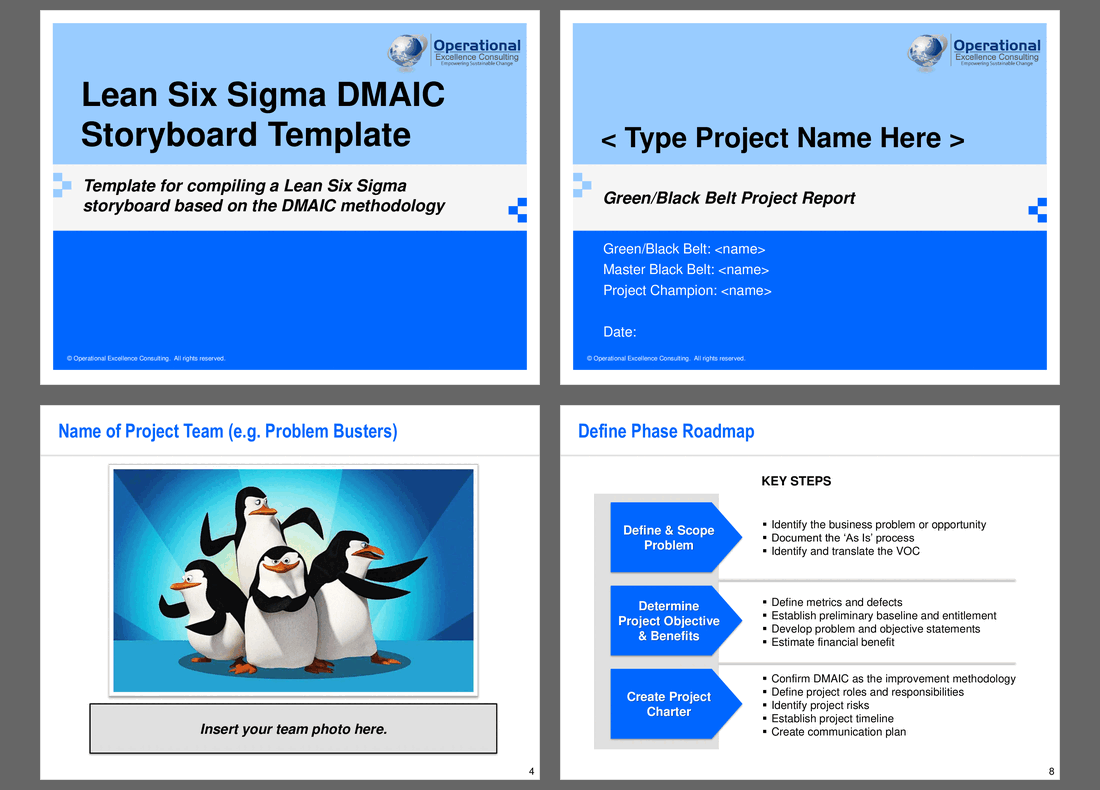
Our PowerPoint template is designed to help your project team compile a comprehensive report or storyboard for Green/Black Belt toll-gate reviews or stakeholder briefings based on the Lean Six Sigma DMAIC methodology.
• Guidelines: Each slide includes headlines or guidelines on what content to insert, making it easy to follow.
• Visuals: Images, diagrams, and charts are provided to quickly illustrate what is required under each phase of the DMAIC process.
• Deliverables List: Each phase includes a list of deliverables to guide you on what to include in the report or storyboard.
Note: This template focuses on providing a structured framework and visual aids for reporting and presenting your DMAIC project. It does not include tools for creating visual representations. Users are encouraged to utilize existing resources within their organizations, such as Minitab, SigmaXL, Microsoft Visio, SmartDraw, and other available tools, for these purposes.
By using this template, you can ensure a thorough and effective presentation of your Lean Six Sigma project, streamlining the process and enhancing clarity and impact for all stakeholders.
|||||||||||||||||||||||||||||||||||||||||||||||||||||||||||||||||||||||||||||||||||||||||||||||||||||||||||||||||||||||||||||||||||||||||||||||||||||||
This package includes:
1. Lean Six Sigma DMAIC Storyboard template (PowerPoint format)
2. Lean Six Sigma DMAIC poster (PDF format, in color and monochrome, printable in A3 size)
|||||||||||||||||||||||||||||||||||||||||||||||||||||||||||||||||||||||||||||||||||||||||||||||||||||||||||||||||||||||||||||||||||||||||||||||||||||||
The five steps of LSS DMAIC are:
Step 1: DEFINE – Define the problem or opportunity.
Define Phase Deliverables:
1.1 Define business case
1.2 Define problem statement
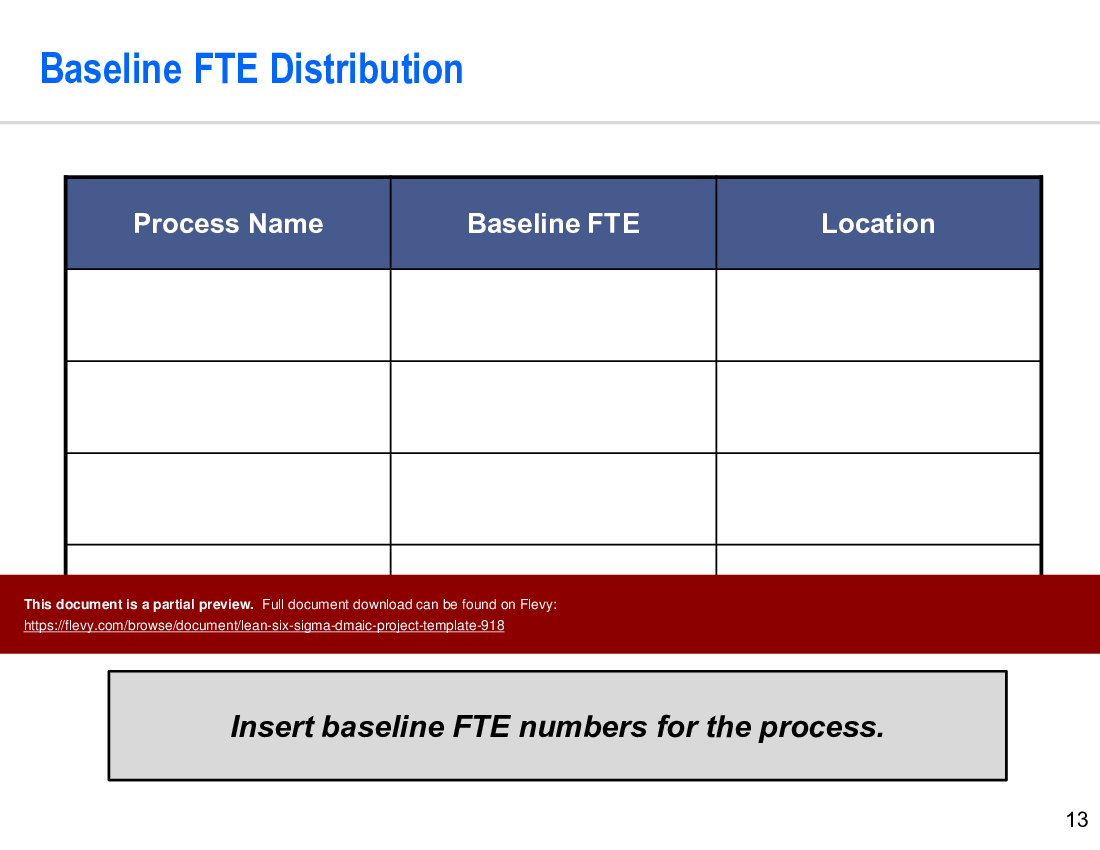
1.3 Establish baseline project metrics
1.4 Define objective statement and scope
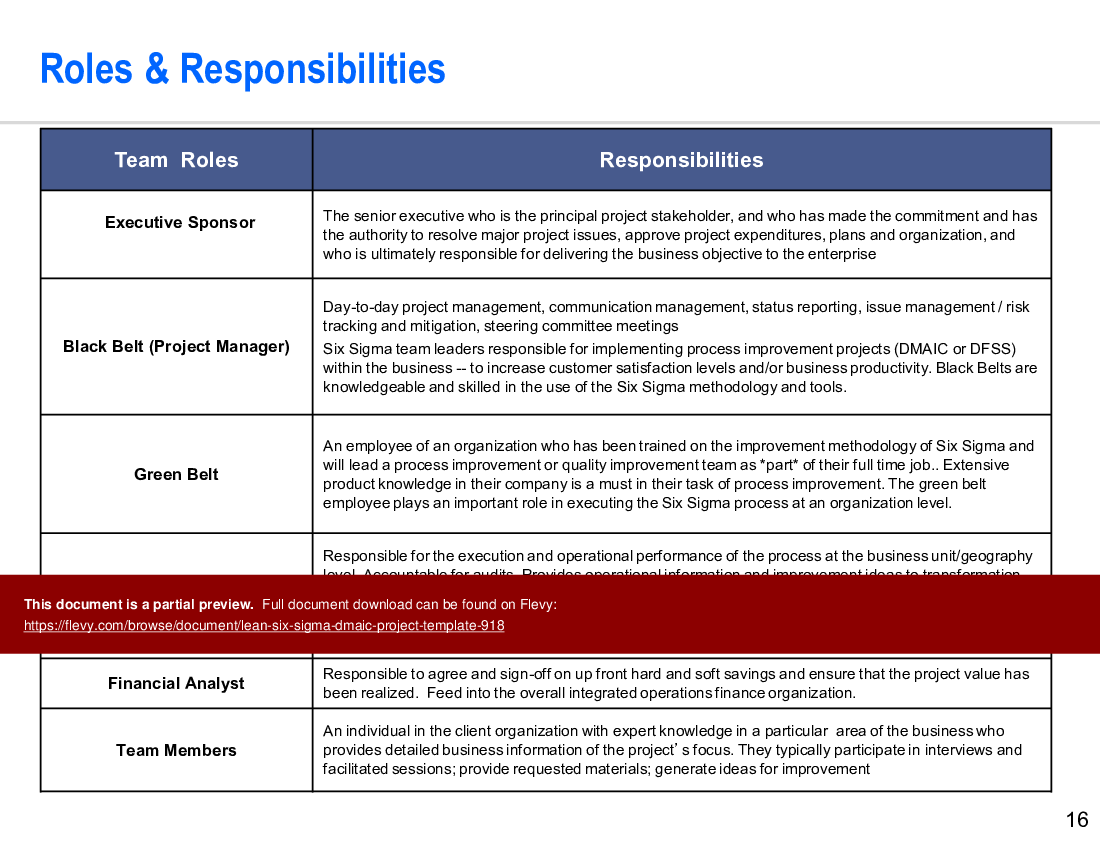
1.5 Form project team
1.6 Identify financial impact
1.7 Complete project charter
1.8 Approved project charter
Step 2: MEASURE – Measure the current performance and capability.
Measure Phase Deliverables:
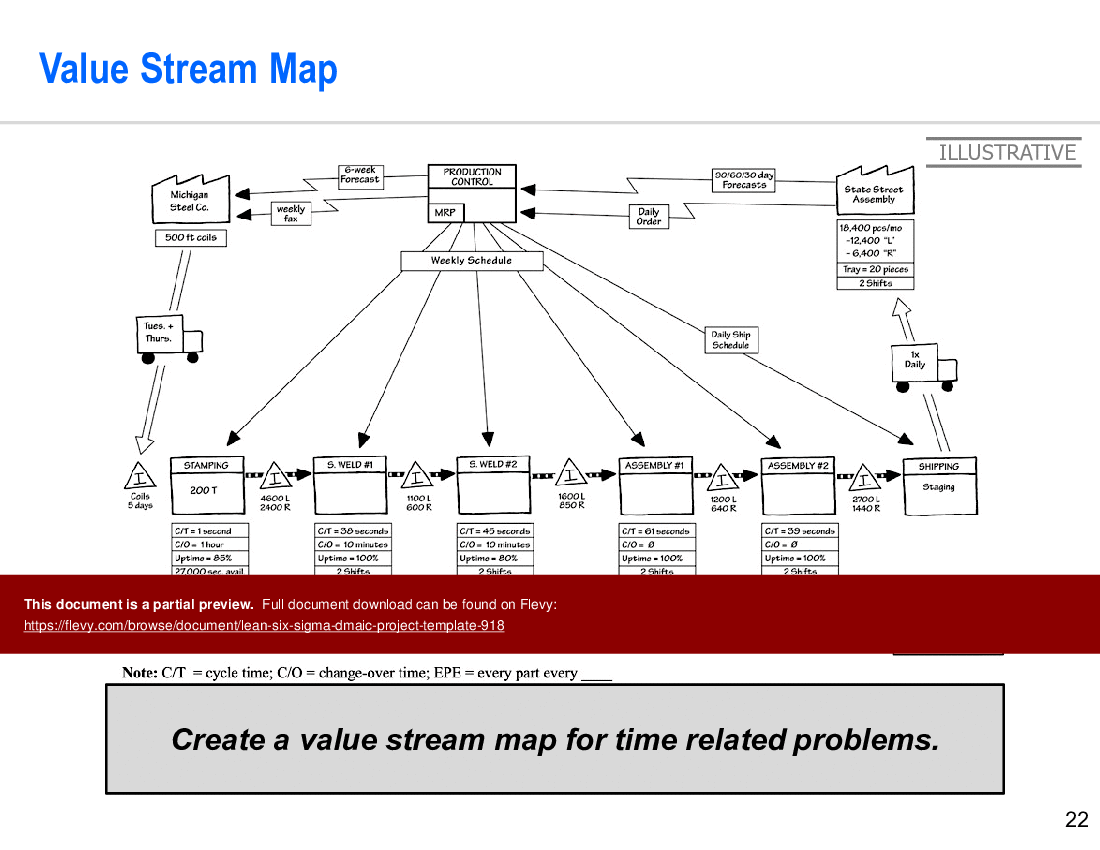
2.1 Map the process
2.2 Collect process data
2.3 Verify data integrity
2.4 Document process behavior
2.5 Baseline process capability (Sigma level or DPMO)
2.6 Quick wins
2.7 List of potential X's
Step 3: ANALYZE – Analyze to identify root causes.
Analyze Phase Deliverables:
3.1 Cause and effect analysis
3.2 FMEA
3.3 Graphical analysis
3.4 Statistical analysis
Step 4: IMPROVE – Improve by implementing potential solutions.
Improve Phase Deliverables:
4.1 Generate solutions
4.2 Evaluate solutions
4.3 Pilot and implement solutions
4.4 Statement of Y = f(X)
Step 5: CONTROL – Control by standardizing solution and monitoring performance.
Control Phase Deliverables:
5.1 Control methods
5.2 Control plan
5.3 Clear indication of improved primary metric
5.4 Project transition action plan
5.5 Project approval
5.6 Financial validation
5.7 Lessons learned
Got a question about the product? Email us at support@flevy.com or ask the author directly by using the "Ask the Author a Question" form. If you cannot view the preview above this document description, go here to view the large preview instead.
Executive Summary
The Lean Six Sigma DMAIC Storyboard Template is a structured presentation tool designed to facilitate the implementation of the DMAIC (Define, Measure, Analyze, Improve, Control) methodology. Created by Operational Excellence Consulting, this template provides a comprehensive framework for Lean Six Sigma projects, enabling users to define problems, measure current performance, analyze root causes, implement improvements, and control processes effectively. This ready-to-use PowerPoint template is essential for professionals aiming to enhance operational efficiency and drive continuous improvement initiatives within their organizations.
Who This Is For and When to Use
• Lean Six Sigma practitioners (Green Belts, Black Belts)
• Project managers overseeing process improvement initiatives
• Quality assurance teams focused on operational excellence
• Business analysts involved in performance measurement and analysis
Best-fit moments to use this deck:
• During the initiation of a Lean Six Sigma project to outline objectives and scope
• In project meetings to communicate progress and findings at each DMAIC phase
• For training sessions aimed at educating team members on the DMAIC process
Learning Objectives
• Define the DMAIC methodology and its application in process improvement
• Develop a comprehensive project charter that outlines objectives and scope
• Measure current process performance using relevant metrics
• Analyze data to identify root causes of defects and inefficiencies
• Implement effective solutions and monitor their impact on performance
• Establish control measures to sustain improvements over time
Table of Contents
• Introduction to DMAIC (page 5)
• Define Phase Overview (page 8)
• Measure Phase Overview (page 19)
• Analyze Phase Overview (page 28)
• Improve Phase Overview (page 39)
• Control Phase Overview (page 51)
• Project Charter Template (page 15)
• Communication Plan Template (page 17)
Primary Topics Covered
• Define Phase - Focuses on identifying the problem or opportunity, defining project objectives, and creating a project charter.
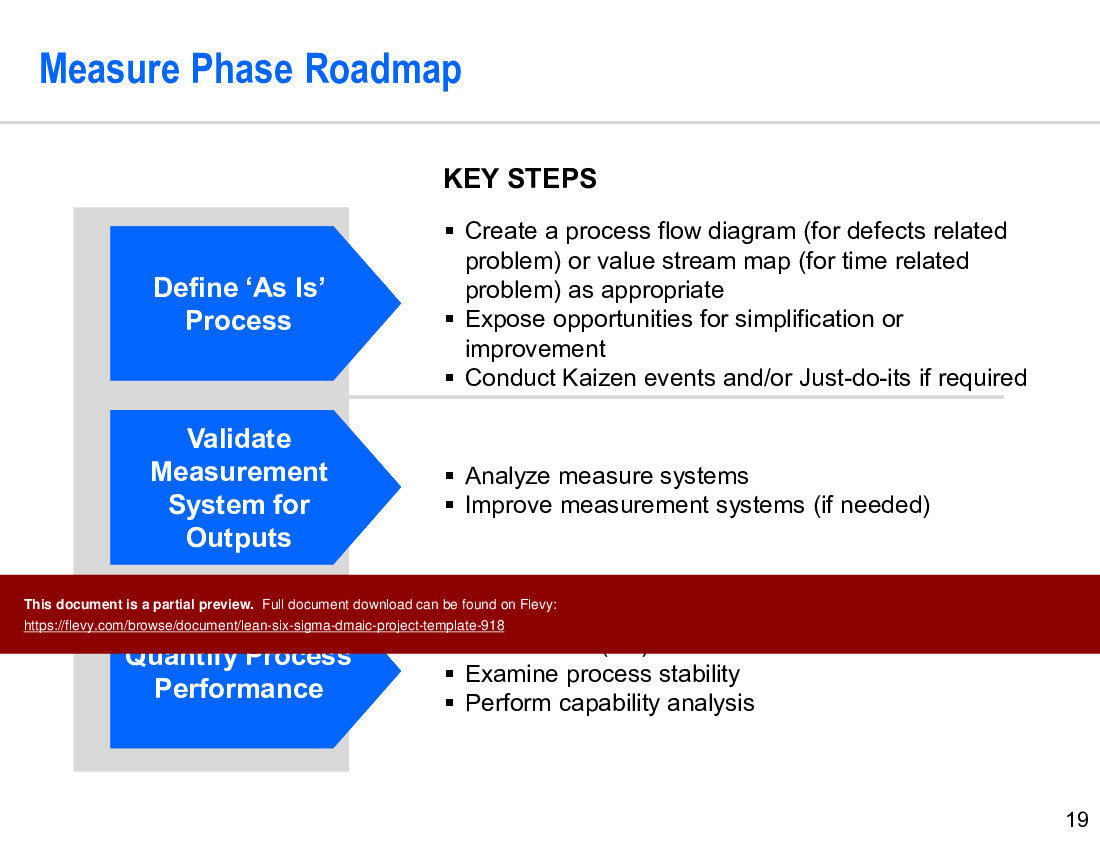
• Measure Phase - Involves mapping the current process, collecting data, and validating measurement systems.

• Analyze Phase - Centers on identifying potential causes of issues through data analysis and graphical methods.
• Improve Phase - Emphasizes generating and testing potential solutions, including the development of a future state value stream map.
• Control Phase - Establishes control methods to sustain improvements and monitor ongoing performance.
• Project Charter - A template for documenting project objectives, scope, and team roles.
Deliverables, Templates, and Tools
• Project charter template to define project objectives and scope
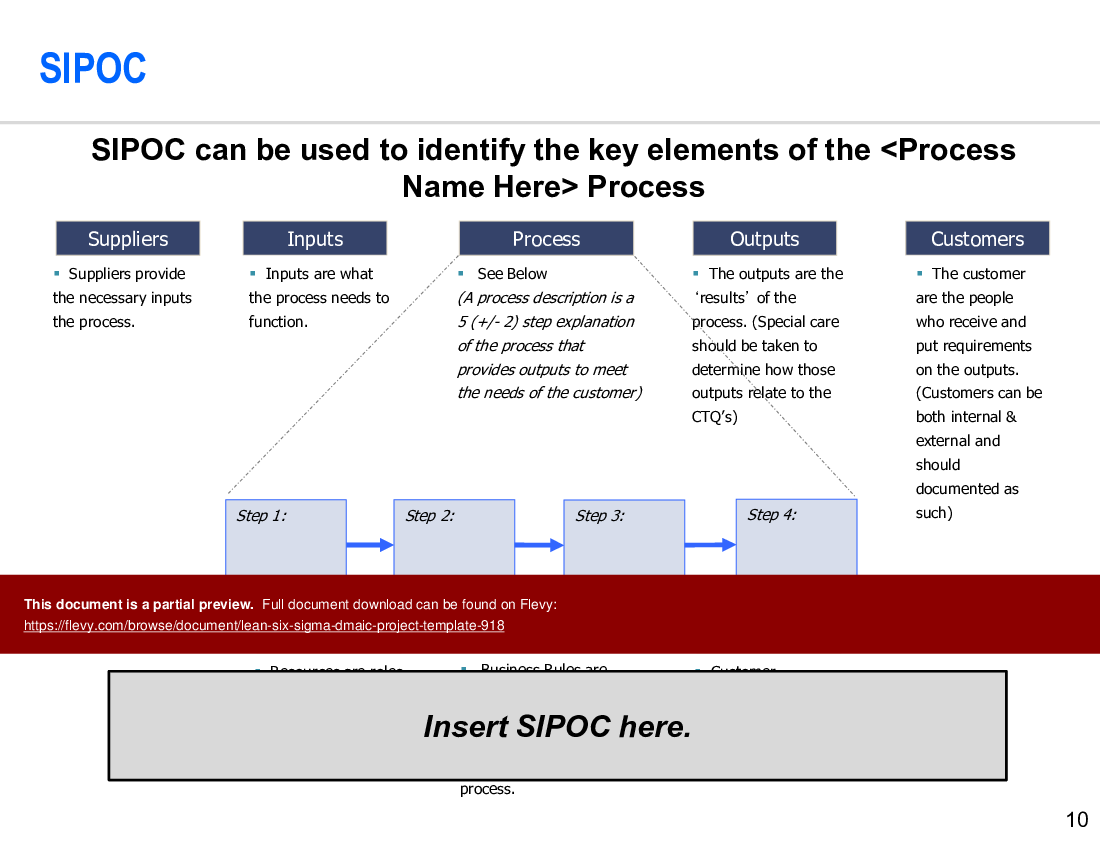
• SIPOC diagram to identify key process elements
• Process flow diagrams for current and future state mapping
• Data collection plan template for measuring process performance
• Control plan template for monitoring ongoing improvements
• Communication plan to ensure stakeholder engagement
Slide Highlights
• Overview of the DMAIC process with visual representations
• Detailed steps for each DMAIC phase, including key deliverables
• Templates for project charters and communication plans
• Graphical analysis tools for identifying root causes
• Control charts to track performance metrics over time
Potential Workshop Agenda
DMAIC Overview Session (60 minutes)
• Introduce the DMAIC methodology and its importance
• Discuss the roles of team members in each phase
• Review the project charter and communication plan
Define Phase Workshop (90 minutes)
• Identify the problem statement and project objectives
• Create a SIPOC diagram to outline the process
• Develop the project charter collaboratively
Measure and Analyze Session (120 minutes)
• Map the current process and collect relevant data
• Analyze data to identify root causes and areas for improvement
• Discuss findings and implications for the project
Customization Guidance
• Tailor the project charter to reflect specific project objectives and team members
• Modify the SIPOC diagram to accurately represent the unique process being analyzed
• Adjust the communication plan to fit the organizational structure and stakeholder needs
• Update metrics and control plans based on the specific context of the project
Secondary Topics Covered
• Voice of the Customer (VOC) analysis
• Financial benefits estimation and validation
• Risk assessment and management strategies
• Lean techniques for waste reduction
Topic FAQ
Document FAQ
These are questions addressed within this presentation.
What is the DMAIC methodology?
DMAIC is a data-driven quality strategy used for process improvement, consisting of 5 phases: Define, Measure, Analyze, Improve, and Control.
How can I customize the templates in this deck?
Templates can be modified to suit your organization’s specific processes, objectives, and team structures.
What types of projects is this template suitable for?
This template is ideal for any process improvement project within manufacturing, service, healthcare, and other industries focused on operational excellence.
Can this template be used for training purposes?
Yes, the template is designed to facilitate training sessions on Lean Six Sigma methodologies and can be adapted for educational workshops.
What deliverables can I expect from using this template?
Users can produce project charters, process maps, data collection plans, and control plans, among other deliverables.
How do I measure the success of my Lean Six Sigma project?
Success can be measured through improvements in key performance metrics, financial savings, and stakeholder satisfaction.
Is there a specific format for the project charter?
Yes, the project charter template included in the deck provides a structured format for documenting project objectives, scope, and team roles.
What tools can be used in the Analyze phase?
Tools such as fishbone diagrams, Pareto charts, and statistical analysis methods are recommended for identifying root causes.
Glossary
• DMAIC - A structured problem-solving process used in Lean Six Sigma.
• SIPOC - A tool that outlines Suppliers, Inputs, Process, Outputs, and Customers.
• VOC - Voice of the Customer; feedback from customers about their experiences.
• FMEA - Failure Mode and Effects Analysis; a systematic approach to identifying potential failure modes.
• Control Chart - A statistical tool used to monitor process stability over time.
• Kaizen - A Japanese term meaning "continuous improvement."
• CTQ - Critical to Quality; the key measurable characteristics of a product or process.
• Lean - A methodology focused on minimizing waste within manufacturing systems.
• Six Sigma - A set of techniques and tools for process improvement.
• Process Map - A visual representation of the steps in a process.
• Stakeholder - An individual or group with an interest in the outcome of a project.
• Baseline Metrics - Initial measurements used to compare against future performance.
• Implementation Plan - A detailed plan for executing project solutions.
• Standard Work - Documented best practices for performing tasks consistently.
• Mistake-proofing - Techniques used to prevent errors in processes.
• Financial Validation - The process of confirming the financial benefits of a project.
• Lessons Learned - Insights gained from the project that can inform future initiatives.
• Project Charter - A document that outlines the purpose, objectives, and scope of a project.
• Control Plan - A document that outlines how to monitor and control process performance.
Source: Best Practices in DMAIC PowerPoint Slides: Lean Six Sigma DMAIC Storyboard Template PowerPoint (PPTX) Presentation Slide Deck, Operational Excellence Consulting
|
Receive our FREE presentation on Operational Excellence
This 50-slide presentation provides a high-level introduction to the 4 Building Blocks of Operational Excellence. Achieving OpEx requires the implementation of a Business Execution System that integrates these 4 building blocks. |