 Click main image to view in full screen.
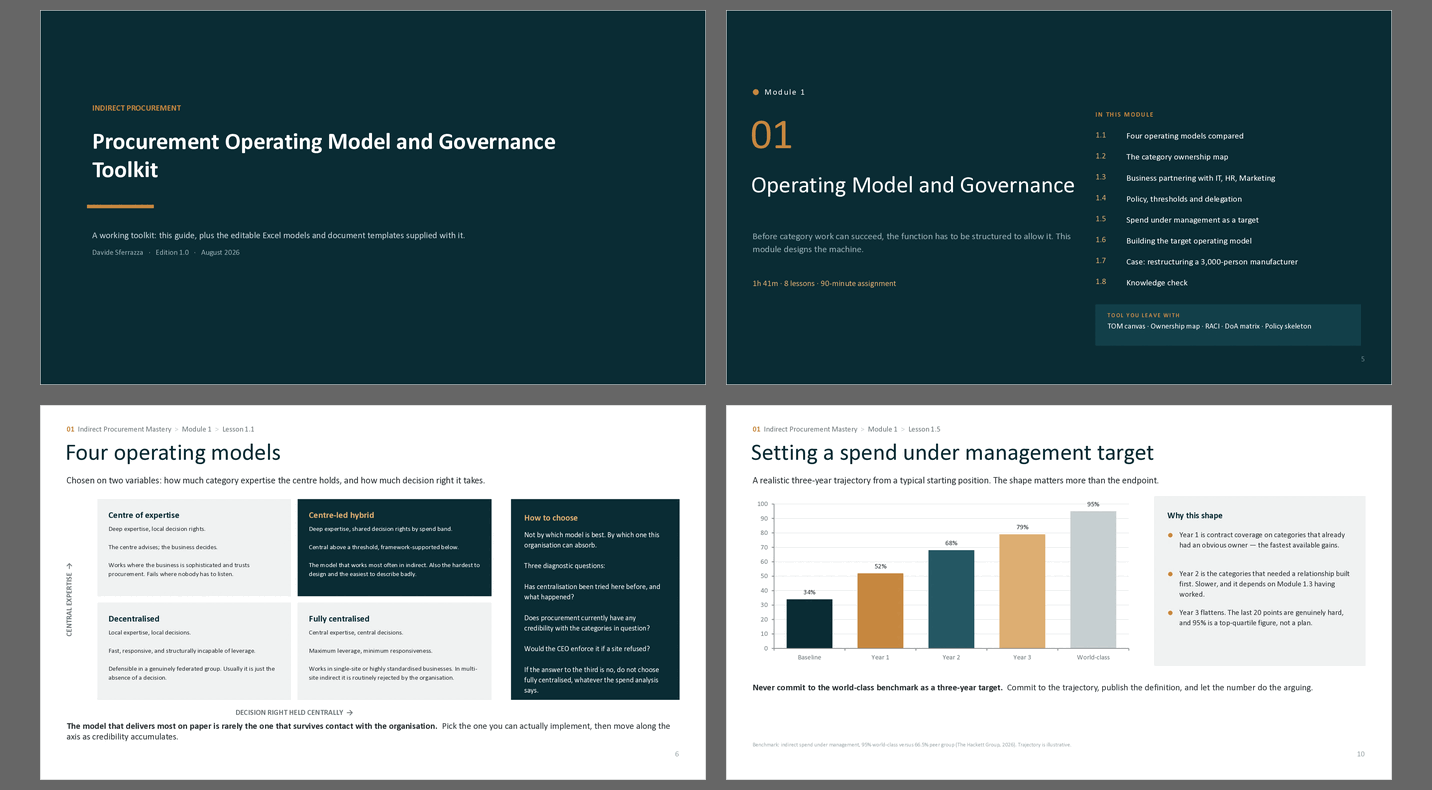
Procurement Operating Model and Governance Toolkit – PowerPoint PPTX Template
PowerPoint (PPTX) 15 Slides


BENEFITS OF THIS DOWNLOADABLE POWERPOINT DOCUMENT
- Separate the four governance instruments organisations usually merge into one document nobody reads.
- Fix the authority problem that most compliance failures turn out to be.
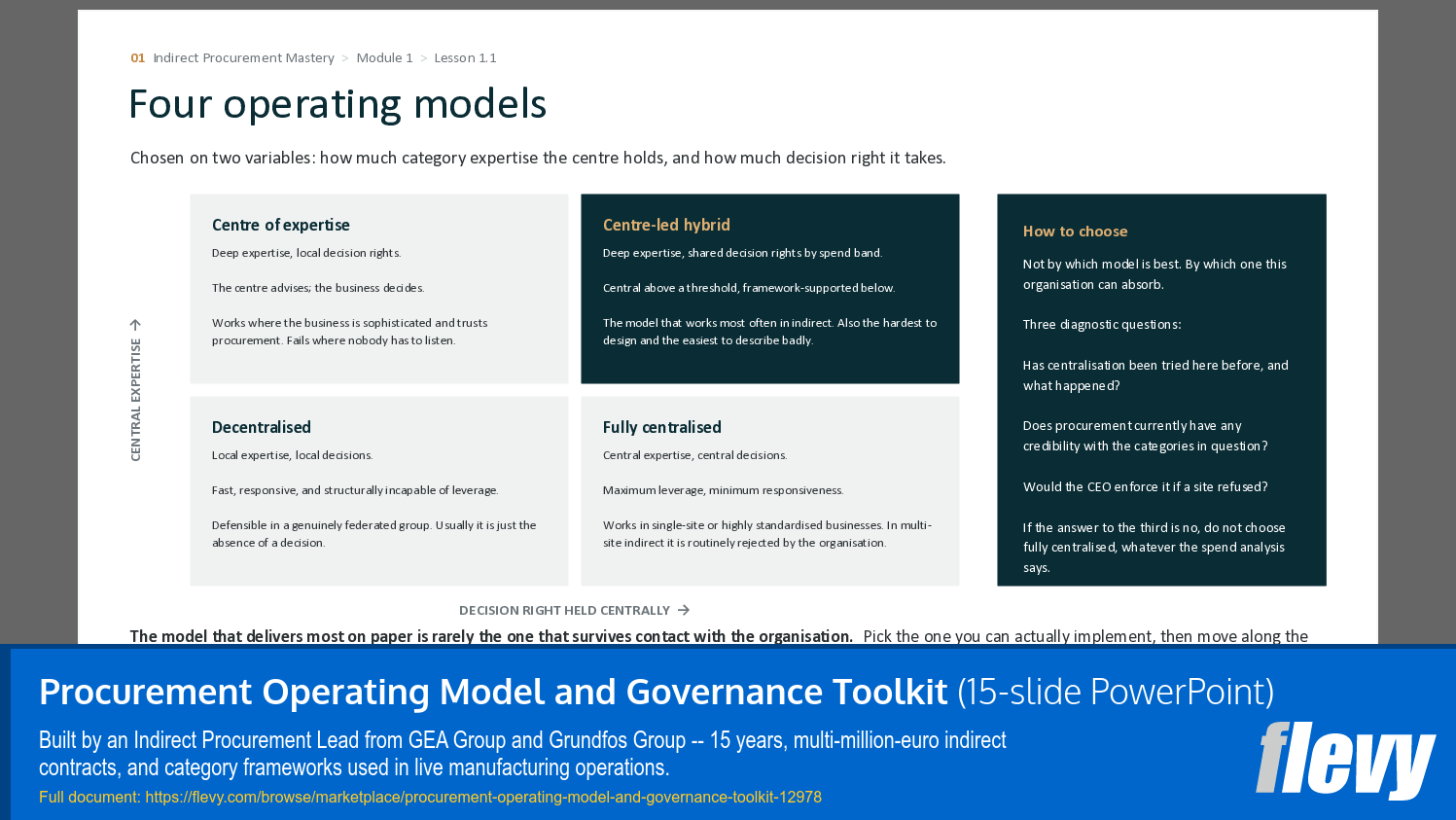
- Choose an operating model the organisation can actually absorb, with the trade-offs made explicit.
PROCUREMENT STRATEGY PPT TEMPLATE DESCRIPTION
How the procurement function is organised, who is allowed to commit what, and who owns which category – the four instruments that decide whether anything else works.
Most compliance problems are authority problems wearing a disguise. This toolkit separates the four instruments that organisations usually combine into one long document that nobody reads: the policy states principles, the delegation matrix states who can commit what value, the ownership map states who leads which category, and the buying guides state where to buy.
WHAT IS INCLUDED
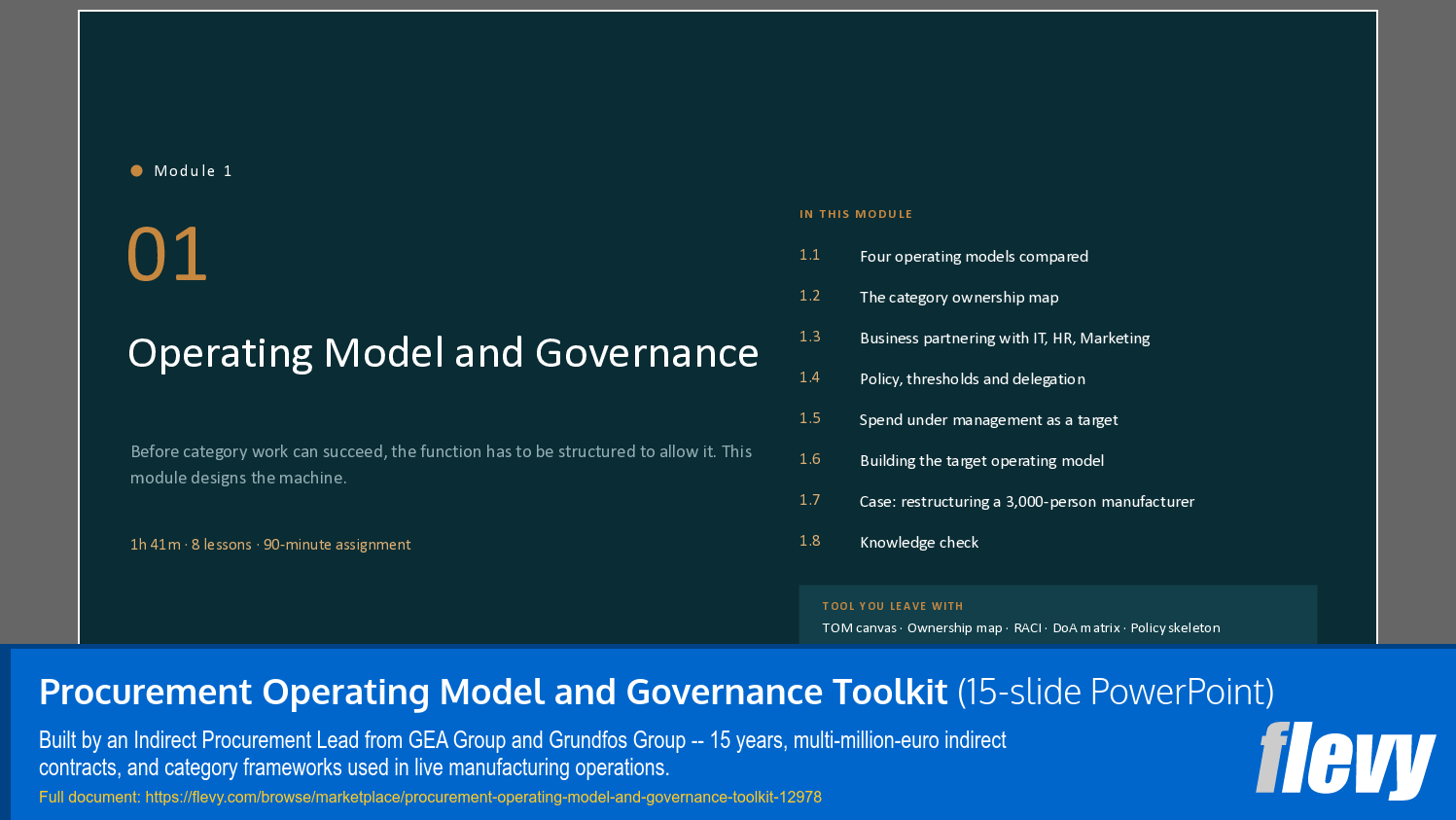
• Target Operating Model Canvas (PowerPoint) – four models compared, with the trade-offs made explicit.
• Category Ownership Map (Excel) – who owns what, and who has to countersign it.
• RACI Matrix (Excel) – for the decisions that keep being remade by different people.
• Delegation of Authority Matrix (Excel) – thresholds, approvers and escalation.
• Procurement Policy Skeleton (Word) – two pages of principles and mandatory behaviours. Deliberately short: a policy nobody finishes is a policy nobody follows.
• Stakeholder Influence Map (Excel) – before any change that requires people to buy differently.
WHO IT IS FOR
Heads of procurement, transformation leads and consultants designing or restructuring a procurement function.
WHAT YOU RECEIVE
The primary document is a 15-slide guide covering the material above, in the same consulting layout used throughout this series: a headline that states the point, a body that evidences it, and a closing line that tells you what to do with it. It is designed to be read on its own or presented internally.
The accompanying archive contains 6 working files – Excel models with live formulas, Word templates and, where relevant, PowerPoint canvases. Nothing is password-protected or locked. A locked template a professional cannot adapt is worth nothing.
HOW THE SPREADSHEETS ARE BUILT
Every workbook uses the standard financial-modelling colour convention, applied consistently: blue text on a pale yellow fill is an input you type over, black text is a formula you should not overwrite, and green text is a reference to another sheet that must be changed at source. Each model carries one worked example row, shaded and italicised, which you delete once your own data is in, and an assumptions block at the top that should be read before any output below it is trusted. Print areas and page setup are configured on every sheet.
WHAT THIS IS NOT
This is educational and commercial material, not legal, tax or financial advice. Contractual content exists so that you can identify what matters commercially and ask better questions of whoever does advise you; contract law and regulatory obligations vary by jurisdiction. All case material is composite – figures are drawn from real engagements, but no case describes a single identifiable organisation and every company name is invented.
A licence page inside each file sets out the terms of use: unrestricted use for your own work and inside your own organisation, no resale or redistribution outside it.
Got a question about the product? Email us at support@flevy.com or ask the author directly by using the "Ask the Author a Question" form. If you cannot view the preview above this document description, go here to view the large preview instead.
Source: Best Practices in Procurement Strategy, Target Operating Model PowerPoint Slides: Procurement Operating Model and Governance Toolkit PowerPoint (PPTX) Presentation Slide Deck, Davide Sferrazza
ABOUT THE AUTHOR

Indirect Procurement Lead, with 15 years spent in the categories most organisations manage least well: MRO, facilities, utilities and energy, marketing services, IT and software, professional services, logistics and CapEx.
That career has been inside manufacturing groups -- Pavan (GEA Group) and DAB Pumps (Grundfos Group) -- leading procurement transformation projects, negotiating
... [read more]
Ask the Author a Question
You must be logged in to contact the author.




























